Getting Around Morocco in 2026: Trains, Buses, Taxis and Drivers
Getting around Morocco is straightforward once you understand where the train network ends and when buses, taxis or a private driver make more sense. The wrong transport choice, however, can turn a simple journey into an exhausting day.
I’m Youness, a licensed Moroccan guide based in Marrakech. After more than 20 years of planning routes for travelers, I normally recommend using ONCF trains between the major cities, CTM or Supratours buses for destinations without rail service, and taxis for shorter journeys.
Rental cars and private drivers are most useful in the Atlas Mountains, along less-connected coastal routes and when traveling toward the Sahara.
This guide explains the best way to get around Morocco in 2026, including realistic travel times, typical costs, booking advice and the transport mistakes I see visitors make most often.
If you have not booked your flights yet, my guide to airports in Morocco explains which arrival airport is most convenient for each destination.
Table of Contents
Table of Contents
Best Way to Get Around Morocco in 2026: Quick Answer
The best way to get around Morocco is to combine transport types rather than use one option for the entire trip.
For a classic first visit, I normally recommend trains between the major cities, CTM or Supratours buses for destinations without railway service, and petit taxis for short journeys inside cities. A rental car or private driver becomes more useful in the Atlas Mountains, along less-connected coastal routes and when traveling toward the Sahara.
| Transport | Best for | Main advantage | Main limitation |
|---|
| ONCF train | Tangier, Rabat, Casablanca, Meknes, Fes and Marrakech | Comfortable and efficient between major cities | No railway to Chefchaouen, Essaouira, Agadir, the Atlas Mountains or the Sahara |
| CTM or Supratours bus | Cities and towns outside the railway network | Practical scheduled service with bookable seats | Fixed departure times and longer journeys |
| Petit taxi | Short trips inside a city | Convenient for stations, hotels and attractions | Cannot travel beyond the city boundary |
| Grand taxi | Regional trips between nearby towns | Reaches places without trains or frequent buses | Shared vehicles often wait for enough passengers |
| Rental car | Mountains, coastal roads and independent exploration | Maximum flexibility | Parking and driving in large cities can be stressful |
| Private driver | Families, Sahara routes and complex itineraries | Door-to-door travel with flexible stops | More expensive than public transportation |
If this northern route is part of your itinerary, my Tangier to Chefchaouen transport guide explains current bus guidance, taxis, private transfers, driving and connections from the airport or ferry ports.
My Recommended Transport Mix
For most travelers, the practical combinations are:
- Major cities only: use ONCF trains and petit taxis.
- Cities plus Chefchaouen or Essaouira: combine trains with CTM or Supratours buses.
- Atlas Mountains or rural coast: consider a rental car, grand taxi or private transfer.
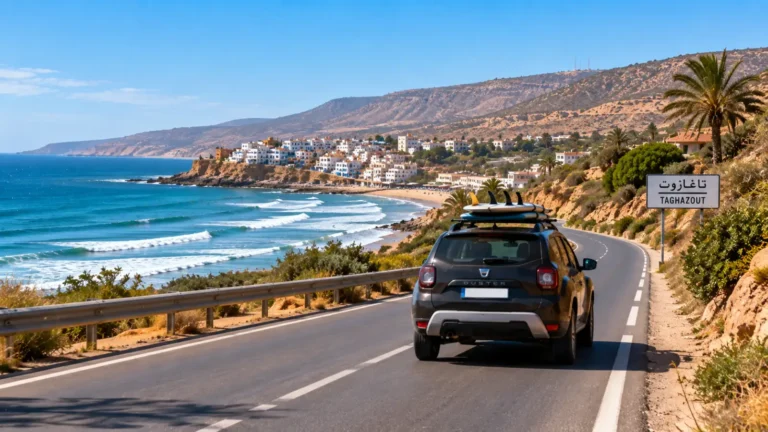
- Legzira Beach is a good example: the southern coastal location is easiest by rental car or arranged driver, while public transport usually requires additional connections.
- Sahara journey: use an organized tour, private driver or carefully planned self-drive route.
- Family trip or limited time: a private driver can reduce transfers, luggage handling and waiting.
What many visitors underestimate is not the distance on the map but the time lost changing stations, waiting for departures, crossing mountain roads and entering busy city centers.
When I plan a Morocco route, I use the train wherever it saves time and then switch to road transport only where the railway stops. This normally gives travelers the best balance of comfort, cost and realistic pacing.
Morocco Train Network: Where Can You Travel by Rail?
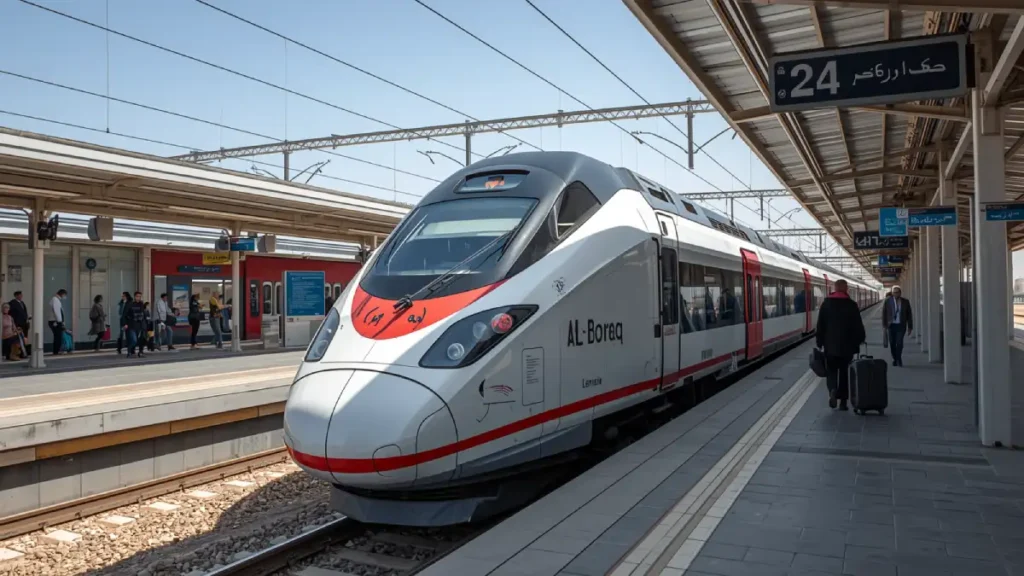
Morocco’s railway is most useful for travel between the major northern and central cities. It does not cover every destination on a typical Morocco itinerary.
The main tourist rail network connects destinations including:
- Tangier
- Kenitra
- Rabat
- Casablanca
- Meknes
- Fes
- Marrakech
- El Jadida
- Oujda
- Nador
- Mohammed V International Airport
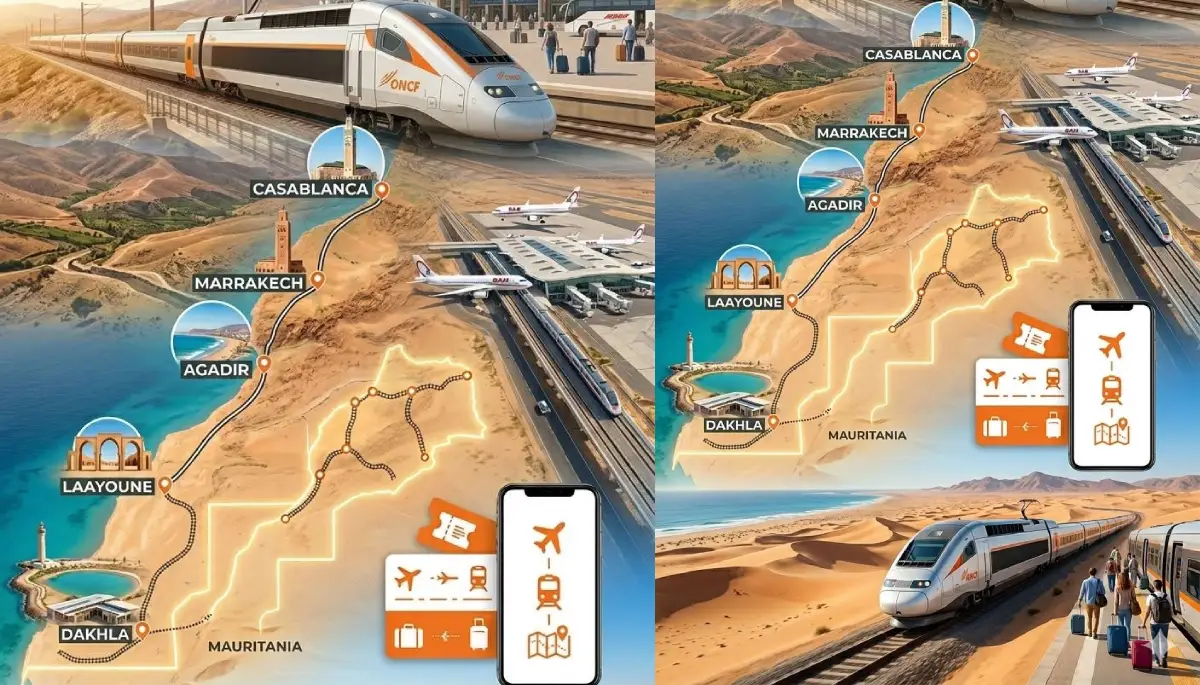
The Al Boraq high-speed service connects Tangier with Casablanca, stopping at Kenitra and Rabat Agdal. Travelers continuing toward Marrakech, Fes or other cities may need to change trains, depending on the route and departure.
For a clearer visual overview, my Morocco train map shows the main rail corridors, important stations and destinations where you must continue by road.
Popular destinations without a railway station include:
- Chefchaouen
- Essaouira
- Agadir
- Imlil and the Atlas Mountains
- Ouarzazate
- Aït Ben Haddou
- Zagora
- Merzouga and Erg Chebbi
For these places, you will need a bus, grand taxi, rental car, organized tour or private transfer.
My simple planning rule is:
Use the train between the major cities, then change to road transport for the coast, mountains and Sahara.
Check current routes and departure times through the official ONCF Voyages booking platform before finalizing your itinerary.
Al Boraq Versus Conventional ONCF Trains
Al Boraq is Morocco’s high-speed train connecting Tangier, Kenitra, Rabat and Casablanca. It is normally the most efficient public-transport option for journeys along this corridor.
Conventional ONCF services, commonly shown as Al Atlas or regional trains, connect Casablanca with cities such as Marrakech, Fes, Meknes, El Jadida, Oujda and Nador.
When I plan a north-to-south journey, I often use Al Boraq for the Tangier–Casablanca section and then connect to a conventional train for Marrakech or another destination.
For detailed connection advice, current fare ranges, the night couchette and driving alternatives, read my Tangier to Marrakech transport guide.
Leave enough connection time when changing trains, particularly if you are carrying several bags or traveling with children. Casa Voyageurs is a large and busy station, and a connection that appears comfortable on paper can feel rushed when platforms change.
First Class or Second Class?
Both first- and second-class tickets are available on major ONCF services.
Second class is usually suitable for travelers who want the lower fare and are comfortable with a busier carriage. First class normally provides more space and a quieter environment, which can be worthwhile on longer journeys.
I normally consider first class when:
- The journey lasts several hours
- The price difference is reasonable
- A traveler has several bags
- A family wants to sit together more comfortably
- Someone prefers a quieter carriage
Seat-selection and reservation conditions can vary by train and ticket type. Check the carriage and seat details during booking rather than assuming every service works in exactly the same way.
How Much Do Morocco Train Tickets Cost?
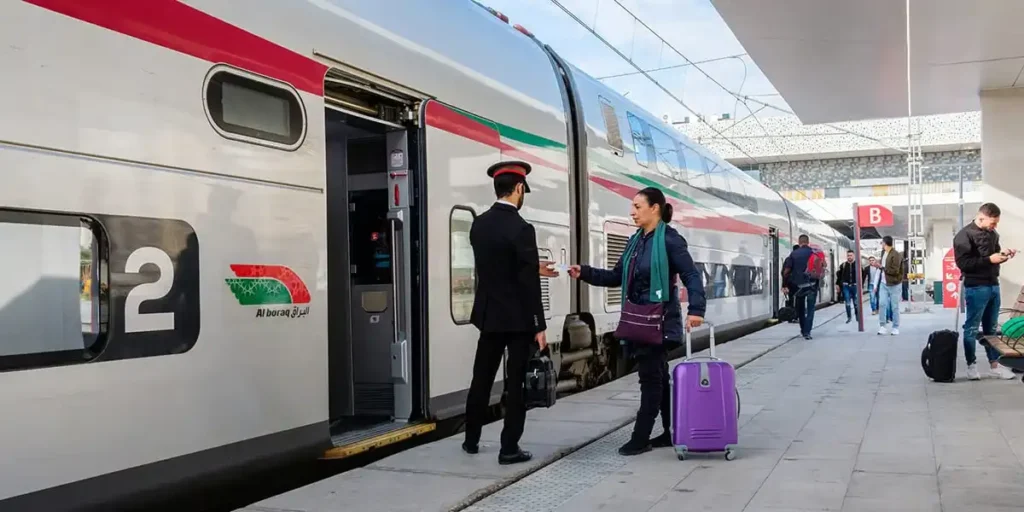
Morocco does not use one fixed price for every journey. The fare depends on:
- Route
- First or second class
- Train type
- Travel date
- Ticket flexibility
- Availability
- How early you book
ONCF sometimes offers lower advance-purchase fares, but the cheapest price may have limited availability or stricter exchange conditions.
For accurate planning, search your exact route and travel date on ONCF Voyages. Avoid building a tightly timed itinerary around a price or schedule copied from an older travel article.
Booking in advance is particularly sensible during weekends, Moroccan holidays and busy travel periods. For ordinary journeys outside peak dates, travelers can often book closer to departure, but advance booking gives you more choice of trains and seats.
Long-Distance Buses in Morocco: CTM or Supratours?
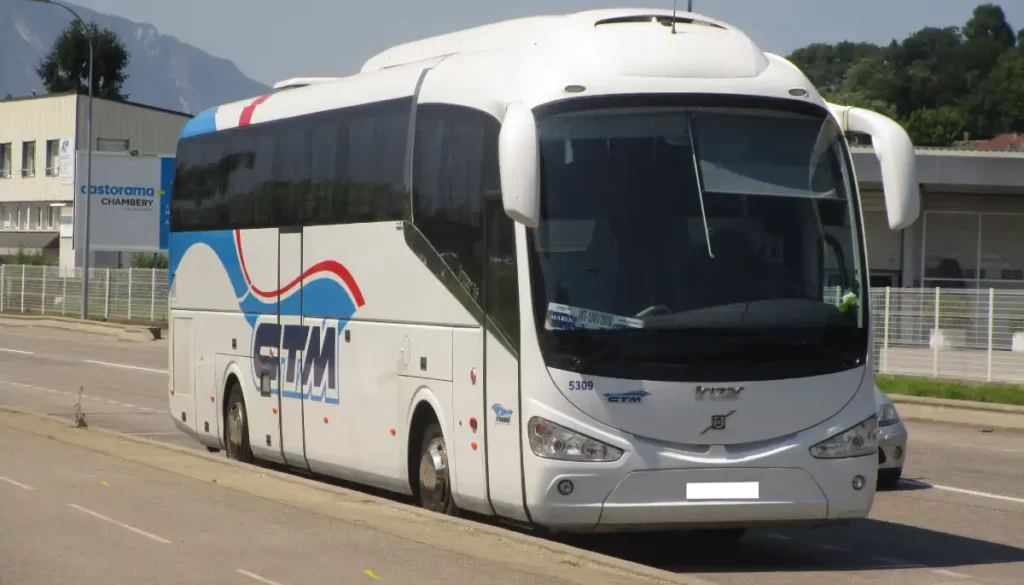
CTM and Supratours are the two bus companies I normally suggest first to international travelers. Both are useful for destinations that the railway does not reach, but they do not serve exactly the same routes or departure points.
CTM operates a broad national coach network. Supratours belongs to the ONCF Group and is particularly useful for journeys that continue beyond a railway station.
The best company is usually the one offering the most practical direct departure for your route and date.
| Company | Best used for | Main advantage | What to check |
|---|---|---|---|
| CTM | Direct intercity coach journeys | Broad network and online booking | Exact station, coach category and baggage conditions |
| Supratours | Continuing beyond the railway network | Useful train-and-bus connections | Whether the departure coordinates with your train |
| Local bus company | Smaller towns and low-cost regional journeys | Often cheaper and may serve additional stops | Comfort, schedule reliability and station location |
What Are CTM Buses Like?
CTM sells several coach categories, and facilities vary between them. Depending on the service, a coach may offer air-conditioning, reclining seats, USB charging, Wi-Fi or additional space.
Do not assume that every bus has every facility. Check the coach category shown during booking and carry a charged power bank for longer journeys.
CTM allows travelers to search current routes, times and prices through its official booking system:
Check CTM schedules and tickets
Checked baggage is handled separately from hand luggage. CTM currently states that passengers may carry up to two bags in the luggage hold, with each bag weighing no more than 20 kilograms. Confirm the current baggage conditions when buying your ticket, particularly if you are carrying large suitcases or sports equipment.
What Are Supratours Buses Like?
Supratours coaches extend Morocco’s public transport network beyond the railway lines. This makes them useful for destinations such as Essaouira and for other routes where travelers continue by road after arriving at a train station.
When a route includes both train and bus travel, check whether the connection is sold as one coordinated journey or as two separate tickets. Leave additional time when you must collect luggage or change departure areas.
Current schedules and tickets should be checked through the official Supratours website:
Marrakech to Essaouira by Bus
Essaouira has no railway station. CTM and Supratours both commonly serve the Marrakech–Essaouira route, but departure times and station locations can change.
Supratours is often convenient for travelers arriving near Marrakech railway station. CTM may offer a departure that better matches a particular hotel, arrival time or onward journey.
Compare the live schedules rather than assuming one company is always better.
For detailed station advice and current transport options, see my Marrakech to Essaouira guide.
Fes to Chefchaouen by Bus
Chefchaouen does not have a railway station. A scheduled CTM coach is one of the simplest public-transport options from Fes when a direct departure is available.
The journey follows winding roads, so travelers who experience motion sickness should prepare before departure. Check the current journey time and number of stops rather than relying on an old timetable.
My Fes to Chefchaouen guide explains the route and whether a day trip is realistic.
Marrakech to Chefchaouen
I do not recommend treating Marrakech to Chefchaouen as a simple one-day bus journey. The distance is long, and a connection can make the trip even more tiring.
A more comfortable plan is usually:
- Train from Marrakech toward Fes or Tangier
- Overnight in the connecting city when the itinerary allows
- Continue to Chefchaouen by CTM bus or private transfer
Travelers with limited time should consider whether Chefchaouen fits naturally into their route rather than adding it only because it looks close on a map.
For a complete comparison of travel times, connections, driving and private-transfer options, read my detailed Marrakech to Chefchaouen guide.
When Should You Book Morocco Bus Tickets?
Book ahead when:
- Traveling on a weekend or public holiday
- Using a route with only a few daily departures
- Visiting during a busy domestic travel period
- Traveling with several people who want seats together
- Connecting with a flight, ferry or another fixed departure
For an ordinary weekday journey with several departures, booking one or two days ahead may be sufficient. For a route that affects the rest of your itinerary, I prefer reserving as soon as the travel date is settled.
Always verify:
- Departure station
- Arrival station
- Luggage conditions
- Coach category
- Cancellation or exchange rules
- Whether the ticket is for CTM, Supratours or another operator
The station name matters. Large cities can have more than one bus departure point, and arriving at the wrong terminal can cause a missed journey.
Best Transport Between Popular Morocco Destinations
These are the transport options I normally recommend as a starting point. Always check current schedules before booking flights, ferries or other fixed connections.
| Route | Best default option | Why |
|---|---|---|
| Casablanca to Rabat | ONCF train | Direct and easier than driving between the city centers |
| Casablanca to Tangier | Al Boraq train | The most efficient public-transport option |
| Casablanca to Marrakech | ONCF train | Direct connection without airport or road transfers |
| Marrakech to Essaouira | CTM or Supratours bus | Essaouira has no railway station |
| Marrakech to Agadir | CTM, Supratours or private transfer | No direct passenger railway connects the cities |
| Agadir to Marrakech | CTM, Supratours or private transfer | No passenger train connects Agadir with Marrakech |
| Fes to Chefchaouen | CTM bus or private transfer | Chefchaouen has no railway station |
| Tangier to Chefchaouen | CTM bus or private transfer | A practical road journey from northern Morocco |
| Marrakech to Imlil | Grand taxi or private transfer | Better suited to the mountain road than a large coach |
| Marrakech to Ouarzazate | Bus, rental car or private driver | The route crosses the High Atlas by road |
| Marrakech to Merzouga | Organized tour or private driver | The journey requires several long driving stages |
| Fes to Merzouga | Scheduled bus or private driver | Long road journey with no railway to Merzouga |
| Marrakech to Fes | ONCF train | Best for efficiency when the desert is not part of the route |
The best option can change according to luggage, group size and how much time you have.
If your route includes both cities, my Rabat to Marrakech train guide explains the current journey time, station choices, ticket advice and when a private transfer makes more sense.
A solo traveler with a flexible schedule may be comfortable combining trains and buses. A family carrying several suitcases may save considerable stress by using a private transfer for the sections beyond the railway.
My main warning is not to treat every route as a day trip. Marrakech to Merzouga, Marrakech to Chefchaouen and other long journeys may look manageable on a map but can consume most of a day or require an overnight stop.
Taxis in Morocco: Petit Taxis, Grand Taxis and Ride Apps
Morocco has two traditional taxi systems:
- Petit taxis for short journeys inside a city
- Grand taxis for shared or private journeys between towns and surrounding areas
They serve different purposes, and understanding the difference prevents many arrival-day misunderstandings.
Petit Taxis Inside Moroccan Cities
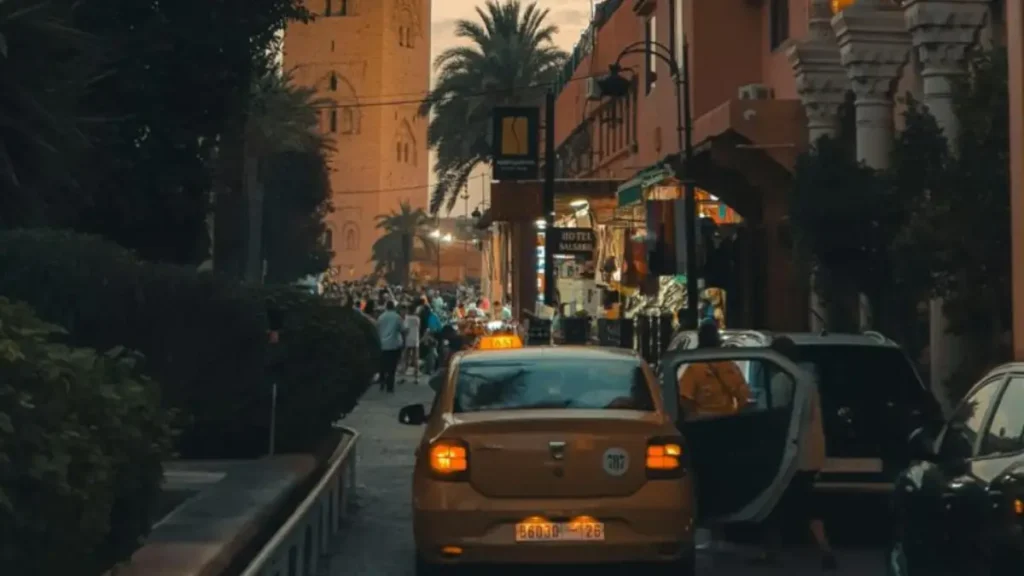
Petit taxis are small, city-based vehicles used for trips between hotels, railway stations, restaurants and attractions.
Their color varies by city. They also have limited luggage space, so one petit taxi may not be practical for a family or several large suitcases.
In cities where meters are normally used, ask politely before the journey begins:
“Compteur, s’il vous plaît.”
In Moroccan Arabic, you can say:
“Afak, compteur.”
If the driver does not use a meter, confirm the total fare before entering. Make sure the amount is in Moroccan dirhams and applies to the entire journey rather than each passenger.
I recommend carrying small notes because drivers do not always have change for large bills.
Taking a Taxi From Marrakech Airport
Marrakech Menara Airport has an official taxi station, and fares should be displayed at the airport taxi area.
Use the official counter or taxi rank rather than accepting an unsolicited offer inside or outside the terminal. Confirm:
- Your exact destination
- The total fare
- Whether the vehicle can carry your group and luggage
- The nearest vehicle-accessible point if your riad is inside the Medina
A taxi may not be able to reach the door of a Medina riad. Ask your accommodation for the nearest gate or drop-off point before arriving.
For detailed arrival options, taxi advice and Medina drop-off points, see my Marrakech Airport to Medina guide.
Do Ride Apps Work in Morocco?
Ride apps can be available in Morocco, but coverage and driver availability vary by city and time of day.
Careem officially lists Morocco among its active ride regions. inDrive also operates in Morocco and allows riders and drivers to agree on a proposed fare through the app.
An app can be useful because it shows:
- The proposed or estimated price
- Driver and vehicle information
- Pickup location
- Trip details
- A digital record of the journey
Do not make a ride app your only plan for a late-night airport journey or an important connection. Availability can change, pickup areas may be confusing and mobile data is required.
Keep an official taxi or prearranged transfer as a backup.
Grand Taxis Between Towns
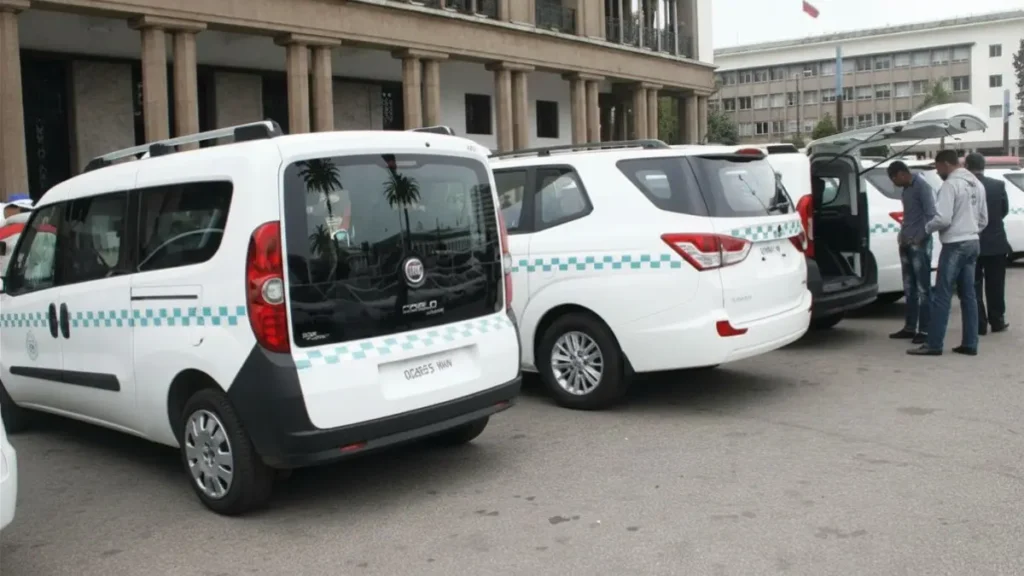
Grand taxis connect towns, villages and destinations beyond normal city taxi boundaries. They usually operate from designated taxi stands and follow established regional routes.
A shared grand taxi normally leaves when enough passengers have paid for the available seats. This makes it affordable, but the waiting time is unpredictable.
Before entering, ask:
- Where the taxi finishes
- Whether the fare is per person
- How much luggage costs, if anything
- Whether you must change taxis
- How long the driver expects to wait
Travelers who do not want to wait can sometimes pay for several seats or hire the entire vehicle. Confirm the full-vehicle price before departure.
Grand taxis are useful for routes such as Marrakech to Imlil and for shorter regional connections. For a long journey with several bags, a scheduled coach or professional private transfer is normally more comfortable.
Do not rely on an old online grand-taxi price. Fares can vary according to the route, vehicle, passenger demand and whether you share or hire the whole taxi.
Renting a Car in Morocco: When Does It Make Sense?
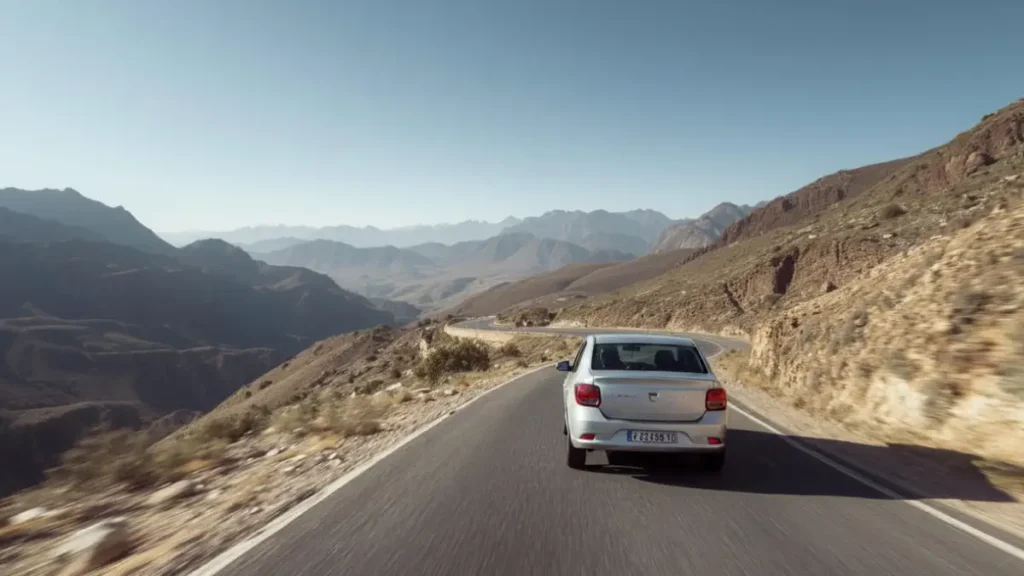
Renting a car in Morocco is most useful when the journey matters as much as the destination.
A car gives you flexibility in the Atlas Mountains, along quieter coastal roads and through rural areas where buses are limited. It is much less useful when your itinerary focuses on Marrakech, Casablanca, Rabat, Tangier and Fes, because trains and taxis usually make those city-to-city journeys easier.
Routes Where a Rental Car Can Be Useful
I normally consider self-driving for:
- The Atlantic coast between El Jadida, Oualidia, Essaouira and Agadir
- The Ourika Valley, Ouirgane and other Atlas Mountain areas
- Ouarzazate, Skoura, the Dades Valley and Todra Gorge
- The Draa Valley and routes around Agdz or Zagora
- Rural destinations with limited scheduled transport
A normal rental car is sufficient for most paved tourist routes. A four-wheel-drive vehicle becomes relevant only when the route genuinely includes rough tracks or remote off-road areas.
Do not assume that renting a four-wheel drive gives you the experience to cross isolated desert terrain safely.
Where I Would Avoid Driving
I do not normally recommend keeping a rental car while staying inside:
- Marrakech Medina
- Fes Medina
- Central Casablanca
- Central Tangier
- Rabat’s historic center
Parking can be inconvenient, city traffic is demanding and many riads cannot be reached directly by car.
A better arrangement is often to collect the vehicle when leaving the city and return it before beginning another city stay.
If Marrakech is your starting point, my detailed car rental Marrakech guide explains airport versus Gueliz pickup, deposits, insurance and the checks to complete before driving away.
Rental Car or Private Driver?
| Choose a rental car when | Choose a private driver when |
|---|---|
| You are comfortable driving abroad | You want to concentrate on the scenery |
| You want complete independence | You prefer door-to-door transport |
| You are planning a slower road trip | The itinerary has several long driving days |
| You are confident using mountain roads | You are traveling with children or older relatives |
| You are comfortable handling parking and navigation | You want help with stops and local logistics |
Self-driving is usually cheaper than hiring a private driver, but it also means the driver in your group cannot relax during long road days.
Driving Licence and Rental Requirements
Licence requirements depend on the country that issued your licence and the rental company’s rules.
British travelers currently need both their UK driving licence and a 1968 International Driving Permit. Travelers from other countries should confirm whether an IDP is required with their rental company or the relevant Moroccan consular authority.
Rental companies may also require:
- A minimum driver age
- At least one year of driving experience
- A passport
- A physical driving licence
- A credit card in the main driver’s name
- A refundable security deposit
Do not rely only on a booking platform’s summary. Ask the actual rental company to confirm the documents, deposit and licence requirements in writing.
For current road-safety and licence information, consult the official Morocco travel advice from the UK government.
Rental Car Insurance and Pickup Checklist
Before accepting the vehicle, check what the rental price actually includes.
Important questions include:
- What is the insurance excess?
- Does the policy cover glass, tires, wheels and the underside of the car?
- Are unpaved roads excluded?
- Is roadside assistance included?
- Are additional drivers covered?
- What happens after an accident or mechanical problem?
- What deposit will be blocked on the card?
- When should the deposit be released?
“Full insurance” can mean different things. Read the exclusions rather than relying on the name of the package.
At pickup, photograph or record:
- Every side of the vehicle
- Existing scratches and dents
- Windshield and windows
- Wheels and tires
- Fuel level
- Dashboard warning lights
- Interior condition
- Odometer reading
Make sure all existing damage appears on the rental form before signing.
Keep the rental agreement, insurance documents and emergency telephone number inside the vehicle.
What Driving in Morocco Is Actually Like
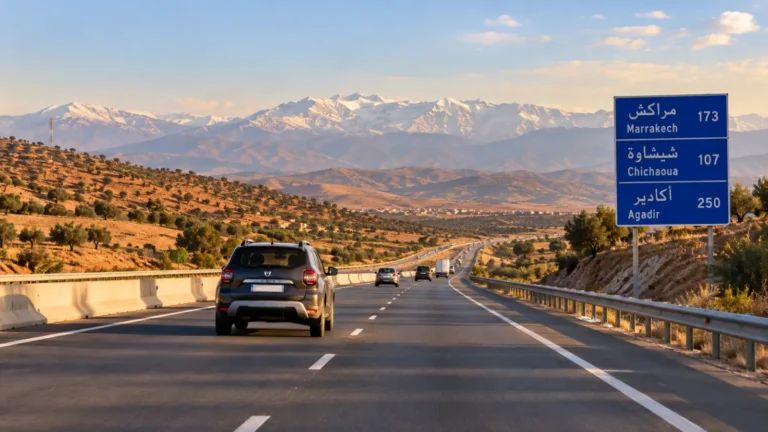
Motorways between the major cities are generally the easiest roads for visitors. Driving becomes more demanding in crowded city centers, on mountain roads and after dark.
Expect:
- Police checks and speed controls
- Trucks moving slowly on hills
- Pedestrians and scooters near towns
- Animals or carts on rural roads
- Sharp bends and limited visibility in the mountains
- Longer journey times than a map may suggest
Avoid driving at night when possible. Poor lighting makes pedestrians, bicycles, animals and slow vehicles harder to see, particularly outside the major cities.
Mountain weather also matters. Rain, snow, fog or flooding can affect secondary roads and passes, so check current conditions before leaving.
My advice is simple: use a rental car for flexibility, not to squeeze more destinations into an already rushed itinerary.
Getting to the Sahara: Bus, Shared Tour, Private Driver or Self-Drive?
There is no passenger train to Morocco’s main Sahara destinations.
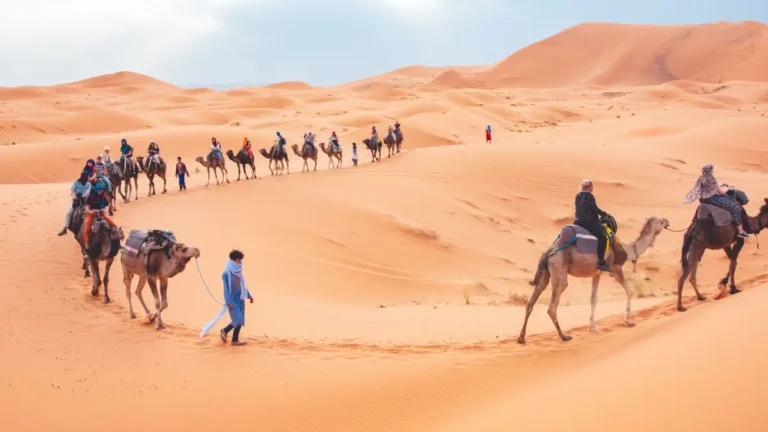
For Merzouga and the Erg Chebbi dunes, travelers normally choose between a scheduled coach, a shared desert tour, a private vehicle with a driver or a rental car. Erg Chigaga is more remote and requires an off-road transfer for the final approach.
The right choice depends on whether you only need transportation or want the journey through southern Morocco to be part of the experience.
| Option | Best for | Main advantage | Main limitation |
|---|
| Scheduled coach | Independent and budget travelers | Lowest-cost transport to Merzouga | Camp, meals and local transfers must be arranged separately |
| Shared desert tour | Travelers prioritizing price and simple booking | Transport and basic accommodation are commonly packaged together | Fixed stops, limited flexibility and long driving days |
| Private driver | Families, couples and customized itineraries | Door-to-door travel with flexible pacing | Higher cost than public transport |
| Rental car | Confident drivers planning a slower road trip | Full independence on the paved route | The driver cannot relax, and camp access may require an additional transfer |
| Erg Chigaga 4×4 journey | Travelers seeking a more remote desert | Off-road access to quieter dunes | Longer approach and fewer public-transport options |
Taking a Bus to Merzouga
A scheduled coach can take independent travelers to Merzouga without joining a tour. Supratours lists Merzouga among its destinations, but departure cities, schedules and fares must be checked for the exact travel date.
This option provides transportation rather than a complete desert experience. You will still need to arrange:
- Accommodation in Merzouga or Hassilabied
- Transport to your desert camp
- Camel ride or alternative dune transfer
- Meals not included by the accommodation
- Return or onward transportation
A coach is practical for travelers with flexible itineraries who are comfortable organizing each part separately. It is less suitable when you have only three days from Marrakech and want to include Aït Ben Haddou, the valleys and a desert camp.
Shared Desert Tours From Marrakech
A shared tour is usually the least expensive way to combine transportation, overnight accommodation and a desert camp.
The common three-day Marrakech–Merzouga route crosses the High Atlas and continues through Ouarzazate, the Dades area, Todra Gorge and the southeast before reaching Erg Chebbi.
The main trade-off is time. Stops are fixed, the group follows one schedule and much of the final day is spent returning to Marrakech.
Before booking, confirm:
- Maximum group size
- Vehicle type
- First-night accommodation
- Whether the desert tent has a private bathroom
- Meals included
- Entrance fees and local guides
- Camel ride or alternative camp transfer
- Luggage arrangements
- Marrakech return time
- Whether the tour can finish in Fes instead
My detailed 3 Day Desert Tour From Marrakech guide explains the route, driving reality, typical inclusions and common additional costs.
Private Driver for a Sahara Route
A private driver gives you more control over departure times, photo stops, meals and overnight accommodation.
The vehicle may be an air-conditioned SUV, minivan or another private vehicle suited to the group. A four-wheel drive is not automatically necessary for the paved journey to Merzouga.
The main advantages are:
- Door-to-door pickup
- Flexible stops
- More control over the daily pace
- Easier travel with children or several bags
- Choice of standard or upgraded accommodation
- Ability to finish in Fes instead of returning to Marrakech
A private journey does not make the distances shorter. Marrakech to Merzouga still involves long road days, especially on a three-day return itinerary.
When possible, I normally recommend four days rather than three. The additional day creates more time for the valleys, kasbahs and desert instead of treating each place as a short roadside stop.
For a comparison of routes and tour styles, see my Best Sahara Desert Tours From Marrakech guide.
Can You Drive Yourself to Merzouga?
Yes. The normal road route reaches Merzouga on paved roads, so an ordinary rental vehicle is sufficient for most independent travelers.
Self-driving makes the most sense when you have at least four days and are comfortable with:
- High Atlas mountain roads
- Long driving stages
- Police controls and speed limits
- Navigation through towns
- Parking and luggage security
- Changing weather and road conditions
Do not attempt to drive an ordinary rental car onto dunes or unfamiliar desert tracks.
Most camps arrange the final transfer from Merzouga or Hassilabied by camel or four-wheel drive. Confirm the meeting point, parking and luggage arrangements before arriving.
Merzouga or Erg Chigaga?
Merzouga sits beside Erg Chebbi and is the easier desert to reach independently. Paved roads reach the settlements beside the dunes, and there is a broad choice of hotels, guesthouses and camps.
Erg Chigaga is more remote. The final approach from the M’Hamid or Foum Zguid area crosses off-road desert tracks and normally requires a suitable four-wheel-drive vehicle with someone who knows the route.
Choose:
- Merzouga and Erg Chebbi for easier logistics, more accommodation choices and a first Sahara experience.
- Erg Chigaga for greater isolation, fewer camps and a more adventurous off-road journey.
My Erg Chebbi vs Erg Chigaga comparison explains the practical differences in more detail.
My Sahara Transport Recommendation
Choose a scheduled coach when you only need affordable transportation and have time to organize the desert stay independently.
Choose a shared tour when price matters more than flexibility and you understand that three days from Marrakech will feel rushed.
Choose a private driver when the desert is a major part of your trip, you are traveling with family or you want control over the route and accommodation.
Choose self-driving only when the road trip itself appeals to you and your itinerary allows enough time.
Morkosh Tours currently offers private Merzouga journeys and customized routes toward the quieter Erg Chigaga desert. Travelers can contact me with their dates, group size and next destination, and I will explain which route fits before they make a booking decision.
Traveling Around Morocco During Ramadan and Eid
Public transport continues operating during Ramadan, but the daily rhythm changes.
ONCF trains, CTM coaches, Supratours services and taxis normally remain available. However, departure times, ticket availability, station activity and local transport demand can differ from an ordinary week.
Always check your exact train or bus schedule shortly before traveling. ONCF provides a live timetable and traffic-information service, and CTM publishes current routes and ticket availability through its official booking system.
What Changes Around Iftar?
Iftar is the meal that ends the daily fast at sunset.
During the hour before sunset, roads can become busier as people travel home, shop for food or finish work. At the moment of iftar, streets may become noticeably quieter because many drivers and staff stop to eat.
In my experience, the most difficult time to find a petit taxi is shortly before and during iftar. This is particularly noticeable in busy areas of Marrakech, Casablanca and other large cities.
Plan to:
- Reach your accommodation or restaurant before the pre-iftar rush
- Avoid scheduling an airport transfer exactly around sunset
- Allow more time for city traffic late in the afternoon
- Carry the address and telephone number of your accommodation
- Prearrange transportation when catching a flight, train or ferry
Sunset changes by date and city, so check the local sunset time rather than relying on a general estimate.
Traveling During Eid al-Fitr
The days immediately before and after Eid al-Fitr can be much busier than an ordinary travel period.
Moroccan families travel to spend the holiday together, which can increase demand for:
- Trains
- Long-distance coaches
- Shared grand taxis
- Domestic flights
- Rental cars
Book important journeys early when your dates fall close to Eid. Do not depend on finding several seats together at the station on the day of travel.
Some shops, restaurants and services may open later or close temporarily during the holiday itself. Confirm airport transfers, tours and accommodation arrangements directly.
When Are Ramadan and Eid Dates Confirmed?
Ramadan and Eid follow the Islamic lunar calendar. The exact Moroccan dates are officially confirmed through crescent-moon observation and may differ from preliminary dates shown on international calendars.
Check the latest Moroccan announcement before finalizing travel plans around a religious holiday.
My Visiting Morocco During Ramadan guide explains eating, opening hours, clothing, etiquette and what the experience feels like for a visitor.
Solo Female Travel and Transport in Morocco

Solo women regularly use Morocco’s trains, scheduled coaches and taxis, but it is better to plan transport deliberately rather than assume every option will feel equally comfortable at every hour.
Many women travel around Morocco independently without serious problems. Unwanted attention can still occur, especially when walking alone, waiting at stations or traveling late at night.
Trains and Long-Distance Buses
ONCF trains and established coach companies such as CTM and Supratours are normally the easiest public-transport options for solo travelers.
For a more comfortable journey:
- Book a reserved seat when possible
- Keep your phone and wallet in a closed bag
- Keep important documents and valuables with you
- Confirm the arrival station before departure
- Avoid arriving in an unfamiliar city very late at night
- Arrange the final taxi or accommodation transfer in advance when necessary
On longer train journeys, first class may provide a quieter carriage and more space. It is an option rather than a safety requirement.
Using Taxis Alone
Use an official petit taxi, the airport taxi rank, a reputable ride app where available or a transfer arranged by your accommodation.
Before beginning the journey:
- Confirm the destination
- Ask for the meter or agree on the total fare
- Check that the vehicle and driver match the app details when using an app
- Sit where you feel most comfortable
- Share the journey details with someone you trust when traveling late
- Leave the vehicle if the situation or driving makes you uncomfortable
Do not assume a ride app will always have an available driver. Mobile coverage, pickup restrictions and driver supply vary, so keep an official taxi or accommodation transfer as a backup.
I would avoid joining an unfamiliar shared grand taxi late at night when another practical option is available. During the day, shared grand taxis are widely used, but the seating is close and departure times are unpredictable.
Arriving After Dark
When arriving late at an airport, railway station or coach terminal, prearranging the final transfer can remove unnecessary stress.
Send your accommodation:
- Your flight, train or coach number
- Expected arrival time
- Number of travelers
- Amount of luggage
- A working telephone or WhatsApp number
For a Medina riad, ask for the exact meeting gate or vehicle-accessible drop-off point. A taxi may not be able to reach the door.
Clothing and Unwanted Attention
There is no special transport dress code for women in Morocco.
Loose clothing that covers the shoulders, chest and knees may attract less attention and can feel more comfortable in conservative towns or rural areas. It is advice rather than a legal requirement for ordinary public spaces.
A clear “No, thank you” or “La, shukran” is usually enough when someone is being persistent. Move toward a staffed counter, shop, family group or other busy place when a situation feels uncomfortable.
Current official travel advice also notes that women may receive unwanted attention, particularly when traveling alone. Check the latest UK government Morocco safety advice before departure.
For a fuller discussion of accommodation, clothing, harassment and independent travel, see my Solo Female Travel Morocco Guide 2026.
Reliable mobile data also makes navigation and transport booking easier. My Morocco SIM Card 2026 guide explains the main local options.
Getting Around Morocco in 2026: My Final Recommendation
Getting around Morocco in 2026 is easiest when you combine transport rather than forcing one method to cover the whole trip.
Use ONCF trains between major cities such as Tangier, Rabat, Casablanca, Meknes, Fes and Marrakech. Add CTM or Supratours coaches for destinations outside the railway network, including Chefchaouen and Essaouira.
Inside cities, petit taxis are usually the most practical choice. For the Atlas Mountains, rural coast, southern valleys and Sahara routes, consider a rental car or private driver according to your experience, budget and desired pace.
A rental car works best for travelers who genuinely enjoy independent road trips. A private driver is more suitable when the itinerary includes several long road days, children, substantial luggage or complicated hotel changes.
The most common planning mistake I see is adding too many distant places because the driving times look manageable on a map. A route can be technically possible and still leave you exhausted.
Shwiya b’shwiya works well in Morocco. Travel a little more slowly, allow time for connections and choose the transport that suits each section.
For help building a realistic route, start with my Morocco Itineraries guide. Travelers who prefer a private customized journey can also contact me through Morkosh Tours with their dates, group size and preferred destinations. to reach out to me through Morkosh Tours. I spend half my life optimising itineraries like that.
FAQs About Getting Around Morocco
What is the best way to get around Morocco?
The best method is usually a combination of trains, scheduled coaches and local taxis.
Use ONCF trains for major cities, CTM or Supratours for destinations without railway service, and petit taxis for journeys inside cities. A rental car or private driver becomes more useful for mountain, coastal and Sahara routes.
Can you travel around Morocco without renting a car?
Yes. Most first-time itineraries can be completed without a rental car.
Trains connect the major northern and central cities, while scheduled coaches reach destinations such as Chefchaouen, Essaouira and Merzouga. Local taxis and occasional private transfers can cover the remaining sections.
Should I book Morocco train tickets in advance?
Advance booking is sensible for popular departures, weekends, holidays and journeys with important onward connections.
Availability, fares and ticket conditions vary by train and date. Check the official ONCF Voyages platform for the exact journey rather than relying on an old timetable or price.
Should I choose CTM or Supratours?
Choose the company with the most convenient direct route, departure time and station for your plans.
CTM has a broad national coach network. Supratours complements the railway system and can be especially useful when continuing by road beyond a train station.
Are petit taxis and grand taxis the same?
No. Petit taxis operate inside one city and are used for short urban journeys.
Grand taxis connect towns, villages and surrounding areas. They may operate as shared vehicles or be hired privately for the whole journey.
Are ride apps available in Morocco?
Ride-app availability varies by city, pickup point and time of day.
They can be useful for seeing driver details and a proposed fare, but they should not be your only plan for an airport transfer, late arrival or important connection. Keep an official taxi or prearranged transfer as a backup.
Is driving in Morocco difficult?
Motorways and main intercity roads are manageable for confident drivers accustomed to driving abroad.
City centers, Medina areas, mountain roads and night driving can be more demanding. Rent a car for genuine route flexibility, not simply to add more destinations to a rushed itinerary.
Do I need a four-wheel-drive vehicle for Merzouga?
No. The normal route to Merzouga and the settlements beside Erg Chebbi uses paved roads.
A four-wheel-drive transfer may be needed for the final journey to certain camps. Confirm the meeting point, parking and camp-transfer arrangements before arrival.
Is a private driver worth it in Morocco?
A private driver can be worthwhile for families, travelers with limited time and itineraries involving the Atlas Mountains, southern valleys or Sahara.
The main benefit is not faster driving. It is simpler luggage handling, door-to-door transportation, flexible stops and a route planned around your pace.
What is the easiest transport option for families?
Families often find trains comfortable between the major cities and private transfers useful for destinations beyond the railway.
When comparing options, consider the number of transfers, luggage, child seats, arrival times and the distance between stations and accommodation. The cheapest ticket is not always the easiest overall journey.
Can I take public transport to the Sahara?
Yes. Scheduled coaches can reach Merzouga, but they provide transportation rather than a complete desert experience.
You must arrange accommodation, camp access, meals and activities separately. A shared tour or private driver may be easier when you have limited time or want the southern route to be part of the experience.
Is public transport reduced during Ramadan or Eid?
Trains, coaches and taxis normally continue operating during Ramadan, but demand, departure times and local transport patterns may change.
Travel can become particularly busy around Eid. Verify each journey directly and reserve important tickets or transfers early.