
Meknes is one of Morocco’s most rewarding imperial cities for travelers who want major history without the intensity of Marrakech or Fes. It has monumental gates, royal granaries, a compact medina, traditional crafts and a more relaxed local rhythm. In my experience as a licensed Moroccan guide, it is also generally more affordable and less pressured by tourism than Morocco’s busiest historic cities.
This Meknes travel guide explains what to see, how long to stay, how to get around and why it makes sense to combine a visit with Volubilis and Moulay Idriss Zerhoun.
Table of Contents
Table of Contents
Is Meknes worth visiting?
Yes, especially if you enjoy architecture, history and everyday Moroccan city life more than nightlife or large-scale shopping. Meknes became an imperial capital under Sultan Moulay Ismail, who ruled from 1672 to 1727. The UNESCO World Heritage listing for historic Meknes recognises the city’s exceptional 17th-century imperial planning. During his long reign, Moulay Ismail built monumental walls, palace complexes, military facilities, granaries and water infrastructure on a grand scale.
His ambition was to create a royal capital comparable in grandeur to major European courts, including Versailles. That imperial vision still defines Meknes today, even though much of the palace city is no longer accessible or has changed over time.
Meknes is a good choice for:
- Travelers looking for a calmer alternative to Fes and Marrakech.
- Visitors interested in Morocco’s imperial history and traditional architecture.
- Couples, families and independent travelers who prefer a manageable medina.
- Anyone planning to visit Volubilis and Moulay Idriss Zerhoun.
- Travelers on a moderate budget who want riad stays, local food and historic sites without the higher costs often found in Morocco’s most visited cities.
Do not visit Meknes expecting the huge nightlife scene of Marrakech or the labyrinthine intensity of Fes. Its appeal is different: quieter streets, a lived-in medina, strong craftsmanship and reminders of one of Morocco’s most ambitious royal building projects.
How long should you stay in Meknes?
A full day is enough for the principal monuments, the medina and an evening in Place El Hedim. However, I recommend one or two nights if you want to see Meknes at a relaxed pace and include Volubilis and Moulay Idriss Zerhoun without rushing.
If you only have three or four hours
Start at Place El Hedim and Bab Mansour, then continue to the Mausoleum of Moulay Ismail. From there, take a short petit taxi or a traditional horse carriage to Heri es-Souani and Sahrij Swani. Finish with a short walk through the medina souks or a visit to Bou Inania Madrasa if time allows.
This is enough to understand the city’s imperial character, but you will not have time to explore it deeply.
A practical one-day Meknes itinerary
For a complete day in Meknes, I suggest beginning around 9 AM:
- Start at Bab Mansour and Place El Hedim.
- Visit the Mausoleum of Moulay Ismail, subject to access conditions.
- Continue to Heri es-Souani, the Royal Stables and Sahrij Swani.
- Stop for a traditional Moroccan lunch.
- Visit Bou Inania Madrasa and Dar Jamai Museum if open.
- Explore the souks and artisan workshops in the medina.
- Return to Place El Hedim in the evening, when local families, food vendors and cafés bring the square to life.
Stay two nights if you want to add Volubilis
Two nights are ideal for travelers who want to experience Meknes after sunset and take a proper excursion to Volubilis and Moulay Idriss Zerhoun. That combination is one of the best historical circuits in northern Morocco.
Start at Bab Mansour and Place El Hedim
Bab Mansour: Meknes’ great ceremonial gate
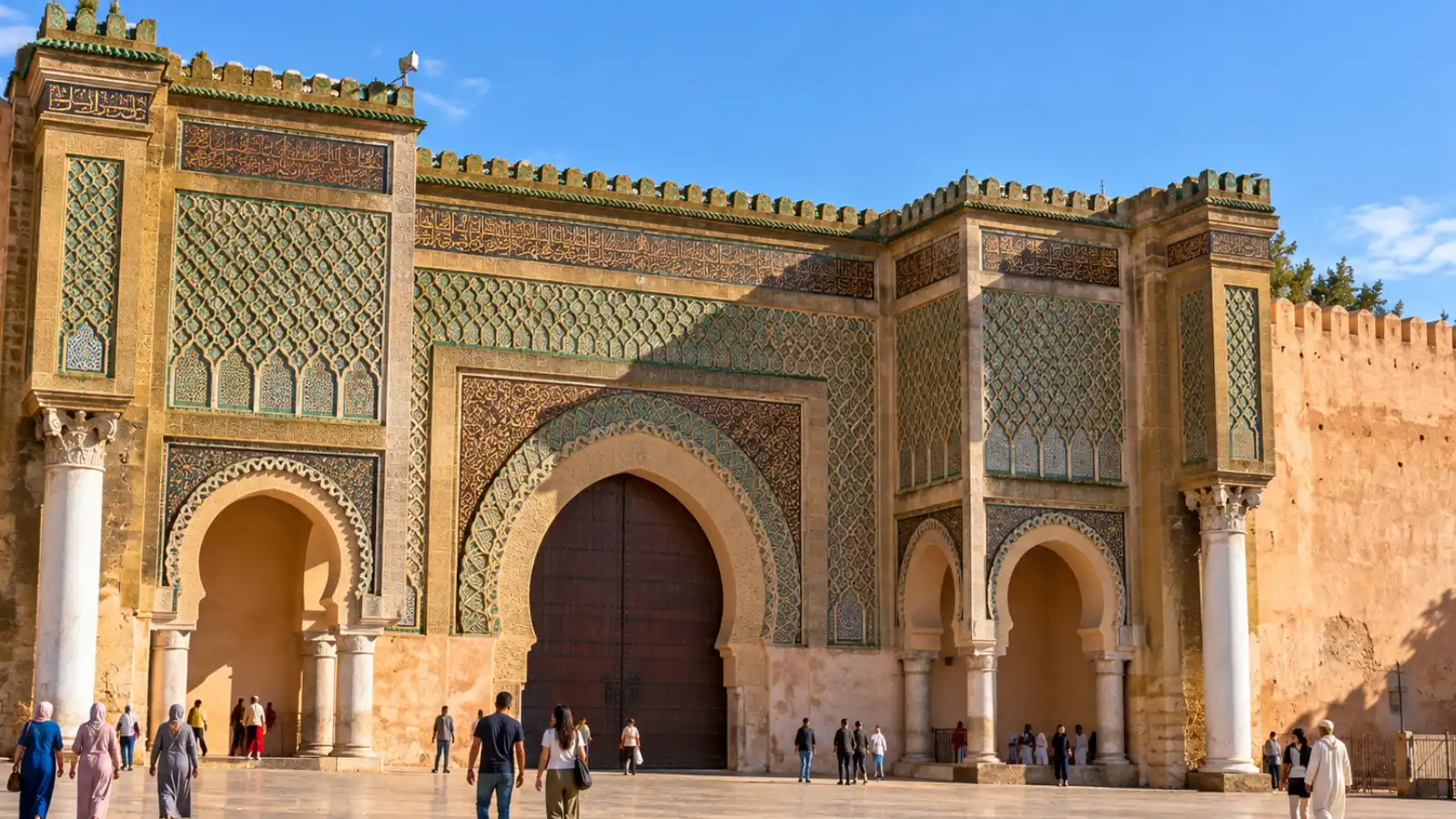
Bab Mansour is one of Morocco’s most impressive city gates and the architectural symbol most travelers associate with Meknes. Completed in 1732, after Moulay Ismail’s reign, it was designed as a monumental entrance to the imperial city.
Its central arch, carved stucco, intricate zellige tilework and marble columns deserve more than a quick photograph. I recommend allowing around 20 to 30 minutes to appreciate the details and understand why the gate was meant to project royal power.
The gate is best admired from Place El Hedim. Access to any interior areas or exhibitions depends on current arrangements, and restoration work has periodically affected the façade and surrounding access.
Place El Hedim: the best place to feel Meknes after sunset
Place El Hedim is the historic public square facing Bab Mansour. Its name is linked to demolition associated with Moulay Ismail’s reshaping of the city and construction of the imperial capital.
During the day, the square is relatively calm and practical for photography, visiting nearby covered markets and entering the medina. In the late afternoon and evening, it becomes much livelier. Local families gather, vendors set up stalls and the atmosphere becomes similar to a quieter, more local version of Marrakech’s Jemaa el-Fnaa.
One of my favorite simple experiences here is having mint tea on a terrace overlooking the square. It is an easy way to rest between sightseeing and watch the city change pace as evening arrives.
Visit the monuments built for Moulay Ismail’s imperial capital
Mausoleum of Moulay Ismail
The Mausoleum of Moulay Ismail is an essential stop for understanding Meknes. It contains the tomb of the sultan who transformed the city into an imperial capital, and its courtyards, carved plaster, zellige and traditional craftsmanship are worth studying carefully.
Non-Muslim visitors have traditionally been allowed into designated sections of the complex, though access to the tomb chamber and some religious areas may be restricted. Dress modestly, remove shoes if requested and be particularly respectful around prayer times and on Fridays.
Historical accounts connect the mausoleum with diplomatic exchanges between Morocco and France, including stories involving antique clocks associated with Louis XIV. These stories are interesting, but their precise provenance and current display should be confirmed before relying on them during a visit.
Heri es-Souani and the Royal Stables
Heri es-Souani and the nearby Royal Stables are among the most important places to visit in Meknes. They reveal the logistical side of Moulay Ismail’s imperial ambitions.
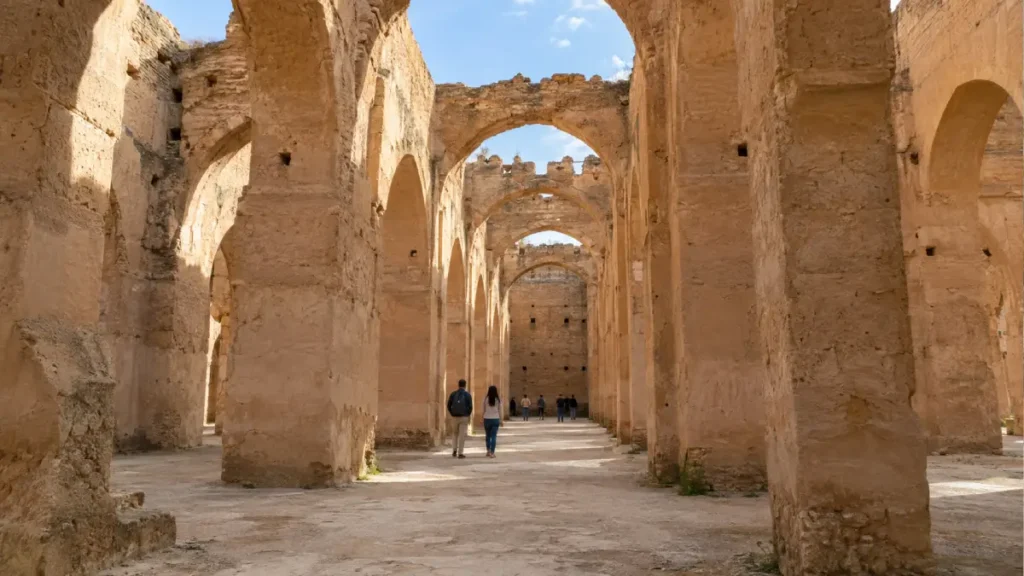
The massive granaries have thick walls and high vaulted chambers designed to store food under relatively cool conditions. Nearby ruined stable structures are associated with the royal cavalry and show the vast scale of the military infrastructure needed to support the sultan’s court and forces.
Historical earthquakes damaged parts of the complex, and restoration has taken place at different times. Even when sections are restricted, the scale of the surviving architecture helps visitors understand that Meknes was not simply a palace city; it was a carefully planned imperial and military centre.
Sahrij Swani and the importance of water
Sahrij Swani, also called the Agdal Basin, is a large historic reservoir connected to the imperial complex. It illustrates the importance of water storage in a city built to support royal households, military operations and extensive palace grounds.
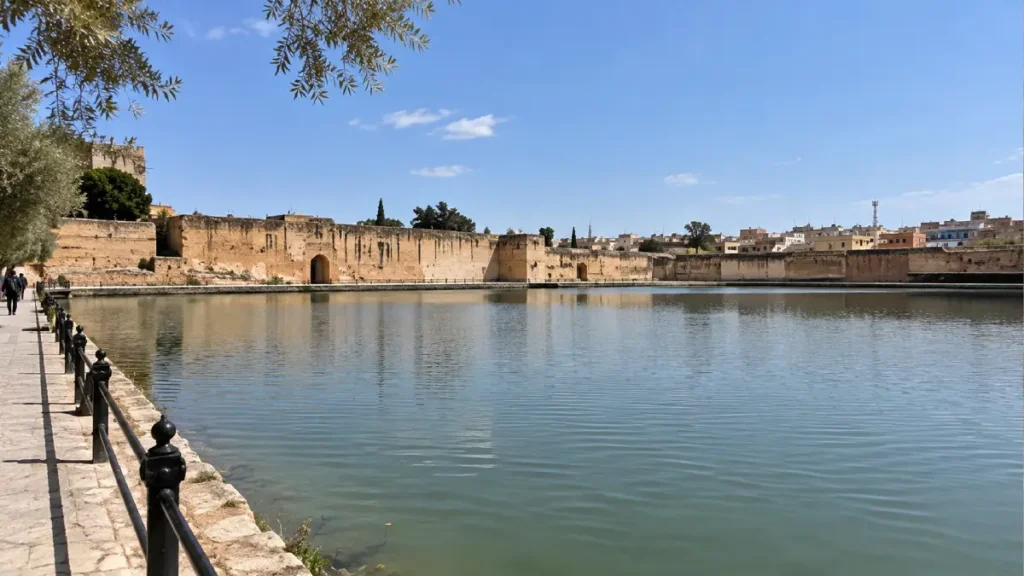
The basin, granaries and stable complex are close enough to visit together. The walk from Place El Hedim is manageable for many visitors, but it is around one to one and a half kilometres from the main medina sights. A short taxi or caleche ride is worthwhile in hot weather, for families with young children or for travelers with limited mobility.
Explore Meknes Medina beyond the main square
Meknes Medina is more compact and less overwhelming than the medinas of Fes or Marrakech. It remains a working commercial area where residents shop for food, spices, household goods and traditional products.
Start with the lanes branching from Place El Hedim, then allow yourself time to wander through food markets and smaller workshops. Look for local olives, olive oil, preserved lemons, spices, leather slippers, carpets and carved wooden objects.
Look for Meknes damascening workshops
One of the city’s most distinctive crafts is damascening, known locally as damasquinerie. Artisans inlay fine silver wire into dark iron or steel, creating detailed decorative patterns on trays, jewellery boxes, ornaments and other objects.
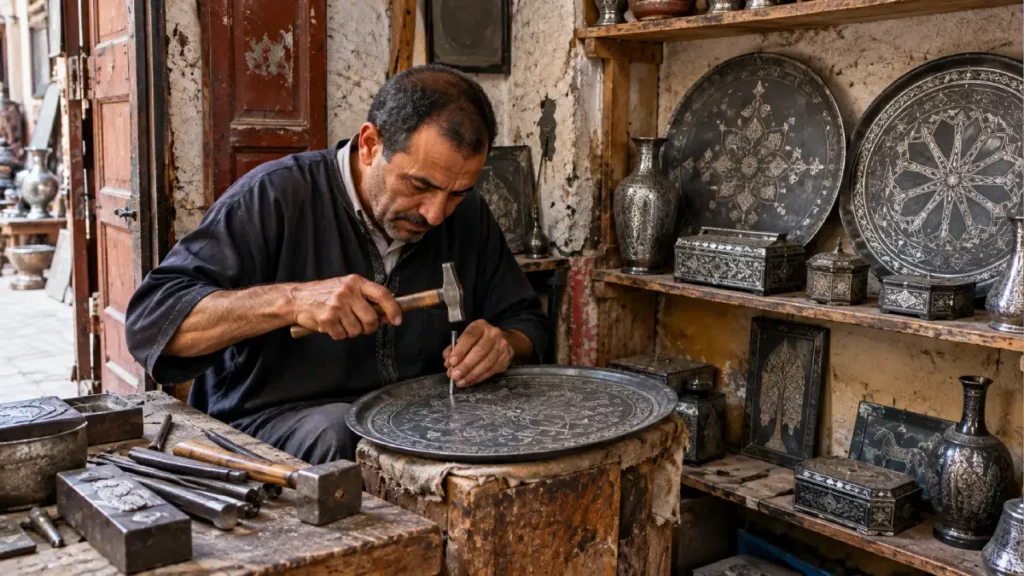
Watching the technique being demonstrated is much more meaningful than buying from a conventional souvenir shop. If you are interested in craft traditions, ask politely before taking photographs and agree on prices before purchasing anything.
Bou Inania Madrasa
Bou Inania Madrasa is a Marinid-era religious school dating from the 14th century. It is known for its carved cedarwood, detailed stucco decoration, traditional tilework and attractive central courtyard.
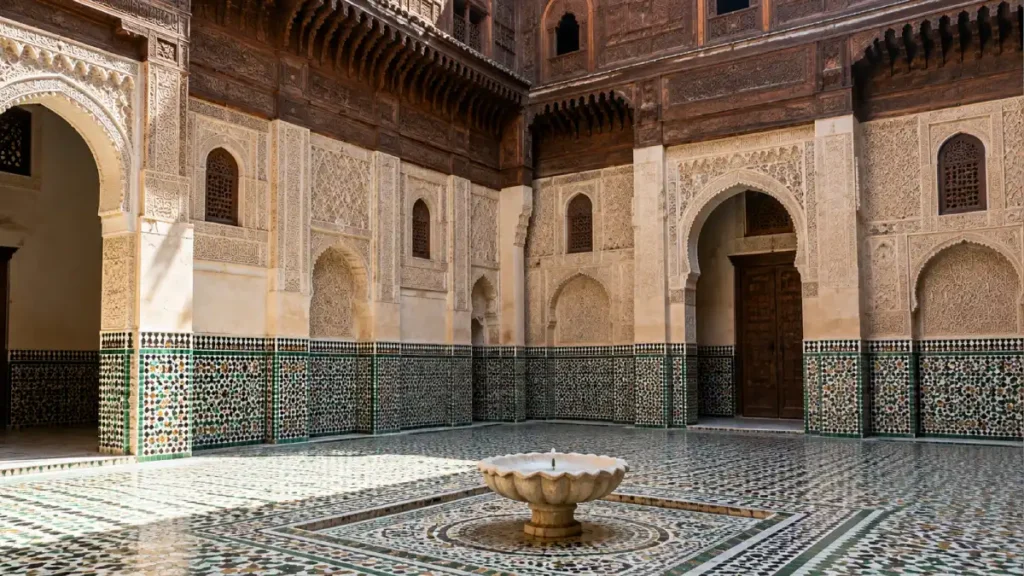
When rooftop access is permitted, the views across the medina can be excellent, including views toward the green-tiled roof of the Grand Mosque. There are stairs and uneven surfaces, so it may not suit every visitor with mobility limitations.
Dar Jamai Museum
Dar Jamai Museum occupies a historic 19th-century palace near Place El Hedim. It is a worthwhile stop for travelers interested in Moroccan arts, architecture, musical instruments, jewellery, carpets and metalwork.
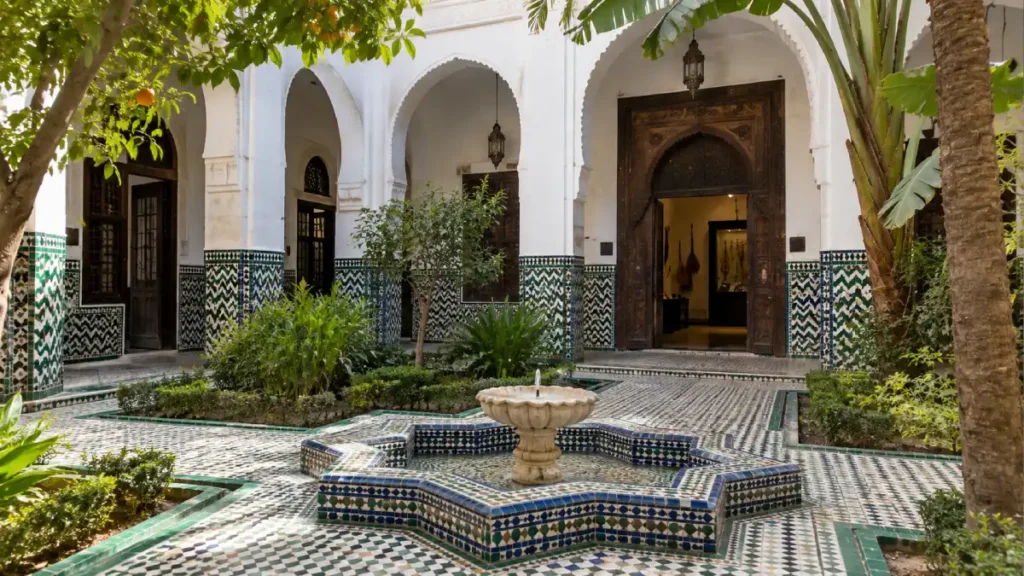
It is particularly useful for visitors who want more context for the crafts seen in the medina, rather than treating the souks only as shopping areas.
Other worthwhile places in Meknes
If you have extra time, consider adding:
- Place Lalla Aouda, a peaceful historic square close to the imperial monuments.
- Borj Bel Kari, a historic defensive tower associated with ceramic and pottery exhibitions.
- The walls around Agdal Basin, which can be pleasant for evening views and may offer sightings of nesting storks.
- Medina rooftops, especially around Bou Inania Madrasa when access is available.
Combine Meknes with Volubilis and Moulay Idriss Zerhoun
From my guiding experience, the best historical excursion from Meknes combines Volubilis and Moulay Idriss Zerhoun. Both lie northwest of the city, roughly 30 to 40 minutes away by road depending on the destination, traffic and route conditions.
For a full day covering all three places, I recommend departing Meknes around 7:30 to 8 AM. This gives you enough time to visit the archaeological site properly, explore Moulay Idriss without rushing and return to Meknes before the evening.
Volubilis: Morocco’s Roman archaeological site
Volubilis is a UNESCO World Heritage archaeological site covering a large area of former Mauretanian and Roman settlement. It is one of the country’s most important ancient sites and is far more rewarding with historical explanation than with a quick independent walk.
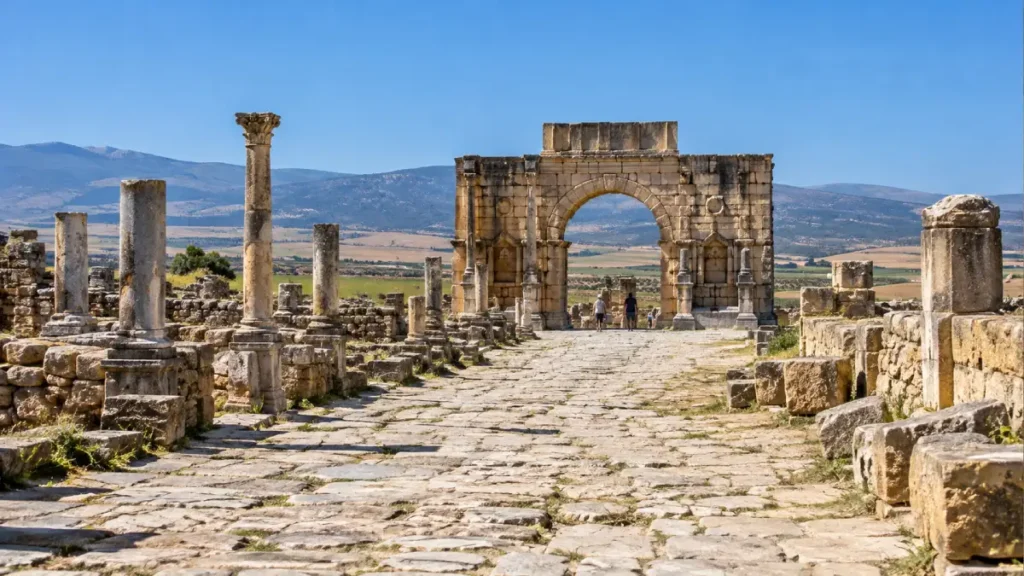
Allow at least one and a half to two hours. Important features include:
- The Triumphal Arch of Caracalla.
- The Capitol and Basilica.
- The Decumanus Maximus, the former main street.
- Roman olive presses and bathhouse remains.
- Floor mosaics associated with the House of Orpheus, the Labours of Hercules and the House of Dionysus.
I recommend hiring an official licensed site guide if your budget allows. The ruins become much more interesting when someone explains the buildings, Roman daily life, mythology, olive production and the wider archaeological significance of the site.
For full admission details, site highlights, guides and travel options, read my Volubilis archaeological site guide.
Moulay Idriss Zerhoun
Moulay Idriss Zerhoun is a whitewashed pilgrimage town built across hills above the surrounding valley. It is associated with Moulay Idriss I, founder of the Idrisid dynasty, and remains an important religious destination.
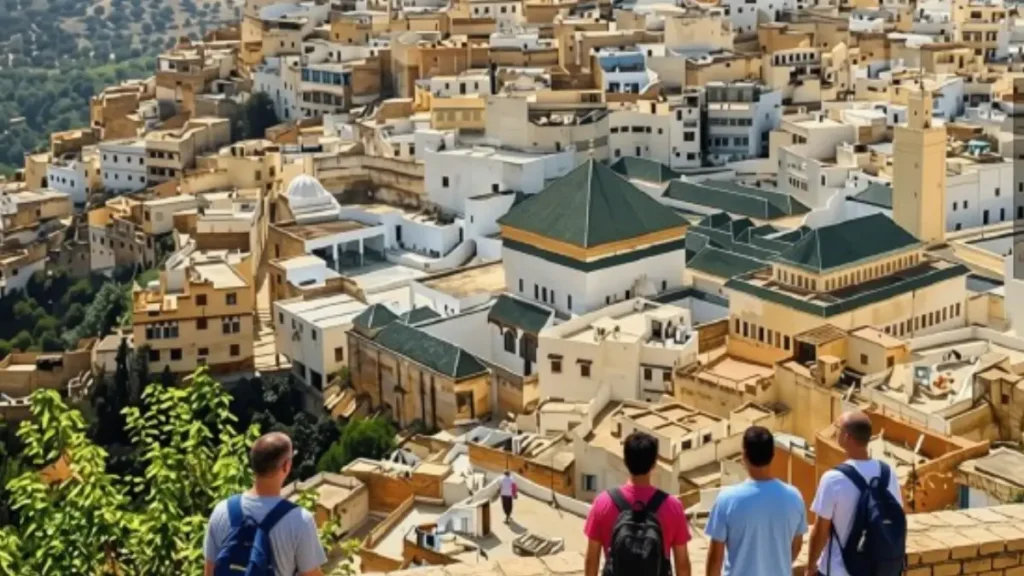
Allow around one to one and a half hours to walk its streets, see local markets and enjoy views across the Zerhoun hills. The town is also known for its unusual cylindrical minaret.
The sacred mausoleum complex has religious access restrictions, and non-Muslim visitors should not enter prohibited areas. Respectful clothing and behaviour are especially important here.
Transport for the Volubilis circuit
Private transport is the easiest way to combine Meknes, Volubilis and Moulay Idriss on the same day. A grand taxi may be arranged with waiting time, but prices vary according to negotiation, vehicle condition, route and season.
For a private grand taxi with waiting time, ask for a complete return-journey quotation before departure; reported planning estimates of 250–400 MAD are not a confirmed current fare. The Moroccan Ministry of Culture’s official Volubilis ticket page lists admission at 100 MAD for foreign adults, 50 MAD for foreign children aged 7–13, and 30 MAD for Moroccan or resident adults (10 MAD for Moroccan or resident children aged 7–13). It lists visitor hours of 9 AM–5 PM. Guide fees are arranged separately and should be confirmed on site. Summer heat and holiday arrangements can affect your plan.
Morkosh Tours can discuss customised private transport and licensed-guide arrangements for Meknes, Volubilis and Moulay Idriss Zerhoun. A driver, guide, monument tickets and meals are separate unless included in the agreed quotation.
- Compare guided day tours.
How to get to Meknes from Fes, Rabat, Casablanca and Marrakech
Fes to Meknes by train
For travelers arriving from Fes, the ONCF train is usually the simplest and best-value option. The journey commonly takes around 40 to 50 minutes.
Indicative second-class fares have been around 30 to 45 MAD. Shared grand taxis are another option, often taking around 50 to 60 minutes, though passengers may need to wait until the vehicle fills. Estimated shared-taxi fares have been around 35 to 50 MAD per person.
Driving from Fes via the A2 motorway can take around 45 to 50 minutes under favourable conditions. There are motorway tolls.
For northern Morocco itinerary planning, my Fes travel guide helps compare the two imperial cities. If you are travelling from Fes mainly to visit Meknes and Volubilis, see my best day trips from Fes guide.
Train connections from other major cities
Meknes is also connected by rail to Rabat, Casablanca and Marrakech. Indicative journey estimates are around two hours from Rabat, around three to three hours and 40 minutes from Casablanca, and roughly five hours and 40 minutes from Marrakech depending on the service and connections. Check your date and stations on the official ONCF booking website rather than assuming one fixed journey time. My Morocco train map explains routes and station connections.
The important practical detail is that Meknes has two railway stations:
- Gare de Meknes, serving the modern city.
- Meknes Amir Abdelkader, generally more convenient for the historic medina and central sights.
Always check which station your chosen train serves before booking. Choosing the more convenient station can save time and taxi costs on arrival.
Getting around Meknes: walking, taxis and parking
Most places around Place El Hedim, Bab Mansour, the mausoleum, Dar Jamai and the medina are within comfortable walking distance. The old city is best explored on foot.
For Heri es-Souani, Sahrij Swani and other more distant imperial sites, use a petit taxi or caleche when necessary. Petit taxis for short central journeys have often cost around 10 to 15 MAD, depending on distance and tariff. Ask drivers to use the meter where applicable, or agree on the fare before departing.
If you are arriving by rental car, use designated or supervised parking outside the medina rather than attempting to drive through narrow lanes. Areas around Place El Hedim, Bab Berdieyinne and Bab el Khemis can be practical starting points. Guarded overnight parking has sometimes been available for around 20 MAD, but fees vary.
What to eat in Meknes
Meknes has excellent traditional food, and you can often find better value by walking beyond the most tourist-facing restaurants directly overlooking Place El Hedim.
For more local flavours, places I have recommended include Chez Drissi, Restaurant Aisha and Dar Baraka. Check each restaurant’s current location, hours and menu before making a special trip; a good simple lunch away from the busiest tourist frontage is often enough.
Look for:
- Tagine with local olives and preserved lemons.
- Chicken or almond pastilla.
- Couscous.
- Harira soup.
- Grilled meats.
- Msemen for breakfast or an afternoon snack.
- Olives and olive oil from the Meknes region.
In the evening, the area around Place El Hedim has affordable food stalls and drink vendors. Use the same common sense you would elsewhere: choose busy stalls, check that food is being prepared and served hot, and keep small dirham notes for easy payment.
Where to stay in Meknes
For atmosphere and easy access to the historic sights, choose a traditional riad inside or near the medina. This suits travelers who want historic architecture, rooftop terraces and the ability to walk to Place El Hedim and the main monuments.
The compromise is access. Taxis generally cannot reach narrow riad entrances, so you may need to walk from a drop-off point with your luggage.
For easier vehicle access, elevators and proximity to railway stations, consider a modern hotel in the Ville Nouvelle or Hamria district. This is often more practical for families carrying heavy luggage, business travelers and visitors who prefer modern facilities over a medina setting.
Budget estimates suggest basic accommodation may fall around 200 to 400 MAD per night, while mid-range riads may be around 450 to 900 MAD. Availability and rates change substantially by season and property.
- Compare riads and hotels in Meknes.
- Filter by medina access, parking, steps and luggage arrangements—not only the room photographs.
When to visit Meknes
Spring, from March to May, and autumn, from September to November, are generally the most comfortable periods for sightseeing. Temperatures are more manageable for medina walks and excursions to Volubilis.
Summer can be very hot, sometimes reaching 30 to 40°C or more. If visiting at that time, start outdoor sightseeing early. Volubilis is exposed, with little shade in places, so bring water, sunscreen and a hat. Save the medina, shaded courtyards and evening time in Place El Hedim for later in the day.
Local tips for visiting Meknes comfortably
Meknes is generally one of Morocco’s more comfortable imperial cities for solo visitors, couples and families. The medina has less persistent tourist pressure than some busier destinations, but normal precautions still matter.
Keep these points in mind:
- Politely decline unsolicited guiding services if you do not want them.
- Confirm taxi fares before departure if the meter is not being used.
- Keep small Moroccan dirham notes for taxis, snacks and tips.
- Agree on prices before buying souvenirs or accepting assistance.
- Dress respectfully when visiting religious sites.
- Expect uneven cobblestones, stairs and unshaded routes around historic monuments.
- Use a taxi or caleche to reduce walking distances if travelling with children, elderly relatives or anyone with limited mobility.
- Verify monument access locally before setting out, as restoration and religious schedules can affect visits.
Female solo travelers should remain aware of occasional unwanted comments or approaches, as in many cities, without assuming Meknes is unsafe. Families often enjoy Place El Hedim and Place Lalla Aouda most in the late afternoon, when local residents gather.
Plan Meknes as a calm imperial city, not a rushed stop
The most common mistake I see is treating Meknes as a quick Bab Mansour photo stop before moving on. The gate is outstanding, but the city makes much more sense when you also visit the mausoleum, granaries, reservoir and medina workshops.
Do not skip Heri es-Souani simply because it is farther from the square. It is one of the best places to understand the scale of Moulay Ismail’s imperial project. And if your itinerary permits, combine Meknes with Volubilis and Moulay Idriss Zerhoun rather than trying to fit all three into an overly rushed day.
If Meknes is part of a wider central Morocco route, you may also like my guide to the best day trips from Rabat.
FAQ
Is one day enough for Meknes?
Yes, one full day is enough for Bab Mansour, Place El Hedim, the Mausoleum of Moulay Ismail, Heri es-Souani, Sahrij Swani, the medina and selected museums or religious monuments. Stay one or two nights if you also want to visit Volubilis and Moulay Idriss without rushing.
Can I visit Meknes as a day trip from Fes?
Yes. The train from Fes is usually the simplest option and commonly takes around 40 to 50 minutes. A day trip gives you enough time for the main Meknes sights, but staying overnight provides a more relaxed experience and lets you enjoy Place El Hedim in the evening.
What are the best things to do in Meknes?
The main highlights are Bab Mansour, Place El Hedim, the Mausoleum of Moulay Ismail, Heri es-Souani, the Royal Stables, Sahrij Swani, Bou Inania Madrasa, Dar Jamai Museum and the medina souks. Watching damascening artisans at work is also a memorable cultural experience.
Is Volubilis easy to visit from Meknes?
Yes. Volubilis is normally about 30–40 minutes by road from Meknes. Allow 1.5–2 hours to explore its ruins and allow extra time for Moulay Idriss. As listed by Morocco’s Ministry of Culture, admission is 100 MAD for foreign adults and 30 MAD for Moroccan or resident adults; check the official ticket page for other categories and current hours.
Is Meknes cheaper than Fes and Marrakech?
Meknes is generally a more affordable and relaxed choice than Fes and Marrakech, particularly for accommodation, meals and local transport. Exact costs depend on season, hotel choice, current admission prices and whether you book private excursions.