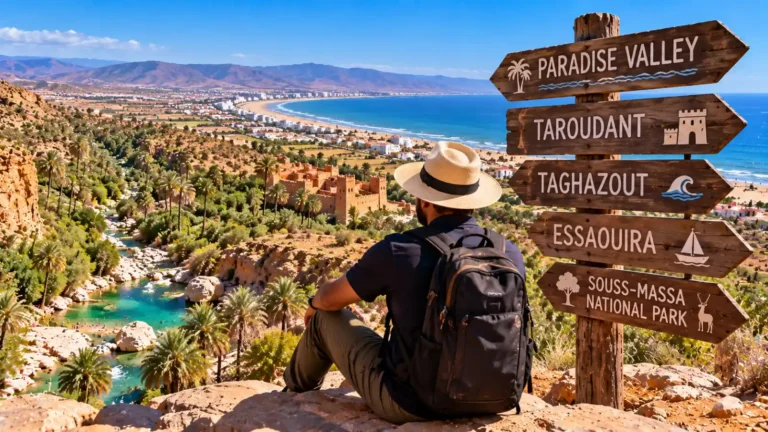

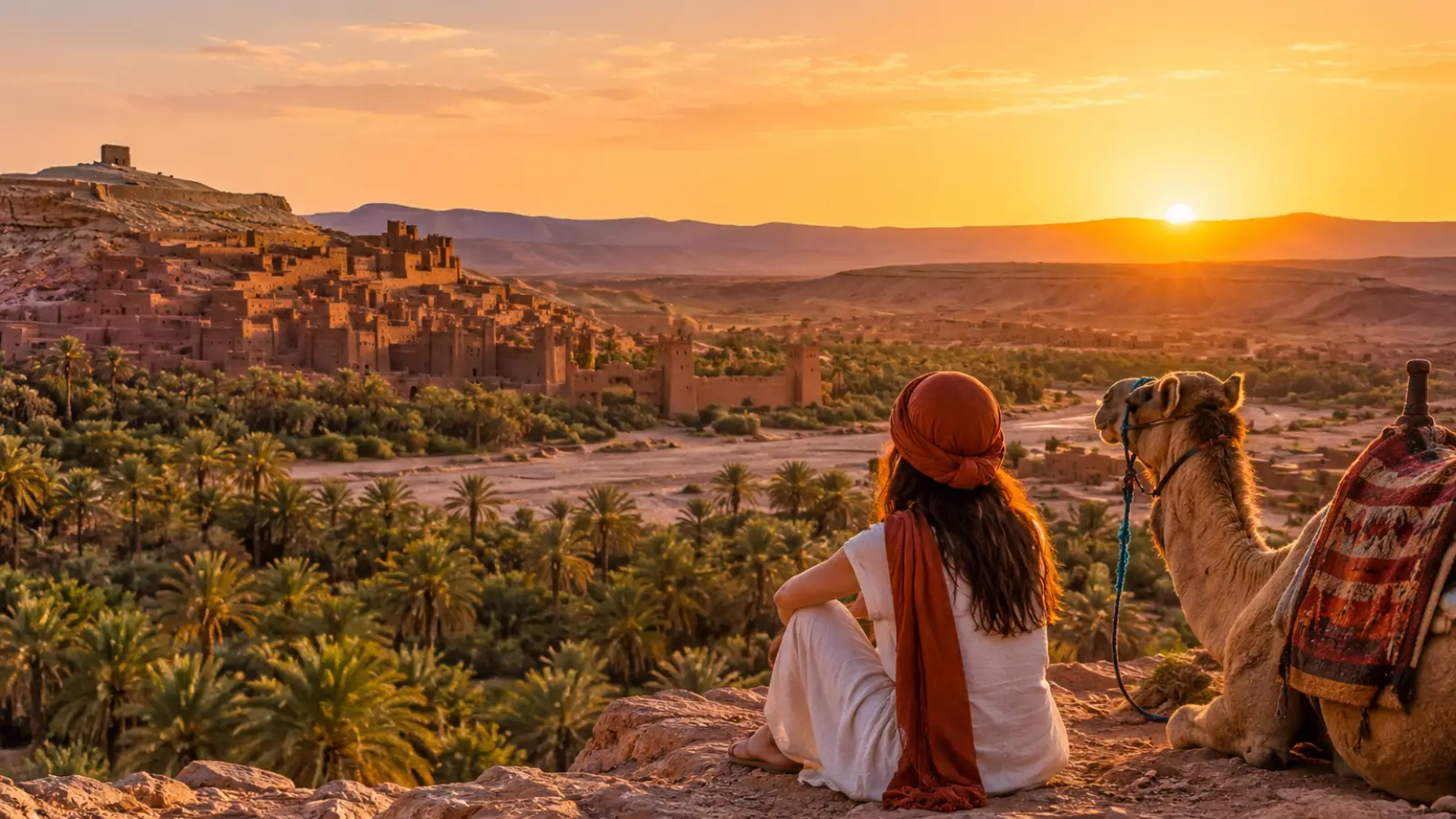
A 2 day desert tour from Marrakech to Zagora is a fast but rewarding way to cross the High Atlas, visit Ait Ben Haddou, follow the palm-lined Draa Valley and spend a night near the desert. It works best for travelers with only two days available who want a short introduction to southern Morocco rather than a long dune-focused Sahara journey.
The trade-off is simple: you will spend a lot of time on the road—around seven hours of actual driving each day, before sightseeing stops, meals and breaks. In return, you see a remarkable change of landscapes in a very short time: mountain passes, kasbah country, rocky desert terrain, date-palm oases and, depending on where you sleep, a camel ride and sand dunes.
Table of Contents
Table of Contents
Is a 2-day Marrakech to Zagora desert tour worth it?
Yes, if you have limited time and want to combine the High Atlas, Ait Ben Haddou and the Draa Valley with an overnight desert-style experience.
It is not the best choice if your main goal is to see Morocco’s biggest dunes. Zagora is much closer to Marrakech than Merzouga, which makes the two-day format possible, but the dunes around Zagora are smaller and less extensive than Erg Chebbi near Merzouga.
For the strongest dune experience on this route, it is worth continuing farther south from Zagora towards Tagounite and Erg Lihoudi. This adds roughly another 1.5 hours of driving, but the scenery is more convincing for travelers who specifically want sand dunes rather than simply a desert landscape.
If you have three to five days available, a longer journey towards Merzouga is usually the better use of your time. The extra days make the drive through southern Morocco less rushed and bring you to the larger dunes of Erg Chebbi. See this 3-day desert tour from Marrakech guide for the more relaxed alternative.
What the Marrakech to Zagora route looks like
The Marrakech to Zagora journey is not a direct motorway-style transfer. It is a full scenic crossing of the country, moving from Marrakech’s plains into the High Atlas and then south through kasbah landscapes, rocky passes and the Draa Valley.
A normal two-day route includes:
- Pickup from your riad or hotel in the Medina or Marrakech’s new town
- A High Atlas crossing via Tizi n’Tichka
- A visit to Ait Ben Haddou
- A lunch stop in Ait Ben Haddou or Ouarzazate
- The road through Agdz and the Draa Valley
- An overnight stay in Zagora, near Zagora, or farther south towards Tagounite
- A camel ride, usually around 40 minutes to one hour
- The return journey to Marrakech on day two
The days are long, so this is better suited to travelers who are comfortable with road travel and do not mind early starts.
Day 1: Marrakech to Ait Ben Haddou through the High Atlas
The journey normally begins with pickup at your accommodation in Marrakech. One advantage of booking a private tour is that collection can be arranged from a riad in the Medina as well as hotels in the newer parts of the city.
The first stop in the High Atlas
After roughly one hour, there is usually a coffee and toilet stop at a panoramic viewpoint. It is a useful break before the higher mountain roads and a good first look at the landscape: mountain villages, olive trees, cultivated fields and the changing terrain beyond Marrakech.
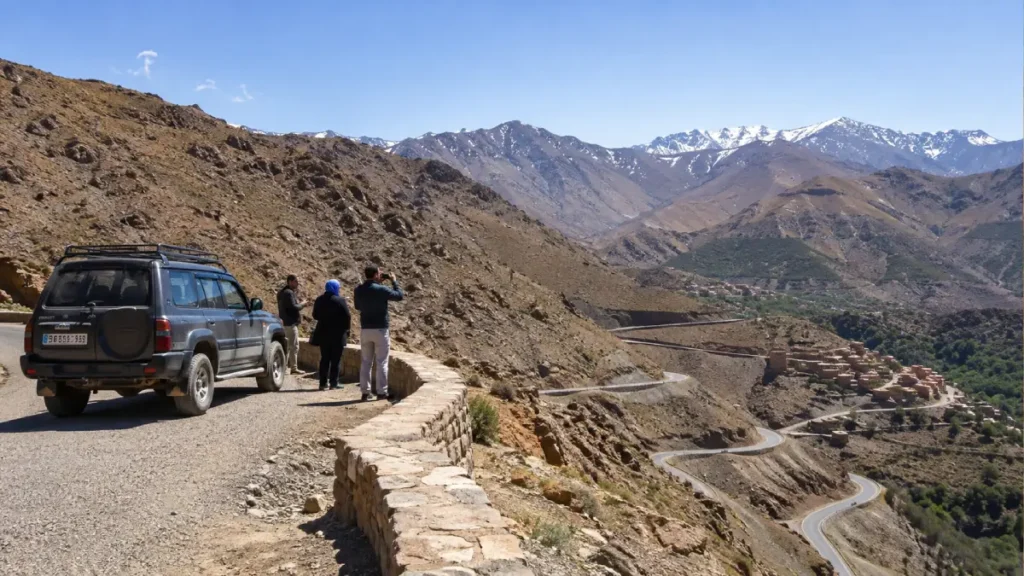
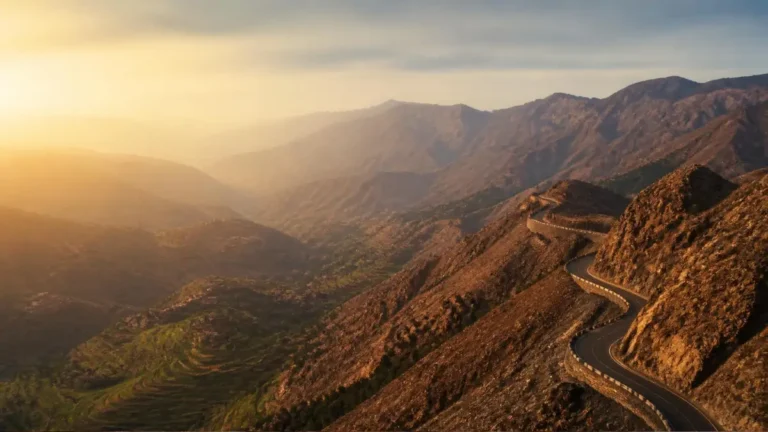
The route then climbs towards Tizi n’Tichka, the High Atlas pass at around 2,260 metres. Several photo stops are normally possible around the pass. This is one of the most dramatic parts of the Marrakech to Zagora drive, particularly for travelers who have only seen Morocco’s cities and coastal areas before.
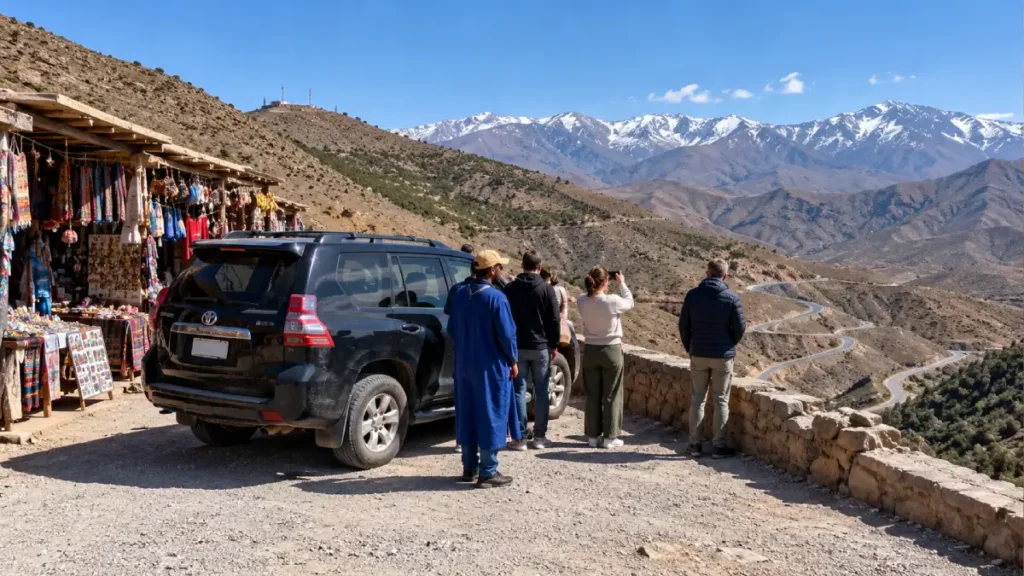
For a closer look at this section of the journey, read the guide to traveling from Marrakech to Ouarzazate.
Ait Ben Haddou: the main cultural stop
Ait Ben Haddou is usually the major visit of the first day. Plan on around one hour here, although the experience depends on how much walking you want to do.
Travelers who are comfortable on uneven ground can walk through the ksar and climb towards the top for wider views over the surrounding landscape. The walk is worthwhile, but it involves inclines and irregular surfaces.
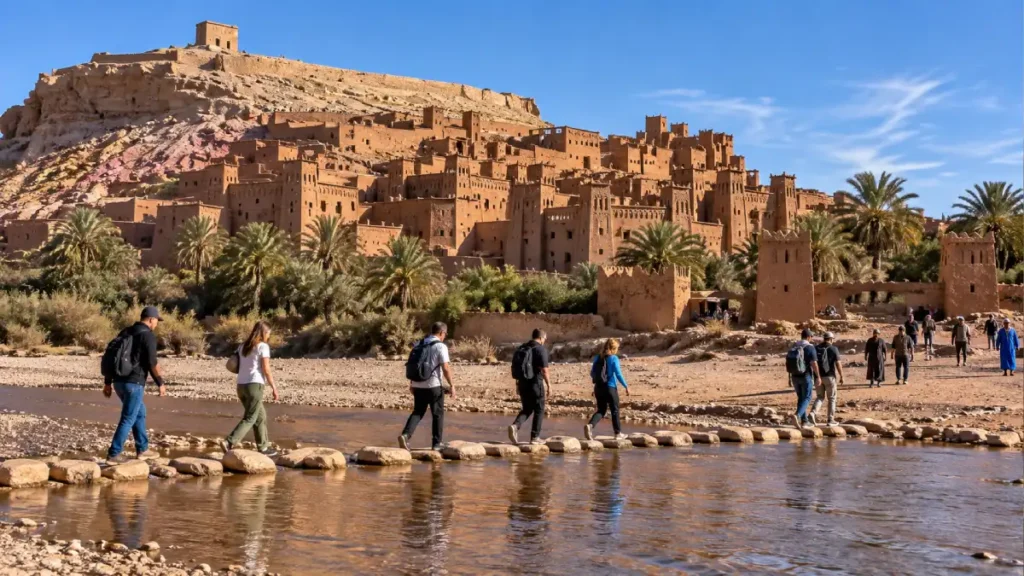
If mobility is limited, it is still possible to have a meaningful visit without making the climb. A traditional Amazigh (Berber) house can offer a more accessible stop, and guides can point out locations associated with film productions.
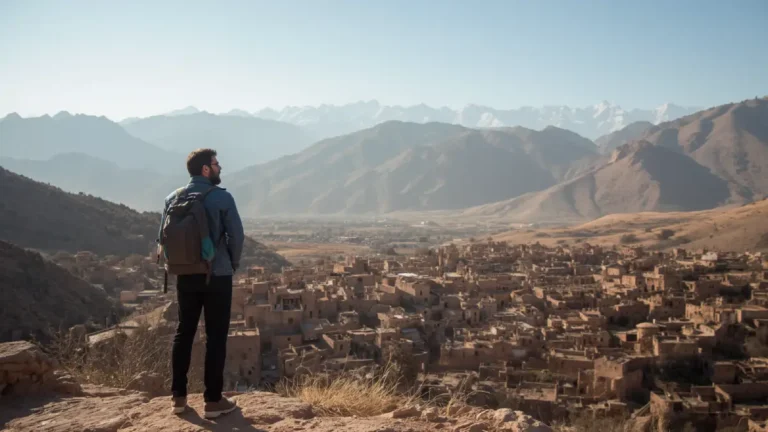
Ait Ben Haddou is a fortified earthen village, and its appeal is not just the view from above. Take time to notice the narrow lanes, mud-brick architecture and the way the settlement sits against the dry landscape. For more practical visiting advice, see the Ait Ben Haddou travel guide.
Where to have lunch: Ait Ben Haddou or Ouarzazate?
There are two practical lunch options on this route:
- Lunch in Ait Ben Haddou: convenient if you want to eat after your visit and keep the day moving.
- Lunch in Ouarzazate: around 30 minutes farther on, with more restaurant choice.
Neither is automatically better. Eating in Ait Ben Haddou keeps the visit and lunch together, while Ouarzazate may suit travelers who want a wider selection before continuing south.
Day 1 afternoon: Ouarzazate, Agdz and the Draa Valley
After lunch, the route continues south through a drier and more open landscape. You cross the rocky Ait Saoun pass before reaching Agdz and the Draa Valley.
The Draa Valley palm groves
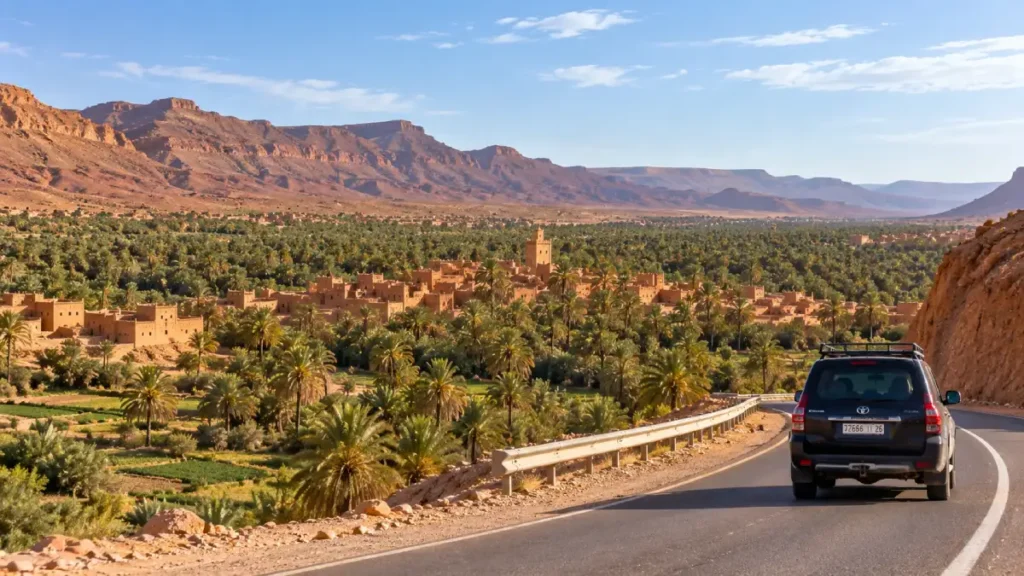
The Draa Valley is one of the route’s biggest rewards. After the mountain crossing and stony terrain, the long stretches of date palms feel like a major change of scene.
There are normally additional panoramic and coffee stops along this section. These pauses matter because the distance is substantial; they also give you time to appreciate the contrast between the palm groves, villages and surrounding arid hills.
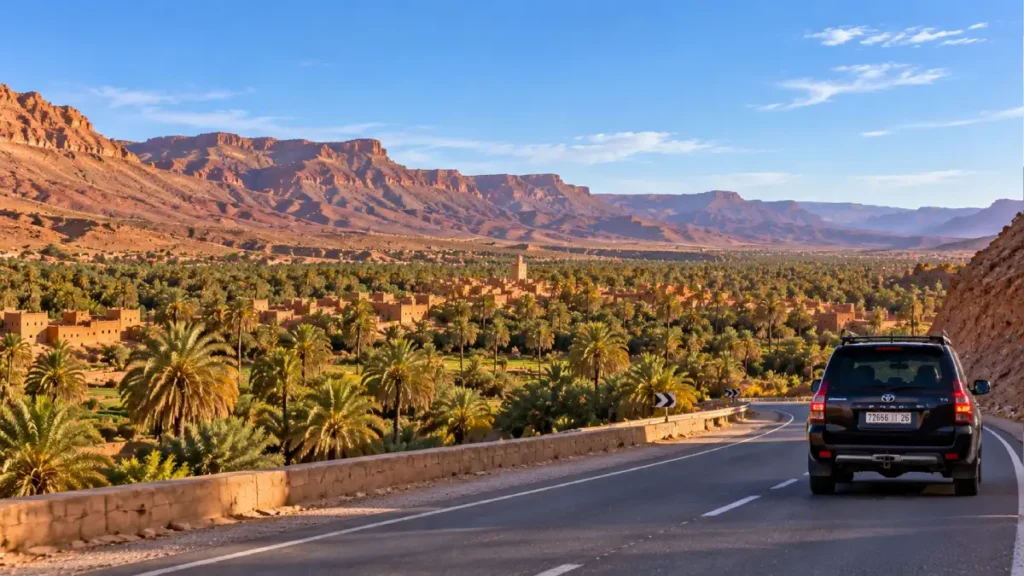
By the time you reach Zagora or your chosen camp, it will usually be late in the day. That is why the two-day itinerary should be approached as a road trip with a desert overnight, not as a slow stay in one place.
Where do you sleep on a Zagora desert tour?
Your overnight location makes a real difference to the experience. There are three broad options.
Sleeping in Zagora town
A hotel in Zagora town is the simplest choice. It can suit travelers who want a more conventional overnight stop and do not need to sleep directly among dunes.
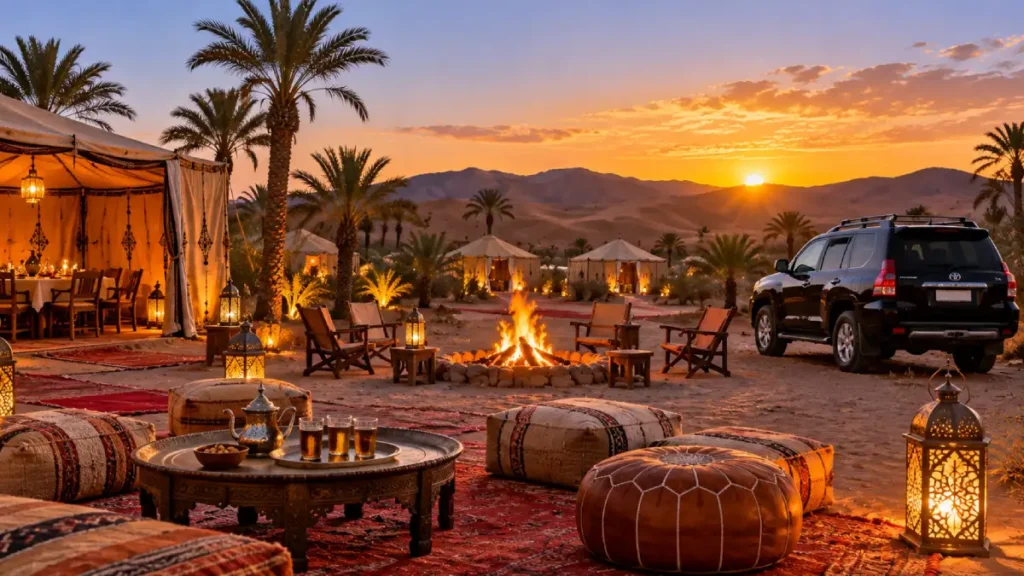
This option is practical, but it is not the most immersive desert-camp experience.
A camp just outside Zagora
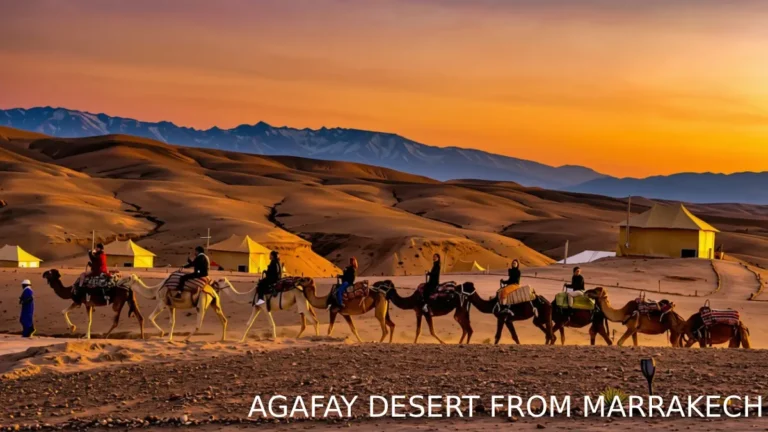
A camp outside Zagora provides a more desert-oriented evening while keeping the drive relatively manageable. This is often the middle ground for travelers who want dinner, a camp setting and a camel ride without adding the extra distance to the more southerly dunes.
Continuing towards Tagounite and Erg Lihoudi
For better dunes, continue roughly 1.5 hours farther south towards Tagounite and Erg Lihoudi, in the direction of M’Hamid.
This is the stronger choice if the desert itself is the priority. It does add more driving to an already compact itinerary, so it is best for travelers willing to accept a fuller schedule in exchange for a better sand-dune setting.
What is the camel ride like?
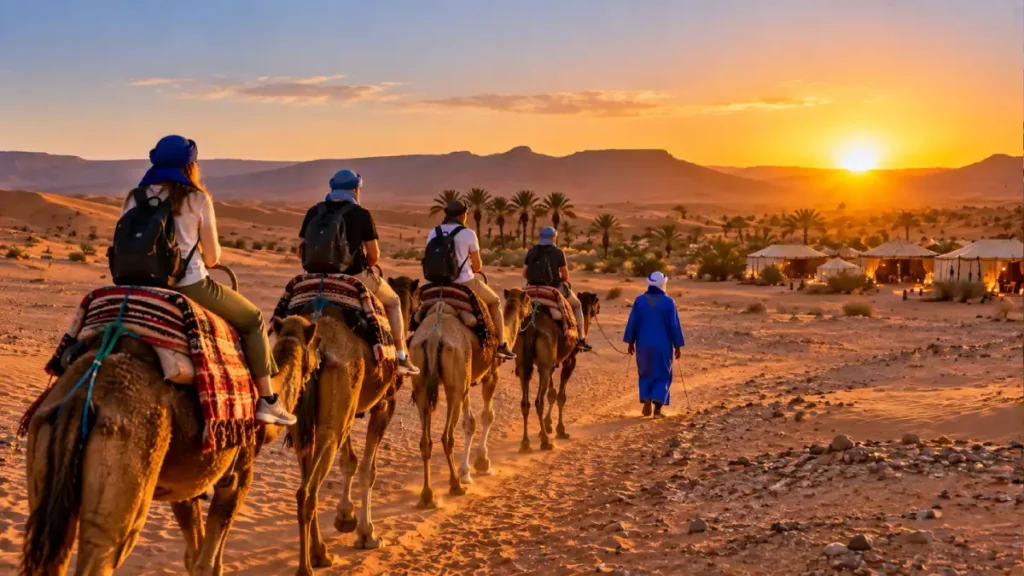
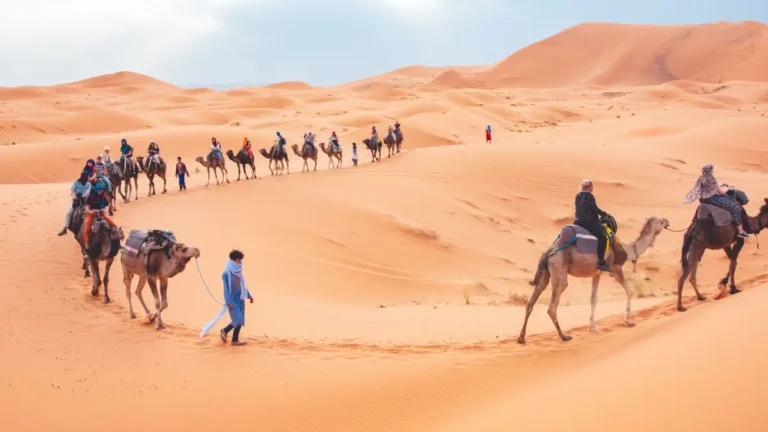
On a typical Zagora desert tour from Marrakech, the camel ride is around 40 minutes to one hour.
It is a short experience rather than an all-day trek, but it gives you time to travel through the desert landscape at a slower pace before or around the overnight stay. If riding a camel is an essential part of your trip, confirm where the ride takes place. A camp outside Zagora and a camp farther towards Erg Lihoudi do not offer the same dune scenery.
Also consider your comfort level. Camel riding is memorable for many travelers, but it can feel awkward or physically demanding if you have back, hip or mobility concerns. You can still enjoy the desert camp experience without treating the camel ride as compulsory.
Day 2: expect a long return to Marrakech
The second day is primarily the return journey to Marrakech. Allow roughly seven hours of actual driving, excluding meal breaks, coffee stops, photo stops and any sightseeing included by your chosen itinerary.
This is the main limitation of a 2-day Marrakech desert tour: the route covers a lot of ground, but there is little time to linger. It is best to avoid planning a major evening activity in Marrakech on your return day.
Pack water, snacks and anything you may want close at hand during the drive. Keep a light layer accessible too, as temperatures and conditions can feel different between Marrakech, the High Atlas and the southern valleys.
Private versus shared tours: which should you choose?
The choice comes down to budget, flexibility and how much control you want over the overnight experience.
Private Marrakech to Zagora tours
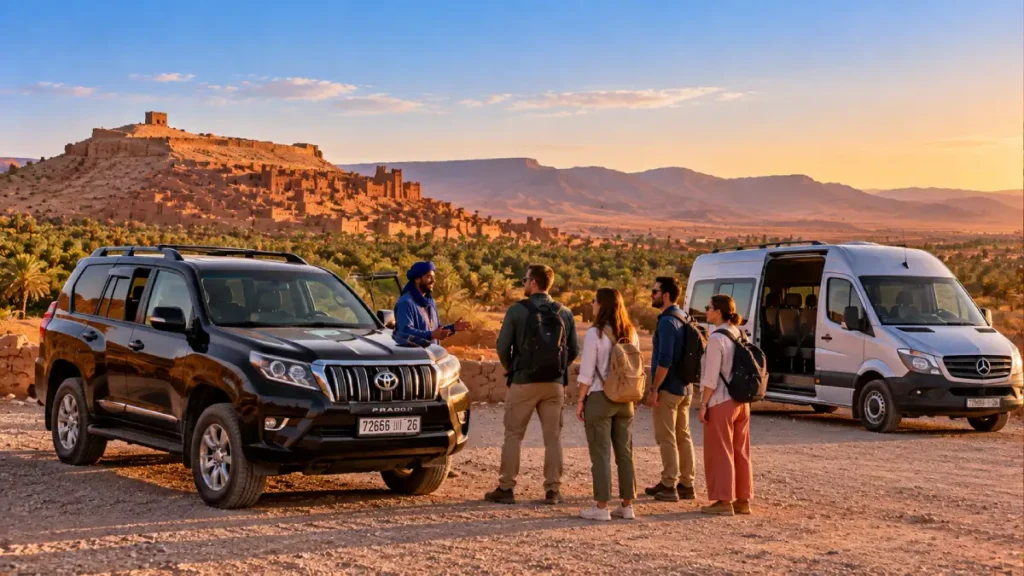
A private tour gives you more flexibility over practical decisions, including pickup from your accommodation, vehicle type, stops, lunch timing and the type of accommodation or camp selected.
Private trips can use either a 4×4 or minivan:
- 4×4: a good option for up to around four passengers, with good luggage space. It is generally the more expensive vehicle choice.
- Minivan: can accommodate roughly six to 17 passengers, depending on the vehicle size. It makes sense for families and groups travelling together.
Morkosh Tours offers private 4×4 and minivan desert tours from Marrakech, with the vehicle selected according to group size and travel style.
In 2026, a private two-day Marrakech–Zagora trip is typically around €350 per person for an inclusive standard option, rising towards €500 per person for upgraded accommodation and vehicle arrangements. Final pricing depends on group size, season and the standard selected.
A typical package includes:
- Transport with a driver-guide
- One night in the selected hotel or camp
- Dinner
- Breakfast
- Camel ride
A separate licensed local guide for a monument or a more detailed visit may cost extra. This is worth clarifying before booking if a guided visit to Ait Ben Haddou is important to you.
Shared 2-day desert trips
Shared tours can be worth considering if you are travelling alone or trying to keep costs lower, but check the itinerary carefully before committing.
The important questions are not only the departure date and price. Ask where you will sleep, whether the camp is near Zagora or farther south, whether the camel ride is included, and how much time is allowed at Ait Ben Haddou.
A shared itinerary may suit you if you are happy to follow a fixed schedule. Choose a private trip if you want more say over stops, accommodation level, vehicle type or the decision to continue towards Erg Lihoudi.
What to pack for one night in Zagora
Keep your luggage practical. You will be getting in and out of the vehicle often, and the trip is too short to benefit from overpacking.
Bring:
- Comfortable shoes for Ait Ben Haddou’s uneven paths
- A light jacket or warm layer for the evening
- Sun protection, including sunglasses and sunscreen
- A refillable water bottle
- Small personal items for the overnight stay
- Phone or camera charging equipment
- Any medication you may need during a long driving day
If you plan to climb through Ait Ben Haddou, footwear matters more than having specialist hiking gear. Comfortable, secure shoes are enough for most travelers.
Who should choose Zagora instead of Merzouga?
Choose Zagora if:
- You only have two days from Marrakech
- You want to see the High Atlas, Ait Ben Haddou and the Draa Valley
- You are happy with a short desert experience rather than major dunes
- You understand that the itinerary involves long driving days
Choose Merzouga instead if:
- Sand dunes are the main reason for your desert trip
- You have at least three days, ideally more
- You want a less compressed journey through southern Morocco
- You want the larger and more extensive dunes of Erg Chebbi
For travelers who have the time, the choice is clear: Merzouga offers the stronger dune destination. But for a short break, the Marrakech to Zagora route remains a sensible and scenic way to experience southern Morocco without needing several days on the road. You can also compare route lengths and styles in this guide to the best Sahara desert tours from Marrakech.
Make the two-day Zagora route work for you
The best way to enjoy this trip is to set the right expectation. It is not a relaxed desert holiday; it is a compact cross-country journey with an overnight camp or hotel experience at the end of a long scenic drive.
If your priority is seeing as much as possible in two days, the High Atlas, Ait Ben Haddou, Draa Valley and Zagora route is a strong choice. If your priority is spending more time among large dunes, save the trip for a longer route to Merzouga—or choose the farther-south Erg Lihoudi option to make the Zagora version more dune-focused.
FAQ
How long is the drive from Marrakech to Zagora?
Expect around seven hours of actual driving each day, not including coffee breaks, meals, photo stops and sightseeing. The journey is long, but the landscapes change significantly along the way.
Is Zagora worth visiting for a desert experience?
Yes, particularly if you only have two days. Zagora gives you a desert landscape, a possible camel ride and an overnight camp experience, but its dunes are smaller than those near Merzouga. For stronger dunes on this route, continue towards Erg Lihoudi near Tagounite.
Can I visit Ait Ben Haddou on a two-day Zagora tour?
Yes. Ait Ben Haddou is normally one of the main stops on the first day, with around one hour for the visit. Travelers comfortable walking can climb through the ksar, while those with limited mobility can focus on more accessible areas and a traditional house visit.
What is normally included in a private Marrakech to Zagora tour?
A typical private package includes transport with a driver-guide, one night in the selected hotel or camp, dinner, breakfast and a camel ride. A separate licensed guide for monuments or detailed site visits may cost extra.
Is a private or shared Zagora tour better?
A shared trip can suit travelers who are comfortable with a fixed itinerary. A private tour is better if you want flexibility over pickup, stops, vehicle type, accommodation level or whether to continue farther south towards better dunes.