
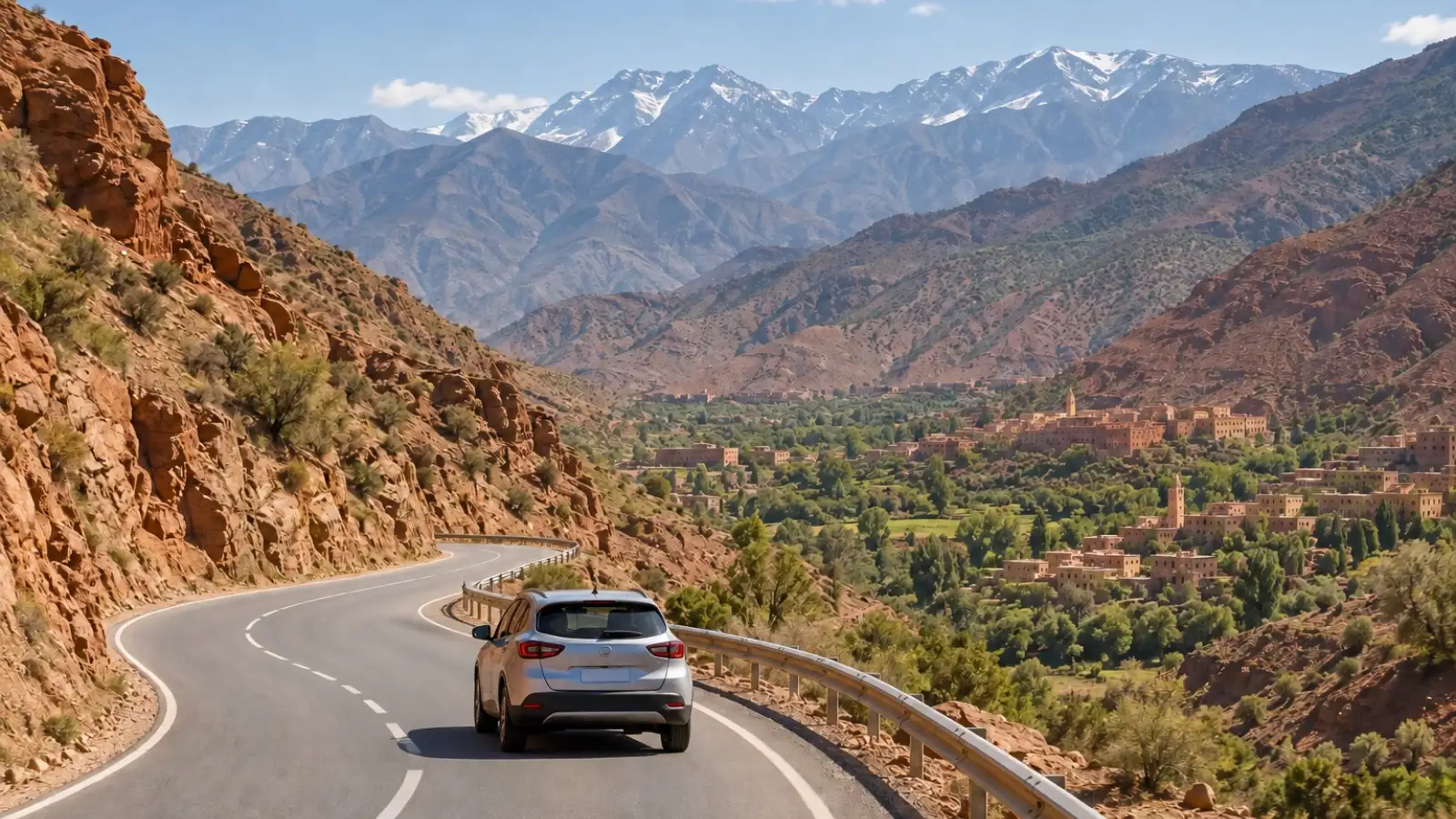
Driving in Morocco can be an excellent way to see places that are awkward to reach by train or bus: Atlas valleys, smaller coastal towns, the Dades and Todra gorges, and the approach to Merzouga. But it is not the easiest choice for every trip.
Rent a car if you are a confident driver and want the freedom to travel at your own pace outside the major cities. Choose trains, private drivers or organised transfers if your itinerary is mostly Casablanca, Rabat, Fes, Tangier, Marrakech and Agadir—or if busy traffic, mountain roads and night driving sound stressful.
The key to driving in Morocco as a tourist is simple: drive defensively, slow down well before towns and checkpoints, avoid driving after dark, and do not try to take a car into the old medinas.
Table of Contents
Table of Contents
Is driving in Morocco safe and worth it for tourists?
For a confident and patient driver, yes. Morocco has a good motorway network between major cities, paved roads to many popular destinations, and rental cars make a self-drive itinerary far more flexible than relying only on public transport.
A car is particularly useful if you want to:
- Travel through the High Atlas at your own pace
- Stop in smaller villages and viewpoints
- Visit the Dades Valley, Todra Gorge or desert fringes
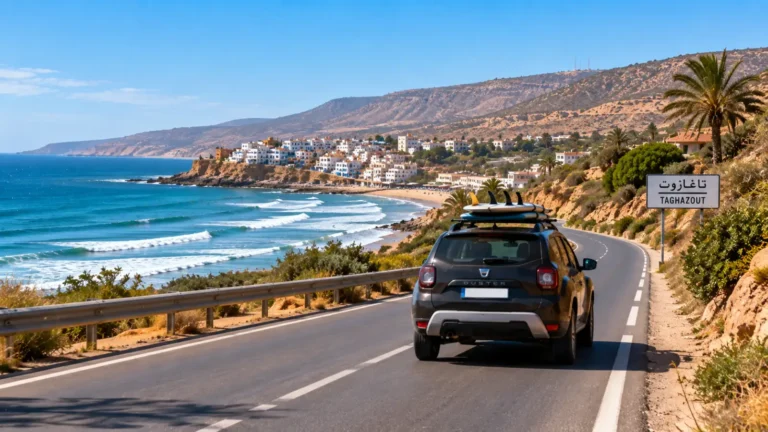
- Explore the Atlantic coast beyond the larger cities
- Stay in rural guesthouses where public transport is limited
- Avoid being tied to bus or train timetables
The trade-off is that driving conditions in Morocco vary sharply. Motorways are generally straightforward, but city traffic can be intense, and mountain routes demand concentration. The biggest mistake many visitors make is treating a Moroccan road trip like an easy European self-drive holiday: arriving tired, collecting a car at the airport, then immediately tackling Marrakech traffic or the Atlas after dark.
If you are unsure, a good compromise is to spend your first days in Marrakech without a car, then collect one in Gueliz when you are ready to leave the city.
For a wider comparison of trains, buses, taxis and private transfers, see this guide to getting around Morocco.
What are Moroccan roads like?
Road quality depends greatly on where you are driving.
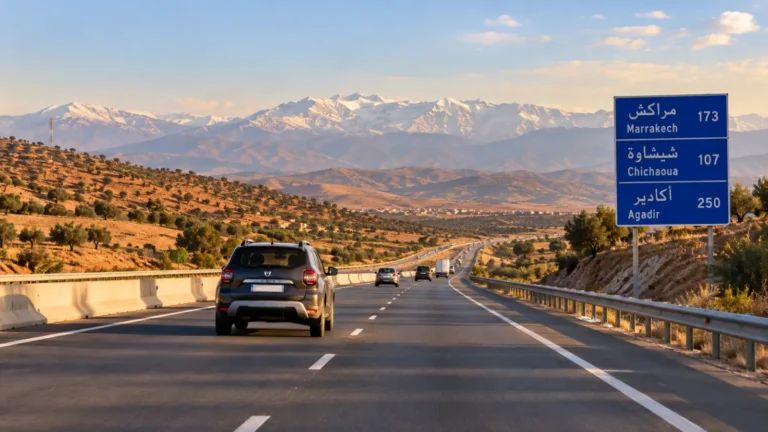
The main motorways linking cities such as Casablanca, Rabat, Tangier, Marrakech and Agadir are generally the least stressful roads for visitors. They are designed for longer journeys, are usually well maintained, and keep you away from the slower traffic and frequent built-up areas found on national roads.
National and regional roads can also be scenic and perfectly usable, but they require more attention. You may share the road with slow trucks, farm vehicles, pedestrians, cyclists, animals and vehicles making unexpected turns. As you pass through villages, speed limits and road conditions can change quickly.
Secondary roads are where expectations matter most. A route that looks short on a map may be narrow, winding or slow. In the mountains and desert regions, some connecting roads can become rough single-lane tracks rather than the smooth paved route visitors expect.
Motorways are the easiest long-distance option
Morocco’s toll motorways are the most relaxed way to cover distance between major cities. They are especially useful for routes such as Marrakech to Casablanca or Marrakech to Agadir.
Toll booths accept cash and credit cards. It is still sensible to carry 50 MAD and 100 MAD notes, as this makes payment easier and avoids depending entirely on a card terminal.
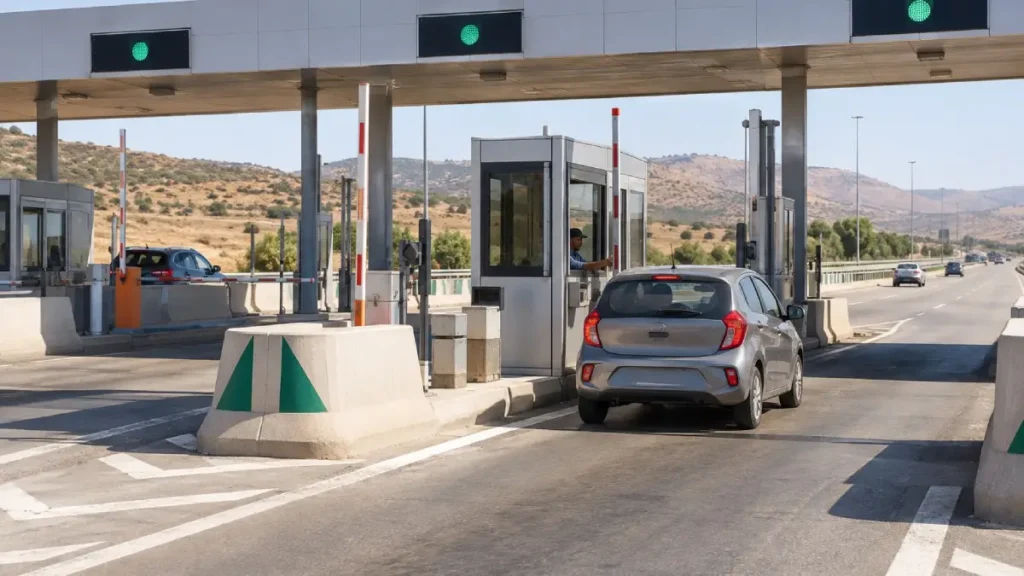
Tolls depend on the entrances, exits and vehicle class. Check your exact route using the motorway operator’s current tariff table rather than relying on a general estimate.
You can consult the motorway operator’s toll tariff information and payment guidance, but check your specific route before departure because tolls can change.
National roads are slower but often more interesting
National roads can be a good choice when you want to see more of the country rather than simply arrive quickly. They pass through towns, agricultural areas and landscapes that motorways bypass.
However, allow more time than a map estimate suggests. The road may be busy with local traffic, and every town entrance requires you to slow down and watch closely for speed controls. Overtaking should be approached cautiously, especially on two-lane roads where visibility can be limited by bends, hills or trucks.
Morocco road rules visitors should take seriously
The basic principle for driving in Morocco is not to assume that the traffic around you will behave predictably. Keep a generous following distance, expect vehicles to change lanes abruptly, and do not rush to match the pace of impatient local traffic.
The most important rule from a practical visitor’s perspective is this: come to a full stop at every STOP sign. A rolling stop may feel harmless, but it can be enforced strictly. Bring the car to a complete, motionless stop before proceeding.
Speed traps are also extremely common, particularly:
- At entrances to towns and villages
- On downhill sections
- On roads where the speed limit changes quickly
- Near police checkpoints
Do not rely on other drivers’ speed as a guide. Local drivers may know the road, but that does not make their speed safe or legal for your situation.
Licences and essential documents
Foreign visitors can generally drive with a valid licence issued in their own country for up to one year after entering Morocco. An international driving permit is also recognised, but it should accompany rather than replace your original licence. Check the requirements for your nationality and rental company before travelling; this official Morocco travel information provides a useful current reference.
Carry your driving licence, passport, rental agreement and insurance documents. Follow the posted speed limit, make sure every occupant uses a seat belt, request an appropriate child seat when needed, and do not drive after drinking alcohol.
For official road-safety information, consult the National Road Safety Agency before your trip.
How to handle police checkpoints and traffic stops
Police checkpoints are routine in Morocco and are not automatically a sign that anything is wrong. You will see them on main roads, near town entrances and in areas with regular traffic controls.
When approaching a checkpoint:
- Slow down significantly.
- Watch the officer’s signal.
- Stop only if you are directed to do so.
- Keep your driving licence, passport and rental contract accessible.
- Remain calm, polite and straightforward.
If you are stopped, do not argue at the roadside. Answer questions clearly and provide the documents requested. If you receive a fine, ask for an official receipt.
Fuel stations: cash, cards and what to expect
Fuel stations in Morocco are generally attended rather than self-service. You pull up, tell the attendant the fuel type and amount, and they fill the car for you.
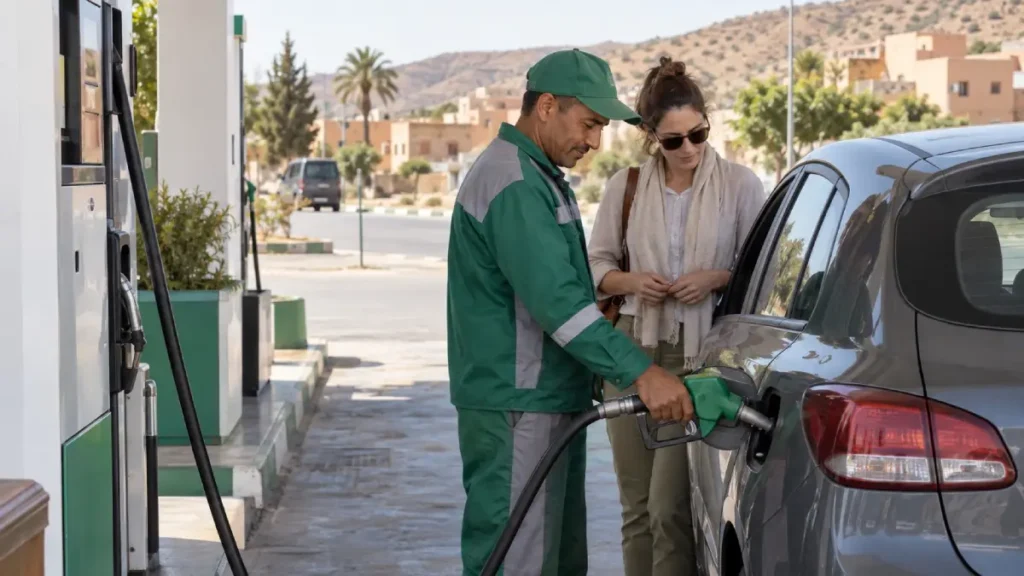
Fuel prices change regularly and are displayed at the station. Check the pump and confirm the requested fuel type and amount with the attendant before filling.
Modern stations commonly accept cards, particularly on major roads and around cities. In smaller rural or mountain locations, however, cash may be the safer option. Do not wait until the fuel warning light comes on before looking for a station when you are heading into the Atlas, remote valleys or desert areas.
A small tip for helpful service is optional, not compulsory.
City driving: where visitors struggle most
The challenge of driving in Morocco is usually not the open road. It is urban traffic, parking and the constant mix of cars, scooters, pedestrians and small vehicles sharing the same space.
Marrakech: avoid the Medina and watch for scooters
Marrakech demands full attention behind the wheel. Scooters and motorcycles can weave through traffic and undertake on the right. Pedestrians may cross unexpectedly, while donkey carts and horse carriages add another layer of movement around busy streets.
Roundabouts can feel chaotic, and drivers do not always behave in the way visitors expect from home. Enter cautiously, watch every side of the vehicle and avoid sudden changes of direction.
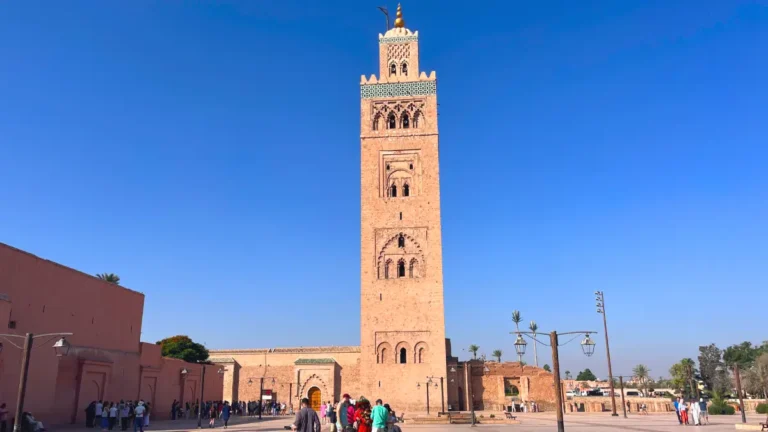
Do not drive inside the Medina. Its lanes are narrow, crowded and heavily used by pedestrians and two-wheeled traffic. Book accommodation with clear parking arrangements, or leave your car in an official lot outside the old city.
A practical approach is to explore Marrakech on foot first, then collect your rental car in Gueliz when it is time to continue your road trip.
Casablanca is the most demanding major city
Of Morocco’s major cities, Casablanca is usually the most intense for visitors driving themselves. Expect heavy traffic, aggressive lane changes and limited easy parking in central areas.
A rental car can still be useful if you are leaving Casablanca immediately for another region, but it is rarely necessary for exploring the city itself. If Casablanca is your first stop after a long flight, consider waiting to collect the car until you are ready to leave.
Fes, Tangier, Rabat and Agadir
Fes has a car-free Medina core, so visitors should not expect to drive to the door of a traditional riad inside the old city. Confirm the nearest drop-off point and parking plan with your accommodation before arrival.
Tangier and Rabat generally feel more manageable than Casablanca, though they still require alert driving in busy areas.
Agadir is one of the easiest Moroccan cities for foreign drivers. Its broader roads and more modern layout make it a less intimidating place to begin or end a self-drive trip.
Parking in Morocco: lots, street guardians and realistic expectations
Parking is a normal part of driving in Morocco, but it can work differently from what visitors are used to.
You will find official car parks, hotel parking, street spaces and informal parking guardians. These guardians often wear bright vests, help guide cars into tight spaces and watch vehicles while their owners are away.
Parking charges vary by city, neighbourhood, time and whether the space is an official car park, metered area or informally supervised street space. Confirm the price before leaving the vehicle and keep small cash available.
For an informal guardian, agree on or confirm the expected amount rather than assuming a fixed price. Keep small notes and coins available, and make sure you know whether your accommodation has practical access for luggage and parking before you arrive.
Do not leave valuables visible inside the vehicle. Put luggage in the boot before you park, not after arriving at a busy viewpoint or roadside stop.
Atlas Mountain driving: beautiful, slow and tiring
Driving through the Atlas Mountains can be one of the strongest reasons to rent a car, but it is not the place to overestimate your energy or underestimate travel times.
Tizi n’Tichka requires concentration
The Tizi n’Tichka route between Marrakech and the Ouarzazate side of the High Atlas is winding, with steep drops and frequent bends. It can be tiring even in daylight.
Avoid driving it at night. Use extra caution during rain, and be prepared for possible snow and disrupted conditions during colder periods.
Do not plan an ambitious mountain drive immediately after collecting a car at the airport. If you are jet-lagged or unfamiliar with Moroccan traffic, spend the night in Marrakech first and leave in daylight.
Dades and Todra roads can be narrow
Routes around Dades and Todra include narrow roads and switchbacks. The main paved roads are usable for ordinary cars, but some secondary connections can be rough, narrow and slow.
Do not choose a route simply because a navigation app says it is the shortest. Check whether it is a principal road, allow extra daylight time, and turn back if the surface becomes unsuitable for your vehicle.
Desert driving: reaching Merzouga is not the same as driving in the dunes
Paved roads reach Merzouga village, so most visitors can drive there in a regular rental car. That does not mean a standard car is appropriate for entering the dunes.
For dune access, use a suitable 4×4 or arrange a transfer through your desert camp. Driving an ordinary rental car onto sand can leave you stuck, create insurance complications and turn a straightforward arrival into an expensive problem.
If your accommodation is in or beyond the dunes, confirm the meeting point, parking location and transfer arrangements before leaving the paved road.
Why night driving in Morocco is best avoided
Night driving is one of the clearest situations where caution pays off. It is strongly discouraged, especially outside cities.
The risks include:
- Unlit vehicles, including slow-moving farm traffic
- Pedestrians walking close to the carriageway
- Animals on or beside the road
- Potholes and uneven surfaces that are difficult to see
- Limited lighting on mountain and rural roads
- Fatigue after a long sightseeing day
Plan your itinerary around arriving before dark. This is particularly important on Atlas roads, desert approaches and secondary coastal routes. A shorter daytime drive is usually a much better choice than squeezing in one more stop and finishing the journey at night.
Rental car realities: deposits, insurance and vehicle choice
Rental cars offer freedom, but the rental agreement deserves as much attention as the itinerary.
Rental deposits vary considerably by company, vehicle class, insurance package and payment card. Check the exact amount and currency before booking so the cardholder has sufficient available credit at pickup.
Check the deposit policy before booking, including whether the company accepts your particular card type. Do not assume a debit card will be treated the same as a credit card.
Basic insurance can also come with a high excess. Stronger cover is worth considering if you plan to drive mountain roads, park frequently in crowded cities or simply want to reduce the financial risk of minor damage disputes.
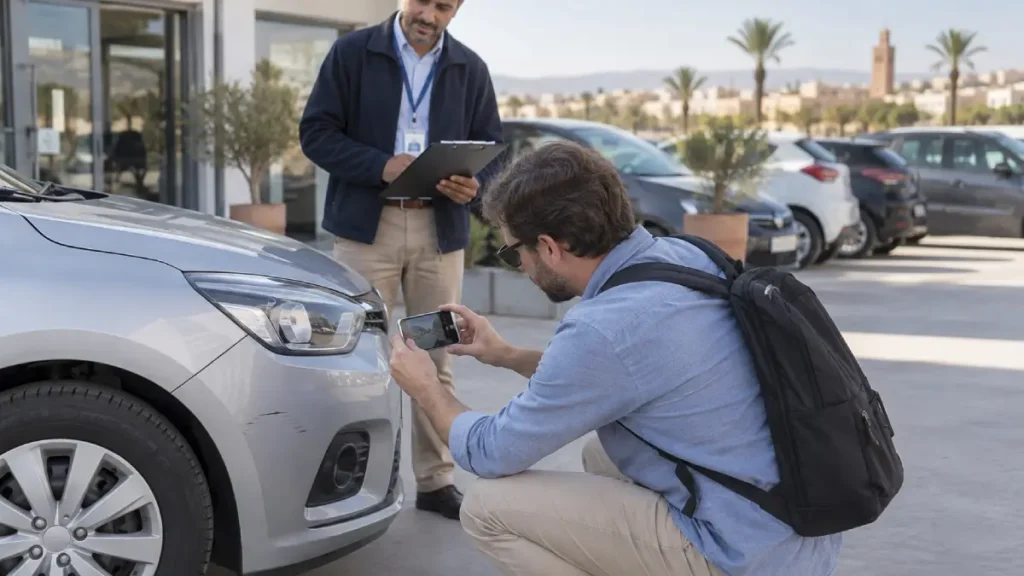
At pickup:
- Photograph and video the entire vehicle.
- Record wheels, tyres, bumpers, mirrors, windscreen and interior.
- Ensure every existing scratch, dent or mark appears on the contract.
- Check the fuel level and return policy.
- Confirm whether roadside assistance is included.
- Ask where to return the car and how much time to allow at the end of the trip.
Manual cars are standard in Morocco and are usually cheaper. Automatics cost more and should be reserved early, particularly during busy travel periods.
Who should rent a car—and who should skip it?
A self-drive trip works best for travellers who are comfortable making independent decisions on the road. It is less suited to visitors who only need transport between large cities or who dislike the responsibility of unfamiliar traffic conditions.
Rent a car if you want flexibility beyond the cities
A rental car makes sense if you are a confident driver who wants to explore:
- The Atlas Mountains
- Coastal villages and beaches beyond the main resorts
- Rural kasbah and valley routes
- Dades, Todra and the approach to Merzouga
- Smaller towns where trains do not reach
It is also a good choice for travellers who want to stop for viewpoints, cafés and local detours without following a fixed group schedule.
Use trains, drivers or transfers if city traffic is your concern
Skip the rental car, or collect it later, if you will mainly visit major cities. You do not need a car inside Marrakech Medina or Fes Medina, and parking in Casablanca can be more trouble than it is worth.
Private drivers and trains can be more relaxing for city-to-city travel, particularly after a long flight. If safety and street awareness are also on your mind, read the Morocco travel safety guide alongside this driving guide.
A sensible self-drive plan for Morocco
The most comfortable road trips usually avoid trying to cover too much ground in one day. Build your route around daylight driving, especially once you leave the motorway network.
A practical approach is to:
- Explore Marrakech, Fes or Casablanca without a car first.
- Collect the vehicle only when leaving the city.
- Use motorways for long intercity stretches.
- Start mountain and desert drives early.
- Refuel before heading into remote areas.
- Arrive at your accommodation before dark.
- Use official parking or a clearly understood parking arrangement near medinas.
Driving in Morocco is rewarding when you treat it as part of the journey rather than a race between destinations. Give yourself time, keep your plans flexible, and let difficult roads or changing weather dictate a slower pace when necessary.
FAQ
Is it difficult driving in Morocco as a tourist?
It can be challenging in major cities and mountain areas, but motorways and main roads are manageable for confident drivers. The main difficulties are unpredictable city traffic, scooters, frequent speed controls, narrow mountain roads and the risks of driving after dark.
Should I rent a car in Marrakech?
Not for exploring Marrakech itself. The Medina is not suitable for driving, and city traffic can be stressful. It is often better to explore on foot, then collect a rental car in Gueliz when leaving for the Atlas, coast or desert.
Are toll roads expensive in Morocco?
Tolls depend on the motorway entrances, exits and vehicle class. Check your exact route on the current Autoroutes du Maroc tariff table before travelling.
Can I drive a normal rental car to Merzouga?
You can drive a normal rental car on paved roads to Merzouga village. Do not drive into the dunes with a standard car; arrange a 4×4 transfer or transport through your desert camp.
Is night driving safe in Morocco?
Night driving is best avoided, particularly outside major cities. Unlit vehicles, pedestrians, animals, potholes and poorly lit mountain or rural roads make it much riskier than daytime driving.