Morocco Travel Insurance 2026:
Do You Need It, What It Covers, and How to Choose
Your Real-World Safety Net for Traveling in Morocco
Before you explore Marrakech, hike the Atlas Mountains, or sleep under the stars in the Sahara, you need to understand travel insurance Morocco – what it covers, when it’s truly needed, and how to choose a policy that matches your trip.
Morocco is full of lively markets, mountain roads, and long desert drives. As a licensed Moroccan guide and insurance professional, I’ve seen:
- Sprained ankles in the medina
- Broken wrists on sand dunes
- Stomach bugs that turned into hospital visits
None of these are fun, but the difference between an “annoying story” and “trip ruined + huge bill” is often one thing: good travel insurance for Morocco.
In this 2026 guide, we’ll go through:
- Whether you really need travel insurance for Morocco
- When it’s required or effectively required
- What Morocco travel insurance should cover
- Rough costs and timing
- How to choose the best travel insurance for Morocco for your style of trip
Tabel of Contents
Table of Contents
Do You Really Need Travel Insurance for Morocco?
People ask me all the time: “Do I need travel insurance for Morocco?” or “Do you need travel insurance for Morocco if you’re only going for a week?” Legally it’s not mandatory for most nationalities, but from a risk point of view my answer is almost always yes.
Is Travel Insurance Mandatory for Morocco?
For most travelers, travel insurance is not legally mandatory to enter Morocco.
So if you’ve been wondering “is travel insurance mandatory for Morocco?”, the honest answer is that it isn’t for most tourists at the border – but it becomes effectively required the moment you start booking expensive non‑refundable trips, Sahara tours, or high‑altitude hikes.
- US, UK, EU, Canadian, Australian citizens, etc.:
- You are usually not asked for proof of insurance at the border.
- There is no Schengen-style rule that forces you to show a policy on arrival.
However:
- Many governments (UK FCDO, US State Department, etc.) strongly recommend travel insurance that covers:
- Medical emergencies
- Repatriation (medical evacuation)
- Trip cancellation
From what I’ve seen guiding people here for more than 20 years, coming to Morocco without travel insurance is playing with fire—even if nobody at passport control asks for your policy.
When Travel Insurance Becomes “Effectively Required”
There are situations where, in practice, having travel insurance for Morocco is almost essential:
1. If You’re Applying for a Visa or e‑Visa
Some consulates and visa centers expect proof of insurance as part of your application (especially for certain nationalities).
- Always check your local embassy/consulate instructions.
- For an overview, see my Morocco visa requirements guide and then confirm locally.
Some travelers also search for “Morocco travel insurance requirements” or “travel insurance for Morocco visa”. Requirements can vary by nationality, so always follow the list given by your specific consulate or visa center, but in practice most will want to see at least basic medical and repatriation cover for your full stay.
2. If You’re Booking Expensive, Non-Refundable Tours or Flights
If you’re planning a 7–10 day route or a Sahara loop, your deposits for:
- Flights
- Riads and hotels
- Sahara desert camps
- Long-distance tours
can add up to thousands. A sudden illness back home can mean losing all of that without cancellation coverage.
3. If You Plan Activities Beyond “Easy City Walks”
Desert trips, adventure activities like trekking in the Atlas, mule treks, quad biking, and long road journeys all raise your risk a bit. Insurance is cheap compared to a private hospital or evacuation.
The Real Cost of Medical Care in Morocco

Morocco does not have free healthcare for tourists, and there are no automatic agreements with Western health systems.
Public Hospitals
- Often crowded and under-resourced.
- Not always at the standard most visitors from Western Europe or North America expect.
Private Hospitals & Clinics
- Much better quality in big cities (Marrakech, Casablanca, Rabat, Fes).
- But not cheap:
- A serious case can cost up to 14,000 MAD (around $1,500) per day in a private hospital.
- You usually need to pay or guarantee payment before treatment goes too far.
US Insurance & Medicare
- Generally do not cover you in Morocco.
- You may need to pay out of pocket first, then claim later if your policy allows.
This is why I strongly recommend every guest arriving in Morocco has travel medical insurance with solid coverage.
Essential Coverage for a Trip to Morocco
When you look at travel insurance for Morocco, focus on a few core protections rather than every shiny add‑on.
1. Emergency Medical & Repatriation (Non‑Negotiable)
This is the most important part.
It should cover:
- Sudden illnesses (food poisoning, infections, etc.)
- Accidents (falls, sprains, broken bones)
- Doctor visits and hospital stays
What to look for:
- At least $50,000–$100,000 USD (or equivalent) in medical coverage (more is better).
- Emergency evacuation / repatriation coverage:
- Critical if you’re heading to remote places like the Sahara Desert (Erg Chebbi / Merzouga, M’Hamid) or the High Atlas Mountains.
- If something serious happens in the desert, you may need transfer to a bigger city—or even home.
2. Trip Cancellation & Interruption
Think about how much you’re prepaying:
- Flights
- Riads and hotels
- Sahara desert camps
- Private or group tours
A good policy can refund non‑refundable costs if you have to cancel or cut short your trip for a covered reason, such as:
- Unexpected illness or injury (you or a close family member)
- A close family member’s death or serious illness
- Major disruption at your destination (depending on policy wording)
Some insurers offer “Cancel For Any Reason” (CFAR) coverage, which can reimburse a percentage (often 50–75%) of your prepaid trip even if you simply change your mind. Just remember:
- You usually have to buy CFAR soon after your first trip payment.
- CFAR is more expensive but offers more flexibility.
3. Baggage and Personal Belongings
This typically covers:
- Lost or delayed checked luggage
- Stolen items (bags, cameras, laptops) up to a certain limit
- Damage to personal items
Moroccan cities are busy and pickpocketing can happen, especially in crowded areas like Jemaa el‑Fna or narrow medina alleys. I’ve had guests lose phones and wallets in exactly those places. Baggage coverage won’t erase the headache, but it helps financially.
Here are three providers I see many travelers use and that generally tick those boxes for Morocco trips:
| Provider | Best For | Medical / Evac Limits | Adventure & Cancellation | My Take |
|---|---|---|---|---|
| EKTA | Most Morocco trips: cities, Sahara, Atlas, 1–3 weeks | Plans typically offer strong medical + evacuation cover (check exact limit when you quote) | Good fit for standard desert tours, city stays and light adventure; optional trip cancellation on many plans | A solid “default” choice if you want clear pricing and reliable cover for a classic Morocco itinerary |
| VisitorsCoverage | US and international travelers wanting lots of plan options | Wide range of plans, from basic to very high medical and evacuation limits | Some plans include or can add adventure cover and strong cancellation benefits (varies by policy) | Great if you like to compare several insurers in one place and pick the exact mix of price and protection |
| Insubuy | Longer trips, older travelers, pre‑existing conditions cases | Multiple insurers and limit levels, including options tailored for seniors | Can filter for plans that include higher‑risk activities and stronger trip interruption/cancellation | Useful comparison platform if you have specific health needs or want to fine‑tune your cover before booking Morocco |
If you don’t want to spend hours comparing policies, I’d start with EKTA for most classic Morocco trips, or VisitorsCoverage or Insubuy if you prefer a marketplace with lots of plan options.
Morocco-Specific Risks: What Your Policy Should Explicitly Cover
Adventure & Activity Coverage
Many basic policies quietly exclude:
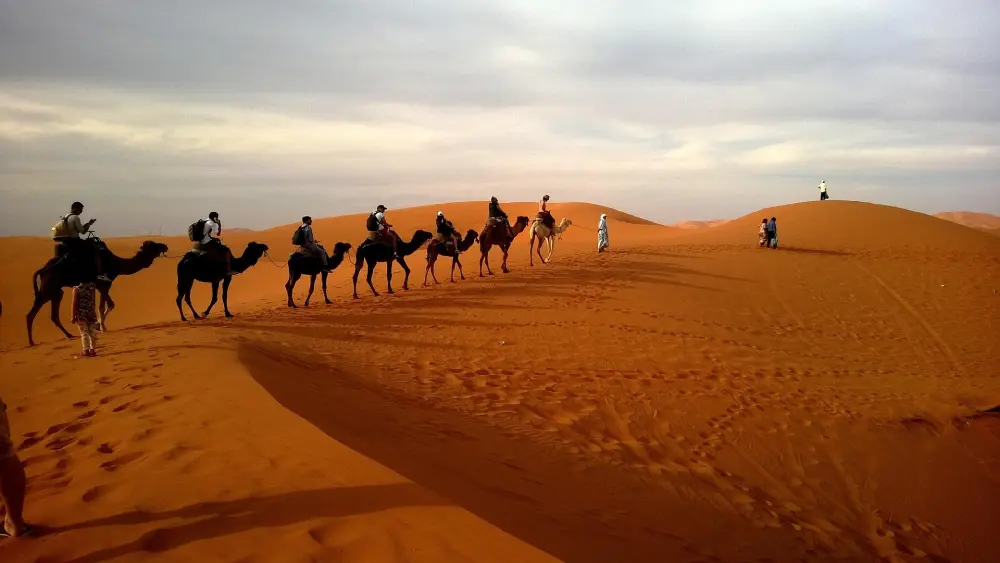
- Camel trekking
- Sandboarding
- Quad biking / ATV tours
- High-altitude hiking (like Mount Toubkal)
- Some water sports on the coast
Before you buy:
- Read the “sports and activities” section.
- Make sure camel rides, desert tours, quad biking, and mountain hiking are clearly covered.
- If your policy calls these “adventure activities” or “hazardous sports”, you might need an add‑on.
If you’re booking a Sahara tour, Toubkal trek, or off‑road adventure, this detail really matters.
High-altitude activities like trekking Atlas Mountains Morocco often require specific insurance riders—don’t climb without checking your policy.
Region Definitions: Is Morocco “Europe” or “Worldwide”?
Morocco is in North Africa, but many UK and European insurers group destinations by area, for example:
- “Europe including Morocco”
- “Worldwide excluding USA/Canada”
- “Area 3 / Area 4” with a list in small print
Do not assume anything. Always check:
- That “Morocco” is explicitly listed in the region you’re choosing.
- If in doubt, ask the insurer by chat or phone—it’s better than discovering at claim time that they considered Morocco “outside Europe”.
Special Situations: Seniors, Long Trips & Digital Nomads
Seniors
If you’re over 65 or 70:
- Expect higher premiums, but don’t skip cover.
- US travelers: Medicare does not cover you in Morocco, so you’ll need separate travel medical insurance.
Look for plans that:
- Explicitly cover your age band.
- Offer options for pre-existing conditions (sometimes with an extra premium or conditions).
Digital Nomads & Long-Stay Travelers
If you’re a remote worker basing yourself in Taghazout, Marrakech, Essaouira or elsewhere:
- Standard “single trip” policies may be too short (often 30–60 days).
- Look at long‑stay or digital nomad insurance options with:
- Month‑to‑month payments
- Coverage across multiple countries
- Clear rules about visiting your home country
Key questions:
- How long can you stay abroad per policy?
- What counts as your “country of residence” for claims?
- Are there limits on time spent in one country (like Morocco)?
How Much Does Travel Insurance for Morocco Cost?
Prices vary with:
- Age
- Trip length
- Total trip cost
- Coverage levels
- Your home country
As a very rough guide in 2026:
When people ask “how much is travel insurance to Morocco?”, I usually explain it this way:
- A 1-week trip to Morocco:
- Around $50–$200 USD for a decent policy.
- Often about 5–8% of your total trip cost.
Example:
- If you’re spending $3,000–$4,000 on flights, tours and accommodation, you’re often looking at $150–$250 for a solid policy that covers:
- Medical
- Evacuation
- Cancellation
When comparing, don’t choose only by price. Compare:
- Medical and evacuation limits.
- Deductible (excess).
- Activity coverage.
- Cancellation rules.
When Should You Buy Travel Insurance for Morocco?
Best practice:
- Buy as soon as you book your flights and first big accommodation/tour.
Why:
- Cancellation and interruption benefits often only apply to events that happen after you buy the policy.
- If you wait until just before departure, you lose protection for things that could force you to cancel earlier.
What About Credit Card Travel Insurance in Morocco?
Many premium credit cards offer some kind of “free” travel insurance if you pay for your trip with that card. This can be useful, but:
- Coverage is often limited (lower medical caps, stricter terms).
- Sometimes there is no cover for adventure activities or long trips.
Check:
- Whether Morocco is included as a covered destination.
- Medical and evacuation limits.
- Whether you must pay your entire trip with that card or just flights.
If you aren’t 100% comfortable relying on it, consider a separate dedicated travel insurance policy as your main protection.
For 2026 ATM fees, cash strategy and Sim card tips, check my Morocco Money and SIM Card Guide 2026.
For a full breakdown of eSIM options, see my eSIM Morocco 2026 guide.
Beyond Insurance: Smart Safety & Cultural Awareness
Travel insurance is your backup plan. Your first line of defense is how you move through Morocco day to day.
Dress & Cultural Norms
Morocco is a Muslim-majority country with a strong sense of modesty:
- Women: covering shoulders, cleavage, and knees usually reduces unwanted attention, especially in conservative areas.
- Men: t‑shirts and pants are fine; very short shorts in medinas attract looks.
Western women sometimes experience verbal harassment (“sweet tongues”, comments about beauty). If someone is too insistent:
- A firm “La, shukran” (no, thank you) and walking away works most of the time.
- If they still persist, saying “Hshouma!” (shame on you) in public can be very effective.
LGBTQ+ Travelers
Moroccan law still criminalizes same‑sex sexual activity. In practice:
- Many LGBTQ+ travelers visit without issues, especially in big cities and tourist areas.
- However, I recommend:
- Avoiding public displays of affection (for any couple, but especially same‑sex).
- Being extra discreet in smaller towns and conservative regions.
Know that if something serious happens, the legal context is not the same as in Western Europe or North America.
Emergency Numbers & Support
If something does go wrong:
- Police: 19
- Ambulance / Fire: 15
If you’re in a serious situation like assault or ongoing harassment, get to:
- A police station (Commissariat) or Gendarmerie (outside cities)
- Your embassy or consulate for legal and practical support
For a wider safety overview, read my Morocco Travel Safety Guide and solo travel guides.
How This Fits Into Your Bigger Morocco Travel Plan
Travel insurance is just one piece of the puzzle. To plan a full route that makes sense for your time, budget, and comfort, I recommend pairing this guide with:
- The main Morocco Travel Guide
- Itinerary hub: Morocco Itineraries
- Best Morocco Tours for First-Timers (if you prefer organized trips over DIY).
- Best places to stay in Morocco
- Best Riads in Fes 2026
- Where to Stay in Marrakech 2026
Final Word from Your Guide
I’ve seen guests travel without insurance and “get away with it”, and I’ve seen others saved from huge bills or painful decisions because their policy covered a sudden hospital stay or early flight home.
For Morocco in 2026, my honest advice is simple:
- Yes, you should get travel insurance.
- Make sure it covers:
- Emergency medical + evacuation
- Your prepaid trip costs
- The activities you actually plan to do here (desert, quads, hiking, surfing)
If you’re planning a trip and want help matching your itinerary and risk level to the right kind of cover, you can always reach out to me via Morocco Unfolded or through my tour company Morkosh Tours. I’m happy to help you design a route that’s not only beautiful, but also sensible and safe.
Travel Insurance Morocco: FAQS
1. Do I need travel insurance to visit Morocco?
Legally, most tourists do not need travel insurance to enter Morocco, and you are unlikely to be asked for a policy at the border. However, healthcare and evacuation can be expensive, and there is no EHIC/GHIC-style coverage here. As a guide and insurance professional, I strongly recommend having travel insurance for Morocco, especially if you are visiting the desert, mountains, or doing any activities beyond simple city sightseeing.
2. What should travel insurance for Morocco cover?
At minimum, your Morocco travel insurance should include emergency medical expenses, emergency evacuation or repatriation, and trip cancellation or interruption. Ideally, it also covers baggage and personal belongings, and clearly states whether activities like camel rides, quad biking, hiking in the Atlas Mountains, or surfing on the coast are included. I suggest at least $50,000–$100,000 USD in medical cover.
3. Is Morocco considered Europe or worldwide for insurance?
Morocco is in North Africa, but some European insurers include it in “Europe including Morocco”, while others classify it under “worldwide” or another area. Never assume. Always check the destination list or region definitions in your policy and make sure “Morocco” is explicitly included in the area you choose before you buy.
4. Does my European health card (EHIC/GHIC) cover me in Morocco?
No. EHIC and GHIC cards only apply within certain European countries and a few associated states. Morocco is not part of that system. You still need separate travel insurance for Morocco if you want cover for medical care, hospital stays, and medical evacuation.
5. Does travel insurance cover camel rides and quad biking in Morocco?
It depends on the policy. Many insurers cover camel rides, but treat quad biking, sandboarding and some adventure activities as “hazardous sports” that are excluded or require an upgrade. Always read the “sports and activities” section of your travel insurance for Morocco and confirm that the specific activities you plan to do—desert tours, quad biking, hiking, surfing—are included.
6. How much does travel insurance for Morocco cost?
Cost depends on your age, country of residence, trip length, total trip cost and coverage limits. As a rough guide, a one-week trip to Morocco in 2026 will often cost around 5–8% of your total trip price for a solid policy that includes medical, evacuation and cancellation. For example, on a $3,000–$4,000 trip, many travelers pay around $150–$250 for good coverage.
7. When is the best time to buy travel insurance for Morocco?
The best time to buy travel insurance is as soon as you start paying for your trip—usually when you book your flights or first non-refundable accommodation or tour. Buying early means your cancellation and interruption cover can apply if something happens before departure. If you wait until just before you fly, you lose protection for earlier events that might force you to cancel.
