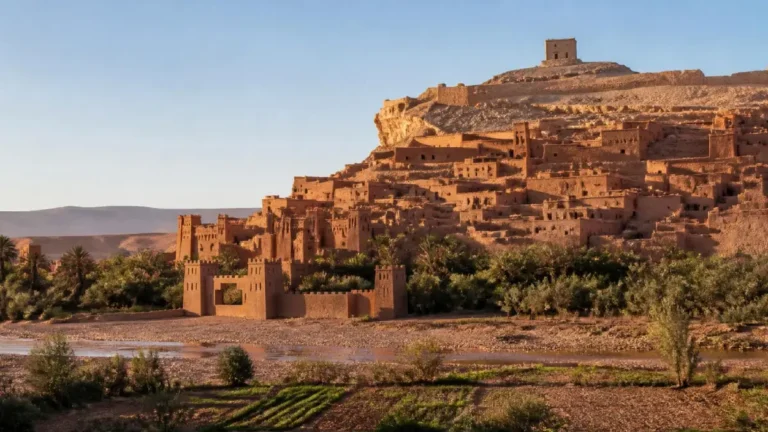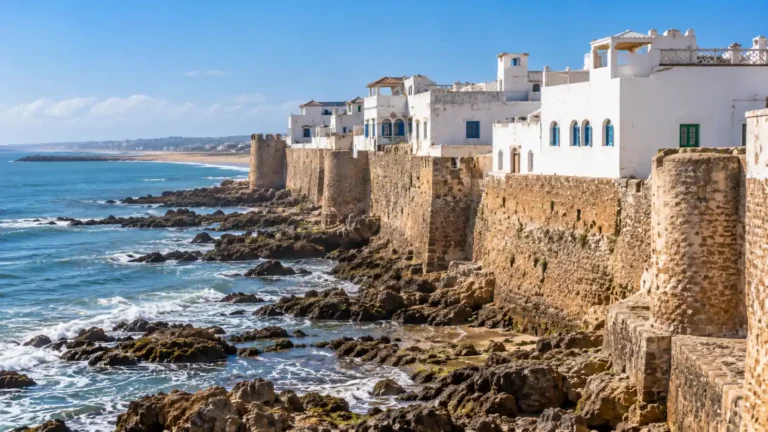

Tetouan, Morocco, is one of the most rewarding northern cities for travelers who want history, living culture and everyday Moroccan life without the intense visitor pressure of Marrakech, Fes or nearby Chefchaouen. This Tetouan travel guide covers the UNESCO-listed Medina, Andalusian heritage, Spanish Quarter, museums, beaches, transport and the practical details that make a visit easier.
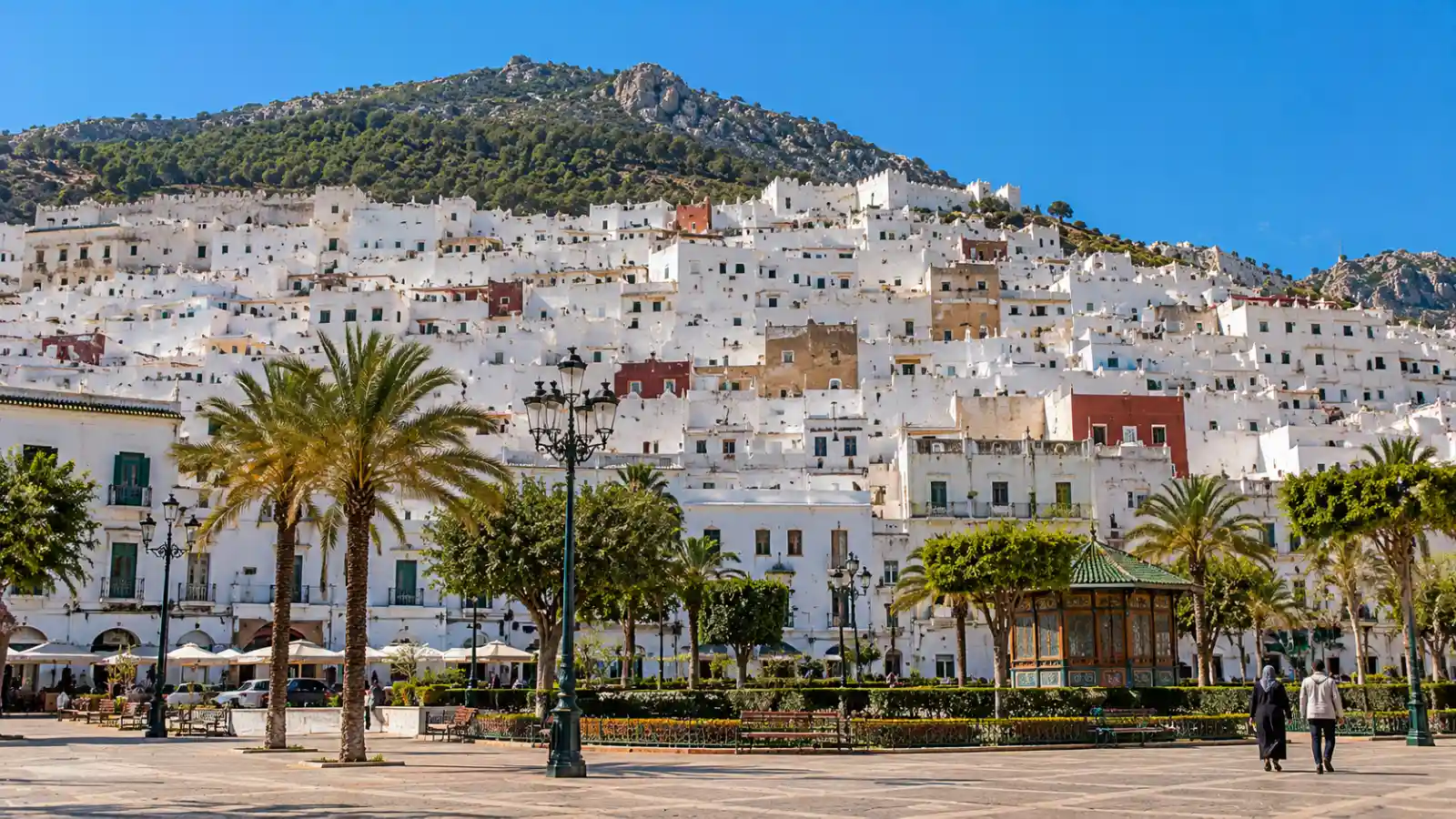
Known as the White Dove, or La Paloma Blanca, Tetouan rises in whitewashed layers beneath Jebel Dersa. It is also called the Daughter of Granada because Andalusian Muslim and Jewish communities helped rebuild and shape the city after arriving from southern Spain during the late medieval period. Their influence remains visible in the streets, crafts, food, homes and music of the city today
Table of Contents
Table of Contents
Is Tetouan worth visiting?
Yes—especially if you enjoy cultural cities that still feel local.
Tetouan is not a destination for travelers looking for a long list of polished tourist attractions or nightlife aimed at visitors. Its appeal is more authentic and gradual: wandering the Medina, seeing traditional crafts in use, noticing Andalusian details in old houses, drinking tea in the Spanish Quarter and understanding the mix of Moroccan, Jewish and Spanish histories that shaped northern Morocco.
It also works well as part of a northern itinerary with Tangier tours and excursions, Chefchaouen and the Mediterranean coast.
A rushed day trip is possible, but one or two nights is better. Staying overnight gives you time to see the Medina without hurrying, enjoy the Spanish Quarter in the evening and add a beach or mountain excursion.
Explore Tetouan Medina, a UNESCO World Heritage site
Tetouan Medina is the city’s main reason to visit. Inscribed in 1997, the UNESCO World Heritage site is recognised for its exceptionally well-preserved urban fabric and Andalusian-influenced architecture. Unlike some Moroccan medinas where tourism dominates the central lanes, Tetouan’s old city remains strongly connected to local daily life.
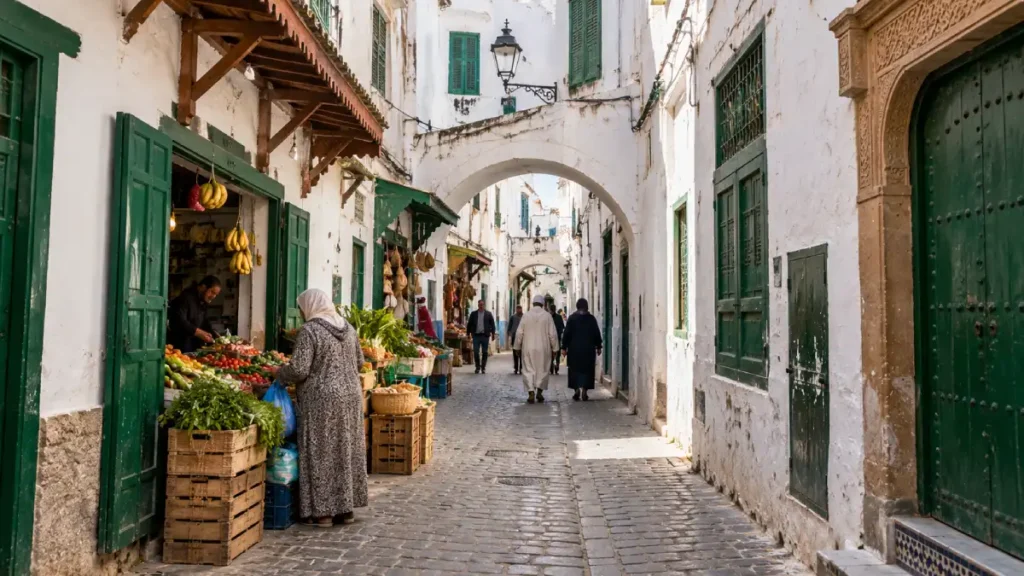
The Medina is enclosed by roughly five kilometres of historic walls and entered through several traditional gates. Inside are narrow whitewashed streets, residential quarters, souks, fountains, mosques, workshops and small commercial lanes that climb and descend the slopes of Jebel Dersa.
Do not expect completely flat walking. Some lanes are steep, cobbled or uneven, and there are stairs in parts of the old city. Comfortable shoes make a major difference.
Start at Place Hassan II and the Royal Palace exterior
My preferred introduction to Tetouan begins at Place Hassan II. This important open square sits between the old Medina and the Spanish-era new town, making it a good place to understand the city’s contrasting historical layers.
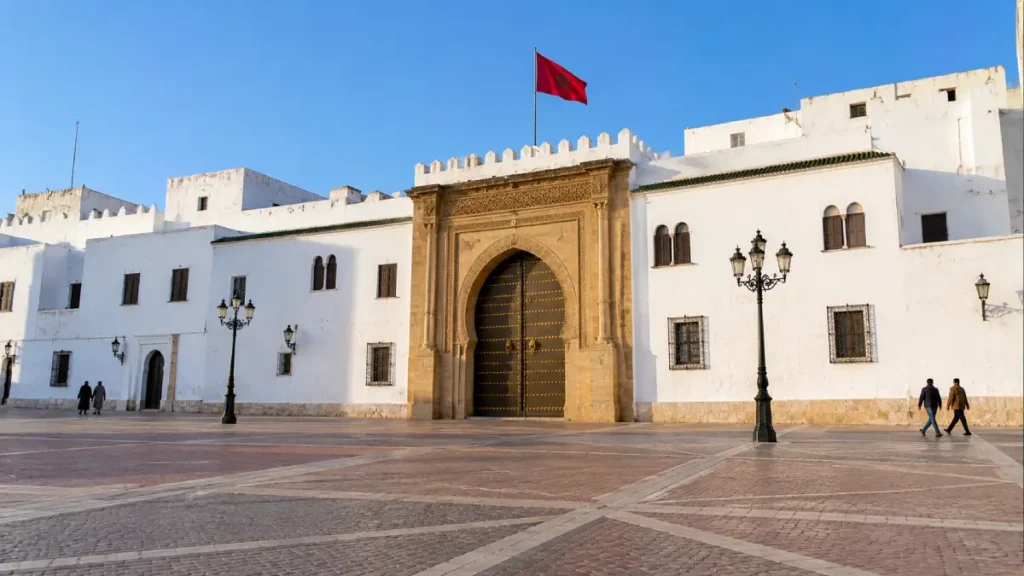
The Royal Palace, known as Dar El Makhzen, stands here behind impressive gates and decorated exterior walls. It is an important royal landmark, but visitors should not expect to enter the palace. The interior is not normally open to tourists.
Take time to admire the exterior from authorized public areas, but respect security restrictions and avoid photographing guards or restricted entrances.
Enter through Bab er-Rouah or Bab El Oqla
Bab er-Rouah is a practical entrance for exploring the commercial streets, traditional markets and artisan quarters of the Medina. From here, you can gradually work through the busier lanes and into quieter residential areas.
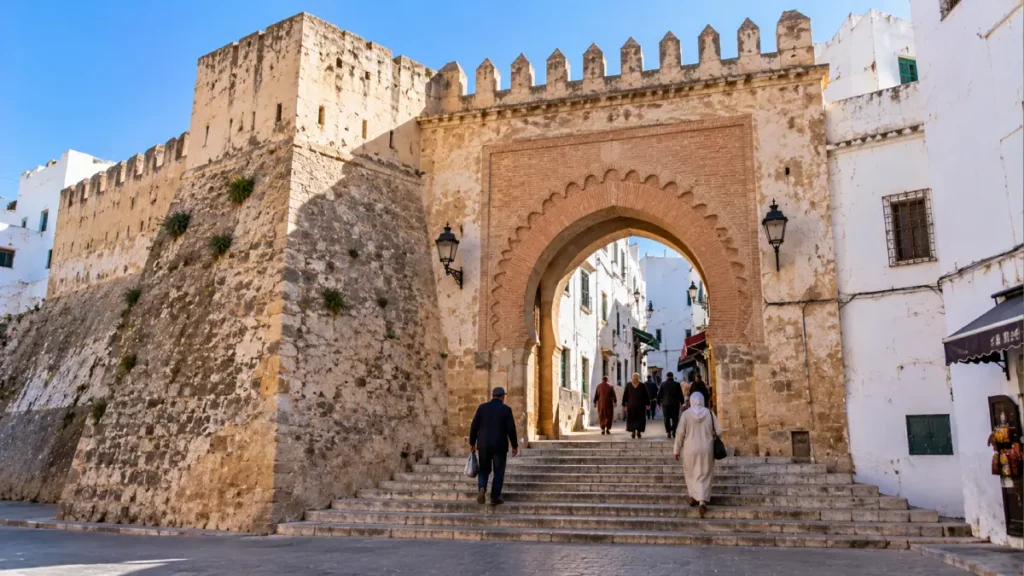
Bab El Oqla is another important gate and one I particularly recommend. It offers access to the Ethnographic Museum and is close to Dar Sanaa, Tetouan’s School of Arts and Crafts. It is a useful place to finish a Medina walk because it connects several of the city’s most interesting cultural sites.
Follow the souks and artisan lanes around Rue Mexuar
The streets around Rue Mexuar and the surrounding souks reveal why Tetouan remains such an important craft city. Many shops still cater primarily to residents, so the atmosphere is generally less focused on souvenir shopping than in Morocco’s busiest tourist centres.
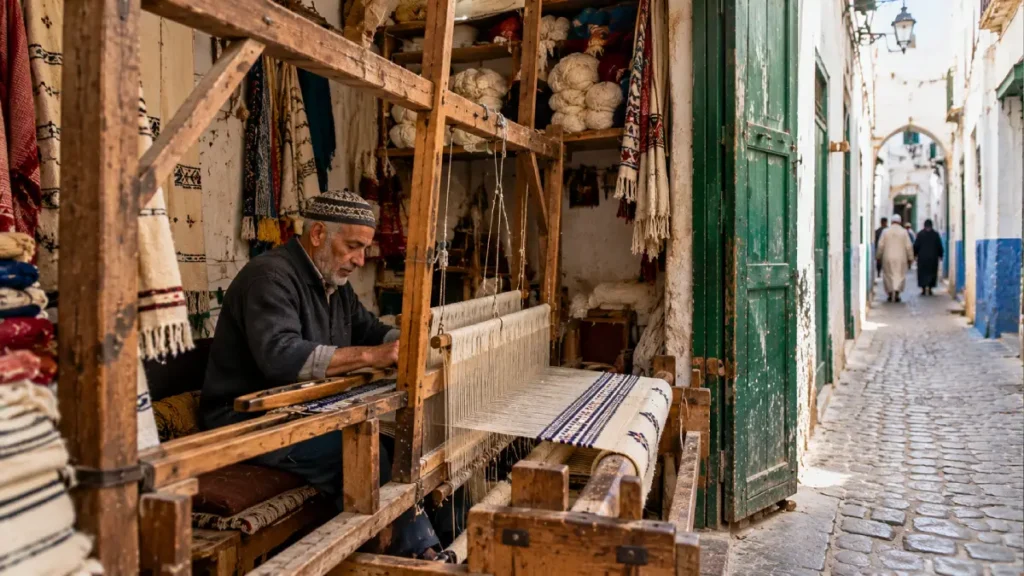
Look out for workshops and stalls selling or producing:
- Embroidery and traditional textiles
- Copperware and metalwork
- Leather goods
- Ceramics
- Zellige tilework
- Woodcarving and decorative woodwork
- Traditional Moroccan household items
Tetouan is especially associated with fine embroidery, Hispano-Moorish woodcarving, ceramics and decorative arts shaped by both Andalusian and Moroccan traditions. If you want to photograph artisans or step into a workshop, ask permission first. These are working spaces, not staged displays.
Visit the smaller traditional tanneries respectfully
Tetouan has historic tanneries that are smaller and generally less commercialized than the famous Chouara tanneries in Fes. Where access is permitted, visitors may see traditional leather processing and stone tanning vats without the same organized shopping pressure found in more tourist-oriented sites.
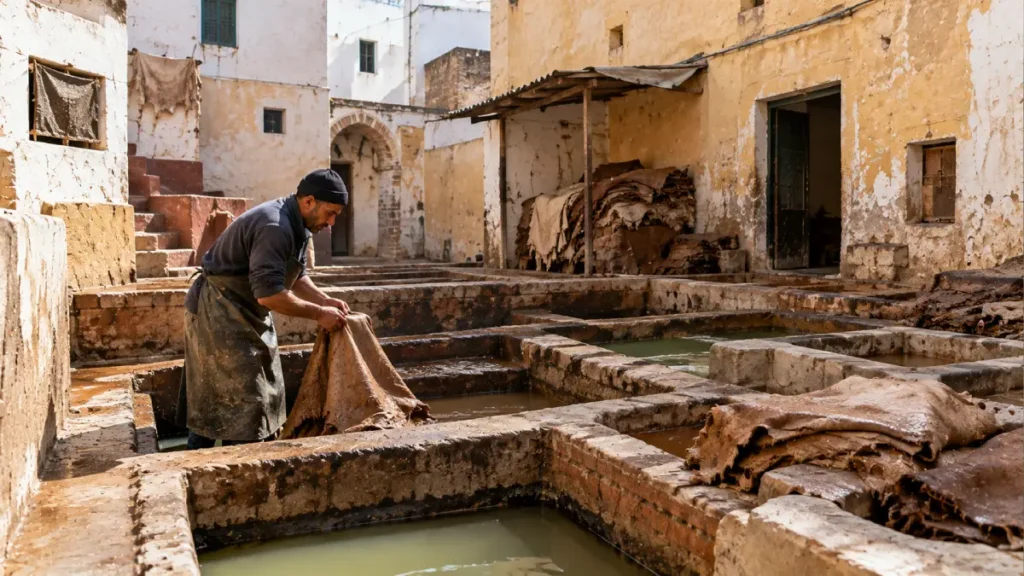
However, access is not guaranteed. Tanneries are working places, and conditions can change depending on the day, production activity and the preferences of those working there. Do not enter restricted areas, photograph workers without permission or assume every tannery welcomes visitors.
Look for fountains, doors and religious architecture
Part of the pleasure of the Tetouan Medina is noticing details rather than rushing between landmarks. Watch for carved wooden doors, green-tiled roofs, whitewashed plasterwork, small public fountains and decorative façades.
The Grand Mosque and other historic religious buildings are important features of the old city. Non-Muslim visitors should appreciate mosque exteriors respectfully and should not assume they can enter active places of worship. Avoid blocking entrances, especially around prayer times.
Understand Tetouan’s Andalusian and Jewish heritage
Tetouan’s cultural identity cannot be separated from its Andalusian past. The city developed strongly through the arrival of Muslim and Jewish communities from southern Spain, particularly around the fall of Granada and the wider Spanish Reconquista.
These communities brought architectural traditions, artistic knowledge, commercial connections and cultural practices that remain visible in the Medina. Tetouan’s reputation for refined crafts, embroidery, decorative plasterwork, tilework and woodcarving is closely connected to this inheritance.
Walk through the historic Mellah
Tetouan’s old Jewish quarter, or Mellah, is an essential part of the city’s history. It lies near the central historic districts and contains distinctive residential architecture, including multi-storey houses, projecting upper floors and decorative balconies.
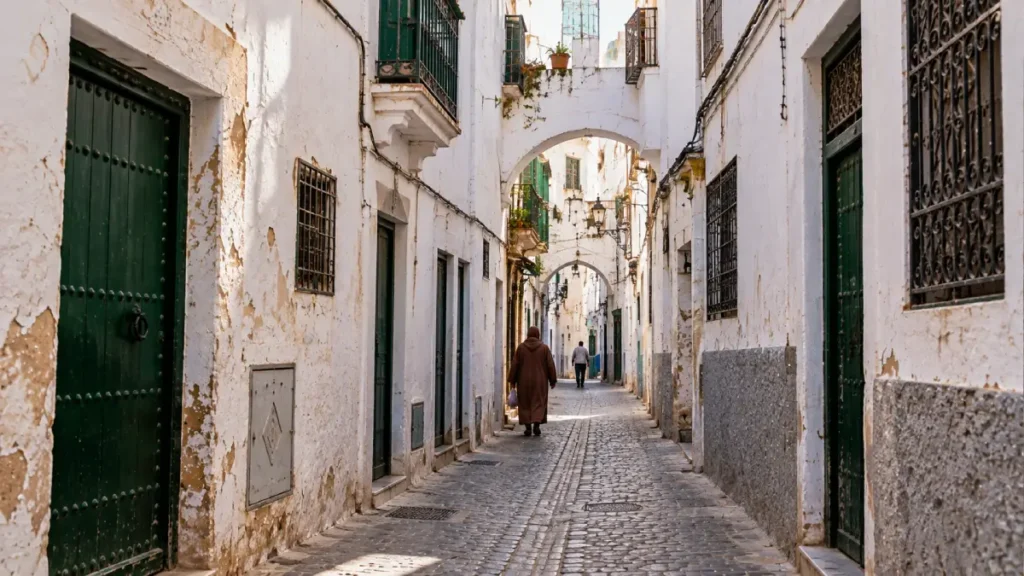
The Mellah reflects the long presence of Sephardic Jewish communities in Tetouan and their contribution to trade, craftsmanship and urban life. It is not simply a separate historic quarter; it helps explain why Tetouan developed such close cultural links with Andalusia and the Mediterranean world.
A licensed guide can provide useful context here, particularly for travelers interested in the relationship between Muslim and Jewish communities in northern Moroccan history.
See the Spanish Quarter in El Ensanche
Tetouan’s second major historical layer is El Ensanche, often called the Spanish Quarter. During the twentieth century, Tetouan served as the administrative capital of the Spanish Protectorate in northern Morocco, until Moroccan independence in 1956.
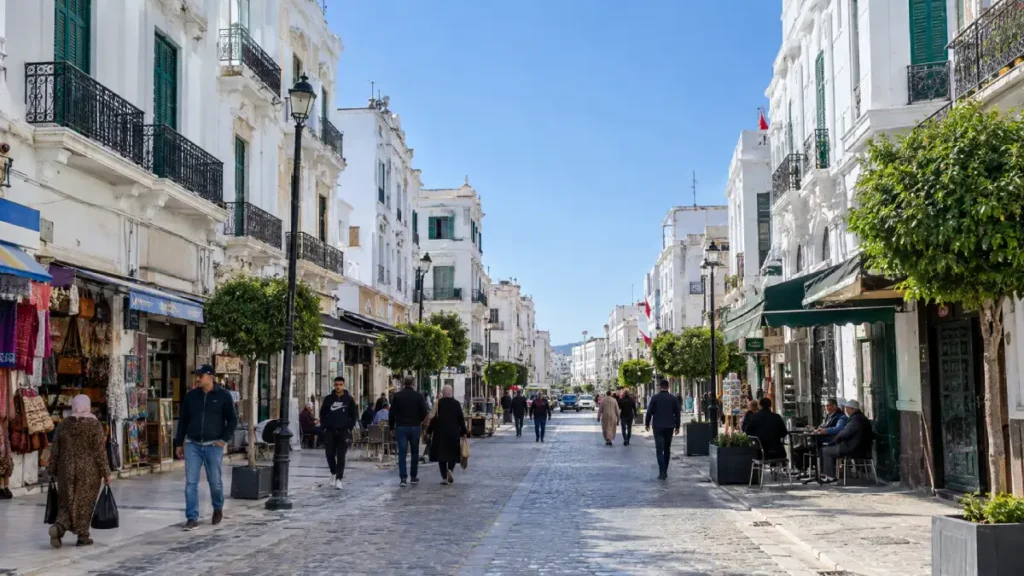
The result is a striking contrast with the Medina. Instead of narrow lanes and enclosed courtyards, El Ensanche has broad avenues, planned squares, cafés, decorative façades, wrought-iron balconies and buildings influenced by Art Deco, Neo-Mauresque and Neomudéjar styles.
Walk Avenue Mohammed V
Avenue Mohammed V is the main route through the Spanish-era district. It is a pleasant place for an unhurried walk, particularly later in the day when local residents gather around cafés and stroll through the broad streets.
The area also helps explain why Spanish remains familiar to many people in Tetouan and other parts of northern Morocco, alongside Arabic and other local languages.
Stop at Place Moulay El Mehdi
Place Moulay El Mehdi is one of the Spanish Quarter’s most enjoyable public spaces. It is surrounded by cafés, historic buildings and everyday local activity, making it a good place to pause after a morning in the Medina.
Nearby, the Church of Nuestra Señora de las Victorias is one of the area’s most recognizable landmarks. Its façade and Spanish architectural character provide a clear visual contrast with Tetouan’s traditional Moroccan buildings.
Which museums in Tetouan are worth visiting?
Tetouan’s museums are most rewarding for travelers who want context rather than simply a quick walk through the old city. They help explain the region’s archaeological past, living craft traditions and continued artistic importance.
Archaeological Museum
The Archaeological Museum is a good choice for visitors interested in the history of northern Morocco before the Islamic and Andalusian periods. Its collections include material associated with prehistoric, Phoenician, Punic and Roman civilizations.
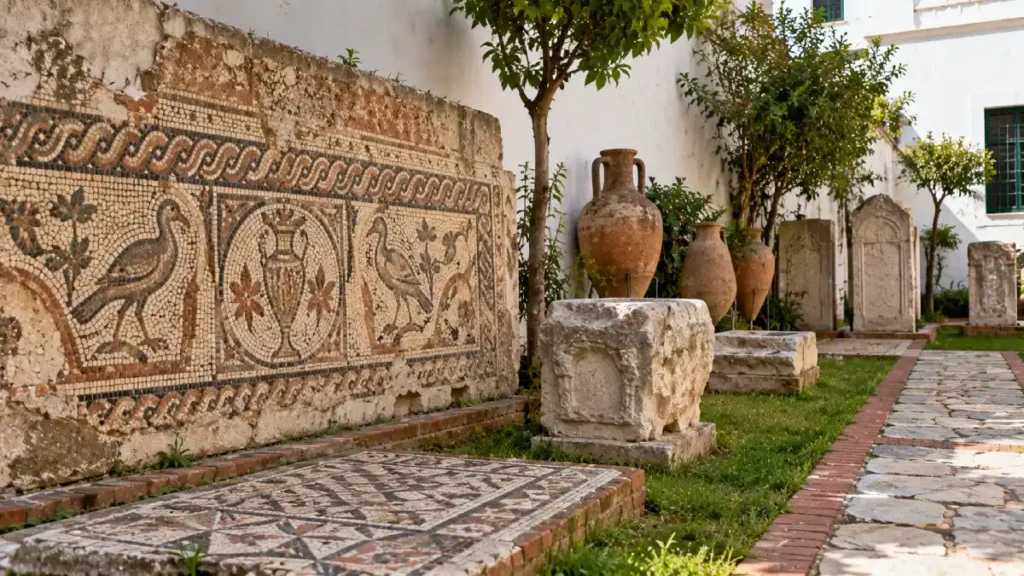
Roman mosaics, pottery, coins and archaeological objects connected with northern sites such as Tamuda and Lixus are among the most relevant exhibits. Visit early in your Tetouan stay if you want a deeper historical framework for the city and surrounding region.
Ethnographic Museum near Bab El Oqla
Near Bab El Oqla, the Ethnographic Museum focuses on northern Moroccan cultural traditions. Exhibits relate to clothing, weddings, embroidery, domestic objects, regional crafts and local ways of life.
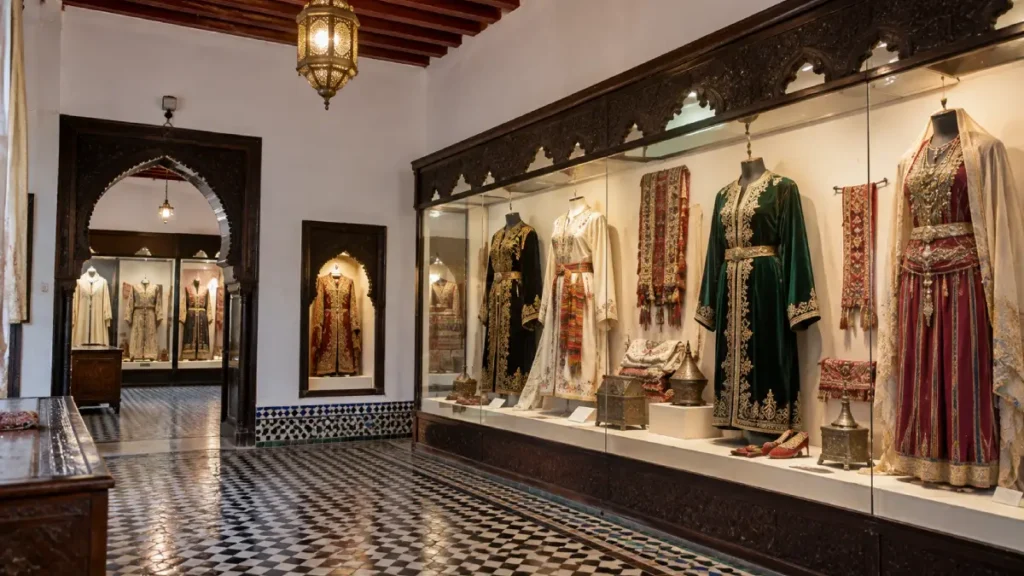
It fits naturally into a Medina itinerary, especially if you are already visiting Bab El Oqla and Dar Sanaa.
Dar Sanaa School of Arts and Crafts
Dar Sanaa, also known as the School of Arts and Crafts, represents Tetouan’s continuing commitment to preserving traditional skills. The institution has trained artisans in crafts including zellige, woodcarving, leatherwork, ceramics and Hispano-Moorish decorative techniques. The Moroccan Ministry of Culture’s ticketing page currently lists 60 MAD admission for foreign adults and 30 MAD for Moroccan or resident adults, with visiting hours of 9 AM–5 PM. Check its current visitor arrangements before planning around a class or workshop.
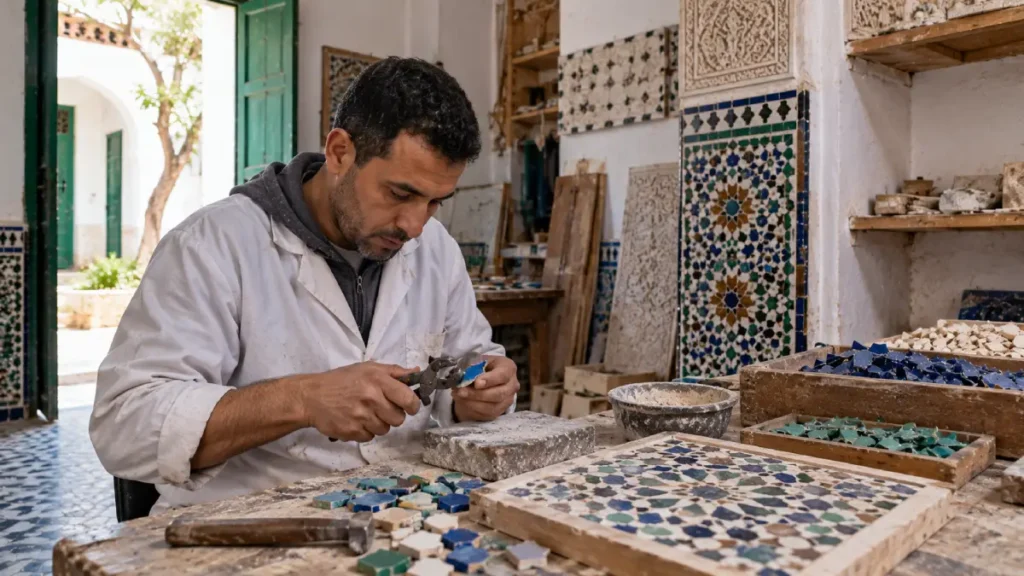
The Spanish painter Mariano Bertuchi was associated with Tetouan’s artistic development and with the preservation of local craft traditions during the Spanish Protectorate period. When access is permitted, seeing students or artisans practising these techniques adds real value to a visit.
Tetouan Museum of Modern Art
The Museum of Modern Art is housed in a restored historic railway-station building from the Spanish period. It is a useful stop for travelers who want to see Tetouan as a living artistic centre rather than only a historic Medina city.
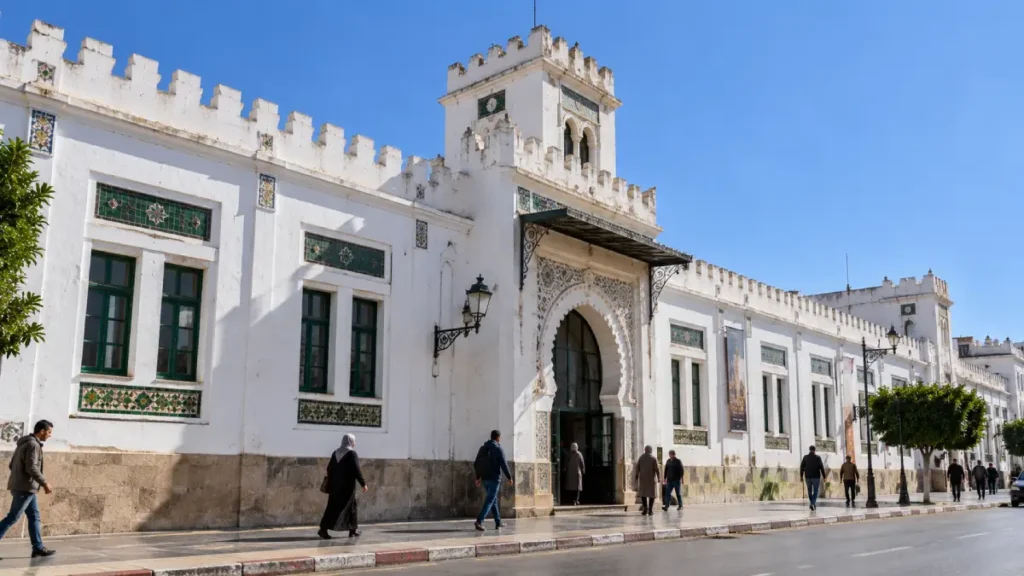
Exhibitions can change, so check the current programme before planning your visit around it.
Where to find Tetouan’s best viewpoints
For panoramic photographs, look toward the upper slopes of Jebel Dersa and suitable accessible areas near the historic Kasbah. From elevated points, the white buildings of the Medina spread across the hillside with the Rif Mountains beyond.
Feddan Park can also offer views toward the historic city, while some museum terraces may provide additional perspectives when open.
Do not enter restricted areas or isolated hillside paths simply for a photograph. Ask locally about safe, accessible viewpoints, especially if you are exploring late in the day.
How long do you need in Tetouan?
A minimum of half a day gives you an introduction, but a full day is more satisfying. I recommend one or two nights if Tetouan is a priority on your northern Morocco route.
A three- to four-hour Tetouan itinerary
If time is limited, focus on the city’s major cultural layers:
- Start at Place Hassan II and see the Royal Palace exterior.
- Enter the Medina through Bab er-Rouah.
- Explore the artisan souks and traditional lanes.
- Walk through the historic Mellah.
- Finish near Bab El Oqla, Dar Sanaa and the Ethnographic Museum if open.
This route gives you a meaningful introduction without trying to fit every museum and district into a rushed visit.
A full-day Tetouan itinerary
For a fuller experience, begin in the morning with Place Hassan II, the Royal Palace exterior, the Medina, artisan workshops, the Mellah and, where possible, the historic tanneries.
After lunch, visit Dar Sanaa and the Ethnographic Museum. Add the Archaeological Museum if ancient history interests you. In the late afternoon, walk through El Ensanche along Avenue Mohammed V and Place Moulay El Mehdi, then stop at a café or visit an accessible viewpoint around Feddan Park or Jebel Dersa.
Early morning is usually best for Medina sightseeing, when temperatures are more comfortable and markets are active. The Spanish Quarter is especially pleasant in the late afternoon and evening.
Beaches near Tetouan: Martil, M’diq and Cabo Negro
Tetouan is one of the easiest Moroccan cultural cities to combine with a beach stay. The Mediterranean coast is a short drive away, with several distinct options depending on whether you want a busy promenade, a resort-style stay, seafood or a quieter escape.
Martil for a lively family beach atmosphere
Martil is around 10 kilometres from Tetouan and is a popular family beach town with a long promenade, cafés, restaurants and a lively summer atmosphere.
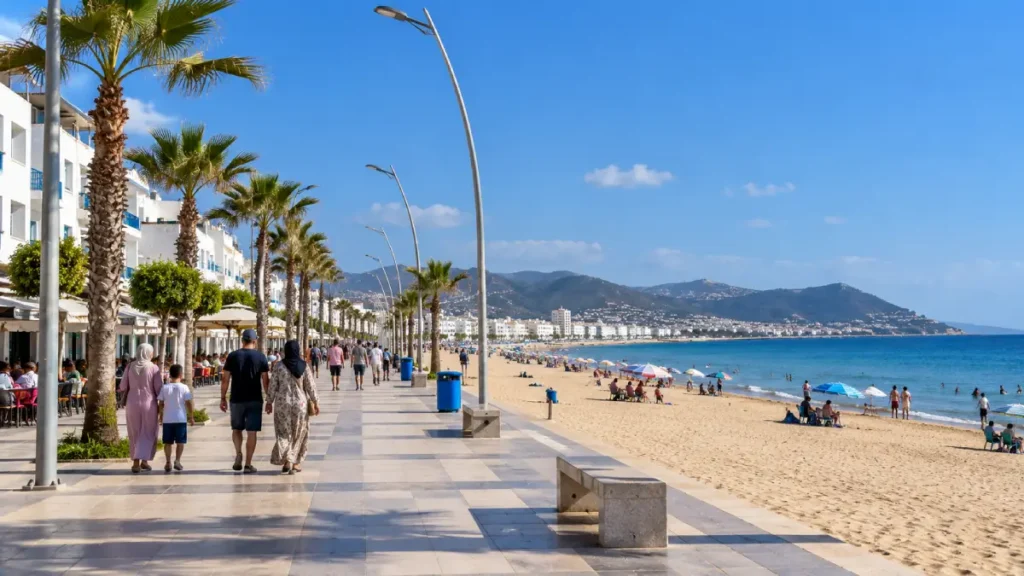
It is convenient for travelers who want to stay close to Tetouan while spending time by the sea. July and August are particularly busy, when Moroccan holidaymakers fill the beach, cafés and accommodation.
Cabo Negro for resorts and coastal leisure
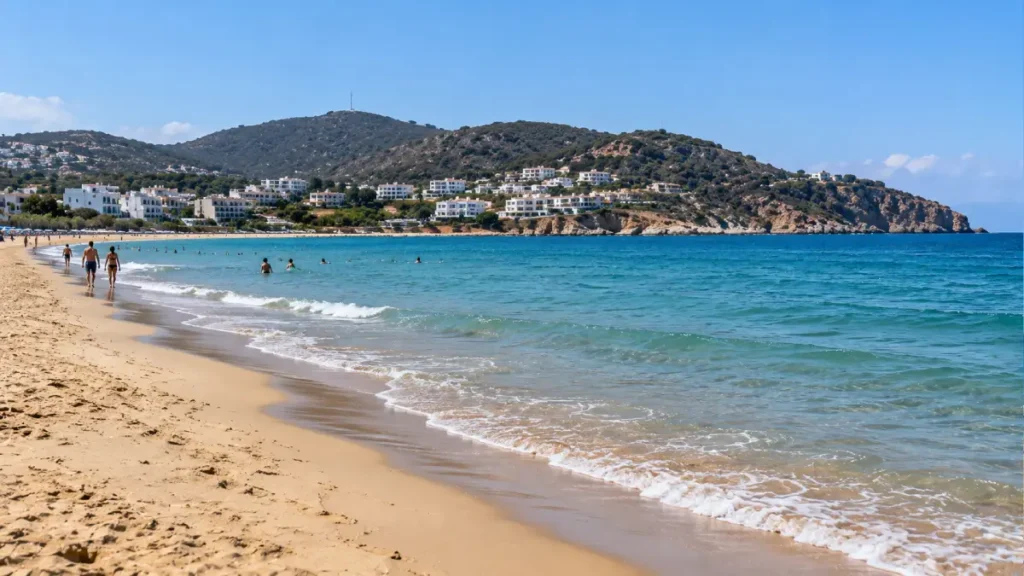
Cabo Negro lies roughly 12 to 15 kilometres from Tetouan. It is associated with modern resorts, sandy beaches, golf facilities and coastal leisure stays.
It suits travelers who prefer a more resort-oriented base than the Medina or Spanish Quarter.
M’diq for seafood and a fishing harbour
M’diq is roughly 15 to 20 kilometres from Tetouan and is particularly appealing for its fishing harbour, marina and seafood restaurants. When available, boating can also be part of the experience.
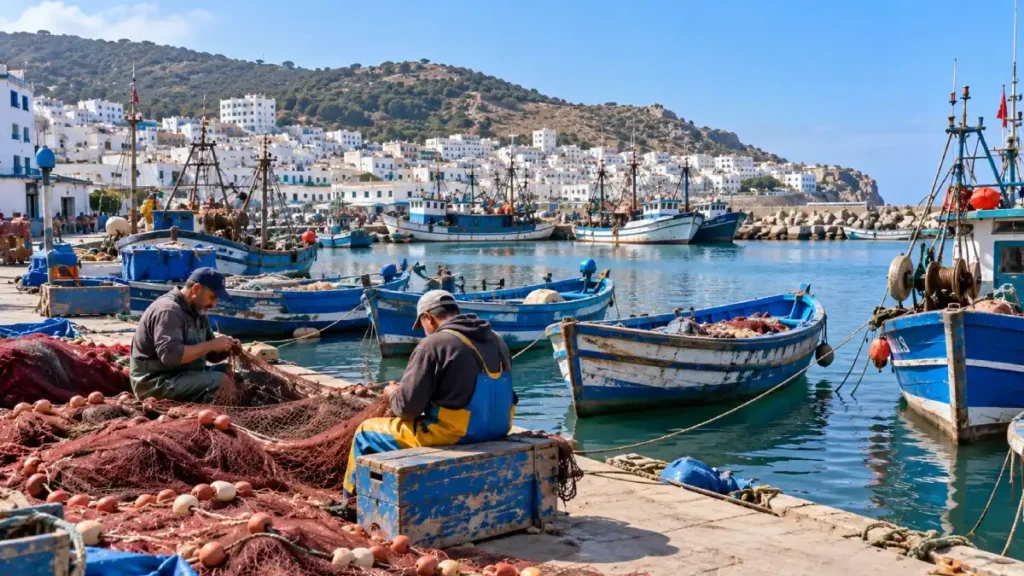
For seafood, I particularly recommend exploring M’diq and the fishing areas around Azla, where local grills and restaurants may serve fresh catch-of-the-day fish.
Marina Smir, Fnideq and Oued Laou
Marina Smir and the surrounding resort coastline offer further accommodation and leisure options. Fnideq is another practical coastal stop closer to the northern border region.
Oued Laou, around 40 kilometres from Tetouan, has a quieter feel and attractive scenery. The journey can combine a Mediterranean beach visit with views of the surrounding mountain landscape.
Mediterranean water is often calmer and warmer than Morocco’s Atlantic coast, especially in summer, but swimming conditions always depend on waves, weather, currents and lifeguard coverage. Families should use supervised beaches when possible and check conditions before entering the water.
Getting to Tetouan from Tangier, Chefchaouen and other cities
Tetouan is well positioned for a northern Morocco itinerary, although travelers should not expect a regular passenger railway connection into the city.
Tangier to Tetouan
Tangier is around 60 to 65 kilometres from Tetouan, with a typical driving time of approximately one hour. Buses generally take around one to one and a half hours depending on stops and route conditions.
Your main options are:
- Intercity bus: usually the most straightforward budget choice.
- Shared grand taxi: a common local option, although you may wait until enough passengers are ready to depart.
- Rental car: useful if you plan to combine Tetouan with beaches, rural areas or Chefchaouen.
- Private transfer: the easiest option for travellers with luggage, families or limited time.
Travelers arriving in Tangier can also consider private tours from Tangier that combine Tetouan with other northern destinations. For choosing a same-day excursion instead, see my best day trips from Tangier guide.
Tetouan to Chefchaouen
Chefchaouen is usually around one and a half to two hours from Tetouan by road, depending on the route and mountain conditions. Buses, grand taxis and private drivers are the main transport choices.
The road passes through attractive Rif Mountain scenery but includes winding stretches. Allow extra time and avoid unnecessary night driving. For planning your next stop, see my Chefchaouen travel guide.
Arriving from Fes, Rabat or Casablanca
Tetouan does not have a regular passenger railway station. Travelers coming from Fes, Rabat or Casablanca should plan for road transport or take the train to a connected city and continue by bus, grand taxi or private transfer. For the main rail corridors, see my Morocco train map.
From Fes, the road journey to Tetouan generally takes around three and a half to four hours in favourable conditions, depending on traffic and route.
Tetouan Sania Ramel Airport is only a short drive from the city centre, around six kilometres away. Tangier Ibn Battouta Airport is another arrival option, often with a wider choice of international connections, followed by a road transfer to Tetouan. If you arrive in Tangier, my Tangier Airport transfer guide explains taxis, transport choices and onward travel.
Getting around Tetouan and parking near the Medina
Walking is the best way to explore the Medina and El Ensanche. The central areas are close together, but the old city’s slopes, cobbles and steps can be tiring.
Small yellow petit taxis are useful for travelling between outer neighbourhoods, stations, accommodation and destinations beyond the centre but within city limits. They should use the meter and carry no more than three passengers. For longer trips outside Tetouan, arrange a grand taxi, bus or private transfer instead. As fares and night supplements can change, confirm how the charge is calculated before departing.
If you arrive by rental car, use designated or supervised parking outside the Medina, around the accessible edges of the historic centre or in El Ensanche. Do not assume you can drive into narrow historic streets or be dropped directly outside a Medina riad.
What to eat in Tetouan
Tetouani cuisine reflects Arab-Andalusian traditions, Mediterranean seafood and fresh ingredients from the Rif region. The city is a good place to eat simply and locally rather than limiting yourself to tourist-oriented restaurants.
Look for:
- Fresh grilled fish and fried fish platters
- Seafood tagines
- Beef or lamb tagine with prunes and almonds
- Traditional couscous
- Harira soup
- Bessara, especially as a simple breakfast or snack
- Msemen and homemade khobz
- Moroccan pastries and mint tea
- Jben, a fresh northern Moroccan cheese
- Seasonal figs, dates, nuts and local produce
Tetouan also has many inexpensive snack restaurants serving generous sandwiches and casual meals. My advice is to notice where local residents are eating, particularly at lunchtime, rather than choosing solely from tourist advertising.
Where to stay in Tetouan
Your best area depends on the kind of trip you want.
Stay in the Medina for atmosphere and history
A traditional riad in the Medina offers the most immersive stay, with tiled courtyards, Andalusian-influenced decoration and immediate access to the souks and historic streets.
The trade-off is practical: Medina accommodation may involve stairs, uneven lanes and carrying luggage from the nearest taxi drop-off point. It is less convenient for travellers with limited mobility or large suitcases.
Stay in El Ensanche for easier access
El Ensanche, especially around Avenue Mohammed V and Place Moulay El Mehdi, is often more convenient for taxi access, broad pavements, cafés and modern services. It is still within easy reach of the old city but may suit families, older travellers and visitors who prefer less complicated access.
Stay on the coast for a beach-focused trip
For a summer beach holiday, Martil, Cabo Negro or M’diq may be more practical than central Tetouan. These coastal towns offer easier access to beaches, resort facilities and seaside restaurants, though they do not provide the same historic setting as the Medina.
- Compare Tetouan riads and Mediterranean coast hotels.
- Confirm recent reviews, precise location, parking, stair access and travel time into the Medina before booking.
When is the best time to visit Tetouan?
Spring, especially April to June, and autumn, particularly September and October, are excellent periods for Tetouan. Temperatures are usually comfortable for walking, the Medina is less crowded than during peak summer and the coast is generally calmer than in the busiest holiday weeks.
Summer is best for beach time, but midday sightseeing in the historic city can be hot and coastal towns become much busier in July and August.
Winter brings cooler temperatures and occasional rain. It can still be a good period for museums, markets and uncrowded cultural sightseeing, but bring layers and allow for wet-weather plans.
Tetouan costs and daily budget
Tetouan is generally relatively affordable compared with Morocco’s most heavily visited cities, partly because many shops and cafés serve local customers.
As broad planning estimates, budget travellers can allow around 300–500 MAD per person per day for basic accommodation, local food, inexpensive transport and selected attractions; mid-range spending may reach 800–1,500 MAD per person per day with boutique accommodation and restaurant meals. These are not fixed 2026 prices; private guiding, hired vehicles and ticket choices can raise costs substantially, while shared rooms may lower per-person accommodation costs.
These are planning estimates rather than guaranteed daily costs. Prices can rise during summer, Moroccan holidays and busy coastal periods.
Practical safety and accessibility tips for Tetouan
From my experience, Tetouan is generally welcoming and comfortable for independent travellers, couples, families and solo visitors. Tourist pressure is lower than in Morocco’s busiest destinations, but normal city precautions still apply.
Keep these points in mind:
- Protect valuables in crowded markets and transport areas.
- Politely decline unwanted assistance if you do not need it.
- Agree on prices before accepting informal services.
- Use legitimate licensed guides for organised sightseeing.
- Ask before photographing people, workers or workshop interiors.
- Wear supportive shoes for sloping cobbled lanes and stairs.
- Take regular breaks if you have mobility concerns.
- Use taxis to reduce unnecessary walking between districts.
Some unofficial guides may approach visitors near Medina gates, though aggressive hassle is generally less common than in more heavily touristed cities. Travelers with only a few hours can benefit from hiring a licensed guide for the first two or three hours, particularly to understand the Medina’s history and avoid wasting time on confusing routes.
Solo female travellers should follow ordinary urban travel precautions, but there is no reason to avoid Tetouan because of its lower tourist profile.
Common mistakes to avoid in Tetouan
The most common mistake is treating Tetouan as a quick transit stop between Tangier and Chefchaouen. The city needs at least a full day to make sense.
Other mistakes include:
- Visiting only the Spanish Quarter and skipping the Medina.
- Expecting a regular passenger rail station in Tetouan.
- Arriving at midday and finding some workshops quieter or closed.
- Wearing unsuitable shoes for the Medina’s slopes and uneven surfaces.
- Trying to navigate every historic lane too quickly.
- Overlooking the city’s artistic heritage while focusing only on beaches.
- Assuming access to mosques, tanneries, workshops or museum spaces without checking first.
Plan a private Tetouan visit with a licensed guide
For travellers who want a structured introduction, a private Tetouan city tour can begin at Place Hassan II and the Royal Palace exterior, then continue through the UNESCO Medina, artisan souks, traditional workshops, tanneries and Mellah.
Depending on opening conditions and your interests, the route can include Dar Sanaa, the Ethnographic Museum, a traditional Moroccan lunch, El Ensanche, Avenue Mohammed V and Place Moulay El Mehdi. A suitable accessible viewpoint can also be included for guests interested in photography.
Private transport and licensed guiding can be arranged according to the itinerary. A professional driver does not replace a licensed guide for escorted visits in historic sites. Museum tickets, meals and extra services are included only when confirmed in the individual quotation. For a tailored private vehicle and licensed-guide arrangement, contact Morkosh Tours; or compare guided Tetouan visits.
Disclosure: Some booking links in this guide may be affiliate links. If you book through them, I may receive a small commission at no additional cost to you.
FAQ
Is Tetouan better as a day trip or an overnight stay?
Tetouan works as a day trip from Tangier if you start early and focus on the Medina and Spanish Quarter. One or two nights allow more time for museums, craft workshops, cafés and nearby Mediterranean beaches.
What is Tetouan most famous for?
Tetouan is best known for its UNESCO-listed Medina, Andalusian heritage, traditional crafts, Spanish-era architecture and proximity to Mediterranean beaches such as Martil, M’diq and Cabo Negro.
Can you visit Tetouan Medina without a guide?
Yes. Independent travellers can explore the Medina on foot, especially if they are comfortable navigating narrow streets. However, a licensed guide is useful for understanding the Mellah, artisan traditions, historical gates and less obvious architectural details.
How far is Tetouan from Tangier?
Tangier is about 60–65 km from Tetouan. By car the journey commonly takes about an hour, while buses may take around 60–90 minutes depending on departure points, stops and traffic.
Is Tetouan suitable for travellers with limited mobility?
It can be, but planning is important. El Ensanche is easier to navigate than the Medina, which has slopes, cobbles, uneven lanes and stairs. Use petit taxis where possible, choose accommodation with accessible access and plan shorter walking sections.