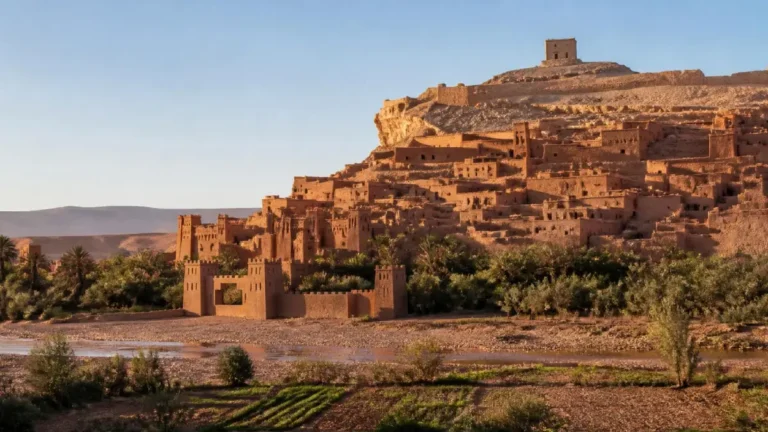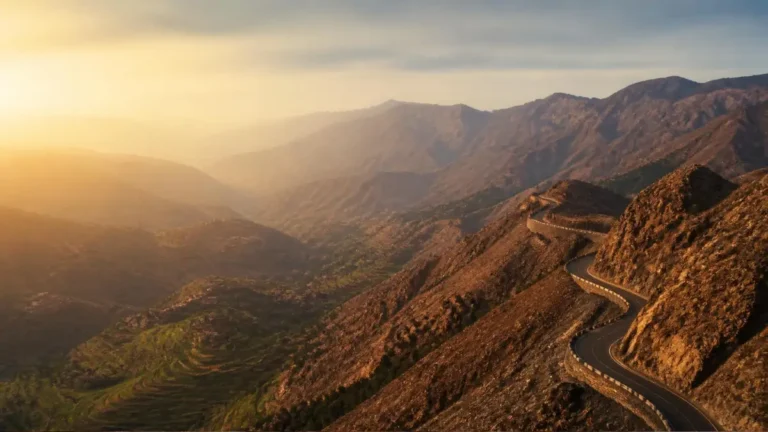
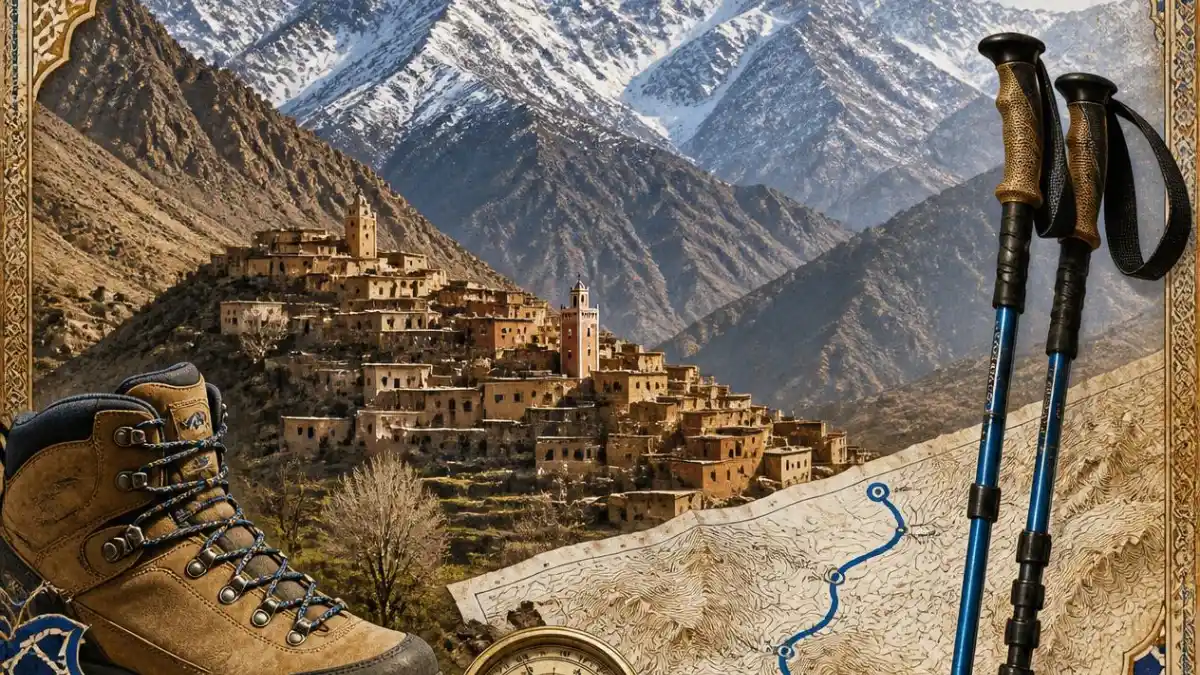
Trekking Atlas Mountains Morocco 2026: Routes, Gear & Safety
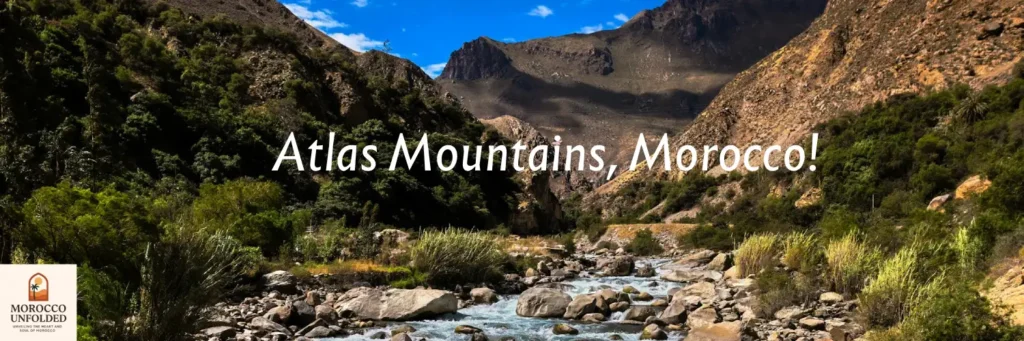
The Atlas Mountains are Morocco’s wild heart – a spine of rugged peaks, pine‑scented valleys and Berber villages that have stayed largely untouched by mass tourism. Whether you’re chasing the sunrise over Jebel Toubkal, hunting hidden waterfalls in the High Atlas, or simply breathing the fresh alpine air, a trek here is a once‑in‑a‑lifetime experience. In this guide I’ll walk you through the most popular routes for the Trekking Atlas Mountains Morocco 2026, the gear you really need, and the safety habits that keep locals and visitors alike coming back for more.
Table of Contents
Table of Contents
Why the Atlas Mountains Are a Must‑Do Trekking Destination
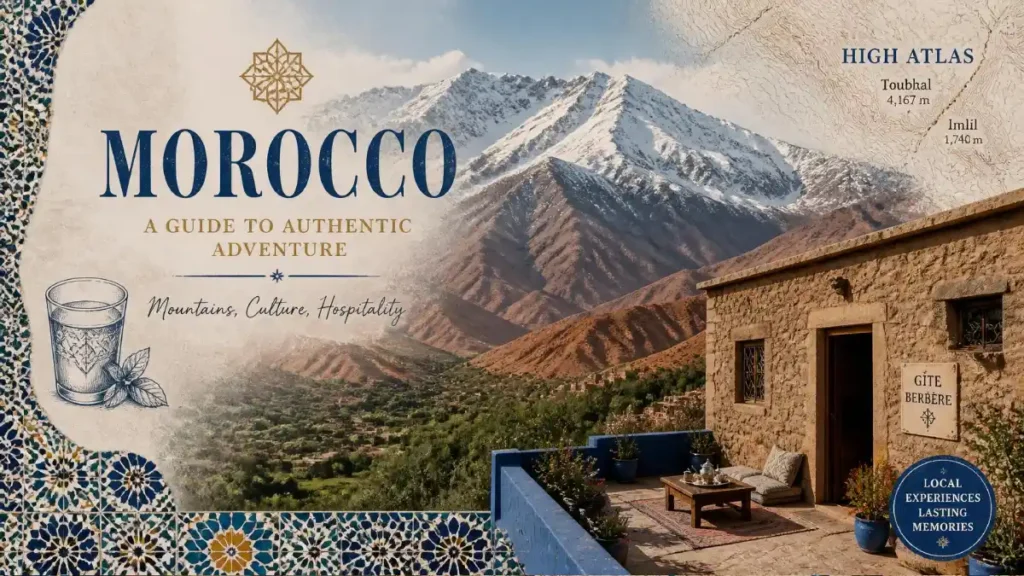
- Stunning variety – From snow‑capped summits to orange‑hued desert foothills, the range offers every landscape in one trip.
- Living culture – The Berber way of life is still very much alive. You’ll share tea with shepherds, stay in family‑run guesthouses (known locally as gîtes*), and hear stories that have been passed down for centuries.
- Accessibility – The mountains are just a short drive from Marrakech, making day‑trips possible, while longer circuits are easily combined with a visit to the coast or the Sahara.
If you need a quick overview of the region, check out my Atlas Mountains travel guide for maps, climate tips and the best times to visit.
Choosing the Right Trek: 2026 Route Overview
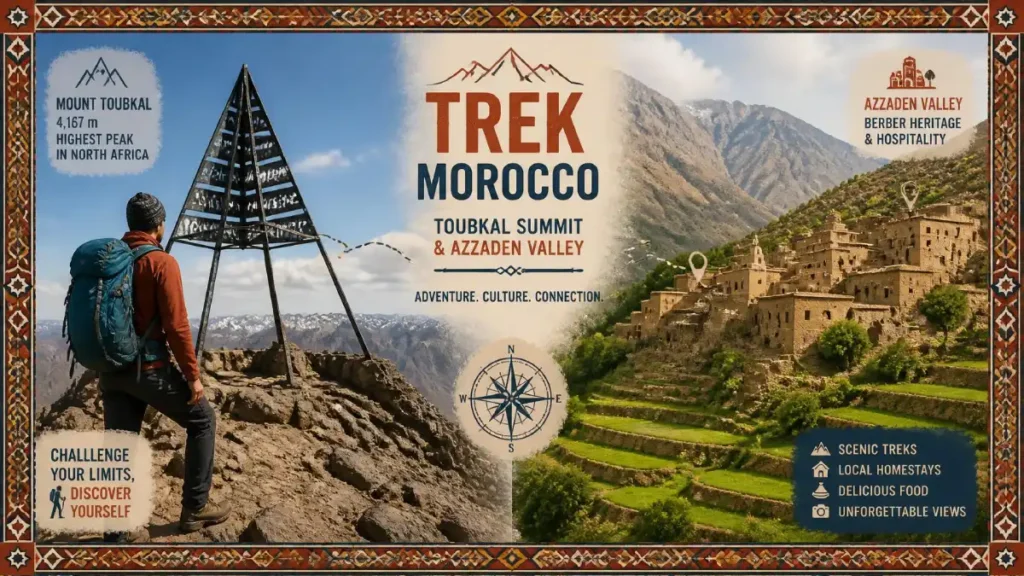
Below are the three most popular trekking options for 2026. As a local guide, I’ve refined these descriptions to reflect the actual difficulty and the logistical reality of what you will experience on the ground.
If you’re not ready for a full multi‑day trek, start with an Atlas Mountains day trip from Marrakech to Imlil, Ourika or the 3 Valleys.
1. Toubkal Summit – Classic 2‑Day Trek (Challenging)
- Distance: 32 km round‑trip from Imlil
- Highest point: 4,167 m (Mount Toubkal – North Africa’s Peak)
- Highlights: The holy shrine of Sidi Chamharouch, sleeping in a high-altitude mountain refuge, and a legendary sunrise view over the Sahara and the Marrakech plains.
Itinerary for 2 Days:
- Day 1 – Imlil to Toubkal Refuge: A steady 5 to 6-hour climb through the village of Aroumd to reach the Neltner or Les Mouflons refuge (3,207m). This is where you’ll feel the altitude for the first time.
- Day 2 – Summit & Return to Imlil: An “alpine start” at 4:00 AM to reach the peak for sunrise. After the triumph at the top, it’s a long descent back to the refuge for lunch, and then all the way back down to Imlil.
Who it’s for: Fit hikers comfortable with steep, rocky terrain (scree). This trek requires significant leg strength for the 2,400m total descent on the second day.
2. The Azzaden Valley & Toubkal Loop – 4‑Day Circular Trek (Moderate)
- Distance: 45 km total loop
- Highest point: 4,167 m (If summit included) or 3,550m (Tizi Aguelzim)
- Highlights: The “Red Valley,” traditional Berber juniper forests, and spectacular waterfalls that most day-trippers never get to see.
Itinerary for 4 Days:
- Day 1: Imlil to Ait Aissa via the Tizi Mzik pass. A beautiful introduction to Berber village life.
- Day 2: Ait Aissa to Tamsoult Summer Pastures to visit the high waterfalls.
- Day 3: Tamsoult to the Toubkal Refuge via the Tizi Aguelzim pass—famous for its 92 switchbacks and incredible views.
- Day 4: Toubkal Summit push at dawn and a final descent to Imlil.
Who it’s for: Travelers who want more scenery and better acclimatization. The Azzaden Valley is widely considered the most beautiful valley in the High Atlas.
3. Oukaimeden Plateau Walk – Easy Alpine Experience (Easy)
- Distance: 8–12 km flexible loop
- Highest point: 2,600 m (Oukaimeden Plateau)
- Highlights: Ancient Berber rock carvings (petroglyphs), high-altitude summer meadows, and 360-degree views of the Atlas peaks without the grueling climbs.
This is perfect for those staying in Marrakech who want to breathe the “High Atlas air” without committing to an overnight stay. During the warmer trekking season, Oukaïmeden is a peaceful plateau for walking and exploring its rock carvings. Winter is very different, so use my guide to skiing in Morocco at Oukaïmeden for practical advice about snow, road conditions and lift reliability. Pair this with a visit to my guide on the best day trips from Marrakech for a full-day mountain experience.
If you want to understand how all these valleys and passes connect, I’ve drawn it out in my Atlas Morocco Map & Guide.
For a better planning see my multi-day Morocco itineraries that include the Atlas Mountains.
Getting Your Bearings: Atlas Morocco Map & Navigation
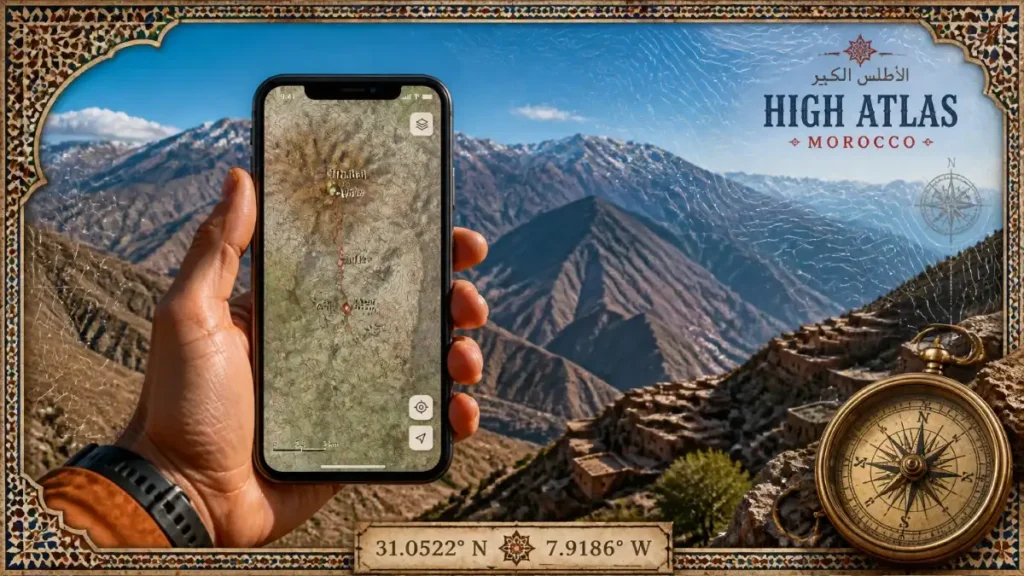
A reliable atlas morocco map is essential. I recommend printing a topographic sheet from the Moroccan National Cartographic Institute (available in most tourist offices) and complementing it with an online map of Morocco Atlas Mountains on OpenTopoMap. The interactive map lets you zoom to trailheads, see contour lines and spot water sources – a lifesaver when the weather changes fast.
Essential Gear Checklist for 2026
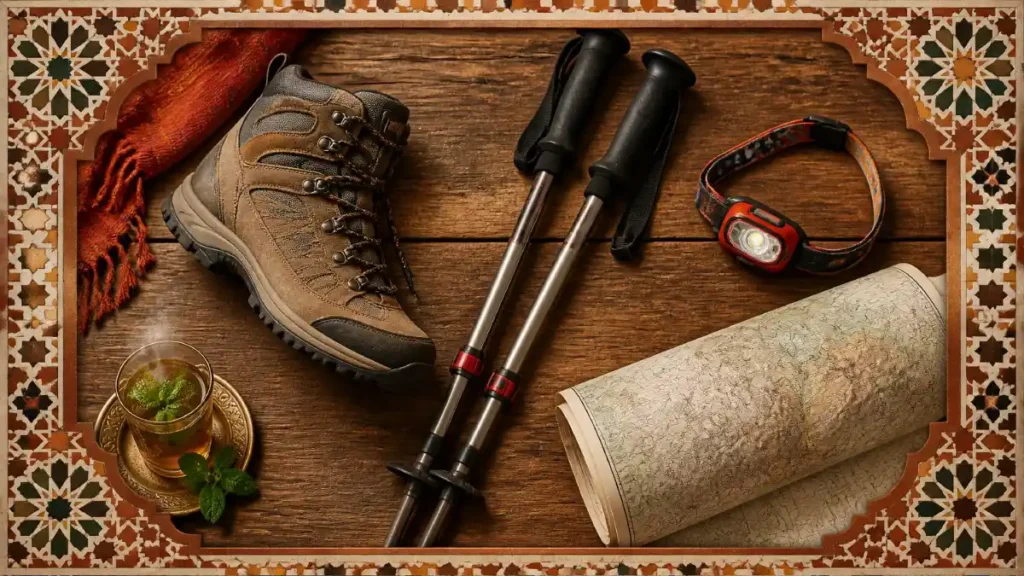
Your comfort and safety on the mountain start with the right equipment. While you can use my Morocco packing list as a baseline for your trip, high-altitude trekking requires specific gear to handle the “hot days, freezing nights” reality of the Atlas.
Clothing – The Layering System
The secret to the Atlas is versatility. You will sweat on the way up and shiver the moment you stop.
- Base Layers: Moisture-wicking merino wool or synthetic tops. Avoid cotton; once it gets wet from sweat, it stays cold.
- Insulation: A heavy fleece or a lightweight down jacket. Even in summer, summit mornings can be 0°C (32°F).
- Outer Shell: A windproof and waterproof jacket (Gore-Tex or similar). The wind on the mountain ridges is bitingly sharp.
- Trekking Pants: Lightweight, breathable trousers. I recommend zip-offs to switch to shorts in the lower valleys.
- Accessories: A warm beanie, lightweight gloves, and a buff to protect your face from dust and wind.
Footwear
Your feet are your most important asset.
- Sturdy Trekking Boots: Must have good ankle support and a stiff, lugged sole for the rocky scree on Toubkal. Crucial Tip: Make sure they are well broken-in before you arrive.
- Camp Shoes: A pair of lightweight sandals or flip-flops. Your feet will thank you when you take your boots off at the refuge or gîte.
Technical Gear
- Sun Protection: The sun at 4,000m is brutal. Bring SPF 50+, lip balm with UV protection, and high-quality sunglasses.
- Water Treatment: While we provide water on my tours, it is smart to carry a LifeStraw or purification tablets for emergencies.
- First-Aid: Focus on blister pads (Compeed), rehydration salts, and ibuprofen for altitude headaches.
For a full category-by-category breakdown of products I recommend, see my complete Morocco packing list.
Health & Safety
- First‑aid kit: Bandages, antiseptic wipes, pain relievers, blister pads, and any personal medication.
- Water treatment: UV purifier or chlorine tablets (streams are generally clean but not always safe to drink directly).
- Sun protection: SPF 50+ sunscreen, lip balm, and UV‑blocking sunglasses.
For a full inventory, see the mountain safety tips in Morocco and of course the Morocco packing list article where I break down each category with product suggestions.
Safety Tips Every Trekker Should Know
1. Acclimatization Is Key
Altitude sickness can affect anyone, even fit athletes. If you’re tackling Toubkal or M’Goun, spend at least one night at 2,000 m (Imlil is perfect) before the summit push. Hydrate well and avoid alcohol the night before.
2. Weather Can Turn Quickly
The High Atlas is notorious for sudden storms. Check the forecast on Visit Morocco each morning and keep an eye on low‑lying clouds that may indicate a rapid temperature drop.
3. Stay on Marked Trails
Most routes are well‑marked with cairns, but stray hikers sometimes create “shortcut” paths that lead to steep, unstable terrain. Stick to the established trail and use the cairns as reference points.
4. Emergency Contacts
- Local rescue: Call the Moroccan emergency number 150 for mountain rescue.
- Insurance: Make sure you have a comprehensive travel insurance policy that covers high‑altitude trekking. Our Morocco Travel Guide – trail rescue and evacuation explains what to look for.
5. Respect the Communities
When you pass through a Berber village, ask permission before taking photos and always offer a small tip for hospitality. A cup of mint tea goes a long way in building goodwill.
Cell service in the High Atlas is spotty and largely depends on your carrier. If you absolutely need connectivity for weather updates or checking in with family, a strong mobile Wi-Fi setup for remote travel combined with an external power bank is your safest bet.
Getting There: How to Reach the Atlas Mountains
By Air & Train
The nearest international gateway is Marrakech Menara Airport (≈45 km to Imlil). From the airport, you can take a ONCF train to Marrakech city centre and then a grand‑taxi (shared 4‑door sedan) to the mountain base.
By Car
Renting a car gives you flexibility to explore side valleys. The main road (N9) runs through the Tizi n’Tichka pass – a spectacular drive with several pull‑outs for photo stops.
Public Transport
Regular buses from Marrakech to Imlil run daily; the journey takes about 1 ½ hours. For the M’Goun Loop, you’ll need to arrange a private transfer or join a guided group from the Viator platform.
Where to Stay: From Mountain Huts to Cozy Guesthouses
- Refuge de Toubkal (4,250 m): Basic dormitory with bunk beds, shared kitchen, and hot showers – perfect for summit nights.
- Kasbah du Toubkal (Imlil): Family‑run guesthouse with traditional décor, excellent breakfast, and a small terrace overlooking the valley.
- Aremd Gîte (M’Goun Loop): Stone‑built rooms with wood‑burning stove; offers home‑cooked tagine and the chance to learn a few Berber words.
Booking in advance is advisable during the high season (April–June, September–October).
Sample 5‑Day Itinerary: Combining Trekking with Culture
Day 1 – Arrival in Marrakech
Explore the medina, visit the Saadian Tombs, and enjoy a sunset dinner on a rooftop.
Day 2 – Transfer to Imlil & Acclimatization
Short hike to the [atlas morocco map] viewpoint, early night in a local gîte.
Day 3 – Toubkal Summit
Start at 2 am, summit for sunrise, descend to Imlil for a celebratory dinner.
Day 4 – Berber Village Day‑Trip
Visit Ait Benhaddou (UNESCO site) and a traditional pottery workshop; return to Marrakech.
Day 5 – Departure
Relax in a hammam or shop for souvenirs before heading to the airport.
Feel free to adapt this outline to suit your interests – perhaps swap Day 4 for a coastal escape to Essaouira, or add an extra night on the M’Goun Loop for deeper immersion.
Final Thoughts & Next Steps
Trekking the Atlas Mountains in 2026 is more than a physical challenge; it’s a cultural immersion, a photography treasure hunt, and a chance to reconnect with nature in a way that few other destinations can offer. With the right preparation, solid gear, and respect for the local environment, you’ll return with stories that will last a lifetime.
Ready to start planning? Browse our Atlas Mountains destination page for detailed maps, or head over to the Morocco Travel Guide for visa, transport, and insurance information. And when you’re ready to hit the trail, don’t forget to share your photos with us – we love showcasing fellow adventurers on the blog!
FAQ: Trekking Atlas Mountains Morocco
What is the best time of year for trekking the Atlas Mountains?
April‑June and September‑October offer mild temperatures, clear skies and the most reliable trail conditions. July‑August can be hot in the valleys, while winter brings snow and closed passes above 2,500 m.
Do I need a guide for the Toubkal summit?
No, the route is well‑marked and many hikers go solo. However, if you’re uncomfortable with navigation or altitude, hiring a local guide costs around €30‑€50 per day and adds cultural insight.
How much water should I carry?
Aim for at least 2 liters per person per day. Streams are common, but always treat the water before drinking.
Are the mountain huts heated?
Most refuges have communal wood‑burning stoves. Bring warm socks, a sleeping bag rated for 0 °C, and a thin liner for extra comfort.
Can I combine a trek with a beach holiday?
Absolutely. Many travelers fly into Marrakech, trek the Atlas for 4‑5 days, then drive to Essaouira or Agadir for a few relaxing days by the Atlantic.
Happy trekking, and see you on the trail!