3 Day Desert Tour From Marrakech (2026): What Really Happens
A 3 day desert tour from Marrakech sounds simple when you read the itinerary: cross the Atlas Mountains, visit Aït Ben Haddou, ride a camel at sunset and sleep under the Sahara stars.
The reality is more complicated.
You will see some of southern Morocco’s most beautiful landscapes in a very short time. You will also spend many hours inside a vehicle, arrive late at some stops and wake up before sunrise on your final morning.
I have been guiding travelers across these roads for more than 20 years. Some guests return from Merzouga saying it was the highlight of their Morocco trip. Others tell me they wish they had added a fourth day.
Both reactions are understandable.
This guide explains what really happens during a three-day Marrakech to Merzouga tour, how much it should cost, where cheaper tours make compromises and how to decide whether this fast-paced Morocco desert itinerary is right for you.
Table of Contents
Table of Contents
Quick Answer: Is a 3 Day Desert Tour From Marrakech Worth It?
Yes, a three-day tour is worth considering when your time is limited and seeing the large Erg Chebbi dunes is a priority.
However, three days should be understood as the minimum practical duration, not a relaxed Sahara holiday.
| Quick fact | Realistic answer |
|---|---|
| Main destination | Merzouga and the Erg Chebbi dunes |
| Duration | 3 days and 2 nights |
| Approximate one-way distance | Around 550 kilometres, depending on the route |
| First night | Dades Valley, Boumalne Dades or sometimes Tinghir |
| Second night | Desert camp near Merzouga |
| Typical departure | Around 7:20–8:00 AM |
| Longest day | The return from Merzouga |
| Best for | Travelers with limited time who accept long drives |
| Better for families | Four-day route |
| Camel ride required? | No, a 4×4 transfer can usually be arranged |
| My recommendation | Choose three days for efficiency and four days for comfort |
Merzouga is one of Morocco’s main gateways to Erg Chebbi, the dune region most visitors imagine when they think about the Moroccan Sahara.
Is the 3-Day Sahara Desert Tour From Marrakech Worth It?
It can be.
The landscapes alone make this one of Morocco’s most impressive road journeys. In three days, you move from Marrakech through the High Atlas, descend into dry valleys and palm oases, pass earthen villages and finally reach the golden dunes of Erg Chebbi.
The part travelers underestimate is the distance.
You are not spending three full days in the desert. Most of the tour is a journey toward and away from the desert, with one night near the dunes.
I normally recommend this tour to:
- First-time visitors with limited time
- Couples who want to include the Sahara in a short Morocco trip
- Solo travelers comfortable joining a shared tour
- Travelers continuing from Marrakech to Fes
- People who enjoy scenic road journeys as much as destinations
I am more cautious about recommending it to:
- Families with very young children
- Travelers who struggle with long driving days
- People expecting several days among the dunes
- Photographers who need time to wait for light
- Travelers with significant back, hip or knee discomfort
- Anyone who wants a slow, spontaneous journey
The three-day route gives you the main experience. The four-day route gives you room to enjoy it.
What Really Happens on a Marrakech Sahara Tour in 3 Days?
Most tour advertisements show the destinations but not the waiting, logistics and compromises between them.
A typical Marrakech Sahara tour 3 days experience can involve:
- Collecting travelers from several hotels or meeting points
- Waiting outside the Medina where vehicles cannot enter
- Coffee and toilet stops
- Mountain-road delays
- Fixed lunch restaurants
- Short photography stops
- Optional guide fees
- Commercial visits to scarf, fossil or carpet shops
- Accommodation check-in
- Luggage transfers
- Waiting for the camel departure
- Driving after sunset
- A very long final day
None of this automatically makes the tour bad. It simply means you should understand the pace before paying.
A private tour reduces many of these frustrations because you are not waiting for other passengers. You can also decide whether a photography stop, shop or restaurant is worth your time.
Day 1: Marrakech to Dades Valley Through the High Atlas
The first day introduces you to the diversity of southern Morocco.
A normal route follows:
Marrakech → Tizi n’Tichka Pass → Aït Ben Haddou → Ouarzazate → Skoura → Valley of Roses → Dades Valley
Morning pickup in Marrakech
Most tours depart between 7:20 and 8:00 AM.
A vehicle may collect you directly from your hotel when it is accessible. Many riads inside the Marrakech Medina cannot be reached by car, so you may need to walk to a nearby meeting point.
Confirm these details the day before:
- Exact pickup point
- Pickup window
- Driver’s name or company
- Vehicle type
- Luggage allowance
- Emergency contact number
Shared departures may involve several collections before leaving Marrakech. A private tour normally departs once your group is ready.
Crossing the Tizi n’Tichka Pass
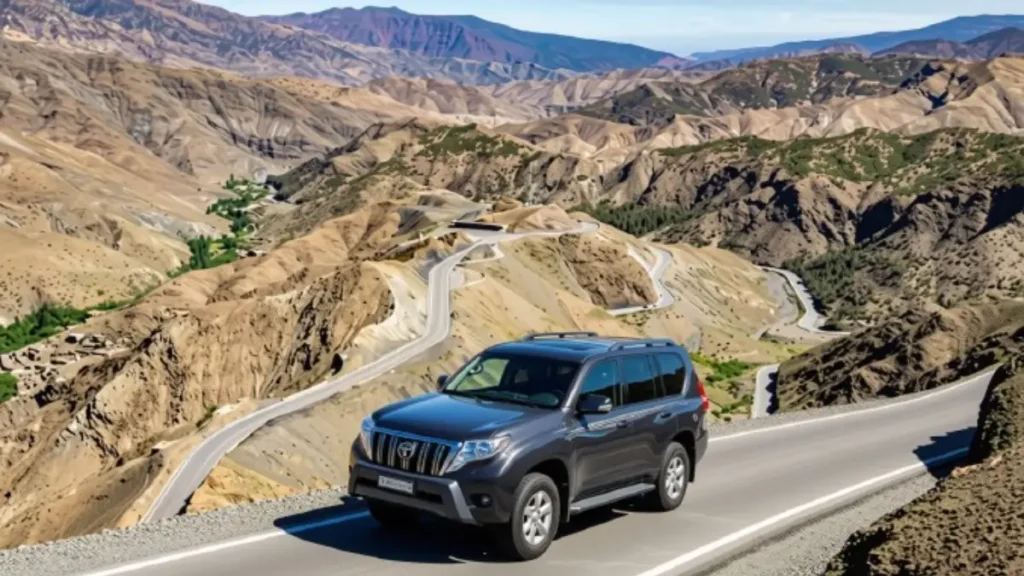
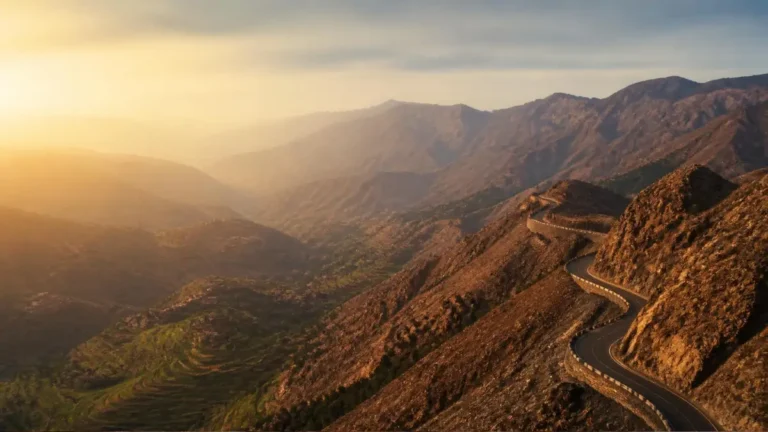
The road climbs into the High Atlas through long bends, villages, valleys and exposed mountain sections.
This is where map estimates become misleading. The distance may not look enormous, but the road requires slower driving than a motorway.
Travelers prone to motion sickness should prepare before departure. I usually suggest:
- Eating a light breakfast
- Avoiding a large amount of acidic juice
- Sitting near the front when possible
- Looking toward the road rather than reading
- Bringing any motion-sickness treatment you already know works for you
- Keeping water and light snacks nearby
Do not take unfamiliar medication without professional advice.
There are normally stops for coffee, toilets and mountain photographs. On a shared tour, the exact stops follow the company’s schedule. With a private driver, you can stop when the view or your energy level makes sense.
For a deeper look at mountain roads, use my Atlas Morocco map and mountain-pass guide.
Visiting Aït Ben Haddou without rushing
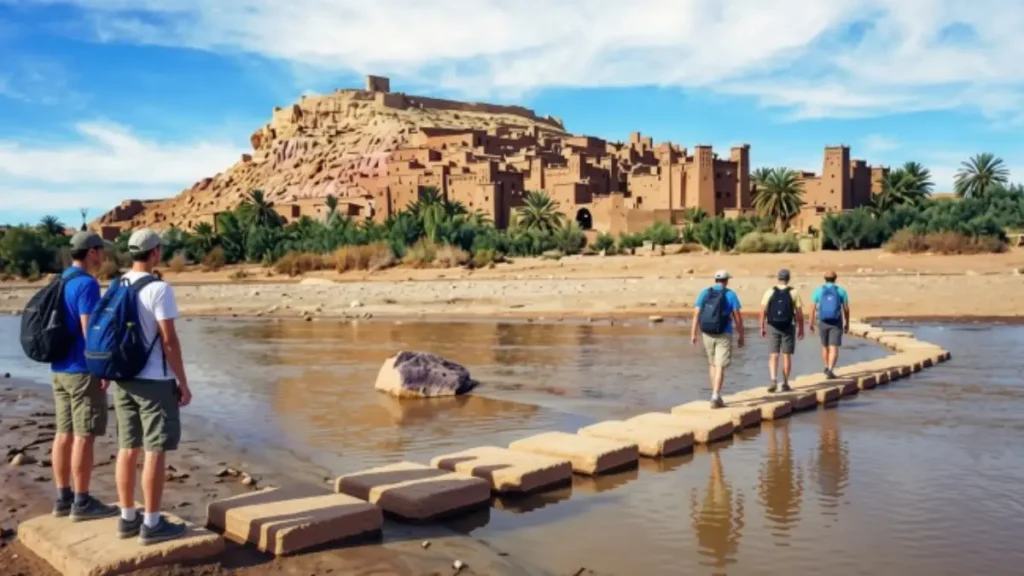
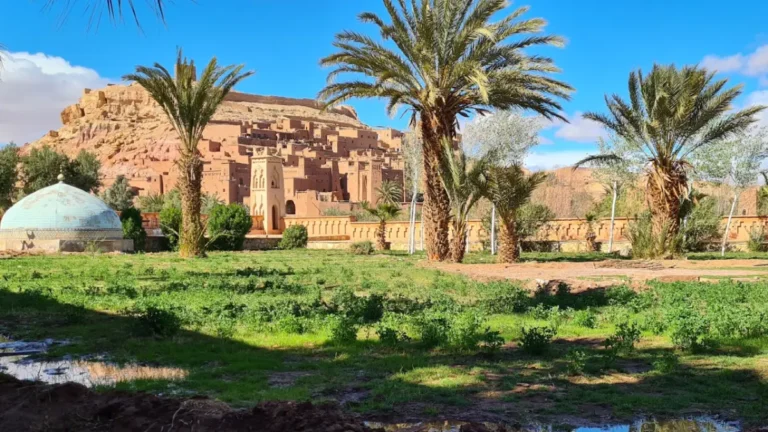
Aït Ben Haddou is usually the main cultural stop on Day 1.
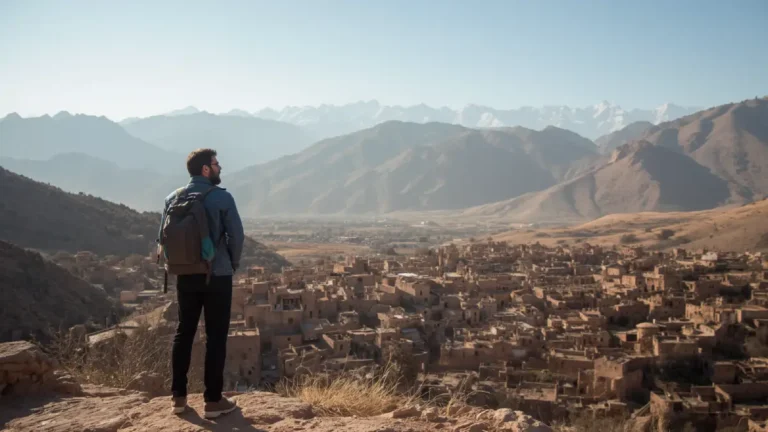
It is a ksar, meaning a fortified community rather than one individual kasbah. UNESCO describes it as an important example of southern Moroccan earthen architecture, with homes and community spaces protected by defensive walls and corner towers.
The most common three-day-tour experience includes:
- A panoramic photograph from across the river
- A bridge crossing into the ksar
- A walk through the lower passages
- A climb toward a viewpoint when access permits
- Lunch nearby
A local guide may not be included in the base tour price. Agree on the fee before starting and ask whether the price is per person or per group.
You can visit independently, but a knowledgeable guide helps explain the architecture, caravan history and difference between a ksar and a kasbah.
The problem is time.
A rushed group may allow less than an hour. That is enough for photographs and a short walk, but not enough to understand the place properly.
Read my Aït Ben Haddou Travel Guide for current access advice, walking conditions and local fees.
Ouarzazate: real stop or photo stop?
Ouarzazate is often described as a major stop, but the reality depends on the tour.
Some itineraries include lunch in or near the city. Others only pause for a photograph outside Kasbah Taourirt or Atlas Film Studios.
A complete studio visit is rarely realistic on a tightly scheduled three-day tour unless another stop is shortened.
Travelers who want to understand the city should read my Ouarzazate Travel Guide. The separate Marrakech to Ouarzazate guide also explains the mountain route in more detail.
Skoura, the Valley of Roses and Boumalne Dades
After Ouarzazate, the landscape opens into palm groves, dry plateaus and villages.
Skoura is normally passed through rather than explored. The route continues toward Kelaat M’Gouna and the Valley of Roses before reaching Boumalne Dades.
By this point, guests often understand why the first day takes longer than expected. There are many places worth stopping, but the hotel may still be hours away.
First night in the Dades Valley
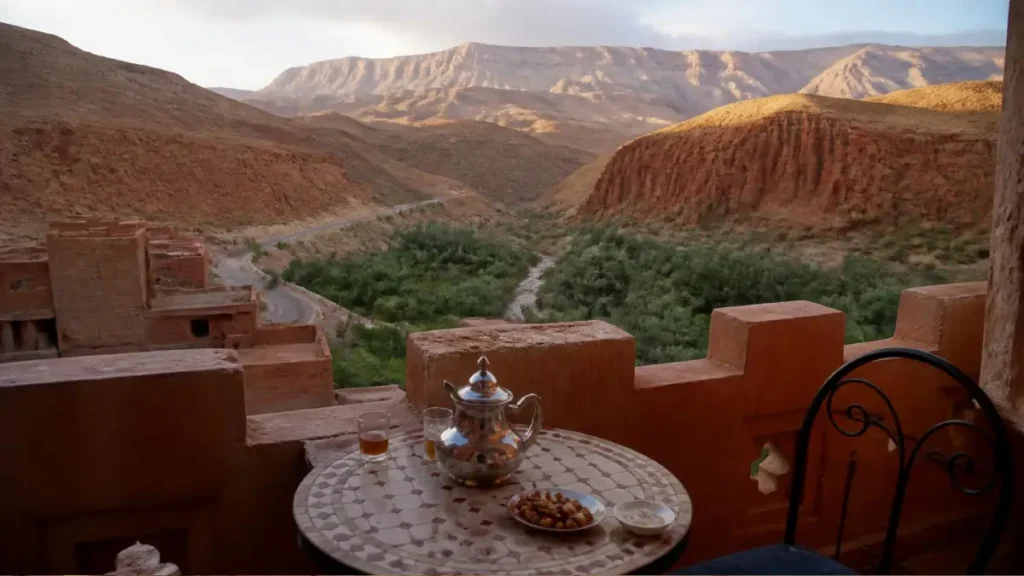
The first-night hotel can change the feeling of the entire tour.
A budget room may be clean but simple, with basic heating, limited hot water or little sound insulation. A better kasbah-style guesthouse may offer comfortable bedding, a terrace and views across the valley.
I recommend asking for the hotel name before booking.
Check:
- Recent guest reviews
- Heating in winter
- Air conditioning in warmer months
- Private bathroom
- Dinner quality
- Road access
- Room configuration
- Valley or roadside location
One of the quiet pleasures of this route is arriving in Dades, receiving mint tea and watching the last light move across the rock formations. This moment rarely appears in the tour headline, but guests often remember it as clearly as the dunes.
Dinner and breakfast are normally included. Drinks may be extra.
Day 2: Dades Valley, Todra Gorge and Merzouga
Day 2 is when the landscape begins to feel more desert-like.
The usual route is:
Dades Valley → Todra Gorge → Tinghir → Tinjdad → Erfoud → Rissani → Merzouga
Dades Gorge and the winding road
Depending on the hotel location and schedule, you may stop near the “monkey fingers” rock formations or drive farther into the gorge.
The famous winding section of road makes a good viewpoint, but reaching it requires additional time. Some shared tours include it. Others show it from a distance or skip it when the group is running late.
Ask whether the Dades Gorge stop is included or whether “Dades” only refers to the overnight location.
Walking beneath the cliffs of Todra Gorge
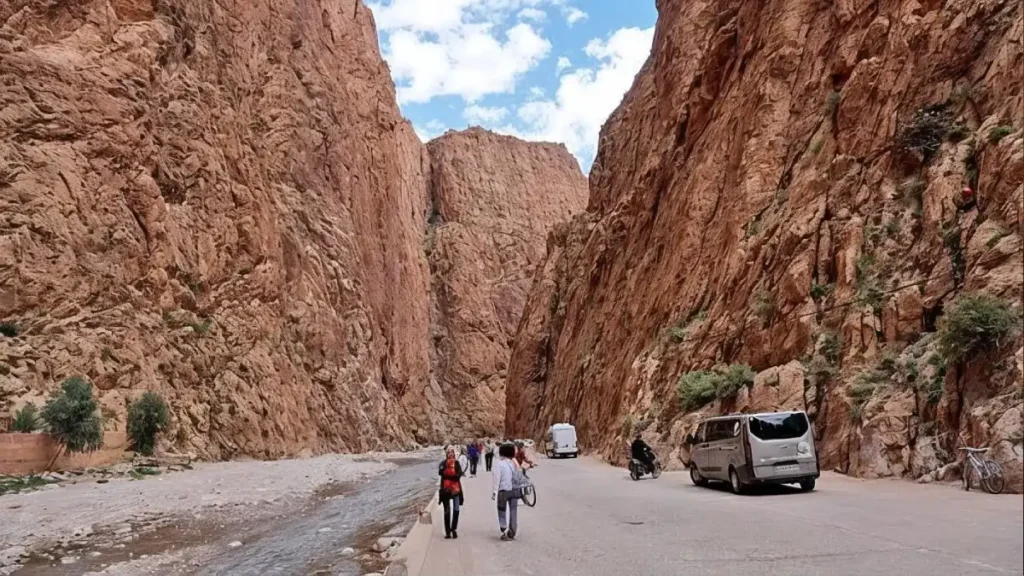
Todra Gorge is a genuine stop on most tours.
Travelers normally get around 15–30 minutes to walk near the river beneath the high limestone walls. The area can be peaceful early in the day and busy when several tour vehicles arrive together.
Twenty minutes is enough to stretch your legs and see the narrowest section. It is not enough for a proper hike or slow photography.
This is one of the places guests often describe as rushed. A private itinerary can normally allow more time, but adding time here may mean reaching Merzouga later.
Lunch and roadside restaurants
Lunches are frequently excluded.
A typical meal may cost around 60–150 MAD per person, depending on the restaurant and what you order.
Tour groups often stop at restaurants that can park several vehicles, serve quickly and handle different dietary requests. These places are practical, but they may cost more than small local restaurants in Marrakech.
Before ordering:
- Ask for the menu
- Confirm the price
- Check whether drinks are included
- Explain dietary needs clearly
- Avoid ordering food that looks as though it has been sitting for a long time
On a private tour, ask your driver whether there is a smaller local option that fits the schedule. It will not always be possible, but flexibility is one advantage of private travel.
Erfoud and Rissani
Erfoud is known for fossils and stone workshops. Many tours include a short commercial stop.
You are not required to buy anything.
Rissani is historically important and has a traditional market, but a short three-day itinerary rarely allows an in-depth visit. Depending on the day, the tour may stop briefly, pass through or continue directly toward Merzouga.
Arriving at Merzouga
Many groups aim to reach the edge of the dunes around 4:00 PM, but this is not guaranteed.
Arrival depends on:
- Daylight hours
- Season
- Road conditions
- Lunch duration
- Group delays
- Time spent at Todra Gorge
- Hotel location
- Camel-departure arrangements
When you arrive, the staff normally separate overnight luggage from the suitcases staying in the vehicle.
Keep these items in a small bag:
- Warm layer
- Toiletries
- Medication
- Camera
- Power bank
- Water
- Sleepwear
- Headlamp
- Documents and valuables
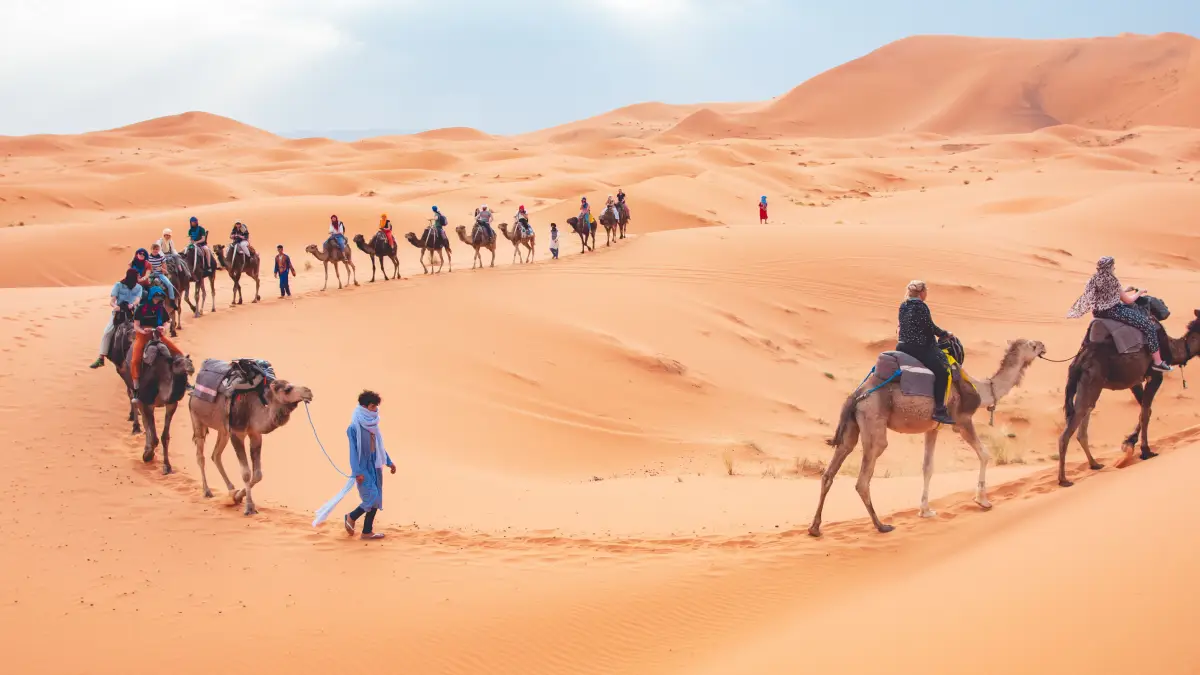
The sunset camel trek
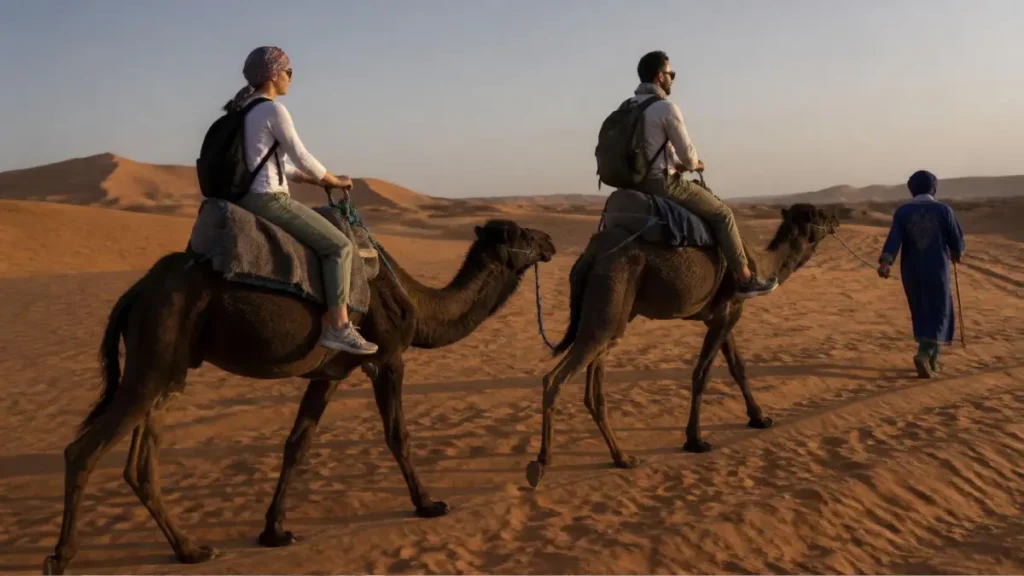
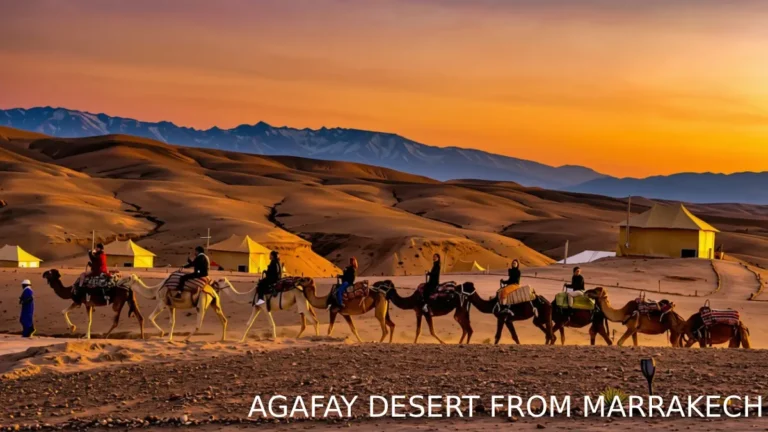
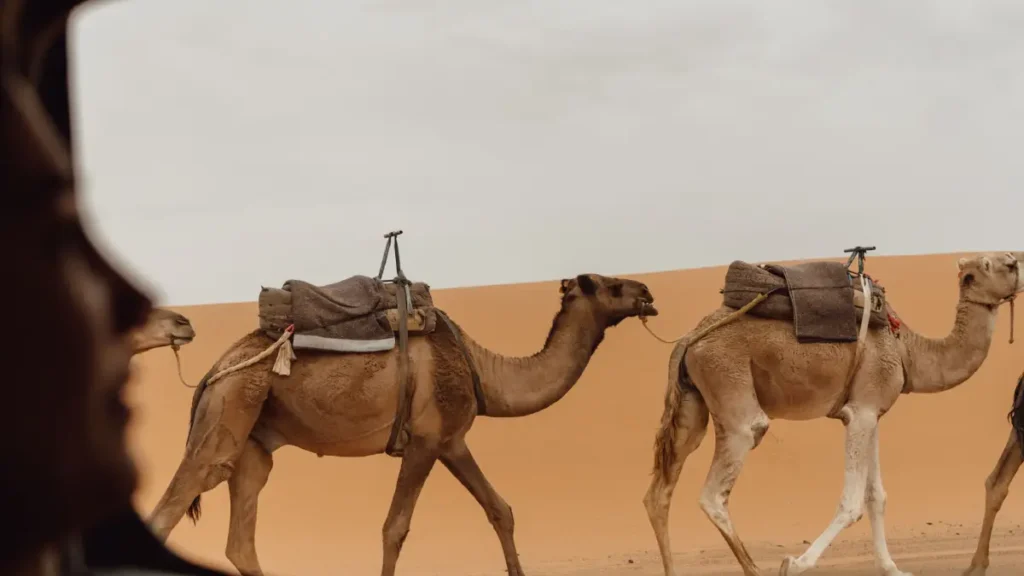
The camel ride is the emotional centre of the journey for many travelers.
Mounting can feel awkward. The camel rises in stages, so listen carefully to the handler and hold the saddle firmly.
The ride may last roughly 45–90 minutes depending on the camp, weather and starting point. Do not assume every tour includes a full 90-minute trek.
Wear trousers that allow easy movement. Tight jeans, short clothing and thick seams can become uncomfortable after an hour in the saddle.
A scarf is useful for sun, wind and blowing sand, but you do not need to buy one unless you actually want it.
Can you skip the camel ride?
Yes.
A 4×4 transfer can usually be arranged for travelers who:
- Do not feel comfortable around camels
- Have limited mobility
- Are pregnant
- Have back, hip or knee concerns
- Prefer a quicker transfer
- Are traveling with a child who does not want to ride
The 4×4 journey may take around 15–20 minutes, depending on the camp location and track.
There is no prize for forcing yourself onto a camel. The goal is to experience the desert safely and comfortably.
What Happens at a Merzouga Desert Camp?
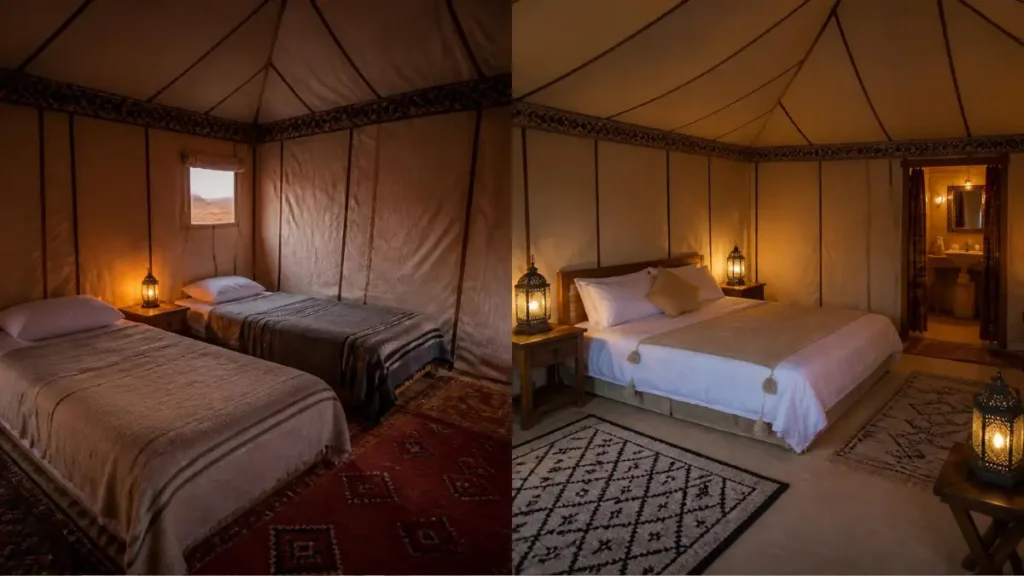
The camp experience varies more than almost any other part of the tour.
Two listings may both use the phrase “luxury desert camp” while offering completely different levels of comfort.
What to expect from a standard camp
A basic or standard camp may offer:
- Simple private or shared tents
- Basic beds or mattresses
- Blankets
- Shared toilets
- Limited hot water
- Limited electricity
- Dinner
- Music around a fire
- A social group atmosphere
Standards differ. Some basic camps are clean, friendly and well managed. Others feel overcrowded or poorly maintained.
What to expect from a higher-comfort camp
A better-equipped camp may include:
- Private tent
- Ensuite bathroom
- Proper bed
- Better linen
- Hot shower
- Charging point
- More private dining
- Improved heating arrangements
- Fewer guests
- Better staff-to-guest ratio
Heating is not guaranteed simply because a bathroom is private.
Do not trust the word “luxury” by itself
Ask for:
- Exact camp name
- Current photographs
- Google Maps location
- Private or shared bathroom
- Hot-water arrangements
- Heating in winter
- Electricity schedule
- Bed type
- Number of guests
- Camel and 4×4 transfer options
A beautiful photograph of one premium tent does not prove that your booking includes that tent.
Dinner, music and stargazing
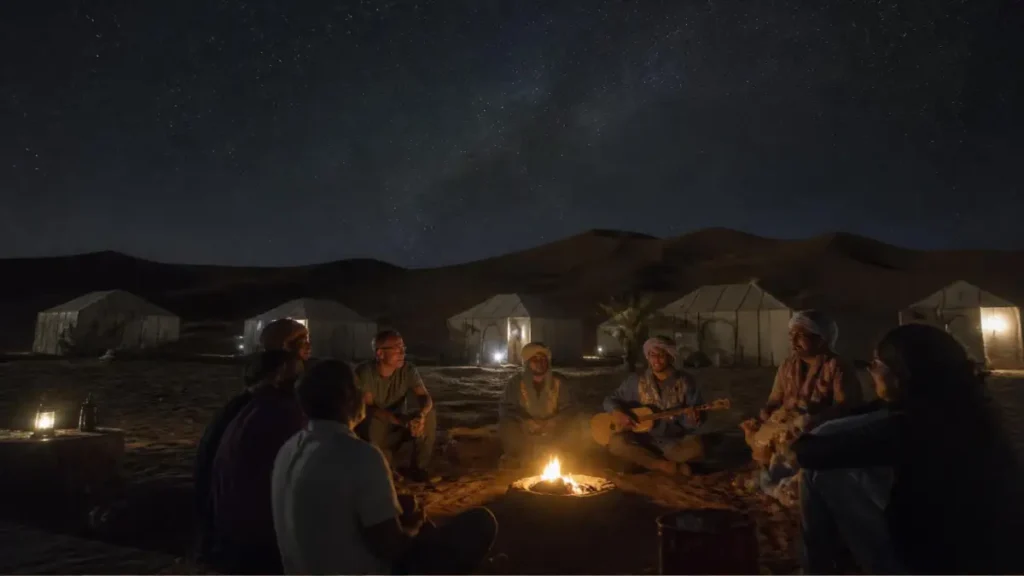
Dinner is usually served after guests have settled into their tents.
The evening may include Amazigh music and drumming around a fire. This is normally an organized camp activity rather than an accidental gathering of nomads.
That does not make it meaningless. The atmosphere can still be warm and enjoyable, especially when the group participates respectfully.
Later, move away from the brightest camp lights and look at the sky.
Guests often tell me the silence surprises them more than the dunes. Without city traffic and strong urban light, the desert can feel much larger than it looked in photographs.
Day 3: Sunrise and the Long Return to Marrakech
Day 3 begins early.
Sunrise wake-up may be around 5:30 or 6:00 AM, depending on the season. Some guests climb a nearby dune. Others watch from close to camp.
Sunrise is not guaranteed to be dramatic. Clouds, haze or wind can soften the colors. It is still worth waking up for the quiet.
After sunrise, guests return by camel or 4×4, have breakfast and begin the longest driving section.
The standard return problem
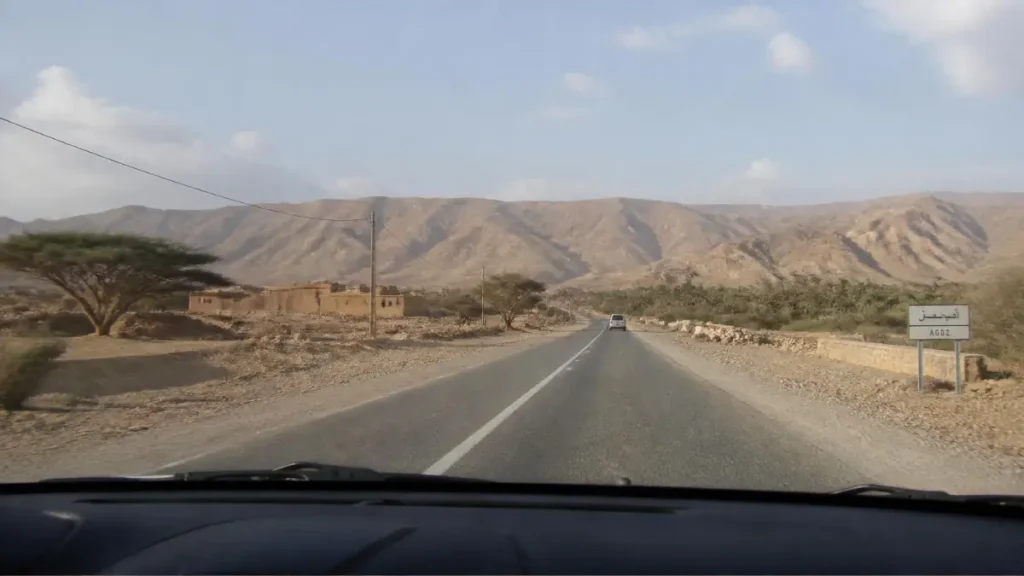
Many budget tours backtrack west toward Ouarzazate and Marrakech.
The current Morkosh three-day route instead travels through Rissani, Alnif, Tazarine, Nkob, Agdz and the Draa Valley before crossing back toward Marrakech. Its live itinerary currently gives an estimated Marrakech arrival around 5:00–6:00 PM, although real arrival times always depend on stops and road conditions.
This alternative shows different scenery, but it is still a long day.
Plan for an evening arrival rather than booking:
- An early train
- A domestic flight
- A non-refundable dinner
- A tightly timed airport transfer
- Another long excursion
A delayed return does not always mean poor organization. Mountain traffic, roadworks, weather and extra guest stops can all affect the final time.
How Much Driving Is Involved?
Travelers often hear “18–20 hours of driving,” but the experience does not divide evenly.
| Day | Route | What it feels like |
|---|---|---|
| Day 1 | Marrakech to Dades | Long, but broken by mountains and major stops |
| Day 2 | Dades to Merzouga | Substantial drive with gorge and lunch stops |
| Day 3 | Merzouga to Marrakech | The longest and most tiring day |
The exact total varies because sightseeing detours, accommodation locations and return routes differ.
The better question is not only “How many hours?”
Ask:
How many consecutive hours will I sit before the next meaningful stop?
A good driver breaks the road into manageable sections. A very cheap operator may prioritize speed, restaurant agreements and group logistics over comfort.
What Instagram Does Not Show
The dunes are beautiful. The sunset can be extraordinary. The road also has a less photogenic reality.
You spend more time traveling than riding camels
The camel experience may last around an hour. The complete journey covers more than 1,000 kilometres.
Cheap minibuses can feel cramped
Seventeen seats may mean very limited personal space, especially when luggage is added.
Not every desert camp is isolated
Some camps are close to other camps, tracks or villages. Music from another camp may carry through the night.
Camel riding can become uncomfortable
The first few minutes feel exciting. After an hour, your hips and inner legs may feel the movement.
Winter nights can be genuinely cold
A thick blanket helps, but it does not heat the air inside the tent.
Summer can restrict the experience
The Moroccan National Tourist Office identifies spring and autumn as the best periods for Sahara travel. Summer conditions in southern Morocco can be extremely hot, reducing the time you comfortably spend outdoors.
Roadside stops may be commercial
Fossil workshops, scarf shops and fixed restaurants can be part of the tour logistics.
A polite “no, thank you” is enough when you are not interested.
3 Day Desert Tour From Marrakech Prices in 2026
Prices are difficult to compare because operators package the tour differently.
One price may include lunches, an ensuite camp and a private guide. Another may cover only transport, basic accommodation, breakfast and dinner.
Current marketplace listings show shared options around the mid-US$100 range, while private options can cost several hundred dollars per group. Prices change by date and availability.
Use these ranges only for initial planning:
| Tour type | General planning range | Best suited to |
|---|---|---|
| Budget shared tour | About €85–€150 per person | Backpackers and budget solo travelers |
| Small-group comfort tour | About €160–€250 per person | Travelers wanting fewer passengers |
| Private standard tour | Often €350–€550+ per person for two | Couples, families and photographers |
| High-comfort private tour | Often €500–€800+ per person | Travelers prioritizing accommodation and flexibility |
| Premium custom experience | Can exceed these ranges considerably | Bespoke hotels, vehicles and special services |
Morkosh Tours currently publishes €450 per person for a minimum of two travelers for its private three-day Marrakech to Merzouga tour, with discounts for larger groups. The live package lists private transport, accommodation, meals, a luxury tent and camel trekking, but travelers should always confirm the final written inclusions before paying.
Why private prices fall with larger groups
A large part of the cost comes from:
- Vehicle
- Driver
- Fuel
- Driver accommodation
- Route logistics
Two travelers divide these costs between two people. Four or six travelers divide them more widely.
Accommodation and meals still increase with group size, so the final price does not fall in a perfectly straight line.
What Is Usually Included?
A reputable package may include:
- Air-conditioned transport
- Driver or driver-guide
- Fuel
- Marrakech pickup
- First-night hotel
- Desert camp
- Two breakfasts
- Two dinners
- Camel transfer
- 4×4 transfer when arranged
- Marrakech drop-off
Never assume all tours follow the same definition of “included.”
Ask for a written list.
What Is Usually Excluded?
Common exclusions include:
- Lunches
- Drinks
- Local guide at Aït Ben Haddou
- Entrance fees
- Tips
- Quad biking
- Travel insurance
- Souvenirs
- Alcohol
- Room upgrades
- Luxury-camp upgrades
- Additional activities
A low headline price can become less attractive after meals, guide fees and accommodation upgrades are added.
Shared Tour vs Private Tour
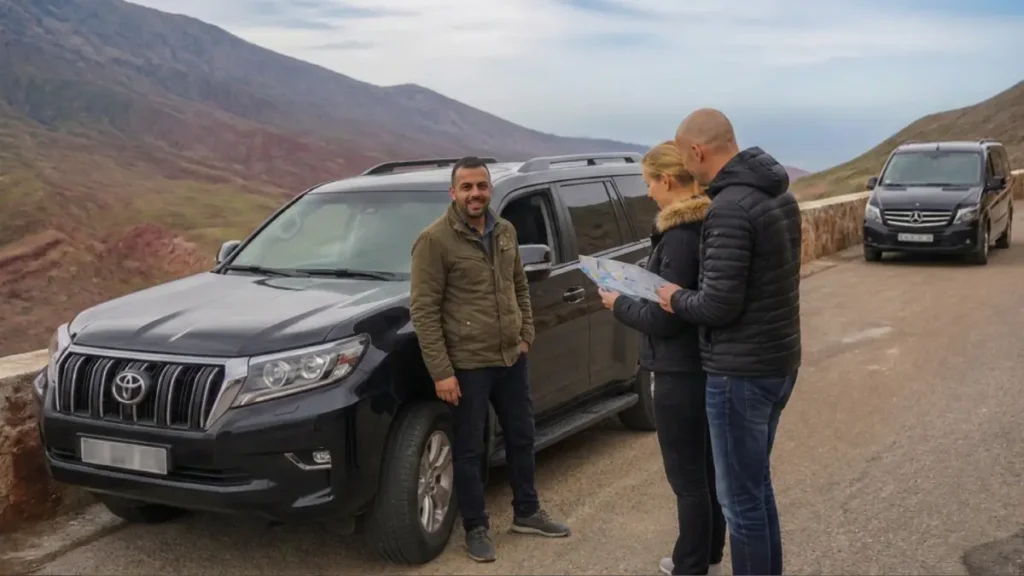
Choose a shared tour when:
- Budget is the main concern
- You are traveling alone
- You enjoy meeting people
- You accept a fixed schedule
- You do not mind predetermined restaurants
- You are comfortable with basic accommodation
Large booking platforms currently carry many shared and private Merzouga options, including tours with hotel pickup, camel rides and camp accommodation.
You can compare current options on:
Affiliate disclosure: Some booking links may earn Morocco Unfolded a commission at no extra cost to you. The advice in this guide remains based on practical suitability, not commission.
Choose a private tour when:
- You want control over stops
- You are traveling as a couple or family
- You want named accommodation
- You need a slower pace
- You have mobility considerations
- You want to finish in Fes
- Photography is important
- You want to avoid large tourist restaurants
- You prefer direct communication with the operator
Private does not automatically mean luxury.
It means the vehicle and route are arranged for your group.
Standard Camp vs Luxury Desert Camp
| Feature | Standard camp | Higher-comfort camp |
|---|---|---|
| Bathroom | Often shared | Usually private |
| Shower | Basic or unavailable | More likely to be hot |
| Bedding | Basic bed or mattress | Proper bed and better linen |
| Electricity | Limited | Usually available for part of the night |
| Heating | Rare | Sometimes available |
| Privacy | Lower | Better |
| Atmosphere | Social and active | Quieter |
| Price | Lower | Higher |
My advice is simple:
Ask for the actual camp, not the camp category.
Marrakech to Merzouga or Marrakech to Fes?
A one-way Marrakech to Fes desert tour itinerary is often more efficient than returning to Marrakech.
The first two days remain similar. On Day 3, you travel north from Merzouga through:
- Ziz Valley
- Errachidia
- Midelt
- Middle Atlas landscapes
- Cedar country
- Ifrane
- Fes
Morkosh’s live three-day Marrakech-to-Fes tour follows this general route and currently publishes a price of €600 per person for a minimum of two travelers.
Choose the Fes ending when:
- Fes is already part of your itinerary
- Your next hotel is in northern Morocco
- You want to avoid returning over the same general region
- Your international travel plans allow it
Return to Marrakech when:
- Your flight leaves Marrakech
- Your main luggage is stored there
- You have prepaid accommodation
- Your wider route continues toward Essaouira or the Atlantic coast
Merzouga or Zagora for a Short Desert Tour?
Merzouga is farther from Marrakech but offers access to the large Erg Chebbi dunes.
Zagora is closer and works better for a two-day trip, but the landscape is generally rockier and the dunes are smaller.
For travelers imagining tall golden dunes, Merzouga is usually the better match.
For travelers with only one night available, Zagora may be more realistic.
Read my Erg Chebbi vs Erg Chigaga comparison and Best Sahara Desert Tours guide before choosing.
Is Three Days Enough for the Sahara?
Three days are enough to:
- Cross the High Atlas
- Visit Aït Ben Haddou
- Sleep in Dades
- See Todra Gorge
- Reach Merzouga
- Ride a camel
- Spend one night at a camp
- Return to Marrakech or continue to Fes
Three days are not enough to:
- Explore every major stop slowly
- Spend a full day in the dunes
- Visit nomadic families without rushing
- Enjoy extended photography sessions
- Take long hikes
- Recover between driving days
Three days
Best when time is limited.
Four days
Better for families, photographers, older travelers and anyone who dislikes rushing.
Five days
Better for deeper exploration, cultural visits and combining the Sahara with less-visited southern routes.
Best Month to Visit the Merzouga Sahara Desert
Spring and autumn are normally the most comfortable periods for a Merzouga tour from Marrakech. Morocco’s official tourism office also recommends spring and fall for Sahara travel.
March to May
Good temperatures and high demand. Book well ahead during Easter and popular spring weeks.
September to November
Another strong period with warm days and generally more comfortable touring conditions than midsummer.
December to February
Days can be pleasant, but desert nights and mountain mornings can feel very cold. Confirm heating and bedding.
June to August
Expect serious heat. The itinerary may require earlier camel rides, later outdoor activity and greater reliance on air conditioning.
I do not automatically tell every traveler to cancel a summer trip. I do tell them to understand what midday heat does to walking, camp comfort and energy.
What to Wear for a Camel Ride in Morocco
Choose clothing that protects you without restricting movement.
Good options include:
- Loose trousers
- Comfortable leggings under a longer layer
- Breathable shirt
- Light scarf
- Sunglasses
- Secure shoes
- Warm layer for after sunset
Avoid:
- Very tight jeans
- Short skirts
- Shorts that expose skin to the saddle
- Clothing with thick inner seams
- Loose items that may fall
- Expensive jewelry
Closed walking shoes are practical, but you do not need heavy hiking boots for a normal camp transfer.
Luggage Advice
Leave your main suitcase in Marrakech only when:
- You are returning to the same city
- Your accommodation agrees to store it
- You do not need the contents during the tour
Travelers continuing to Fes must bring their main luggage.
Large suitcases normally remain inside the vehicle or luggage compartment while you take a small bag into camp.
Never leave these behind:
- Passport
- Money
- Medication
- Phone
- Camera
- Travel documents
- Valuables
A drone, unless you have obtained the required written authorization before traveling. Moroccan Customs warns that undeclared drones may be confiscated and penalties may apply.
For a complete regional checklist, read my Morocco Packing List 2026.
Ordinary tourists should not bring a drone to Morocco without written authorization obtained before travel.
Is the Tour Suitable for Children and Older Travelers?
There is no universal age rule.
The question is whether the traveler can handle long vehicle days.
Families with children
Some children love:
- Camels
- Sandboarding
- Camp music
- Sleeping in a tent
- Watching the landscape change
The difficult part is the road.
For toddlers and children who struggle in vehicles, I normally recommend a four-day itinerary.
Older travelers
Age alone is not the problem. Comfort, mobility and tolerance for sitting matter more.
Ask for:
- Regular breaks
- Easy vehicle access
- Ground-level rooms
- 4×4 camp transfer
- Private bathroom
- Better bedding
- Slower four-day pacing
Travelers with limited mobility
You can still enjoy the dunes without completing a camel ride.
A 4×4 can normally transfer guests close to the camp, although sand and uneven surfaces remain part of the environment.
Local Etiquette Along the Route
Southern Morocco is welcoming, but villages and camps are not outdoor film sets.
A few simple habits make a difference:
- Ask before photographing people
- Respect a refusal
- Dress with reasonable modesty in rural communities
- Do not enter homes without invitation
- Agree on guide and photography fees before the service
- Avoid climbing fragile earthen walls
- Keep noise low near homes
- Carry rubbish out
- Buy only when genuinely interested
Mint tea is a gesture of hospitality, but you do not need to purchase an expensive carpet because someone offered you tea.
Be friendly and clear.
Tipping Without Pressure
Tipping is appreciated for good service but should not be treated as a compulsory hidden fee.
Possible planning ranges include:
- Driver: around 50–100 MAD per day
- Aït Ben Haddou guide: around 100–200 MAD per group
- Camel handler: around 20–50 MAD
- Camp team: around 20–50 MAD or more for excellent service
These are not official rates.
Give the driver’s tip at the end of the tour. Smaller service tips can be given when the service finishes.
Can You Bring a Drone?
Moroccan Customs’ 2026 guide for foreign visitors states that private individuals are not permitted to bring drones into Morocco under the temporary admission system. Travelers who fail to declare a drone risk having it confiscated and may also receive a penalty.
This rule concerns importing a drone into Morocco, not merely where you plan to fly it. Do not pack a drone for your trip unless you have received written approval from the appropriate Moroccan authorities before departure.
How to Choose a Reliable Tour Operator
Before paying, ask these questions:
- Is this a private, small-group or large shared tour?
- What is the maximum number of passengers?
- What vehicle will be used?
- Does the vehicle have functioning air conditioning?
- What are the hotel and camp names?
- Is the camp bathroom private?
- Is hot water guaranteed?
- Are lunches included?
- Is the Aït Ben Haddou guide included?
- Is the camel ride optional?
- Can I choose a 4×4 transfer?
- Does the tour return to Marrakech or finish in Fes?
- What is the expected arrival time?
- What is the cancellation policy?
- Is the company licensed and insured?
- Is the price per person or per vehicle?
- Which payments are due before arrival?
- What happens if weather affects the route?
A good operator will answer clearly.
Vague replies about hotels, camp bathrooms or group size are a warning.
My Honest Recommendation as a Moroccan Guide
I recommend the three-day route when time is limited and seeing Erg Chebbi matters more than traveling slowly.
It is a powerful journey. The High Atlas, Aït Ben Haddou, Dades, Todra and Merzouga each show a different Morocco.
However, I do not describe it as relaxing.
A four-day tour gives you more breathing room, especially when traveling with children or when you want to spend longer at the gorges and dunes.
The right decision depends on your itinerary:
- Choose three days for efficiency
- Choose four days for balance
- Finish in Fes when it fits your route
- Choose private travel when flexibility is worth the price
- Choose shared travel when budget and social experience matter more
Planning a Private Merzouga Tour With Morkosh Tours
Morkosh Tours arranges private desert journeys rather than large shared minibus departures.
Options include:
- 3-day Marrakech to Merzouga tour
- 4-day Marrakech to Merzouga tour
- 3-day Marrakech to Fes tour
- Longer Marrakech to Fes desert route
Depending on group size and route, transport may be arranged in a private SUV, Mercedes Vito or a larger vehicle.
The purpose of private travel is not simply to make the trip look more luxurious. It allows us to adjust stops, recommend a realistic pace and select accommodation that suits your comfort level.
Not sure whether the three-day route fits your Morocco itinerary?
Contact Morkosh Tours, email morkosh@gmail.com, or send a WhatsApp message to +212 666 313 842 with your dates, number of travelers and preferred finishing city. Morkosh’s current contact page states that inquiries are reviewed directly by Youness or the local team.
Frequently Asked Questions About a 3 Day Desert Tour From Marrakech
How far is the Sahara Desert from Marrakech?
Merzouga is approximately 550 kilometres from Marrakech by road, depending on the route. The journey takes much longer than a simple motorway trip because you cross mountain roads and stop at several destinations.
Can you visit the Sahara Desert on a day trip from Marrakech?
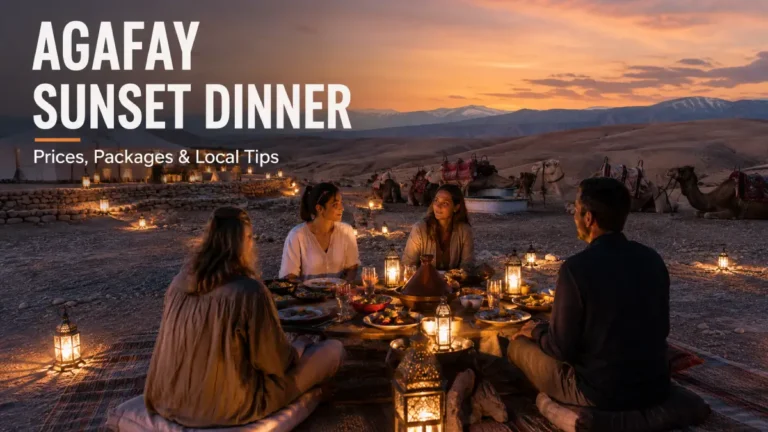
No, not the large dunes around Merzouga. A day trip from Marrakech can reach the rocky Agafay landscape, but Agafay does not have the tall golden dunes of Erg Chebbi.
How many hours of driving are involved?
Expect a substantial amount of driving spread across all three days, with the final return usually being the longest section. Total estimates vary because hotel locations, sightseeing stops and return routes differ.
Is Merzouga the real Sahara?
Merzouga sits beside Erg Chebbi and is one of Morocco’s best-known gateways to the Sahara dune experience. It offers the large sand dunes, camel routes and desert camps most first-time visitors expect.
Can I take a Merzouga tour from Marrakech without riding a camel?
Yes. Most camps can arrange a 4×4 transfer. Request it before arriving so the operator can coordinate the vehicle and camp access.
Is a standard desert camp comfortable?
Some are comfortable and well managed, while others are extremely basic. Ask about bathrooms, bedding, electricity and the exact camp name rather than relying on the word “standard.”
Is a luxury desert camp in Merzouga worth it?
It is worth considering when you need a private bathroom, proper bed, better linen or greater privacy. It is not automatically worth paying more when the operator cannot name the camp or explain the included facilities.
Is the tour suitable for children?
It can be, particularly for children who tolerate long drives. Families with toddlers or children who become uncomfortable during long vehicle journeys should consider a four-day route.
Should I return to Marrakech or finish in Fes?
Finish in Fes when it is already your next destination. Return to Marrakech when your flights, accommodation or stored luggage require it.
What is the best month to visit Merzouga?
March through May and September through November normally offer the best balance of daytime comfort and manageable nights. Spring and autumn are also the Sahara periods recommended by Morocco’s official tourism office.
Should I bring a large suitcase?
You can bring it when there is vehicle space, but take only a small overnight bag into the camp. Leave the main suitcase in Marrakech only when you are returning and your accommodation has agreed to store it.
How much should I tip my driver and camp staff?
There is no compulsory amount. A planning range of 50–100 MAD per day for a good driver and smaller amounts for camp or camel staff is common, but the final tip should reflect the service and your budget.
Final Thoughts
A 3 day desert tour from Marrakech is one of the fastest ways to experience Morocco’s High Atlas, earthen kasbah country, deep valleys and Erg Chebbi dunes in one journey.
It is also demanding.
Book it when you accept the road as part of the experience. Add a fourth day when you want more time, more comfort and fewer rushed stops.
Most importantly, verify the vehicle, hotel, camp, inclusions and finishing city before paying. Those details will shape your experience far more than the beautiful camel photograph at the top of the booking page.