Ait Ben Haddou Travel Guide: Fees, Viewpoints and Local Tips
Most travelers recognize Aït Ben Haddou before they understand it.
They have seen its earthen towers in Gladiator, Game of Thrones, The Mummy, or another production filmed in southern Morocco. They arrive expecting a movie location, take a photograph from across the river, and leave for Ouarzazate.
This Ait Ben Haddou travel guide takes a slower approach.
Youness Labchir is a licensed Moroccan tour guide based in Marrakech with more than 20 years of experience leading private tours across Morocco. Through Morocco Unfolded, he shares honest, practical advice to help travelers plan respectful and realistic journeys through the High Atlas, southern Morocco, and the Sahara.
Information last checked: July 2026. Restoration work, access routes, private-house fees, guide availability, and opening arrangements can change. Follow local barriers and confirm time-sensitive details when you arrive.
Table of Contents
Table of Contents
Ait Ben Haddou Travel Guide at a Glance
| Question | Practical answer |
|---|---|
| Is Aït Ben Haddou worth visiting? | Yes, especially for architecture, history, photography, and cinema |
| General entrance fee | Normally free |
| Time needed | Two to three hours for most visitors |
| Best experience | Half a day or one overnight stay |
| Best time of day | Early morning or late afternoon |
| Guide required? | No, but useful for history and local context |
| Walking difficulty | Moderate, with uneven ground and steep sections |
| Distance from Ouarzazate | Approximately 30 kilometers |
| Best nearby base | Aït Ben Haddou for atmosphere, Ouarzazate for services |
| Restoration status | Open to visitors, with work and possible local restrictions |
Is Aït Ben Haddou Worth Visiting?
Yes. Aït Ben Haddou is worth visiting even when you have no interest in movies.
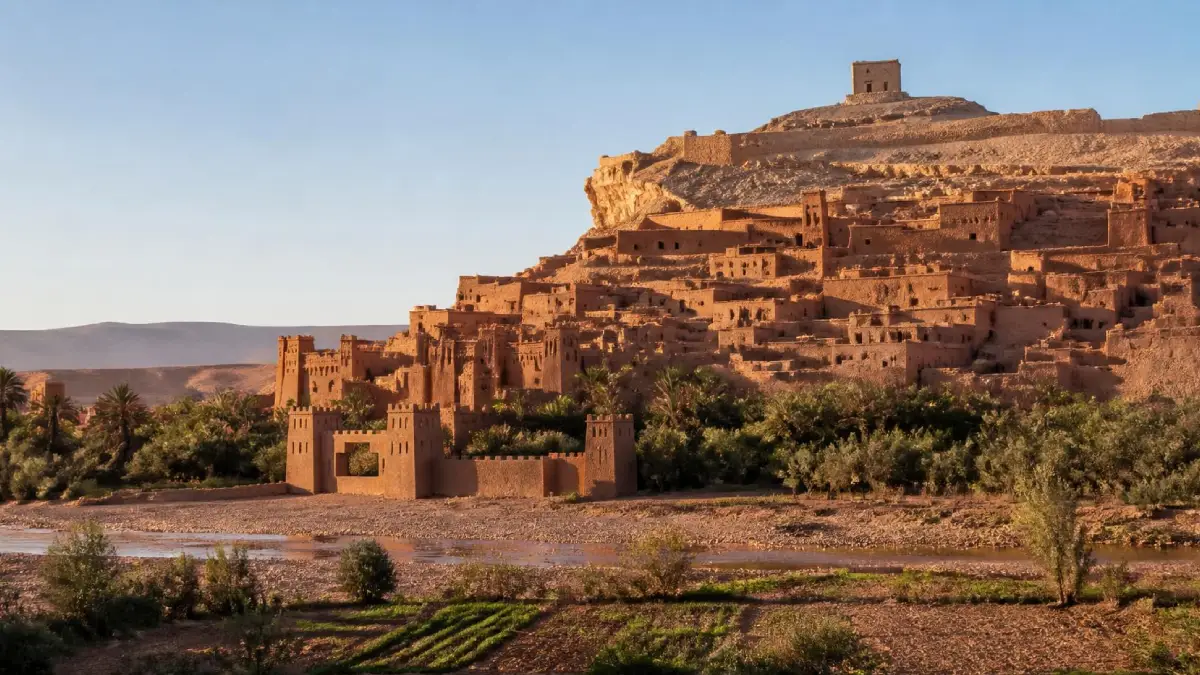
The ksar is one of Morocco’s clearest examples of traditional southern earthen architecture. Its defensive walls, corner towers, compact houses, passages, communal areas, and position above the valley show how people adapted to trade routes, harsh weather, and the need for protection.
What disappoints some visitors is not the place itself. It is the way they visit.
A rushed group may give you 45 minutes at midday, when the heat is strongest and several buses have arrived together. A slower visit lets you walk through the residential lanes, enter a maintained house, learn the difference between a ksar and a kasbah, and watch the walls change color as the sun moves.
A day trip is possible. An overnight stay is better when your schedule allows it.
What Is Aït Ben Haddou?
Aït Ben Haddou is a ksar, meaning a fortified village.
A kasbah normally refers to an individual fortified residence or stronghold. A ksar is a larger protected community containing multiple homes and shared spaces within defensive walls.
UNESCO describes Aït Ben Haddou as an important example of southern Moroccan earthen architecture. The surviving structures mainly reflect construction traditions found in the region from the 17th century onward. The settlement includes homes, defensive buildings, communal areas, a mosque, threshing spaces, cemeteries, a caravanserai, and a hilltop fortification or granary. It joined the UNESCO World Heritage List in 1987.
The buildings were constructed using local earthen techniques, including rammed earth, adobe, traditional plaster, and timber.
These materials were practical. Thick earthen walls helped soften the difference between very hot days and cold nights. Repairs could also be completed with locally understood skills and materials, although earthen buildings require regular maintenance.
The caravan-route history
Long before cameras arrived, Aït Ben Haddou occupied an important position along routes connecting Marrakech, the High Atlas, the Drâa Valley, and trading regions farther south.
Travelers, merchants, animals, and goods moved through a landscape where secure stopping places mattered. Food, water, storage, protection, and knowledge of the road could determine whether a journey continued safely.
When I guide guests here, I tell them:
The movies are interesting, but people were building, trading, storing food, raising families, and crossing this region centuries before Hollywood discovered the view.
Restoration and Access Update for 2026
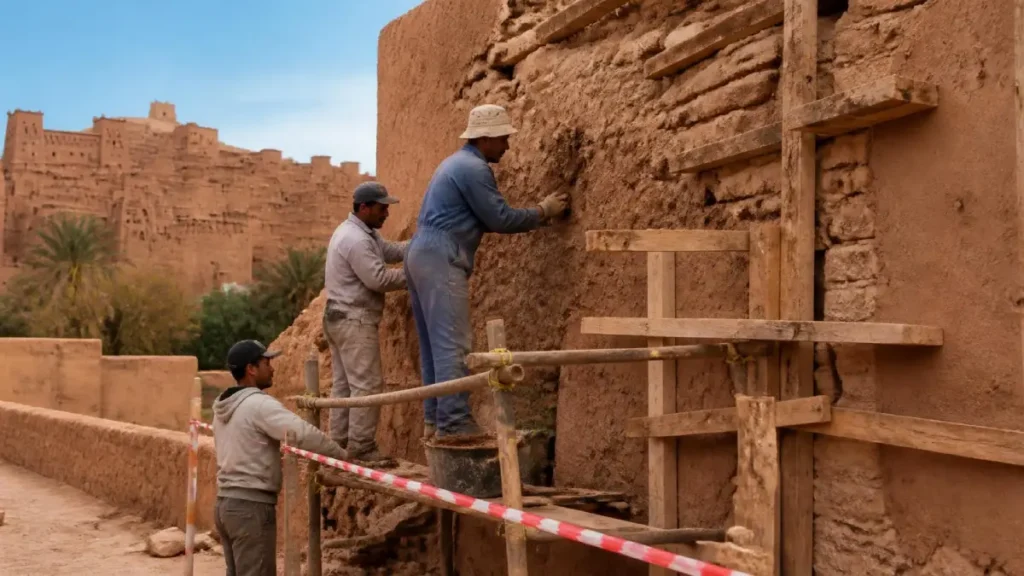
Aït Ben Haddou remains visitable, but restoration is still underway following damage caused by the September 2023 earthquake.
Morocco’s October 2025 conservation report to UNESCO states that restoration officially began in February 2025. Priority work and progressive rehabilitation are scheduled through September 2026. The program includes damaged houses, defensive structures, internal passages, kasbahs, rockfall protection, flood protection, and the remains of the granary and fortress.
The report describes the overall damage as moderate and says the integrity of the whole site was not compromised. However, some buildings have cracks, damaged walls, weakened roofs, or other structural problems.
This means you should:
- Follow barriers and signs
- Avoid entering unstable or closed buildings
- Respect workers and restoration areas
- Never climb onto walls for a photograph
- Ask locally before continuing toward the highest structures
The upper walking route is often accessible, but access around the remains of the hilltop granary may change. Do not assume that an open-looking path is officially safe.
Ait Ben Haddou Entrance Fee and Opening Hours
The Ait Ben Haddou entrance fee is one of the most confusing parts of planning a visit.
There is normally no general official ticket required simply to walk through the ksar. The local destination resource also states that access to the village itself is free. However, individual traditional houses, small exhibitions, privately managed attractions, and guide services may charge separately.
You may be asked for 10, 20, or more dirhams at different points. Before paying, ask:
- What does this payment include?
- Is it for a private house?
- Is it a museum or exhibition?
- Is it a guide service?
- Is the amount per person or per group?
Do not confuse an optional house visit with a compulsory entrance ticket for the entire ksar.
Aït Ben Haddou does not operate like a conventional museum with one gate and fixed opening hours. Visit during daylight. Individual houses and exhibitions often keep their own schedules, and availability may depend on the season or the person managing the property.
9 Best Things to Do in Ait Ben Haddou
1. See the Full Ksar From Across the River
Begin in the modern village on the opposite side of the river.
From here, you can see how the earthen buildings climb the hillside in layers. This wide view makes the defensive position of the settlement easier to understand and gives you the classic photograph most travelers associate with Ait Ben Haddou, Morocco.
Morning light often strikes the buildings from the side, revealing texture in the walls and towers. Late-afternoon light can create warmer amber tones.
Take the full-view photograph before entering. Once you are inside the narrow lanes, you lose the overall perspective.
2. Cross the Pedestrian Bridge
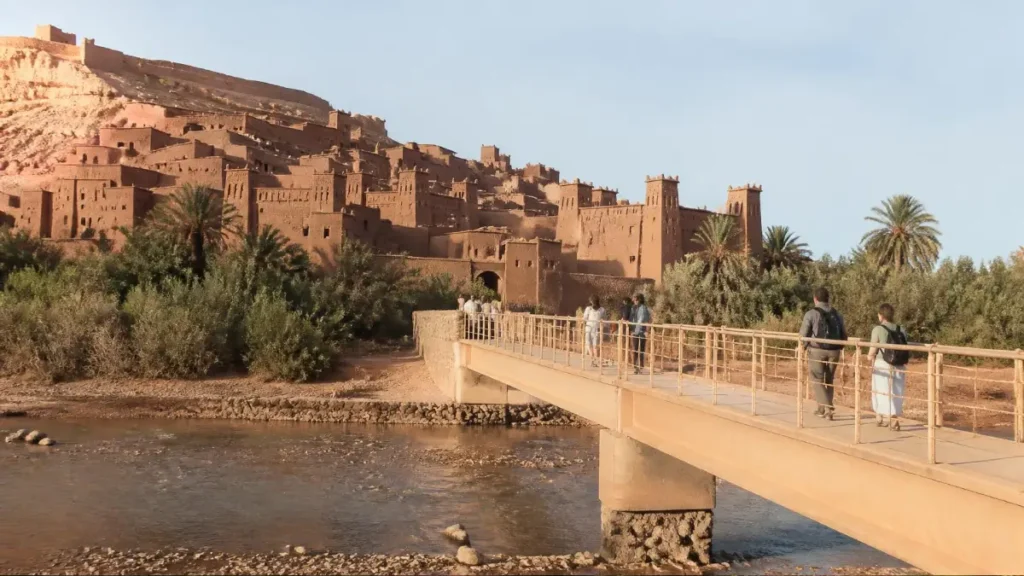
The main pedestrian bridge provides the most dependable route into the historic settlement.
When the river is low, you may see people using stones or walking through the riverbed. That can look more adventurous, but conditions change after rain or mountain snowmelt.
UNESCO’s latest conservation report identifies flooding, erosion, and stronger water events as continuing risks around the site. Use the bridge when water is flowing, muddy, or difficult to judge.
A wet shoe is annoying. Moving water is another matter.
The bridge is not a private attraction. If someone requests money, ask clearly what the charge covers.
3. Explore the Lower Residential Lanes
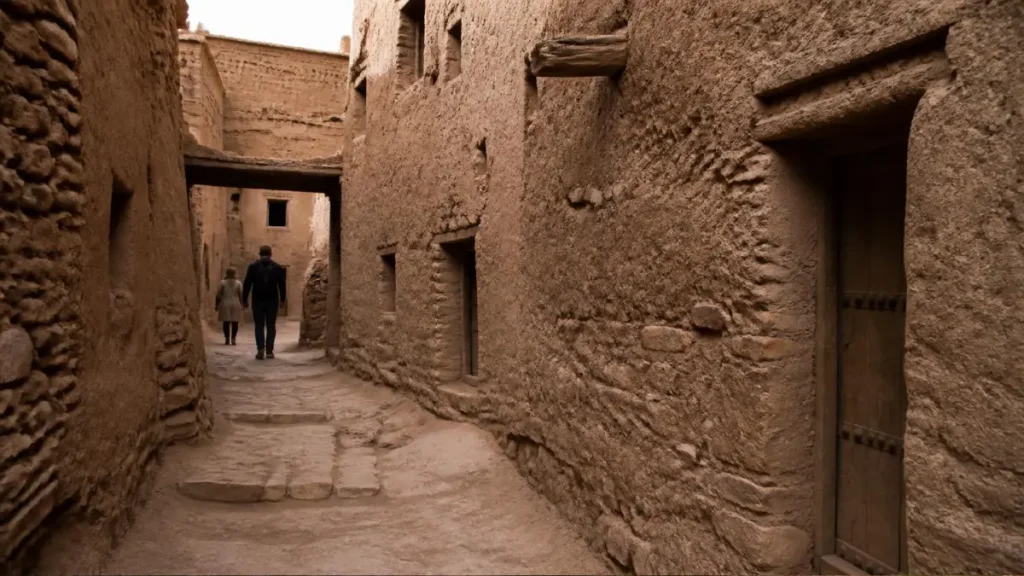
The lower lanes are where you begin to understand how closely the buildings were arranged.
Look for:
- Narrow passages designed for shade
- Defensive entrances
- Earthen walls with layers of repair
- Small courtyards
- Storage spaces
- Wooden beams
- Decorative towers
- Changes between private and communal areas
Some passages now contain souvenir shops or visitor facilities. Others still feel residential.
Walk slowly and remember that every doorway is not an invitation to enter. Aït Ben Haddou is heritage, but it is not an open-air theme park.
4. Enter a Traditionally Maintained House
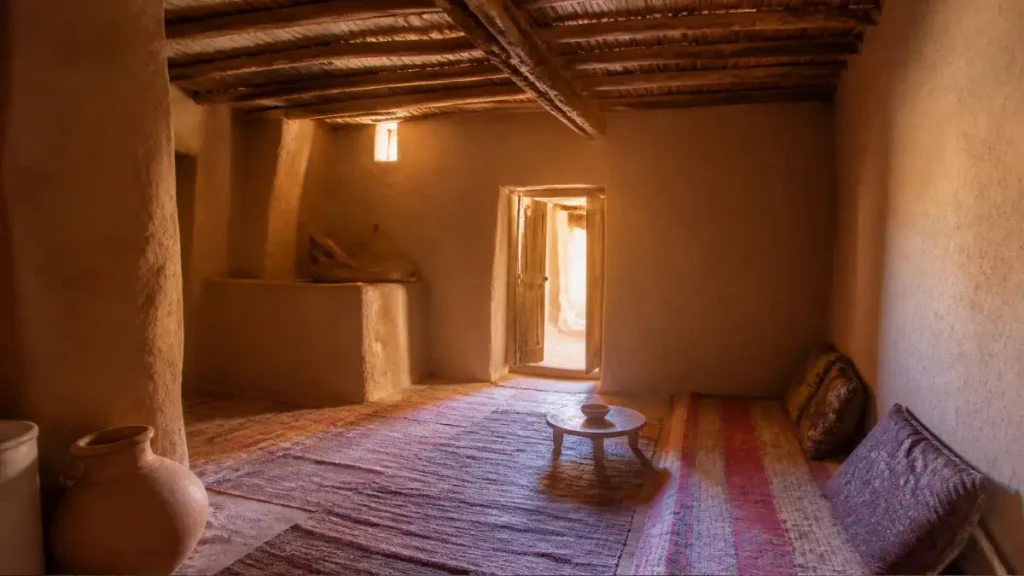
A private-house visit can be worthwhile when the host explains how rooms were organized and how the building was maintained.
A small charge is normal. Ask the price before entering.
Inside, you may see:
- Family rooms
- Storage spaces
- Traditional tools
- Earthen walls and ceilings
- Roof terraces
- Historical photographs
- Objects connected to local life or filmmaking
Choose a house where the visit feels clear and respectful. You should know whether the payment includes an explanation, rooftop access, tea, or only entry.
These small visits are often more informative than simply wandering past closed doors.
5. Visit the Cinema House
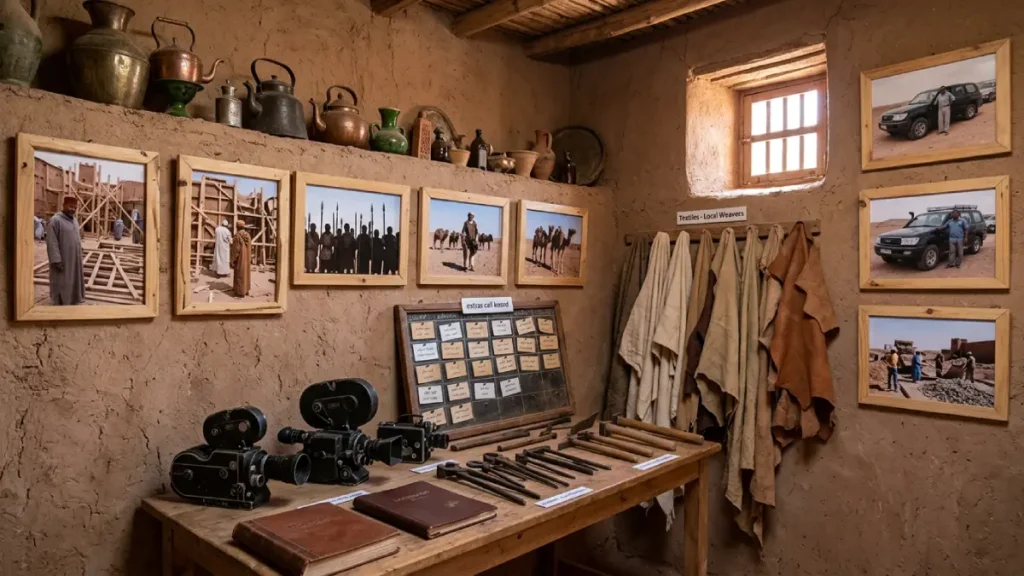
The Cinema House focuses on the relationship between Aït Ben Haddou and the film industry.
It may include photographs, video material, stories from productions, and information about local residents who worked as extras, builders, drivers, animal handlers, craftspeople, or production assistants.
The exact opening schedule and price can vary, so confirm locally before planning your day around it.
This is one of the better things to do in Ait Ben Haddou for film fans because it connects famous productions with the local people who helped make them possible.
Remember that the films are only one layer of the site’s story.
6. Walk Toward the Upper Viewpoint
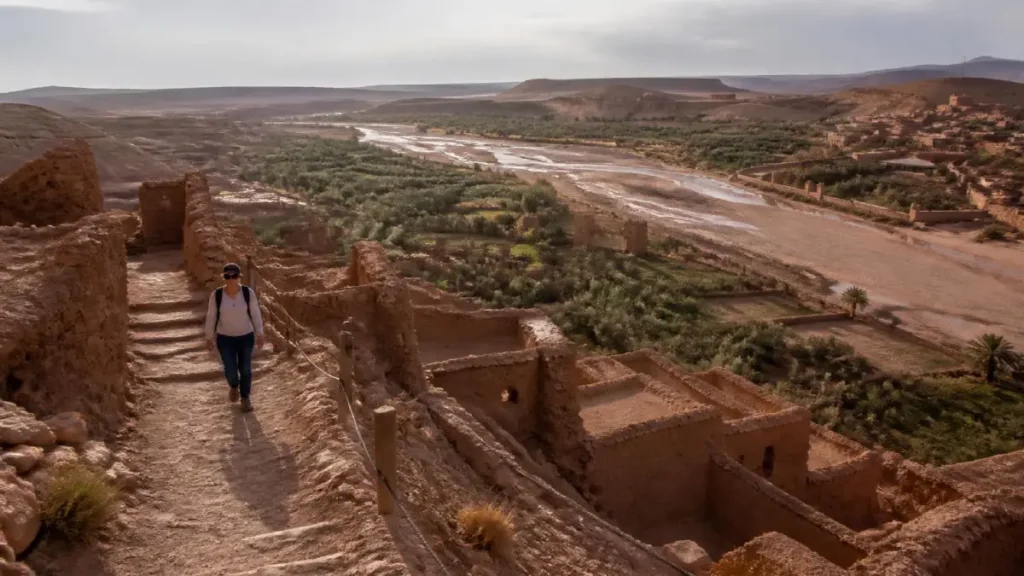
The climb through the ksar is short in distance but steep in places.
The path has uneven stones, dusty slopes, steps, and limited shade. Wear shoes with grip and carry water.
From the permitted upper viewpoint, you can see:
- The modern village
- The river and cultivated land
- The Ounila Valley
- The lower ksar
- The surrounding dry hills
- The route toward Ouarzazate
The hilltop area is connected to the remains of the old granary and defensive structures. Because restoration is continuing, do not cross barriers or approach damaged walls.
The best view is not worth damaging the site or yourself.
7. Understand the Film Locations
Aït Ben Haddou and the wider Ouarzazate region have appeared in productions including Gladiator, Game of Thrones, The Mummy, Lawrence of Arabia, and Kingdom of Heaven.
Parts of the ksar and surrounding landscape have been adapted differently from one production to another. Temporary sets, camera angles, digital effects, and changes made after filming can make exact scenes difficult to recognize.
Film fans often arrive expecting every wall to match a frame from the screen. In reality, the experience is more subtle.
A knowledgeable guide can help you identify:
- Recognizable gateways
- Views used as city backdrops
- Areas adapted for battle or crowd scenes
- Changes made by production teams
- The connection with nearby Atlas Film Studios
Look for the real architecture first. Then add the movie story.
8. Photograph the Ksar at Sunrise or Sunset
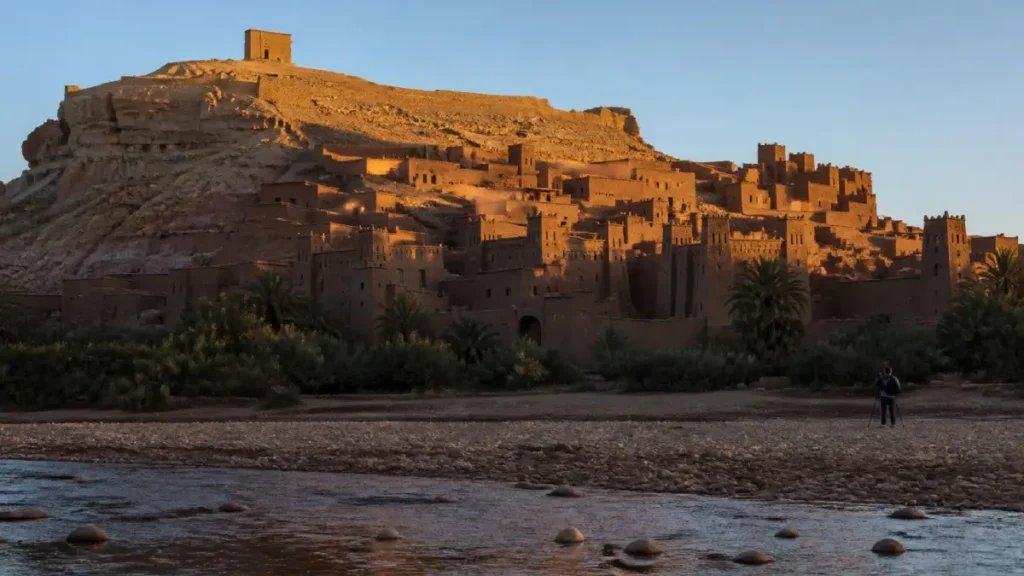
The most reliable classic viewpoint is from the modern-village side across the river.
At sunrise, the site is quieter, temperatures are cooler, and the low light creates stronger textures.
At sunset, the walls often become warmer, although parts of the ksar may fall into shadow depending on the season and your position.
Other useful locations include:
- The riverbank
- The pedestrian-bridge approach
- The permitted upper viewpoint
- A guesthouse rooftop with permission
- A side angle showing cultivated land below the ksar
Always ask before photographing residents. This is especially important when someone is working, entering a home, sitting with family, or carrying out an ordinary daily task.
Do not block narrow passages with tripods during busy periods.
Drones are subject to strict Moroccan rules. Do not arrive assuming you can unpack and fly one.
9. Stay Overnight
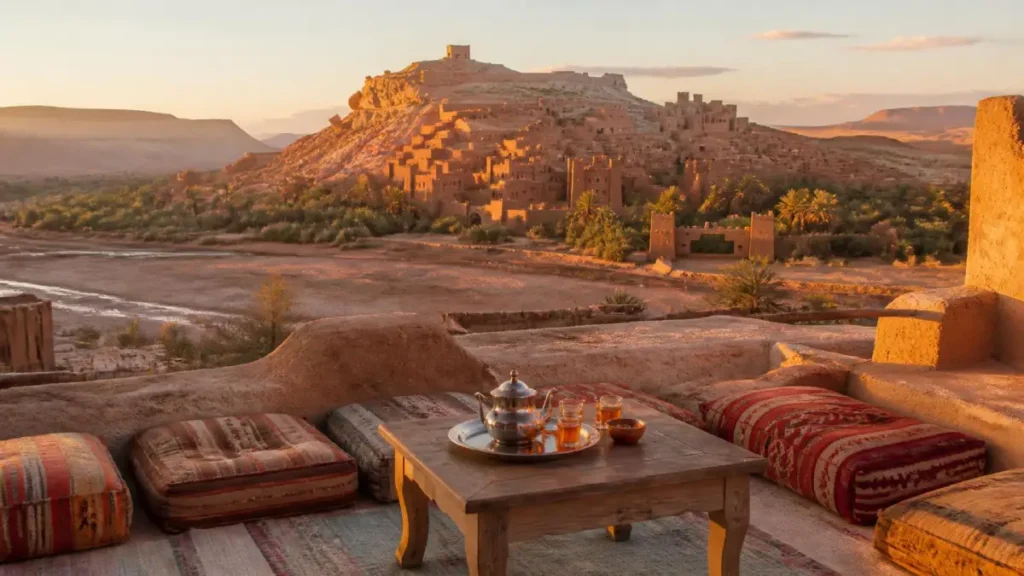
Most visitors leave before the best part of the day.
After the buses depart, the village becomes quieter. The light softens. Restaurant terraces slow down. The ksar feels less like a scheduled attraction and more connected to the landscape around it.
An overnight stay allows you to experience:
- Sunset without watching the clock
- Dinner after the main groups leave
- A quiet evening
- Sunrise photography
- Cooler walking conditions
- A less rushed second visit
This is also when you understand the difference between seeing Aït Ben Haddou and spending time there.
Best Walking Route Through the Ksar
For a first visit, I recommend this simple sequence:
- Stop in the modern village for the full panoramic view.
- Walk toward the main pedestrian bridge.
- Cross into the lower ksar.
- Explore the established residential lanes.
- Visit one maintained traditional house if the price and experience are clear.
- Stop at the Cinema House if it is open.
- Continue toward the permitted upper viewpoint.
- Return through another established lane.
- Finish with tea or lunch overlooking the ksar.
Allow two to three hours for this route without rushing.
The local destination guide says most visitors spend between one and three hours. A house visit, meal, guide, photography, or slower exploration can extend the visit to half a day.
Do You Need a Local Guide?
No. The ksar is compact enough to explore independently.
However, a good guide changes what you notice.
Without context, you may see attractive earthen walls. With context, you begin to understand:
- Why the village was fortified
- How water and storage shaped daily life
- How rooms were used
- Why certain paths are narrow
- How trade moved through the region
- What cinema changed
- What restoration is trying to protect
A guide is especially useful for families, history lovers, film fans, and travelers with limited time.
Before starting, agree on:
- Total price
- Length of the visit
- Language
- Route
- Whether private-house fees are included
- Whether the service is per person or per group
Do not assume a taxi driver’s waiting fee includes a guided tour.
Best Time to Visit Aït Ben Haddou
The most comfortable periods are usually:
- March and April
- October and November
Winter days can be sunny, but mornings and nights may be cold.
July and August can exceed 40°C. During summer, arrive early, wear a hat, use sunscreen, and carry more water than you think you need.
Avoid planning the climb during the hottest part of the day.
Rain can change river conditions and make earthen paths muddy. It can also affect restoration work and access.
How Long Do You Need?
60–90 minutes
Enough for the panoramic view, bridge crossing, a short walk, and a quick climb. This will feel rushed.
Two to three hours
Best for most visitors. You can walk through the ksar, visit one house, take photographs, and reach the permitted viewpoint.
Half a day
Better when you add a guide, Cinema House, a relaxed meal, or more photography.
Overnight
Best for sunrise, sunset, atmosphere, and avoiding the largest groups.
Aït Ben Haddou or Ouarzazate?
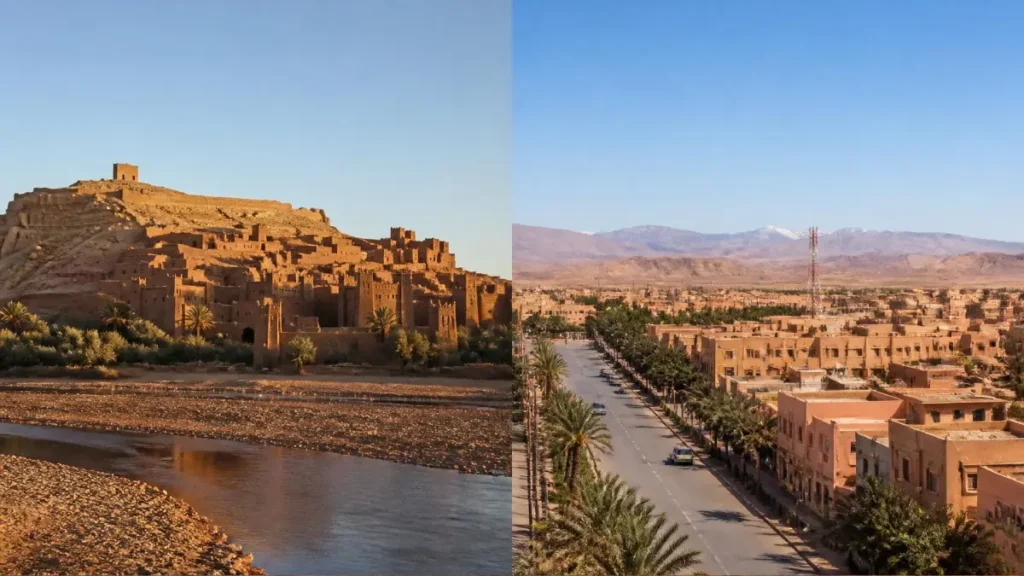
This is not a question of which place is “better.” They serve different travelers.
Stay in Aït Ben Haddou when you want:
- Walking access to the ksar
- Sunrise and sunset
- A quieter atmosphere
- Rooftop views
- A slower visit
- One night away from city activity
Stay in Ouarzazate when you want:
- More restaurants
- More hotel choices
- Fuel and practical services
- Better transport connections
- Atlas Film Studios
- Kasbah Taourirt
- Easier access to several regional excursions
My usual advice is simple: stay near Aït Ben Haddou for atmosphere and stay in Ouarzazate for convenience.
Read my complete Ouarzazate travel guide to compare the city’s attractions, hotels, restaurants, and day trips.
Where to Stay in Ait Ben Haddou
Some accommodation links may be affiliate links. If you book through them, I may earn a small commission at no additional cost to you. This helps support Morocco Unfolded while keeping the travel advice free.
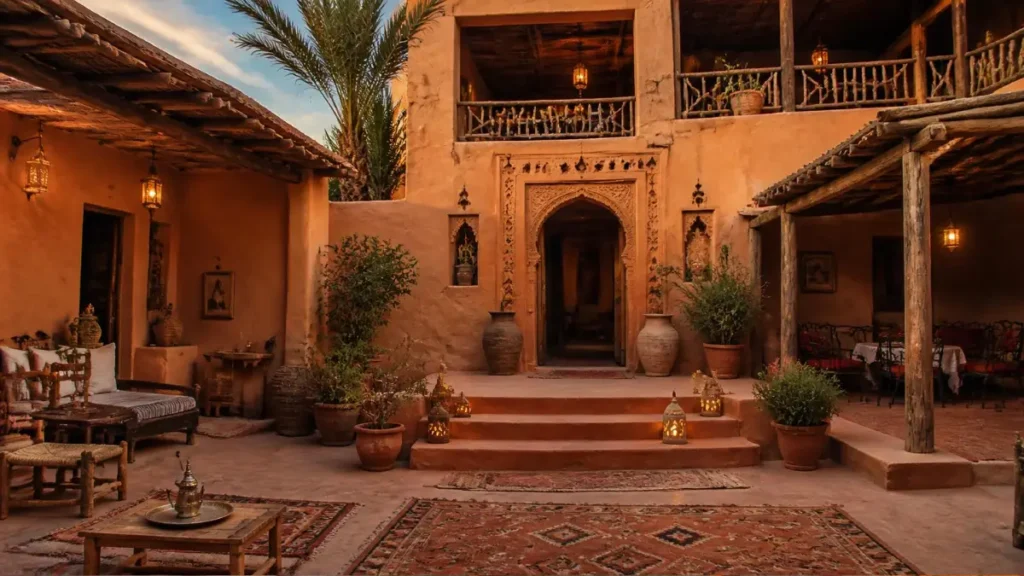
Choosing where to stay in Ait Ben Haddou depends on whether you value a direct ksar view, a pool, a quiet rural location, or access to restaurants.
Bagdad Café
Bagdad Café is a well-established guesthouse near the ksar. Its official site highlights accommodation and rooftop views toward Aït Ben Haddou and the Atlas Mountains.
It is worth comparing for:
- Couples
- First-time visitors
- Travelers without much time
- Rooftop views
- Convenient access to the ksar
Maison d’hôtes Tigminou
This option suits travelers who prefer a quieter setting away from the busiest visitor area.
It may work well for:
- Families
- Couples
- Travelers with a car
- Guests looking for a peaceful stay
Check its current location, meal arrangements, pool availability, and recent reviews before booking.
Riad Caravane
Riad Caravane is another independent option in the wider Aït Ben Haddou and Ounila Valley area.
Compare it for:
- Traditional atmosphere
- Couples
- Road-trip travelers
- A slower regional stay
When choosing where to stay in Ait Ben Haddou, check recent reviews for heating, air conditioning, Wi-Fi, parking, dinner availability, and the exact walking distance to the bridge.
A “ksar-view room” may not always mean an unobstructed view from your window. Ask before booking.
Where to Eat
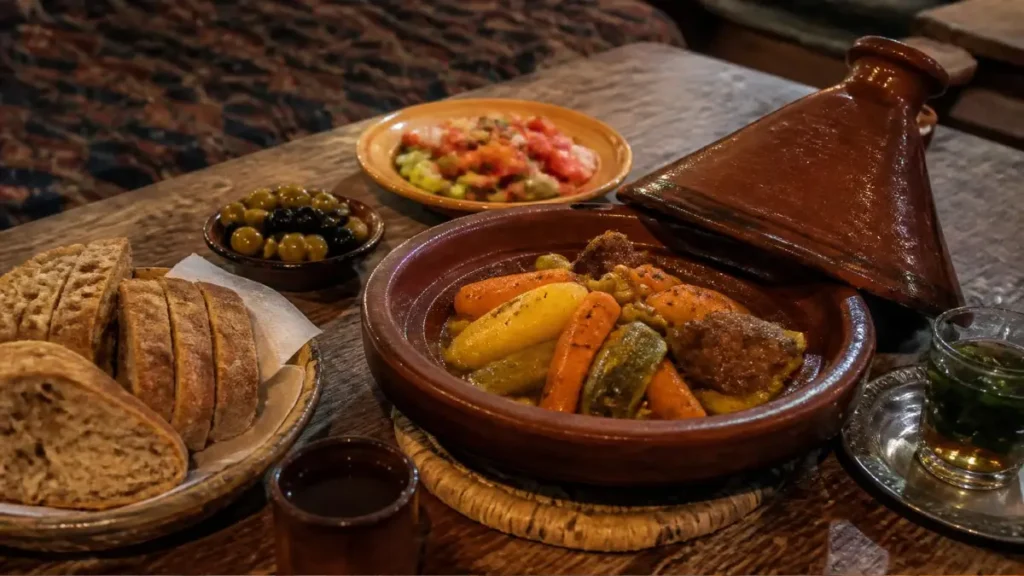
Aït Ben Haddou has small restaurants, guesthouse dining rooms, and rooftop terraces.
The best meal is not always the terrace with the most dramatic view.
Look for:
- Clearly displayed prices
- A manageable menu
- Fresh bread
- Tagines that are given time to cook
- Guesthouses serving dinner by reservation
- Vegetarian dishes prepared with notice
Bagdad Café is a known dining option near the ksar. Chez Brahim Boulkaid’s terrace is often mentioned for views and mint tea. Many guesthouses also prepare home-style dinners for their guests.
A local lunch often includes a tagine, couscous, salad, or grilled food. Prices vary by setting, so check the menu before ordering.
Vegetarian travelers can usually find vegetable tagine, couscous, salads, lentils, eggs, and bread. Clarify whether a vegetable dish is prepared with meat stock.
Getting to Aït Ben Haddou
Aït Ben Haddou is approximately 30 kilometers from Ouarzazate.
From Marrakech, the journey crosses the High Atlas and normally takes several hours each way. A day trip is possible, but it creates a long day with a great deal of driving.
For complete transport options, realistic timing, road conditions, and day-trip advice, read my Marrakech to Aït Ben Haddou guide.
For the scenic route through the Ounila Valley, see my Telouet Kasbah guide.
Travelers continuing east can also compare the route in my Marrakech to Ouarzazate guide.
Parking
Roadside parking may be available in the modern village.
Supervised areas closer to the main approach normally involve a small payment or tip, often around 10 MAD, although the exact amount can vary.
Do not leave passports, cash, or visible electronics inside the vehicle.
Visiting With Children or Limited Mobility
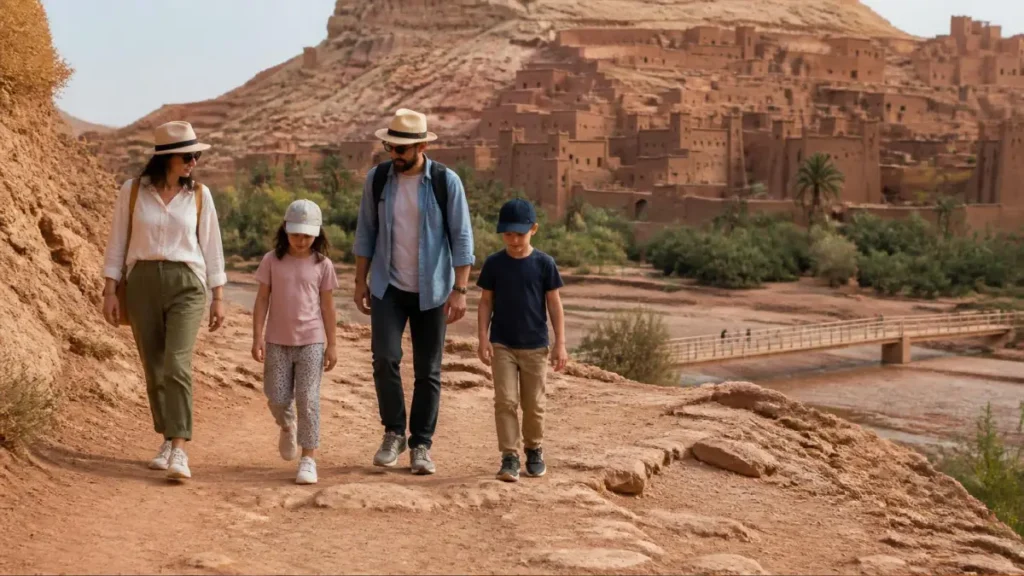
Children can enjoy Aït Ben Haddou, especially when the visit feels like exploration rather than a history lecture.
However, parents should expect:
- Uneven paths
- Steep sections
- Dust
- Limited shade
- Unprotected edges
- Restoration barriers
- A long drive from Marrakech
Keep children close near the upper paths and river.
The historic ksar is generally unsuitable for wheelchairs. Strollers are also difficult because of steps, rough surfaces, narrow lanes, and steep climbs.
Travelers with limited mobility can still enjoy the panoramic view from the modern-village side and approach the bridge without completing the full climb.
Solo Travel and Safety
Aït Ben Haddou is generally straightforward to visit alone.
The most common problems are commercial rather than dangerous:
- Unclear entrance requests
- Unofficial guide offers
- Pressure to enter a shop
- Vague photography fees
- Taxi or parking prices not agreed in advance
Stay polite but direct.
A headscarf is not required for ordinary sightseeing. Clothing covering shoulders and knees is practical and respectful, particularly when entering private homes or smaller villages.
Share your route with someone when traveling alone, carry offline maps, and arrange your return transportation before staying late for sunset.
Responsible Tourism at a Living Heritage Site
Aït Ben Haddou is under real pressure.
Morocco’s latest report to UNESCO notes concern about souvenir businesses and tourist accommodation replacing residential functions within the historic site. It also calls for stronger visitor management and more sustainable tourism.
You can help by:
- Staying on established paths
- Respecting restoration barriers
- Asking before entering homes
- Buying directly from legitimate local craftspeople
- Asking before photographing people
- Avoiding damaged rooftops and walls
- Carrying your rubbish out
- Not treating private life as entertainment
- Avoiding unauthorized drone use
Tourism supports local livelihoods, but only when visitors remember that the ksar is more than a product.
Nearby Places and Onward Routes
Ouarzazate
The nearest practical city, with Atlas Film Studios, Kasbah Taourirt, restaurants, hotels, fuel, and transport connections.
Telouet and the Ounila Valley
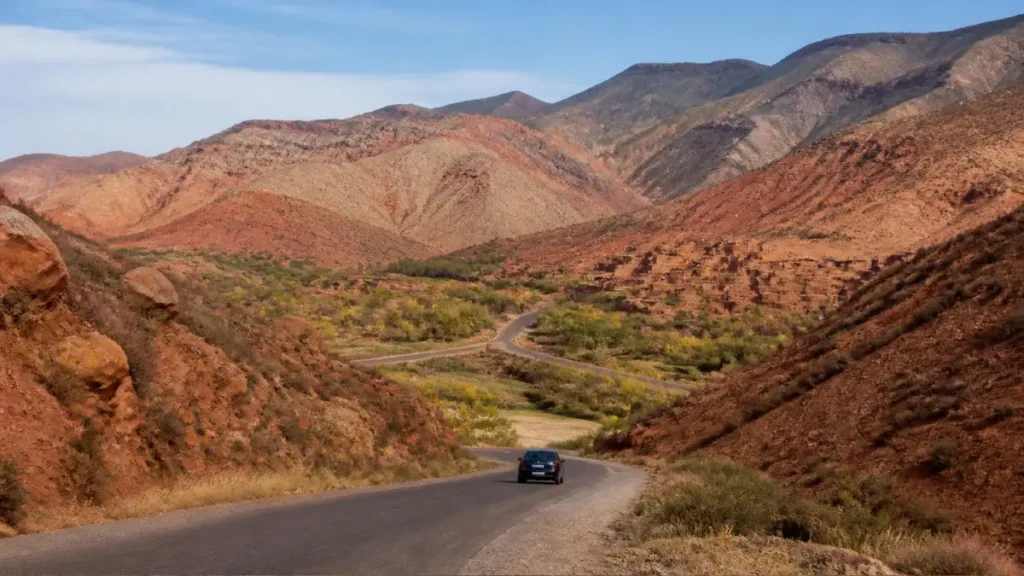
A scenic route through mountain villages, dramatic valleys, and the historic Telouet Kasbah.
Tamdaght
A quieter nearby village with earthen architecture and a more local atmosphere.
Fint Oasis
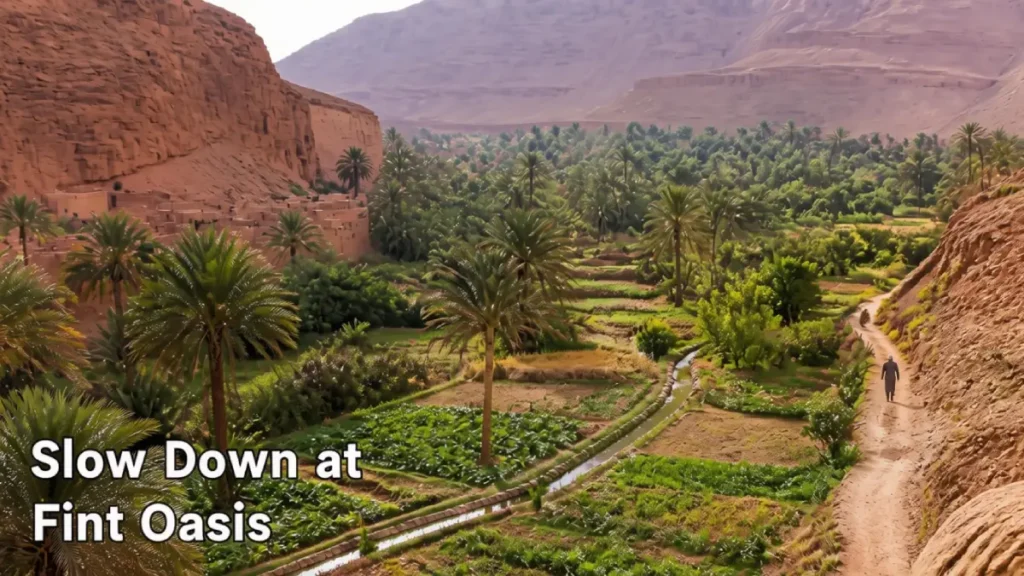
A palm oasis south of Ouarzazate, best visited slowly and respectfully.
Skoura
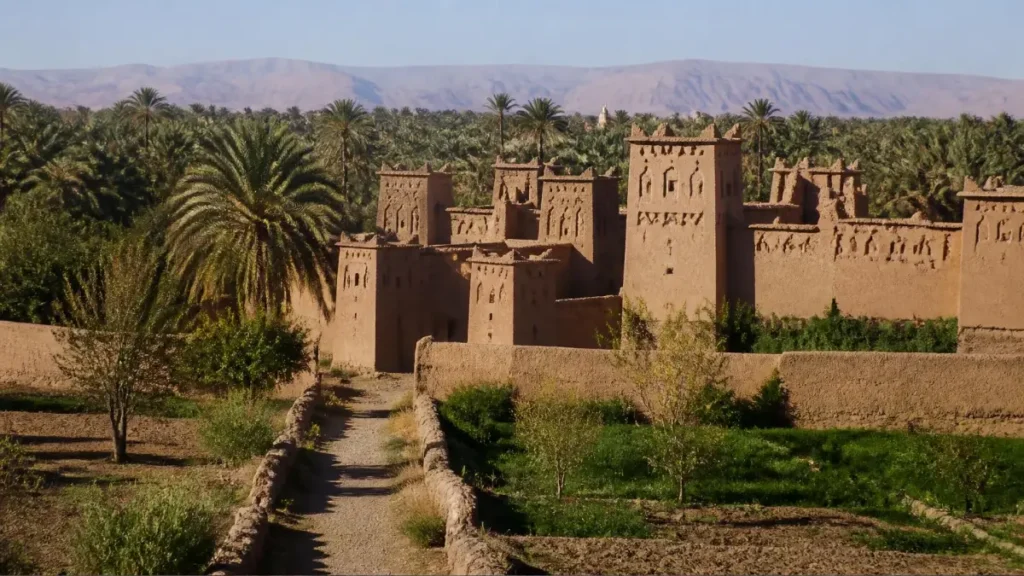
Known for its palm grove and Kasbah Amridil.
Dadès and Todra
These are onward destinations rather than short local stops. Include them as part of a longer route east.
The Sahara
Aït Ben Haddou is not the Sahara and does not have large dunes. It works naturally as part of a multi-day journey toward Zagora, M’Hamid, or Merzouga.
Travelers using Aït Ben Haddou as the first major stop can see how it fits into the Marrakech to Merzouga three-day route, including realistic visit time, the Dades Valley overnight and the final return journey.
My Honest Recommendation
My final advice in this Ait Ben Haddou travel guide is to give the ksar at least two or three hours.
A day trip from Marrakech works when time is limited, but accept that much of the day will be spent on the road.
Stay overnight when you enjoy photography, quiet evenings, slow travel, or historical places that become more meaningful after the crowds leave.
Combine Aït Ben Haddou with Ouarzazate when you want film studios, more hotel choices, and city services.
Combine it with Telouet and the Ounila Valley when the journey and landscape matter as much as the destination.
Through Morkosh Tours, I can help arrange Aït Ben Haddou as a private day trip from Marrakech, a slower overnight journey, or part of a longer route through Telouet, Ouarzazate, and southern Morocco.
Send me your travel dates, group size, and interests. I will tell you honestly what fits without turning the journey into a race.
Ask Youness About a Private Aït Ben Haddou Trip
Frequently Asked Questions About Aït Ben Haddou
Is Aït Ben Haddou free to enter?
There is normally no general official entrance fee to walk through the ksar. Individual traditional houses, small attractions, museums, and guide services may charge separately, so ask what each payment covers before entering.
How long do you need at Aït Ben Haddou?
Most travelers need two to three hours for a comfortable visit. Allow half a day when you want a guide, house visit, Cinema House, meal, or serious photography.
Is Aït Ben Haddou open during restoration?
Yes, the site remains visitable, but restoration is continuing through parts of 2026. Certain passages, buildings, or upper areas may be restricted, so follow current barriers and local instructions.
Can you climb to the hilltop viewpoint?
Visitors can often walk toward the upper viewpoint, but access close to the damaged granary and fortress remains subject to restoration conditions. Do not cross barriers or enter unstable structures.
Do you need a guide for Aït Ben Haddou?
A guide is optional because the ksar is compact enough to explore independently. A knowledgeable guide adds value by explaining the architecture, caravan history, local life, restoration, and cinema connections.
Can you visit Aït Ben Haddou from Marrakech in one day?
Yes, but it is a long day involving several hours of mountain driving in each direction. Leave early and expect less time at the ksar than you would have during an overnight visit.
Is it better to stay in Aït Ben Haddou or Ouarzazate?
Stay in Aït Ben Haddou for sunrise, sunset, atmosphere, and walking access. Stay in Ouarzazate for more restaurants, hotels, transport options, fuel, Kasbah Taourirt, and Atlas Film Studios.
What films were made at Aït Ben Haddou?
Productions connected with the ksar and surrounding region include Gladiator, Game of Thrones, The Mummy, Lawrence of Arabia, and Kingdom of Heaven. Exact filming locations and remaining structures vary because productions altered sets and used the landscape differently.