Authentic Moroccan Mint Tea: The Real Guide to Atay bi Nanaa (From a 20-Year Guide)
Look, I’ve been guiding tours across Morocco for more than 20 years. I’ve sat in Berber tents in the Sahara, shared tea in riads in Fes, and watched countless tourists try to recreate authentic Moroccan mint tea back home with mixed results. Most guides will tell you it’s “just tea, mint, and sugar.” That’s like saying tagine is “just meat and vegetables.”
Authentic Moroccan mint tea – we call it Atay bi Nanaa – is Morocco’s liquid handshake. It’s how we welcome you, how we slow time down, and how we turn strangers into friends. But there’s a right way to make it, and about fifty wrong ways I’ve seen over the years.
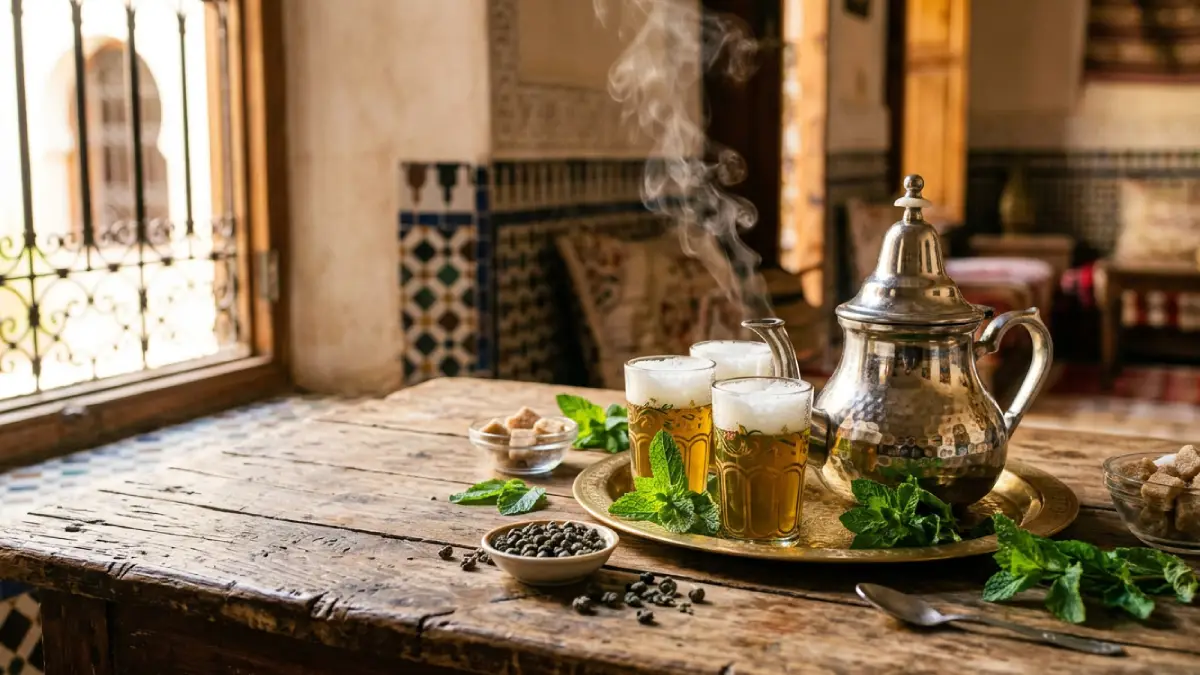
What is authentic Moroccan mint tea? It’s a precise blend of Chinese gunpowder green tea, fresh Nanah spearmint, and sugar, prepared through a ritual that matters as much as the ingredients. The magic happens in the method: the spirit rinse, the marriage of flavors, and that signature high pour that creates the foamy “turban” on top.
This isn’t the Pinterest version or the café shortcut. This is how my grandmother made it, how I serve it to guests on tours, and how you can bring a piece of the medina into your own kitchen.
Table of Contents
Table of Contents
The Anatomy of Authenticity: Essential Ingredients That Actually Matter
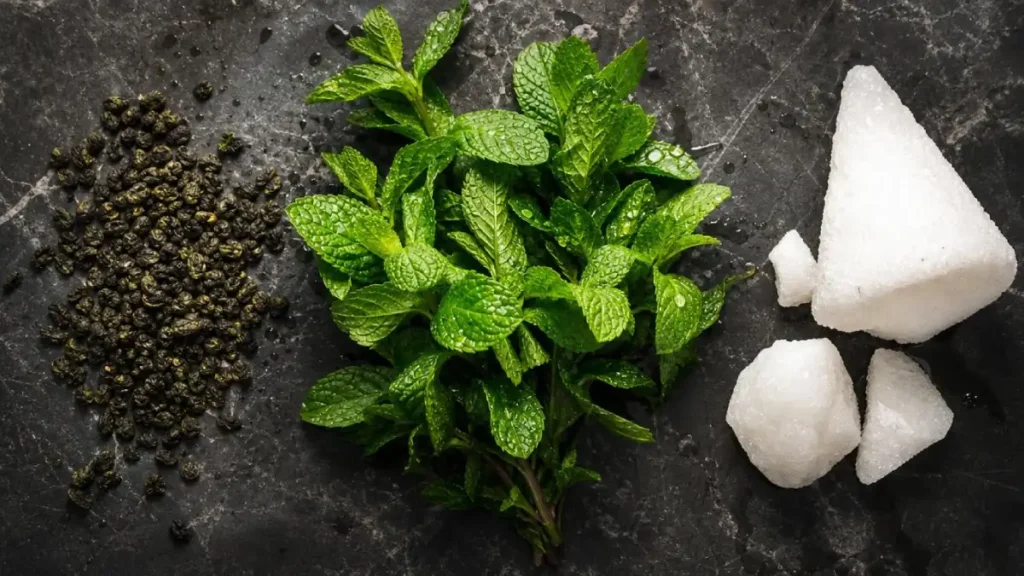
After two decades of watching travelers get this wrong, let me break down what makes authentic Moroccan mint tea actually authentic.
Gunpowder Green Tea: The Foundation Everything Builds On
The base is always gunpowder green tea – those tight little pellets that look like, well, gunpowder. When hot water hits them, they unfurl like tiny flowers. That’s your first clue you’ve got the real thing.
Why gunpowder specifically?
- It travels well (crucial for caravan routes and modern luggage)
- Has a robust, slightly smoky flavor that stands up to heavy mint and lots of sugar
- Releases flavor gradually, so each pour from the pot tastes different
For a standard berrad (that’s our word for the traditional teapot), I use about one heaped teaspoon to two tablespoons of gunpowder tea, depending on how strong my guests like it. In my family, we go heavy on the tea – life’s too short for weak Atay.
Nanah Mint vs. Peppermint: Why This Distinction Will Make or Break Your Tea
Here’s where most people mess up. Nanah mint is a specific type of spearmint – soft, rounded leaves, naturally sweet, very aromatic. It’s not the sharp peppermint you find in most Western supermarkets.
The difference?
- Nanah mint: Sweet, gentle, perfect balance with gunpowder tea
- Peppermint: Harsh, overpowering, will make your tea taste like mouthwash
I’ve watched guests buy “mint tea” kits online that come with peppermint. The tea tastes nothing like what you’d get in a Marrakech riad or a nomad tent. For the closest thing to real Nanah, look for spearmint labeled for cooking or mojitos.
When preparing, I use a big handful – we don’t count leaves, we go by “does the pot look full of green?” Some families remove all the stems, others just the thick ones. I usually cut the sprigs in half so they fit the pot better.
Sugar Culture: Why Moroccan Tea is Sweeter Than You Think
Visitors often ask: “Why is Moroccan mint tea served so sweet?” The traditional answer involves three to four tablespoons of sugar for a medium pot – sometimes more.
We use beet sugar, traditionally in cone or block form. The sweetness serves several purposes:
- Balances the astringency of gunpowder green tea
- Shows
hospitality – being generous with sugar was a sign of respect for guests
- Creates that syrupy texture that makes the tea feel like a warm hug
In rural areas and with older generations, you’ll encounter tea that’s almost dessert-sweet. In my tours, I adjust based on my guests’ preferences, but in traditional homes, don’t be surprised if your first sip tastes like liquid candy.
These days, many Moroccans (myself included) use less sugar at home. But when hosting, we still lean generous.
Mint tea is also one of the standard drinks at a Moroccan breakfast, alongside breads such as khobz, msemen and baghrir.
The Master’s Tools: Choosing the Best Moroccan Teapot for Stovetop
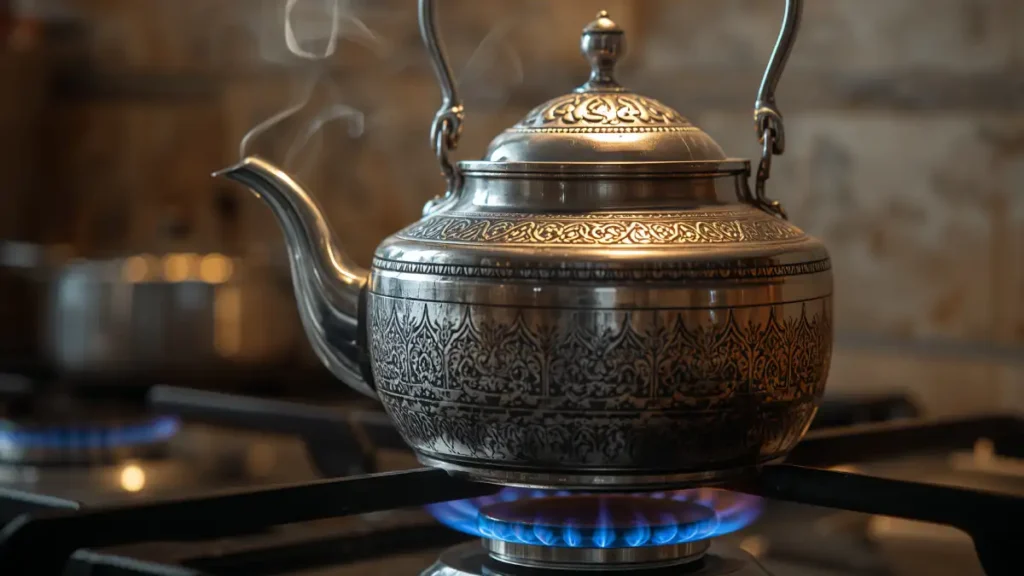
You can have perfect tea and mint, but if your berrad is wrong, you’ll never get authentic results. After seeing countless cracked tourist teapots, here’s what actually works.
Heat Resistance: Why Pretty Doesn’t Mean Practical
The best Moroccan teapot for stovetop use is almost never the shiniest one in the souk. For actual brewing, you need:
- 18/10 stainless steel (look for this stamp on the bottom)
- Solid construction that won’t warp or crack under direct heat
- A handle that stays cool and doesn’t wobble
What to avoid:
- Decorative teapots with thin walls.
- Anything ceramic or clay (they’ll crack on direct heat).
- Super lightweight pots (usually factory-made and fragile).
I always tell guests: buy two pots if you want. A sturdy steel one for brewing, and a prettier one for serving if you like the aesthetics. Check my articles about ‘traditional crafts in Morocco‘, and learn how to buy a Moroccan rug.
The Difference Between Moroccan Teapot With Feet and Without
This confuses a lot of people. Here’s the simple rule:
- Feet-free berrad (smooth, rounded base): These sit directly on your stovetop. This is what you want for brewing.
- Footed berrad (small decorative legs): These are for serving only, usually placed on a tray or small burner.
If you see three little legs under the pot, treat it as serving equipment, not for serious cooking.
Quality Indicators I Actually Use in the Medina
When I’m shopping with guests in Marrakech’s metalworkers’ quarter:
- Weight matters: A good brewing berrad feels heavy for its size. Lightweight = cheap and temporary.
- Deep engravings: Artisanal pots have clean, deep patterns. Factory copies have shallow, sometimes blurred designs.
- The stamp check: Flip it over. Quality pots usually have material information stamped on the base.
A solid stovetop berrad in the medina runs about 150-400 MAD ($15-40) depending on size and quality. If someone quotes you 50 MAD, it’s probably decorative only.
For a better planning see my article : “Morocco travel adapter 2026” (for guests bringing electric kettles or chargers)
The Ultimate Brewing Guide: How to Brew Moroccan Mint Tea With Gunpowder Tea
Now for the real Gunpowder tea and Nanah mint recipe – the method that separates tourist tea from the real deal.
Ingredients (for a standard 400-500ml berrad):
- 1-2 tablespoons gunpowder green tea
- Large handful fresh Nanah mint (spearmint)
- 3-4 tablespoons sugar (adjust to taste)
- Hot water
Step 1: The “Spirit” – Guard This With Your Life
This step gets butchered in every online recipe I’ve seen.
- Add gunpowder tea to your berrad
- Pour a small amount of boiling water to cover the leaves
- Let sit for 30-40 seconds, then gently swirl
- Pour this liquid into a glass and keep it
This first infusion is the “spirit” of the tea – the essence, the soul, the most flavorful part. You do NOT throw it away. Every time I see someone dump this down the drain, a little part of me dies.
Step 2: The Cleaning Rinse
Now we wash the tea:
- Add more hot water to the berrad
- Swirl vigorously to remove dust and excess bitterness
- Discard this second water completely
This cleaning step removes the harsh edges while keeping the tea leaves alive and ready.
Step 3: The Marriage – Where Magic Happens
This is my favorite moment:
- Put the berrad back on gentle heat
- Return the saved “spirit” to the pot
- Add your fresh Nanah mint – whole sprigs or cut in half
- Add sugar – start with 3 tablespoons, taste, adjust
- Fill with hot water almost to the top
Now all the elements are married: tea + spirit + mint + sugar + water. This is where the alchemy begins.
Step 4: The Simmer & Moroccan Mix
- Let everything gently simmer for about 5 minutes over low heat – think quiet bubbles, not volcanic boiling
- Remove from heat
- Pour one glass of tea and return it to the pot
- Repeat this three times
I call this the “Moroccan mix.” It dissolves the sugar completely, distributes flavors evenly, and mixes everything without bruising the mint leaves.
Taste now. Too strong? Add hot water. Too weak? Next time use more tea or simmer longer. This is how you learn.
The High Pour: Aeration and the Legendary “Turban”
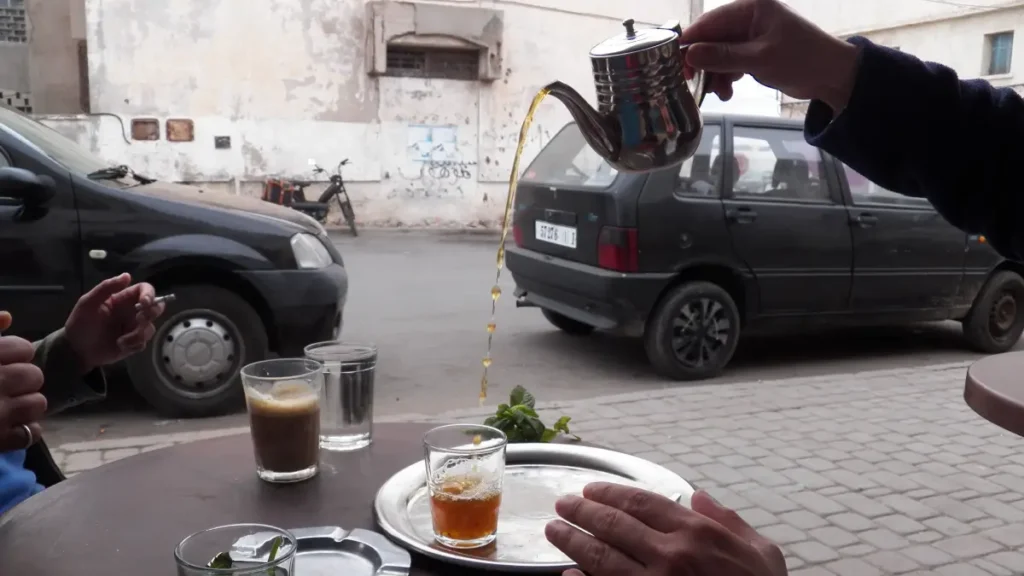
You’ve seen the photos – tea poured from impossible heights, creating that dramatic green waterfall. But why do you pour Moroccan tea from a height?
The Technique That Actually Matters
Hold the berrad steady, position your glass low, and pour from about 30cm (12 inches) high – higher if you’re feeling confident. I’ve seen guests try this on their first day and create tea tsunamis across riad terraces. Start conservative.
The Science Behind the Show
The high pour isn’t just Instagram theater:
- Aerates the tea, making flavors smoother and more balanced
- Releases mint aromatics into the air – you smell it before you taste it
- Creates the signature foam “turban” (we call it “amama”) on top
- Cools the tea to drinking temperature without waiting
In the Sahara, old nomad guides tell me their grandfathers used that foam layer to protect tea from blowing sand. More bubbles, better protection. True or folklore? Doesn’t matter – it makes good tea.
Science-Backed Health Benefits of Moroccan Mint Tea
We say “it’s always tea o’clock” in Morocco, and there are real health benefits of Moroccan mint tea beyond just tradition.
Digestive Powerhouse
After a heavy tagine or couscous Friday, tea isn’t optional. Science supports what we’ve known for centuries regarding the antioxidant and digestive properties of spearmint, which is the primary herb in our tea.
- Menthol in Nanah mint relaxes digestive muscles
- Reduces bloating and gas naturally
- The warm liquid helps everything move along smoothly
I’ve noticed guests who drink tea after big meals feel more comfortable during long afternoon drives. It is the perfect natural recovery drink after a long day of trekking in the Atlas Mountains, helping to settle the stomach after physical exertion.
Mental Focus and Steady Energy
People ask: “Is Moroccan mint tea high in caffeine?”
Yes, it contains caffeine from the green tea base – less than espresso, more than herbal teas. The combination of caffeine and L-theanine provides steady energy without the jitters. This is why you’ll see Moroccans nursing tea glasses while working, playing cards in cafes, or during long evening conversations.
If you’re caffeine-sensitive, avoid large amounts after 6 PM, or ask for a smaller glass.
Immune and Antioxidant Benefits
Gunpowder tea delivers catechins and antioxidants, while Nanah mint provides:
- Antibacterial properties for oral health
- Immune system support during cold season
- Natural headache relief (I’ve seen this work on tour buses)
Moroccans don’t talk about antioxidants – we just know tea makes us feel better when we’re tired, stressed, or fighting off something.
Beyond Mint: Seasonal and Regional Variations
Authentic Moroccan mint tea is the standard, but this country is big and tastes change with weather and geography.
Khunjul: Traditional Moroccan Spiced Tea Recipe for Winter
In winter, especially around Marrakech and on Sahara routes, street vendors sell Khunjul – our version of spiced tea. A typical traditional Moroccan spiced tea recipe Khunjul includes:
- Fresh ginger and galangal
- Cinnamon sticks and whole cloves
- Cardamom pods
- White pepper and mace
- Sometimes a small red chili
The result is powerful, warming, medicinal – like liquid armor against winter cold. It’s not always minty; it’s more like Moroccan chai, believed to boost circulation and fight off illness. If you visit Marrakech in December or January, look for the steaming Khunjul pots in Jemaa el-Fnaa after sunset.
Regional Herb Variations I’ve Encountered
What are the best herbs for Moroccan tea besides mint? After years of traveling with families across different regions:
- Louiza (lemon verbena): Light, lemony, calming – popular in the evening, especially in the north
- Chiba (wormwood): Extremely bitter but loved in southern and mountain areas; used sparingly in winter
- Salmiya (sage): Soothing for sore throats and colds; common when someone’s feeling under the weather
- Atar (geranium): Floral, aromatic – a few leaves perfume an entire pot
In northern Morocco (Fes, Tetouan), tea tends to be stronger and sometimes less sweet. In the south, particularly among nomad communities, I’ve encountered extra herbs and often sweeter tea – sometimes almost syrupy.
Moroccan Tea Ceremony Etiquette: How to Drink Like a Local
Let’s talk Moroccan tea ceremony etiquette – the unspoken rules that help you avoid hshuma (shame/awkwardness) and actually enjoy the experience.
The Rule of Acceptance (Not Necessarily Three)
You’ve probably heard about “three glasses” – first for life, second for love, third for wisdom. That’s poetic but not rigid law. The real rule:
- Accept at least one glass when offered – refusing completely can feel abrupt
- If the host keeps pouring, you may get two or three small glasses as the pot evolves
- Each pour tastes slightly different as flavors develop
Don’t rush. Don’t leave your glass full (suggests you didn’t enjoy it). Follow the rhythm of the group.
Who Serves, Who Drinks First
In a traditional Moroccan tea ceremony:
- The host or eldest typically prepares and serves
- Most honored guest gets the first pour, then others by age/status
- You rarely serve yourself – let the host manage the flow
If you’re unsure which glass is yours, watch where the host places it and follow the social cues.
Asking for Less Sugar Without Offense
Modern Morocco understands dietary preferences. To ask politely in Darija:
- “Ghira shwiya sukker, 3afak” (Just a little sugar, please)
- “Atay bla sukker, 3afak” (Tea without sugar, please)
Most hosts, especially in cities and riads, won’t be offended if you ask kindly. We know not everyone drinks tea like our grandparents.
When You Really Can’t Drink Tea
Sometimes you genuinely can’t – health issues, medication, extreme caffeine sensitivity. You can:
- Accept a small glass, sip slowly, leave most of it
- Explain you have stomach issues or are very full
- Show appreciation for the gesture even if you drink very little
Moroccans understand health concerns. The key is expressing gratitude for the hospitality, even if you can’t fully participate.
Bringing the Medina Home: Your Complete Setup Guide
If you want to recreate authentic Moroccan mint tea in your own kitchen, here’s your realistic shopping list:
Essential Equipment
- Heat-resistant berrad (18/10 stainless steel, feet-free design)
- Small glasses (traditional Moroccan tea glasses if possible)
- Fine-mesh strainer (backup for loose leaves)
Quality Ingredients
- Gunpowder green tea (buy from tea shops or online – avoid generic “green tea”)
- Fresh spearmint (closest to Nanah; avoid peppermint)
- Sugar (regular granulated works; beet sugar if you can find it)
Setting Realistic Expectations
Your first attempts won’t taste exactly like a riad in Fes or a tent in Merzouga. The water is different, the mint variety might not be identical, and you’re missing the atmosphere of the medina. That’s okay.
Focus on the technique: the spirit rinse, the marriage, the gentle simmer, and the high pour. Master these fundamentals, and you’ll create something authentic and delicious, even if it’s not identical to what you remember from your Morocco trip.
Building Your Tea Ritual
Start simple:
- Begin with moderate sweetness (2-3 tablespoons) and adjust over time
- Practice the high pour over the sink until you’re confident
- Invite friends – tea is meant to be shared, not rushed alone
The most important ingredient isn’t in any souk: it’s the intention to slow down, connect, and create space for conversation.
Conclusion: More Than Just a Recipe
After 20 years of sharing authentic Moroccan mint tea with thousands of travelers, I’ve learned it’s never really about the tea. It’s about the pause, the welcome, the moment when strangers become friends over something warm and sweet.
You don’t need a perfect setup or exotic ingredients to capture the spirit of Atay bi Nanaa. You need patience, respect for the process, and the understanding that good tea, like good travel, happens shwiya b’shwiya – step by step.
If you want to experience the real thing – sitting with a Berber family in the Atlas, sharing tea around a desert campfire, or learning from artisans in Fes – you’re always welcome to travel with me through Morkosh Tours. But whether you visit Morocco or bring Morocco to your kitchen, remember: the best tea is the one shared with people you care about.
Try the recipe, practice the pour, and let me know how it goes. And if you have questions about your technique, your berrad, or anything else about Moroccan tea culture, drop me a message. I’m always happy to help fellow tea lovers get it right.
FAQ: Authentic Moroccan Mint Tea
What is the “spirit” of Moroccan tea?
The “spirit” of Moroccan tea is the first small infusion you pour over the gunpowder tea leaves, let sit for 30-40 seconds, then save in a glass. This contains the essence and strongest flavor of the tea. You never discard it – after cleaning the leaves with a second rinse, you return this “spirit” to the pot during the marriage with mint and sugar. Many online recipes miss this crucial step.
Can I use a ceramic teapot to make Moroccan tea on the stove?
No, ceramic or clay teapots will likely crack on direct stovetop heat, especially gas or electric burners. For brewing authentic Moroccan tea, you need a heat-resistant metal berrad, ideally 18/10 stainless steel with a smooth base (no decorative feet). You can brew in metal and transfer to ceramic for serving if you prefer the aesthetic.
Why is Moroccan tea poured from a height?
The high pour serves several practical purposes: it aerates the tea making flavors smoother, releases aromatic oils from the mint, creates the signature foam “turban” on top, and cools the tea to drinkable temperature. The technique also enhances the sensory experience – you smell the mint before tasting. Traditional nomads used the foam layer to protect tea from desert sand.
Is Moroccan mint tea high in caffeine?
less than espresso but more than herbal teas – and provides steady, sustained energy thanks to the combination of caffeine and L-theanine. Most people can drink it throughout the day, but if you’re caffeine-sensitive, avoid large amounts in the evening.
What are the best herbs for Moroccan tea besides mint?
Traditional alternatives include louiza (lemon verbena) for evening relaxation, chiba (wormwood) or salmiya (sage) in winter or southern regions for medicinal benefits, and atar (geranium) for floral aromatics. Khunjul, the spiced winter tea, uses ginger, galangal, cinnamon, cloves, and cardamom. Regional preferences vary, with northern Morocco favoring stronger mint tea and southern areas incorporating more diverse herbs.
Why is Moroccan mint tea served so sweet?
The traditional sweetness comes from using beet sugar cones or blocks – often 3-4 tablespoons per pot, creating an almost syrupy consistency. This balances the astringency of gunpowder green tea and historically demonstrated hospitality and respect for guests. Being generous with sugar showed wealth and care. The sweetness also makes the strong tea more approachable and encourages longer social gatherings. Modern Moroccans often use less sugar, but traditional preparation remains quite sweet.
How do I know if my Moroccan teapot is suitable for stovetop use?
Look for 18/10 stainless steel construction (check for stamps on the base), solid weight that feels substantial, and a smooth rounded bottom without decorative feet. Avoid lightweight, thin-walled pots or anything ceramic/clay for direct heat brewing. Quality indicators include deep, clean engravings rather than shallow patterns, and sturdy handles that don’t wobble. When shopping in Moroccan souks, expect to pay 150-400 MAD ($15-40) for a reliable stovetop berrad.
What’s the difference between Nanah mint and regular peppermint for Moroccan tea?
Nanah mint is a type of spearmint with soft, rounded leaves that provide natural sweetness and gentle aromatics, creating the authentic flavor profile of Moroccan tea. Regular peppermint is much harsher with high menthol content that can overpower the tea and make it taste medicinal or like mouthwash. For the closest authentic taste, look for spearmint varieties often labeled for cooking or mojitos, rather than standard peppermint found in most Western supermarkets.