
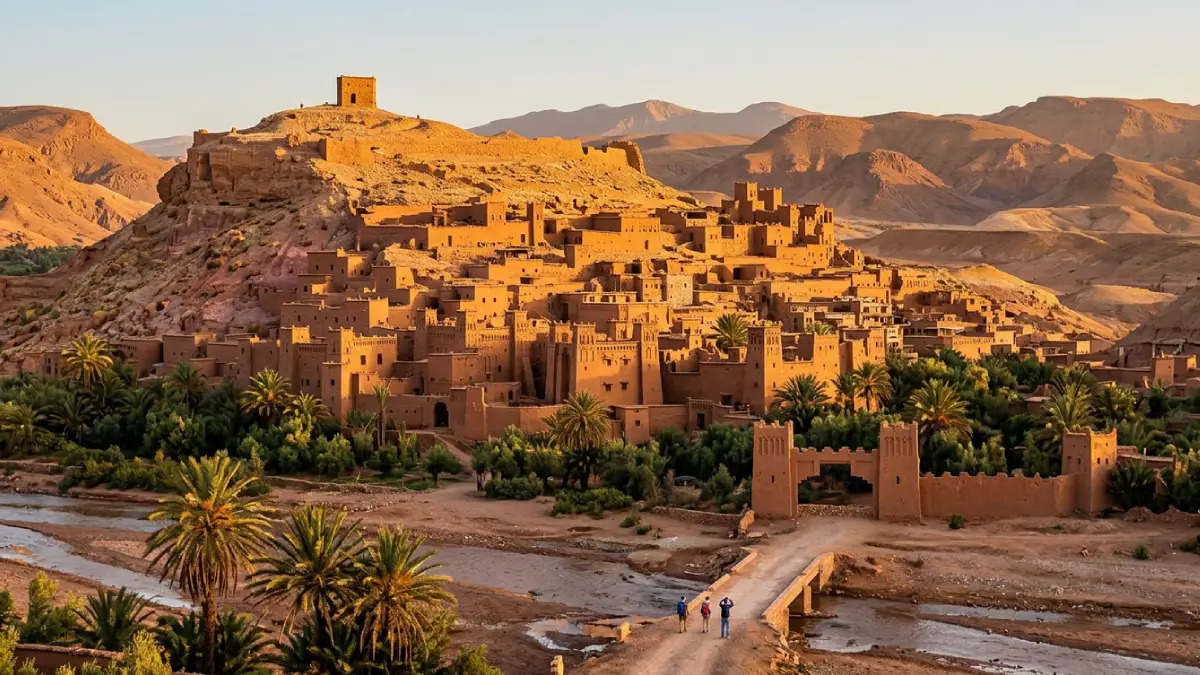
Marrakech to Ait Ben Haddou 2026: Is This Long Day Trip Really Worth It?
I still remember my first visit to Aït Ben Haddou. It was around 2004, more than 20 years ago, when I was already starting to discover Morocco beyond the usual tourist routes. Since then, I have returned many times with travelers from all over the world, and every time I walk through the old alleys of the ksar, I notice something new.
Many visitors arrive because they have seen Aït Ben Haddou in movies like Gladiator or Game of Thrones. They come expecting a famous Hollywood location, and they are usually impressed by the scenery.
But after more than 20 years guiding in Morocco, I always tell my guests the same thing:
Aït Ben Haddou is not only a movie set. The real story is much older.
This ancient ksar (fortified village) was once an important stop on the caravan routes connecting Marrakech with the Sahara. Merchants crossed this region carrying valuable goods such as salt, gold, and spices. The architecture, built from earth, clay, and straw, tells the story of how people adapted to the harsh conditions of southern Morocco.
The big question many travelers ask me is:
“Is Marrakech to Ait Ben Haddou really worth the long drive?”
My honest answer:
Yes, it is worth visiting, but you need to understand what you are choosing.
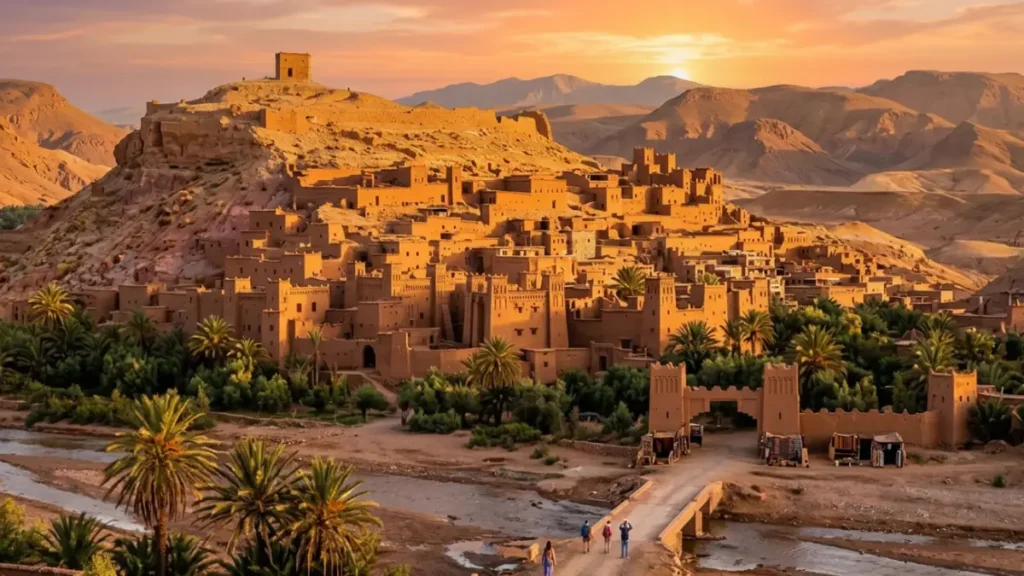
A day trip is possible, but it is a long day. You spend many hours crossing the High Atlas Mountains for a relatively short visit at the ksar. If you have more time, staying overnight allows you to experience Aït Ben Haddou at its best, when the crowds disappear and the golden light transforms the walls into deep shades of orange.
Many travelers look at the map and think 180 km does not sound far. In Morocco, especially when crossing the High Atlas Mountains, distance does not tell the whole story.
This guide explains exactly what to expect, how to get there, how much it costs, and how to make the most of your visit.
If you are comparing the best excursions from Marrakech, start with my complete guide to the best day trips from Marrakech before choosing your route.
Table of Contents
Table of Contents
Marrakech to Ait Ben Haddou: Quick Summary
| Question | Answer |
|---|---|
| What is Aït Ben Haddou? | A UNESCO World Heritage Site and ancient fortified ksar built from earthen architecture |
| Distance from Marrakech | Approximately 180–195 km |
| Driving time | Around 3.5 to 4.5 hours each way |
| Best route | Tizi n’Tichka Pass or scenic Ounila Valley route |
| Best for | History lovers, photographers, cinema fans, culture travelers |
| Day trip possible? | Yes, but it is a very long day |
| Best experience | Overnight stay to enjoy sunrise and sunset |
| Main nearby destinations | Ouarzazate, Telouet Kasbah, Ounila Valley |
Is Marrakech to Ait Ben Haddou Worth a Day Trip?
| Option | Best For | Time | Experience |
|---|---|---|---|
| Shared tour | Budget travelers | Full day | Convenient but fixed schedule |
| Private day trip | Couples/families | 10-12 hours | Flexible and comfortable |
| Overnight | Slow travelers | 2 days | Best atmosphere |
| Sahara combination | First Morocco trip | Multi-day | Complete southern route |
This is the question I receive most often.
The short answer:
Yes, but only if you are prepared for a full day on the road.
An Ait Ben Haddou day trip from Marrakech is usually around 10 to 12 hours in total.
The reality is:
- approximately 8 to 9 hours are spent driving;
- around 1.5 to 2 hours are usually spent exploring the ksar;
- most visitors arrive during the hottest part of the day;
- large groups often arrive at the same time.
This does not mean you should skip it.
The journey itself is part of the experience.
Crossing the High Atlas Mountains, stopping at viewpoints, seeing traditional villages, and watching the landscape change from Marrakech’s red plains to the rocky landscapes around Ouarzazate is something special.
However, if your schedule allows it, I usually recommend a slower itinerary.
Aït Ben Haddou deserves more than a rushed photo stop.
Day Trip vs Overnight: My Honest Recommendation
The Case for a Day Trip
A day trip makes sense if:
- you have limited time in Morocco;
- you are staying only a few days in Marrakech;
- you want to see the most famous landmarks quickly;
- you are comfortable with a long driving day.
My advice:
Leave Marrakech early, ideally around 7:00 AM or before.
This gives you more time at the site and helps avoid arriving with every other tour group.
The Case for Staying Overnight
For me, this is the better experience.
The magic of Aït Ben Haddou is not only inside the walls. It is the atmosphere around the ksar.
During the middle of the day:
- temperatures are higher;
- groups arrive;
- the narrow streets become busy.
At sunrise and sunset:
- the crowds disappear;
- the mud-brick walls change color;
- the valley becomes quiet;
- photography becomes much better.
This is when you understand why this place has inspired filmmakers for decades.
Staying overnight also gives you time for nearby experiences:
- Ouarzazate;
- Atlas Film Studios;
- Kasbah Taourirt;
- Telouet Kasbah;
- Ounila Valley.
What Is Aït Ben Haddou? Understanding the Ksar Beyond Hollywood
Before talking about movies, it is important to understand what Aït Ben Haddou actually is.
Aït Ben Haddou is a ksar, which means a fortified village in Morocco.
Unlike a simple village, a ksar was designed as a protected community.
It included:
- homes;
- storage areas;
- communal spaces;
- defensive towers;
- a shared granary.
The entire structure was built using traditional materials:
- rammed earth;
- mud bricks;
- clay;
- straw.
This was not only because these materials were available.
They were practical.
The thick walls helped regulate temperatures during extreme conditions:
- cooler inside during hot days;
- warmer during cold nights.
This type of architecture is one of the reasons Aït Ben Haddou became a UNESCO World Heritage Site.
Aït Ben Haddou and the Ancient Caravan Route
Long before Hollywood arrived, this area already had an important role.
The ksar was located along historic caravan routes connecting:
- Marrakech;
- the Atlas Mountains;
- the Sahara;
- trading regions further south.
Merchants transported valuable goods including:
- salt;
- gold;
- spices;
- textiles.
The journey across Morocco was not simple. Mountain passes, deserts, and difficult terrain made strategic stopping points essential.
Aït Ben Haddou was part of this network.
When I explain this history to guests, I always tell them:
“The most interesting thing here is not that movies were filmed here. The most interesting thing is that people were living and trading here centuries before cameras arrived.”
Many travelers combine Aït Ben Haddou with a longer journey toward the Sahara. If you are planning the dunes of Merzouga, I recommend reading my complete guide to choosing the right Marrakech to Merzouga desert tour.
A Living Village, Not Just an Ancient Monument
One detail many visitors do not know:
Aït Ben Haddou is not completely abandoned.
Most families moved across the river to the modern village during the 20th century because daily life became easier there.
However, a small number of families still maintain homes inside the old ksar.
Walking through the narrow passages, you can still feel that this was once a real community, not simply a tourist attraction.
Some houses are preserved for visitors, some are family homes, and some spaces are connected to local artisans.
Aït Ben Haddou: The Hollywood of Africa, But There Is More Than Movies
Aït Ben Haddou is often called the “Hollywood of Africa”, and there is a reason for this.
The dramatic red earth walls, towers, narrow streets, and mountain surroundings created the perfect backdrop for filmmakers looking for ancient cities, desert landscapes, and historical settings.
Over the years, many famous productions used Aït Ben Haddou and the surrounding Ouarzazate region as filming locations.
Some of the most famous examples include:
- Gladiator
- Game of Thrones
- Lawrence of Arabia
- The Mummy
- Kingdom of Heaven
For many visitors, the connection with movies is the first reason they discover this place.
When guests ask me about Gladiator or Game of Thrones, I always enjoy explaining the connection, especially when they recognize locations they have seen on screen.
For example, Aït Ben Haddou was used as the city of Yunkai in Game of Thrones, and some scenes from Gladiator were filmed in and around the area.
But I also explain something important:
The real value of Aït Ben Haddou is not Hollywood. Hollywood is only one chapter of the story.
The Reality Behind Cinema Tourism
One common expectation is that visitors will find a complete ancient city frozen in time.
The reality is more complex.
Some structures inside and around the ksar have been:
- restored;
- adapted for visitors;
- used for film production;
- maintained because of tourism.
Some movie-related areas can feel more like a cinematic backdrop than a traditional village.
Personally, I think this is not a negative thing if visitors understand it before arriving.
Cinema helped put Aït Ben Haddou on the world map and contributed to its preservation.
But when I guide guests there, I always encourage them to look beyond the movie scenes.
Look at:
- the construction techniques;
- the old homes;
- the defensive towers;
- the relationship between the village and the valley;
- the history of the caravan routes.
That is where the real story begins.
How to Get From Marrakech to Aït Ben Haddou
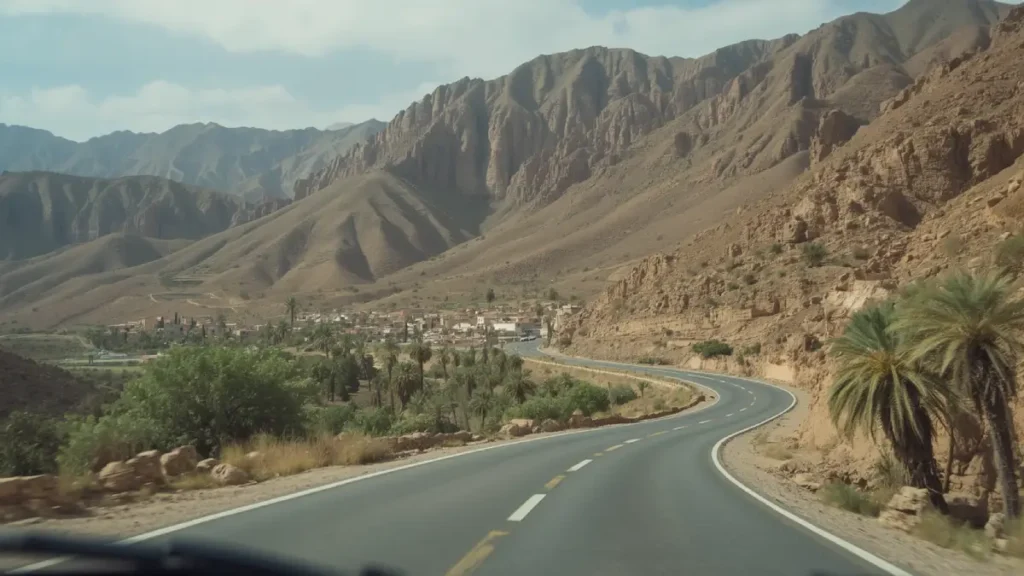
The journey is one of the most important parts of the experience.
The Marrakech to Ait Ben Haddou distance is not extremely large on a map, approximately 180 to 195 km depending on the route.
However, Morocco is not always about kilometers.
Mountain roads change everything.
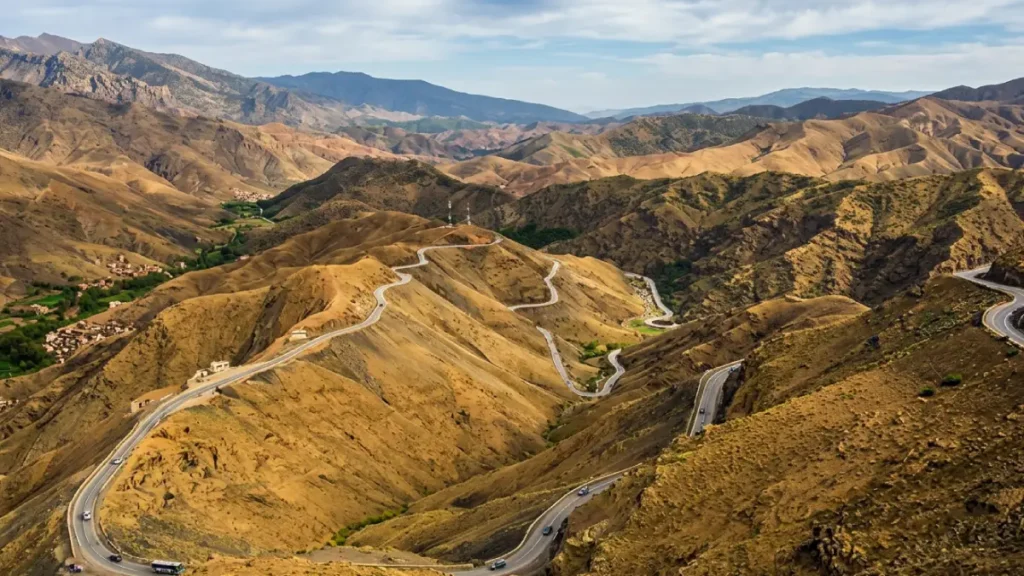
The drive includes:
- winding roads;
- high mountain passes;
- elevation changes;
- stops for viewpoints and villages.
Expect approximately:
3.5 to 4.5 hours each way.
This is why choosing the right transport option matters.
Option 1: Private Driver or Private Aït Ben Haddou Tour
For travelers who want comfort, flexibility, and a deeper experience, this is usually the option I recommend.
A private trip allows you to enjoy the journey instead of only thinking about reaching the destination.
With Morkosh Tours, we customize the itinerary depending on your interests.
Possible stops include:
- Tizi n’Tichka Pass;
- panoramic viewpoints;
- Telouet Kasbah;
- Ounila Valley;
- local villages;
- Aït Ben Haddou;
- Ouarzazate.
For vehicles, we adapt depending on group size:
Toyota Prado
Best for:
- couples;
- small families;
- 1 to 4 travelers.
It is comfortable, especially for long mountain roads.
Mercedes Vito
Best for:
- small groups;
- families;
- up to approximately 6 travelers.
Mercedes Sprinter
Best for:
- larger groups.
The advantage of a private trip is not only the vehicle.
- It is the flexibility.
- You can stop when you see something interesting.
- You can spend more time where you enjoy yourself.
- You are not following a strict schedule designed for 30 or 40 people.
Ask Youness for a Marrakech to Aït Ben Haddou Tour Quote on WhatsApp
Tell me your travel dates, number of travelers, and whether you prefer a day trip, overnight stay, or a longer Morocco itinerary.
Contact Youness on WhatsAppWhat Does a Private Aït Ben Haddou Tour Include?
A private Aït Ben Haddou tour can be customized, but usually includes:
- private transportation;
- experienced driver;
- local recommendations;
- lunch stop;
- optional local guide inside the ksar;
- flexible stops.
Depending on the itinerary, we can also include:
- Ouarzazate;
- Atlas Film Studios;
- Telouet Kasbah;
- Sahara combinations for longer tours.
For travelers who want a simple transfer, the route can be direct.
For travelers who want to understand Morocco, I prefer making the journey part of the experience.
Option 2: Organized Group Tour From Marrakech
A shared group tour is the most common choice for visitors looking for a lower-cost option.
The advantage is simple:
- pickup is arranged;
- transport is included;
- you do not need to organize anything.
However, travelers should understand the limitations.
A cheaper group tour often means:
- fixed departure times;
- limited stops;
- less flexibility;
- less time at Aït Ben Haddou;
- large groups.
For a place that requires several hours of driving, comfort matters.
Before booking, check:
- vehicle type;
- group size;
- whether lunch is included;
- whether a local guide is included;
- cancellation conditions.
The cheapest Ait Ben Haddou tour price is not always the best value.
Option 3: Driving Yourself
Renting a car is possible and gives you freedom.
It is a good option for confident drivers who enjoy independent travel.
Advantages:
- stop whenever you want;
- explore villages;
- choose your own timing;
- combine with overnight stays.
However, consider:
- Marrakech traffic can be stressful;
- mountain roads require attention;
- the Tizi n’Tichka pass has many curves;
- driving after dark is not ideal.
The road is safe when driven carefully, but it requires concentration.
Option 4: Bus and Public Transport
Independent travelers can reach Ouarzazate by bus with companies such as CTM or Supratours.
From Ouarzazate, Aït Ben Haddou is around 30 km away, so you would need another taxi or local transport.
This option works for travelers with more time.
However, for a short Marrakech stay, it is usually not the most efficient solution.
Before leaving Marrakech, it is worth understanding where to start your journey, especially if you are staying in the Medina or near the airport. read my Marrakech travel guide.
The Scenic Route: Ounila Valley Instead of Going Directly
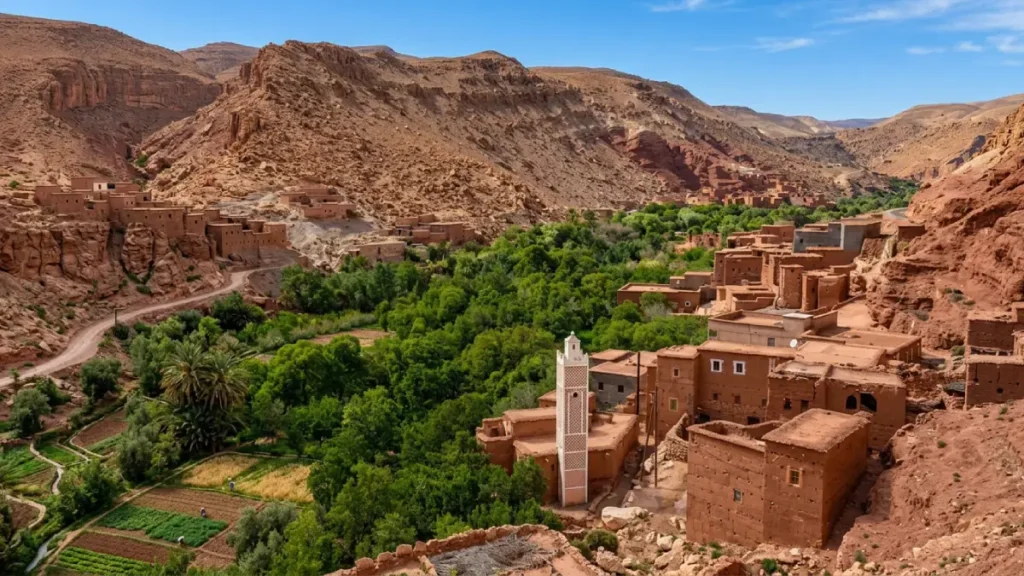
Many visitors only know the main road from Marrakech to Ouarzazate.
But if you have enough time, I personally love taking the more scenic route through the Ounila Valley.
This is where the journey becomes much more than transportation.
The route passes through:
- dramatic red rock landscapes;
- green valleys;
- traditional villages;
- old kasbahs;
- less crowded areas.
Instead of only going from point A to point B, you experience southern Morocco slowly.
Tizi n’Tichka Pass: Crossing the High Atlas Mountains
The first major landmark on the route is the famous Tizi n’Tichka Pass.
At approximately 2,260 meters altitude, it is one of the highest paved mountain passes in North Africa.
The views are impressive:
- mountain peaks;
- valleys below;
- changing landscapes;
- traditional villages.
I always recommend stopping safely at viewpoints when conditions allow.
Many travelers underestimate how much the landscape changes during this part of the journey.
You leave behind the red city of Marrakech and enter a completely different Morocco.
Telouet Kasbah: The Forgotten Jewel on the Road
If you have time, Telouet Kasbah is one of my favorite stops.
From the outside, it can look almost abandoned.
But inside, the story changes.
The kasbah was once the residence of the powerful Glaoui family, especially Thami El Glaoui, known as the Pasha of Marrakech.
The contrast is fascinating:
Outside:
- damaged walls;
- quiet courtyards;
- a forgotten appearance.
Inside:
- beautiful zellij tilework;
- carved cedar wood;
- detailed decorations.
It tells an important story about the history and power of southern Morocco.
Many travelers rush past Telouet.
I think that is a mistake.
Ounila Valley: A Road Trip Inside the Road Trip
The Ounila Valley is one of those places where you should slow down.
The landscape combines:
- red cliffs;
- green agricultural areas;
- traditional villages;
- old kasbahs.
Places like Anmiter and Tamdaght offer a different feeling from the more famous Aït Ben Haddou.
They show what southern Moroccan village life looked like before tourism and cinema became so important.
Visiting Aït Ben Haddou: What Should You Actually See Inside the Ksar?
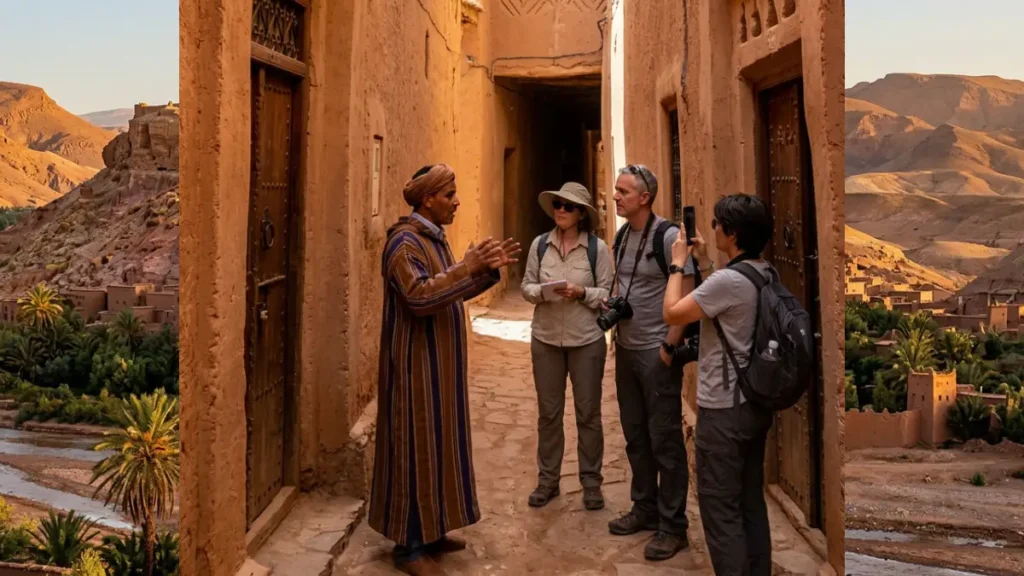
Many visitors arrive at Aït Ben Haddou, take a few photos, walk around for 30 minutes, and leave.
I think that is a missed opportunity.
The ksar is not huge, but every corner has a story.
When I walk through Aït Ben Haddou with guests, I do not only show them the famous viewpoints. I explain how people lived here, how the village was organized, and why this architecture was perfectly adapted to the environment.
Here are the places I recommend paying attention to.
Walking Through the Old Alleys
The first thing to do is simply slow down.
The narrow passages between the earthen houses were designed for practical reasons:
- protection from the sun;
- natural cooling;
- movement between homes;
- community life.
Look carefully at the buildings.
You will notice:
- geometric patterns on the towers;
- traditional decorations;
- different construction techniques;
- restored and original sections side by side.
The beauty of Aït Ben Haddou is not only the view from outside.
It is the feeling of walking inside a place built by generations of families.
The Agadir: The Best Viewpoint Over Aït Ben Haddou
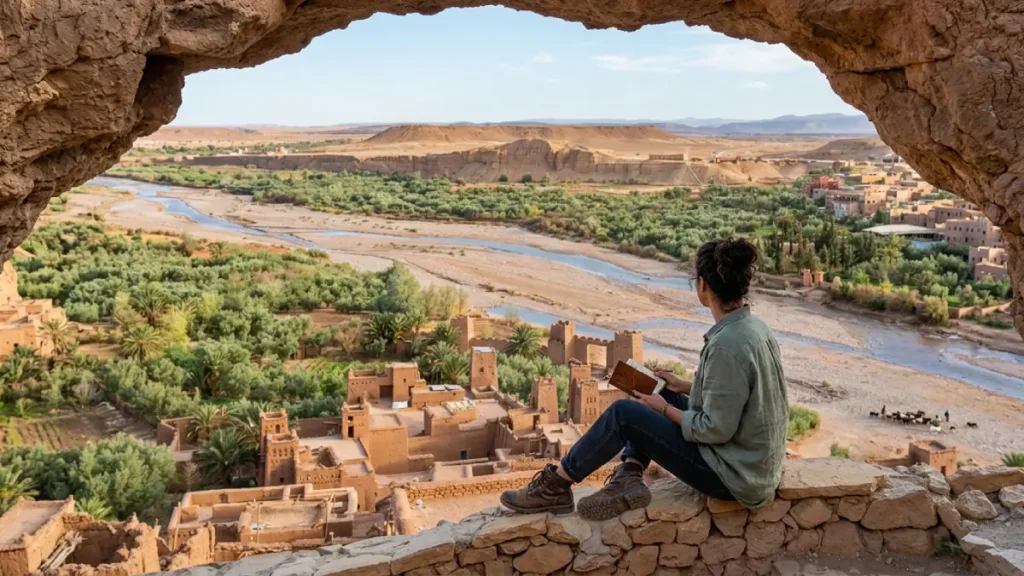
If you only do one thing inside the ksar, climb to the top.
The agadir was the communal granary and one of the most important areas of the village.
From the top, you get a panoramic view of:
- Aït Ben Haddou;
- the Ounila Valley;
- the surrounding mountains;
- the landscape that made this location famous.
This is also where you understand the strategic importance of the ksar.
From this position, people could observe the valley and protect their community.
I always recommend guests take their time here.
It is not just a photo opportunity.
It is the place where the entire story of Aït Ben Haddou becomes clear.
Crossing the River: Two Different Experiences
To reach the ksar, visitors cross the area near the Ounila River.
Today there is a modern pedestrian bridge, which makes access easier.
However, when water levels are low, some visitors enjoy the traditional-style crossing using sandbags and stepping stones.
This small detail adds something special to the experience.
It reminds you that before modern access, the river was part of daily village life.
Of course, safety comes first.
The river conditions change depending on season and rainfall.
Do You Need a Local Guide Inside Aït Ben Haddou?
Technically, no.
The ksar is small enough that independent travelers can walk around.
But I always say:
You can see Aït Ben Haddou without a guide, but you understand Aït Ben Haddou with one.
The difference is the stories.
A good local guide can explain:
- how the village was organized;
- the caravan routes;
- the meaning of the architecture;
- local traditions;
- how families lived inside the walls.
There are no signs explaining every detail.
Without context, some visitors only see old buildings.
With context, they see a living piece of Moroccan history.
For my private tours, I adapt depending on the group.
Some travelers prefer a quiet walk with my explanations.
Others prefer a local Aït Ben Haddou guide who can share family stories and deeper knowledge of the ksar.
Both options can work depending on the traveler’s interests.
A Detail Many Visitors Miss: Traditional Painting With Saffron
One of the most interesting small experiences inside Aït Ben Haddou is seeing traditional painting techniques.
Some local artists demonstrate how natural materials were historically used to create decorations.
A fascinating example is saffron-based painting.
The artwork can appear simple at first, but when heated, hidden colors and details can become visible.
It is a small experience, but it shows the creativity behind traditional Moroccan craftsmanship.
Aït Ben Haddou Tour Price: What Should You Expect?
The price of visiting Aït Ben Haddou depends heavily on your travel style.
There is no single fixed price.
Factors include:
- private or shared transport;
- vehicle type;
- group size;
- overnight stay;
- included meals;
- local guide;
- additional stops.
Typical Private Aït Ben Haddou Tour Price
For a private day trip from Marrakech:
Expect approximately:
2,500 to 4,000 MAD for a couple
depending on:
- vehicle;
- itinerary;
- inclusions;
- season.
A private trip is usually more expensive, but it makes a big difference on such a long journey.
You are spending several hours in the vehicle, so comfort matters.
For families or small groups, the cost per person can become much more reasonable.
Typical Shared Tour Price
A shared group tour is usually the budget option.
Typical prices:
Around 200 to 1,800 MAD per person
depending on the company and what is included.
Always check:
- Is lunch included?
- Is there a local guide?
- How many people are in the group?
- How much time do you actually spend at Aït Ben Haddou?
A cheap tour can look attractive online, but sometimes the savings come from reducing your actual experience.
Overnight Stay Costs
Staying overnight changes the experience completely.
The additional cost depends on:
- accommodation quality;
- dinner;
- breakfast;
- season.
A typical extension may add approximately:
600 to 1,200 MAD per person
depending on the package.
Independent travelers can also find guesthouses near the ksar.
One place many travelers appreciate is Bagdad Café, known for its comfortable atmosphere, good food, and convenient location.
Small Local Costs To Consider
Even when the main tour is paid, remember smaller expenses.
Approximate examples:
Ksar access
The ksar itself is technically free to enter.
However, some families may request a small contribution when entering private homes or maintained areas.
Expect around:
10–20 MAD
for some private sections.
Museums and Private Homes
Some family-run museums or houses may request a small entrance contribution.
Usually:
10–20 MAD
Parking
If driving yourself:
- daytime parking is usually around 10–20 MAD;
- overnight parking may cost more depending on location.
Local Guide
A local guide may request around:
100 MAD
depending on the service and group size.
Where To Eat Near Aït Ben Haddou
Food is part of the experience.
After walking through the ksar, a good Moroccan meal with a view can be one of the highlights of the day.
Option 1: Local Restaurants Near the Ksar
The easiest choice is the modern village across the river.
You will find:
- Moroccan salads;
- tagines;
- couscous;
- grilled meat;
- omelets;
- mint tea.
This is practical and convenient.
Option 2: Restaurant With a View
Many travelers love eating while looking directly at Aït Ben Haddou.
Rooftop terraces are especially popular.
The experience is simple:
You sit, drink Moroccan tea, eat a tagine, and watch the ancient ksar above the valley.
Some restaurants near the ksar are appreciated for their views, but always check recent reviews because quality can change.
My Personal Recommendation: Bagdad Café
For travelers staying overnight or looking for a memorable meal, Bagdad Café is one of the places I often recommend.
The style is simple and comfortable.
Many guests appreciate:
- the atmosphere;
- the hospitality;
- the food quality;
- the proximity to the ksar.
For me, it represents what I like about Morocco:
Good food, good conversation, and a relaxed atmosphere.
Staying Overnight: Aït Ben Haddou or Ouarzazate?
This is another question I receive often.
The answer depends on your travel style.
Neither option is automatically better.
They offer different experiences.
Sleeping in Aït Ben Haddou
Choose Aït Ben Haddou if you want:
Golden Hour Photography
The best moments are often:
- sunrise;
- sunset.
The walls change color, the light becomes softer, and the atmosphere is completely different from midday.
Quiet Evening Atmosphere
After the day visitors leave, the village becomes peaceful.
You hear:
- fewer voices;
- fewer vehicles;
- local life continuing.
It feels like a slower Morocco.
Walking Distance to the Ksar
Staying nearby allows you to:
- visit early;
- avoid crowds;
- return whenever you want.
Sleeping in Ouarzazate
Choose Ouarzazate if you prefer:
More Comfort and Services
Ouarzazate offers:
- more hotels;
- more restaurants;
- shops;
- fuel stations;
- easier transport connections.
Film History
It is also the best base for:
- Atlas Film Studios;
- Kasbah Taourirt.
Practical Travel
If you arrive late or continue your journey early the next day, Ouarzazate can be more convenient.
My Recommendation
If you have two days:
My favorite combination is:
Day 1: Marrakech → Aït Ben Haddou → overnight near the ksar
Enjoy sunset.
Day 2: Sunrise → Ouarzazate → Kasbah Taourirt or Atlas Film Studios
Then continue depending on your itinerary.
This gives you both atmosphere and practicality.
Exploring Ouarzazate: More Than Just a Stop on the Way
Many travelers pass through Ouarzazate quickly because their main goal is Aït Ben Haddou.
But if you have time, Ouarzazate deserves attention.
The city has a completely different atmosphere from Marrakech.
It is quieter, more open, and surrounded by the landscapes of southern Morocco.
For many years, it has been an important gateway between the High Atlas Mountains, the Sahara, and the valleys further south.
It is also famous for another reason:
Cinema.
Atlas Film Studios: The Hollywood Connection Continues
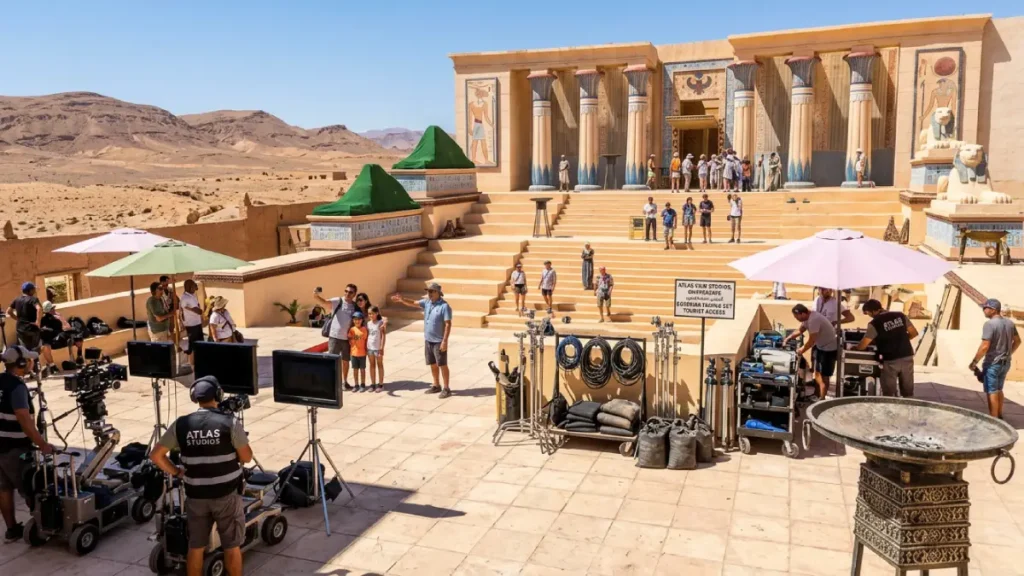
Ouarzazate is home to Atlas Film Studios, one of the world’s most famous film studios.
Many productions have used the region because of its landscapes and architecture.
Inside the studios, visitors can discover sets connected with:
- historical films;
- ancient Egypt;
- desert scenes;
- biblical productions;
- fantasy movies.
For serious movie fans, it can be an interesting stop.
However, I always explain something to my guests:
Do not expect a modern Hollywood studio with impressive technology everywhere.
Some sets are exactly what they look like:
movie sets.
They are designed for the camera angle, not necessarily for real life.
You may see:
- impressive facades;
- large outdoor sets;
- structures created for filming.
But you may also notice that some areas are temporary or supported in ways that make sense only in cinema.
That is part of the charm.
You are seeing how imagination and Moroccan landscapes came together.
Kasbah Taourirt: A More Authentic Historical Experience
If you choose between the film studios and historical architecture, I often recommend visiting Kasbah Taourirt as well.
Located in Ouarzazate, it was one of the important residences connected with the powerful Glaoui family.
Compared with some film attractions, Kasbah Taourirt feels more connected to Moroccan history.
Inside you can discover:
- traditional rooms;
- decorated ceilings;
- Amazigh architectural details;
- the lifestyle of powerful families from southern Morocco.
The Glaoui family played a major role in the history of the region, especially through their influence over trade routes and mountain areas.
For travelers interested in culture, this can sometimes be more rewarding than another movie set.
The Glaoui Family and the History Behind the Region
To understand Aït Ben Haddou, Telouet, and Ouarzazate, you need to understand the importance of the Glaoui family.
One of the most famous figures was:
Thami El Glaoui, known as the Pasha of Marrakech.
His influence came from:
- controlling important routes;
- collecting taxes from trade;
- political power;
- alliances with different communities.
His wealth helped create impressive buildings like Telouet Kasbah.
But history is never only about beautiful architecture.
The same buildings also tell stories about power, politics, and the changing face of Morocco.
This is one reason I encourage visitors to go beyond taking photos.
Every wall has a story.
My Honest Recommendation: Is Aït Ben Haddou Worth the Drive From Marrakech?
After visiting Aït Ben Haddou for more than 20 years and bringing many guests there, my answer is:
Yes, Aït Ben Haddou is worth the drive, but only if you visit it the right way.
If you only have one day from Marrakech, go early and understand that it will be a long day.
You will spend many hours driving, but the journey through the High Atlas Mountains is part of the experience.
If you have more time, I strongly recommend slowing down.
- Stay overnight.
- Wake up near the ksar.
- Walk through the empty alleys in the morning.
- Watch the walls change color at sunset.
That is when Aït Ben Haddou shows its real personality.
- The movies made it famous.
- The history makes it special.
Book a Private Marrakech to Aït Ben Haddou Experience With Youness
If you prefer a flexible experience instead of a rushed group tour, I organize private trips from Marrakech through my company, Morkosh Tours.
My goal is simple:
Help travelers understand Morocco, not just take pictures of it.
Depending on your schedule, I can organize:
- Marrakech to Aït Ben Haddou day trips;
- overnight experiences;
- Ouarzazate combinations;
- Telouet and Ounila Valley routes;
- Sahara extensions;
- customized 4×4 experiences.
Private travel allows you to decide the rhythm:
- more photography stops;
- more cultural explanations;
- more time in places you enjoy.
For a personalized recommendation, send me your travel dates and group size.
Ask Youness for a Marrakech to Aït Ben Haddou Tour Quote on WhatsApp
Tell me your travel dates, number of travelers, and whether you prefer a day trip, overnight stay, or a longer Morocco itinerary.
Contact Youness on WhatsAppFrequently Asked Questions About Marrakech to Aït Ben Haddou
How far is Aït Ben Haddou from Marrakech?
The Marrakech to Ait Ben Haddou distance is approximately 180 to 195 km depending on the route. Because the journey crosses the High Atlas Mountains and the Tizi n’Tichka Pass, the drive usually takes around 3.5 to 4.5 hours each way.
Is Aït Ben Haddou worth a day trip from Marrakech?
Yes, especially if you love history, architecture, photography, or cinema locations. However, it is a long day, and travelers should understand that much of the experience is spent driving. If you have extra time, an overnight stay offers a much better atmosphere.
If you want a desert-style experience without spending a full day driving, compare it with my guide to Agafay Desert tours from Marrakech.
How long do you need in Aït Ben Haddou?
Most day trips allow around 1.5 to 2 hours at the ksar. I recommend more time if possible because the site is better enjoyed slowly, especially with a local guide explaining the history.
Do I need a guide for Aït Ben Haddou?
A guide is not mandatory because the ksar is small and easy to explore. However, a knowledgeable local guide can explain the caravan history, architecture, traditions, and details you would probably miss walking alone.
How much does an Aït Ben Haddou tour cost?
An Aït Ben Haddou tour price depends on transport, group size, and what is included. Shared tours are usually the budget option, while a private Aït Ben Haddou tour costs more but provides flexibility, comfort, and personalized stops.
Is the road from Marrakech to Aït Ben Haddou safe?
Yes, the road is regularly used by locals and travelers. However, the Tizi n’Tichka Pass has many curves and mountain sections, so confident driving or an experienced local driver is recommended.
What movies were filmed at Aït Ben Haddou?
Famous productions connected with Aït Ben Haddou include Gladiator, Game of Thrones, Lawrence of Arabia, The Mummy, and Kingdom of Heaven. The site was used because of its unique earthen architecture and dramatic landscape.
Is it better to stay in Aït Ben Haddou or Ouarzazate?
It depends on your priorities.
Stay near Aït Ben Haddou if you want sunrise, sunset, atmosphere, and walking access to the ksar.
Choose Ouarzazate if you prefer more hotels, restaurants, transport options, and access to Atlas Film Studios and Kasbah Taourirt.
Can children visit Aït Ben Haddou?
Yes, children can enjoy the experience, especially if they like history and exploring. However, parents should consider the long drive from Marrakech and the uneven paths inside the ksar.
Is Aït Ben Haddou better than Ouzoud Falls or Ourika Valley?
Aït Ben Haddou:
history + architecture + cinema
Ouzoud:
waterfalls + nature
Ourika:
easy Atlas escape
Can I visit Aït Ben Haddou and Ouarzazate in one day from Marrakech?
Yes, but it creates a very long day. For a more comfortable experience, I recommend either starting very early or including an overnight stay.
If you are still deciding between Marrakech excursions, you can also compare Aït Ben Haddou with my guides to Marrakech to Essaouira, Ouzoud Falls, Ourika Valley, and Imlil.
Links:
