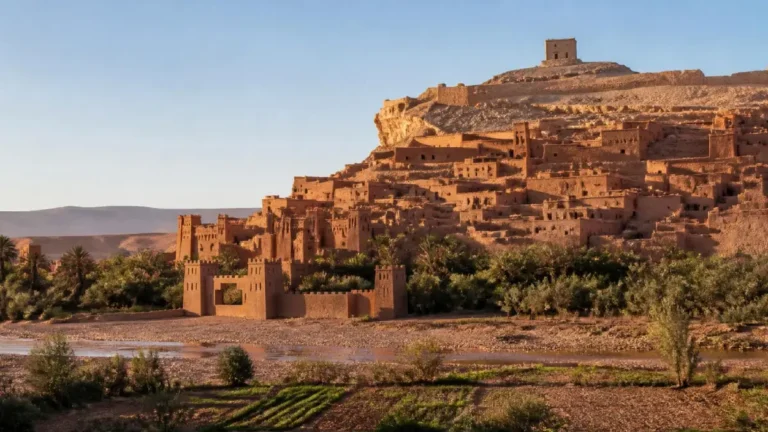

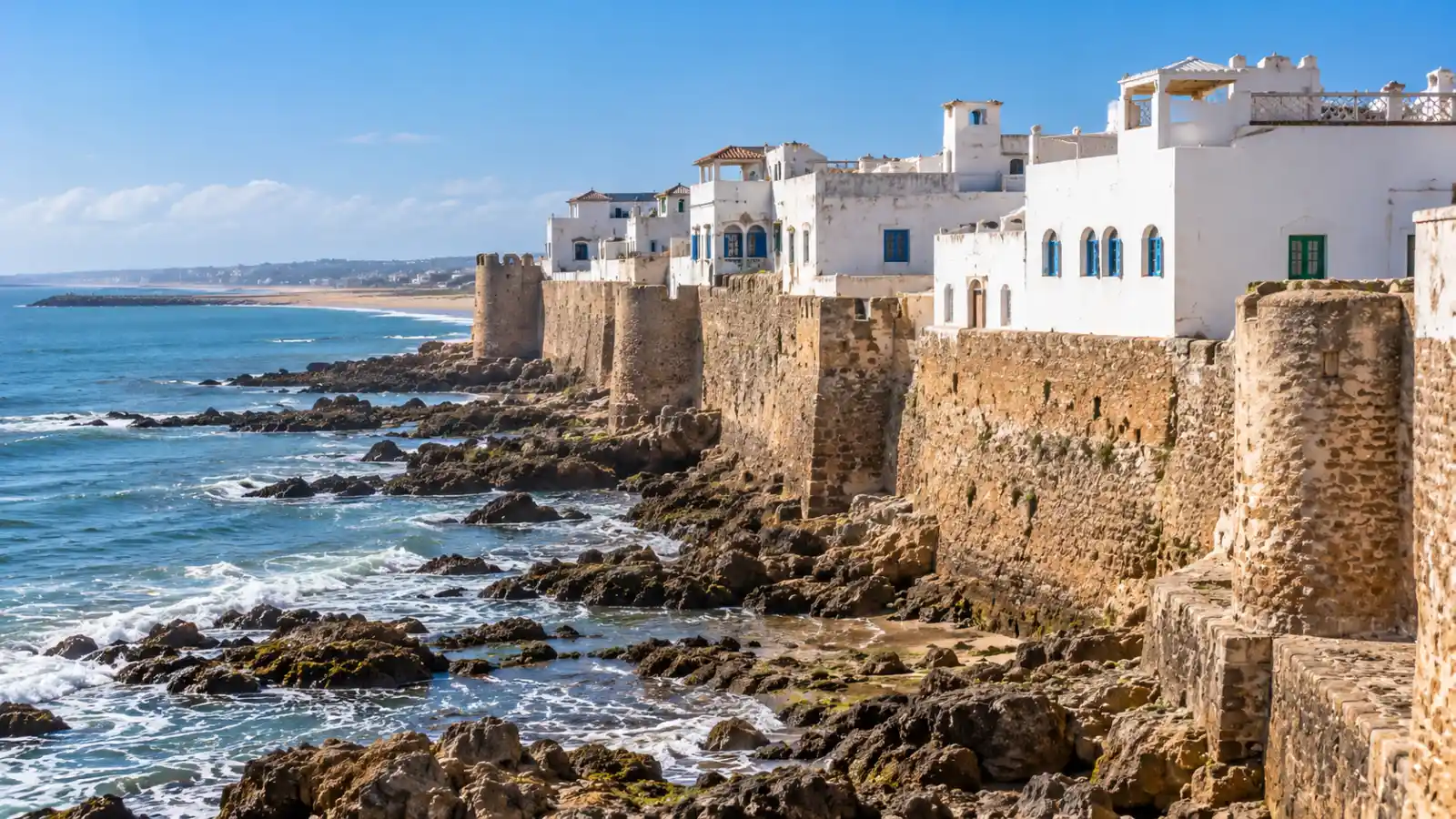
Asilah, Morocco, is well worth visiting if you want a slower Atlantic-coast experience after Tangier or as part of a northern Morocco route. Its whitewashed Medina, Portuguese-era walls, changing street murals and beaches make it very different from Morocco’s larger cities. You can see the essentials on a day trip, but I recommend staying one or two nights if your schedule allows: early mornings and sunset are when Asilah feels at its best.
This Asilah Morocco travel guide explains what to see, where to walk, which beaches are practical, how long to stay and what to expect before you go.
Table of Contents
Table of Contents
Is Asilah better as a day trip or an overnight stay?
Asilah works very well as a day trip from Tangier. Allow around 45 minutes to one hour by road, depending on your departure point and traffic. For train stations, tickets, shared taxis and driving details, read my Tangier to Asilah transport guide.
A day trip is enough for:
- A walk through the Medina and mural streets
- The Portuguese ramparts and ocean views
- Krikia viewpoint around sunset
- Lunch or tea in town
- A quick visit to the central beach
However, I recommend an overnight stay for travelers who enjoy photography, art, seafood, beaches or simply a quieter pace. Once day visitors leave, the Medina becomes especially peaceful. Staying overnight also gives you time to visit a beach outside town, explore the market, try a hammam or enjoy dinner without watching the clock.
Asilah is particularly suitable for couples, independent travelers, artists, photographers, families and anyone who finds Tangier too busy.
Walk the Medina from Bab Homar to the Atlantic ramparts
The Medina is small, pedestrian-friendly and one of the easiest historic quarters to explore in northern Morocco. It is not a vast maze like Fes, which is part of its appeal: you can wander without feeling lost, then return to the sea walls within a few minutes.
Expect whitewashed houses, blue and green shutters, flowerpots, decorated doorways and murals painted directly onto residential walls. Although Asilah attracts visitors, it remains a lived-in town, so treat the Medina as a neighborhood rather than only a photography setting.
Start at Bab Homar
I recommend entering through Bab Homar, an impressive stone gateway associated with the Portuguese period. It gives a strong first impression of Asilah’s defensive history and places you close to the most interesting Medina lanes.
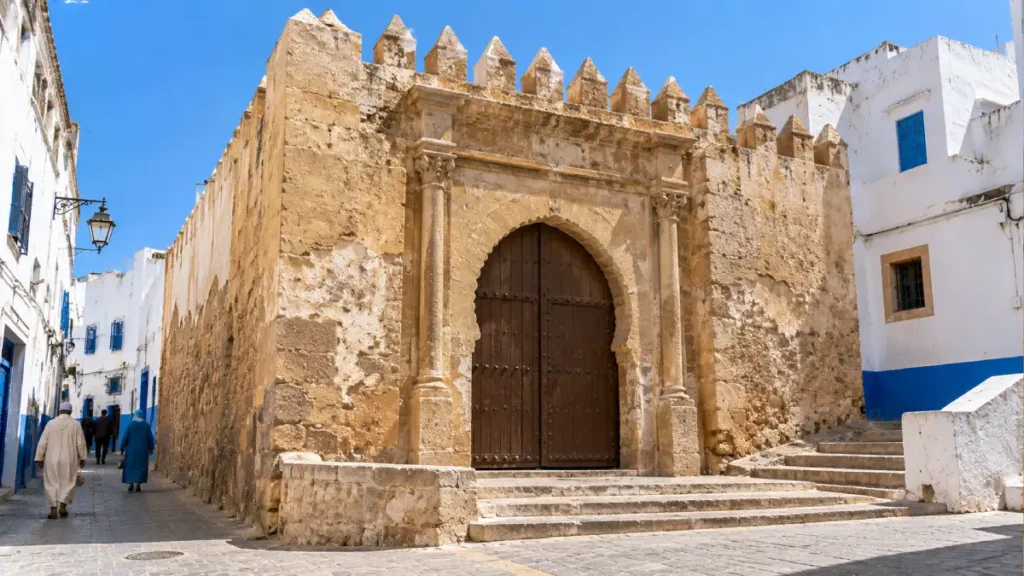
The Portuguese captured Asilah in the late fifteenth century and developed major fortifications around the town. The surviving walls and towers remain among its most distinctive features.
From Bab Homar, walk slowly through the quieter streets around Place Ibn Khaldun and toward the Grand Mosque area. There is no need to follow a rigid route; the pleasure is in noticing painted doors, murals, small craft shops and the contrast between the bright walls and Atlantic light.
See the Grand Mosque and Kasbah streets
The Grand Mosque is an important landmark within the Medina. Visitors should admire its exterior and respect the religious character of the surrounding area.
The nearby Kasbah streets are among the best places to appreciate Asilah’s residential atmosphere. These lanes are compact, generally flat and manageable on foot, although uneven paving, cobblestones and occasional steps can be difficult for travelers with reduced mobility.
Follow the Portuguese walls toward Krikia viewpoint
The ocean-facing ramparts are the highlight of an Asilah visit. Massive stone walls rise above the Atlantic, and on rougher days the waves below create dramatic scenery.
Walk toward Krikia, also called Caraquia, near the southwestern corner of the Medina. It is one of my favorite photography locations in Asilah because it combines the sea, old walls and coastline in one view.
Late afternoon is particularly good for warmer light, while sunset from the ramparts is one of the best reasons not to rush back to Tangier too early. During rough seas, stay behind barriers and avoid exposed edges.
Look for Borj Al Kamra and the historic gates
Borj Al Kamra is another notable tower connected with the Portuguese fortifications and former administrative area. It is worth viewing from the surrounding streets, but do not assume every historic tower or building is open to the public.
Other gateways and defensive elements around the Medina also help explain why Asilah was historically important on this part of the coast.
Why Asilah’s murals make the Medina different
Asilah is often described as an open-air art gallery, and that description is deserved. Colorful murals appear across the Medina’s white walls, transforming ordinary lanes into changing exhibition spaces.
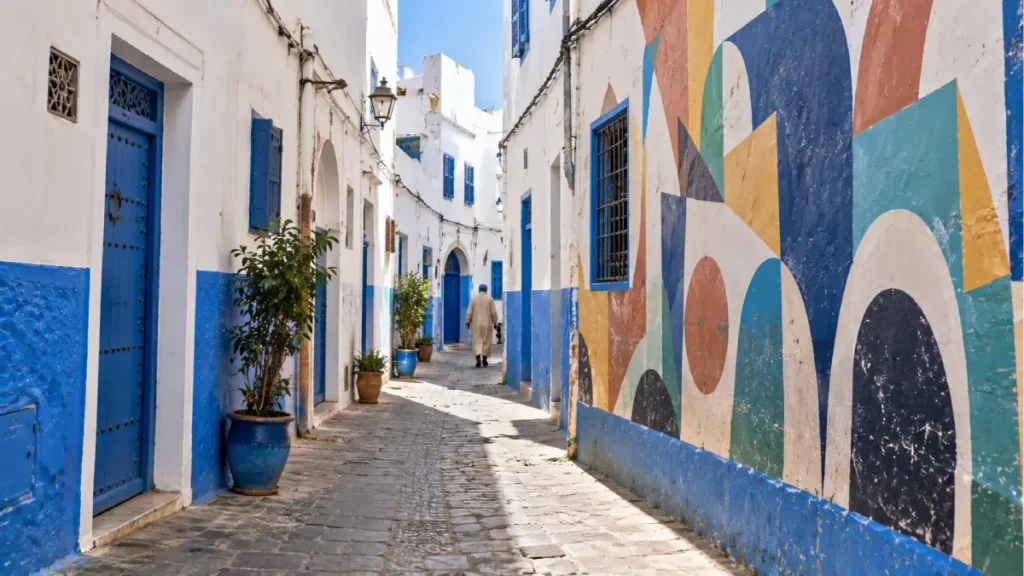
The town’s modern cultural revival began in 1978 through initiatives associated with Mohamed Benaissa, Mohamed Melehi and other Moroccan cultural figures. Since then, artists from Morocco and abroad have contributed paintings, printmaking and other creative work.
The important point for travelers is that the murals are not permanent museum pieces. During festival preparations and cultural events, selected works may be repainted or replaced. A return visit can look quite different from the last one.
Visit during the Asilah International Cultural Moussem
The Asilah International Cultural Moussem is the town’s best-known cultural event, bringing together painting, printmaking, literature, music and cultural discussions. During the festival, visitors may see artists working on murals, attend exhibitions or find events at venues such as Raissouli Palace and the Hassan II Centre for International Meetings.
The Moussem can run in separate seasonal sessions, so do not assume it always occupies fixed dates in July. The 47th edition in 2026 included a summer visual-arts and mural-painting session from 28 June to 5 July and an autumn session from 2 to 18 October featuring cultural debates, exhibitions and poetry. The Moroccan government’s 2026 announcement confirms the autumn dates. Always check the current programme and venue access before planning around the festival.
Even outside festival season, Asilah remains a strong destination for art lovers. Look for independent galleries, printmaking studios, small workshops and craft shops. If buying artwork, ask whether a print is an original piece or a reproduction before agreeing on a price.
Historic places beyond the walls
Raissouli Palace
Raissouli Palace, also known as Palais Raissouli or Raissouni Palace, is linked to Ahmed al-Raissouni, an influential historical figure in northern Morocco. The building dates from the early twentieth century and combines Moroccan and Andalusian architectural influences.
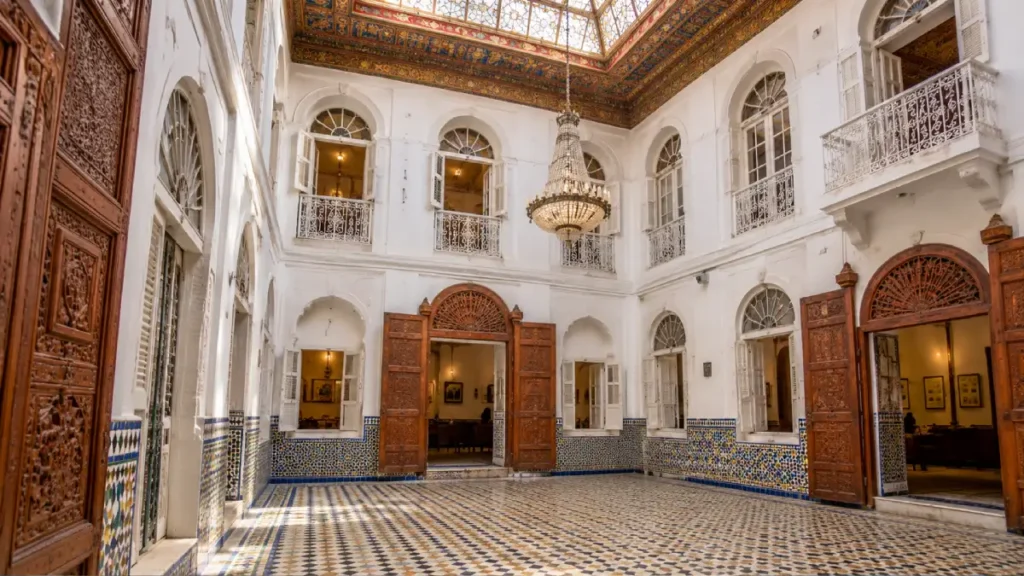
It has hosted cultural exhibitions and events, but interior access can be limited outside festival periods. Even when it is closed, the surrounding streets and exterior are worth seeing as part of a Medina walk.
Church of San Bartolomé and Jewish heritage sites
Asilah’s history includes Phoenician, Roman, Portuguese, Spanish, Muslim and Jewish influences. The continued use of Spanish among some residents reflects the town’s long connection with Spain.
The Church of San Bartolomé is one reminder of this layered history. Travelers interested in Jewish heritage may also wish to learn about the restored Kahal Synagogue. Public visiting arrangements should be confirmed before making a special journey for it.
Sidi Mansour Cemetery
The Sidi Mansour Cemetery, overlooking the Atlantic near the walls, is an atmospheric place that reflects local religious traditions. Visit respectfully. It is a religious and cultural space, not simply a photography stop.
Which Asilah beaches are worth visiting?
Asilah’s beaches are one of its main attractions, but visitors should understand the difference between the convenient town beach and more natural beaches farther along the coast.
Atlantic water can be cool even in summer, and conditions may include waves, rip currents and changing tides. Never assume a remote beach is safe for swimming or has lifeguards, toilets, drinking water or reliable mobile coverage.
The town beach near the Medina
The central beach and promenade are the easiest choice if you are visiting without a car. It is close to the Medina and convenient for a short swim, walk or family break between sightseeing.
In July and August, it can become crowded with local families and holidaymakers. It is practical rather than secluded, but its location is hard to beat for a day visitor.
Paradise Beach south of Asilah
Paradise Beach is also known as R’Milat Beach or Las Cuevas. It lies around seven kilometres south of town and is known for broad golden sand, cliffs and open coastal views. Do not confuse it with the town beach or assume seasonal facilities are always open.
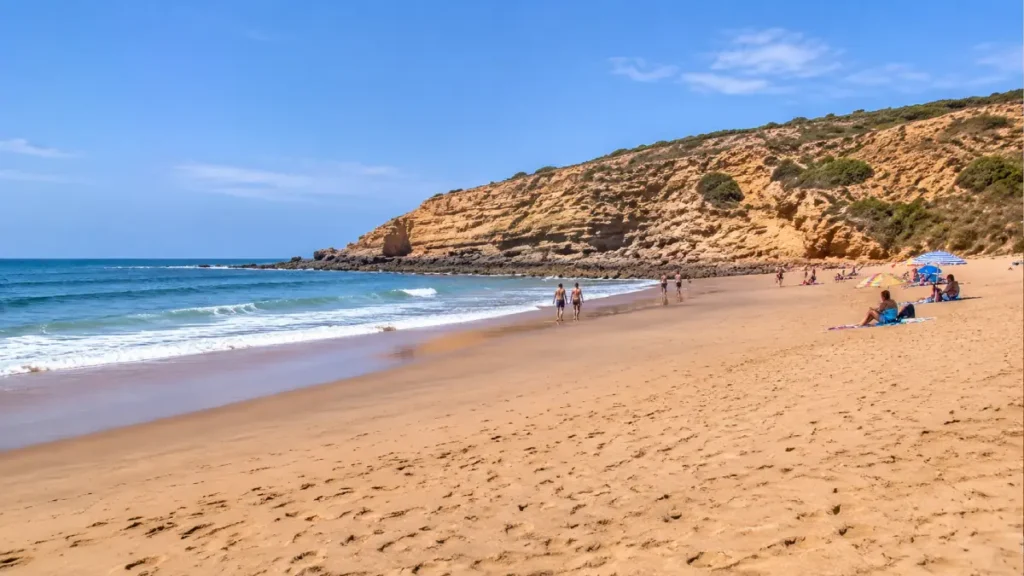
It is a good choice for photography, relaxing and a beach-focused afternoon after exploring the Medina. In warmer months, seasonal cafés or simple restaurants may operate, often serving grilled fish and refreshments.
A private driver, rental car, taxi or locally arranged transfer is usually the most practical way to get there. A normal car is sufficient for main roads, but always use caution on rough tracks and after poor weather.
Horse-and-cart trips have historically been offered on this route, but I would not rely on them being available on any particular day or quote an old fixed fare. If you consider one, check the animal’s condition, route length, sun exposure and return arrangements before agreeing.
Sidi Mghait Beach for a quieter coast
Sidi Mghait, also written Sidi M’Rait, is farther south and offers a quieter, more natural beach setting with fewer facilities. It suits travelers who prefer open coastal scenery to a busy town beach.
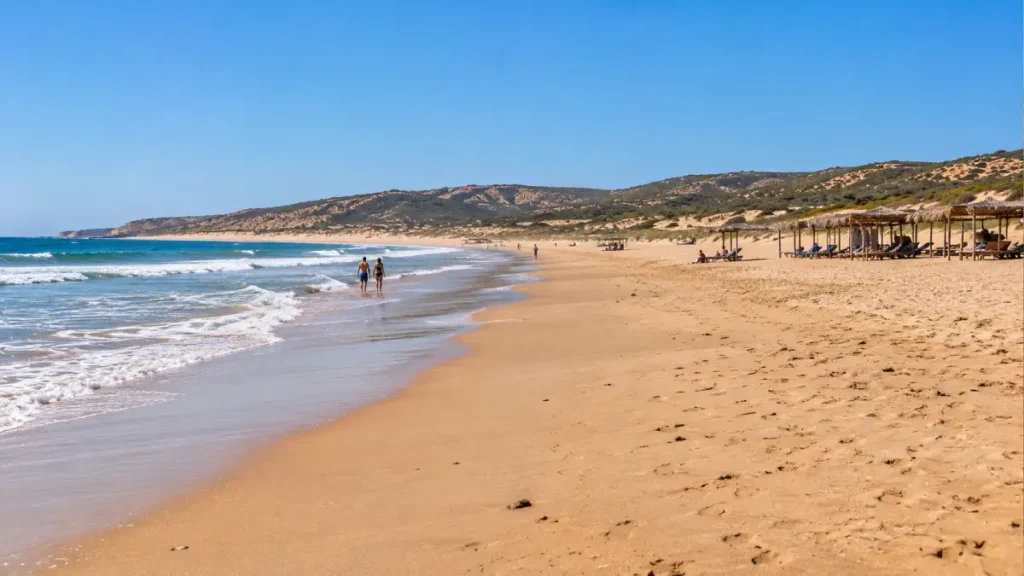
The trade-off is practical: access may involve unpaved roads, and conditions can be unsuitable for ordinary vehicles after poor weather. Bring water, sun protection and anything else you may need.
Summer beach-chair and umbrella rentals have sometimes cost around 30 to 40 MAD, but prices and availability can change.
A practical Asilah itinerary for two hours, half a day or a full day
If you only have two or three hours
For a short visit, I recommend this simple route:
- Enter the Medina through Bab Homar.
- Walk through the whitewashed streets and mural lanes.
- Pass the Grand Mosque exterior and quieter Kasbah streets.
- Continue to the Atlantic walls and Krikia viewpoint.
- Finish with mint tea or a local snack such as kalinti, a northern Moroccan baked chickpea-flour specialty, usually seasoned with cumin.
This is enough to understand why Asilah is different from larger Moroccan destinations without rushing to distant beaches.
A half-day in Asilah
With half a day, add time for:
- The main gates, ramparts and Borj Al Kamra area
- Art galleries, workshops or craft shops
- A seafood lunch
- The seaside promenade or harbor area
The harbor can be interesting for observing the town’s fishing activity. In the evening, fish-selling areas may offer a more local glimpse of daily life when operating.
A full day in Asilah
A fuller itinerary could look like this:
- Visit Marché Central in the morning.
- Explore the Medina, murals, mosque exterior and historic walls.
- Stop at galleries or printmaking workshops.
- Have lunch with fresh Atlantic seafood.
- Spend the afternoon at the town beach or arrange transport to Paradise Beach.
- Return for sunset at Krikia.
If you have an extra day and private transport, M’Zora or Msoura stone circle south of Asilah can be an unusual archaeological detour. The site is associated with local legends about the giant Antaeus and includes standing stones around a central mound.
How to get to Asilah and move around town
Asilah is compact. The Medina, promenade, central market, harbor and many restaurants are close enough to reach on foot.
The railway station is around 1.5 to 2 kilometres from the Medina, depending on your route and accommodation. Walking can take roughly 20 to 30 minutes, but I recommend a local taxi if you have suitcases, young children or arrive in hot weather.
From Tangier, ONCF trains between Tanger Ville and Asilah can take around 40 minutes, but schedules and fares depend on the service. Use the official ONCF booking site for current departures. My Tangier to Asilah guide compares trains, shared grand taxis, private transfers and driving. Driving typically takes around 45 minutes or longer in traffic.
Schedules and fares change, so check current arrangements before traveling. Ride-hailing apps should not be your main plan in Asilah, as local driver availability can be limited. Arrange taxis through your accommodation where possible and agree on the fare before departure.
For travelers arriving by rental car, use designated parking outside the Medina walls, including areas near Bab Homar or the harbor. Most Medina streets are too narrow for vehicles, and guests staying in a riad may need to walk a short distance with luggage. Confirm overnight parking arrangements with your accommodation in advance.
Travelers building a wider northern route can also consider private tours from Tangier that combine Asilah with other coastal stops. For a customised private route, Morkosh Tours can discuss transport according to your group size and accommodation.
- Compare day-trip options.
What to eat in Asilah
Asilah has a strong fishing tradition, so I recommend trying freshly caught Atlantic fish rather than relying only on standard tourist menus.
Look for:
- Grilled sardines
- Sea bream
- Calamari
- Fresh prawns
- Fish tagine with chermoula
- Seasonal local catches
Smaller local restaurants can be better value than waterfront places, especially for tagines, couscous and simple grilled fish. Ask what is fresh that day and clarify whether the listed price is per portion, per fish or per kilogram before ordering.
For casual local food, try:
- Kalinti – baked chickpea-flour snack, usually served with cumin
- Bessara – thick fava-bean soup
- Msemen – flaky Moroccan flatbread
- Sfenj – fried doughnuts
- Harira – Moroccan soup
- Babbouche – spiced snail broth
- Mint tea in a neighborhood café
Carry cash. Smaller cafés, taxis, street-food vendors and market sellers may not accept cards.
Where to stay: Medina riad or modern hotel?
For atmosphere, stay inside the historic Medina. Traditional riads and guesthouses put you close to the murals, ramparts and evening walks, often with rooftop terraces and more character than a standard hotel.
The compromises are worth understanding before booking:
- Medina properties can have steep stairs.
- Rooms may be smaller than modern hotels.
- Cars cannot reach most doors.
- You may need to walk with luggage from the nearest parking area.
Stay outside the walls if you prefer easier parking, larger rooms, swimming pools, beachfront access or more modern facilities. This can be the better choice for travelers with reduced mobility, families carrying lots of luggage or anyone arriving by car.
Outside the summer peak, Asilah can be relatively affordable, but accommodation prices fluctuate by location, weekend and festival programme. Broad planning estimates suggest basic rooms may begin around 140–150 MAD while mid-range guesthouses may cost 300–600 MAD or more; check live rates rather than treating these as fixed quotes.
- Compare Asilah riads and hotels.
- Check recent reviews, the exact address, walking distance from Medina gates, parking and stairs before booking.
When is the best time to visit Asilah?
From my experience, spring and autumn are the best-balanced times to visit.
April to June
Spring usually brings comfortable temperatures, good walking weather and fewer crowds than peak summer. It is ideal for Medina walks, photography and coastal excursions.
July and August
Summer is the liveliest period, with beach holidays, cultural activity and more Moroccan visitors. It is a good time if you want energy and beach life, but expect busier restaurants, fuller accommodation and higher prices. Book ahead if you are visiting during festival dates or summer weekends.
September and October
Early autumn is another excellent period. The summer crowds begin to ease, while conditions can remain pleasant for walking and coastal time.
Winter
Winter is quieter and can still be enjoyable for the Medina, art and seafood. Expect cooler Atlantic breezes, occasional rain and reduced hours at some seasonal businesses. It is less suitable for travelers planning a guaranteed beach holiday.
Local tips for a smoother visit
Asilah is generally relaxed and comfortable for solo travelers, women, couples, families and older visitors. Tourist pressure is normally lighter than in larger cities, but ordinary travel awareness still matters.
A few practical points will help:
- Ask taxi prices before setting off.
- Carry enough cash for markets, snacks and local transport.
- Confirm beach-chair, umbrella and excursion prices before paying.
- Be cautious of claims that every artwork is an original.
- Do not agree to unwanted guiding or shopping services simply to avoid an awkward conversation.
- Check sea conditions before swimming, especially with children.
- Bring water and sun protection for beaches outside town.
- Reserve accommodation early for summer weekends and festival periods.
- Ask about stairs and vehicle access before booking a Medina riad.
One common mistake is treating Asilah as a quick photo stop. Give yourself time to wander the mural streets, sit for tea and see the ramparts when the light changes. Another is assuming every mural will look the same from year to year; the changing artwork is part of the town’s identity.
Is Asilah worth adding to a northern Morocco itinerary?
Yes. Asilah is one of the most rewarding places to add to a northern Morocco itinerary, particularly if you want a destination that feels calmer, more walkable and more artistic than the major cities. If you are staying in Tangier, see my Tangier travel guide and best day trips from Tangier for ideas on balancing both places.
For a short northern trip, use it as an easy day trip from Tangier. For a more relaxed itinerary, stay overnight, walk the Medina early, eat fresh fish, explore the ramparts at sunset and make time for one of the beaches beyond town.
Disclosure: Some booking links in this guide may be affiliate links. If you book through them, I may receive a small commission at no additional cost to you.
FAQ
Is Asilah worth visiting from Tangier?
Yes. Asilah is roughly 45 minutes to an hour by road from Tangier, depending on traffic. Its medina, murals and Atlantic ramparts make a good day trip. Check trains, taxis and driving options in the Tangier to Asilah transport guide.
How many days do you need in Asilah?
Two or three hours is enough for the Medina, murals and ramparts. A half-day allows time for lunch and galleries, while one or two nights is best for travelers who want beaches, markets, hammams and a slower experience.
Can you swim at Asilah beaches?
Sometimes, but conditions vary. Atlantic beaches can have strong waves, currents, cool water and changing tides. Swim only when conditions are suitable, preferably where lifeguards are present, and be especially cautious at remote beaches.
What is Asilah known for?
Asilah is known for its whitewashed medina, Portuguese-era fortifications, ocean viewpoints and changing murals. Its International Cultural Moussem includes art and cultural events, sometimes in separate seasonal sessions, so check the schedule for your dates.
Is Asilah expensive?
Asilah can be affordable outside the summer peak. Street snacks and local cafés are usually inexpensive, while seafood restaurants, beach facilities and accommodation prices vary significantly by season and location. July, August and festival periods are generally more expensive.