
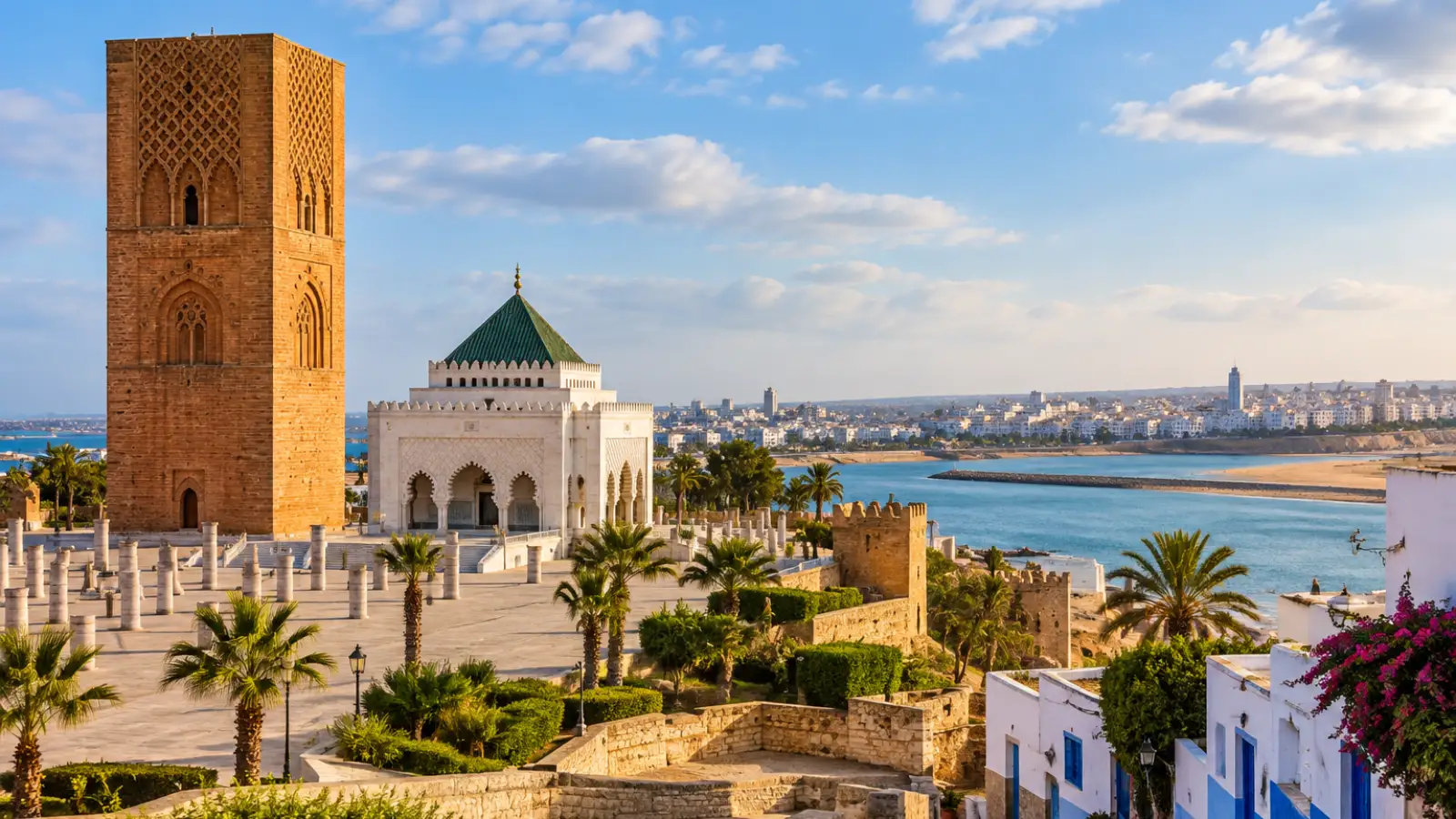
Rabat is one of Morocco’s easiest cities for a first independent visit. It has major historic sites, an Atlantic setting, a lived-in medina, and efficient rail connections, but it feels calmer and less intense than Marrakech or Fes. The best things to do in Rabat are close enough to combine at an unhurried pace, which makes the capital a good place to slow down for a night or two rather than treating it only as a train stop.
For most travelers, one full day covers the essential sights, while two nights gives you a much better feel for the city. With extra time, you can visit Chellah without rushing, spend time by the ocean, explore the medina properly, and enjoy the contrast between historic Rabat and its modern districts.
Table of Contents
Table of Contents
Is Rabat worth visiting for more than a day?
Yes—especially if your Morocco itinerary includes Casablanca, Tangier, Fes, or Marrakech by train. Rabat is a national capital, but it does not feel like a city built solely around government offices. Its attractions are varied and fairly spread out: the Hassan Tower and royal mausoleum, the old kasbah above the Bouregreg River, the medina, Roman and medieval remains at Chellah, and the Atlantic coast.
A one-day stop works if time is limited. You can see the Hassan Tower, Mausoleum of Mohammed V, Kasbah des Oudayas, and part of the medina in a single well-planned day.
Stay for one or two nights if you want to:
- Visit Chellah at a relaxed pace.
- Walk through the medina without treating it as a shopping task.
- Spend time along the river or Atlantic coast.
- Eat in different parts of the city rather than relying on a quick stop near the station.
- Break up a longer train journey through Morocco.
Rabat’s historic ensemble is part of the UNESCO World Heritage listing for Rabat, reflecting the way the city combines historic quarters with its later capital-city development.
Understand Rabat Ville and Rabat Agdal before booking a hotel
The two railway stations travelers most often encounter are Rabat Ville and Rabat Agdal. They serve different parts of the city, so choosing the right one matters when booking accommodation or arriving with luggage.
Rabat Ville: best for first-time sightseeing
Rabat Ville is the more convenient station for most short-stay visitors. It is closer to the medina, Hassan Tower, Mausoleum of Mohammed V, and the Kasbah des Oudayas area. If your priority is walking to historic attractions and having an easy first evening in the city, this is usually the practical base.
The area around Rabat Ville also makes sense for travelers arriving late or leaving early by train, since you are not starting every sightseeing day from the newer parts of town.
Rabat Agdal: best for a modern, residential feel
Rabat Agdal is in a more modern district, with a different atmosphere from the historic center. It is a useful choice if you prefer a residential and commercial neighborhood, or if your accommodation is closer to Agdal than to the old city.
For classic places to visit in Rabat, however, Agdal is less central. You will likely use a taxi, tram, or train connection to reach the medina, Hassan Tower, and Oudayas.
If you are continuing south after Rabat, see this practical guide to the Rabat to Marrakech train and the wider Morocco train map.
See Hassan Tower and the Mausoleum of Mohammed V together
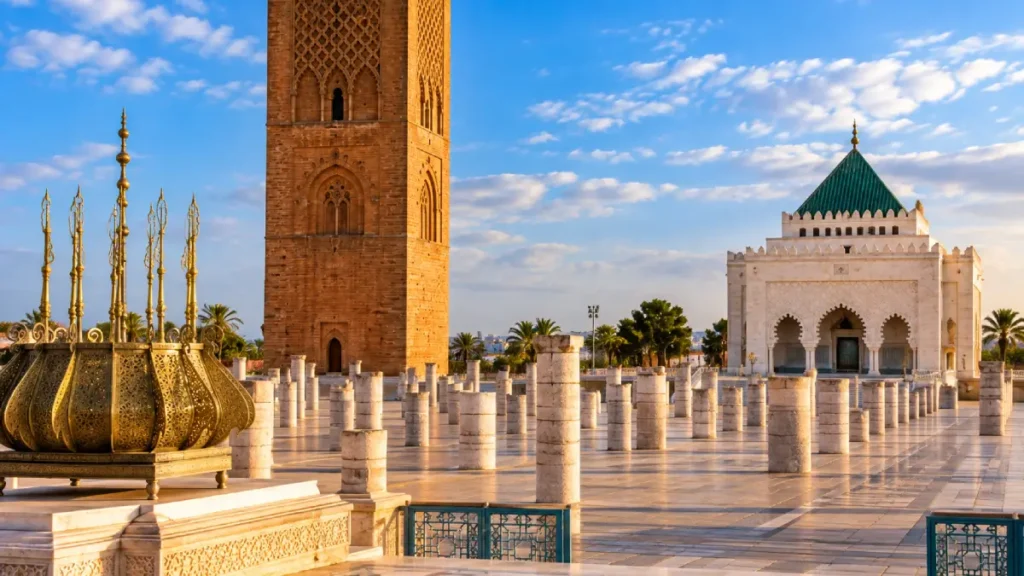
The Hassan Tower and Mausoleum of Mohammed V are among the most important Rabat Morocco attractions, and they are best visited as one stop. They stand in a broad, open ceremonial area that feels very different from the narrow streets of the medina.
Hassan Tower
Hassan Tower is the incomplete minaret of an ambitious mosque project from the Almohad period. The tower itself is the landmark most visitors recognize, but the wider site is part of the experience: rows of stone columns mark the scale of the unfinished mosque.
Take time to walk around rather than photographing only the tower from the entrance. The open layout gives you a clear sense of the project’s intended scale, and it is a useful contrast to the tighter urban spaces you will encounter later in the day.
Mausoleum of Mohammed V
Beside the tower is the Mausoleum of Mohammed V, an important national monument with elaborate Moroccan craftsmanship. Visitors can appreciate the exterior detailing and the guarded ceremonial setting, while the interior is viewed respectfully from above.
Dress and behave appropriately here. This is not simply a historic building; it is a significant national mausoleum. Keep voices low, follow any instructions from guards, and do not assume that all areas are open for photography.
Walk through Kasbah des Oudayas and down toward the river
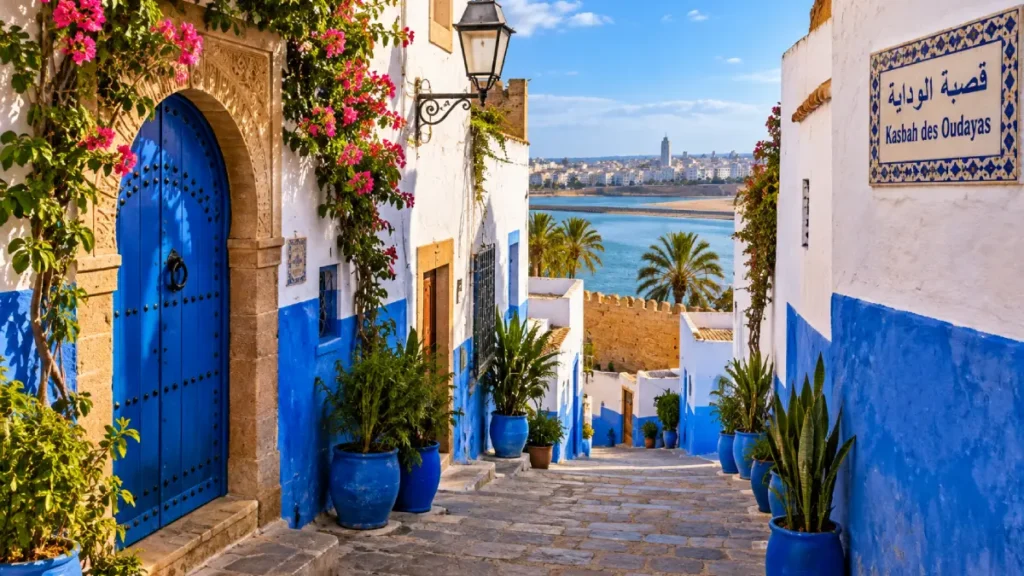
The Kasbah des Oudayas is one of the best places to see in Rabat because it combines history, architecture, river views, and a quieter side of the old city. Its white-and-blue lanes have a different character from the busier medina streets.
Enter through the monumental kasbah gate, then allow yourself time to wander rather than following a strict route. The lanes are compact and easy to explore on foot. You will find whitewashed walls, blue-painted details, small doorways, and occasional views toward the Bouregreg River and neighboring Salé.
The kasbah is especially worthwhile for travelers who enjoy walking and photography, but it also works well if you simply want a break from traffic and shopping. It is not a large site, so it fits naturally into a one-day Rabat itinerary.
Stop at the Andalusian Garden
Inside the kasbah area, the Andalusian Garden offers a more formal, planted space than the surrounding lanes. It is a good pause between the kasbah walk and the waterfront.
Do not plan your entire day around the garden alone. Instead, treat it as part of a wider Oudayas visit that includes the streets, viewpoints, and the walk toward the river mouth.
Look across the Bouregreg toward Salé
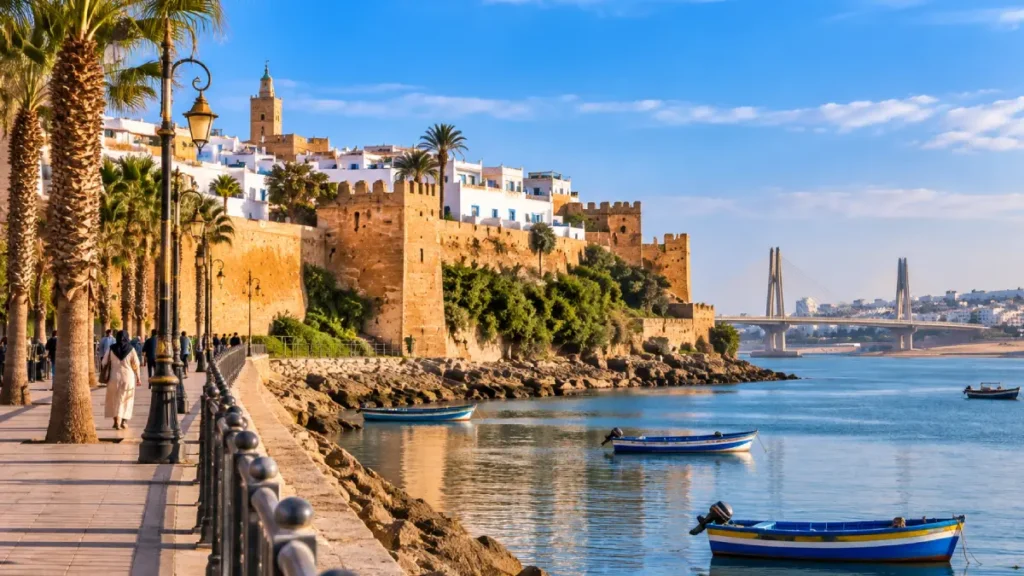
From the Oudayas side, the Bouregreg River creates one of Rabat’s most distinctive views. Across the water is Salé, Rabat’s historic neighbor. This riverfront setting is one reason Rabat feels more open than many Moroccan imperial cities.
The area can be particularly pleasant later in the day, when you can combine the kasbah, nearby waterfront, and an early dinner in the city center.
Explore Rabat Medina without rushing it
Rabat Medina is smaller and generally easier to navigate than the medinas of Fes or Marrakech. That does not mean it lacks character—it simply has a more everyday rhythm. For many first-time visitors, this makes it a comfortable place to browse independently.
The medina is a practical place to look for everyday Moroccan goods, textiles, slippers, spices, small household items, and simple souvenirs. It is less about ticking off a grand monument and more about watching daily city life unfold.
A few useful expectations:
- The medina is walkable, but individual lanes can still be confusing. Keep your hotel location saved offline.
- Sellers may invite you into shops, but you are not obliged to buy.
- Bargaining is common in many small shops and stalls, though it should remain polite and unhurried.
- The medina is best combined with the Oudayas or Rabat Ville area rather than approached as an isolated attraction.
- Do not expect the same concentration of riads, historic palaces, and tourist-oriented souks found in Marrakech or Fes.
If you only have a short time in Rabat, walk through the medina in daylight, choose a few streets that interest you, and leave room for a café stop rather than trying to cover every lane.
Visit Chellah for Rabat’s Roman and medieval layers
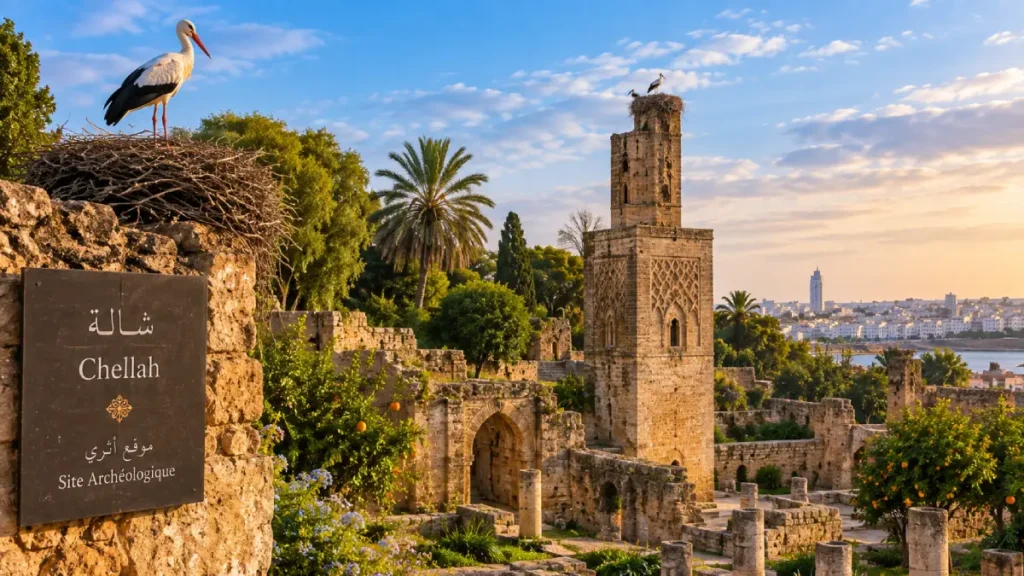
Chellah is one of the most rewarding attractions in Rabat for travelers interested in archaeology, ruins, and quieter green spaces. It lies away from the compact old-city sights, so it deserves its own part of the day rather than being squeezed between the Hassan Tower and Oudayas.
The site brings together remains from the Roman settlement of Sala Colonia and later medieval structures. As you walk through, look for the contrast between stone ruins, old walls, paths, gardens, and the traces of later Islamic architecture. Chellah feels less like a single monument and more like an archaeological landscape.
It is a particularly good choice if you have two days in Rabat. In a one-day itinerary, include it only if you are happy with a full sightseeing schedule and are willing to use a taxi between areas.
Chellah is also a place where the experience depends on taking your time. Do not visit only for a quick photograph at the entrance; walk through the site and allow time for the quieter sections beyond the main ruins.
Spend time on Rabat’s Atlantic coast
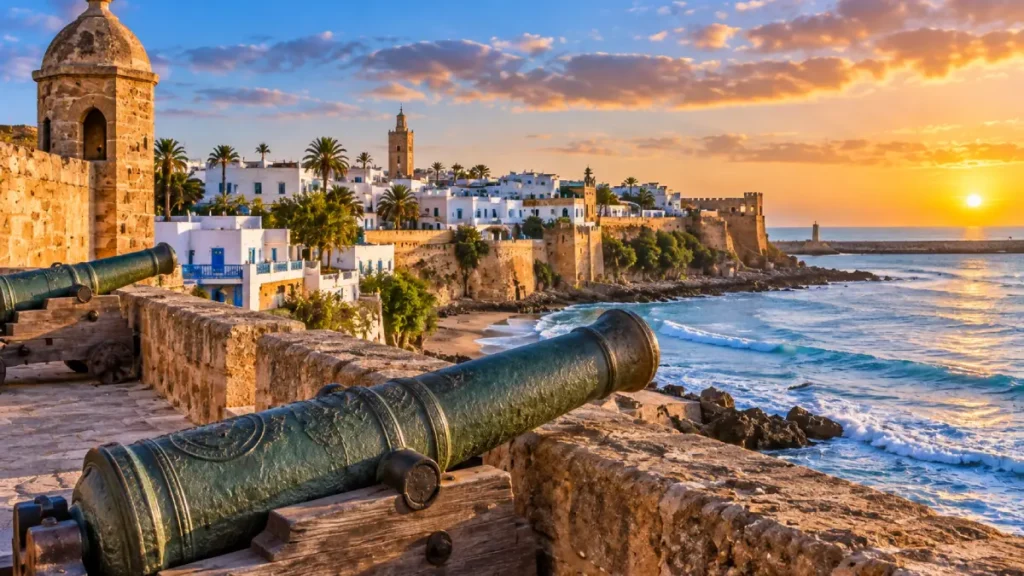
Rabat’s Atlantic position is part of the city’s appeal, though the beach should be approached as a coastal break rather than the central reason to visit the capital. The most convenient coastal areas are near the Oudayas and the western edge of the historic center.
A walk by the ocean can be a good addition after visiting the kasbah, especially if you have already completed the major monuments. It gives you a different perspective on Rabat: surf, broad skies, sea air, and local life away from the medina lanes.
Swimming conditions on Morocco’s Atlantic coast can vary with the sea, weather, and seasonal conditions. Pay attention to local safety guidance and do not assume calm-looking water is safe for swimming. If the sea is rough, enjoy the coast as a walk rather than forcing a beach day.
For a dedicated beach-focused stay, Rabat is usually less practical than Morocco’s main resort destinations. But for a city break, its coastline is a valuable extra.
How to get between Rabat’s main sights
Rabat is manageable on foot in sections, but the main attractions are not all next door to each other. The best approach is to combine walking within each area with short rides between districts.
Walk the historic-center cluster
You can comfortably walk between:
- Rabat Ville station and the medina.
- The medina and Kasbah des Oudayas.
- The kasbah, riverfront, and nearby Atlantic side.
- Hassan Tower and the Mausoleum of Mohammed V.
Walking is the best way to understand the differences between the ceremonial capital, commercial medina, and kasbah quarter.
Use blue petit taxis for point-to-point trips
Blue petit taxis are useful for getting between separate sightseeing areas, particularly when going to Chellah or returning to your accommodation after a long day. They are often more convenient than trying to create a fully walking-based itinerary.
Ask the driver to use the meter before setting off. This is the simplest way to avoid uncertainty and makes short city journeys easier to manage.
Use the tram when it matches your route
Rabat’s tram can be useful on certain cross-city journeys, including routes involving Salé. It is not necessary for every visitor, however. If you are staying near Rabat Ville and concentrating on the historic sights, walking and occasional petit taxis may be simpler.
The practical choice is not about using every form of transport. It is about avoiding a long, tiring walk when the next attraction is in a separate part of the city.
Where to eat in Rabat
Rabat has a more local, everyday dining rhythm than heavily tourist-focused cities. Where you eat should depend on what part of the city you are exploring at the time.
Eat near the medina for a traditional, central stop
The medina and streets around the central city are convenient for Moroccan dishes during a sightseeing day. Look for busy places serving straightforward local food rather than choosing only by exterior appearance or an aggressive invitation from the street.
Lunch is a good time for a traditional meal, especially if you are spending the morning at Hassan Tower and the medina before continuing to the Oudayas.
Choose Ville or Agdal for cafés and a relaxed evening
Around Rabat Ville and the newer districts, you will find cafés and more varied restaurant choices. Agdal is especially useful if you are staying there and want an evening away from the historic center.
For travelers with only one night, it is often easier to eat close to your hotel after a full day rather than crossing the city just to chase a particular restaurant. Rabat rewards a slower evening more than an overplanned dining mission.
Keep meals practical during a short stay
A sensible one-day approach is:
- Coffee and a light breakfast near your accommodation.
- Lunch near the medina or central sights.
- A relaxed dinner near Rabat Ville, Agdal, or your hotel.
Avoid building your itinerary around unverified restaurant recommendations, as openings, quality, and operating hours can change quickly.
Where to stay for a first visit to Rabat
For one or two nights, location is more important than finding the most elaborate accommodation. Rabat is spread out enough that a poorly placed hotel can add unnecessary taxi rides to a short visit.
Stay near Rabat Ville for convenience
Choose the Rabat Ville area if you want quick access to trains, the medina, and the main historic sights. This is the most straightforward choice for travelers arriving independently and leaving by rail.
Stay in or near the medina for atmosphere
A medina stay can suit travelers who want old-city character and easy morning or evening walks through the historic center. Be prepared for narrower streets and the possibility that a taxi cannot stop directly at the door.
Stay in Agdal for a modern neighborhood base
Agdal suits travelers who prefer a newer district with a more residential feel. It can work well for longer stays, business travel, or visitors who are less focused on being within walking distance of every historic attraction.
For broader ideas on choosing accommodation around the country, see this guide to the best places to stay in Morocco.
A realistic one-day Rabat itinerary
A one-day visit should focus on the historic center and avoid trying to see every corner of the city.
- Morning: Hassan Tower and Mausoleum of Mohammed V
Begin with Rabat’s major ceremonial monuments while you are fresh. The open setting is easy to navigate and provides an immediate introduction to the city.
- Late morning: Rabat Medina
Walk through the medina at an unhurried pace. Browse, take a coffee break, and avoid trying to cover every lane.
- Lunch: central Rabat or near the medina
Keep lunch close to your next stop so you do not lose time crossing the city.
- Afternoon: Kasbah des Oudayas and Andalusian Garden
Explore the kasbah lanes, pause in the garden, and take in views toward the Bouregreg.
- Late afternoon: riverfront or Atlantic walk
Finish near the coast if the weather is pleasant. This is a good time to slow down rather than add another major monument.
This plan leaves Chellah for another visit. It is possible to add it, but the day becomes rushed and transport-dependent.
A better two-day Rabat itinerary
With two days, you can experience Rabat as a city rather than a checklist.
Day one: the capital’s essential historic sights
Follow the one-day route: Hassan Tower, Mausoleum of Mohammed V, medina, Kasbah des Oudayas, and the waterfront. Stay overnight in Rabat rather than immediately boarding an onward train.
Day two: Chellah, modern Rabat, and a slower afternoon
Start with Chellah, allowing enough time to walk through the archaeological site properly. Use a blue petit taxi if it is the most practical connection from your hotel, and ask for the meter.
Afterward, have lunch in the part of town that suits your route. Spend the afternoon exploring a modern district such as Agdal, returning to the coast, or revisiting the medina if you found a section you wanted more time to explore.
This second day is deliberately flexible. Rabat works best when you leave room for ordinary city life: a café stop, a walk, an unplanned shop, or time by the river.
Make Rabat a proper stop, not just a station
Rabat may not have the sensory intensity of Marrakech or the maze-like scale of Fes, but that is precisely why many travelers enjoy it. It is calmer, easier to navigate, and well suited to independent travel. Give it at least one night if your itinerary allows, and two nights if you want to include Chellah and the coast without hurrying.
For help placing Rabat within a wider route, the Morocco travel guide can help you connect the capital with the country’s other major destinations.
FAQ
How many days do you need in Rabat?
One full day is enough for Hassan Tower, the Mausoleum of Mohammed V, the medina, and Kasbah des Oudayas. Two nights is better if you also want to visit Chellah, spend time near the Atlantic coast, and explore at a calmer pace.
What are the best things to do in Rabat Morocco?
The main places to visit in Rabat are Hassan Tower, the Mausoleum of Mohammed V, Kasbah des Oudayas, Rabat Medina, Chellah, and the Bouregreg and Atlantic waterfront areas.
Is Rabat easy to get around without a car?
Yes. You can walk between several central attractions, especially the medina, Oudayas, Hassan Tower, and Mausoleum area. For longer trips, including Chellah, blue petit taxis are useful; ask the driver to use the meter.
Should I stay near Rabat Ville or Rabat Agdal?
Rabat Ville is usually better for first-time visitors focused on the medina and historic attractions. Agdal is a more modern district and can suit travelers who prefer a residential, commercial neighborhood or are staying longer.
Is Rabat Medina worth visiting?
Yes, particularly if you want a more relaxed medina experience than Marrakech or Fes. It is smaller, easier to navigate, and better approached as an everyday shopping and walking district than as a monument-filled sightseeing site.