
A Morocco family vacation can work very well when the route is built around realistic travel days rather than a long checklist of cities. Morocco offers lively medinas, beaches, mountains, desert landscapes and family-friendly accommodation, but distances, pedestrian-only old towns and changes in climate can make an overambitious plan tiring for children and adults alike.
For most families planning Morocco with kids, the best approach is to choose two or three main bases, include downtime by a pool or beach, and avoid combining Marrakech, Fes, Chefchaouen and the Sahara on a short trip.
Table of Contents
Table of Contents
Is Morocco a good destination for a family holiday?
Yes, Morocco can be an excellent family destination, especially for families who enjoy culture, food, outdoor scenery and a little variety in their trip. Children can experience markets, gardens, beaches, camel rides, mountain villages and hands-on food experiences, while teenagers often enjoy the energy of Marrakech, surf-oriented coastal towns and the dramatic landscapes on a desert route.
The key is to plan for comfort as well as sightseeing. A family trip to Morocco is easier when you:
- Limit long road journeys and frequent hotel changes.
- Choose accommodation with practical access, not only character.
- Build in pool, beach or free afternoons.
- Stay outside the busiest parts of a medina if carrying a buggy, large luggage or sleeping children.
- Check room configuration before booking, especially if you need connecting rooms.
- Plan for seasonal conditions: summer heat, cooler mountain evenings and cold desert nights in winter.
Morocco is not the best place for trying to “see everything” in one week. It is much more rewarding when the itinerary gives children time to settle into each destination.
Morocco with toddlers and babies
Morocco can work well with babies and toddlers, but the itinerary needs to be slower. Choose accommodation with easy vehicle access, avoid changing hotels too often, plan around naps and heat, and check in advance whether a stroller will be practical in the areas you want to visit. In Marrakech and Fes medinas, a baby carrier can sometimes be easier than a pushchair because of narrow lanes, uneven paving and steps.
Morocco with teenagers
Morocco can be especially rewarding with teenagers because the trip can combine city life, food, photography, surf, mountain scenery and desert adventure. Marrakech, Fes and Essaouira usually offer more variety for older children, while longer road trips and Sahara stays become easier when teenagers are comfortable with travel days. Give them some choice in the itinerary rather than planning every activity for them.
How many days do families need in Morocco?
| Destination | Best for families who want | Main consideration |
|---|---|---|
| Marrakech | Culture, gardens, markets, easy short trips | Busy, hot in summer, intense with very young children |
| Essaouira | Walkable coast, relaxed pace, medina atmosphere | Windy conditions can be strong |
| Agadir | Beach, pools, resorts, easier downtime | Less traditional medina atmosphere |
| Rabat | Calmer city stay and Atlantic access | Usually works best as part of a wider route |
| Fes | History, crafts, culture | More demanding walking and medina navigation |
| Atlas Mountains | Scenery, cooler air, quiet stays | Winding roads and uneven terrain |
| Sahara | Desert experience and adventure | Long road journeys and bigger temperature changes |
A week is enough for one region or two nearby destinations. Ten days allows a more balanced first trip, while two weeks gives a family enough time to combine cities, coast and inland scenery without making every second day a driving day.
Best time to visit Morocco with kids
Spring and autumn are usually the easiest seasons for a Morocco family vacation because temperatures are generally more comfortable for sightseeing and road travel. Summer works better when you spend more time on the Atlantic coast or in the Atlas Mountains, while winter can be pleasant in the cities but much colder in mountain and desert areas, especially at night.
A 7-day Morocco family itinerary: Marrakech and the coast
This is the simplest choice for families travelling for the first time, particularly when children are young or the trip is during a hot period.
A practical route could be:
- Days 1–3: Marrakech – arrive, recover from the journey, explore gardens and selected parts of the medina, and allow time at the hotel pool.
- Days 4–6: Essaouira, Agadir or another Atlantic coastal base – choose based on the type of family stay you want. Essaouira works well for a smaller, walkable coastal town with medina atmosphere, while Agadir is better for resort-style hotels, pools and easier beach downtime.
- Day 7: Return travel – ideally from the most convenient airport for your route.
This itinerary avoids the longest drives and gives children a clear rhythm: city first, then rest.
A 10-day Morocco family itinerary: Marrakech, Atlas Mountains and coast
Ten days makes it easier to add a short mountain stay without rushing.
- Days 1–3: Marrakech
- Days 4–5: Atlas Mountains – choose a comfortable base rather than trying to cover multiple valleys.
- Days 6–9: Agadir or the Atlantic coast
- Day 10: Departure
The Atlas portion adds a completely different side of Morocco: quieter roads, village views and cooler conditions than Marrakech at certain times of year. It is a better family choice than the Sahara for some travellers because it requires less time in the vehicle.
A 14-day Morocco family itinerary: cities, coast and desert
Two weeks is a more suitable minimum if the Sahara is an important part of your trip. Even then, the route needs sensible pacing.
A possible structure is:
- Days 1–3: Marrakech
- Days 4–5: Atlas Mountains or a stop on the route east
- Days 6–7: Sahara region
- Days 8–9: Return west with an overnight break
- Days 10–13: Agadir or another relaxed coastal base
- Day 14: Departure
Alternatively, families more interested in imperial cities can focus on Marrakech, Rabat and Fes, with a carefully planned travel day between each stop. Adding Chefchaouen and the Sahara to that same trip is possible only with more time and a willingness to accept substantial road travel.
For more route ideas and different trip lengths, see our complete Morocco itineraries guide, including options for first-time visitors, the coast, imperial cities and the Sahara.
Arriving in Morocco with children
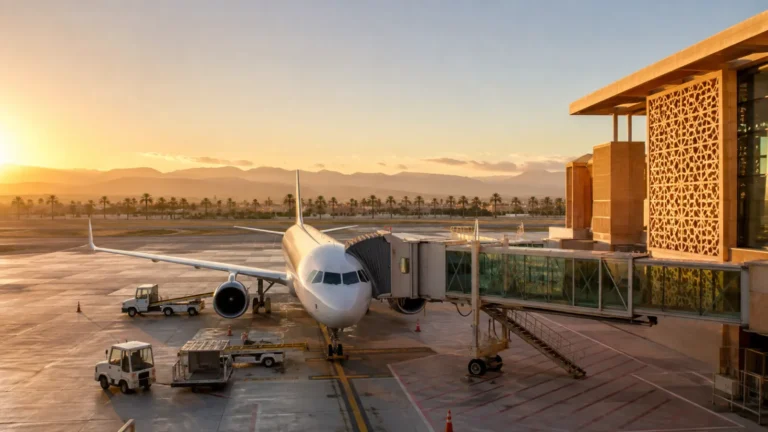
For families, the first transfer can set the tone for the trip. After a late flight or a long travel day, it is often easier to arrange airport transport in advance rather than start the holiday negotiating transport with tired children and luggage. Confirm the vehicle size, luggage space, child-seat requirements and the exact drop-off point, especially if your riad is inside a pedestrian medina.
If you are still choosing where to fly, see our Airports in Morocco guide for the main international airports, onward transport and which arrival point makes the most sense for your itinerary.
Which Moroccan destinations suit families best?
The best destinations depend on your children’s ages, tolerance for travel and the kind of holiday you want. Morocco is diverse enough that a beach-based family holiday and a cultural family tour can feel like completely different trips.
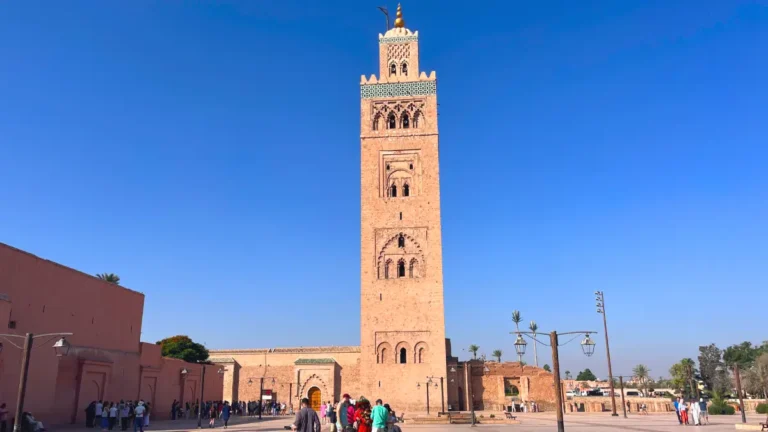
Marrakech: best for first-time family visits and short trips
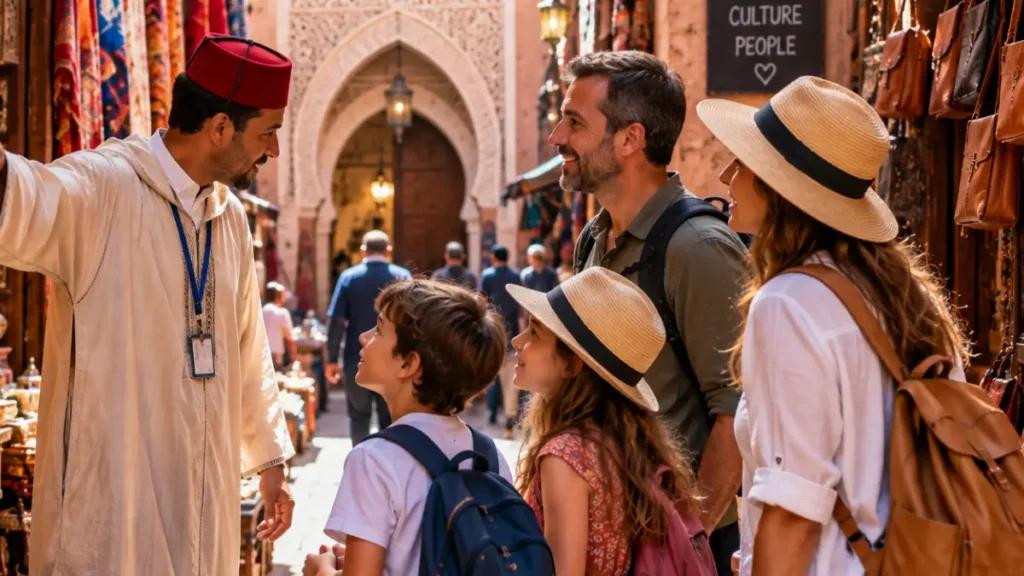
Marrakech is usually the easiest starting point for a Morocco family holiday because it has a wide choice of accommodation, restaurants, gardens and day-trip possibilities. It is busy, noisy and stimulating, so it works best in short doses rather than as a full two-week base.
For families, focus on a manageable number of experiences each day. A morning in the medina followed by an afternoon at a pool is usually more enjoyable than hours of shopping and sightseeing in the heat.
For a fuller plan, see our Marrakech Travel Guide for the main sights, practical transport advice, where to stay and how to organize a first visit without overloading the day.
Marrakech can be particularly good for:
- Families with older children and teenagers who enjoy lively streets and markets.
- Short breaks where a simple airport arrival matters.
- Families wanting hotels with pools and easier vehicle access.
- A base for a short Atlas Mountains excursion.
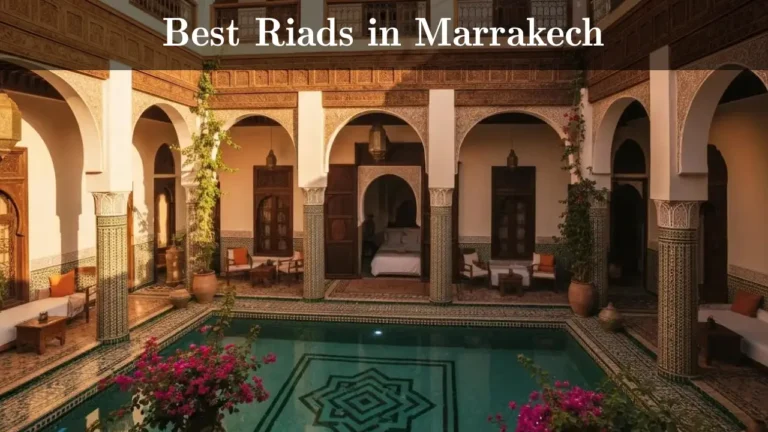
Before booking, read a detailed Marrakech travel guide and think carefully about where you want to stay. A riad inside the medina can be atmospheric, but some are deep within pedestrian lanes. That may mean walking with bags, navigating uneven surfaces and relying on directions in a maze-like area.
Rabat: best for a calmer city break
Rabat is a sensible option for families who want a more relaxed urban experience than Marrakech. It can work well as part of an itinerary along the Atlantic corridor, particularly when you prefer a city with a less intense pace.
It is worth considering for:
- Families arriving or departing through the north-west of the country.
- Travellers who prefer a calmer base between larger destinations.
- A city-and-coast itinerary that does not require desert driving.
Do not add Rabat simply because it is on a map. It works best when it fits naturally between your arrival point, Casablanca area, Fes or the coast.
Fes: best for older children and culture-focused families
Fes is one of Morocco’s most rewarding cities for families interested in history, traditional crafts and the atmosphere of an old medina. It is also more demanding than Marrakech.
The medina involves narrow lanes, uneven walking surfaces, steps and frequent turns. Families with toddlers, pushchairs or mobility concerns should choose accommodation with particularly good access and keep daily walking ambitions modest. A guided visit can make the first exploration easier, especially if you want to understand what you are seeing without spending the day trying to navigate.
For more help planning the city, see our Fes travel guide for the medina, main sights, practical access and where to stay.
Fes suits:
- Teenagers interested in photography, crafts and historic cities.
- Families who can handle walking and a denser urban environment.
- Trips of at least 10 days, where Fes is not squeezed between long transfers.
It is less ideal as a quick add-on to Marrakech and the Sahara during a one-week trip.
Agadir: best for beach time, pools and an easier pace
Agadir is one of the most practical choices for families wanting a beach-focused stay. It offers a useful contrast to the intensity of the medinas: more open space, a coastal setting and accommodation designed around holidays rather than old-city character.
A stay here can be especially valuable after Marrakech or a longer road route. Families can use it as a recovery stop rather than trying to fill every day with excursions.
If you are considering a few days on the Atlantic coast, see our guide to the best things to do in Agadir for beaches, family-friendly sights and easy day-trip ideas.
When comparing Morocco family resorts, look beyond photographs. Check:
- Whether rooms actually fit your family comfortably.
- Whether connecting rooms or family suites are available.
- Whether the pool is suitable for the ages of your children.
- Air-conditioning in warm months and heating in cooler periods.
- Lift access if rooms are above ground level.
- Beach access, meal arrangements and the practical distance to restaurants or shops.
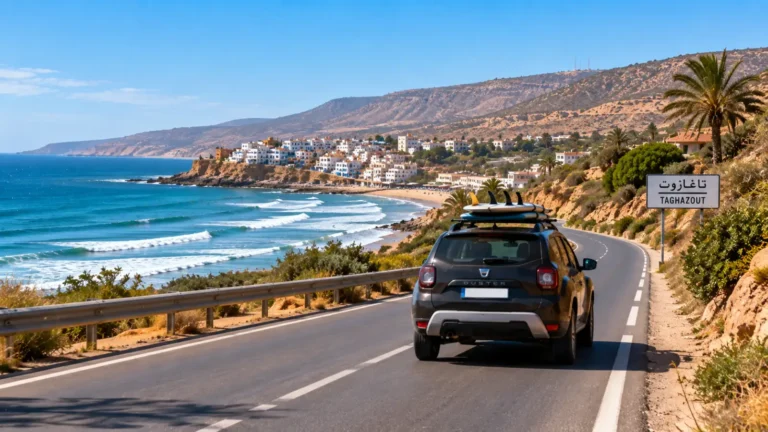
Essaouira: best for a relaxed, walkable coastal stay
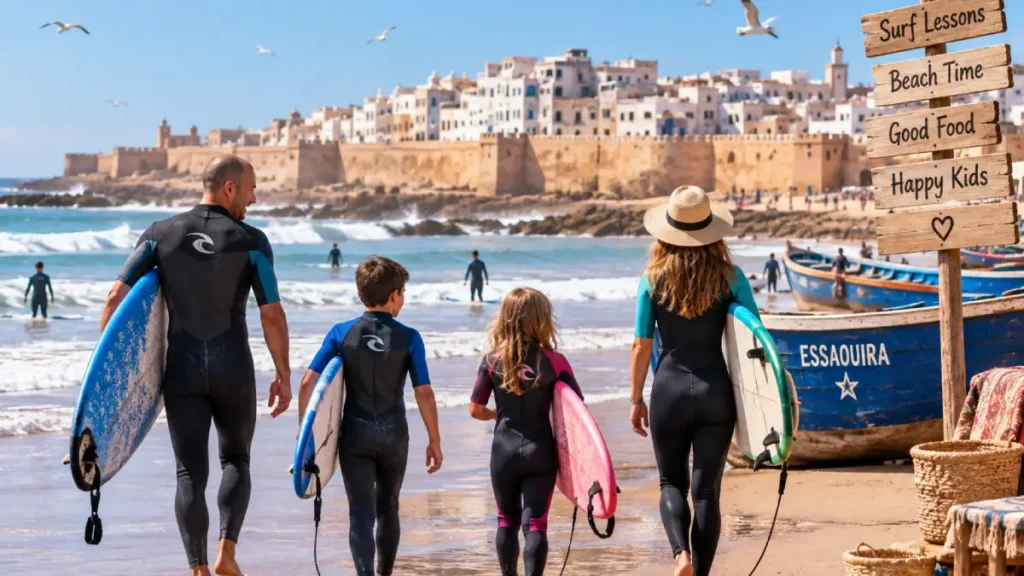
Essaouira is a good choice for families who want the coast without a large resort atmosphere. The medina is smaller and generally easier to explore than Marrakech or Fes, and the beach, harbour and compact centre make it possible to spend several days without a packed sightseeing schedule.
It works particularly well for families who prefer a slower pace, older children who enjoy walking and photography, and travelers combining Marrakech with a few days by the Atlantic. The main consideration is the wind, which can be strong at certain times of year.
The Atlas Mountains: best for scenery and a quieter stop
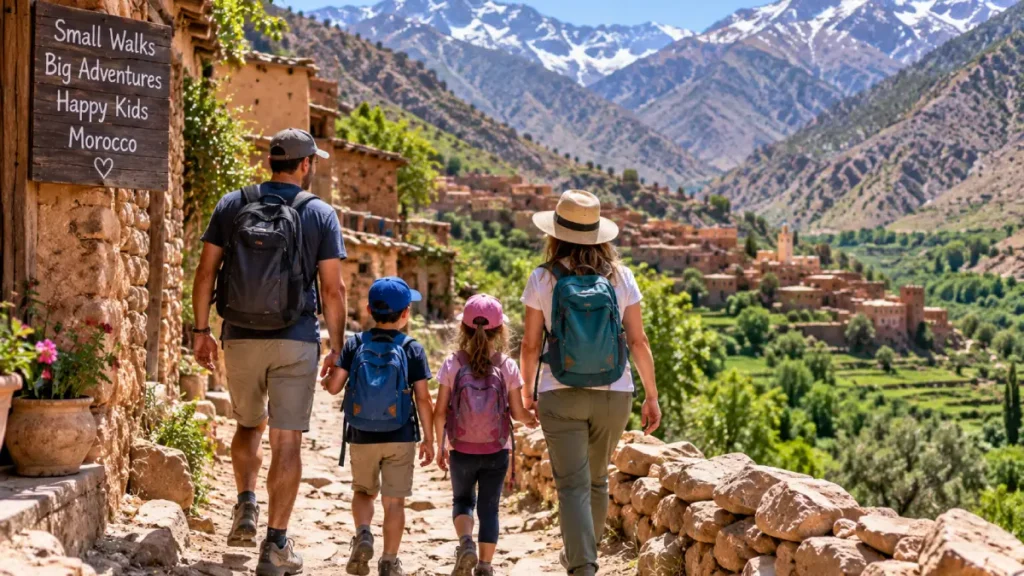
The Atlas Mountains offer a calmer side of Morocco and can be a good family addition from Marrakech.
If you are considering a mountain day trip or short stay, see our Atlas Mountains or Ourika Valley guide for travel times, walking difficulty and practical planning from Marrakech.
The appeal is not ticking off numerous villages in a day; it is slowing down, enjoying the landscape and choosing a comfortable place to stay.
A mountain stay is particularly useful if your family wants:
- Cooler air than the city during warmer periods.
- Short walks rather than full-day sightseeing.
- A change from busy medina streets.
- A quieter property where children can relax outdoors.
Mountain roads can be winding, and evenings may feel much cooler than Marrakech. Check heating in cooler months and avoid choosing a property solely for its views if access will be difficult with children, luggage or a stroller.
The Sahara: best for families with enough time and patience for road travel
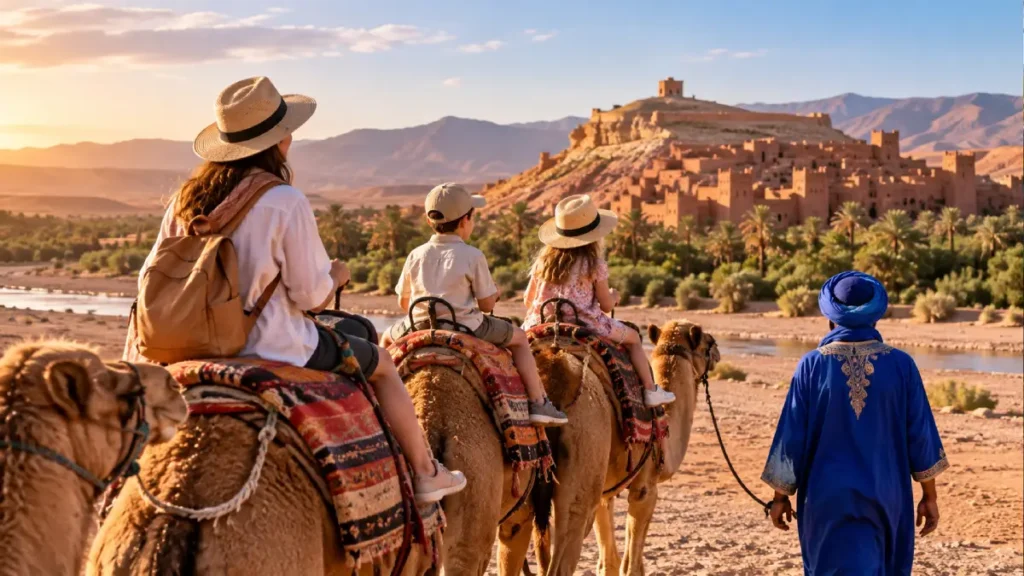
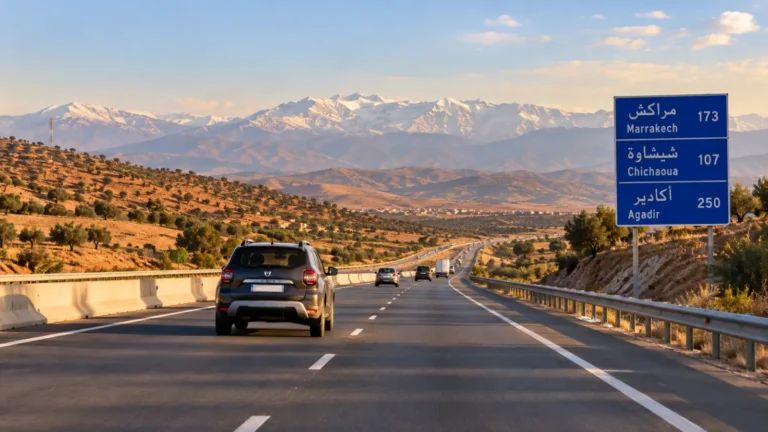
A Sahara trip can be memorable for school-age children and teenagers, but it is not automatically the right choice for every family. If the desert is an important part of your family trip, see our Sahara desert guide for realistic travel times, overnight-stop ideas and what to expect on the road from Marrakech.
The desert is far from the main tourist cities, and reaching it usually involves long travel days. Young children who dislike car journeys may find the route harder than the desert experience itself.
Consider the Sahara if:
- You have at least 10 to 14 days in Morocco.
- Your children manage long vehicle journeys well.
- You are happy to make overnight stops on the way.
- You understand that desert temperatures can vary sharply between day and night.
For a shorter trip, the Atlas Mountains or the coast often provides a better balance of scenery and comfort. Do not add the Sahara only because it appears on every Morocco itinerary online.
Season can change which family route works best. Marrakech, the interior and the desert can be very hot in summer, so families traveling in July or August may prefer more time on the Atlantic coast or in the Atlas Mountains. In winter, desert nights and mountain evenings can be cold, so warm layers are important even when daytime temperatures feel comfortable.
Best things to do in Morocco with kids
The best family activities in Morocco depend on the children’s ages and how active they are. Rather than filling every day, choose one or two experiences that fit naturally into each destination.
In Marrakech, families can combine an easy medina walk with gardens, traditional markets and a Moroccan cooking experience. Children often enjoy seeing spices, bread ovens and craft workshops more than spending hours visiting monuments.
On the Atlantic coast, Agadir and Essaouira are good for beach time and a slower pace. Older children and teenagers may enjoy surf lessons, while younger children can simply have time on the beach or around the hotel pool.
In the Atlas Mountains, choose short walks, village visits and scenic stops rather than demanding full-day hikes. The mountains can be a good break from busy cities, especially for families who enjoy nature but do not want the long journey to the Sahara.
For families with enough time, a Sahara desert trip can include a camel ride, sunset in the dunes and an overnight desert camp. The experience can be memorable for school-age children and teenagers, but remember that reaching the desert involves long road journeys, so it works better as part of a well-paced itinerary.
Other family-friendly experiences can include Moroccan cooking classes, pottery or craft workshops, food tastings and guided medina walks. The goal is not to fit everything into one trip, but to choose activities your children will actually enjoy and leave enough free time between them.
Where should families stay: riad, hotel or resort?
There is no single best accommodation type for a family tour in Morocco. The right choice depends on the children’s ages, luggage, bedtime routines and how much city walking you want to do.
Riads work best when location and access are practical
Riads can offer character, intimate surroundings and a more traditional stay, especially in Marrakech and Fes. But families should look past the courtyard photographs.
Ask whether the riad has:
- A room layout suitable for your family, rather than assuming an extra bed will solve the problem.
- Connecting rooms or a family suite, if needed.
- Reliable heating or air-conditioning for your travel season.
- A lift, particularly if anyone has mobility limitations or you have a pushchair.
- Vehicle drop-off nearby.
- A manageable walk through the medina with luggage.
A beautiful riad deep inside a pedestrian medina is not always the practical choice with children. A property near a gate or on the edge of the old town can save considerable effort at arrival and departure.
Hotels are often easier for first-time family trips
A modern hotel can be the more straightforward option when you value larger rooms, lifts, reception support, vehicle access and pools. This can be particularly helpful after a late flight or when travelling with babies, toddlers or several suitcases.
Hotels also make sense if you want the freedom to step away from the medina after a busy morning. You can still visit historic areas without sleeping in the middle of them.
For broader help comparing locations and accommodation styles, see this guide to the best places to stay in Morocco.
Resorts suit families whose priority is downtime
A resort-style stay is most useful on the coast, especially for families combining sightseeing with several days of rest. The trade-off is that you may feel less connected to daily local life than in a riad or small city hotel.
That is not necessarily a disadvantage. For a Morocco family vacation, having a pool, space and an easy breakfast can be worth more than a highly stylised room in an inconvenient location.
Getting around Morocco with children
Transport choices shape the whole trip. The fastest-looking route is not always the easiest family route once luggage, naps, toilet breaks and hotel changes are considered.
Private driver or organised family tour
A private driver or one of the more tailored family tours in Morocco can make sense for a multi-stop itinerary, particularly for Marrakech, the mountains and the Sahara. It removes the pressure of navigation, parking and coordinating multiple transfers.
However, confirm exactly what is included: vehicle size, luggage space, accommodation, stops, meal arrangements and the availability of suitable child seats.
Do not assume that every taxi, transfer or tour vehicle will automatically provide the right child seat. If you need one, request it in advance and confirm the child’s age or size so the operator can tell you what is available.
Train travel
Train travel can be a comfortable option on routes linking major cities, and it may be preferable for families who want to avoid long road days. For current train schedules and ticket options, check the official ONCF Voyages website before your travel date.
For city-to-city routes such as Casablanca–Rabat–Fes–Tangier, train travel can reduce driving fatigue, but families should still plan the taxi or transfer between the station and their hotel.
It is generally most useful when your itinerary focuses on urban destinations rather than remote mountain or desert areas.
The limitation is that stations do not always place you at your final hotel. You still need to consider transfers, luggage handling and the distance from your accommodation.
For a clearer overview of the options, read getting around Morocco in 2026.
Self-driving
Driving gives families flexibility, especially for coastal stays or a slower trip through the countryside. But it also creates responsibilities: navigating unfamiliar roads, parking, arranging child seats and managing fatigue on long routes.
It is usually better suited to travellers comfortable driving abroad and willing to keep the itinerary simple. Avoid treating a rental car as a reason to cover huge distances every day.
Taxis and local transfers
For city journeys, taxis and pre-arranged transfers can be easier than moving a family through busy streets with luggage. Agree practical arrangements before setting off, especially when travelling with children who need more space or a particular seating arrangement.
What should children eat in Morocco?
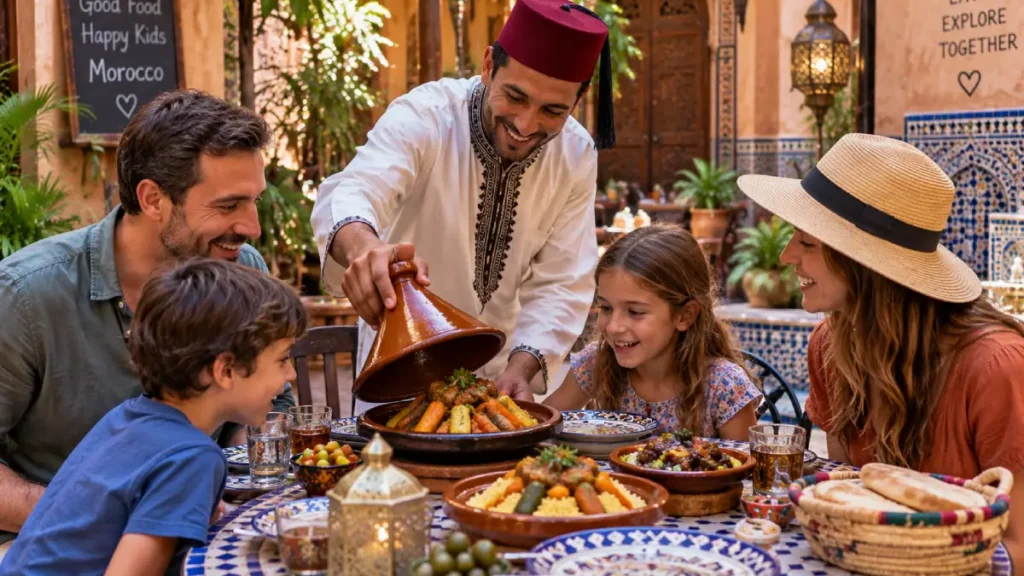
Moroccan food can be very family-friendly, although children with limited tastes may prefer to alternate local meals with simpler options. Bread, grilled meats, omelettes, rice, soups, potatoes and fresh fruit are widely familiar foods. Tagines can be a gentle introduction to Moroccan cooking because they are often slow-cooked and served with bread.
For more ideas on what families can try, see our Moroccan Food Guide for traditional dishes, street food and practical eating tips around the country.
Useful approaches include:
- Order a few dishes to share rather than committing each child to a large unfamiliar meal.
- For younger or picky eaters, it can help to order one familiar item alongside local dishes so children can try new food without turning every meal into a challenge.
- Ask about ingredients if a child has allergies or dietary restrictions.
- Keep snacks and water with you during long transfers.
- Choose meal times around your family’s routine rather than waiting until everyone is tired and hungry.
- Use hotel breakfasts and familiar foods strategically; every meal does not have to be an adventure.
Food safety needs the same sensible approach you would take in any unfamiliar destination. Choose places that look clean and busy, keep hands clean, and be careful with dietary needs. Families managing severe allergies should communicate them clearly and avoid assumptions about ingredients.
How demanding is Morocco for walking with children?
Walking difficulty varies greatly by destination and neighbourhood.
Marrakech and Fes medinas are the most demanding places for buggies, tired toddlers and anyone with limited mobility. Expect narrow passages, uneven paving, crowds and occasional steps. A carrier may be more practical than a pushchair in older medina areas.
If you do bring a stroller, a compact model with stronger wheels is more useful than a lightweight travel stroller with very small wheels on uneven medina streets.
Newer districts, coastal promenades and many modern hotels are generally easier to navigate. The Atlas Mountains can involve steep paths and uneven ground, depending on where you stay and which walks you choose.
Plan one main activity per day in the most walkable-intense places. Parents often underestimate how tiring the combination of heat, noise, navigation and browsing can be for children.
Safety and comfort: practical family habits
A successful family trip is usually about small routines rather than complicated rules.
- Keep children close in busy medinas and markets, where lanes can become crowded and confusing.
- For younger children, agree on a simple meeting point and make sure they know your hotel or riad name in case you are briefly separated in a busy area.
- Carry water, sun protection and snacks during sightseeing.
- Save outdoor walking for cooler parts of the day when possible.
- Keep a photo of your accommodation details on your phone in case you get separated or need help finding the way back.
- Avoid packing every day with an excursion, particularly after an arrival day or a long drive.
- Make sure children have a layer for mountain evenings and desert stays, even when daytime weather feels warm.
- Bring essential child medication in its original packaging, along with a copy of the prescription when appropriate, and check Moroccan entry rules in advance for any controlled prescription medicine.
For general destination context before booking, the official Morocco tourism website is also a useful starting point alongside practical route planning.
What to pack for Morocco with kids
Pack for the season and the type of itinerary rather than bringing too much. Useful family essentials include sun protection, reusable water bottles, comfortable walking shoes, a light layer for cooler evenings, familiar snacks for long transfers and any essential medication in its original packaging. For babies and toddlers, also think about a compact stroller or carrier, nappies or other items you prefer not to search for immediately after arrival.
Common mistakes when planning a Morocco family itinerary
Trying to visit four major destinations in one week
Marrakech, Fes, Chefchaouen and the Sahara do not make a relaxed short itinerary. The result is usually too much time checking in, checking out and sitting in a vehicle.
Choose a route that matches your days. For a week, Marrakech plus the coast is often more enjoyable than a rushed grand tour.
Booking for style without checking access
A riad may look ideal online but be difficult to reach with luggage, a buggy or sleeping children. Check vehicle access, walking distance from drop-off, stairs and room layout before paying.
Ignoring hotel facilities that matter to families
A pool, lift, air-conditioning, heating and a genuinely suitable room can make a major difference. These are not minor details when travelling with children.
Underestimating luggage and vehicle space
A family vehicle needs to fit people comfortably as well as suitcases, day bags and possibly a pushchair. Confirm this in advance for airport transfers, private drivers and longer tours.
Treating the Sahara as an easy day trip
The desert requires travel time. Trying to reach it too quickly can make the journey feel like an endurance test rather than a family highlight.
Scheduling no recovery time
After a flight, a medina day or a long road transfer, children often need unstructured time. A relaxed afternoon at the hotel can improve the entire holiday.
Build your family trip around comfort, not a checklist
The best Morocco family vacation is rarely the one with the most destinations. A good family itinerary should balance a few memorable places with manageable travel days, practical accommodation and enough time for children to rest.
For a first visit, Marrakech plus the coast is hard to beat for simplicity. Families with more time can add the Atlas Mountains, Rabat, Fes or the Sahara according to their interests and tolerance for travel. Start with the practical foundations—room layout, airport access, luggage, child seating and realistic road days—then add the experiences that suit your family.
For broader route ideas and destination planning, see the complete Morocco travel guide.
FAQ
Is Morocco suitable for families with young children?
Yes, provided the itinerary is paced carefully. Choose accommodation with easy access, allow time for pool or rest breaks, and avoid making every day a long sightseeing or driving day. Marrakech plus a coastal stay is often easier than adding several distant cities.
How many days do you need for a Morocco family vacation?
Seven days is enough for Marrakech and the coast. Ten days allows a more relaxed itinerary with the Atlas Mountains or another stop. Plan around two weeks if you want to include the Sahara without making the trip overly rushed.
Should families stay in a riad in Marrakech or Fes?
A riad can be a lovely choice, but check access carefully. Some are deep inside pedestrian medina lanes and may involve a long walk with bags, uneven surfaces and stairs. Families with young children may prefer a riad near a medina gate or a hotel with easier vehicle access.
Is the Sahara worth visiting with children?
It can be, especially for school-age children and teenagers who enjoy long journeys and outdoor scenery. However, it requires significant travel time, so it is better suited to a 10- to 14-day itinerary than a short Morocco holiday.
Are Morocco family resorts a good choice?
They can be a practical choice for families who want beach time, pools and uncomplicated downtime, particularly around Agadir and the Atlantic coast. Before booking, confirm the room setup, pool suitability, air-conditioning or heating, lift access and the distance to the beach or local facilities.
What is the best age to visit Morocco with children?
There is no single best age. Babies and toddlers can travel well with a slower itinerary and easy-access accommodation, while school-age children and teenagers usually handle medinas, longer day trips and desert routes more comfortably. The right route depends more on your child’s tolerance for heat, walking and long drives than on age alone.
Is Morocco safe for a family vacation?
Morocco is a popular family destination, but families should use the same practical precautions they would use in any unfamiliar country: keep children close in busy medinas, protect valuables, use reputable transport, avoid overloading the itinerary, and plan carefully for heat, long drives and accommodation access.
Is Morocco stroller-friendly?
It depends on where you are. Modern districts, promenades and many hotels are manageable with a stroller, but Marrakech and Fes medinas have narrow lanes, uneven paving and occasional steps. A compact stroller with stronger wheels can work, while a baby carrier is often easier in the oldest parts of the medinas.