

A Moroccan breakfast can be as simple as warm bread, olive oil and sweet mint tea—or as generous as the pancake-and-pastry spreads served in many riads. Both are authentic, but they are not the same everyday experience.
For most Moroccan families, breakfast is practical and uncomplicated on working or school mornings. Msemen, baghrir, eggs with khlii and amlou all belong to Moroccan breakfast food, but they are often saved for weekends, guests or a slower morning. This guide explains what Moroccans eat for breakfast, what to order in cafés and markets, and how everyday home breakfasts differ from the generous spreads served in many riads.
Table of Contents
Table of Contents
What do Moroccans eat for breakfast at home?

A typical traditional Moroccan breakfast at home often starts with fresh khobz—round Moroccan bread—or a baguette, served with olive oil and sweet mint tea. Bread is not usually cut with a knife and fork. It is torn by hand and used to scoop up olive oil, eggs, amlou or other accompaniments.
The exact breakfast changes by household, city, season and how much time people have. On a busy weekday, it may be nothing more elaborate than:
- Fresh bread or a baguette
- Olive oil
- Sweet Moroccan mint tea or coffee
- Cheese, butter, honey or jam in some homes
- Leftover homemade bread or pastries, if available
This is very different from the long breakfast trays often presented to visitors. A riad breakfast usually combines several authentic foods in one meal: bread, pancakes, preserves, fruit, eggs, juice, tea and coffee. The ingredients are Moroccan, but the quantity and variety are generally more elaborate than what many families prepare every morning.
Breakfast can also be a slow social meal, particularly at weekends or when relatives and guests are present. It is not always designed around the quick Western pattern of cereal, coffee and rushing out the door.
The Moroccan breakfast breads and pancakes worth trying

Bread and griddle breads are at the center of breakfast in Morocco. They are filling, affordable and commonly eaten with sweet or savory toppings.
Khobz: everyday Moroccan bread
Khobz is the round, often rustic bread found across Morocco. It may be made at home, bought from a neighborhood bakery or baked in a communal oven. Its texture and grain can vary from one region and household to another.
At breakfast, khobz is commonly paired with olive oil, honey, butter, cheese or eggs. It is also the practical tool for eating: tear off a piece and use it to scoop rather than expecting individual plates and cutlery for every item.
A baguette is equally normal in many urban homes and cafés. French influence is visible in Morocco’s morning bread habits, especially in cities where bakeries sell baguettes alongside local round loaves and pastries.
Msemen: flaky square pan-fried bread
Msemen is one of the best-known Moroccan breakfast foods. It is a layered, square-shaped flatbread cooked on a griddle. The dough is folded repeatedly with oil or butter, giving it a flaky texture.
Msemen can be eaten plain, with honey, jam, butter, cheese or amlou. It can also appear in savory forms, but a simple warm msemen with tea is the classic breakfast experience travelers usually seek.
Although msemen is authentic and widely available, it is not necessarily a daily breakfast in every home. Many families make or buy it more often on weekends, when visitors come, or for a more relaxed breakfast.
Baghrir: the “thousand-hole” pancake
Baghrir is a soft semolina pancake recognized by the small holes that form across its surface while cooking. Those holes absorb melted butter, honey or syrup especially well.
It is usually lighter and softer than msemen, with no flaky layers. Like msemen, baghrir is strongly associated with Moroccan breakfast and hospitality, but it is often part of a more generous family meal rather than an automatic weekday routine.
If you are served both msemen and baghrir at a riad, try them differently: msemen works well with amlou or cheese, while baghrir is particularly good with butter and honey.
Sfenj: Moroccan fried doughnuts
Sfenj are ring-shaped, airy fried doughnuts sold by street vendors and small neighborhood shops. They are often eaten warm, plain or lightly sweetened, alongside tea or coffee.
They are a casual morning choice rather than a formal sit-down breakfast. Buy them freshly cooked when possible, as they are at their best warm and crisp.
Amlou, olive oil and the sweet side of breakfast
Moroccan breakfast spreads often depend on what is available locally. Olive oil is a straightforward everyday accompaniment in many homes, while honey, butter, cheese and preserves may be added when the breakfast is more substantial.
Amlou: almond, argan oil and honey

Amlou is a rich spread made from toasted almonds, argan oil and honey. It is often compared loosely to nut butter, but its flavor is distinct: nutty, lightly sweet and shaped by the taste of argan oil.
Amlou has especially strong roots in southern Morocco, particularly the Souss region around Agadir and Taroudant. It is now widely available in tourist areas across the country, so you do not need to travel south to try it.
Eat it with bread or msemen, ideally in small amounts at first because it is rich. It makes a satisfying breakfast when paired with tea or coffee.
Honey, butter and local preserves
Honey is commonly served with Moroccan pancakes and bread, especially in guesthouse breakfasts. In Atlas areas, local honey and heartier grain-based foods can be especially prominent.
A large tray of honey, butter, jam, olive oil and amlou is common in riads. At home, families may serve only one or two of these items depending on the day and what is in the kitchen. That simpler version is no less traditional.
Eggs, khlii and warm savory breakfasts
Moroccan breakfast does not have to be sweet. Eggs are common, especially in cafés and on more relaxed mornings.
Fried eggs with cumin and paprika
A simple Moroccan-style egg dish is often fried eggs seasoned with cumin, salt and paprika. Eggs may also be prepared as an omelette, sometimes with tomato.
These are straightforward dishes, but the seasoning matters. Cumin is particularly common and gives a familiar café egg plate a distinctly Moroccan character. Bread is used to scoop up the yolk and sauce rather than eaten separately.
Eggs with khlii in Fes, Meknes and beyond
Khlii is Moroccan preserved meat, particularly associated with cities such as Fes and Meknes. It is often cooked with eggs, creating a rich and salty breakfast that is more substantial than bread and tea alone.
Travelers in Fes, Meknes or Marrakech may find eggs with khlii on café menus. It is a good order for someone who wants a hearty savory breakfast, but it is not the lightest choice before a long hot day of walking.
Moroccan breakfasts normally do not include pork bacon or pork sausages. When a menu offers a Moroccan-style cooked breakfast, expect eggs, bread, olive oil, cheese, olives, khlii or vegetables instead.
Bessara: a cold-weather bowl of beans
Bessara is a thick soup or purée made from split peas or fava beans. It is especially common in northern Morocco and is valued as a warming breakfast during colder weather.
Served with olive oil, spices and bread, it is a filling choice for cool mornings. Travelers visiting northern cities or the Rif should look for it in local cafés and neighborhood food stalls rather than expecting it on every riad breakfast table.
Tea, coffee and what to order in a Moroccan café

Both tea and coffee are normal morning drinks in Morocco. The choice often depends on the person, place and pace of the morning.
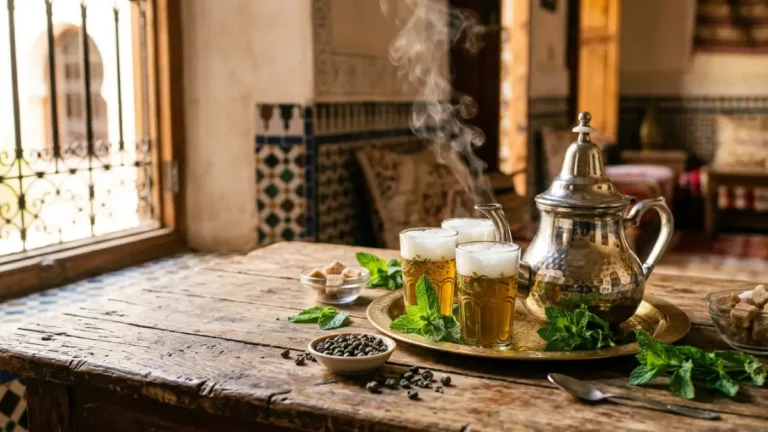
Sweet Moroccan mint tea

Sweet mint tea remains central to Moroccan hospitality and daily life. At breakfast, it works naturally with bread, msemen, baghrir and sfenj.
If you usually take tea without sugar, be aware that traditional Moroccan mint tea can be quite sweet. You can ask for less sugar, though the result may vary depending on whether the tea has already been prepared in a pot.
Coffee and the popular nous-nous
Coffee is extremely common in Moroccan cafés. One of the most useful orders to know is nous-nous, meaning roughly half coffee and half hot or steamed milk.
A nous-nous is a practical choice if you want something between black coffee and a large milk-heavy café drink. It is especially common in neighborhood cafés, where morning customers may stop briefly before work or school.
How much does a Moroccan breakfast usually cost?
Breakfast can be one of the most affordable meals for travelers in Morocco, particularly outside hotel dining rooms and tourist-focused cafés.
Breakfast prices vary considerably by city, neighborhood and setting. Use these comparisons as a practical guide rather than a fixed tariff:
- Street or medina stalls: usually the least expensive option for freshly cooked msemen, sfenj, bread or a similar single breakfast item.
- Neighborhood cafés: a simple combination of bread or msemen, eggs, and tea or coffee generally costs more than a single stall item but less than a full breakfast in a tourist-focused café or hotel.
- Riad breakfast: often included in the room rate and usually much more generous than a local café meal.
Always check the menu or ask the price before ordering. Central tourist areas usually cost more than residential neighborhoods, while bakeries and simple stalls are often the least expensive choices.
The most inexpensive local-style approach is usually to buy warm bread, msemen or sfenj from a medina or souk vendor, then have tea or coffee at a nearby neighborhood café where that arrangement is appropriate. It is a good way to sample everyday morning habits without paying for a full tourist breakfast.
Where to try an authentic Moroccan breakfast
There is no single “most authentic” breakfast setting. A riad, café, bakery and street stall each show a different part of Moroccan food culture.
Neighborhood cafés for a quick local breakfast
A neighborhood café is usually the best choice for a simple, inexpensive breakfast. Look for cafés with local morning customers ordering coffee, tea, eggs, bread or msemen.
Many neighborhood cafés and bakeries begin serving early for workers and schoolchildren. Exact opening times vary by city, neighborhood, season and day of the week, so confirm locally if you need breakfast before an early departure.
Order tea or a nous-nous, then choose bread or msemen and eggs if you want a fuller meal. This is a practical option for travelers leaving early for sightseeing or transport.
Medina stalls for msemen, sfenj and fresh bread
Morning stalls in medinas and souks are ideal for freshly made griddle breads and fried dough. Msemen, sfenj and similar items are normally sold individually rather than presented as a complete plated breakfast.
This option suits travelers who want something quick, local and inexpensive. It is less convenient if you need seating, a full menu or an unhurried meal. In that case, buy the food first and find a café for tea or coffee.
Riads for variety and a relaxed start
Riad breakfasts are convenient, especially on the first morning after arrival or before a day exploring a medina. They often include a generous selection of breads, pancakes, honey, jam, eggs, fruit, juice, tea and coffee.
The important distinction is not whether the food is authentic—it usually is—but whether the scale is typical of an ordinary weekday Moroccan home. In most cases, it is better understood as a welcoming guest breakfast that gathers several Moroccan morning foods together.
Bakeries for bread and French-influenced pastries
In cities such as Marrakech and Fes, travelers will find local bread alongside French-influenced pastries. This reflects a normal part of urban Moroccan breakfast culture, not a contradiction to it.
For a more traditional Moroccan breakfast, combine bakery bread with olive oil, tea, eggs, amlou or cheese. For a quicker city breakfast, coffee and a pastry are also common.
If you are spending time in the Red City, this Marrakech travel guide can help you plan the rest of your eating and sightseeing days around the medina.
Regional Moroccan breakfast differences to look for
The foundations of breakfast are similar across Morocco, but regional ingredients give each area its own character.
Fes and Meknes: khlii with eggs
Fes and Meknes are particularly associated with khlii, so eggs with preserved meat are a worthwhile order for travelers who enjoy savory breakfasts. The cities also have plenty of bakeries serving baguettes and pastries alongside more traditional breads.
Northern Morocco and the Rif: bessara and fresh jben
Northern Morocco and the Rif are known for bessara and fresh jben cheese. Bessara is especially welcome in colder weather, while fresh cheese can be eaten simply with bread.
These are good foods to seek in local cafés and markets rather than limiting yourself to hotel breakfast menus.
Souss, Agadir and Taroudant: amlou and argan oil
The Souss region, including the area around Agadir and Taroudant, is especially linked with amlou and argan oil. This is one of the best regions to try amlou as part of a breakfast with bread or msemen.
Atlas areas: honey and heartier grains
In the Atlas, local honey and more substantial grain-based foods can be part of the morning table. These are well suited to cooler mountain conditions, particularly compared with the lighter bread-and-coffee routine common in urban cafés.
Draa Valley: dates during the autumn harvest
In the Draa Valley, fresh dates can appear at breakfast during the autumn date harvest, particularly around October and November. They make a natural accompaniment to bread, tea and other simple breakfast foods.
A family breakfast tradition: fekkas with milk
Not every Moroccan breakfast centers on pancakes or eggs. In some families, children may be served small fekkas biscuits in a bowl with milk as a simple breakfast before school.
Fekkas can include ingredients such as aniseed and sesame. In this context, they function somewhat like a traditional alternative to packaged breakfast cereal: simple, comforting and easy to eat before school.
Travelers may know fekkas as a tea-time biscuit, but it is also part of the wider Moroccan morning food tradition.
How to order breakfast without overcomplicating it
If you are unsure what to choose, keep the order simple. These combinations work well:
- Light and local: bread with olive oil, plus mint tea.
- Sweet breakfast: msemen or baghrir with honey or amlou, plus tea.
- Savory café breakfast: eggs with cumin and paprika, bread, and a nous-nous.
- Hearty regional option: eggs with khlii in Fes or Meknes, or bessara in northern Morocco.
- Quick street-food stop: warm sfenj or msemen with tea or coffee.
The main mistake is assuming you need a huge spread to have an authentic experience. A piece of khobz, olive oil and tea can be as representative of everyday Moroccan life as a riad tray loaded with pancakes and preserves.
For a wider introduction to dishes beyond the morning meal, see this guide to traditional Moroccan food or the site’s ultimate Moroccan food guide.
FAQ
What is a typical Moroccan breakfast?
A typical everyday Moroccan breakfast is often fresh khobz or baguette with olive oil and sweet mint tea. Coffee, cheese, butter, honey or eggs may be added, but large pancake spreads are more common at weekends, with guests or in riads.
Is msemen eaten every day in Morocco?
Msemen is a traditional Moroccan breakfast food, but it is not necessarily an everyday weekday meal in every household. Many families serve it more often on weekends, special occasions or when guests visit.
How much does breakfast cost in Morocco?
Prices vary by city, neighborhood and type of establishment. Bakery and street-stall items are usually the least expensive, neighborhood cafés sit in the middle, and tourist cafés or hotels generally charge more. Check the menu or ask the price before ordering.
What is amlou eaten with?
Amlou is usually eaten with bread or msemen. It is made from toasted almonds, argan oil and honey, and it is especially associated with southern Morocco, particularly the Souss region around Agadir and Taroudant.
What is nous-nous in Morocco?
Nous-nous is a popular Moroccan café coffee made with roughly half coffee and half hot or steamed milk. It is a common morning order alongside bread, eggs, msemen or pastries.