Marrakech Souks & Markets: What to Buy, Prices & Bargaining Tips
I’m Youness, a licensed Moroccan guide based in Marrakech. After more than twenty years guiding visitors through the souks of Marrakech, I have seen the same two shopping mistakes again and again: buying from the first attractive shop and negotiating before checking the quality.
A first Marrakech market visit can feel overwhelming. The lanes are crowded, prices are rarely displayed, and handmade Moroccan crafts are often mixed with mass-produced souvenirs. Once you understand how the markets are organised, however, shopping becomes much more enjoyable.
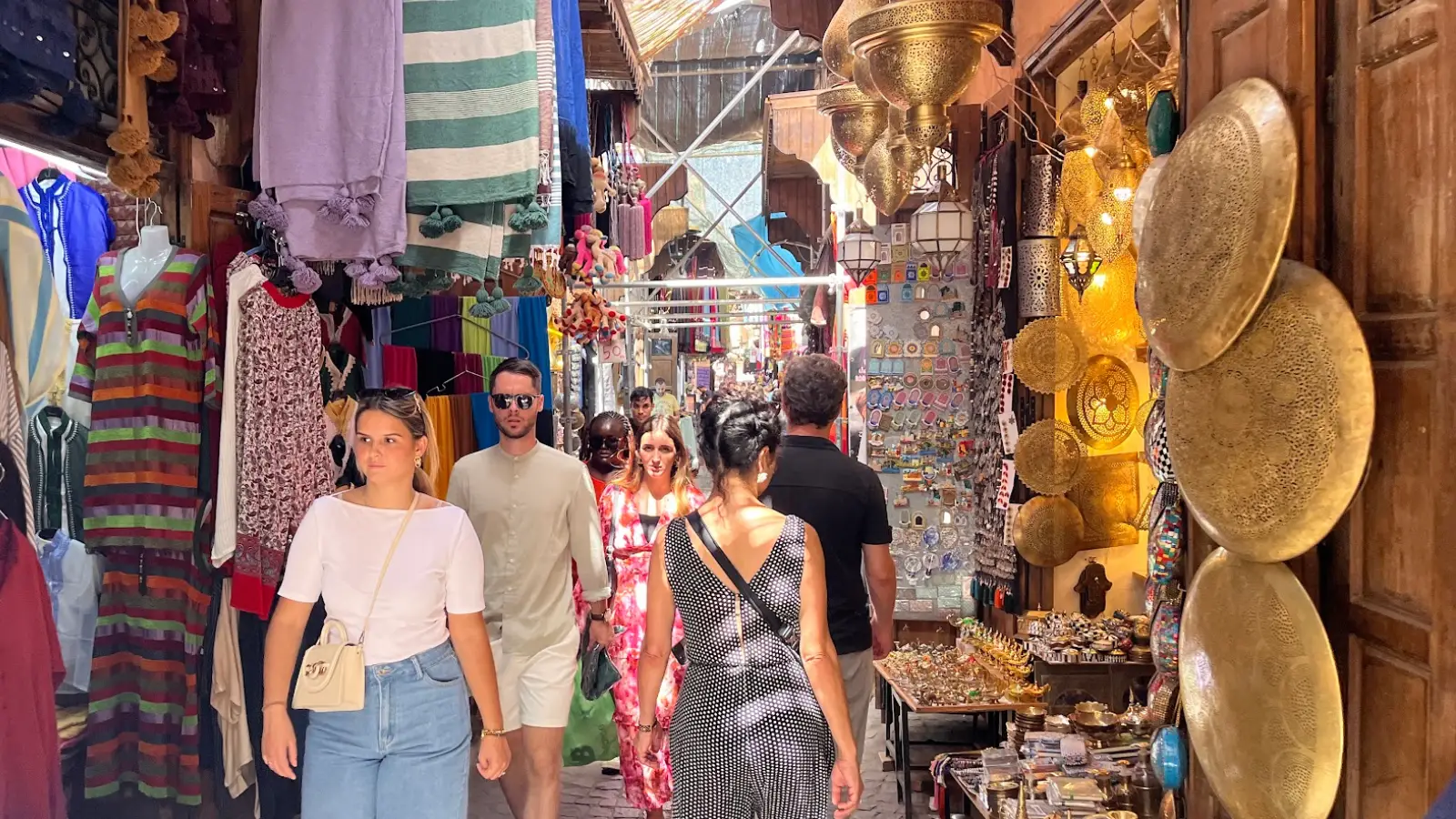
The Marrakech souks are not one market. They are a network of connected lanes and traditional craft areas where you will find leather babouches, lanterns, rugs, ceramics, spices, baskets and woodwork. Each Marrakech souk has its own character, although the old craft boundaries are less strict than they once were.
In this Marrakech market guide, I will show you where to shop, what is genuinely worth buying, which pressure tactics to avoid and how to plan a practical two-hour route from Jemaa el-Fna without spending your entire budget in the first shop.
Is shopping in the souks of Marrakech worth it?
Yes—if you shop selectively and treat the souks as part of the Marrakech experience, not simply as a place to find the lowest price.
The souks of Marrakech were historically organised by craft, with separate areas for slippers, leather, metalwork, carpets and woodwork. Those boundaries are less strict today, and many stalls sell a mixture of handmade pieces, factory-made products and ordinary tourist souvenirs.
Souk Semmarine is the easiest place to begin, but it is also one of the busiest and most tourist-facing routes. I normally advise visitors to look first, compare the same type of item in several shops and inspect the workmanship before discussing the final price. A cheaper product is not necessarily a better bargain if the stitching, material or finish is poor.
Do not assume that every object is handmade or that every shop deeper inside the Medina will automatically be cheaper. The advantage of exploring the specialised souks is that you can compare more products, see some artisans working and better understand what you are buying.
If you want practical advice about navigating the Medina before you start shopping, use my wider Marrakech travel guide.
Contents
Table of Contents
Where to shop in Marrakech: the souks that matter
Souk Semmarine: the easiest introduction from Jemaa el-Fna
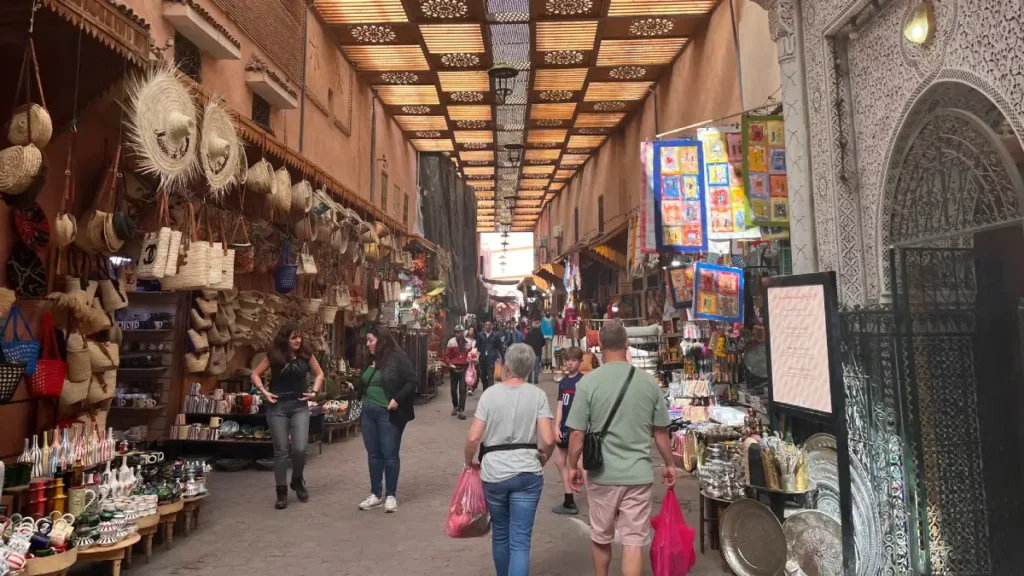
Souk Semmarine is the main covered shopping artery leading from Jemaa el-Fna into the Medina. It is a useful place to begin because it is busy, easy to follow and gives you a quick overview of what Marrakech markets sell: slippers, lamps, scarves, leather bags, ceramics, textiles and souvenirs.
It is also one of the most tourist-facing parts of the souk. Prices are often higher here, especially in the first shops closest to the square. Browse, compare and get comfortable with the rhythm of bargaining, but avoid feeling obliged to buy immediately.
Souk Smata for leather babouches
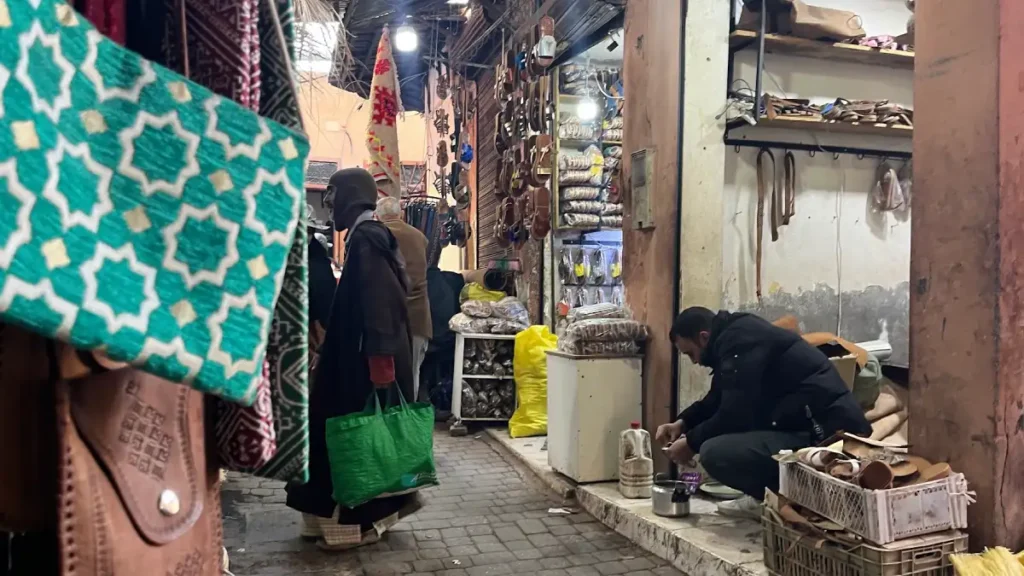
Souk Smata is the place to look for babouches, the traditional Moroccan leather slippers. You will see pairs in simple natural leather as well as brightly coloured embroidered versions.
A realistic post-negotiation range for ordinary leather babouches is around 70–100 MAD, depending on the material, finish and how well you negotiate. Check the stitching, sole and interior before buying. A pair that looks attractive on display but has weak seams or a very thin sole may not travel well.
Souk Cherratine for leather bags and jackets
For leather bags, wallets, belts and jackets, head toward Souk Cherratine. Quality varies widely, so compare several products before buying rather than relying on the first seller’s description.
Smell alone does not prove that an item is genuine leather. Check the exposed edges, natural variation in the grain, flexibility, lining, stitching, zips, buckles and straps. Pay particular attention to handles and seams, because these are usually the first areas to fail on a poorly made bag.
Ask directly what type of leather was used, but judge the item by its construction as well as the answer. A high opening price does not guarantee better leather or workmanship.
Souk Haddadine for lanterns and metalwork
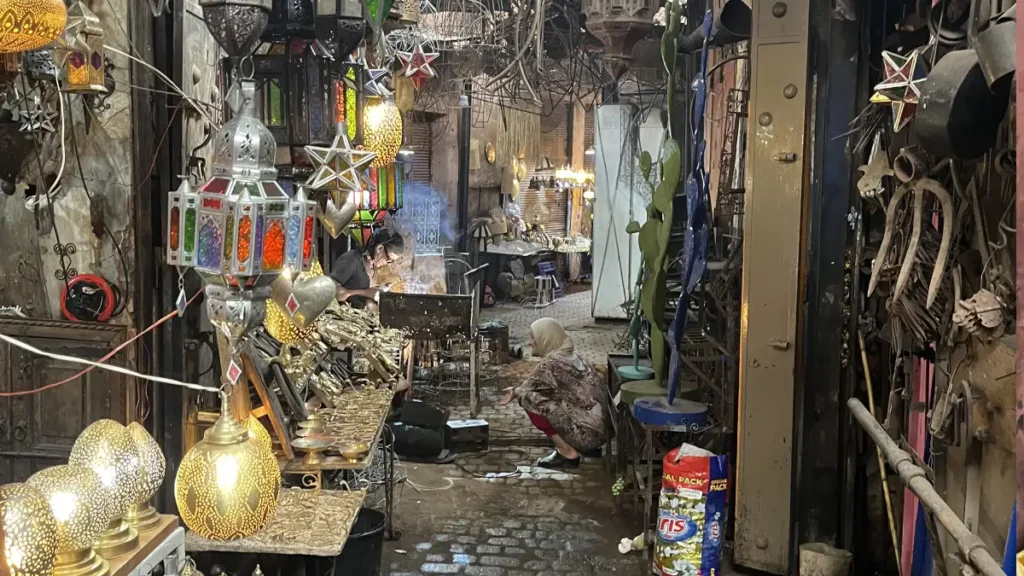
Souk Haddadine is the traditional blacksmiths’ quarter. The sound of hammering and the sight of metalworkers make this area worth visiting even if you do not plan to buy anything. You will find lanterns, trays, candle holders and other decorative metalwork, although not every item displayed was necessarily made in the workshop where it is sold.
Small lanterns can start from around 30 MAD after negotiation, while larger or more detailed pieces cost considerably more. Ask whether an item is solid brass, brass-plated or made from another metal rather than judging it only by its colour.
Check the pierced pattern, joins, hinges, door and sharp edges. The lantern should feel reasonably sturdy and sit level on a flat surface.
Choose a size that can be packed safely. If you want to use the lantern with a candle or electrical fitting at home, check its intended use carefully. Many souk lanterns are sold as decoration and may require suitable wiring or adaptation after you return.
Souk Zrabi for carpets and rugs
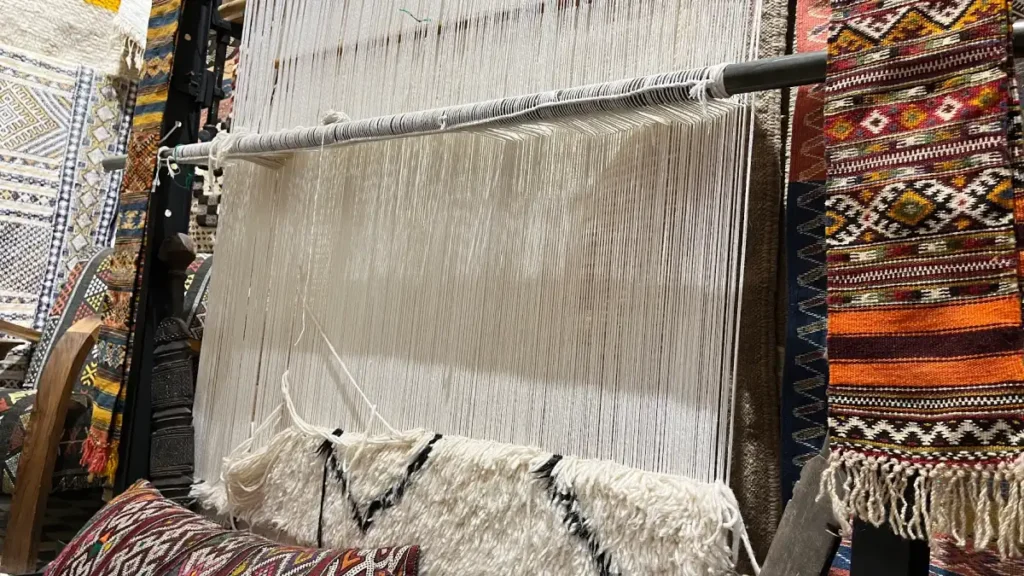
Souk Zrabi is associated with carpets and rugs. This is where the atmosphere can become more formal: you may be invited in for tea, shown several pieces and given a long explanation of their origins, materials or age.
Small, simple rugs may begin around 200 MAD, while serious handmade rugs can cost substantially more. The huge variation is normal. Construction, size, materials, density, condition and design all affect value.
Do not buy a rug simply because it is described as old, rare or from a particular region. Look at the weave, knots, texture and irregularities. Buy a piece because you genuinely like it and because the price works for you—not because you are persuaded by an unverified story.
For more help comparing materials, workmanship, prices and authenticity, read my complete Moroccan rug buying guide.
Souk Chouari for cedar woodwork
Souk Chouari is the carpenters’ area, recognisable by the scent of cedar and the presence of woodworking shops. You may find carved boxes, small furniture, frames and decorative objects.
Wooden items can be beautiful but are not always easy to pack. Before agreeing on a price, consider weight, fragility and whether the item will fit in your suitcase. Check that lids close properly, carvings are not cracked and joints feel secure.
Rahba Kedima, or Spice Square, for spices and baskets
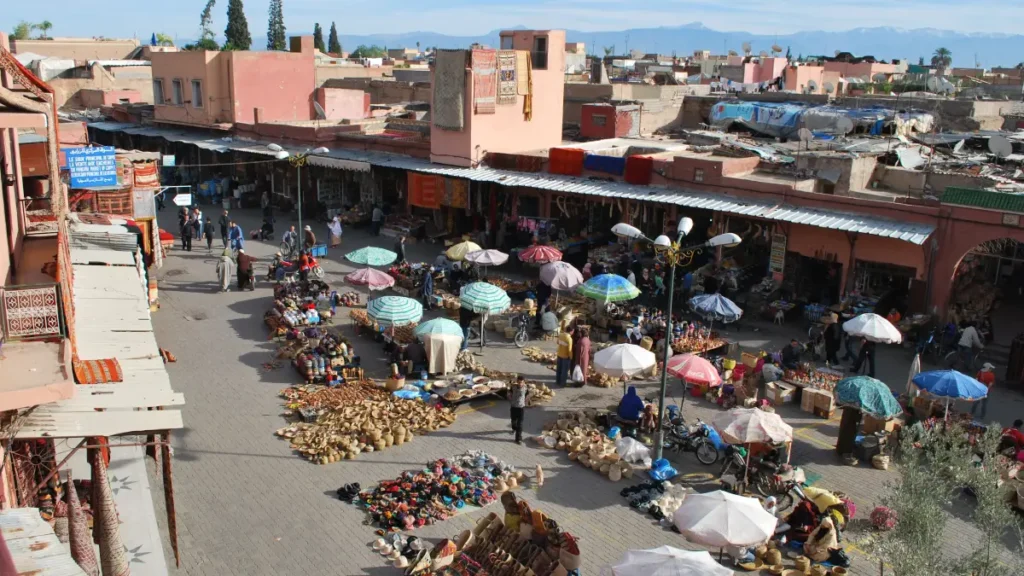
Rahba Kedima, often called Spice Square, is useful for spices, apothecary-style products and woven baskets. It is a good browsing stop, particularly if you want colourful photographs of baskets and displays—though always ask before photographing individual stalls or people.
Spices can make practical gifts, but avoid buying large quantities simply because the display looks attractive. Ask what you are buying, check the aroma and choose an amount you will realistically use.
For argan oil, traceability matters more than the appearance of the shop. Buy from a reputable seller or cooperative, check whether it is intended for culinary or cosmetic use, and look for a clear ingredients label. Do not assume every unlabelled bottle in a tourist market contains pure argan oil.
As a practical guide, a 100 ml bottle of genuine argan oil from a trusted source costs around 150 MAD.
Bab El Khemis for secondhand finds and flea-market browsing
Bab El Khemis, on the northeast side of the Medina, is a large flea-market-style area used by locals for secondhand goods, vintage objects and supposed antiques. It can be rewarding if you enjoy browsing more than buying with a fixed list in mind.
Be particularly cautious with objects described as antiques. Without expertise or documentation, it is safer to buy because you like the piece than because of its claimed age or history. The same applies to supposed antique silver: do not pay an antique premium without reliable certification.
What is worth buying in a Marrakech souk?
The best souvenirs are useful, well-made and clearly connected to Moroccan craft traditions. For more background on the materials and skills behind these purchases, see this guide to traditional Moroccan crafts.
Leather goods
Babouches, wallets, belts and bags are widely available and easy to carry home. Leather is worth buying when you can assess the quality carefully: check the smell, touch, stitching, lining and hardware.
A leather bag can be a good use of budget, but only after comparing styles and prices in more than one shop. Do not assume a high opening price proves quality.
Hand-pierced lanterns
A small hand-pierced lantern is compact, recognisably Moroccan and often easier to buy than a large decorative piece. Look for clean patterns and solid construction. A small brass lantern may start at around 30 MAD, while more detailed or larger pieces will cost more.
Hand-painted ceramics
Ceramic tagines, bowls, plates and small decorative pieces are common across Marrakech markets. Ceramic tagines can be around 20–50 MAD, depending on size.
If you want a tagine for cooking rather than decoration, ask specifically about its intended use. For travellers with limited luggage space, a small hand-painted Safi ceramic piece is usually easier to pack than a full-size serving dish.
Rugs and kilims
A small colourful kilim can make a memorable purchase without the expense or shipping complications of a larger rug. Examine the weave and finish, and do not rush because tea has been served or a seller says another buyer is waiting.
Rugs are one category where spending more can make sense—but only when you understand what you are buying and are happy with the item itself.
Argan oil from a trusted source
Argan oil is widely sold in Marrakech, but quality and purity are not guaranteed by the label alone. Buy from a reputable, traceable seller or cooperative. If the price seems implausibly low for the amount offered, take that as a reason to ask more questions rather than as an automatic bargain.
How to bargain in Marrakech without making it awkward
Bargaining is part of souk shopping, but it works best as a relaxed social exchange. Stay friendly, take your time and do not approach it as a confrontation.
A useful framework is to start at roughly one-third to 40% of the initial asking price. If a seller begins at 500 MAD, an opening offer around 165–200 MAD is reasonable. A possible final settlement may be around 50–60% of the original asking price, but this is not a fixed rule or a guarantee.
The right price depends on the item, quality, season, demand and the seller’s own margin.
A simple bargaining approach
- Ask the price, then inspect the item. Do not bargain seriously until you have checked the quality.
- Make an offer you would genuinely be happy to pay. Avoid offering a figure and then refusing it if accepted.
- Keep the exchange lighthearted. Smile, be polite and do not become frustrated over a small difference.
- Compare before committing. A few minutes spent checking nearby stalls gives you useful context.
- Walk away politely if needed. If the price stops moving, this is often the strongest negotiating tool. A vendor may call you back if there is still room to negotiate.
Do not feel pressured to buy because a seller has offered tea, spent time showing items or said the sale will bring good fortune. Hospitality can be genuine, but it does not create an obligation.
Prefer to explore the souks with a guide?
If you would rather have help navigating the Medina, comparing products and handling bargaining, this private Marrakech souks shopping tour covers several important market areas with a local guide.
Affiliate disclosure: If you book through this widget, I may earn a commission at no additional cost to you.
A two-hour Marrakech shopping route from Jemaa el-Fna
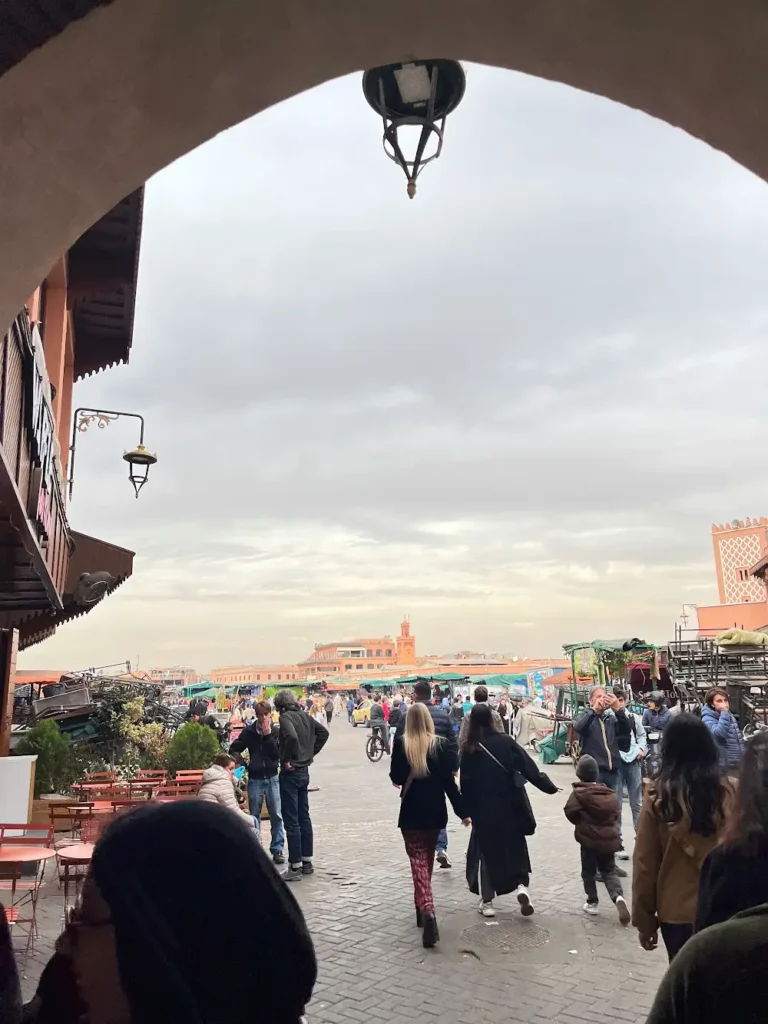
This route is designed for a first visit, a budget of around 1,000 MAD, and travellers who want quality and variety rather than one large purchase.
First 20 minutes: enter through Souk Semmarine
Start at Jemaa el-Fna and enter via Souk Semmarine. Use this first section to understand prices, styles and the general pace of shopping. Browse scarves, lamps, leather and ceramics, but resist buying the first version you see.
Before entering, use my map of Marrakech to understand the route from Jemaa el-Fnaa through Souk Semmarine toward Rahba Kedima and Ben Youssef, then save your live navigation map offline.
Next 30 minutes: choose babouches in Souk Smata
Move toward Souk Smata to compare leather slippers. A reasonable target is around 100 MAD for a good pair of leather babouches.
Try them on if possible, especially if you want to wear them beyond your hotel room. Check the sole, seams and fit before paying.
Next 25 minutes: buy traceable argan oil
At Rahba Kedima or from another trusted source, look for a medium bottle of genuine argan oil at around 150 MAD. Prioritise traceability and product confidence over a dramatic market display.
Next 25 minutes: choose one small crafted object
Head toward the metalworkers around Souk Haddadine or compare ceramics as you pass through the souks. Allow around 100–150 MAD for a hand-pierced brass lantern or a small hand-painted Safi ceramic piece.
Final 20 minutes: use the remaining budget on one larger souvenir
With roughly 600 MAD remaining, you can negotiate for a leather bag or a small colourful kilim. At this point, you will have seen enough products and prices to make a calmer decision.
The route works because it avoids spending your entire budget at the first shop. You leave with several distinct Moroccan crafts rather than a single rushed purchase.
When to shop in Marrakech markets
On normal days, most Marrakech souk shops are generally open from around 8:30 AM to 9:00 PM, although individual stalls vary. Some do not fully open until 9:00 or 10:00 AM, while others may begin closing from around 8:00 PM.
For shopping, I find 9:00 AM to 11:00 AM one of the best periods. Artisan workshops are active, the souks are lively without being at their busiest, and the heat is usually easier to manage. Around 1:00 PM to 2:00 PM, particularly in hot weather, the pace can slow as some vendors take a break.
Friday is different. Many individual stalls may remain closed for the day. Shops that do open commonly close around 12:00 PM to 2:00 PM for Friday prayers, and some vendors may only open later in the day.
Avoid these common Marrakech market scams and pressure tactics
The majority of shopping interactions are straightforward, but a few situations deserve caution.
Unsolicited guides and “special workshops”
Someone may offer a shortcut, mention a festival, or promise to show you a special workshop. The visit may end at a shop where they expect a commission or a tip.
You do not need to be rude. A clear “no, thank you” and continuing in the direction of Jemaa el-Fna or a signed exit is usually enough. Do not hand your phone to someone offering to “help” with directions.
Animal-photo fees around Jemaa el-Fna
Around Jemaa el-Fna, animal handlers may place monkeys or other animals near visitors and then demand payment for photographs. Do not take a photo or engage unless you are comfortable with the likely fee.
Unwanted henna designs
Henna artists may begin a small design while saying it is free, then ask for payment once it is underway. Keep your hands to yourself, decline firmly and do not allow anyone to start applying henna unless you have agreed on both the design and price.
Claimed antiques and silver
A seller’s description is not proof of age, origin or material. This matters especially for old-looking objects, antique jewellery and silver. Unless you have reliable documentation or specialist knowledge, pay for the object you like—not for an unverified claim.
Fixed-price shopping in Gueliz and Sidi Ghanem
If bargaining is not enjoyable for you, the traditional souks are not your only option. Marrakech also has curated boutiques, artisan showrooms and design studios where prices are generally clearer and the shopping experience is less pressured.
In the Medina, El Fenn’s boutique carries a curated selection of fashion, accessories, rugs, ceramics and homeware. Hanout is another Medina option, specialising in contemporary clothing that combines Moroccan craft traditions with modern design.
Sidi Ghanem, Marrakech’s industrial and design district, is better suited to travellers looking for furniture, rugs, lighting and larger decorative pieces. Studio Lid, for example, has a showroom there specialising in Moroccan rugs.
These shops may cost more than a successfully negotiated souk purchase. The higher price may reflect curation, documented materials, contemporary design or a more controlled buying experience, but you should still assess the product carefully.
Buying rugs, furniture or other large items for shipping
For expensive rugs, furniture, tiles or other large purchases, do not rely on a verbal promise. Use an established business that provides:
- A written invoice
- A clear product description
- Shipping terms in writing
- Traceable payment
- A realistic explanation of delivery arrangements
For rugs, Studio Lid is an established showroom in Sidi Ghanem. For handmade decorative tiles, Popham Design operates a workshop and showroom on Route d’Ourika, with visits arranged by appointment.
These are examples rather than guarantees from MoroccoUnfolded. Before making an expensive purchase, confirm the current showroom details, obtain the full terms in writing and understand who is responsible if the item is damaged, delayed or stopped by customs.
Shop with a plan, not pressure
The best Marrakech market purchases are rarely made in the first five minutes. Start from Jemaa el-Fna, browse Souk Semmarine, then move toward the quarters that match what you actually want: Souk Smata for slippers, Souk Cherratine for leather, Souk Haddadine for lanterns, Souk Zrabi for rugs and Rahba Kedima for spices, baskets and trusted argan oil.
Give yourself permission to leave a shop without buying. That one habit makes the souks more enjoyable, improves your bargaining position and leaves room in your luggage for objects you will genuinely use.
For ideas beyond shopping, explore these best things to do in Marrakech.
FAQ
What is the best Marrakech market for first-time visitors?
Start at Jemaa el-Fna and enter through Souk Semmarine. It is the easiest main route into the Medina, although prices can be higher than in the more specialised souks deeper inside.
How much should I pay for babouches in Marrakech?
A realistic post-negotiation price for ordinary leather babouches is around 70–100 MAD. Check the stitching, sole and fit before buying.
Is bargaining expected in Marrakech souks?
Yes, bargaining is normal in many Medina shops. A practical starting point is roughly one-third to 40% of the initial asking price, but the final price depends on the item and quality. Keep the exchange friendly and walk away politely if the price does not work for you.
Where can I shop in Marrakech without bargaining?
Try Gueliz, Sidi Ghanem, larger artisan cooperatives and curated boutiques. These are more likely to use fixed prices than the traditional Medina souks.
What should I avoid buying in Marrakech markets?
Avoid paying an antique premium for objects, silver or rugs based only on a seller’s claim. For argan oil, choose reputable and traceable sellers rather than assuming every market bottle is pure.