
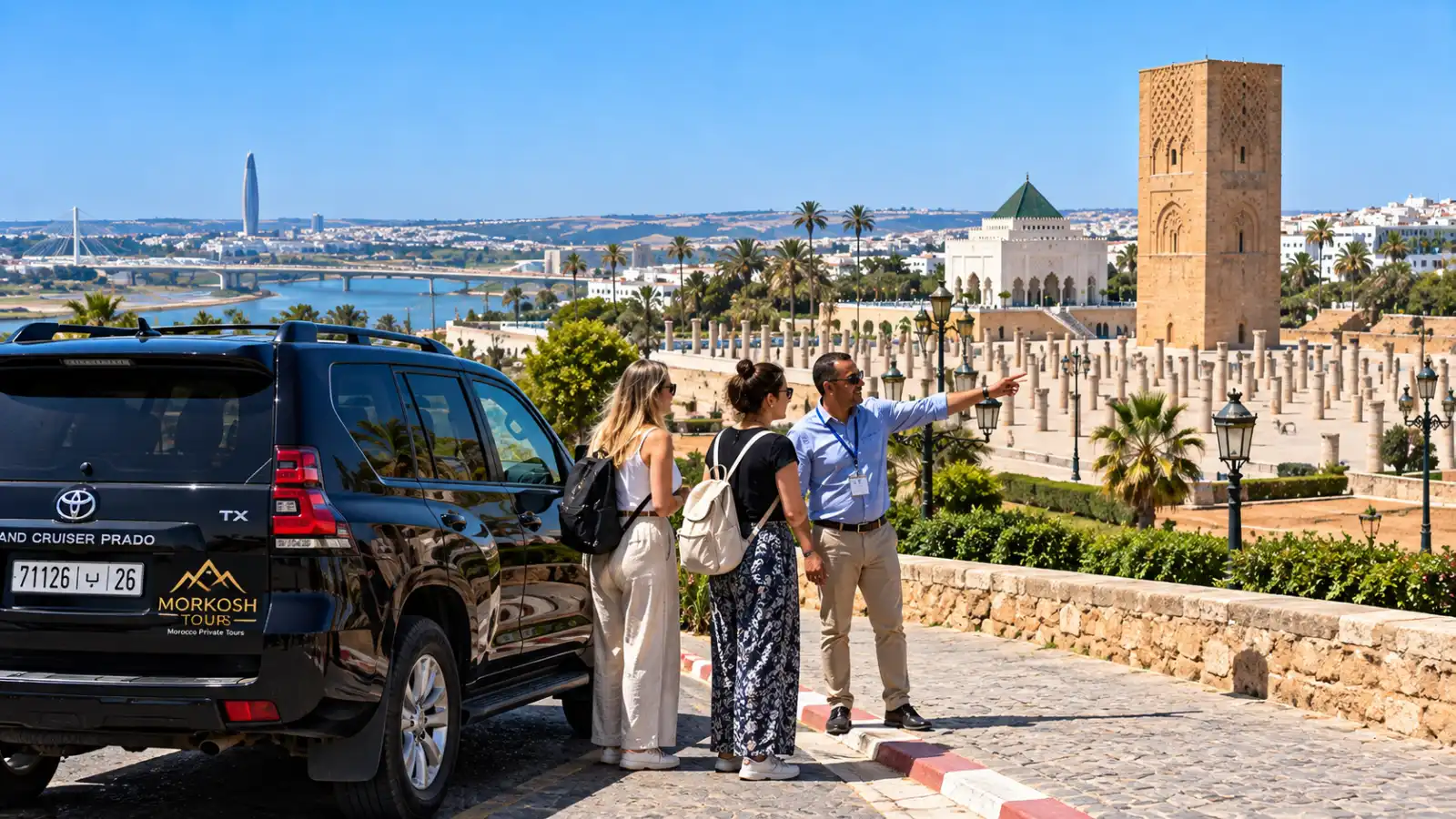
A Rabat city tour is one of the best ways to understand Morocco beyond its imperial medinas and resort cities. The capital combines Almohad monuments, royal history, Atlantic views, traditional shopping streets and a calmer daily rhythm than Marrakech or Fes.
For most first-time visitors, I recommend building a tour around Hassan Tower, the Mausoleum of Mohammed V, the Kasbah of the Udayas, the Andalusian Gardens and Rabat Medina. Add Chellah if you have at least half a day. A licensed guide is particularly useful here because Rabat’s most important stories are not always obvious from the monuments themselves: the unfinished Almohad mosque, the royal mausoleum, Roman and Merinid remains at Chellah, and the shared history of Rabat and Salé.
Table of Contents
Table of Contents
Is a guided Rabat city tour worth it?
Yes, especially if you have limited time, are visiting from Casablanca, arriving on a cruise itinerary, or want more context than a self-guided walk provides.
Rabat is generally easier to explore independently than Marrakech or Fes. Its Medina is more manageable, the central monuments are spread out but not overwhelming, and the atmosphere is usually calmer. Still, a Rabat guided tour can connect the places properly: Hassan Tower is not simply an isolated minaret; it is the surviving part of an ambitious Almohad mosque project. Chellah is not only a garden with ruins; it shows Roman and medieval Moroccan history in the same setting. The Kasbah also has an important connection to the corsair history of Rabat and Salé during the 17th century.
A guided experience is most worthwhile for:
- First-time visitors who want to see the principal monuments efficiently.
- Travelers arriving from Casablanca for one day.
- Families and older travelers who need a route with sensible walking distances.
- Visitors interested in Moroccan royal history, architecture, crafts or archaeology.
- Couples and small groups looking for a flexible private tour in Rabat.
Independent travelers can still enjoy Rabat comfortably, particularly if they have a full day or overnight stay. For broader ideas beyond a sightseeing route, see this guide to things to do in Rabat.
Choose the right Rabat tour length
The best itinerary depends less on how many monuments you can fit in and more on how much walking, history and flexibility you want.
A three-hour Rabat walking tour for visitors with limited time
If you only have two or three hours, I prioritize the historic core rather than trying to reach every major site.
For a compact three-hour visit, I allow time to travel between stops as well as time at each monument. If you want a fully walking-only tour at a leisurely pace, it is better to shorten the route to two areas:
- Hassan Tower and the Mausoleum of Mohammed V – around 35–45 minutes.
- Kasbah of the Udayas and Andalusian Gardens – around 50–60 minutes.
- Rabat Medina and Rue des Consuls – around 35–45 minutes.
This route works for visitors staying centrally or arriving at Rabat Ville, especially with a short taxi or private-vehicle transfer between Hassan Tower and the Kasbah area. It gives you major landmarks and a short introduction to Medina life; the times are approximate and should be adjusted for walking pace, traffic and monument access.
Chellah is not usually realistic within three hours unless you skip the Medina or use a vehicle between stops.
A half-day Rabat sightseeing tour: four to five hours
A half-day tour offers a good balance for many visitors. Four to five hours can cover the central monuments and Chellah with efficient transfers, but you may need to shorten the Medina walk or tea break rather than rushing between stops.
In addition to Hassan Tower, the Mausoleum, the Kasbah and Medina, I recommend adding:
- Chellah archaeological site
- A short pause for Moroccan mint tea
- A brief drive or walk along the Bouregreg waterfront, depending on timing
Chellah deserves at least one hour, and up to two hours for visitors who enjoy history and archaeology. The site combines the remains of the ancient Roman settlement of Sala Colonia with medieval Merinid structures, historic tombs, gardens and storks nesting around the ruins.
A full-day private tour of Rabat: seven to eight hours
A full day is the right choice if you want monuments, museums, city life and a relaxed lunch stop rather than a rushed checklist.
A full-day Rabat city tour can include:
- Hassan Tower and the Mausoleum of Mohammed V
- Kasbah of the Udayas and Andalusian Gardens
- Rabat Medina and Rue des Consuls
- Chellah archaeological site
- Avenue Mohammed V and central Rabat
- The Bouregreg waterfront
- A museum selected around your interests
- Optional traditional Moroccan lunch
The Mohammed VI Museum of Modern and Contemporary Art is especially worthwhile for travelers interested in Moroccan, African and international art. Museum enthusiasts may also consider the National Jewellery Museum in the Kasbah area or the Museum of History and Civilizations.
One full day is generally enough to see Rabat’s principal sights. However, one or two overnight stays give you time to explore museums, try local restaurants, visit Salé and enjoy the city in the evening. For accommodation ideas by area and travel style, read where to stay in Rabat.
- Compare Rabat accommodation.
- Choose central Rabat Ville or Medina accommodation if you want to start walking without an extra transfer.
The essential stops on a Rabat guided tour
Hassan Tower and the Mausoleum of Mohammed V
Hassan Tower is one of Rabat’s defining landmarks. It was commissioned by the Almohad ruler Yacoub al-Mansour in the 12th century as part of a major mosque project. Construction stopped after his death in 1199, leaving the unfinished minaret and rows of stone columns that still show the scale of the original ambition.
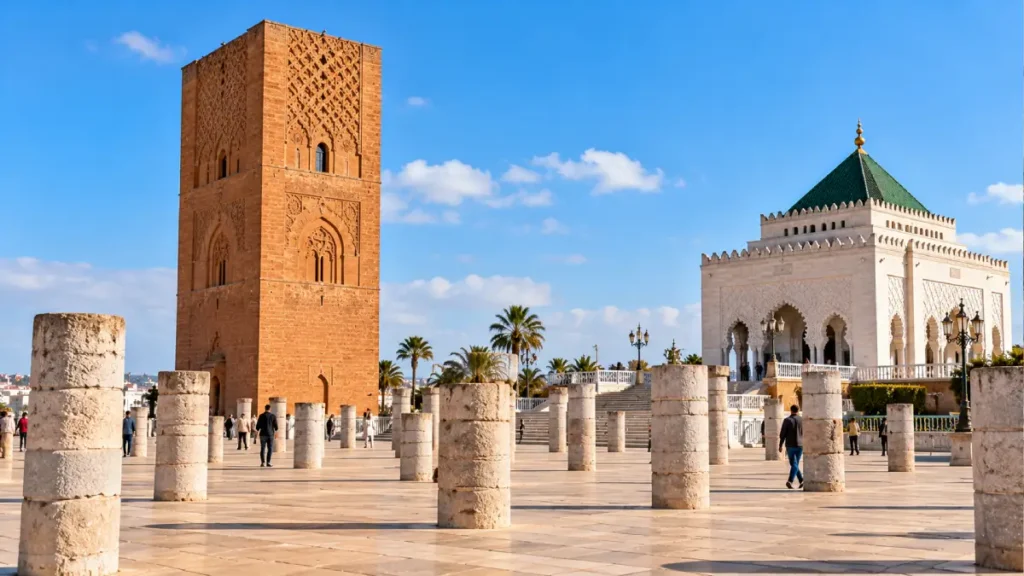
I like explaining to guests that Hassan Tower represents an unfinished chapter of Almohad architectural ambition. The open esplanade and columns make more sense when visitors understand that this was intended to be far more than a stand-alone tower.
Beside it stands the Mausoleum of Mohammed V, which contains the tombs of King Mohammed V, King Hassan II and Prince Moulay Abdellah. It is an excellent place to see traditional Moroccan craftsmanship in one building: carved cedarwood, marble, colourful zellige tilework and a green-tiled roof.
I normally recommend allowing around 45 to 60 minutes for both sites. Visitors should dress respectfully and remain quiet inside the Mausoleum. Visit Rabat publishes opening guidance, but security, holidays and special events can affect access on the day.
Hassan Tower and the Mausoleum are generally free to visit, although access can be affected by security arrangements or occasional restrictions.
Kasbah of the Udayas, Andalusian Gardens and ocean views
The Kasbah of the Udayas stands where the Bouregreg River meets the Atlantic Ocean. It is one of Rabat’s most photogenic areas, but it is also a lived-in historic quarter rather than an open-air museum.
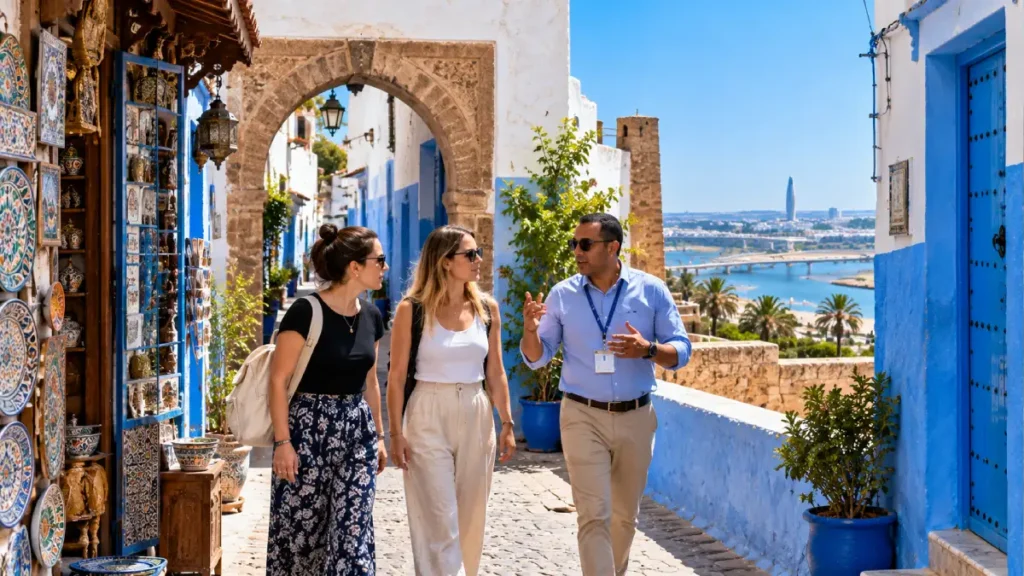
I recommend entering through Bab Oudaia, then taking time to explore the white-and-blue lanes at a relaxed pace. The Kasbah has historic gates, quiet residential streets and viewpoints towards the Atlantic and across the river toward Salé.
The Andalusian Gardens provide a shaded break from walking, with citrus trees and peaceful paths. Nearby, Café Maure is a classic place for Moroccan mint tea and almond pastries when it is open.
The Kasbah is particularly attractive in the late afternoon. If your schedule allows, finishing near its viewpoint or the Bouregreg waterfront around sunset gives the route a more relaxed ending.
Be aware that parts of the Kasbah have slopes and uneven stone surfaces. It is manageable for many travelers, but visitors with reduced mobility may prefer a shorter route focused on the entrance, gardens and viewpoints.
Rabat Medina and Rue des Consuls
Rabat Medina is generally easier to navigate than the larger medinas of Marrakech and Fes. It remains an active shopping area, where visitors can observe everyday Moroccan commerce rather than only tourist-oriented stalls.
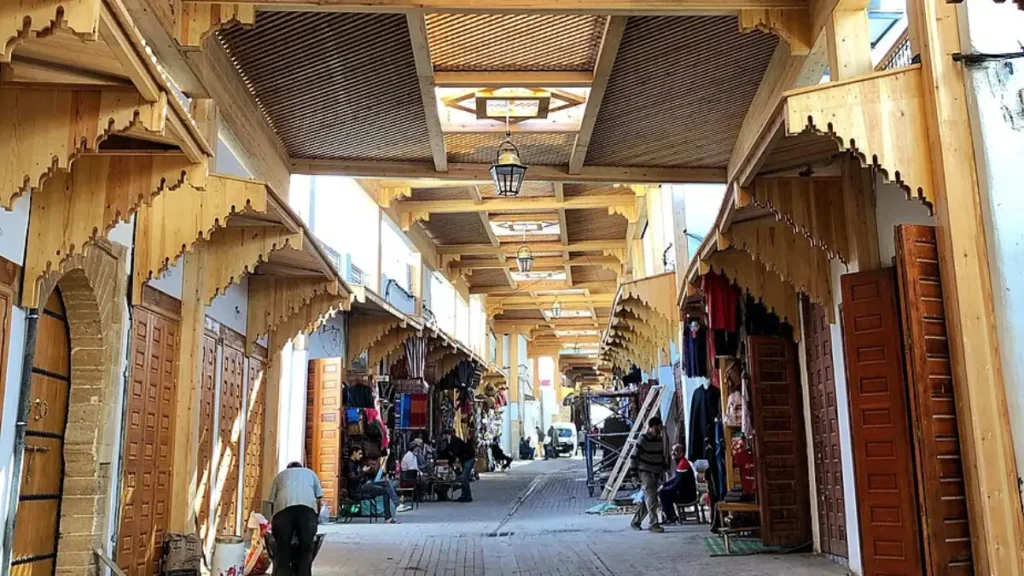
A guide can help explain the city’s urban history, traditional crafts and changing commercial life while also making the walk more efficient. I particularly recommend Rue des Consuls, where visitors can find Moroccan carpets, leather slippers, jewellery, brass lamps and handicrafts.
Look out as well for Fondouk Ibn Aicha, a historic trading building connected with traditional craftsmanship, although visitor access may vary.
The Medina is a good place to carry small amounts of Moroccan dirhams for tea, snacks and small purchases. If you are interested in buying crafts, take your time and agree on prices clearly before paying. Do not feel pressured by unsolicited guides or sales approaches.
Chellah: Roman remains and Merinid Rabat
Chellah is one of my favourite historical attractions in Rabat because it brings together several layers of history in one atmospheric site. Visitors can see remains associated with the ancient Roman settlement of Sala Colonia alongside medieval Merinid architecture, tombs, gardens and stork nests.
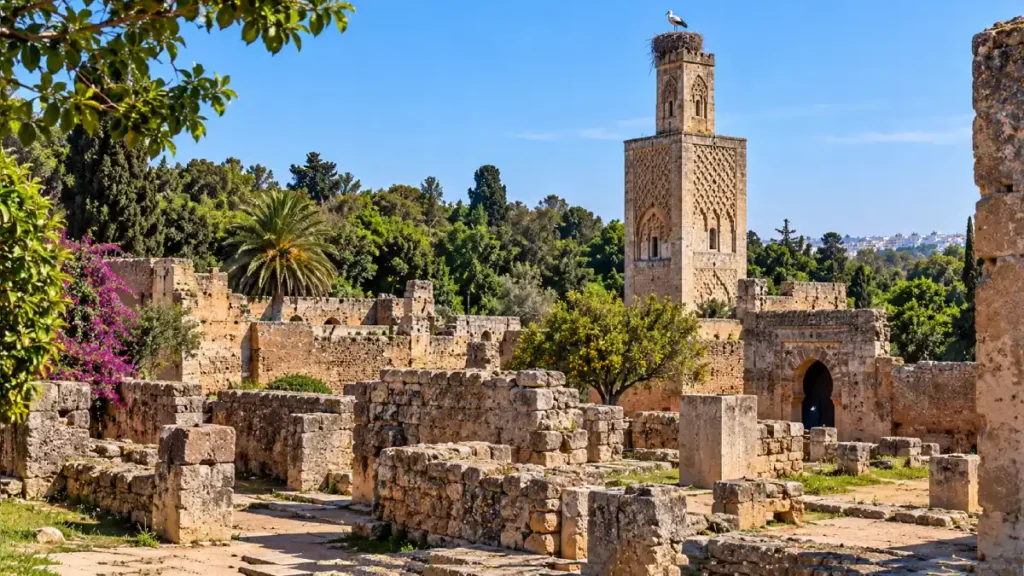
This is not a fast photo stop. I recommend allowing approximately one to two hours, depending on your interest in archaeology and how slowly you prefer to walk.
The paths can be uneven, and the archaeological setting may be difficult for travelers with significant mobility limitations. A private tour with a vehicle can reduce walking between Chellah and the central monuments, but it cannot remove the uneven ground inside the site.
The official Chellah site lists standard admission at 70 MAD for adults over 25, with reduced prices for younger visitors and a 50% discount for Moroccan citizens and foreign residents in Morocco. Seasonal hours are generally 9:00 AM–6:00 PM from October to March and 9:00 AM–8:00 PM from April to September. Ramadan hours and special access conditions may differ, so confirm before your visit.
Royal Palace and the Mechouar area
The Royal Palace of Rabat, known as Dar al-Makhzen, is of interest to visitors curious about Morocco’s royal institutions. Visitors cannot enter the palace interior. Depending on security conditions, authorized areas around the Mechouar may be accessible as part of a sightseeing route.
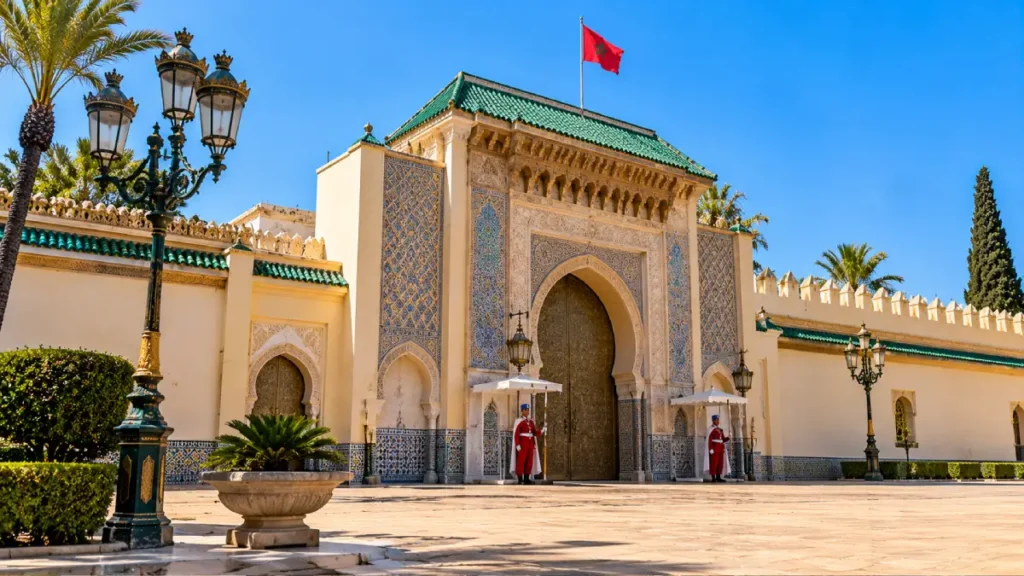
Carry identification and follow instructions from security personnel. This stop should be approached as an exterior and contextual visit, not as a palace tour.
Walking, taxis or a private vehicle: how to get around Rabat
Rabat is best explored through a combination of walking and short transfers.
The Medina, Kasbah and Andalusian Gardens are close enough to combine on foot. Hassan Tower is an additional walk or short vehicle transfer from that cluster, while Chellah, the Royal Palace area and more distant districts are better reached by private vehicle, blue petit taxi or a suitable tramway connection.
Walking is best for the historic centre
A Rabat walking tour works particularly well for:
- Hassan Tower and the Mausoleum
- The Kasbah of the Udayas
- Andalusian Gardens
- Rabat Medina
- Rue des Consuls
- The central waterfront area
Walking gives you time to notice details that are easy to miss from a vehicle, especially Medina workshops, gateways, local cafés and changing views of the river.
Petit taxis and the tramway suit independent travelers
Blue petit taxis are generally a practical way to cover short distances in Rabat; fares depend on the route and the meter. The Rabat–Salé tramway operator lists a 7 MAD single ticket, valid for one hour after first validation with transfers between tram lines permitted. Validate the ticket each time you board.

If you use taxis independently, agree on the fare or ensure the meter is used before beginning the journey. For a tightly timed sightseeing day, a private car and driver can be simpler than arranging several individual transfers.
Private transport is best for families and Casablanca day trips
A private tour in Rabat can be adapted to families, couples, seniors and visitors with limited time. Depending on the agreed plan, it may include hotel or station pickup, a professional driver, a licensed guide, monument visits, Medina exploration, an optional lunch stop, museums or a Bouregreg boat experience.
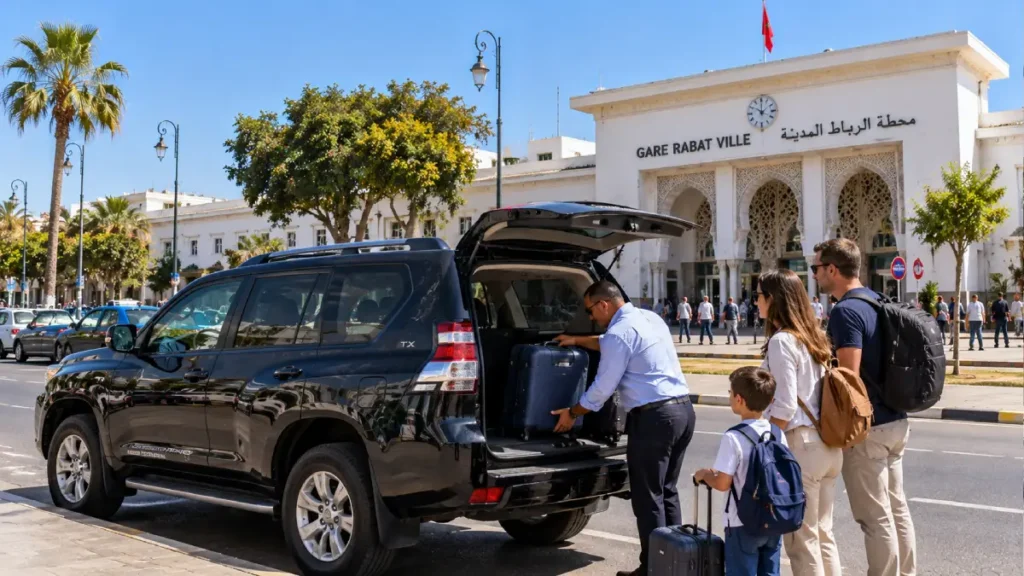
Do not assume all these services are automatically included. Private transportation, museum tickets, meals and boat excursions may be charged separately unless they are specifically listed in your quotation. A professional driver handles transportation; licensed local guides provide guided sightseeing and monument interpretation where required.
Visitors renting a car should use designated parking near the Kasbah, Hassan Tower or central Rabat. Avoid trying to drive into narrow or pedestrian-only Medina streets.
How much does a private Rabat tour cost?
A guide-only private Rabat city tour may be quoted around 600–800 MAD or more, depending on the length of the visit, group size and guide arrangements. Treat this as an indicative planning range, not a confirmed Morkosh Tours price; request a written quotation, especially if you need a vehicle or extras.
The final cost can change based on whether you need:
- Compare guided Rabat tours.
- Check whether the rate includes a licensed guide, a vehicle and monument entry tickets.
- A guide only or a guide plus private driver
- Hotel pickup from Rabat or Casablanca
- A half-day or full-day itinerary
- Museum and Chellah entry tickets
- Lunch, tea stops or a boat excursion
- A tailored route for children, seniors or mobility needs
Many of Rabat’s outdoor landmarks are normally free to explore, including Hassan Tower, the Mausoleum of Mohammed V, the Kasbah exterior areas, Andalusian Gardens and Medina. Chellah and museums usually require paid admission.
Rabat tours from Casablanca and cruise-friendly day trips
Rabat is one of the best day trips from Casablanca. It is a practical choice for travelers who want to experience Morocco’s capital, see major historic monuments and avoid spending an entire day inside Casablanca.
Travelers can use regular ONCF train connections to Rabat Ville or Al Boraq services to Rabat Agdal, depending on their Casablanca departure station and preferred itinerary. Rabat Ville is more convenient for the historic centre, while Rabat Agdal serves the modern Agdal district and high-speed railway connections.
Check current train schedules and fares directly with ONCF. If you are traveling independently, my Casablanca to Rabat transport guide compares rail stations, journey times and road options in detail.
For families, small groups or visitors with a fixed cruise or flight schedule, a private day excursion from Casablanca offers more flexibility. Hotel pickup and direct transfers between monuments can make a day much smoother, particularly when you want to include Chellah as well as the central sights. You can also compare other options in this guide to Casablanca day tours.
When should you start a Rabat sightseeing tour?
I generally recommend starting in the morning. Historic attractions are usually quieter, temperatures are more comfortable and you have more flexibility if security arrangements or access conditions affect part of the route.
Spring and autumn usually bring pleasant weather for walking, although Rabat’s Atlantic climate makes the city appealing for much of the year. The ocean influence can make it cooler than inland cities, particularly in the evening, so carrying a light layer is sensible.
For the best light and atmosphere:
- Morning: Hassan Tower, the Mausoleum and Chellah.
- Midday: Medina, lunch or a museum.
- Late afternoon: Kasbah viewpoints, Andalusian Gardens and Bouregreg waterfront.
Fridays and public holidays may affect opening arrangements, museum access and the pace of the city. Check current conditions before confirming a fixed itinerary.
Add Salé, Agdal or local food if you have more time
Visitors with extra time can extend their Rabat guided tour beyond the main monuments.
Cross the river to Salé
Salé lies directly across the Bouregreg River and has its own traditional Medina, Merinid heritage, old medersa and coastal fortifications. It is a worthwhile addition for travelers who want a less polished, more local contrast to central Rabat.
You can cross by tramway, road connection or traditional riverboat when services are operating. The short rowboat crossing has historically cost only a few dirhams, but current operations and fares should be checked locally.
Explore modern Rabat in Agdal
The Agdal neighbourhood offers a more contemporary side of Rabat, with cafés, bakeries and restaurants. It is a good choice for travelers staying overnight or arriving through Rabat Agdal station.
Include a Moroccan meal or tea stop
Traditional dishes worth trying include chicken or pigeon pastilla, tagine, Friday couscous, harira, rfissa, Moroccan pastries and fresh seafood. Café Balima on Avenue Mohammed V is known for its historic atmosphere, while Dar Naji is an option for traditional Moroccan dining.
Visitors interested in seafood can look around the Bouregreg Marina, where waterfront venues may suit an evening meal. Restaurant operating status, menus and reservations can change, so confirm before planning your schedule around a particular venue.
Practical advice before booking a Rabat guided tour
A few simple decisions will make your visit easier.
- Choose the right meeting point. Tours can begin at Rabat Ville station, a hotel, riad or another agreed location. Confirm this in advance.
- Tell your guide about mobility needs. Hassan Tower’s esplanade and modern boulevards are relatively accessible, but Kasbah lanes and Chellah paths are less even.
- Carry identification. It may be needed near the Royal Palace or other security-controlled areas.
- Bring cash for small purchases. Moroccan dirhams are useful for taxis, tea, snacks and minor Medina purchases.
- Dress respectfully at the Mausoleum. Keep voices low while inside.
- Do not expect Mediterranean-style beach weather. Rabat faces the Atlantic, and its coastline is not primarily a warm-water swimming destination.
- Agree on guiding services in advance. If someone offers an unsolicited tour in the Medina, clarify payment before accepting.
- Confirm what your private tour includes. Guide, driver, tickets, meals and boat trips may all be separate unless stated otherwise.
Non-Muslim visitors are generally not permitted inside active Moroccan mosques. The Mausoleum of Mohammed V normally welcomes visitors regardless of religion, subject to security and access arrangements.
Arrange a private Rabat tour around your interests
Rabat is not a city that needs to be rushed. Its strongest sightseeing route combines major monuments with time to understand the history behind them, pause for tea and enjoy the views where the Bouregreg meets the Atlantic.
Through Morkosh Tours, I can help arrange customized private Rabat sightseeing experiences with a professional driver and licensed local guide. A route can be designed around history, architecture, museums, Medina crafts, food, family travel or a day trip from Casablanca. The itinerary and quotation should always be agreed in advance so that transport, tickets, lunch and optional activities are clear.
If you are staying longer, Rabat also makes a good base for day trips from Rabat.
Affiliate disclosure: If you book through one of these links, I may earn a small commission at no extra cost to you.
FAQ
How long do I need for a Rabat city tour?
Three hours can cover the principal sights with a short vehicle transfer and a brisk pace. If you want a leisurely walking-only tour, focus on two areas. Allow four to five hours for Chellah and a broader visit, or a full day for museums and lunch.
Is Rabat easy to explore without a guide?
Yes. Rabat is generally calmer and easier to navigate than Marrakech or Fes, particularly around the Medina and Kasbah. A licensed guide is most valuable if you want historical context, a smooth route between spread-out sights or help understanding local crafts and royal history.
What are the most important places to see in Rabat?
For first-time visitors, I recommend Hassan Tower, the Mausoleum of Mohammed V, the Kasbah of the Udayas, Andalusian Gardens, Rabat Medina, Rue des Consuls and Chellah. The Bouregreg waterfront is a good addition later in the day.
Can I visit Rabat as a day trip from Casablanca?
Yes. Rabat is one of the most practical day trips from Casablanca, with train connections to Rabat Ville or Rabat Agdal. A private excursion is useful if you want hotel pickup, direct transfers between monuments and a flexible schedule.
Is Rabat suitable for older travelers and families?
Yes, provided the route is adjusted to suit the group. The Hassan Tower area and modern boulevards are relatively accessible, while the Kasbah has slopes and uneven surfaces, and Chellah involves archaeological paths. A vehicle between major stops can reduce the overall walking distance.