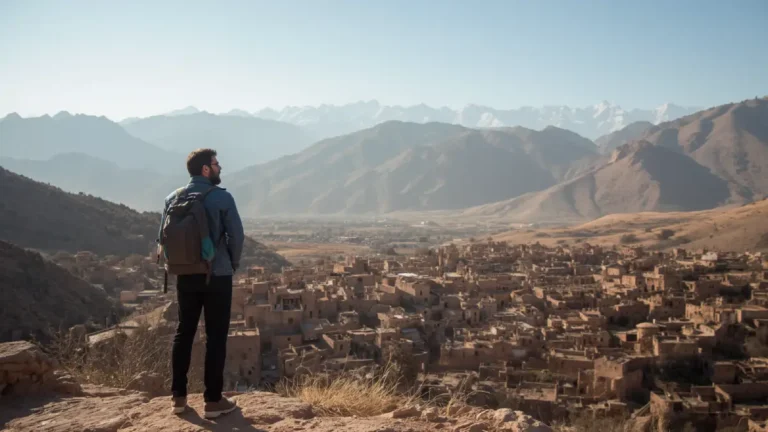

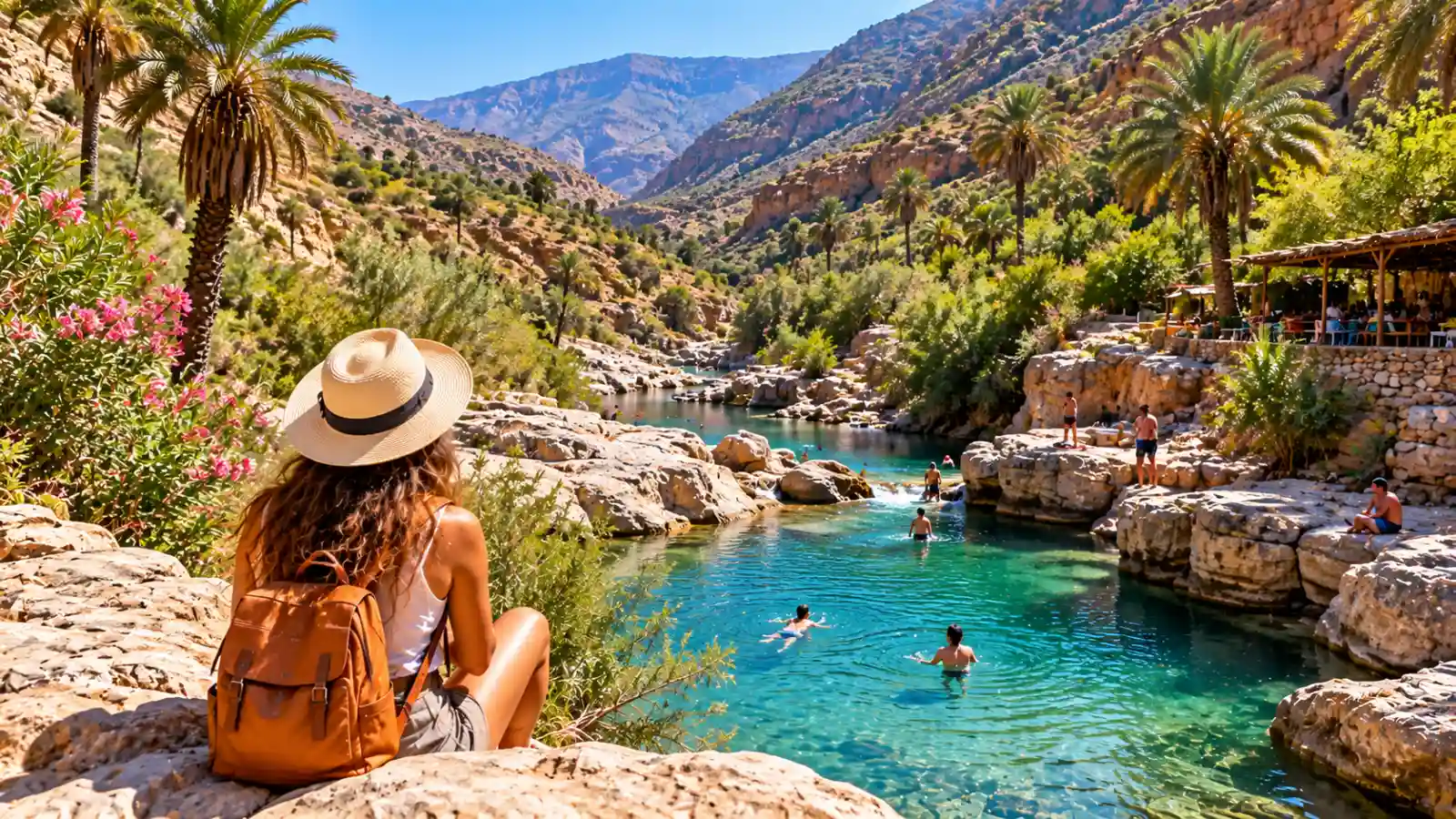
Paradise Valley Agadir is a worthwhile half-day escape for travelers who want mountain scenery, a rocky walk and the possibility of swimming outside the city. The important word is possibility: the pools and water levels change with rainfall, so it is not a guaranteed turquoise-swimming stop at every time of year.
This guide explains how to get from Agadir to Paradise Valley, what the walk is really like, when swimming is most likely to be enjoyable, and how to avoid the common disappointments.
Table of Contents
Table of Contents
Is Paradise Valley from Agadir worth visiting?
Yes, Paradise Valley is worth visiting from Agadir if you enjoy being active outdoors and can be flexible about the swimming conditions.
It is a good choice for:
- Active couples and nature lovers
- Families with school-age children who can manage uneven ground
- Photographers interested in gorge scenery, palms and mountain landscapes
- Travelers who want a break from Agadir’s beach and resort areas
- Visitors combining the valley with Aourir, Tamraght, Taghazout or Imouzzer Ida Ou Tanane
It is less suitable if you have serious knee, balance or mobility difficulties, are travelling with a stroller, or expect a simple roadside swimming pool with guaranteed deep water.
The main pools require a walk over uneven terrain, and the amount of water varies considerably. During dry periods, photos online can give the wrong impression: some images show full, deep turquoise pools after good rainfall, while conditions in late summer may be much lower.
For most visitors, Paradise Valley from Agadir works best as a relaxed half-day trip of around five to six hours door to door. That allows time for the drive, the walk to the pools, a swim if conditions are right, and a drink or meal in the lower valley.
How far is Paradise Valley from Agadir?
From Agadir, allow roughly 45 to 60 minutes each way in normal conditions. If you make scenic stops along the road, the journey can take around one hour and 15 minutes.
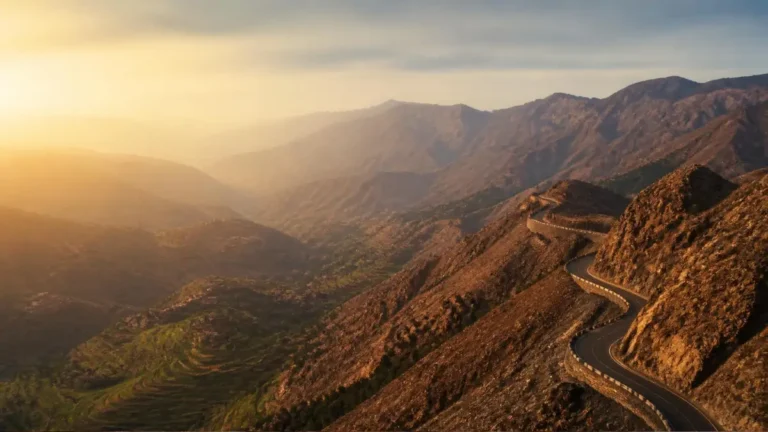
The usual route heads north from Agadir towards Aourir before turning inland on the mountain road towards Imouzzer Ida Ou Tanane. It is a scenic change from the coast: the road gradually moves from built-up areas into foothills, valleys and rocky mountain landscapes.
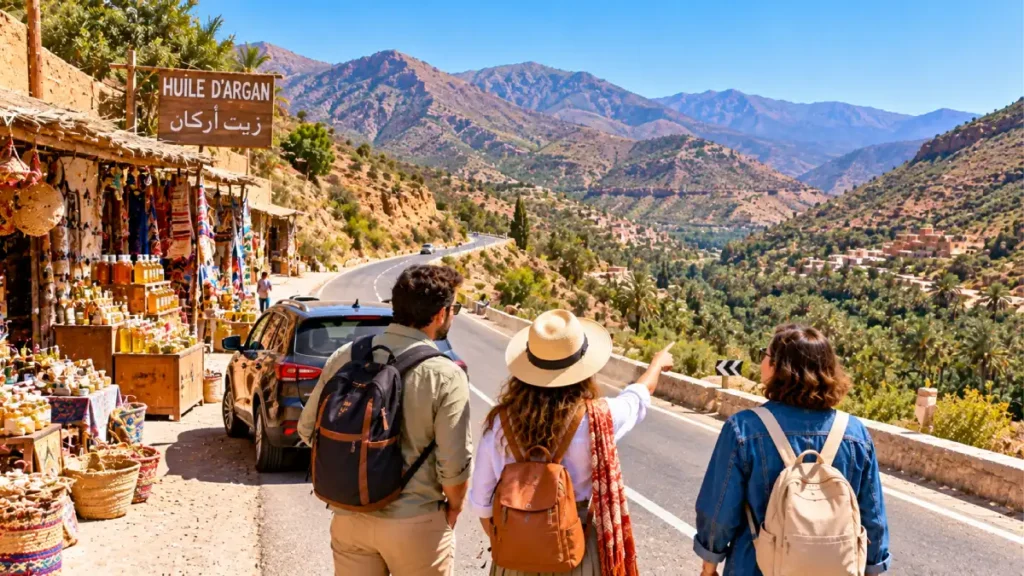
The journey is not only about reaching the pools. Depending on your pace, useful stops can include:
- Aourir, widely known as Banana Village
- Roadside argan cooperatives
- Honey stalls selling local products
- Panoramic viewpoints over the gorge and surrounding hills
These stops can be enjoyable, but they also affect timing. If your priority is swimming and hiking, avoid spending too much of the morning at shopping stops.
Can you drive yourself to Paradise Valley?
Driving gives you the most flexibility. You can leave Agadir early, stop only where you want, and decide whether to return directly or continue inland towards Imouzzer.
However, the key practical point is that the experience does not end at the parking area. You still need to walk down towards the pools on a rocky trail, so a car does not remove the physical part of the visit.
In my experience, parking normally costs around 10–20 MAD, although this can change. Paradise Valley itself normally has no formal entrance ticket.
Private transport or a customized day trip
Private transport is useful for travelers who do not want to drive mountain roads or negotiate a return journey. It also makes sense for families, small groups, or visitors who want to combine Paradise Valley with Aourir, Tamraght, Taghazout or a longer inland route.
Morkosh Tours can be an option for arranging private transport and customized Agadir-area day trips. A private arrangement is especially helpful if you want to control the pace and reduce time spent at commercial stops.
Are organized Paradise Valley tours a good idea?
A group tour can be an easy option if you want transport included and do not mind sharing the day with other visitors. The trade-off is that schedules are fixed, group pace can be slow, and some tours spend more time than expected at argan shops or other commercial stops.
Before booking, ask clearly:
- How much walking is involved
- How long you will have at the pools
- Whether there are planned shopping stops
- Whether lunch is included or optional
- Whether the guide fee and parking are included
- What happens if water levels are low
Do not assume a tour guarantees good swimming conditions. No operator can control rainfall or seasonal water levels.
What is the walk to the Paradise Valley pools like?
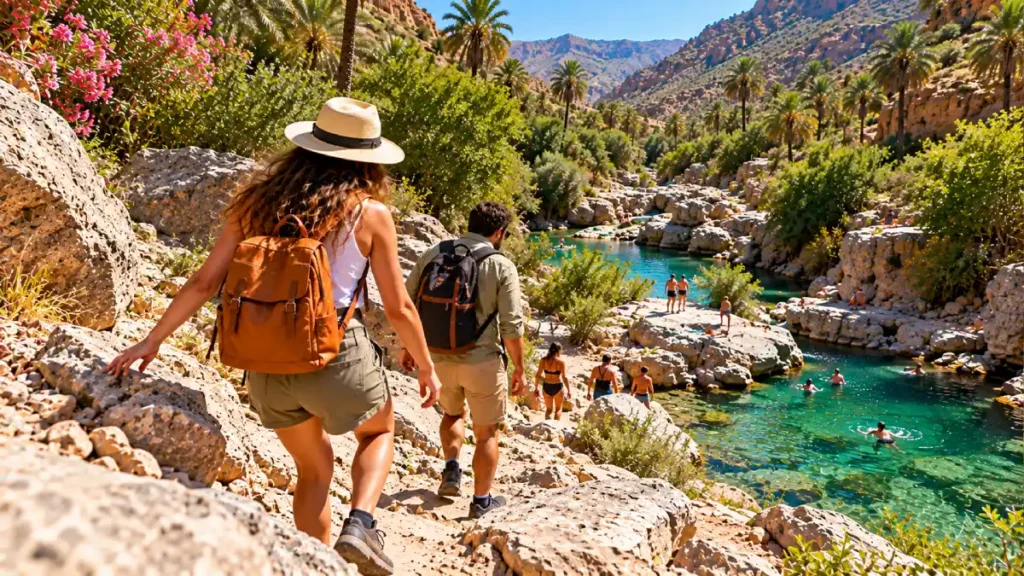
From the parking area, reaching the first main pools normally takes around 20 to 30 minutes on foot. The route is not a paved promenade. Expect uneven rocks, steps, loose gravel and sections along the riverbed.
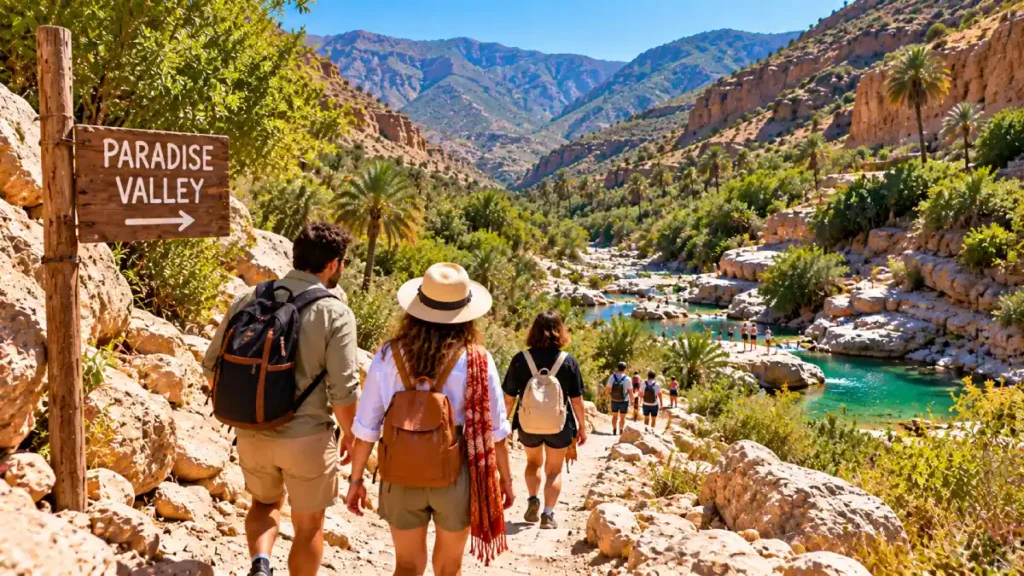
If you continue farther upstream, add roughly 15 to 30 minutes, depending on where you stop and how carefully you walk.
This is manageable for many reasonably active travelers, but it is important to plan honestly rather than treating Paradise Valley as an effortless sightseeing stop.
Who can manage the trail?
The walk can work well for active school-age children, especially when adults allow enough time and keep an eye on slippery sections.
It is not a good fit for:
- Strollers or prams
- Very young children who need to be carried much of the way
- Travelers with serious knee problems
- Anyone with poor balance or limited mobility
- Visitors wearing flip-flops on loose rock
Closed walking shoes are the sensible choice. Trainers or lightweight hiking shoes are generally more practical than sandals for the approach. If you plan to enter the water, bring separate water shoes if possible, as submerged rocks can be uncomfortable and slippery.
Do you need a guide?
A local guide is generally optional rather than compulsory. Some visitors may appreciate a guide for confidence on the route or for a more flexible local explanation, but you should not feel pressured into hiring one.
If you decide to hire a guide, agree on the total price for the whole group before starting the walk. Be cautious of anyone insisting that a guide is mandatory or quoting an inflated price without clearly explaining what is included.
Can you swim in Paradise Valley?
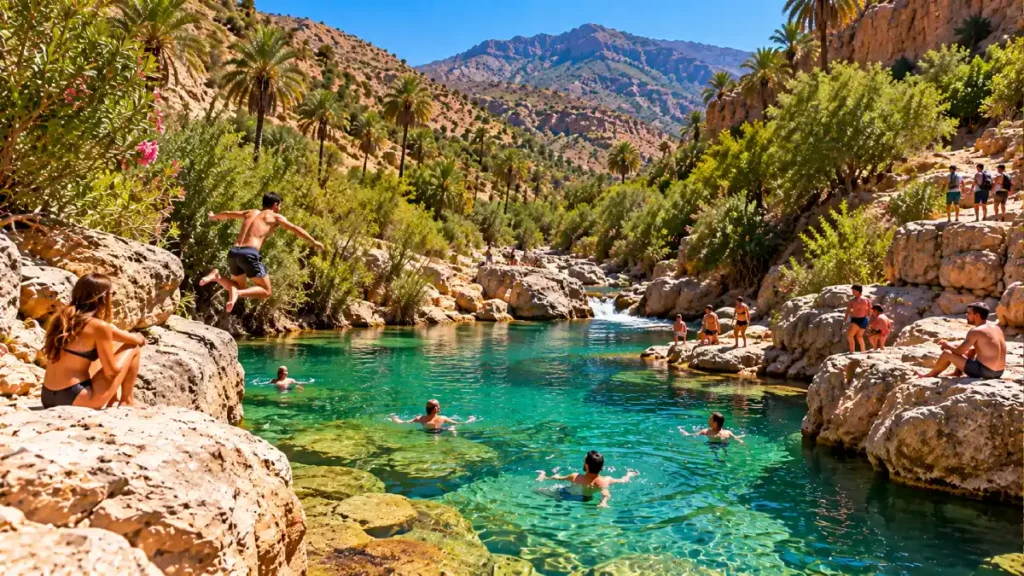
You may be able to swim in Paradise Valley, but swimming conditions are never guaranteed year-round.
Water levels depend heavily on recent rainfall. In a good season, pools can be deep enough for a refreshing swim. In dry periods, the water may be shallow, limited or less inviting than visitors expect.
When are the pools at their best?
In my experience, spring, particularly from around March to June, generally offers the best balance of water, greenery and comfortable daytime weather. This is often the most appealing period for travelers who want to walk, relax and potentially swim without the strongest summer heat.
Autumn can also be a good time if recent rain has replenished the pools. Conditions vary from year to year, so recent weather matters more than the calendar alone.
What is Paradise Valley like in summer?
Late summer can be extremely hot, particularly on the exposed walking sections. Water levels may also be low after a long dry period.
The valley can still be pleasant for scenery and a short escape from Agadir, but visitors should bring plenty of water, use sun protection and keep expectations realistic about pool depth.
If swimming is the main goal, ask about current conditions shortly before you go rather than relying on older photos.
Is it too cold to swim in winter?
Winter can bring greener surroundings after rain, but the water may be too cold for many travelers. It can still be a good time for walking, photography, tea and a mountain lunch, especially on a sunny day, but do not assume you will want to spend much time in the water.
Avoid swimming after heavy rain
Immediately after heavy rain, use extra caution. Wadis can rise quickly, trails can become slippery, and swimming conditions may be unsafe.
Do not enter fast-moving water or attempt to cross a swollen stream. If local conditions look unsafe, change the plan rather than trying to reach a particular pool.
Do not assume cliff jumping is safe
Cliff jumping should never be encouraged without checking water depth first. Pool depth can change significantly according to the season, rainfall and water level. A spot that looked safe in an old video or photograph may not be safe on the day you visit.
What should you bring to Paradise Valley?
Paradise Valley is more comfortable when you pack for a rocky outdoor walk rather than a resort excursion.
Bring:
- Closed walking shoes with decent grip
- Water shoes if you plan to swim
- Swimwear and a towel
- Sunscreen and a hat
- Drinking water
- Small Moroccan dirham notes for parking, cafés and small purchases
- A light layer outside the hottest months
- A waterproof pouch or bag for your phone and valuables if swimming
Many of the small cafés and stalls in the valley operate mainly in cash, so it is better not to rely on card payment.
Avoid bringing unnecessary valuables. You will be walking over rocks and may want to leave your hands free for balance.
Where can you eat near Paradise Valley?
Simple local cafés along the lower valley and riverbed commonly serve tagines, salads, Moroccan tea and fresh juices. It is a pleasant way to slow down after the walk, particularly if you have chosen a half-day trip rather than rushing back to Agadir.
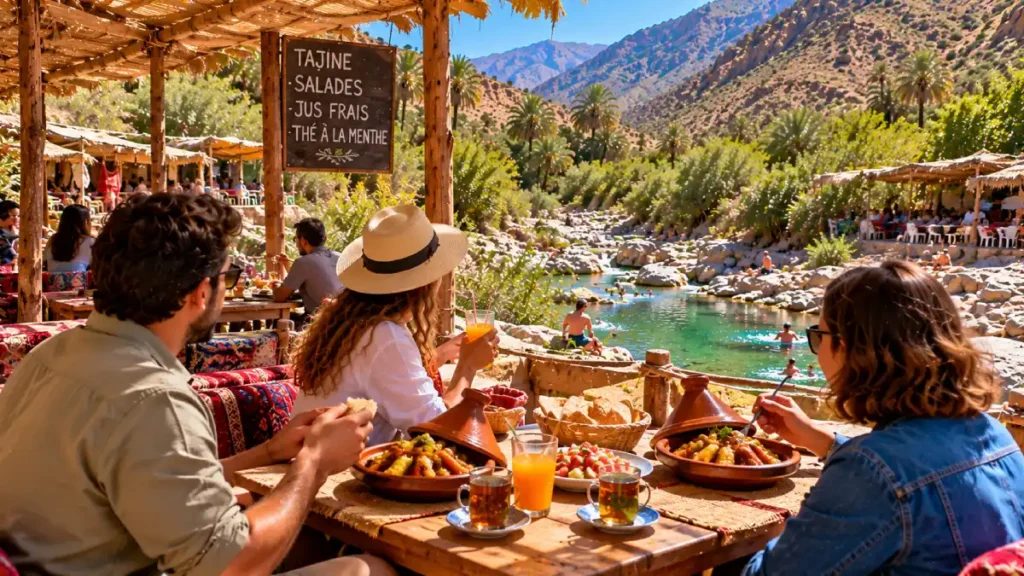
As a practical local guideline, expect around 60–100 MAD for a tagine and roughly 10–20 MAD for tea or juice. Confirm prices before ordering, as menus and portions can vary.
A practical tip is to order your tagine before you set off to explore. It may take around 30 to 45 minutes to cook, so ordering early can mean your meal is ready when you return.
Do not expect a polished restaurant experience in the valley. These are simple local places, best approached as part of the outing rather than the main reason to visit.
How much time do you need for a Paradise Valley day trip from Agadir?
For most travelers, allow five to six hours door to door.
A typical half-day rhythm might be:
- Drive from Agadir to the valley, allowing time for one or two brief scenic stops.
- Park and walk down to the first pools.
- Spend around two to three hours walking, relaxing, swimming if conditions allow and having a drink or meal.
- Return to Agadir, or continue along the coast for lunch or coffee.
A full day makes more sense if you want to:
- Walk farther upstream
- Spend a long time swimming and relaxing
- Have a slow lunch in the valley
- Continue inland towards Imouzzer Ida Ou Tanane
- Combine the outing with coastal stops around Aourir, Tamraght or Taghazout
For ideas on extending the coastal part of the day, see this guide to getting from Agadir to Taghazout and the wider selection of things to do in Taghazout.
Common Paradise Valley mistakes to avoid
The biggest disappointments usually come from unrealistic expectations rather than the journey itself.
Expecting full pools in every season
Paradise Valley is rain-dependent. Photos taken in a wet spring do not necessarily reflect late-summer conditions. Check recent rainfall and ask your accommodation, driver or tour provider about current water levels before setting out.
Wearing flip-flops for the walk
The trail includes loose gravel, uneven rock, steps and riverbed sections. Flip-flops make the approach harder and less safe. Wear closed shoes and carry water shoes for swimming.
Treating the trip as accessible sightseeing
The walk is part of the experience. Travelers with serious mobility limitations, balance concerns or knee problems may find it uncomfortable or unsuitable.
Paying for a guide under pressure
Guides are generally optional. If you want one, agree on the full group price before you begin. Do not accept claims that hiring a guide is compulsory without questioning them.
Letting shopping stops take over the day
Argan cooperatives, honey stalls and roadside shops can be interesting, but they should not consume most of a short half-day trip. If the pools and scenery matter most, set expectations with your driver or tour provider in advance.
Jumping without checking depth
Water depth changes. Never assume a jumping point is safe because someone else did it previously or because you saw it online.
Combine Paradise Valley with Aourir, Tamraght or Taghazout
Paradise Valley pairs naturally with Morocco’s Atlantic coast. On the return journey, you can stop in Aourir, Tamraght or Taghazout for coffee, lunch or time by the sea.
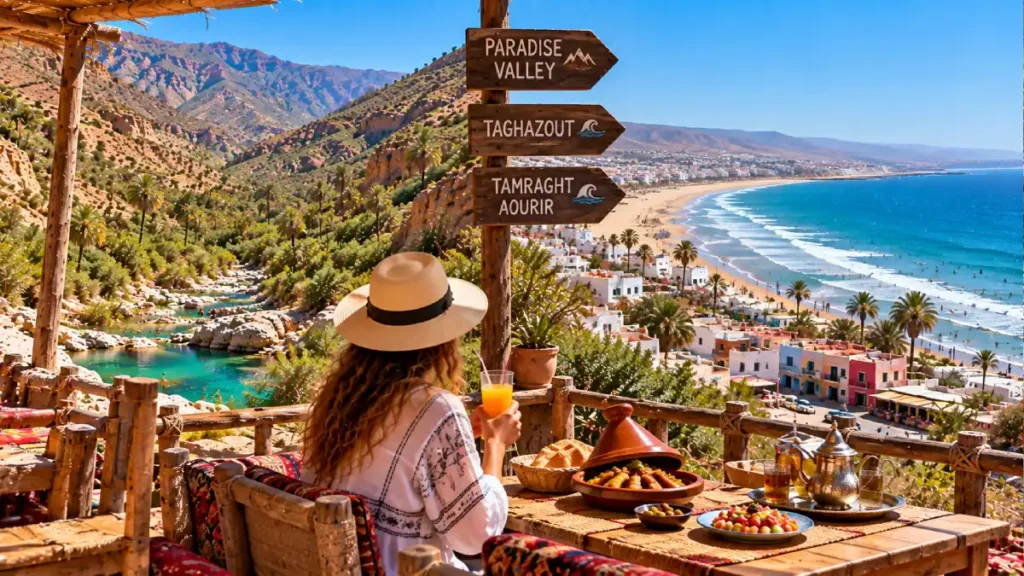
This combination works particularly well if you have hired private transport or are driving yourself. It turns a mountain outing into a fuller Agadir-area day without adding a long detour.
If you prefer to stay close to the city after the valley, my guide to things to do in Agadir can help you choose an easy evening plan. If you are comparing Paradise Valley with other excursions, see my guide to the best day trips from Agadir.
The practical verdict: plan for scenery first, swimming second
Paradise Valley Agadir is best approached as a scenic mountain walk with the chance to swim, not as a guaranteed swimming attraction. Go in spring or after beneficial rainfall if possible, wear proper shoes, carry cash and water, and leave enough time to enjoy the valley without rushing.
For travelers who are comfortable on uneven ground, it offers a welcome contrast to Agadir’s beachfront and can be one of the more rewarding short excursions in the area.
FAQ
How long does it take to get from Agadir to Paradise Valley?
Allow roughly 45–60 minutes each way in normal conditions. With scenic stops at places such as Aourir, argan cooperatives or gorge viewpoints, the journey can take around one hour and 15 minutes.
Is Paradise Valley free to enter?
Paradise Valley normally has no formal entrance ticket. Parking may cost around 10–20 MAD, though this can change.
Can you swim in Paradise Valley all year?
No. Swimming depends on rainfall and seasonal water levels. Spring, especially around March to June, generally offers the best combination of water, greenery and comfortable weather. Late summer may bring low water, while winter water can be too cold for many people.
Is Paradise Valley suitable for children?
It can suit active school-age children who are comfortable walking on uneven terrain. It is not recommended for strollers, very young children, or travelers with serious knee, balance or mobility difficulties.
Do I need a guide for Paradise Valley?
A guide is generally optional. If you choose to hire one, agree on the total price for your group before starting, and be cautious of anyone claiming that a guide is mandatory.