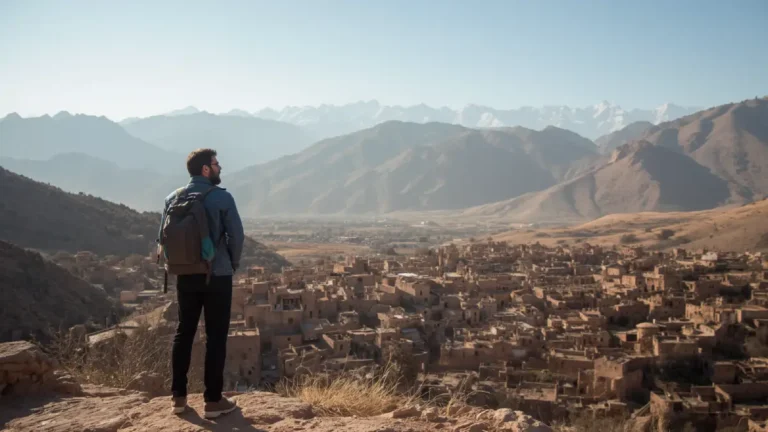

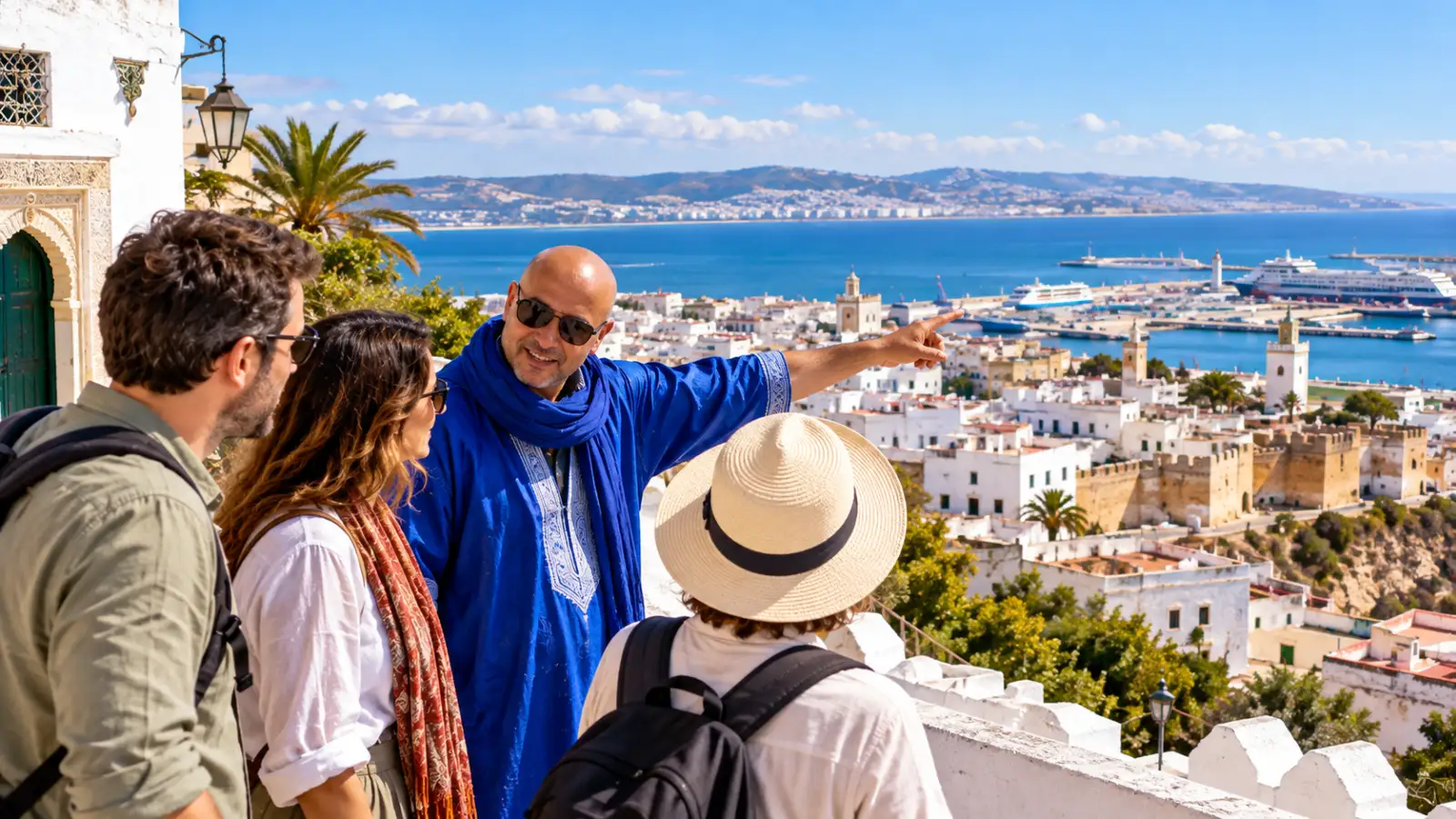
Tangier is best explored as two connected experiences: the historic city on foot, then the Atlantic and Strait coastline by vehicle. The most worthwhile tours in Tangier Morocco combine the Medina, Kasbah, Grand Socco and Petit Socco with a separate drive to Cape Spartel, Hercules Caves and the coast.
Trying to fit everything into a three-hour walk usually leads to a rushed visit. For most first-time visitors, a private full-day Tangier city tour of roughly 6–8 hours gives a far better introduction. If you have two days, use one for the old city and one for the coast and modern waterfront. Three days gives you time to add an excursion to Asilah, Tetouan or Chefchaouen.
Table of Contents
Table of Contents
Which Tangier tour is best for your trip?
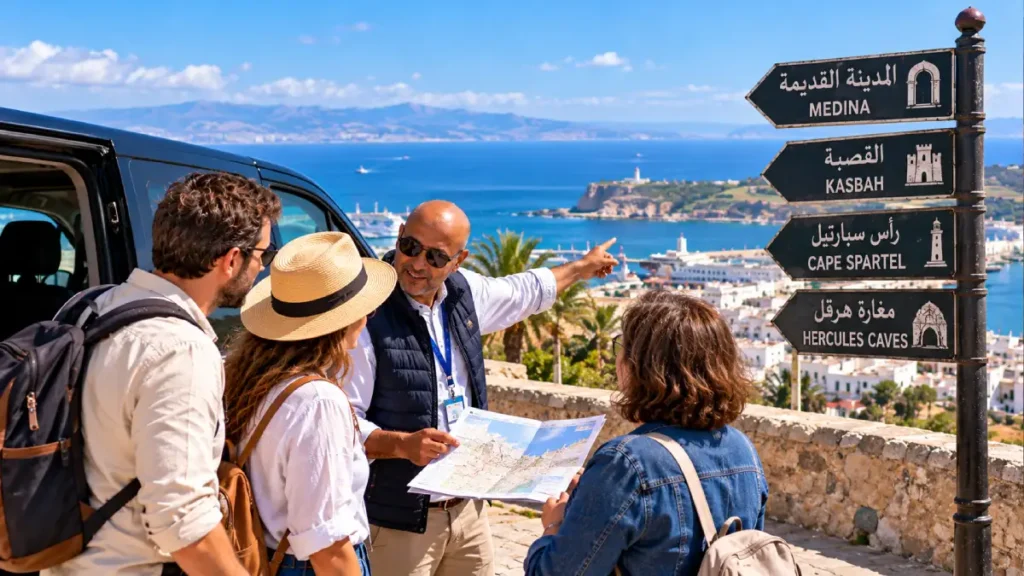
The right Tangier tour depends mainly on your available time, arrival point and interest in history versus scenery.
- First visit with one full day: Choose a private city and coastal tour combining the Medina, Kasbah, Cape Spartel and Hercules Caves.
- Only a few hours in Tangier: Focus on Grand Socco, the Medina, Petit Socco and Kasbah rather than attempting the coast as well.
- Cruise or ferry stop: Book a flexible private itinerary, but keep a generous buffer for passport control, boarding and possible ferry delays.
- History and local atmosphere: Prioritize a guided walking tour of the Medina and Kasbah, with the American Legation and Kasbah Museum if they interest you.
- Scenery, families or limited mobility: A vehicle-based tour is more comfortable, with short walking sections in the old city and at coastal viewpoints.
- Two or more days in northern Morocco: Add a full-day Chefchaouen trip or keep Asilah as a separate excursion.
Tangier works particularly well for first-time Morocco visitors, travelers arriving from Spain or Portugal, ferry and cruise passengers, families, and older travelers who appreciate a flexible pace and private vehicle.
Tangier city tour: explore the Medina and Kasbah on foot
Tangier’s historic center is not suited to being understood from a vehicle. The Medina, Kasbah, Grand Socco and Petit Socco are best explored on foot, where the narrow lanes, slopes, stairs and changing atmosphere are part of the experience.
A licensed local guide is particularly useful here. Beyond helping with orientation, a guide can adapt the route to your walking pace and interests rather than leading you through the old town as a quick checklist of stops.
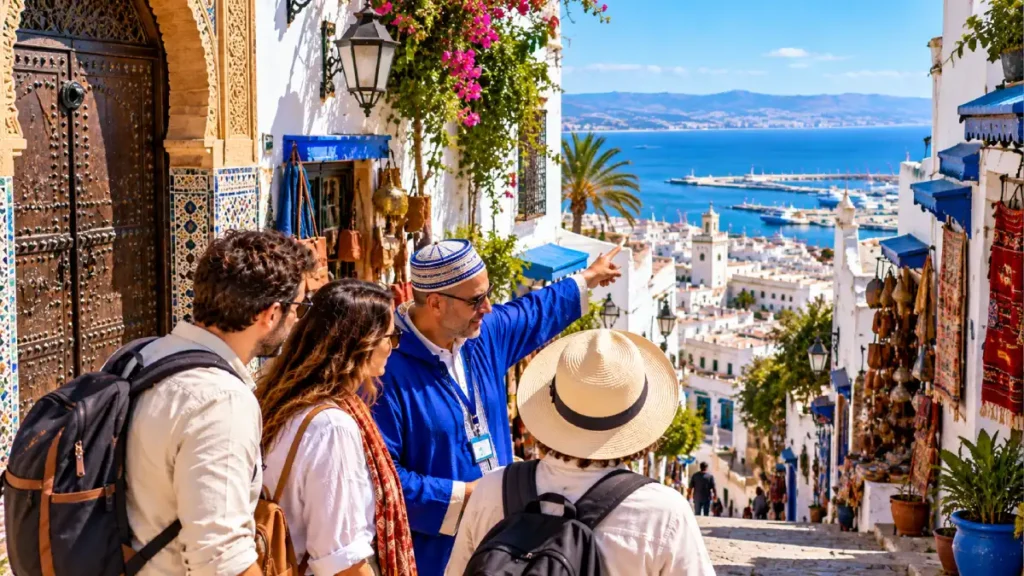
Start at Grand Socco and Bab Fahs
A practical walking route begins around Grand Socco and Bab Fahs, one of the gateways into the Medina. This is a useful meeting area for a city tour and a natural transition between the newer parts of Tangier and the historic lanes inside the walls.
From here, a guide can lead you into the Medina without wasting time trying to navigate every turn independently.
Walk through the Medina and Petit Socco
The Medina is where a Tangier sightseeing tour becomes most rewarding for travelers who enjoy local urban life, traditional shops and the character of an old port city. The lanes can be confusing, especially on a first visit, and some sections involve uneven ground or stairs.
Petit Socco is one of the most recognizable stops within the old town. It works well as part of a gradual route through the Medina rather than as a standalone attraction. Allow time to pause rather than treating it as a photo stop before moving immediately on.
For independent visitors, it is sensible to decide in advance whether you want a guide. Unsolicited unofficial guides can approach travelers near Medina entrances. If you want guiding, arrange a licensed local guide through a reputable operator rather than making a rushed decision on the street.
Climb to the Kasbah
The route from the Medina toward the Kasbah involves an uphill walk, and this is one reason a city tour should not be planned too tightly. The Kasbah area is a key part of understanding old Tangier, but travelers with mobility concerns should let their guide or driver know in advance so the day can be paced accordingly.
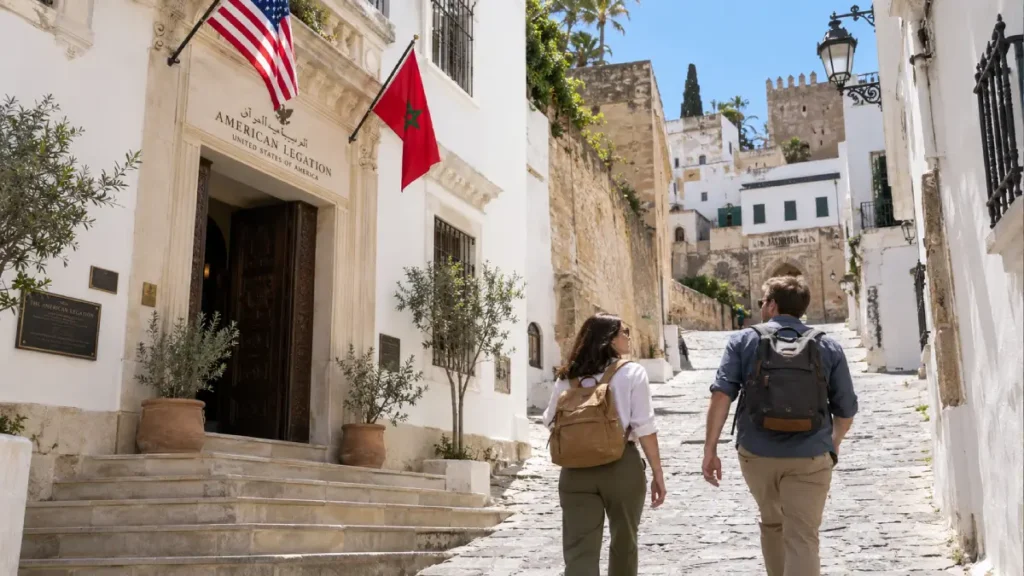
Two worthwhile cultural stops for visitors interested in Tangier’s history are:
- Tangier American Legation
- Kasbah Museum
Not every traveler needs to visit both, particularly on a limited itinerary. They make most sense for those who want more historical context than a simple walk through the old town provides.
Add Café Hafa and the Phoenician Tombs area for Strait views
For views over the Strait of Gibraltar, a Tangier city tour can include the area around Café Hafa and the Phoenician Tombs. These stops are especially worthwhile when you want a break from the close lanes of the Medina and Kasbah.
They fit naturally into a longer historic-city route, though they should not be rushed into a short walking tour that already has too much planned.
Why the Cape Spartel and Hercules Caves tour needs a vehicle
The coastal side of Tangier is very different from the old city. A vehicle is much more useful for reaching Cape Spartel, Hercules Caves, Achakar Beach, Perdicaris Park and the modern waterfront.
This is why it is better to think of Tangier as a walking tour plus a scenic drive, not one short activity.
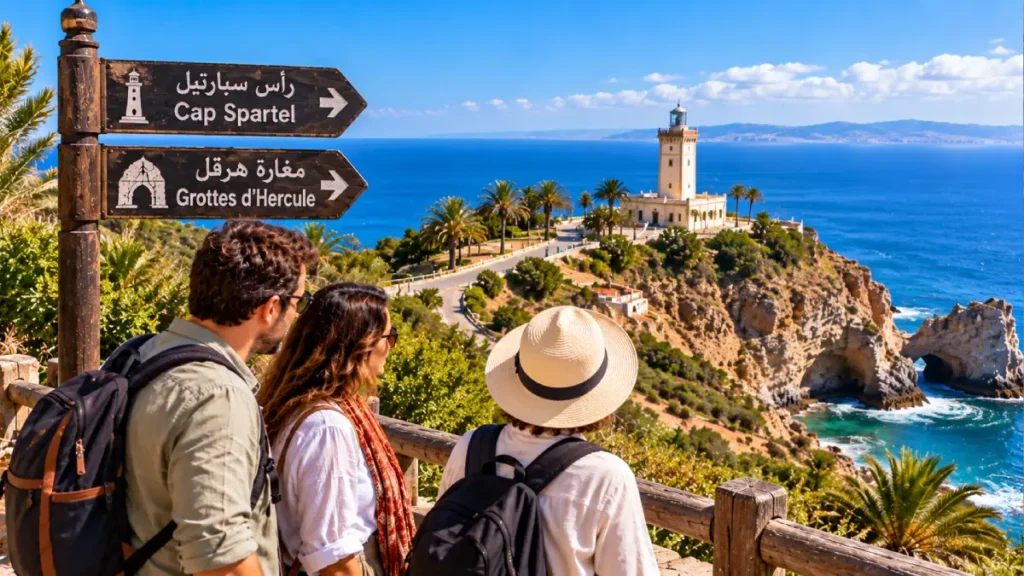
Cape Spartel
Cape Spartel is one of the main coastal stops from Tangier and is worth including when time allows. It is a good fit for travelers who want open views and a change of pace after the compact streets of the Medina.
Hercules Caves
Hercules Caves are commonly paired with Cape Spartel on a Tangier excursion. Together with the coastal drive and stops along the way, allow roughly half a day rather than trying to compress them into a brief add-on after a full Medina walk.
The practical point is simple: if Cape Spartel and the caves matter to you, build the day around them. Do not leave them for the final hour of an already crowded itinerary.
Achakar Beach, Perdicaris Park and the waterfront
Depending on your interests and pace, a private coastal tour can also include Achakar Beach, Perdicaris Park and Tangier’s modern waterfront. These stops are best treated as flexible additions. A family with children, for example, may prefer more time by the coast, while a history-focused visitor may prefer to return to the Medina or include a museum.
Private tours in Tangier: when they make the most sense
A private Tangier tour is often the most practical option because the city’s main sights are spread between walkable historic districts and coastal areas that are easier by vehicle.
Private sightseeing tours normally use comfortable air-conditioned minivans such as a Mercedes Vito. For travelers continuing on a longer Morocco itinerary toward mountain or desert regions, operators may use 4×4 vehicles instead.
A private tour is especially useful for:
- Families who need a flexible pace
- Older travelers who want to reduce unnecessary walking
- Ferry and cruise passengers working around arrival and departure times
- Travelers who want Medina guiding and coastal sightseeing in one day
- Small groups who prefer a tailored route over a fixed group itinerary
Organized private city tours can include a licensed local guide. If you arrange only independent transport, however, expect guiding to be booked separately. This distinction matters: a driver can make the logistics easier, but a licensed guide is the person who can lead and explain the historic center.
Morkosh Tours can arrange private Tangier sightseeing, licensed local guides, Chefchaouen excursions and longer northern Morocco itineraries built around your arrival city, dates and pace.
Tangier excursions worth adding to a longer stay
Tangier is a strong base for northern Morocco, but not every destination should be squeezed into the same day as city sightseeing.
Asilah: better as a separate day trip
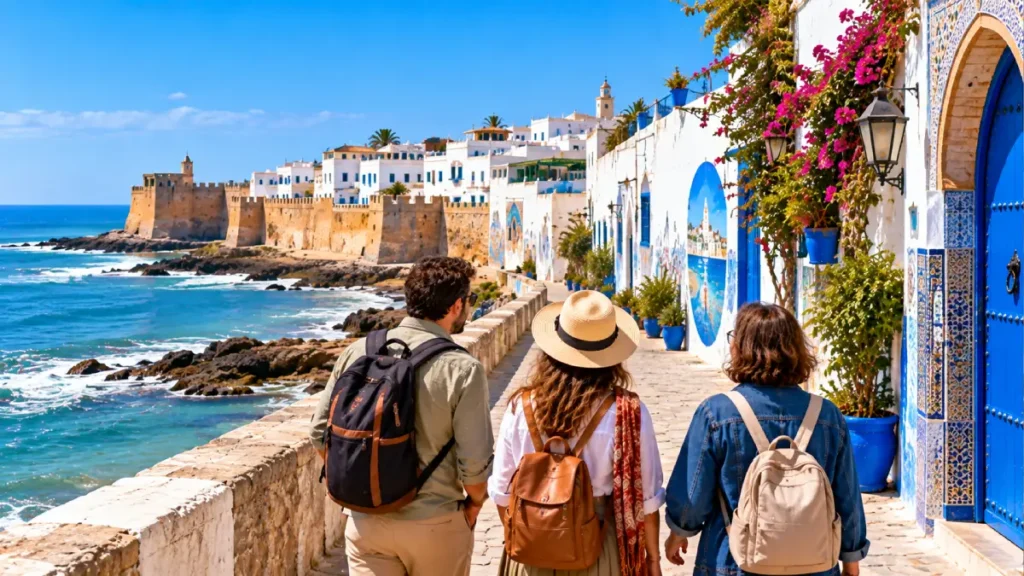
Asilah is best treated as a separate day trip from Tangier or as an onward stop, rather than being added to an already full Tangier city tour.
This is the better choice for travelers who have at least two or three days in the region and want a slower itinerary. Combining Asilah with the Medina, Kasbah, Cape Spartel and Hercules Caves would mean spending more time moving between places and less time enjoying any of them properly.
Chefchaouen: a realistic but long day trip
Chefchaouen is realistic as a full-day trip from Tangier, with roughly 2–2.5 hours of driving each way. It can work well for travelers with limited time who are determined to see the blue medina during a northern Morocco stay. My Tangier to Chefchaouen guide compares the practical transport options and travel time.

However, an overnight stay is preferable when your schedule allows. Staying in Chefchaouen means you can experience the town outside the busiest day-trip hours rather than arriving and leaving within the same rushed window.
Tetouan and longer northern Morocco routes
With three days or more, Tetouan can also fit into a northern Morocco itinerary. It works best when you treat the region as a short journey rather than using Tangier only as a quick port stop.
If Tangier is the beginning of a longer trip, it is worth planning onward transport carefully. Travelers continuing south may find this guide to [getting from Tangier to Marrakech](/tangier-to-marrakech/) useful.
Tangier Ville or Tangier Med: confirm your arrival port first
One of the most important practical details for ferry and cruise passengers is confirming whether they arrive at Tangier Ville or Tangier Med.
- Tangier Ville is beside the city center and much more convenient for a Tangier city tour.
- Tangier Med is well outside central Tangier, so transport time needs to be built into the day.
Do not assume every ferry arrives at the same place. This can completely change what is realistic during a short port call or same-day crossing.
Passengers on a tight ferry schedule should keep their itinerary focused and leave a generous buffer for passport control, boarding and possible delays. A plan that looks manageable on paper can become stressful if border formalities take longer than expected.
Travelers arriving from elsewhere in Morocco can also compare options in my guide to traveling from Casablanca to Tangier.
Common mistakes to avoid on Tangier tours
A little planning avoids several common problems.
Trying to see all of Tangier in three hours
Three hours may be enough for a brief introduction to the Medina and Kasbah, but it is not enough to see Tangier properly. The historic center and coast deserve separate time.
For a first visit, allow roughly 6–8 hours for a full-day city and coastal itinerary. Two days is more comfortable.
Confusing a driver with a licensed guide
Private transport is useful, particularly for Cape Spartel and Hercules Caves, but it is not automatically the same as a guided tour. Confirm whether a licensed local guide is included if you want explanation and navigation through the Medina and Kasbah.
Accepting a taxi fare without clarifying it
Before getting into a taxi, clarify whether the meter will be used or agree on the total fare beforehand. Avoid assumptions, especially for trips that extend beyond the central area.
Ordering seafood without confirming the final price
Some seafood is priced by weight. Before ordering, confirm how the final cost will be calculated rather than relying on a general indication of price.
Overloading a ferry or cruise-day itinerary
A short shore visit is not the time to add Tangier’s old city, coast, Asilah and Chefchaouen into one plan. Prioritize one area well, keep transport flexible and protect your return-to-port time.
A sensible one-day Tangier tour itinerary
For travelers with one full day, this is the most balanced approach:
- Start around Grand Socco and Bab Fahs.
- Walk through the Medina and Petit Socco.
- Continue uphill toward the Kasbah.
- Add the American Legation or Kasbah Museum if history is a priority.
- Stop around Café Hafa and the Phoenician Tombs area for views.
- Use a vehicle for Cape Spartel, Hercules Caves and the coastal road.
- Add Achakar Beach, Perdicaris Park or the modern waterfront only if time and energy allow.
This route balances the parts of Tangier that are best on foot with those that are genuinely easier and more enjoyable by vehicle.
Choose depth over a rushed checklist
Tangier rewards travelers who give it enough time. The Medina and Kasbah provide the historic core, while Cape Spartel and Hercules Caves show the city’s coastal setting. For a first visit, a full-day private tour is usually the best balance; with two days, Tangier becomes much easier to explore at a comfortable pace.
If Chefchaouen or Asilah is also on your list, add another day rather than reducing Tangier to a rushed stop between ferry connections.
FAQ
Is one day enough for a Tangier city tour?
Yes, one full day of roughly 6–8 hours is enough for a strong introduction to Tangier. It allows time for the Medina and Kasbah on foot, followed by a vehicle-based visit to Cape Spartel and Hercules Caves. Two days is better if you prefer a slower pace.
Can I visit Cape Spartel and Hercules Caves from Tangier?
Yes. They are commonly combined with a coastal drive, and a vehicle is the most practical way to reach them. Allow roughly half a day for Cape Spartel, Hercules Caves and the associated coastal stops.
Is Chefchaouen worth doing as a day trip from Tangier?
It is realistic as a full-day trip, with roughly 2–2.5 hours of driving each way. However, an overnight stay is preferable if you have enough time, as it gives you a less rushed experience of Chefchaouen’s blue medina.
Should I book a private guide in Tangier?
A licensed local guide is particularly helpful in the Medina and Kasbah because of the narrow lanes, slopes and stairs. For a full city-and-coast day, a private driver and guide can be the most convenient combination, especially for families, older travelers and ferry or cruise passengers.
Do ferries arrive in central Tangier?
It depends on the port. Tangier Ville is beside the city center, while Tangier Med is well outside central Tangier. Confirm your arrival port before booking a tour, particularly if you have a same-day ferry schedule.