
Taghazout is one of Morocco’s best coastal bases for travelers who want Atlantic beaches, surf culture and a slower rhythm than Agadir. The main things to do in Taghazout include surfing or taking a lesson, spending time on the beach, walking through the old village, eating at casual cafés and seafood restaurants, and taking day trips into the surrounding countryside.
It is not only for experienced surfers. Couples, solo travelers, families and digital nomads often choose Taghazout for its relaxed setting and easy access to the coast. The important decision is where to stay: the original village feels more local and walkable, while Taghazout Bay offers newer resorts and more space.
Table of Contents
Table of Contents
Is Taghazout worth visiting?
Yes, Taghazout is worth visiting if you want a low-key beach stay with surf at its centre, rather than a large-city holiday. It suits travelers who are happy with simple pleasures: sea views, beach walks, long café breakfasts, relaxed meals and days structured around the waves.
It may be less suitable if you want extensive nightlife, major museums, a traditional medina to explore for days, or a wide choice of urban restaurants and shopping. In that case, Agadir is more practical. Essaouira is usually a better choice for travelers who want a historic walled town, more galleries and a more visibly established cultural scene alongside the beach.
Taghazout’s appeal is its atmosphere. It is a small coastal place that has changed quickly as tourism has grown, but the Atlantic-facing setting and surf-town character remain the main reasons to come.
Choose between old Taghazout village and Taghazout Bay before booking
One of the most important parts of a Taghazout travel guide is understanding that “Taghazout” can mean two quite different areas.
| Area | Best for | Main advantage | Main drawback |
|---|---|---|---|
| Old Taghazout village | Surfers, solo travelers, couples, short stays | Walkable cafés, surf schools and village atmosphere | Tighter streets, parking and construction can be issues |
| Taghazout Bay | Families, couples, resort stays | Newer hotels, pools, more space and easier vehicle access | Less of the original village atmosphere |
Old Taghazout village: central, sociable and close to the beach
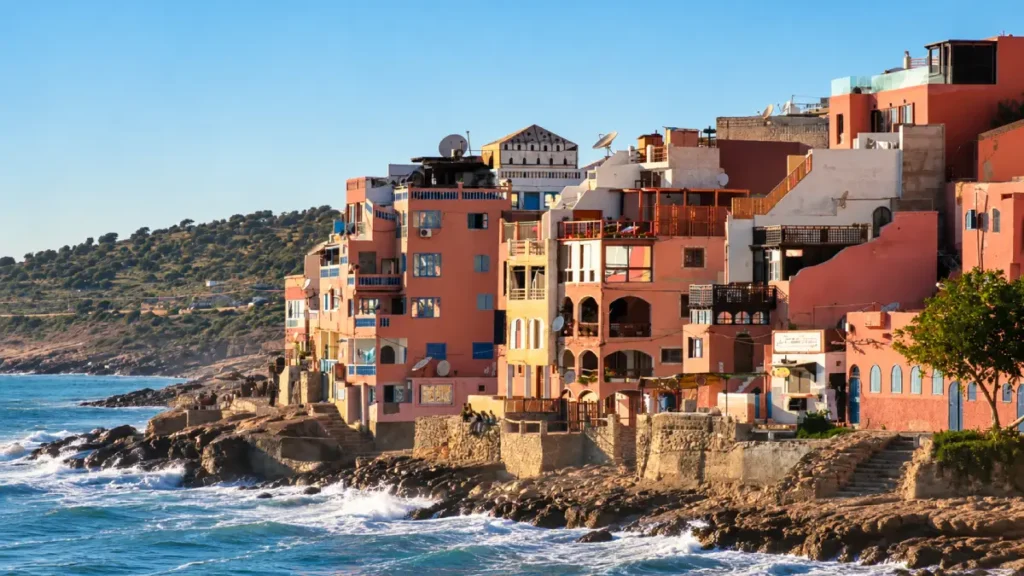
The original village is where travelers find the classic Taghazout atmosphere: narrow lanes, surf schools, small guesthouses, cafés, casual restaurants and an active beach scene. It is the better choice for travelers who want to walk to the water, meet other visitors easily and have meals nearby without depending on a car.
This is usually the most convenient base for:
- Solo travelers and surfers
- Couples who prefer independent cafés and local restaurants
- Travelers staying without a rental car
- Short stays focused on the beach and village life
- People who like an informal, sociable atmosphere
However, the village has grown rapidly. Before booking, check recent guest feedback and ask the property directly about:
- Construction noise near the accommodation
- Parking availability, especially if renting a car
- Road access, as some properties may be reached via narrow or less convenient streets
- The actual walking distance to the beach, rather than relying only on a map pin or broad “beachfront” description
A property described as being “in Taghazout” may not necessarily be a quick, easy walk to the main beach. This matters particularly for families with children, travelers carrying surfboards, and anyone who plans to go back and forth to the sea several times a day.
Taghazout Bay: newer resorts, more space and a quieter setup
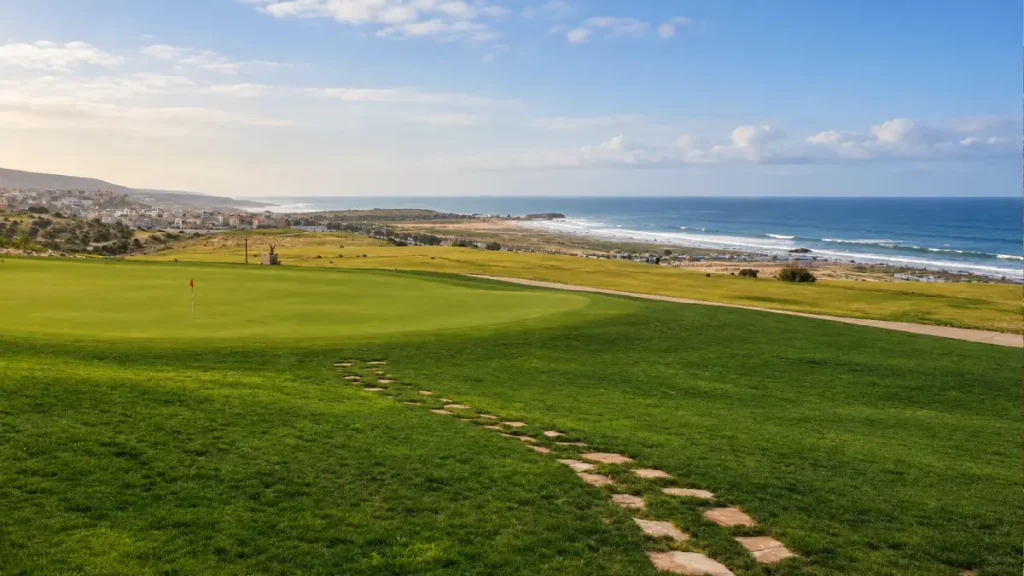
Taghazout Bay is the newer resort development outside the old village. It generally suits travelers looking for modern hotels, more facilities and a less improvised holiday setup. It can work well for families, couples seeking a resort-style break, and visitors who value pools, organised services and easier vehicle access.
The trade-off is that it does not have the same village character. You may be closer to a resort beach than to Taghazout’s small cafés, surf-school scene and evening street life. A rental car or regular taxis can make the stay more flexible if you want to eat in the village or explore the coast.
When comparing the two, think about the type of holiday you want:
- Choose old Taghazout village for walkability, surf culture and a more social atmosphere.
- Choose Taghazout Bay for newer accommodation, resort facilities and a quieter base.
- Choose a stay outside both areas only if you are comfortable arranging transport and do not need restaurants or the beach on your doorstep.
For broader accommodation ideas around the country, see this guide to the best places to stay in Morocco.
Is Taghazout good for families?
Taghazout can work well for families, especially if you choose accommodation with easy beach access, a pool and straightforward vehicle access. Taghazout Bay is generally the easier option for families who want resort facilities and more space, while the old village suits families who prefer a smaller, walkable atmosphere and do not mind narrower streets.
With younger children, check the real walking distance to the beach, road access, stairs and swimming conditions before booking. The Atlantic can be rough, so beach days should be planned around the sea conditions rather than assuming children will always be able to swim.
If Taghazout is one stop on a wider trip with children, see our Morocco Family Vacation guide for family-friendly itineraries, accommodation, transport and practical planning tips.
Spend time on Taghazout’s beaches
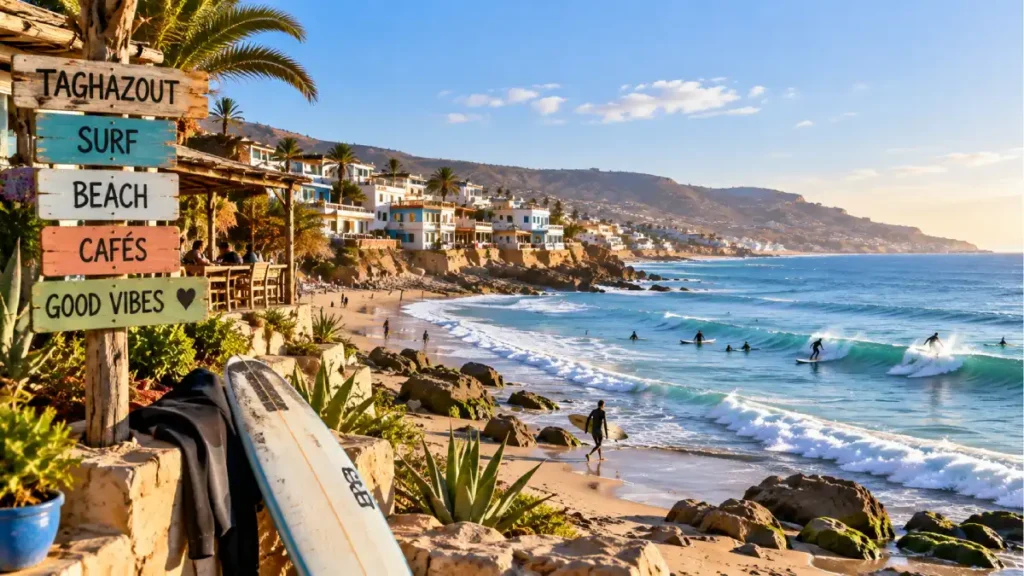
The beach is central to any stay in Taghazout, even for travelers who never plan to surf. The coast is best enjoyed slowly: walk along the sand, watch surfers from the shoreline, take a swim when conditions allow, or settle into a café with an ocean view.
Taghazout is on Morocco’s Atlantic coast, so the sea can be powerful. Waves, currents and water conditions change with the season and weather. Families and less confident swimmers should choose conditions carefully, stay close to shore, and avoid treating every beach day as a swimming day.
Walk the shoreline and watch the surf
A simple coastal walk is one of the best free things to do in Taghazout Morocco. Early morning and late afternoon are particularly pleasant for walking, when the light softens and surfers are often heading in or out.
You do not need to surf to enjoy the scene. Watching lessons near shore and more experienced riders farther out gives a good sense of the town’s daily rhythm. Bring footwear suitable for sand and uneven ground if you are walking beyond the main central stretch.
Plan beach time around the conditions, not just the clock
The Atlantic coast is not a calm resort sea every day. Wind, swell and tides shape the experience, which is exactly why Taghazout is so well known among surfers. For non-surfers, that means staying flexible:
- Pick sheltered or calmer conditions for swimming.
- Do not assume a beautiful sunny day means the sea is easy.
- Keep children closely supervised near the water.
- Use a beach day for walking, reading and café stops when the surf is too rough for swimming.
Surfing in Taghazout: lessons, rentals and the local surf culture
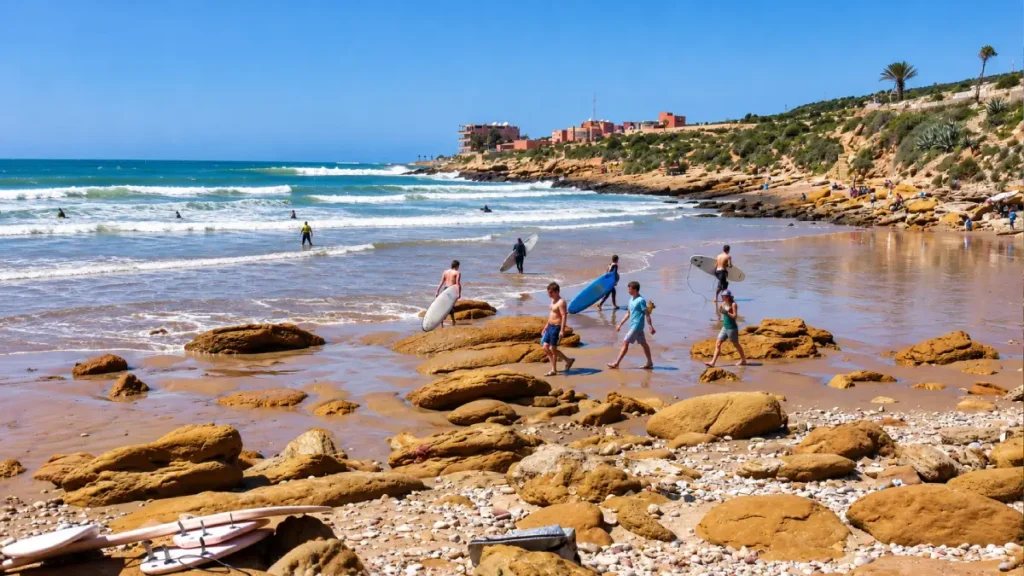
Surfing is the main reason many people visit Taghazout. The coast has a long-established surf identity, with options for first-time learners as well as experienced surfers chasing stronger Atlantic swells.
Beginners should not feel excluded. Surf schools and camps are a visible part of the village, and a lesson can be a practical way to learn beach safety, understand the conditions and avoid choosing the wrong spot independently.
For official destination information on surfing and beaches around Taghazout, see the Moroccan National Tourist Office’s Agadir–Taghazout beach guide.
Take a lesson if you are new to surfing
For first-timers, booking a lesson is usually more sensible than simply renting a board and heading out. Conditions can change, and the right break for an experienced surfer may be unsuitable for someone learning.
When comparing lessons or camps, ask practical questions before committing:
- Is equipment included?
- Is transport to the day’s surf spot included if conditions require it?
- How large is the group?
- Are beginners separated from more advanced surfers?
- Is there an instructor in the water?
- What happens if the sea conditions are not suitable for your level?
Do not choose only by the lowest advertised price. Group size, equipment condition and safety supervision make a real difference to a beginner’s experience.
Popular surf spots around Taghazout
The Taghazout coast has several well-known surf breaks, including Anchor Point, Killer Point, Panorama Beach, Mysteries and Hash Point. Anchor Point is especially famous among experienced surfers, while other spots can suit different ability levels depending on the swell and conditions on the day. Beginners should still follow the advice of a local surf school rather than choosing a break only because it is famous.
Experienced surfers should stay flexible
More experienced visitors often come for the region’s point breaks and consistent surf season. Conditions vary considerably, so it is sensible to keep plans flexible rather than assuming one specific break will work throughout your stay.
A local surf school, surf shop or accommodation host can help visitors understand which areas are working on a given day. Respect local etiquette in the water, do not crowd a peak, and choose a break appropriate to your ability.
Surf culture shapes the village, but it is not the only reason to visit
Even travelers who do not surf will notice that the town’s routines revolve around the ocean. Morning forecasts, boards outside cafés, people returning from sessions and conversations about swell are all part of the local atmosphere.
That makes Taghazout especially easy for mixed groups: one person can surf while another enjoys the beach, cafés, yoga or a quieter day around the village.
Enjoy Taghazout beyond surfing
What to do in Taghazout beyond surfing is a fair question, particularly for travelers staying several nights. The answer is not a long checklist of monuments. It is a destination for relaxed coastal days, food, walks and short excursions.
Slow down in the cafés and small restaurants
Taghazout’s café culture is part of the experience. Many visitors spend unhurried mornings over breakfast, work remotely for a few hours, or return in the evening for a simple meal after the beach.
The village has casual places serving Moroccan food, seafood and international surf-town staples. Rather than chasing a long list of restaurants, choose according to the setting you want:
- Near the beach for sea views and people-watching
- Within the village lanes for a more local, everyday feel
- Around your accommodation if you want an easy dinner after a long surf day
- In Agadir if you are looking for more choice or a more urban dining experience
Menus, quality and restaurant ownership can change quickly in fast-growing destinations, so recent reviews and a look at how busy a place is at meal times are usually more useful than relying on old recommendations.
Walk through the village without expecting a major medina
Taghazout village is compact enough to explore on foot. A walk through its lanes reveals its mix of local life, surf businesses, small shops and guesthouses. It is not a grand historic medina like those in Marrakech or Fes, so set expectations accordingly.
Come here for the casual village feeling, not for a packed sightseeing itinerary. The best approach is to wander, stop for tea or coffee, browse surf shops if needed, and leave time to sit near the sea.
Join a yoga or wellness session if it fits your trip
Yoga and wellness are common additions to the surf scene, especially at camps and some accommodation. For travelers who want a gentler activity, a class can be a useful counterbalance to surfing or long days on the beach.
Check whether sessions are open to non-guests, what level they are designed for, and whether transport is needed. Some stays include activities in their packages, while others operate independently.
Visit Paradise Valley as a day trip from Taghazout
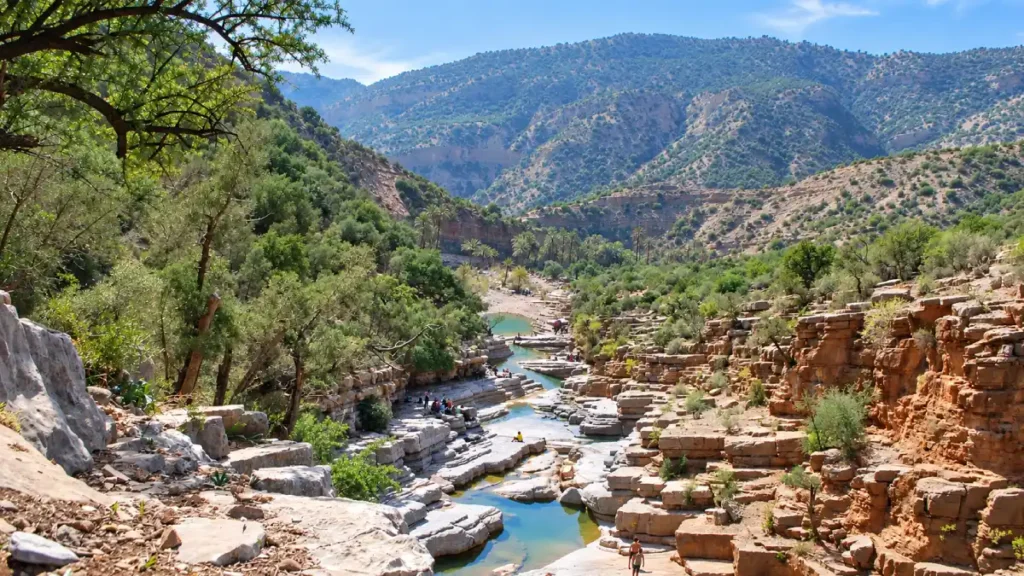
Paradise Valley is often included in Taghazout day-trip plans because it offers a change from the coast: inland scenery, walking and natural pools when conditions permit. It can be a good option for travelers who want one active day away from the beach.
The experience depends heavily on season, rainfall and current water levels. Do not book it expecting the same conditions shown in old promotional photographs or social-media videos. In drier periods, pools may be limited, and the landscape can look very different.
A visit makes most sense if you enjoy a short outing into the countryside rather than expecting a full-scale hiking expedition. Wear shoes that handle uneven ground, carry water and confirm the day’s conditions with a reliable local operator or your accommodation.
Take a day trip to Agadir for city conveniences
Agadir is the practical nearby city for a change of pace. It offers a broader choice of services, shopping, restaurants and a more developed urban seafront than Taghazout.
A day in Agadir can be useful if you need to buy travel essentials, want a larger choice of dining, or simply feel like swapping the village rhythm for a city outing. It is not necessary to visit if your goal is purely a quiet surf-and-beach break, but it is a convenient option for longer stays.
If you want to spend a day in the city, see our Things to Do in Agadir guide for beaches, Souk El Had, Agadir Oufella and other practical ideas.
How to get from Agadir to Taghazout
Most travelers reach Taghazout from Agadir, either after arriving at Agadir’s airport or after staying in the city first. Taghazout is around 19 km north of Agadir, so it is close enough for an easy transfer while still feeling quite different from the city. The simplest options are a pre-arranged transfer, taxi, rental car or local public transport.
For a detailed comparison of buses, taxis, airport transfers and rental cars, see our complete Agadir to Taghazout transport guide.
Private transfer or taxi: easiest with luggage or children
A private transfer or taxi is usually the most straightforward choice for arrivals with surfboards, bulky luggage, young children or a late arrival. It also avoids the need to navigate bus stops and walk from a drop-off point to your accommodation.
Confirm the full fare before leaving, especially if you are taking a taxi rather than a pre-booked transfer. If your accommodation is in the old village, ask whether the driver can reach the door or whether you will need to walk the final section.
Rental car: useful for Taghazout Bay and day trips
A rental car gives the most flexibility for visiting Paradise Valley, Agadir and beaches farther along the coast. It is particularly useful if you are staying in Taghazout Bay or outside the walkable village centre.
The downside is parking. In and around old Taghazout, parking and road access should be checked before booking accommodation. Do not assume a hotel with a coastal location has convenient on-site parking.
Public transport: cheaper but less convenient
Local buses can be a budget option between Agadir and the Taghazout area, but they are less convenient with luggage, surfboards or children. Stops, routing and timetables can change, so confirm the current service locally before relying on it for an airport connection or fixed reservation.
For arrival planning, this overview of airports in Morocco can help you choose the most practical airport for your wider itinerary.
What is nightlife like in Taghazout?
Taghazout has a social evening atmosphere, but it is not a major nightlife destination. Expect relaxed dinners, cafés, surf-camp gatherings and occasional informal events rather than late-night clubs and a large bar scene.
For many visitors, that is a strength. Evenings are often calm enough for couples, families and travelers who want to sleep early for surfing or a day trip. Travelers looking for a more active night out will usually find more options in Agadir.
The village can feel livelier in busy travel periods and quieter outside them. If nightlife is a major priority, stay in or near Agadir and visit Taghazout for the beach and surfing instead.
How many days should you spend in Taghazout?
For most travelers, three to five nights is a good starting point. It gives enough time to settle into the pace of the place, have a few beach or surf sessions, and take one day trip without rushing.
A shorter stay can work if Taghazout is one stop on a larger Morocco itinerary:
- Two nights: enough for a quick coastal break and one surf lesson or beach day.
- Three to five nights: best for a balanced first visit, including surfing, cafés and Paradise Valley or Agadir.
- One week or longer: suitable for travelers taking a surf course, working remotely, or using Taghazout as a slow coastal base.
Non-surfers may prefer the shorter end of that range unless they are specifically looking for downtime. Surfers often benefit from staying longer because ocean conditions vary from day to day.
Best time to visit Taghazout
Taghazout can be visited throughout the year, but the best time depends on what you want to do. The Atlantic coast around Agadir and Taghazout has relatively mild conditions compared with inland Morocco, making it suitable for beach stays in different seasons.
For experienced surfers, the stronger surf season is generally from October to April. Beginners can find opportunities to learn throughout the year, although the best beach and surf spot will depend on the conditions on the day.
If surfing is not your main priority, choose your dates around the kind of coastal holiday you prefer rather than chasing a specific surf season. Even on sunny days, Atlantic wind, swell and water conditions can change, so keep beach plans flexible.
Taghazout vs Agadir vs Essaouira: which coastal destination suits you?
These three destinations can all fit a Morocco itinerary, but they offer different experiences.
Choose Taghazout for surf culture and a slow beach base
Taghazout is best for travelers who want to wake up close to the ocean, surf or watch surfing, eat casually and keep plans loose. It is smaller, more informal and less city-like than Agadir.
It works particularly well for:
- Beginners taking surf lessons
- Experienced surfers who want a coastal base
- Couples seeking a quiet beach stay
- Solo travelers who enjoy a social but relaxed scene
- Families staying in a suitable hotel or resort with easy beach access
Choose Agadir for convenience, larger hotels and city facilities
Agadir is more practical for travelers who want a broad sandy seafront, larger hotels, shopping, wider restaurant choice and easier access to city services. It is also a better base for visitors who prefer an urban holiday environment.
Agadir can be the stronger choice for families who want resort infrastructure, travelers with limited mobility, or anyone who does not want to deal with the tighter roads and more improvised feel of old Taghazout.
Choose Essaouira for history, medina life and a windier coastal city
Essaouira is a better match for travelers who want a historic port city, a walkable medina and a more established mix of culture, food and coastal scenery. Its Atlantic wind is part of its character, making it especially popular for wind-based watersports, but it can feel cooler and windier than travelers expect.
For a first Morocco trip focused on cities and culture, Essaouira often fits more naturally. For a surf-centred coastal break, Taghazout is usually the more direct choice.
If you are still deciding where to base yourself on the Atlantic coast, see our guide to Morocco’s best coastal cities and beach destinations for more options beyond Taghazout, Agadir and Essaouira.
Plan a Taghazout stay around the kind of holiday you want
Taghazout is at its best when you do not over-schedule it. Book accommodation that matches your priorities, leave room for changing sea conditions, and decide in advance whether you want the village’s lively informal feel or the newer comfort of Taghazout Bay.
For a wider overview of routes, destinations and practical travel planning, consult the Morocco travel guide.
FAQ
Is Taghazout worth visiting if you do not surf?
Yes. Non-surfers can enjoy the beaches, coastal walks, café culture, relaxed village atmosphere, yoga sessions and day trips such as Paradise Valley or Agadir. It is best for travelers who enjoy a slow beach break rather than a packed sightseeing schedule.
Is Taghazout better than Agadir?
Taghazout is better for surf culture, a smaller village atmosphere and a quieter coastal stay. Agadir is better for larger hotels, shopping, city conveniences, a wider dining choice and more urban nightlife.
How many days do you need in Taghazout?
Three to five nights suits most first-time visitors. Stay longer if you are taking a multi-day surf course, working remotely or want flexibility for changing surf conditions.
Should I stay in Taghazout village or Taghazout Bay?
Stay in old Taghazout village if you want walkable cafés, beach access and a sociable surf-town atmosphere. Choose Taghazout Bay if you prefer newer resorts, more space and a quieter, more self-contained stay. In either area, check current construction, parking, road access and the real walking distance to the beach before booking.
Can you visit Paradise Valley from Taghazout?
Yes, Paradise Valley is commonly visited as a day trip from Taghazout. Conditions vary by season and rainfall, so confirm current water levels and access before making plans.
Can you swim at the beaches in Taghazout?
Yes, but conditions vary. Taghazout is on the Atlantic coast, so waves, currents and swell can make some days less suitable for swimming. Check the sea conditions before entering the water, stay close to shore if you are not a confident swimmer, and supervise children carefully.
Do you need a car in Taghazout?
Not if you stay in old Taghazout village and mainly want the beach, cafés and surf schools, because much of the area is walkable. A rental car becomes more useful if you stay in Taghazout Bay, want to visit Paradise Valley or other beaches, or plan several day trips along the coast.