
Morocco in July can work very well, but only if you plan for peak summer rather than follow the usual Marrakech–Fes–Sahara circuit. Inland cities and desert regions can be intensely hot, while the Atlantic coast, northern Morocco and the High Atlas offer far more comfortable conditions.
For most travellers, July is best for a coast-and-mountains itinerary: think Tangier, Chefchaouen, Rabat, Agadir, Essaouira and the Atlas. It is less suitable for heat-sensitive visitors hoping to spend full days sightseeing in Marrakech or Fes, and it is a poor time for a classic Sahara camel-trek trip.
Table of Contents
Table of Contents
Is July a good time to visit Morocco?
July is a good time to visit Morocco if you are comfortable adapting your plans to the heat. It suits beach travellers, surfers, kitesurfers, hikers heading into the High Atlas, and visitors who can sightsee early and rest through the hottest part of the day.
It is not the easiest month for a first trip focused on Marrakech, Fes, the Dades Valley and Merzouga. These places remain open and visitable, but the heat changes the experience considerably. Long walks, full-day driving routes and exposed attractions become more tiring, especially during the afternoon.
For a first Morocco trip with similar coastal and mountain advantages but more manageable inland temperatures, June is often the easier choice. See the broader best time to visit Morocco guide for how July compares with the rest of the year.
The biggest mistake in Morocco in July is trying to copy a spring or autumn itinerary without changing the daily rhythm. In peak summer, a slower pace, early starts, long afternoon breaks and a stronger focus on cooler regions make a real difference.
Morocco weather in July: where is hottest and coolest?
Morocco July weather varies sharply by region. Inland cities, southern valleys and the Sahara can be extremely hot, while the Atlantic coast benefits from ocean air and the mountains are cooler at altitude.
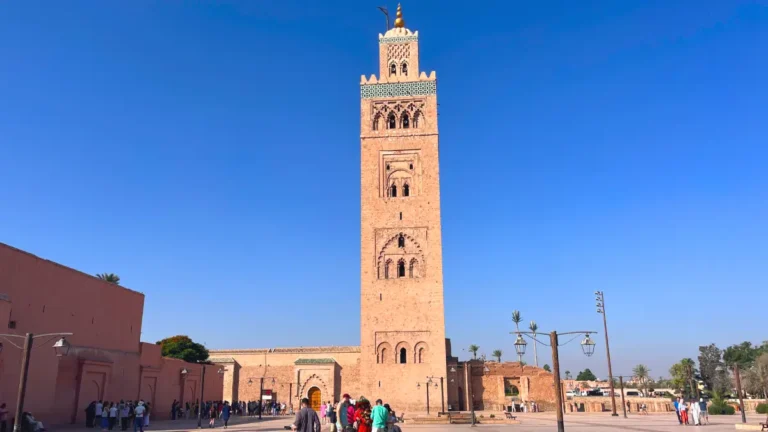
Marrakech in July: plan around the hottest hours
Marrakech in July is hot, even by Moroccan standards. Typical daytime highs are often in the upper 30s, while heatwaves can push temperatures into the low-to-mid 40s. Nights frequently remain warm, so do not expect the same relief you might find on the Atlantic coast or at altitude.
The sensible approach is to avoid prolonged outdoor sightseeing from roughly 11 a.m. until 5 p.m. A practical July day in Marrakech has three parts:
- Sightsee early, around 8–11 a.m. Visit outdoor landmarks, gardens, souks and busy streets before the heat peaks.
- Take a proper afternoon break. Return to an air-conditioned room, use a pool, book a hammam, have a long lunch or choose a shaded indoor activity.
- Return outside later in the evening. Once the strongest heat begins to ease, it is a better time for Jemaa el-Fna, rooftop dinners and a gentler wander through the medina.
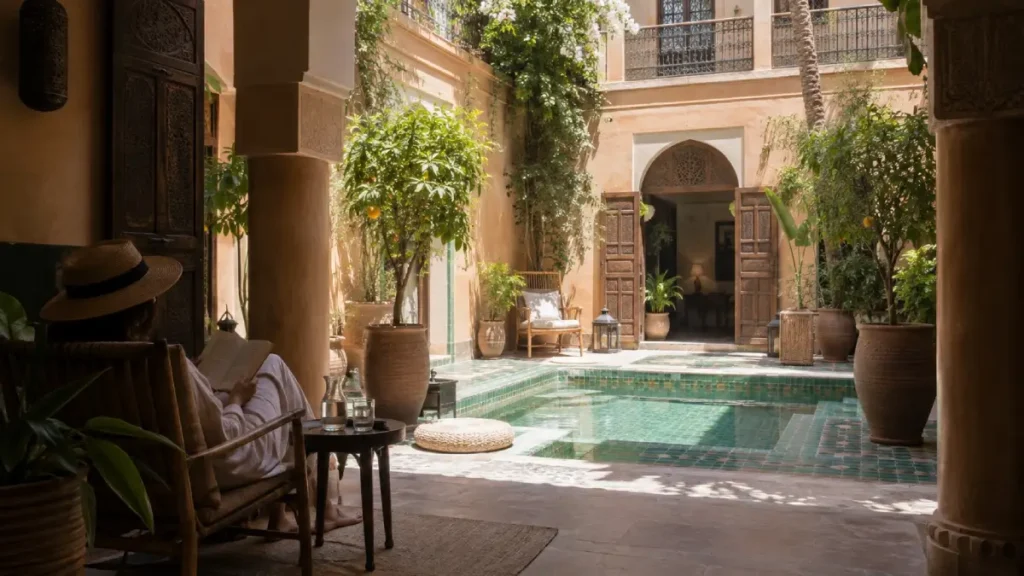
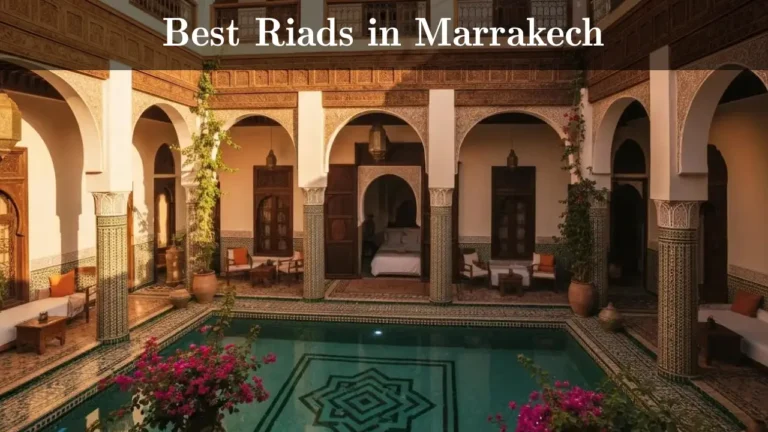
Air-conditioning is an important booking criterion in Marrakech in July. Traditional riads can have limited cooling, so confirm that AC works in the specific room you are booking rather than assuming it is available throughout the property. A pool is not essential for every traveler, but it is extremely useful if you plan to stay in Marrakech for several July nights.
For more practical context on choosing an area and planning your days, see the Marrakech travel guide.
Fes and Meknes are also difficult during midday
Fes is normally very hot in July, with daytime highs often in the upper 30s and still hotter conditions during heatwaves. Its historic medina can feel particularly oppressive during the afternoon because dense stone and tiled buildings hold the heat, while narrow lanes limit airflow.
Explore Fes early, pause often and avoid trying to walk the entire medina in the middle of the day. The tanneries can feel especially intense in high temperatures because the strong smells are more difficult to escape when the air is hot and still.
Meknes is also very hot in July. It may suit travellers willing to keep visits short and early, but it is not the best place to schedule a full afternoon of outdoor sightseeing.
Chefchaouen, Tangier and Rabat are easier in summer
Northern Morocco is a much better choice for travellers visiting Morocco in July.
Chefchaouen’s Rif Mountain setting generally brings cooler conditions than inland cities, with temperatures often ranging from the mid-20s to the low 30s, with more comfortable evenings than Marrakech or Fes. It can still be warm in the middle of the day, particularly on exposed uphill streets, but the overall experience is easier to manage.
Tangier benefits from sea breezes and commonly experiences daytime conditions in the mid-to-high 20s. Its coastal setting makes it a useful summer base for travellers who want city life without the intensity of Marrakech’s heat.
Rabat is another comfortable July city, with daytime conditions typically in the mid-to-high 20s. It is a sensible stop for travellers combining northern cities with Atlantic beaches.
If Rabat is part of your summer route, use my things to do in Rabat guide to plan the historic sights, coast and medina.
Agadir offers the most straightforward beach weather
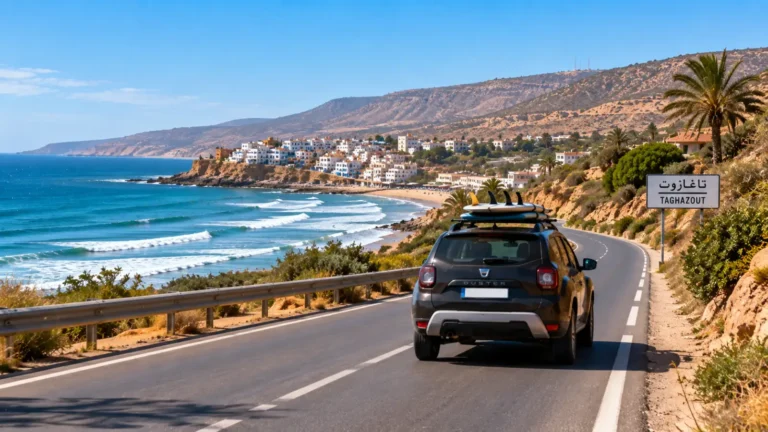
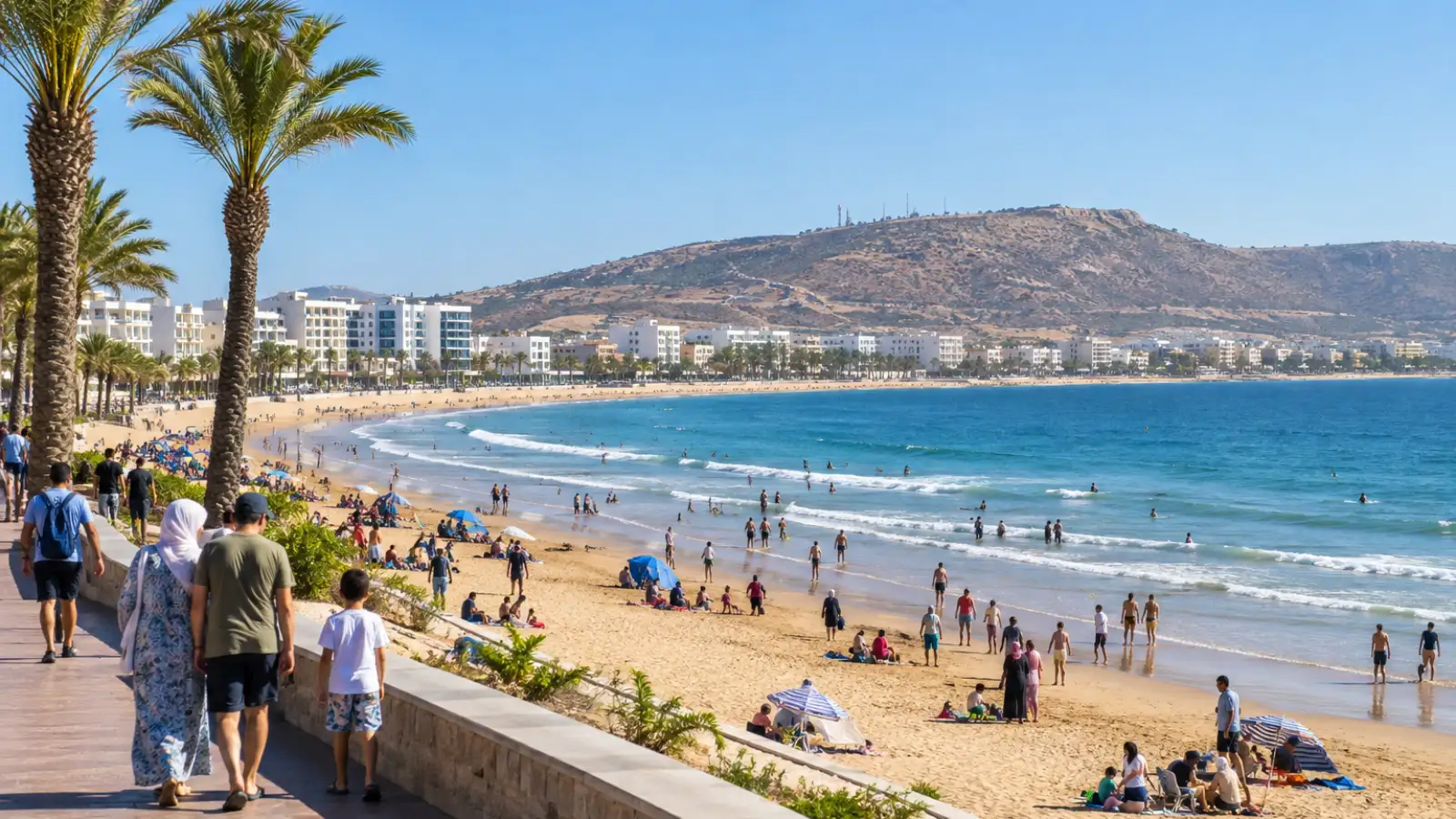
Agadir is one of Morocco’s strongest July destinations for a conventional beach holiday. Daytime conditions are commonly in the mid-to-high 20s, although coastal cloud and wind can affect how warm it feels. Swimming is generally more appealing than during winter or early spring, but water temperature and sea conditions vary.
The broad, sheltered bay works well for families and travellers who want an easy beach-and-hotel stay. The trade-off is crowds. July falls within the domestic summer holiday period, and Agadir’s beaches, promenades and hotels can become very busy with Moroccan families.
Book desirable accommodation well ahead if Agadir is central to your trip. Coastal hotels operate under strong summer demand, so do not rely on finding the best options at the last minute.
If Agadir is one of your main July stops, my Agadir things to do guide covers the beach, sights, food and day trips.
Essaouira is cooler, windier and better for wind sports
Essaouira generally stays considerably cooler than much of Morocco in July, with daytime conditions commonly in the low-to-mid 20s. The Atlantic Alizé winds are especially noticeable in summer, making the town a strong choice for kitesurfing, windsurfing and other wind-based activities.
That wind is also the reason Essaouira is not the right beach destination for everyone. Conventional sunbathing can be uncomfortable when sand is blowing, and the ocean often feels colder and rougher than in Agadir.
Choose Essaouira if you value cooler temperatures, a relaxed coastal town and wind sports. Choose Agadir if your priority is warmer water, easier swimming and a more conventional beach holiday.
Should you visit the Sahara in July?
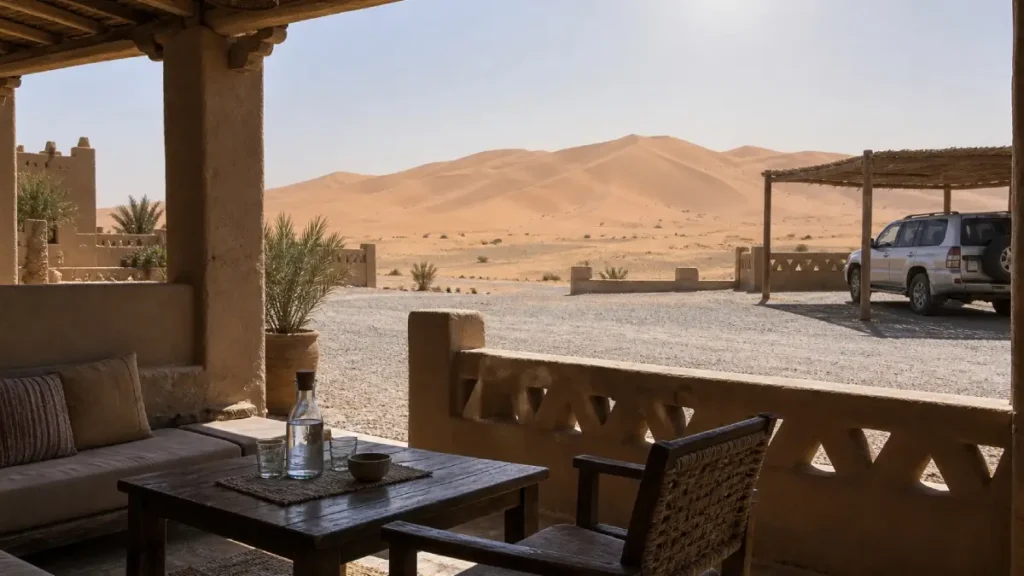
A normal Sahara camp itinerary is not recommended in July. During extreme summer conditions around Merzouga, temperatures can climb well above 40°C and exposed dune sand can become dangerously hot.
Some desert camps reduce operations or close during the hottest part of summer. Others stay open, but standards of cooling vary greatly. A camp described as “luxury” should not be assumed to have air-conditioning.
If you must visit the Merzouga area in July, take a different approach:
- Stay in a desert-edge hotel with reliable air-conditioning and a pool.
- Confirm the cooling arrangement directly before booking.
- Limit dune activities to sunrise or sunset.
- Avoid long camel rides.
- Do not plan exposed midday activities on the dunes.
- Use a reliable air-conditioned vehicle for transfers and longer road journeys.
This is also not an ideal month for a first-time route through Skoura, the Dades Valley, the Draa Valley and the southern interior. These areas can exceed 40°C, and the combination of heat, driving and outdoor stops makes a standard desert circuit much more demanding.
Travellers considering the route should understand what a typical itinerary involves before booking one of the Sahara desert tours from Marrakech. In July, the standard format needs serious adjustment.
The High Atlas is one of the best July escapes
The High Atlas is among the best places to go in Morocco in July. Conditions vary greatly with altitude: lower valleys can still be warm, while higher routes are often considerably cooler than Marrakech.
The Ourika Valley and other higher-elevation Atlas areas are also popular summer escapes because they are cooler than the city. Ouzoud Waterfalls can be another worthwhile break from Marrakech, although water levels vary and should not be assumed to be the same every July.
Trekking conditions in July
July can be excellent for trekking, including Mount Toubkal routes, provided hikers start early and take mountain conditions seriously. Summer afternoons can bring thunderstorms over exposed high ridges, so an early departure is important.
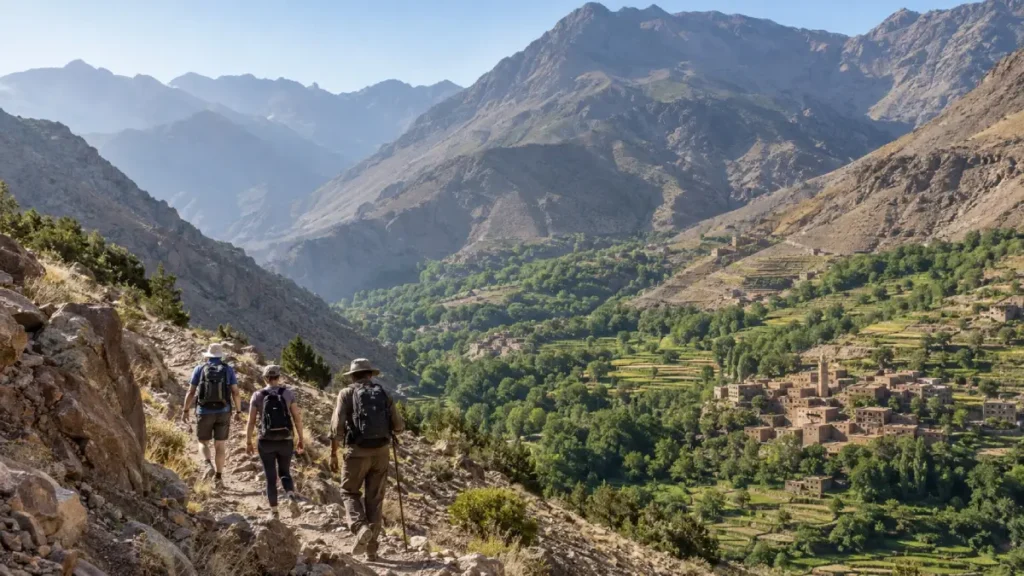
For serious high-altitude hikes, use a licensed mountain guide, carry suitable equipment and check current weather and trail conditions before setting out. Access rules can change, so confirm the requirements for your chosen route locally. The cooler air at altitude does not remove the need for sun protection, hydration or careful pacing.
The Atlas Mountains trekking guide is a useful starting point for choosing a route and understanding what an Atlas trek requires.
Where to go in Morocco in July: the best itinerary strategy
Rather than crossing the country from inland imperial cities to the Sahara, build your route around the climates that work in summer.
Best for beach-focused trips: Agadir and the Atlantic coast
Agadir is the easiest choice for families, swimmers and travellers who want warm beach weather with hotel comfort. It is also a practical base if air-conditioning, a pool and straightforward facilities are priorities.
Expect strong domestic holiday demand in July. Agadir, Tangier, Saidia and other beach destinations can be extremely busy from late June through July and August.
Best for cooler city breaks: Tangier, Rabat and Chefchaouen
A northern itinerary can combine Tangier’s sea breezes, Chefchaouen’s mountain setting and Rabat’s more moderate Atlantic climate. This is a better fit for travellers who still want culture, food and city walks but do not want to spend every afternoon indoors.
Chefchaouen is hilly, so plan its uphill streets for the morning or late afternoon rather than the hottest hours.
Best for active travellers: Essaouira and the High Atlas
Essaouira works especially well for kitesurfers, windsurfers and travellers who prefer a breezier coastal base. Pair it with the High Atlas for a trip that prioritises outdoor activity without the Sahara’s severe heat.
The mountain portion still requires early starts, particularly for longer hikes, but it is one of the most rewarding ways to experience Morocco in peak summer.
Best for travellers who still want Marrakech
Marrakech can still be part of a July itinerary, but keep it short and purposeful. Two or three nights can work well if you stay somewhere with effective AC, build in afternoon rest and avoid packing every hour with sightseeing.
A practical July combination is Marrakech followed by the Atlas or Atlantic coast. That gives you the city experience without making extreme inland heat the focus of the entire trip.
Summer crowds, accommodation and July events
July is peak domestic holiday season along Morocco’s coast. Beach towns and resorts are often far busier than travellers expect, particularly on weekends and during school holiday periods.
Book coastal accommodation early if you have fixed dates. This matters most in popular summer destinations such as Agadir, Tangier and Saidia, where hotels and holiday apartments can sell out well ahead.
Marrakech can show the opposite pattern in some parts of the market. International demand softens during periods of extreme heat, and travellers may occasionally find better value at riads and luxury hotels. That is not guaranteed, however, and a lower rate is not useful if the room has inadequate air-conditioning.
July often brings major cultural events, including the Timitar Festival in Agadir and programmes associated with Asilah. Dates can change, so confirm the current programme on official organiser or tourism channels before booking around an event.
July 30 is Morocco’s official Throne Day national holiday. Opening hours and local transport arrangements may differ, so check practical details close to your travel date.
What to wear and pack for Morocco in July
Packing for Morocco in July is mainly about heat protection, while leaving room for cooler evenings by the coast and in the mountains.
Prioritise:
- Loose, breathable cotton or linen clothing
- Strong sunscreen
- Sunglasses
- A wide-brimmed hat
- Comfortable walking shoes or sandals suitable for hot pavements
- A refillable water bottle
- A light layer for windy Essaouira evenings and mountain stays
- Swimwear if your hotel has a pool or you are visiting the coast
Hydrate regularly throughout the day, especially on walking tours, road trips and hikes. Individual needs differ, so it is better to drink consistently and respond to the heat than to follow a one-size-fits-all target.
For a more detailed checklist, use this Morocco packing list, then adapt it for peak summer conditions.
Practical July travel advice for heat, driving and sightseeing
July travel in Morocco is easier when you treat the middle of the day as downtime rather than sightseeing time.
Choose accommodation for cooling, not just character
In Marrakech, Fes and other hot inland cities, confirm whether your room has functioning air-conditioning. This is especially important in older riads, where a fan or limited cooling in common areas may not be enough during a heatwave.
If you are deliberately staying in Marrakech in July, a pool can make the afternoon much more comfortable. It is a useful feature rather than a requirement for every traveler.
Use an air-conditioned vehicle for long routes
A reliable air-conditioned vehicle is strongly recommended for longer road trips in July. Avoid unnecessary midday driving through the hottest southern regions, take regular breaks and carry enough drinking water for everyone in the vehicle.
Long distances that feel manageable in spring can become exhausting when every stop involves 40°C-plus heat. Plan fewer stops, leave earlier and allow more recovery time after arrival.
Change your sightseeing rhythm
Do not try to complete a full medina, museum list and outdoor monument circuit between breakfast and dinner. In Marrakech and Fes, the better July rhythm is:
- Outdoor walking early in the morning
- Lunch and rest during peak heat
- Short evening exploration after temperatures ease
This approach is not wasted time. It is the practical way to enjoy the cities without turning every day into a test of endurance.
Who should choose Morocco in July?
Morocco in July is particularly good for:
- Beach travellers heading to Agadir or other Atlantic and northern coastal destinations
- Surfers, kitesurfers and windsurfers based around Essaouira
- Trekkers planning time in the High Atlas
- Travellers comfortable with early starts and afternoon hotel breaks
- Visitors building a coast-and-mountains itinerary rather than a desert circuit
It is less suitable for:
- Heat-sensitive travellers
- Very young children or elderly visitors who struggle in high temperatures
- Travellers wanting intensive all-day sightseeing in Marrakech or Fes
- Visitors whose main goal is a classic Sahara camel trek
- First-time visitors determined to cover Marrakech, Fes, southern valleys and Merzouga in one fast trip
The best July plan is not necessarily the most ambitious one. Choose fewer bases, stay longer in each, and let the climate shape your route.
FAQ
Is Morocco too hot in July?
Parts of Morocco are extremely hot in July, especially Marrakech, Fes, Meknes, inland southern valleys and the Sahara. The Atlantic coast, Tangier, Rabat, Chefchaouen and the High Atlas are much more manageable choices.
How hot is Marrakech in July?
Marrakech often reaches the upper 30s during July, with temperatures climbing into the low-to-mid 40s during heatwaves. Plan outdoor sightseeing for early morning and evening, with a long afternoon break.
Is Essaouira or Agadir better in July?
Choose Agadir for warmer swimming conditions, a sheltered beach and a conventional family beach holiday. Choose Essaouira for cooler temperatures, strong summer winds and kitesurfing or windsurfing. Essaouira’s wind can make sunbathing and swimming less comfortable.
Can you do a Sahara desert tour in July?
It is possible, but a standard desert camp itinerary is not recommended. Temperatures around Merzouga can climb well above 40°C during extreme conditions, and dune activities should be limited to sunrise or sunset. If visiting, use a desert-edge hotel with reliable AC and a pool, and confirm camp cooling directly before booking.
Is July good for trekking in the Atlas Mountains?
Yes. The High Atlas is one of Morocco’s best July escapes, with conditions around Imlil and at higher elevations often far cooler than Marrakech. Start hikes early, prepare for strong sun and check for possible afternoon thunderstorms on exposed routes.