
Morocco in August means planning around two realities: intense inland heat and the peak of the Moroccan summer holiday season. It can be an excellent month for Atlantic beaches, wind sports, northern cities and High Atlas trekking, but it is not the time to force a classic Marrakech-to-Sahara itinerary.
For most first-time visitors, the best strategy is to base the trip around the coast, Tangier, Rabat, Chefchaouen or the mountains, then keep Marrakech and Fes short and carefully timed. Coastal hotels and beach towns are especially busy in August, so book desirable accommodation well ahead.
Table of Contents
Table of Contents
Is August a good time to visit Morocco?
August is a good time to visit Morocco if your itinerary matches the season. Choose it for beach time in Agadir, cooler Atlantic weather in Essaouira, northern cities, Mediterranean swimming, or trekking in the High Atlas.
It is a difficult month for travellers who:
- Want to spend full days walking Marrakech or Fes medinas.
- Are particularly sensitive to high heat.
- Have their heart set on a traditional Merzouga camel trek and desert camp.
- Expect quiet beaches, easy coastal parking and last-minute seaside hotels.
The main mistake when visiting Morocco in August is treating it like spring or autumn. Instead of moving constantly through Marrakech, the valleys and the Sahara, slow the pace down. Sightsee in the morning and evening, reserve the middle of the day for air-conditioned interiors or a pool, and prioritise places where the climate is naturally easier.
August is generally similar to July, with sustained heat across inland Morocco. It is also the heart of domestic holiday season, which means stronger demand and heavier crowds on both Atlantic and Mediterranean coasts. For a wider seasonal comparison, see this guide to the best time to visit Morocco.
Morocco weather in August: where the heat is easiest to manage
Morocco August weather varies dramatically by region. A comfortable day on the Atlantic coast can coincide with dangerous heat in the Sahara and very high temperatures in Marrakech.
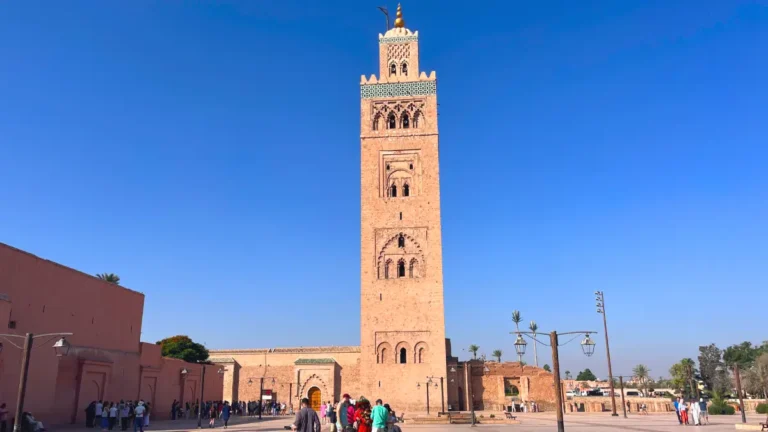
Marrakech: very hot days and warm nights
Marrakech in August is demanding. Daytime temperatures are often in the high 30s, while heatwaves can push them into the mid-40s or higher. Nights can remain warm, so the city may not cool down enough for comfortable sleeping without effective air-conditioning.
Marrakech is still possible in August, but use a heat-conscious rhythm:
- Do outdoor sightseeing early in the morning.
- Take a long break during the hottest part of the day.
- Return outside later in the evening.
- Use museums, cafés, restaurants, hammams or your riad/pool time for the afternoon.
- Do not schedule a full medina walking day from late morning through the afternoon.
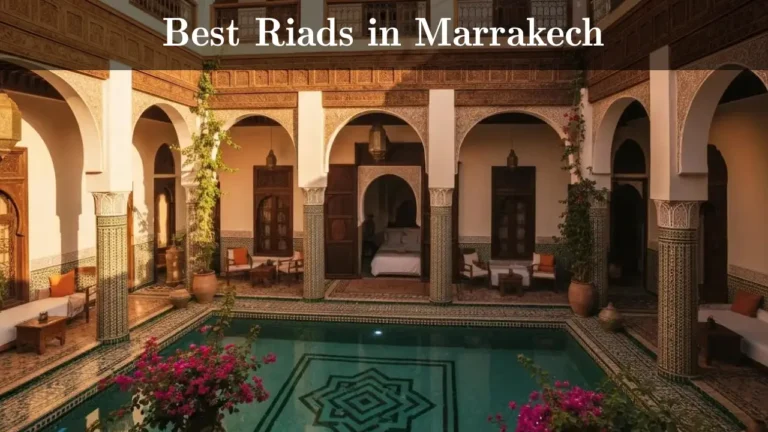
A shaded riad courtyard is pleasant, but it is not a substitute for functioning room air-conditioning during extreme heat. Confirm the specific room has air-conditioning and that it is operating before booking, especially if staying in the medina.
For a short, realistic city plan, use this Marrakech travel guide alongside your August itinerary.
Fes and Meknes: possible with a slower schedule
Fes and Meknes remain visitable in August, though daytime temperatures often reach the mid-to-high 30s. Fes medina has many shaded passages, but the shade does not remove the difficulty of retained heat, crowds, uneven walking and long distances.
The practical approach is similar to Marrakech: start early, rest through the hottest hours, then continue in the evening. Avoid trying to “complete” the medina in one long daytime walk. Fes can be rewarding in August for travellers willing to slow down; it is much less pleasant for those who want to cover every sight on foot from morning until dinner.
Tangier and Rabat: easier major-city choices
Tangier and Rabat are among the more manageable urban destinations in Morocco in August.
Tangier is usually much milder than inland Morocco and often stays in the high 20s, helped by sea breezes. It is a sensible choice for travellers who want city life, coastal views and a break from the inland heat.
Rabat also commonly experiences temperatures in the high 20s. As a major city, it is usually easier to sightsee in August than Marrakech or Fes, particularly when you still plan outdoor visits in the cooler morning and later afternoon.
For a practical one- or two-day plan, see my complete Rabat travel guide.
Chefchaouen: pleasant evenings, busy streets
Chefchaouen is often warm to hot during the day, but its evenings can be pleasant. The town is a better August choice than the hot inland imperial cities, though it is far from quiet.
August can be extremely busy with Moroccan visitors. Narrow lanes, cafés and popular photo spots can feel crowded, so stay overnight if possible and walk early or later in the day rather than arriving only for the busiest midday hours.
Essaouira: the best choice for wind, cooler air and water sports
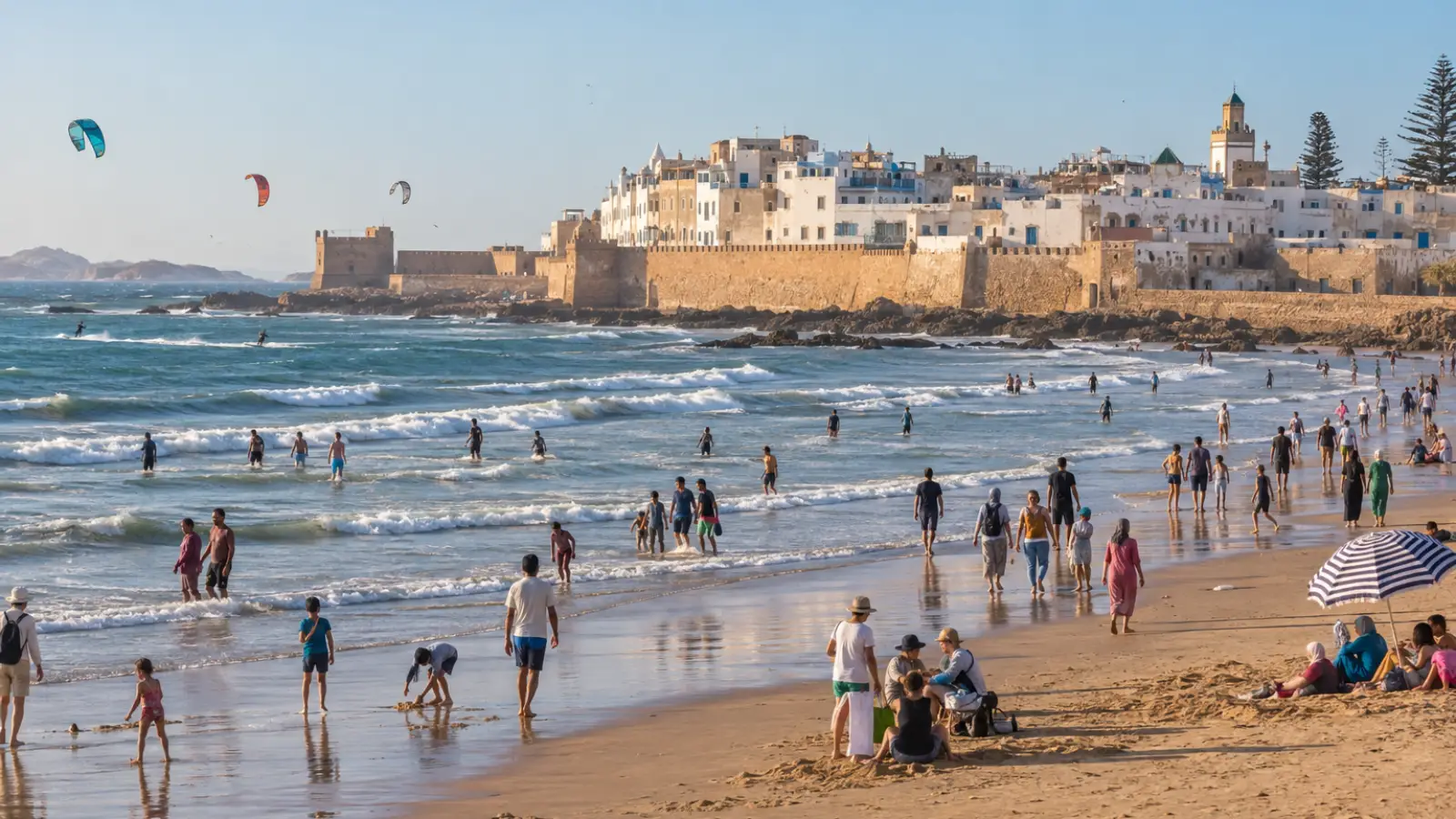
Essaouira is one of the strongest August escapes, with daytime temperatures often in the low-to-mid 20s. The Alizé winds work like natural air-conditioning and make the city especially appealing when much of inland Morocco is hot.
This is a particularly good month for windsurfing and kitesurfing. The trade-off is that strong wind can blow sand across the beach, and the water is cooler than many travellers expect. If your idea of a beach holiday is still, hot weather and long sunbathing sessions, Agadir may suit you better. If you value cooler air, surfing culture and outdoor comfort, Essaouira is hard to beat in August.
Agadir: warm beach weather and peak holiday crowds
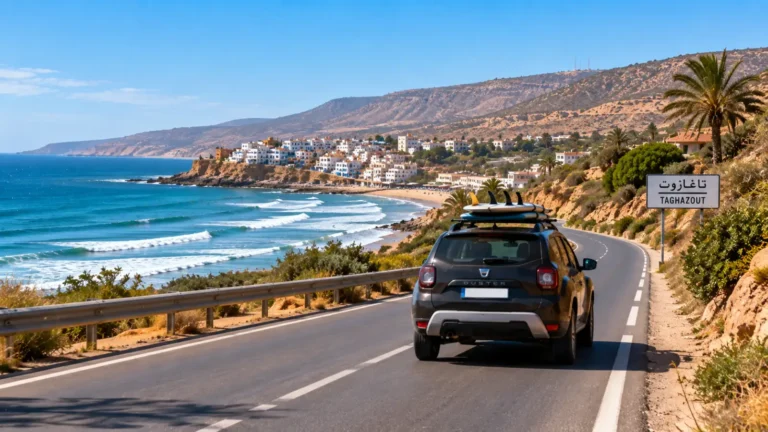
Agadir can work well for a conventional beach holiday in August. Daytime temperatures are commonly in the high 20s, although local cloud, wind and heat can vary. The Atlantic is generally more inviting for swimming than in winter, but it can still feel cool to some travellers.
The downside is demand. August is peak domestic tourism, and hotels, beaches, restaurants and the promenade can operate at very high capacity. Reserve desirable accommodation as early as you can, especially for weekends and popular dates, because availability varies considerably by property.
Agadir works best for travellers who want a resort-style base, beach time and warm swimming conditions rather than a quiet coastal retreat.
If you are basing yourself here, see my complete guide to things to do in Agadir.
Mediterranean beach towns: lively, crowded and in high demand
Saidia, Martil, M’diq and Al Hoceima are extremely popular with Moroccan families in August. The Mediterranean water can be very attractive for swimming, and the atmosphere is lively.
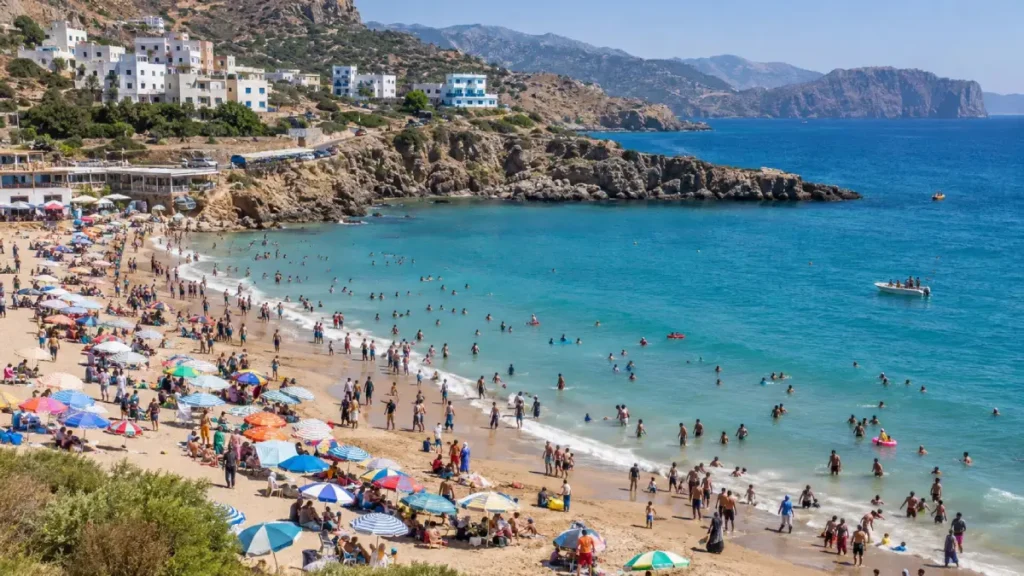
However, these are not quiet shoulder-season beach towns at this time of year. Apartments, roads, restaurants, beaches and parking areas can be extremely busy. They can be a good choice if you enjoy an energetic local holiday atmosphere and are prepared to book early. They are a poor fit if you want empty beaches or easy spontaneous travel.
High Atlas and Imlil: Morocco’s best escape from the heat
The High Atlas and Imlil are among the best places to go in Morocco in August. Conditions vary sharply with altitude: Imlil can be warm by day while higher trails are considerably cooler. The change can feel dramatic after Marrakech or the southern interior.
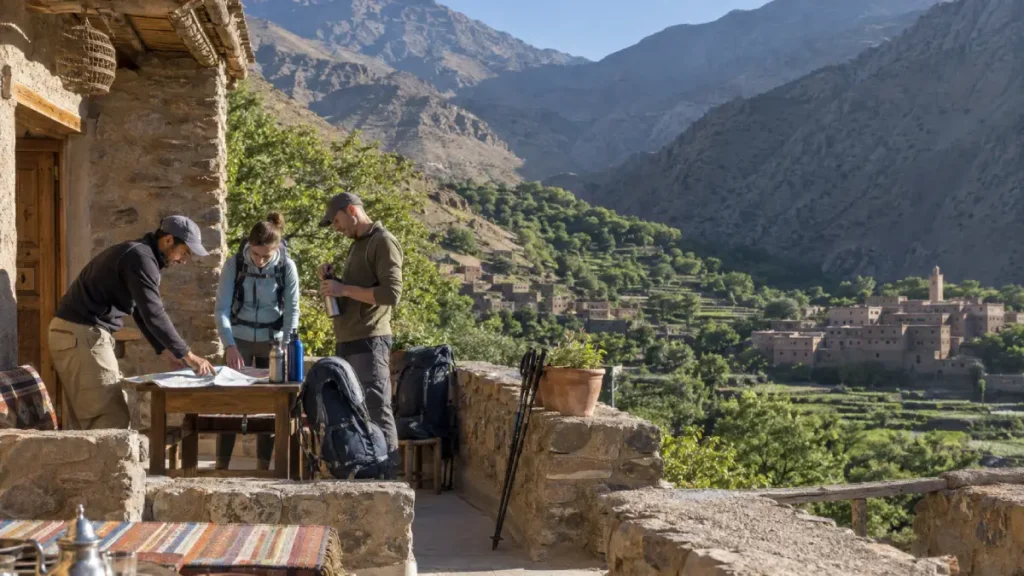
August is a strong month for trekking, though popular routes, including Toubkal routes, can be busy. Start serious hikes early because afternoon thunderstorms can occasionally develop in the mountains. Bring a warmer layer for evenings and higher elevations, even if Marrakech felt intensely hot on the same day.
For Mount Toubkal, arrange a licensed mountain guide and confirm current weather, trail conditions and access requirements locally before setting out.
For route ideas and preparation, read the Atlas Mountains trekking guide.
Ouzoud and the Ourika Valley: cooler in feeling, not quiet
Ouzoud Waterfalls and the Ourika Valley become very popular in August because Moroccan families also head there to escape city heat. They can offer welcome relief from Marrakech, but expect substantially larger crowds than in spring.
These are better treated as early-start day trips or overnight escapes rather than peaceful nature breaks. Do not assume that a popular summer valley will be empty simply because it is outside the city.
Dades, Skoura and the Draa Valley: too hot for a sightseeing-focused trip
Dades, Skoura and the Draa Valley can be brutally hot in August. Temperatures in the pre-Saharan interior frequently rise above 40°C. A well-chosen boutique hotel with a pool can make an overnight stop manageable, but this is not the best season to build a first-time Morocco itinerary around long drives and outdoor sightseeing in these regions.
Should you visit the Sahara in August?
For most travellers, a normal Merzouga or Sahara camp itinerary is not advisable in August. During very hot periods, daytime temperatures can climb well above 40°C, while exposed dune sand becomes dangerously hot.
Some desert camps and excursions operate differently during the hottest weeks. Confirm directly that your accommodation is open, has reliable air-conditioning and can provide an appropriate summer schedule.
If you must visit the Merzouga region in August, make the trip as heat-safe as possible:
- Stay in a desert-edge hotel with reliable air-conditioning.
- Prioritize a property with a pool.
- Limit dune activities to dawn or around sunset.
- Avoid midday camel rides.
- Avoid long exposed walks, quad rides or dune excursions in the middle of the day.
- Travel in an air-conditioned vehicle and carry plenty of water.
For many visitors, postponing the Sahara until a cooler trip is the better decision. The Sahara tours from Marrakech guide can help with route planning for a more suitable season.
Where to go in Morocco in August: the best itinerary choices
The best August itinerary is usually a north, coast or mountains itinerary—not a long inland circuit.
Best for beach holidays: Agadir and the Mediterranean coast
Choose Agadir for warmer Atlantic swimming, resort hotels and a more conventional beach break. Choose Saidia, Martil, M’diq or Al Hoceima for Mediterranean water and a lively Moroccan summer atmosphere.
Book early, expect crowds and allow extra time for traffic and parking.
Best for cooler Atlantic weather: Essaouira
Choose Essaouira if you want relief from inland heat, wind sports and a more comfortable daytime climate. It is particularly good for active travellers, surfers, kitesurfers and anyone who prefers cooler weather over very hot beach conditions.
Best for city sightseeing: Tangier and Rabat
Tangier and Rabat are among the more comfortable choices for travellers who still want a city-focused August holiday. They are not cool in the European sense, but sea breezes and lower temperatures make sightseeing much more manageable than in Marrakech or Fes.
Best for hiking: Imlil and the High Atlas
Choose the High Atlas for trekking, village stays and cooler evenings. This is one of the few times of year when escaping upward in altitude can transform the trip.
Best for a short Marrakech stay: Marrakech plus the coast or mountains
Marrakech can still work if you keep it to two or three nights, choose an air-conditioned hotel or riad, and organise sightseeing around the morning and evening. Then continue to Essaouira, Agadir or Imlil instead of pushing onward into the Sahara.
Accommodation, transport and booking strategy for August
August has two very different accommodation patterns. Coastal destinations operate at peak demand, while Marrakech and some other inland cities may have better availability or seasonal deals because international demand drops during the extreme heat. Rates vary widely by date and property, so do not assume inland stays will always be cheap.
For coastal hotels, book several weeks or months ahead if you want a particular beach area, room type or family-friendly property. This is especially important in Agadir and Morocco’s popular Mediterranean resorts.
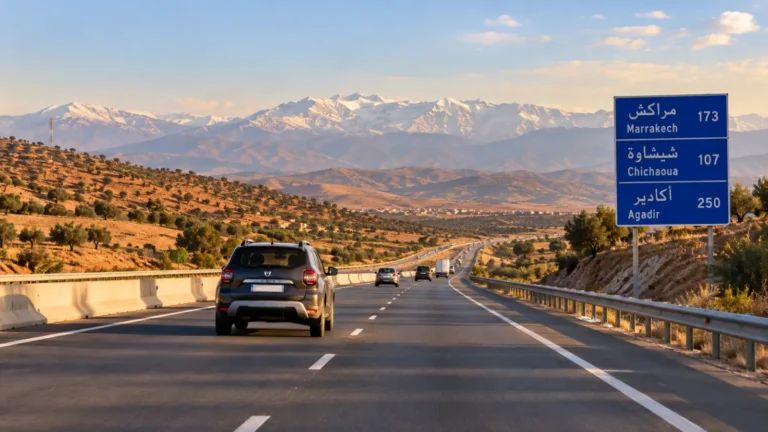
For road trips, an air-conditioned vehicle is strongly recommended, particularly in southern Morocco. Long drives without reliable cooling can become exhausting or unsafe in the August heat.
Traffic is often heavy on routes toward popular Atlantic and Mediterranean beaches. Parking can also be difficult in busy coastal towns. Guarded street spaces and car-park attendants are common, but arrangements and fees vary by location. Confirm the price before leaving the vehicle.
What to pack for Morocco in August
Pack for powerful sun, hot streets, strong coastal wind and cool mountain evenings—not one single climate.
Essential items include:
- Loose cotton or linen clothing.
- Strong sunscreen.
- Sunglasses.
- A wide-brimmed hat.
- Comfortable, breathable walking shoes.
- A refillable water bottle.
- A light layer for windy Essaouira evenings.
- A warmer layer for Imlil and higher Atlas stays.
- Swimwear for Agadir, coastal hotels or pool accommodation.
- A small day bag that can carry water, sun protection and a light layer.
Air-conditioning deserves special attention. In Marrakech, Fes and other inland cities, it is an important booking criterion, not simply a nice extra. Confirm that your specific room is air-conditioned and that the system is functioning.
For a fuller checklist, see the Morocco packing list.
August holidays and festivals: check dates before making plans
Several cultural events may take place in or around August, including events in Asilah and the Moussem of Moulay Abdellah Amghar. Dates and programmes can shift from year to year, so confirm the current schedule before arranging a trip around any event.
August 20 is a national holiday marking the Anniversary of the Revolution of the King and the People, followed by Youth Day on August 21. Opening hours, transport and local events may differ, so check arrangements in your destination.
A realistic way to enjoy Morocco in August
Morocco in August rewards travellers who accept the country’s summer rhythm. Wake early, do the walking before the heat builds, rest properly in the afternoon, and enjoy dinners and evening strolls after sunset.
A strong August trip might combine Tangier and Chefchaouen, Rabat and Essaouira, or Marrakech with Imlil and the Atlantic coast. A beach-focused holiday in Agadir or the Mediterranean can also work very well if you reserve early and accept that the busiest areas will feel busy.
The key is simple: follow the cooler coast and mountains where possible, and do not fight the inland climate.
FAQ
Is August too hot for Morocco?
August is very hot in Marrakech, Fes, the southern valleys and the Sahara, but it is manageable on the Atlantic coast, in northern cities and in the High Atlas. The best itinerary depends on choosing the right regions and avoiding midday outdoor activity inland.
What is Marrakech like in August?
Marrakech is extremely hot, with daytime temperatures often in the high 30s and potentially much higher during heatwaves. Plan outdoor sightseeing for early morning and evening, take a long afternoon break, and book accommodation with confirmed working air-conditioning.
Is Morocco’s coast crowded in August?
Yes. August is the peak domestic holiday period, so Agadir, Saidia, Martil, M’diq, Al Hoceima and other coastal destinations can be very busy. Hotels, roads, beaches, restaurants and parking areas all see stronger demand.
Can you visit the Sahara in August?
It is possible but generally not recommended for a standard camel-and-camp itinerary. Merzouga can climb well above 40°C during very hot periods. If the trip is unavoidable, stay in an air-conditioned desert-edge hotel with a pool and limit outdoor activities to dawn and sunset.
Where is the coolest place in Morocco in August?
Essaouira is one of the coolest coastal choices, with daytime temperatures often in the low-to-mid 20s, while Tangier and Rabat are also relatively manageable. For the greatest escape from summer heat, head to Imlil and higher parts of the High Atlas.