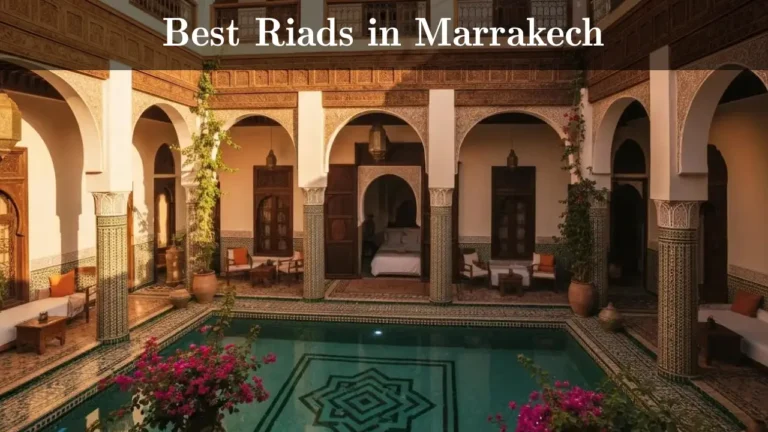

April is one of the most rewarding months for a first trip to Morocco. Days are usually warm without the intense summer heat, lower Atlas valleys are green, waterfalls can carry strong spring flow, and the Sahara remains comfortable when activities are planned around the hotter middle of the day.
For most travellers, Morocco in April is an excellent choice for combining Marrakech, Fes, the Atlas Mountains, desert landscapes and the Atlantic coast. The main trade-off is demand: Easter and European school holidays can make popular riads, desert camps and tours feel more like high season than a quiet spring break.
Table of Contents
Table of Contents
Is April a good time to visit Morocco?
Yes. Visiting Morocco in April works particularly well for first-time visitors, couples, families, photographers and walkers who want varied landscapes without having to travel in extreme heat.
Compared with March, April is normally warmer, drier and more stable, with longer days for sightseeing and road trips. March can be greener and sometimes quieter, but April is the better fit if reliable warmth matters most.
It is especially good for:
- Exploring Marrakech, Fes and Meknes on foot
- Visiting the Sahara before summer heat becomes severe
- Lower-altitude walks around Imlil and the Atlas valleys
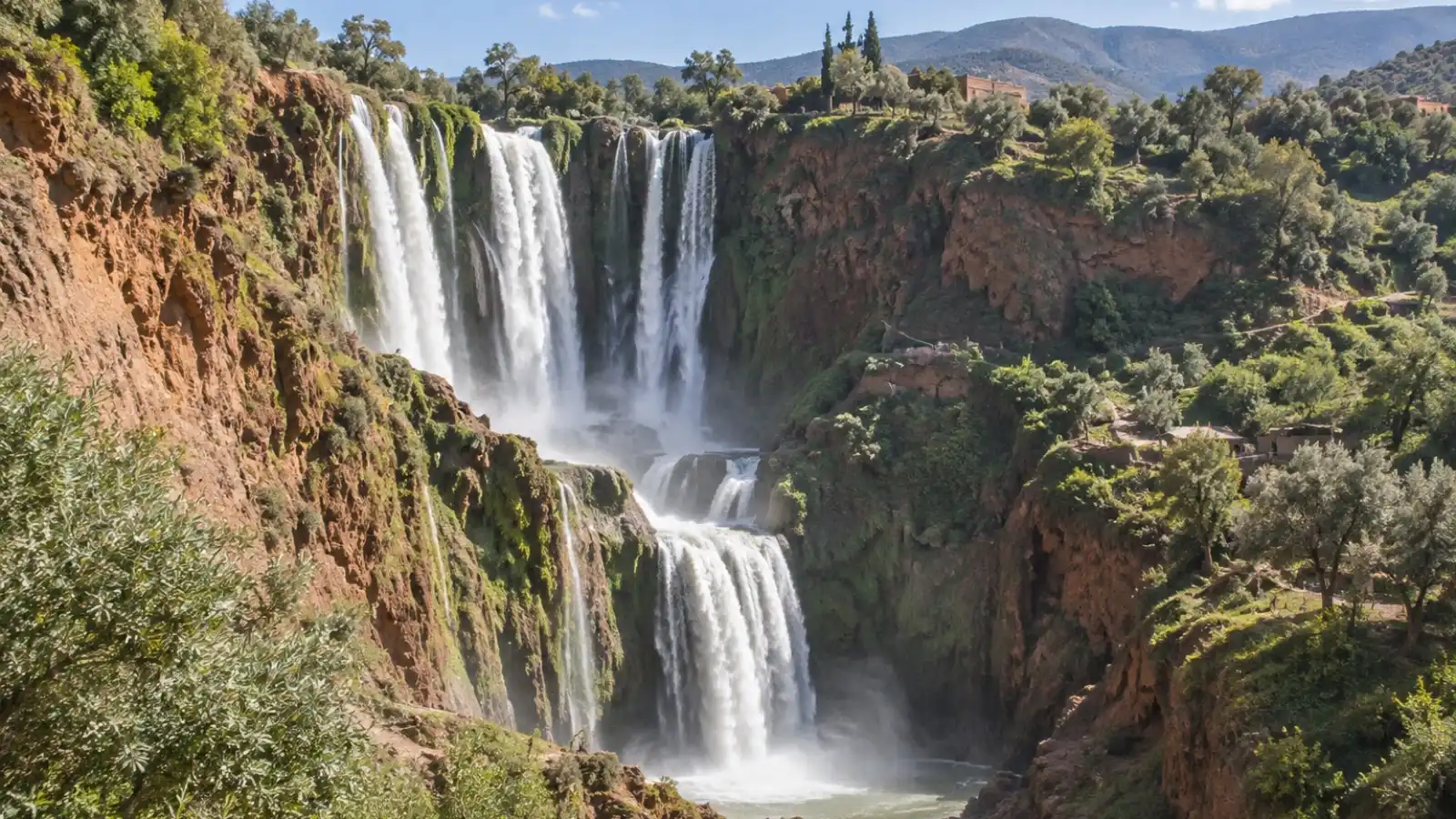
- Seeing Ouzoud Waterfalls with strong seasonal flow
- Road trips through Dades Valley, Skoura and Draa Valley
- Coastal stays in Agadir or Essaouira
- Spring photography, including blossoms, wildflowers and green agricultural fields
April is less ideal if your main goal is guaranteed warm Atlantic swimming. The weather may be pleasant on the coast, but the ocean is still cool.
Budget travellers should also be aware that April often brings higher accommodation demand than winter or early March. Book sought-after riads, desert camps and well-reviewed tours well ahead, especially around school-holiday dates.
Morocco weather in April by region
Morocco April weather varies considerably between the inland cities, coast, mountains and desert. Packing for Marrakech alone is not the same as packing for an overnight in the High Atlas or a Sahara camp.
Marrakech in April: warm days and cooler evenings
Marrakech in April is usually warm and very pleasant for sightseeing. Daytime temperatures typically sit around 24–28°C, while nights cool to roughly 11–14°C.
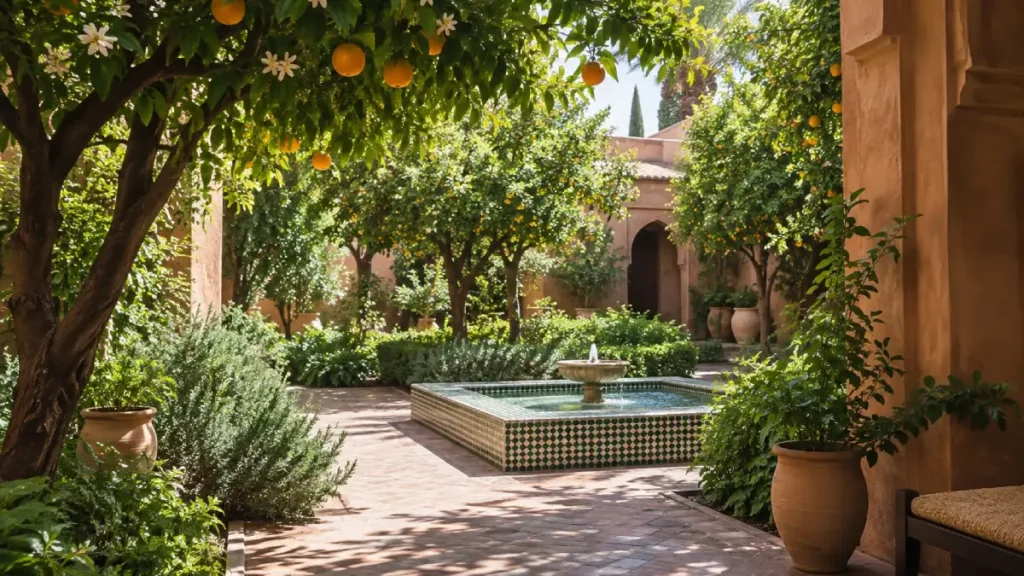
The sun can feel strong in the afternoon—occasionally almost like early summer—so plan your longest medina walks, gardens or palace visits for the morning. The late afternoon is also a good time for a rooftop terrace, a walk around the old city, or dinner after the heat has eased.
Marrakech is considerably more manageable in April than in midsummer, but it is not a month to underestimate the sun. Carry water, wear sunscreen and avoid scheduling a long outdoor excursion at the hottest point of the day.
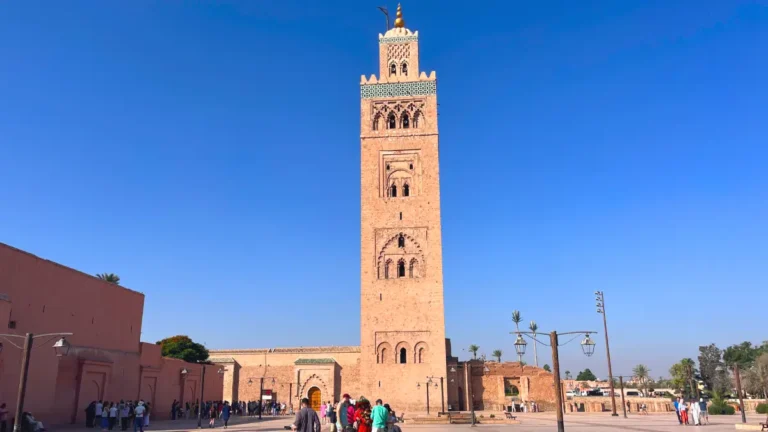
For neighbourhood advice, accommodation areas and practical city planning, see this detailed Marrakech travel guide.
Fes and Meknes: among the best April city breaks
Fes and Meknes are particularly comfortable in April. Typical daytime temperatures are around 21–25°C, generally cooler than Marrakech and well suited to long medina walks before summer arrives.
This is a good month for travellers who enjoy exploring historic streets slowly rather than rushing between indoor attractions. You can spend more of the day on foot, although the uneven lanes and hills of Fes still call for comfortable shoes.
Chefchaouen, Tangier and Rabat: drier spring weather, but bring a rain layer
Northern Morocco becomes noticeably drier in April, though it still receives more rain than the south. Rain is more likely to arrive as an occasional short spring shower rather than the persistent wet weather associated with winter.
Chefchaouen can feel fresh in the mornings and evenings because of its mountain setting, while Tangier and Rabat have a milder Atlantic influence. A lightweight waterproof layer is sensible for this part of the country, even when the forecast looks mostly dry.
Agadir and Essaouira: pleasant coast, cool Atlantic water
April is a comfortable time for the Atlantic coast, but Agadir and Essaouira offer different experiences.
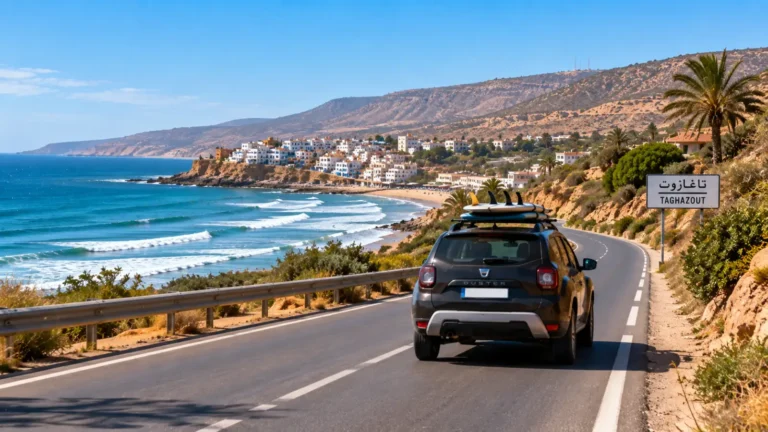
Agadir is normally sunnier and better suited to travellers who want beach weather, hotel pools and relaxed days outdoors. Essaouira remains breezier and is often a stronger choice for seaside walks, a more active coastal atmosphere and wind sports.
Atlantic water temperatures are usually around 17–19°C in April. Some visitors will swim, but most travellers should not expect genuinely warm ocean conditions. A hotel pool is often the more comfortable option if swimming is central to your trip.
Sahara in April: warm, but plan around the afternoon heat
In the Moroccan Sahara, daytime temperatures commonly reach around 28–32°C in April. Nights are still cooler, usually around 12–15°C, so a light warm layer remains useful at camp.
April is a good desert month, but the middle of the afternoon can already feel hot. Time camel rides, desert walks and photography sessions for sunrise or later in the afternoon rather than the strongest sun.
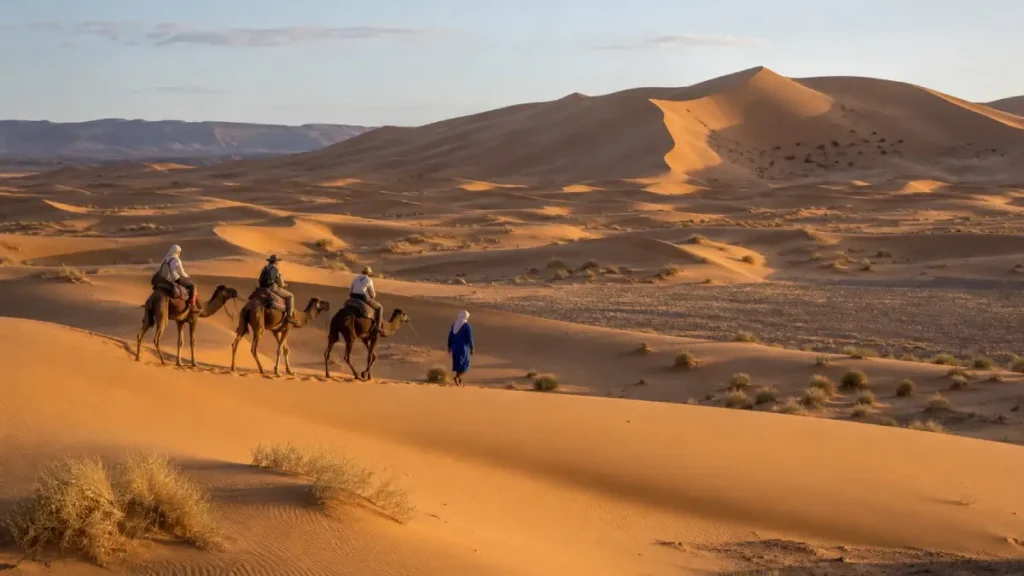
A desert overnight is more comfortable when you arrive prepared for two conditions: bright, dry daytime heat and a cooler evening after sunset. Sunglasses, sunscreen, a hat and a light jacket are all useful.
Where to go in Morocco in April
April is one of the most flexible months for building a varied itinerary. You can combine cities, mountain scenery and desert landscapes without facing the full heat of summer or the more frequent winter weather disruptions.
Marrakech for gardens, medina walks and warm spring evenings
Marrakech is busy in April, but for good reason. The weather supports full days of sightseeing, while evenings are cool enough for outdoor dining and wandering around Jemaa el-Fna.
The best approach is to pace the day well:
- Start early for souks, monuments and gardens.
- Keep the hottest hours flexible for lunch, a hammam, your riad or a shaded café.
- Return outside in the late afternoon.
- Bring a layer for later in the evening, especially after a warm day.
If your dates fall around Easter or European school holidays, do not leave central accommodation until the last minute.
Ouzoud Waterfalls for strong water flow and green surroundings
April is one of the best periods to visit Ouzoud Waterfalls. Winter rainfall and mountain snowmelt normally strengthen the flow, while the surrounding area is greener than it will be later in the summer.
It is a particularly worthwhile day trip from Marrakech for travellers who want a break from the city and do not mind a full day of travel. Paths around the falls can involve steps and uneven ground, so wear shoes with grip rather than sandals.
For route planning and practical expectations, read the guide to a Marrakech to Ouzoud Falls day trip.
Imlil and the lower Atlas for spring walking
The lower Atlas and Imlil are excellent in April. Many lower trails become easier, valleys warm to around 15–20°C, and the contrast between green lower slopes and snow remaining on high peaks can be striking.
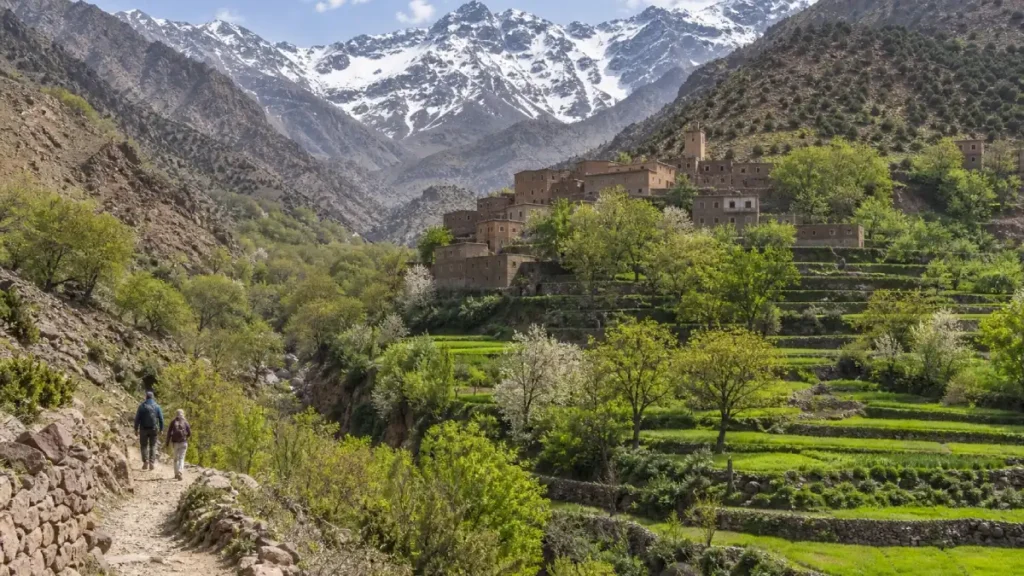
This is an especially good period for travellers who want village walks, valley scenery and moderate hiking without committing to a high-altitude expedition. Conditions can change quickly with elevation, however. A pleasant day in Imlil does not mean high mountain routes are free of snow or ice.
Snow can remain on the highest peaks, including Mount Toubkal. High-altitude routes may still require winter or technical equipment, relevant experience and a professional mountain guide. Confirm current trail conditions and safety requirements before setting out.
For accommodation, access and lower-valley planning, see the Imlil travel guide.
Dades Valley, Skoura and Draa Valley for spring landscapes
April is a rewarding time for a southern road trip through the valleys and oases between the Atlas and the desert.
The Dades Valley, Skoura and Draa Valley can be particularly attractive at this time of year, with:
- Green agricultural fields
- Palm groves
- Fruit blossoms
- Wildflowers
- Red rock landscapes contrasting with the cultivated valleys
These landscapes are very different from the image many travellers have of Morocco as entirely dry and desert-like. April shows the transition between mountain water, fertile valleys and arid southern terrain particularly clearly.
Rose Valley in late April: early flowers, but no guaranteed bloom date
Rose Valley begins changing toward the end of April as roses start blooming. Travellers visiting late in the month may see early flowers, although the main rose season and the largest celebrations are more strongly associated with May.
Blooming depends on that year’s temperatures and weather, so it is best to treat late April as a possible early-season opportunity rather than a guaranteed rose harvest experience. The advantage of arriving before the main May period can be fewer festival crowds.
April crowds, holidays and booking strategy
April can range from moderately busy to very busy. Marrakech, Fes and the most popular Sahara routes are especially affected by Easter and European school holidays.
Expect stronger demand for:
- Well-located riads in Marrakech and Fes
- Small boutique hotels in popular destinations
- Private drivers and multi-day tours
- Quality desert camps
- Atlas accommodation during popular travel weeks
- Activities with limited spaces
Prices vary widely by date and property, but accommodation and activities generally behave more like high season than winter low season. If you have a particular riad, desert camp or itinerary in mind, book it in advance rather than assuming spring availability.
Ramadan and Eid move through the Gregorian calendar each year. If either overlaps with April in your travel year, expect some changes to daytime opening hours, livelier evenings after iftar and altered schedules around Eid. Confirm the official dates before finalising your plans.
What to pack for Morocco in April
Layers are the key to packing for Morocco in April. You may have a warm afternoon in Marrakech, a cool night in the desert and a much colder morning in the Atlas within the same trip.
For most itineraries, pack:
- Breathable tops and modest daytime clothing
- Light trousers, skirts or dresses suitable for city walking
- A light sweater, fleece or jacket for evenings
- Comfortable walking shoes for medinas and uneven paths
- Sunglasses, sunscreen and a hat
- A lightweight waterproof jacket for northern Morocco
- A reusable water bottle for warm city and desert days
For the Atlas, add substantially warmer clothing than you would need in Marrakech or Fes. Temperatures drop with altitude, and weather can feel much colder when cloud, wind or snow is present.
For a Sahara overnight, bring sun protection for the day and a light warm layer for the evening. Sandals may be useful around camp, but closed shoes are more practical for walking and travel days.
For a fuller checklist by season and destination type, use this Morocco packing list.
Driving and road-trip advice for April
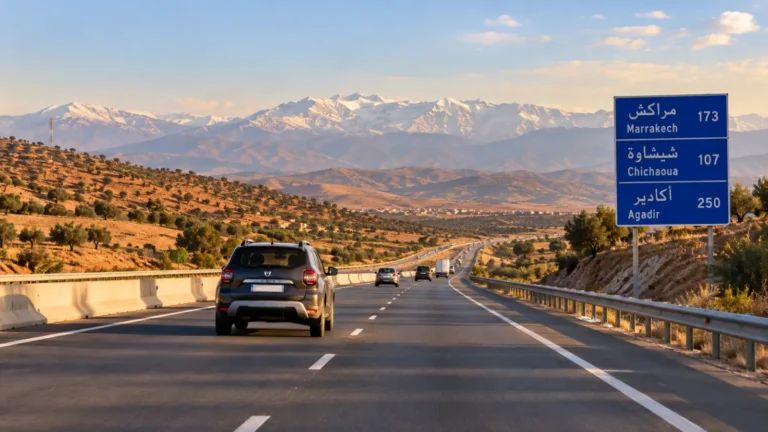
April is generally easier for road trips than deep winter. Major roads are normally straightforward, and the weather is well suited to journeys between cities, valleys and the desert.
That said, mountain driving still requires flexibility. Roads in the Atlas are winding, and higher passes can occasionally be affected by lingering snow, poor weather or temporary closures. Do not assume a particular pass is open simply because it is spring.
A sensible April road-trip approach is to:
- Avoid overly tight one-night itineraries through mountain areas.
- Check current road conditions before crossing higher routes.
- Allow more time than map estimates suggest on winding mountain roads.
- Avoid arriving at a remote destination after dark where possible.
- Keep an alternative route or extra night in mind if weather changes.
April’s long usable days make road travel easier than winter, but Morocco rewards travellers who leave room for real road conditions rather than treating every journey as a fixed timetable.
Who should choose Morocco in April?
April is a strong choice if you want warm weather without the harshest summer temperatures. It is one of the best months for a classic first itinerary that includes Marrakech, Fes, the Atlas Mountains and the Sahara.
Choose April if you are:
- Visiting Morocco for the first time
- Looking for warm city weather and cooler evenings
- Interested in lower-altitude hiking or valley walks
- Planning a Sahara trip but want to avoid peak summer heat
- Traveling for spring landscapes, waterfalls and photography
- Happy to book in advance for popular dates
Consider another period if you are traveling on a tight budget and want lower accommodation prices, or if your main priority is warm Atlantic sea swimming.
For a broader month-by-month comparison, see the guide to the best time to visit Morocco.
FAQ
Is April a good time to visit Morocco?
Yes. April combines generally warm weather with comfortable conditions for cities, lower Atlas walks and Sahara travel. It is also a good month for green valleys, strong spring waterfall flow and seasonal landscapes.
How hot is Marrakech in April?
Marrakech typically has daytime temperatures around 24–28°C in April, with nights around 11–14°C. Afternoon sun can feel strong, so plan outdoor sightseeing earlier or later in the day.
Can you swim in Morocco in April?
Hotel pools in places such as Agadir can be pleasant, but Atlantic water is still cool at around 17–19°C. Most travellers should not expect reliably warm ocean swimming.
Is the Sahara too hot in April?
No, but desert afternoons are becoming noticeably hot. Daytime temperatures commonly reach around 28–32°C, while nights remain cooler. Schedule camel rides and walks around sunrise or late afternoon.
Can I trek in the Atlas Mountains in April?
Lower-altitude hiking around Imlil is excellent in April, with warmer valleys and greener scenery. Higher routes, including Mount Toubkal, may still have snow and ice and can require winter or technical equipment depending on current conditions.