
A cooking class Marrakech experience is one of the best ways to understand Morocco beyond restaurant menus. You do not only learn how to make a tagine. You learn why cumin is not used everywhere, why preserved lemon changes a dish completely, why mint tea is a ceremony, and why Moroccan food tastes different when it is cooked slowly at home.
Marrakech is a city for all the senses. In one morning, you can hear the muezzin, smell fresh bread from a neighbourhood oven, walk past pyramids of turmeric, ginger, paprika and ras el hanout, then sit down with a family or chef to cook the food you just bought.
For the bigger picture of where to go, what to skip, and how to plan your days, read my Marrakech travel guide before choosing your cooking class.
So yes, a Marrakech cooking class is a good idea in 2026. But not all classes are the same. Some are short riad workshops. Some are social-impact projects. Some are market-to-table classes inside the medina. Some are Berber home experiences outside the city.
Shwiya b’shwiya — let’s choose the right one.
Table of Contents
Table of Contents
Quick Answer: Best Marrakech Cooking Class by Traveller Type
- If you want the most authentic family experience, choose a Berber home cooking class outside Marrakech, especially in the Ourika Valley or Atlas foothills.
- If you want the easiest first-time experience, choose a riad or boutique cooking class in Marrakech with clear English explanations and all ingredients prepared.
- If you want your money to support a good cause, choose Amal Women’s Training Center.
- If you want refined technique and a polished setting, choose La Maison Arabe.
- If you want a budget-friendly Moroccan cooking class Marrakech experience, choose a small-group medina class with a market visit.
- If you are travelling with children, choose a family-friendly class where the pace is slower and the environment is relaxed.
Marrakech Cooking Class Price Guide 2026
Prices change by season, platform, class size, and what is included. But as a general guide:
Budget Group Class
$19–$50
Medina Market + Cooking Class
$60–$80
Social-Impact Class
$40–$100
Riad / Boutique Class
$35
La Maison Arabe style experience
Private Berber Home Class
€80–€150+
If you are comparing class prices in euros, dollars or dirhams, also read my guide to money and ATMs in Morocco so you understand cash, cards, tipping and exchange rates before you arrive.
Best Cooking Classes Marrakech: Comparison by Experience
1. Best for Authentic Family Culture: Berber Cooking Class with Morkosh Tours
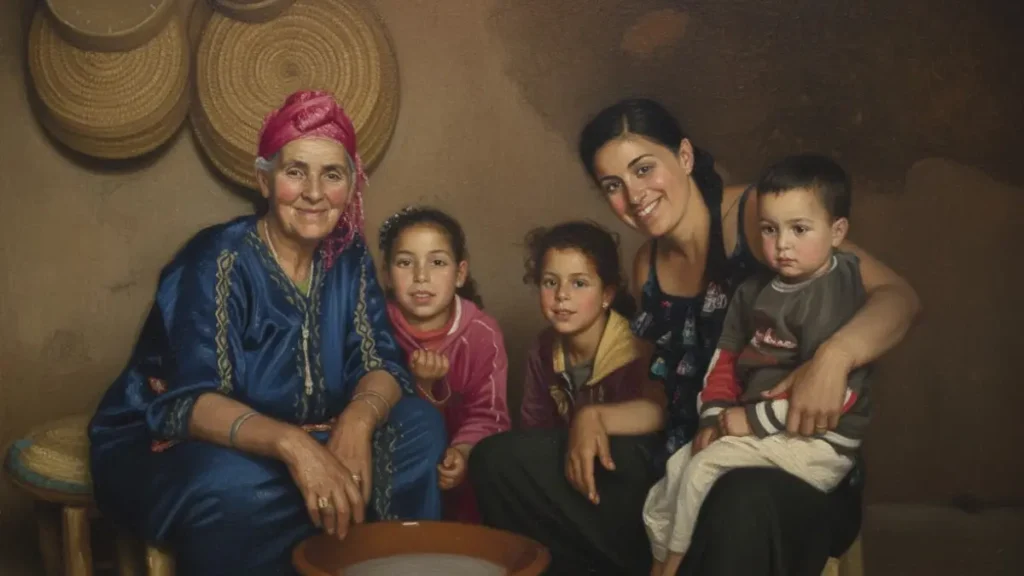
This is the one I naturally recommend most strongly because it is not just a kitchen lesson. It is a cultural day.
With Morkosh Tours, the Berber cooking class is built around a real family experience outside Marrakech. Marketplace descriptions of the Morkosh Berber cooking day mention the Ourika Valley direction, a women’s cooperative stop, and cooking with a Berber family, with Malika, the grandmother of the family, leading the cooking while the guide translates and helps guests understand the process.
This is very different from standing at a polished hotel counter. You are not only learning a recipe. You are seeing how food connects to village life, family roles, bread, tea, market shopping, and hospitality.
- Best for: families, couples, private groups, travellers who want culture more than only technique.
- Typical experience: hotel pickup, market or cooperative visit, drive toward the Atlas/Ourika area, Berber market & family home, mint tea, cooking, shared meal.
- Good to know: this takes more time than a city cooking class, so do not book it on a rushed Marrakech day.
If you want the most meaningful food experience, book the family-friendly Berber cooking class with Morkosh Tours. It is ideal if you want Moroccan food, family hospitality, and a softer escape from the medina in one day.
- See the Berber Cooking Class itinerary with Morkosh Tours.
Who Should Not Book a Countryside Berber Cooking Class?
- Do not book a countryside Berber cooking class if you only have two or three free hours, need to stay inside Marrakech, or want a fast activity between sightseeing stops.
- This experience works best when you give it space. The drive, tea, family welcome, cooking, conversation and shared meal are all part of the value. If you rush it, you miss the point.
- If your Marrakech schedule is tight, choose a medina or riad cooking class instead. If you have half a day or more and want a deeper cultural experience, the Berber home class is the stronger choice.
2. Best for Social Impact: Amal Women’s Training Center
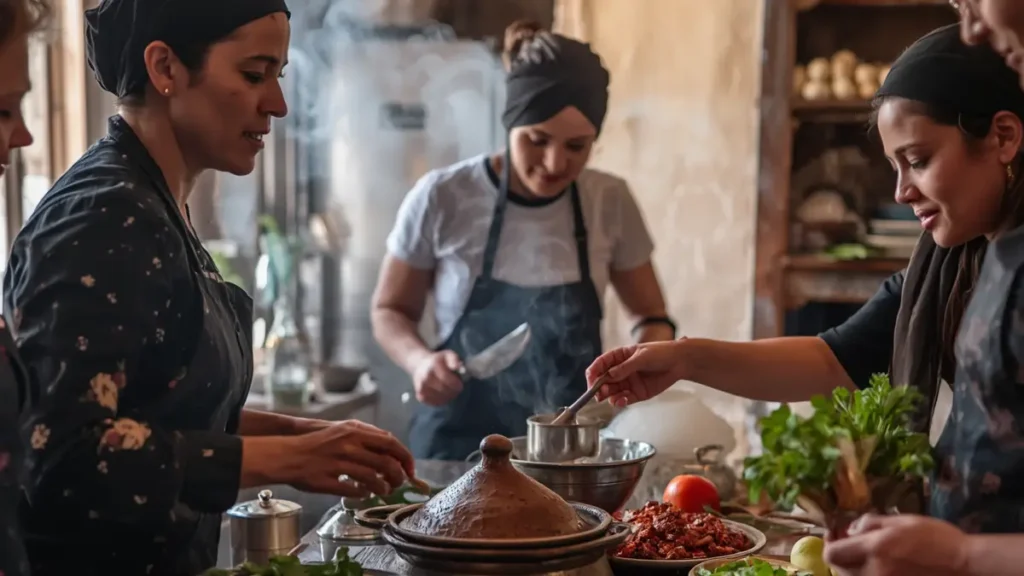
Amal Women’s Training Center is one of the best-known social-impact food projects in Marrakech. Its official site describes a training program for women who want to become chefs, combined with a restaurant and catering service.
Their cooking class is located at the Targa Center and includes making your own Moroccan dish with Amal’s chefs, learning about Moroccan cuisine and culture, and a traditional tea ceremony. Amal describes the class as a three-hour experience that ends with eating the food you cooked.
This is a good choice if you want your travel spending to do something useful. You get a cooking class, but you also support women’s empowerment in Morocco.
- Best for: ethical travellers, solo travellers, small groups, food lovers who want purpose behind the activity.
- What you may cook: tagine, couscous, Moroccan salads, or other traditional dishes depending on the program.
- Good to know: book ahead, because social-impact experiences can fill up quickly.
3. Best for Luxury and Technique: La Maison Arabe
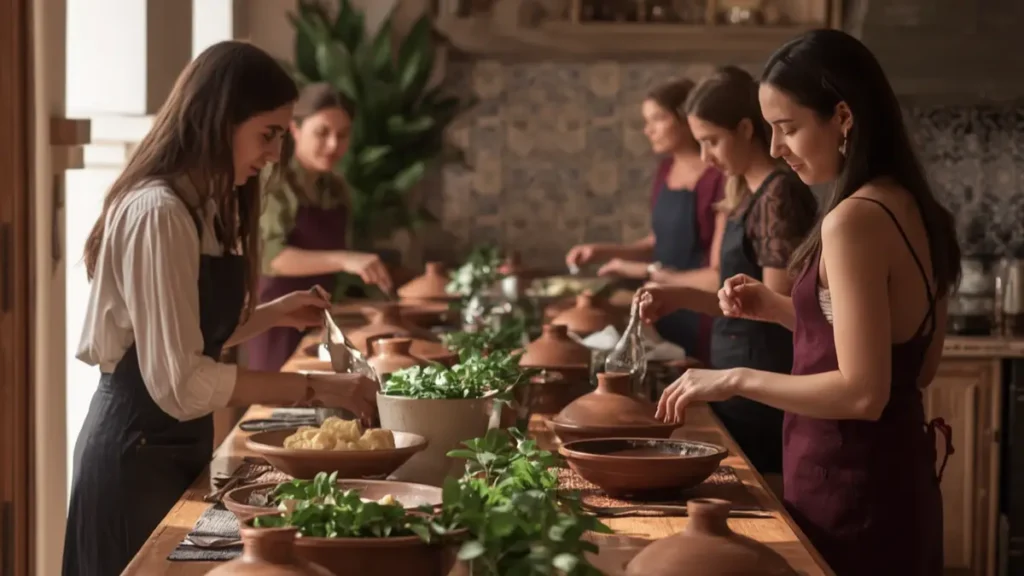
La Maison Arabe is one of the most refined names for a Marrakech cooking class. Its official cooking school page says the workshops are open to hotel guests and outside visitors, and that guests learn Moroccan recipes from dadas, traditional Moroccan cooks, using modern kitchen equipment.
Its half-day workshops usually include preparing an appetizer and main dish, with dessert demonstrated before guests enjoy the meal. Their setup includes individual cooking stations with screens so participants can follow the demonstration clearly.
This is the right choice if you want a polished cooking school rather than a home-style class. It feels more professional, more organised, and less improvised.
- Best for: serious beginners, couples, luxury travellers, foodies who want technique.
- What to expect: structured class, clear instruction, refined setting, traditional Moroccan recipes adapted to home kitchens.
- Good to know: this is not the cheapest option, but it is one of the most established.
4. Best for Market-to-Table Medina Energy: Chef Khmisa-Style Classes
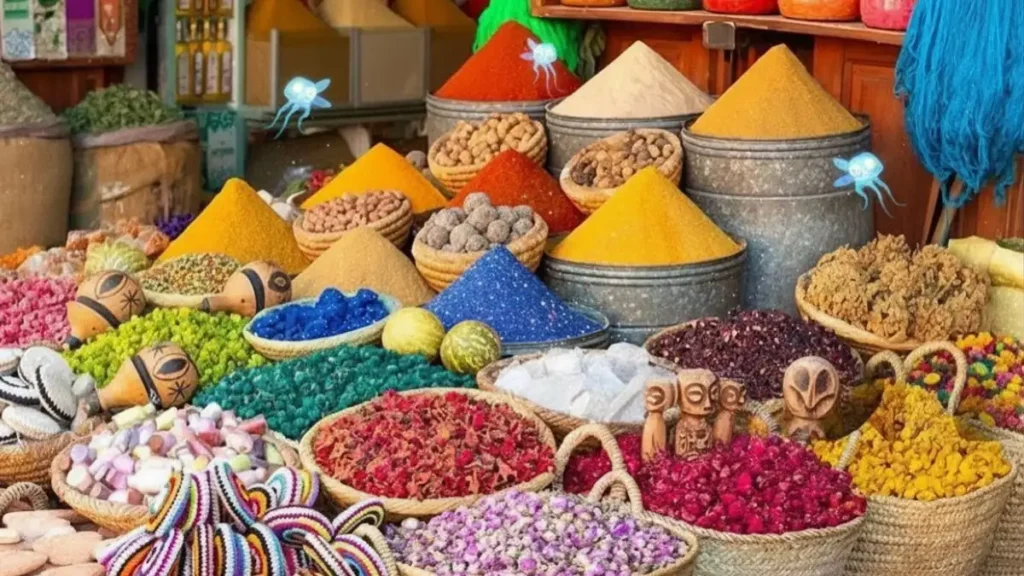
A market-to-table cooking class in Marrakech is perfect if you want to feel the rhythm of the medina. You usually begin with a market walk, buy herbs, vegetables, spices or meat, then go to a home kitchen or workshop space to cook.
Chef Khmisa is one of the better-known names in this category. Cookly describes Khmisa as having 25 years of chef experience in Moroccan cuisine and pastry, with work in prestigious hotels in Rabat and Marrakech. Some listings also present Khmisa-style classes as family-friendly, with market exploration and options for vegan or gluten-free travellers.
This type of Marrakech cooking class is good because it connects ingredients to the final dish. You do not just receive chopped vegetables in a bowl. You understand where they came from.
- Best for: first-timers, solo travellers, food lovers, travellers who want medina atmosphere.
- What to expect: market visit, mint tea, tagine preparation, Moroccan salads, shared meal.
- Good to know: wear comfortable shoes. Medina market walks are part of the experience.
5. Best for Serious Foodies: Multi-Course or Private Chef Classes
Some travellers do not want a simple chicken tagine. They want the deeper stuff: pastilla, taktouka, zaalouk, briouates, mrouzia, tanjia, preserved lemon technique, spice balance, or Moroccan pastry.
For this, choose a private chef class or a more advanced riad/hotel workshop. These cost more, but the teacher can slow down and explain properly.
- Best for: serious home cooks, repeat Morocco visitors, private groups.
- What to ask before booking:
- Can we choose the menu?
- Is the class hands-on?
- Will we learn spice ratios?
- Is there a market visit?
- Can we learn tanjia or only tagine?
If the answer is vague, keep looking.
Are Farm-to-Table Cooking Classes in Marrakech Worth It?
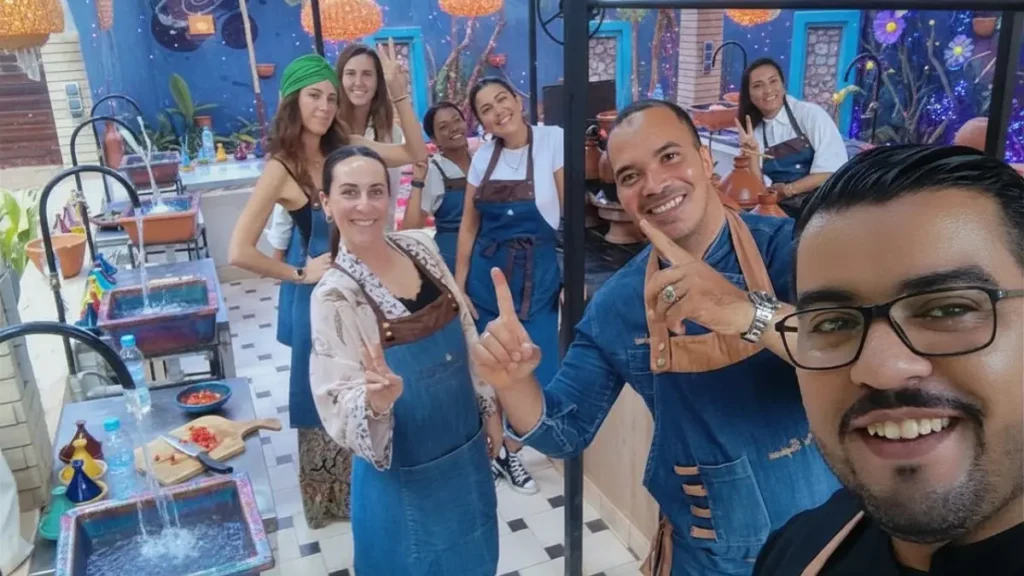
Farm-to-table cooking classes are worth it if you want a slower day and a stronger connection between ingredients and place. Instead of only cooking inside a riad kitchen, you may visit a garden, countryside home, cooperative, or small farm-style setting near Marrakech or the Atlas foothills.
The benefit is atmosphere. You see herbs, bread, olive oil, seasonal vegetables, tea, and family rhythm together. The trade-off is time. A farm-to-table or Berber home class usually takes longer than a city workshop, so it works best when you build the day around it.
The case you only have one free morning, stay inside Marrakech. If you want food, family hospitality and countryside in one experience, go outside the city.
If you prefer a ready-to-book farm-to-table cooking class in Marrakech, you can compare available small-group and countryside cooking experiences on Viator. Look for classes that include a market visit, hands-on cooking, mint tea, transport details, and clear recent reviews before booking.
Tagine, Tanjia and Moroccan Cooking: What You Actually Learn
What Is a Tagine?
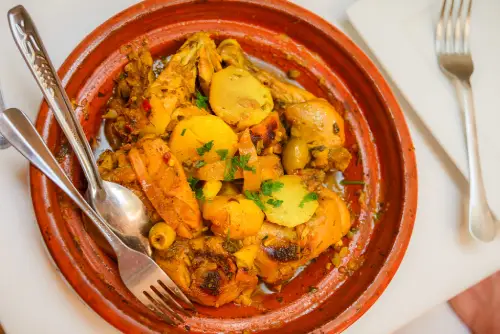
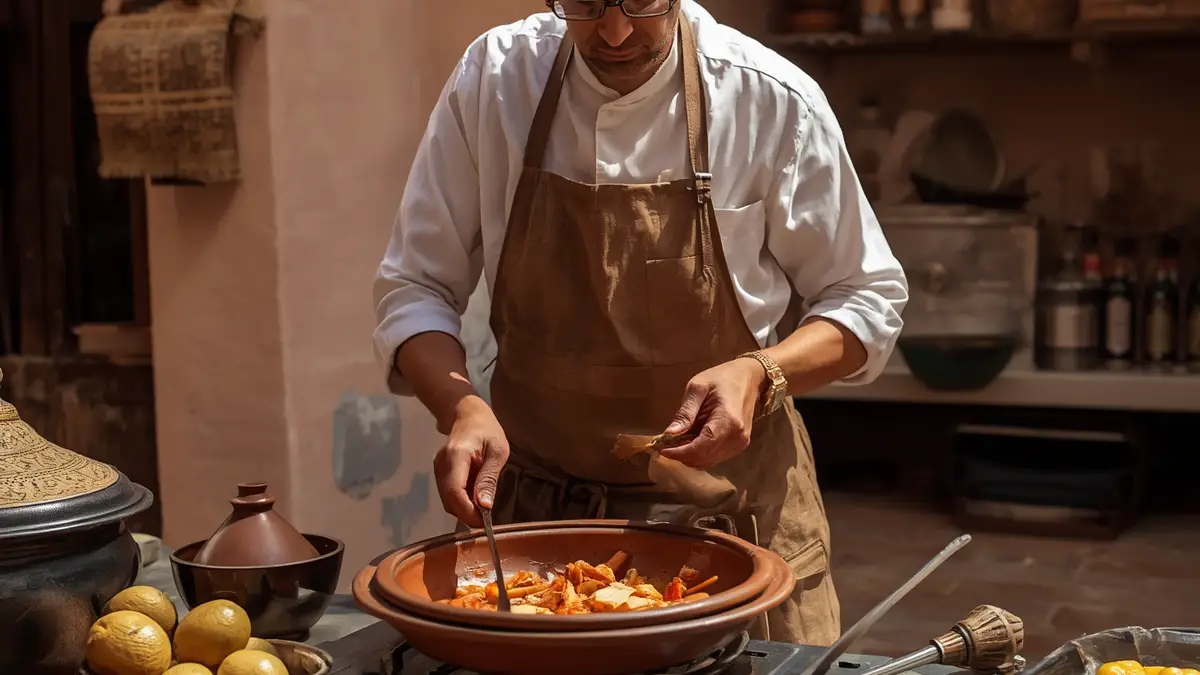
A tagine is both the dish and the cone-shaped clay pot used to cook it. The cone traps steam, which falls back into the food as it cooks. This matters in Morocco because slow cooking creates flavour without needing too much liquid.
A proper tagine is not rushed. Chicken or vegetable tagines may cook faster, but meat tagines can take longer. In a cooking class, the process is often adapted to fit the schedule, but the teacher should still explain the slow-cooking logic.
The Secret Is Not “More Spices”
Many visitors think Moroccan cooking means throwing ten spices into everything. No. The real skill is balance.
Common foundations include:
- Ginger
- Turmeric
- Cumin
- Paprika
- Black pepper
- Saffron or saffron-style colouring in some dishes
- Cinnamon for sweet-savoury dishes
- Ras el hanout for selected recipes, not everything
A good teacher explains when not to use a spice. That is where the learning begins.
Preserved Lemon Changes Everything
For chicken tagine with olives, preserved lemon is not decoration. It is the key. It gives salt, acidity, aroma, and depth.
Many travellers buy preserved lemons in the souk but do not know how to use them. In a good cooking class in Marrakech, ask how much to use, whether to rinse them, and which part of the lemon goes into the dish.
Tanjia Is Not Tagine
This is important in Marrakech.
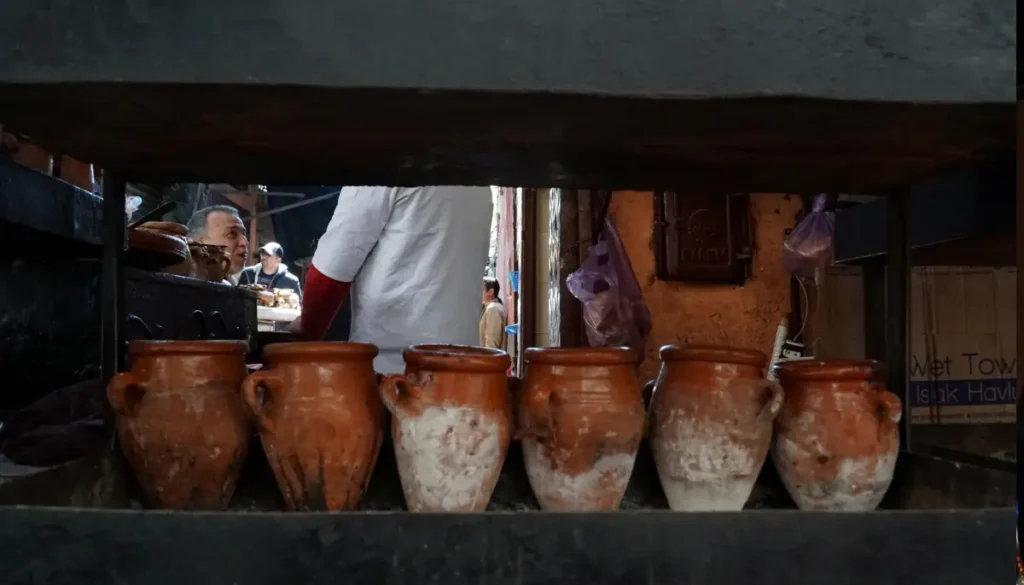
Tagine is cooked in a shallow clay pot with a cone lid. Tanjia is a Marrakech speciality traditionally made with meat, spices, preserved lemon, garlic, and smen, then slow-cooked in a clay urn, historically using the heat of a hammam furnace or communal oven.
If a class teaches tanjia, pay attention. It is one of the most local dishes in Marrakech.
Cooking Class or Food Tour: Which Should You Book?
Book a food tour if you want to taste many things in one evening: olives, bread, grilled meats, soup, sweets, tea, and street food.
Book a cooking class if you want to understand how Moroccan food is made.
For many travellers, the best order is:
- Do a Marrakech food tour on your first evening.
- Take a cooking class the next day or later in the trip.
- Eat in local restaurants with more confidence after that.
This way, food becomes part of your whole Marrakech experience, not just one activity.
If you prefer tasting many dishes instead of cooking one full meal, compare the best Marrakech food tours first. A food tour is better for variety; a cooking class is better for understanding.
Beyond the Kitchen: What to Combine with a Cooking Class
A cooking class Marrakech experience works best when you build the day around it instead of squeezing it between three monuments.
Jemaa el-Fnaa Before Sunset
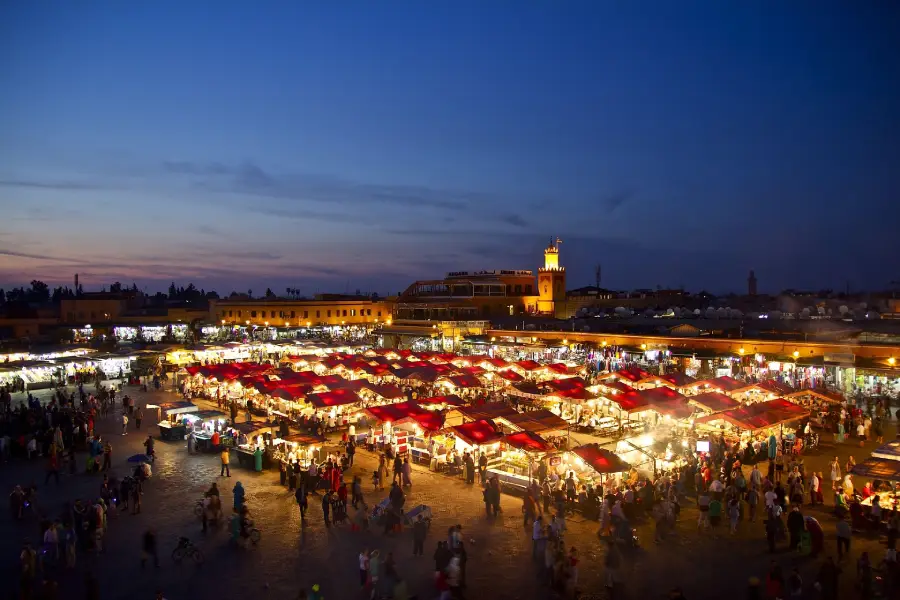
Go a few hours before sunset to see the square change. In the afternoon, it feels open and a little strange. By evening, food stalls, smoke, drums, storytellers and crowds transform it completely.
Instagram shows the magic. Reality includes noise, pushy sellers, and confusion. Go with curiosity, but keep your common sense.
Majorelle Garden and Gueliz
If your class is in the morning, Majorelle Garden can be a good afternoon stop. Book tickets ahead when possible and avoid peak crowds.
Bahia Palace or Ben Youssef Madrasa
If you want culture before cooking, visit one major heritage site in the morning, then cook later. Do not try to visit every palace and also do a cooking class. Marrakech rewards slower days.
Hammam After Cooking
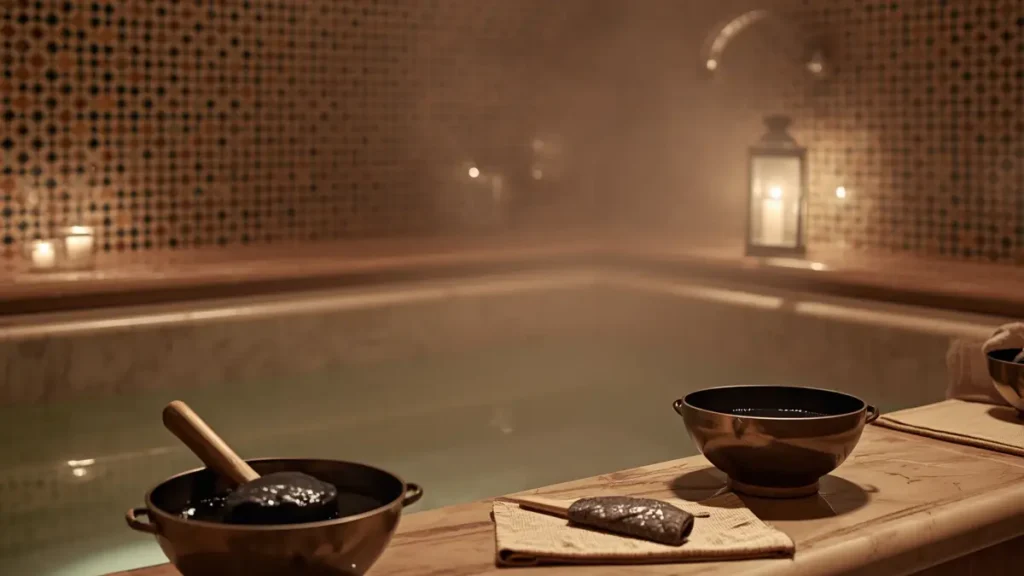
A hammam after a market walk or cooking class can be perfect. You cook, eat, walk back through the city, then wash off the day.
If you want to make this a full Moroccan ritual day, pair the class with a best hammam in Marrakech option or read my full Moroccan hammam experience guide first.
Essential Planning Tips for Marrakech Cooking Classes
How Long Is a Half-Day Cooking Class in Marrakech?
Most cooking classes Marrakech visitors book last around 3–4 hours. Some shorter hotel or riad workshops may be 2–3 hours. A Berber home or farm-to-table experience outside the city can take 5–7 hours including transport.
Do not book another important activity immediately after. Moroccan meals are not meant to be rushed.
Do You Need Prior Cooking Experience?
No. Most classes are designed for beginners. You do not need knife skills or chef knowledge.
In Morocco, cooking is often learned by watching mothers, grandmothers and dadas. A good class should feel practical, not intimidating.
Can Vegetarians and Vegans Join?
Yes, but ask before booking. Vegetarian tagines, zaalouk, taktouka, lentils, beans, salads, bread, and vegetable couscous can work very well.
Vegans and gluten-free travellers should be more specific. Ask about butter, smen, shared surfaces, bread, couscous, and whether the class can genuinely adapt.
Is Marrakech Safe for Solo Female Travellers Taking a Cooking Class?
Generally, yes, especially if you book a reputable class, arrange transport clearly, and avoid wandering through unfamiliar alleys late at night.
For solo female travellers, I recommend daytime classes, riad pickup if available, or a well-reviewed class in an easy-to-find location. The medina is fascinating, but do not accept help from random “guides” who appear suddenly and then demand money.
What Should You Wear?
Wear comfortable shoes if there is a market walk. Wear something modest and practical: light trousers, long skirt, simple top, or breathable shirt.
Avoid long loose sleeves if you will be cooking near heat. Bring hair ties if needed.
For a full clothing and climate breakdown, especially if your trip also includes the Atlas, Sahara or coast, use my what to wear in Morocco guide.
What Should You Bring?
Bring:
- Small cash
- Phone or camera
- Comfortable shoes
- Appetite
- Hand sanitizer
- Notebook if you like recipes
- A light jacket in winter
- Any allergy details written clearly
Do not bring too much. You need your hands free.
My Honest Recommendation
- If you only want a simple class and you are staying in Marrakech for two nights, book a small-group medina cooking class.
- If you want a polished, classic experience, choose La Maison Arabe.
- If you want your money to support a mission, choose Amal Women’s Training Center.
- Want a private, family-friendly Berber cooking class near Marrakech?
- Book the Morkosh Tours Berber cooking class if you want more than a recipe. You will spend the day learning Moroccan food in a real family setting, with market culture, mint tea, slow cooking, countryside atmosphere and a shared meal.
- For me, this is the best cooking class Marrakech experience if you want food to become culture, not just another activity on your itinerary.
FAQ: Cooking Class Marrakech 2026
What is the best cooking class Marrakech experience for first-timers?
For first-timers, the best choice is usually a class with a market visit, mint tea, tagine preparation, Moroccan salads, and a shared lunch. If you want more comfort, choose a riad or boutique class. If you want deeper culture, choose a Berber home experience.
How much do cooking classes in Marrakech cost?
Most group classes cost around €30–€70, depending on the format and platform. Private, luxury, or countryside experiences can cost more because they include transport, smaller groups, or a more personal setting.
How long is a cooking class in Marrakech?
Most city cooking classes last around 3–4 hours. Countryside, Berber home, or farm-to-table classes can take 5–7 hours including transfers and market stops.
Do I need cooking experience?
No. Most Marrakech cooking class experiences are beginner-friendly. The goal is not to turn you into a chef in one morning, but to help you understand Moroccan ingredients, methods, and food culture.
Can vegetarians join a Moroccan cooking class Marrakech experience?
Yes. Moroccan cuisine has many vegetarian dishes, including vegetable tagines, lentils, beans, salads, olives, bread and couscous.
Vegans and gluten-free travellers should confirm details before booking, especially for couscous, bread, butter, smen and shared cooking surfaces. Do not assume every class can adapt properly unless it is clearly confirmed in advance.
Is a Berber cooking class worth it?
Yes, if you want culture, not only a recipe. A Berber cooking class usually gives you a slower, more personal experience with family hospitality, market ingredients, mint tea, and countryside atmosphere.
Should I book a food tour or a cooking class?
Book a food tour if you want to taste many foods in the medina. Book a cooking class if you want to learn how Moroccan dishes are made. If you have time, do both: food tour first, cooking class later.
What should I buy in the Marrakech souks after a cooking class?
Good food souvenirs include spices, preserved lemons, argan oil, saffron from a trusted seller, olives, ceramic tagine dishes for serving, and small tea glasses. Be careful with cheap “saffron” and always ask your teacher or guide where to buy quality spices.