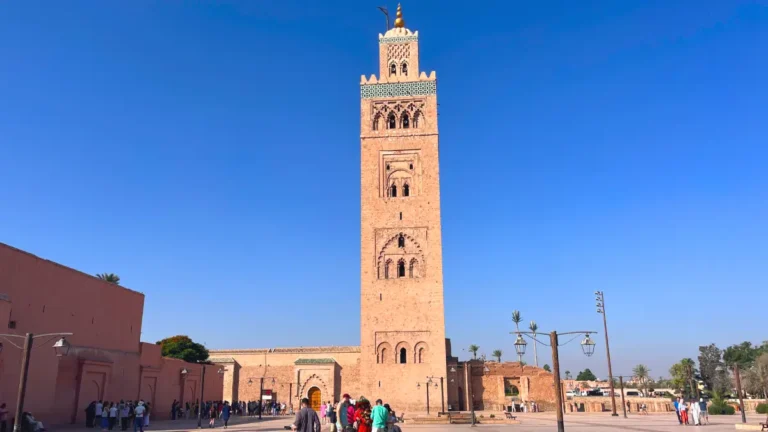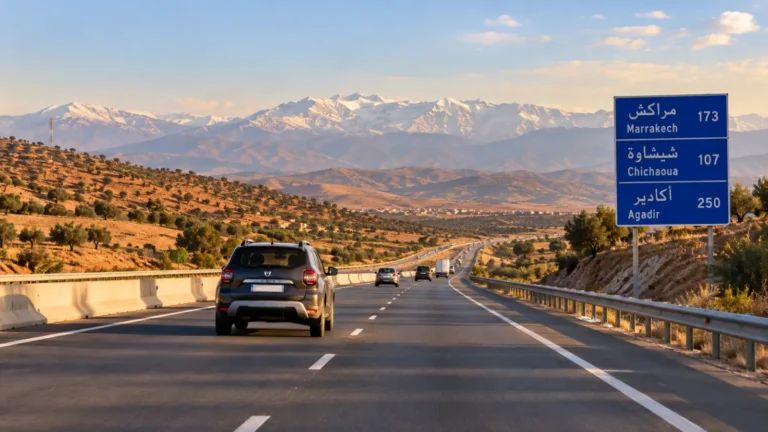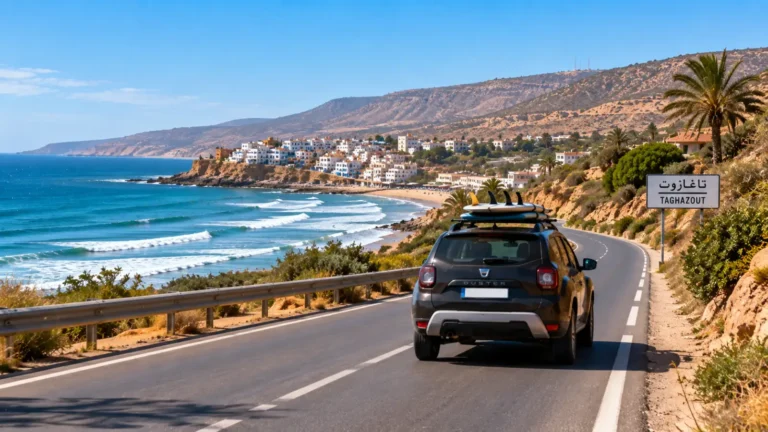

Morocco in September is a month of two halves. The first days can still feel very much like summer, especially in Marrakech, Fes and the Sahara, while the second half brings cooler inland temperatures, quieter roads and beaches, and far more comfortable conditions for sightseeing and trekking.
So, is September a good time to visit Morocco? Yes—particularly from mid-September onward. It is a strong choice for travellers who want warm Atlantic water, fewer crowds than August, and the chance to combine cities, the coast, the Atlas Mountains and, later in the month, the Sahara. Travellers who struggle with high heat should avoid an early-September inland itinerary or consider October instead.
Table of Contents
Table of Contents
What is Morocco weather like in September?
Morocco weather in September depends heavily on where you go and when you travel. The country is large enough for the coast, northern cities, mountains and desert to feel like different seasons on the same day.
Early September remains hot in the interior. Marrakech, Fes, Meknes, the southern valleys and Merzouga can still have demanding daytime heat. By late September, temperatures become more manageable in most regions, although the Sahara remains warmer than the coast and mountains.
The main September pattern is straightforward:
- Early September: still summer-like inland, hot in Marrakech and very hot in the desert.
- Mid-September: improving city sightseeing conditions and fewer holiday crowds.
- Late September: one of the better shoulder-season periods for a wider Morocco itinerary, including trekking and desert travel.
- Coastal Morocco: warm and generally comfortable through the month, with Atlantic water close to its warmest point of the year.
September is not the month to assume that all of Morocco suddenly turns cool on September 1. Plan your route around the actual conditions in each region.
Is September a good time to visit Morocco?
September is a good time to visit Morocco if you choose the right destinations for your dates.
The biggest advantages are the reduction in crowds after the August holiday peak, warm beach weather, and gradually improving conditions in Marrakech, the Atlas and the southern interior. Coastal towns and resort areas can also offer better value after the August peak, although hotel rates still depend on the destination, property and exact travel dates.
Late September is particularly well suited to travellers who want a classic multi-stop trip: Marrakech, the coast, the Atlas Mountains, valleys such as Dades or Skoura, and the Sahara.
October is normally the stronger choice for a first-time Marrakech-Fes-Sahara itinerary because conditions are more consistently comfortable across the country. But late September can be the better-value option for travellers happy to accept slightly warmer inland temperatures in exchange for quieter attractions and warm Atlantic swimming.
Who should visit Morocco in September?
September works especially well for:
- Travellers looking for warm beach weather without August-level crowds.
- Couples and families who prefer quieter coastal resorts.
- Surfers visiting Essaouira, depending on daily wind and swell conditions.
- Hikers planning late-September Atlas trekking.
- Travellers who can schedule Marrakech and desert time after mid-month.
- Road trippers who want easier conditions in Dades, Skoura and the Draa Valley than in August.
Who should consider another month?
Early September is less suitable for travellers who cannot tolerate heat, particularly if their route includes Marrakech, Fes, Merzouga or southern valleys.
If you want the most consistently comfortable conditions for cities, long drives and the Sahara, late October or November may be a better fit. For a broader look at seasonal choices, see this guide to the best time to visit Morocco.
Marrakech in September: hot early, much easier later
Marrakech remains warm in September, and the first half of the month can still feel genuinely hot. Monthly averages are less useful than the forecast for your exact dates because conditions often change noticeably as the month progresses.
Early September daytime temperatures often reach the 30s. This is not ideal for spending long afternoons walking through the medina, visiting gardens or crossing open squares. Visitors should organise sightseeing around the cooler parts of the day rather than expect autumn weather.
From mid-September onward, Marrakech often becomes more practical for daytime exploration. Later in the month, cooler daytime conditions can make a substantial difference when walking between the medina, palaces, museums and souks.
How to plan Marrakech sightseeing in early September
If you are visiting Marrakech during the first part of the month:
- Start outdoor sightseeing early in the morning.
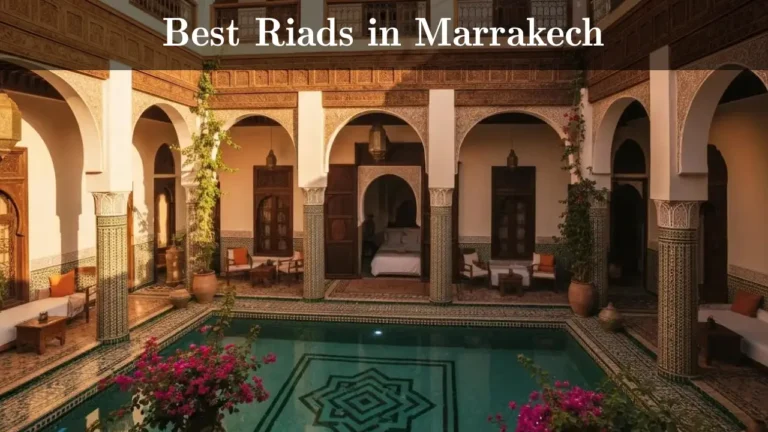
- Keep the middle of the day for lunch, a hammam, a museum, your riad or a pool break.
- Return to the medina and Jemaa el-Fna later in the afternoon.
- Carry water and use strong sun protection.
- Choose accommodation with reliable cooling if heat affects your sleep.
The final two weeks of September are much more suitable for travellers who want to explore Marrakech fully without the more intense July and August conditions. For neighbourhood and itinerary ideas, consult the Marrakech travel guide.
Fes and Meknes become more comfortable in the second half of September
Fes remains warm to hot in early September, with daytime temperatures often reaching the low 30s. The old medina is shaded in places, but its narrow lanes, hills and occasional traffic can still make a hot day feel tiring.
During the second half of the month, daytime conditions generally improve and longer walks become more comfortable. This is a better time for longer medina walks, tanneries, craft workshops and panoramic viewpoints.
Meknes follows a similar seasonal pattern. It can be a sensible choice for travellers who want an imperial-city experience at a more relaxed pace than Marrakech or Fes. The second half of September is generally the more comfortable period for both cities.
Tangier, Chefchaouen and Rabat are excellent September choices
Northern and coastal Morocco are among the best places to visit in September. Tangier, Chefchaouen and Rabat benefit from Atlantic and Mediterranean influences that keep daytime conditions much more comfortable than in the inland south.
Daytime conditions in these areas are generally milder than in inland Morocco, although they still vary by destination and date. That makes September a practical month for walking, café stops, coastal viewpoints and unhurried city exploration.
Tangier for coast and city life
Tangier is a useful choice for travellers arriving from Europe, combining a historic medina, waterfront areas and easy access to the northern coast. September brings warm conditions without the same level of summer-holiday pressure.
Chefchaouen for cooler mountain air
Chefchaouen is not cold in September, but its Rif Mountain setting can feel more comfortable than Marrakech or Fes. It works well as part of a northern route, particularly for travellers who prefer walking and photography to extreme heat.
Rabat for a calmer city break
Rabat is often a good fit for travellers who want a more relaxed urban stop. September’s coastal influence makes it easier to explore than the hottest inland cities, especially when paired with Casablanca or Tangier.
Agadir and Essaouira offer warm Atlantic beaches
September is one of the strongest months for Morocco’s Atlantic coast. The air remains warm, the ocean is much more inviting than in winter or spring, and crowds ease after August.
Agadir is one of the best September beach destinations
Agadir remains one of Morocco’s best beach choices in September. Days are usually warm, and the Atlantic is generally more inviting than in winter or spring, although water temperature and cloud cover vary.
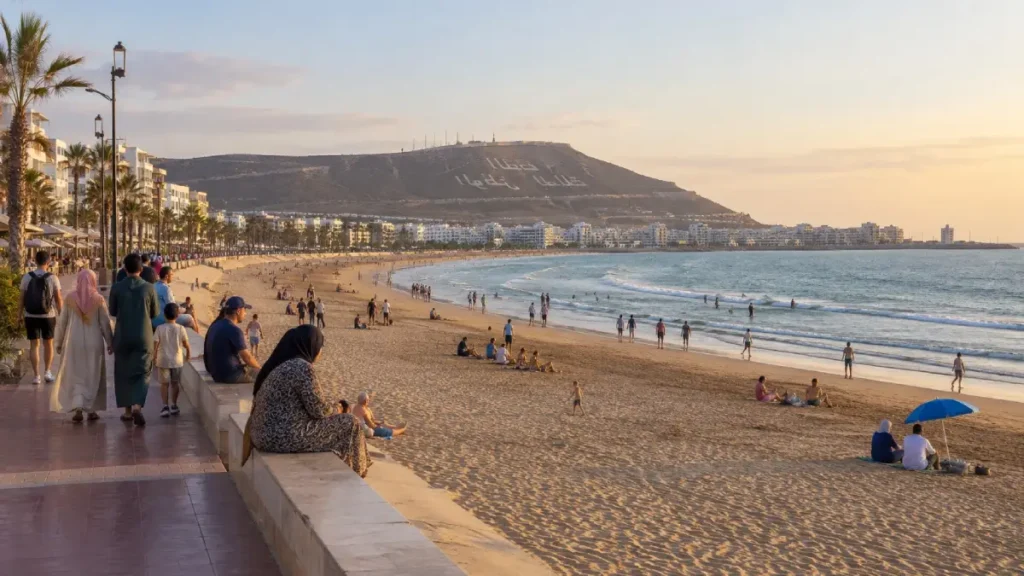
For travellers who want straightforward beach time, swimming and resort facilities, this is a notably better period than the cooler months. Beaches and hotels are generally calmer than during the domestic holiday peak in August, though weekends and popular areas can still be busier.
September is also a good time to explore beyond the beach; see my Agadir travel guide and things to do for ideas.
Essaouira has gentler winds than peak summer
Essaouira is also particularly attractive in September. Its well-known summer winds often begin to ease compared with July and August, while the Atlantic can remain suitable for swimming for visitors comfortable with cooler water.
This can be a good period for surfing, including for intermediate and less experienced surfers, depending on daily conditions. Wind and swell are never guaranteed, so surfers should check a current forecast and choose lessons or equipment according to the day’s conditions.
For non-surfers, September is a more comfortable time to enjoy the medina, harbour, seafood restaurants and beach walks without the strongest summer wind.
Can you visit the Sahara in September?
You can visit the Sahara in September, but timing matters more here than anywhere else in Morocco.
September marks the gradual return of more comfortable desert travel. Early in the month should not be treated as autumn: Merzouga can still be extremely hot during the day. Long exposed stops, midday camel activities and poorly cooled accommodation can be uncomfortable in these conditions.
For most travellers, the later part of September is preferable, but check the forecast for your exact dates rather than relying on a fixed point in the calendar.
Early September in Merzouga
Desert daytime temperatures can remain well into the 30s early in the month. Nights are usually easier than in midsummer, but daytime heat remains a serious planning factor.
If you must travel early in September:
- Avoid building your itinerary around long midday outdoor activities.
- Confirm whether your camp has suitable cooling arrangements.
- Ask how camel rides, 4×4 trips and other activities are scheduled around the heat.
- Carry more water than you would for a city day.
- Do not underestimate heat during roadside stops on the approach to Merzouga.
Late September is a better desert window
Later in the month, desert temperatures often become more manageable, although afternoons can still be hot. This period is generally better suited to sunset activities, dunes and overnight camp stays than early September.
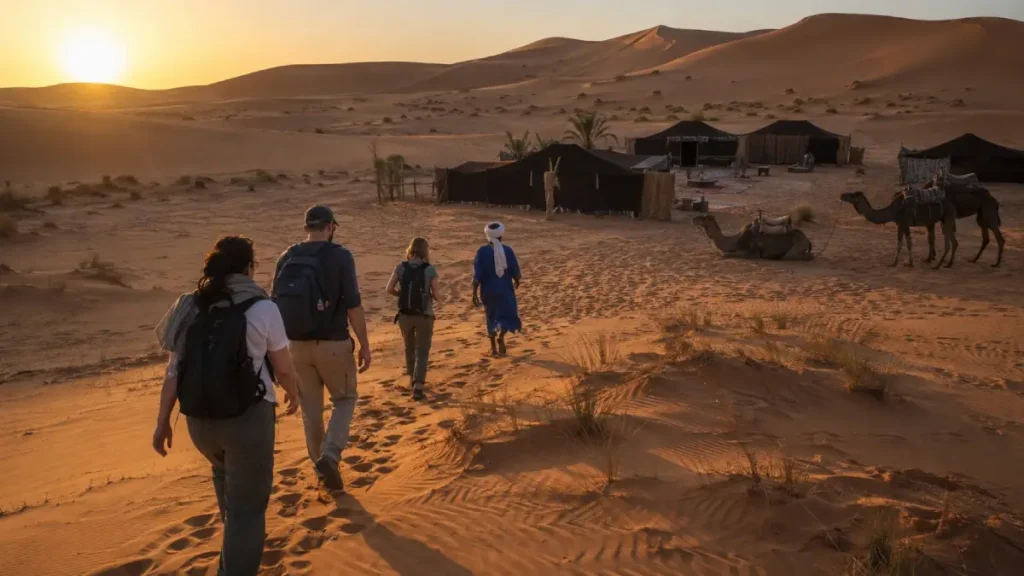
Camp and excursion schedules can vary as conditions change. Confirm that your chosen camp is operating, ask about cooling arrangements and check when outdoor activities are scheduled before booking.
Travellers starting in Marrakech can compare routes and overnight options in this guide to Sahara desert tours from Marrakech.
Late September is excellent for Atlas trekking
Late September is an excellent period for trekking in the Atlas Mountains. The summer heat begins to ease, while daytime sunshine remains pleasant for walking.
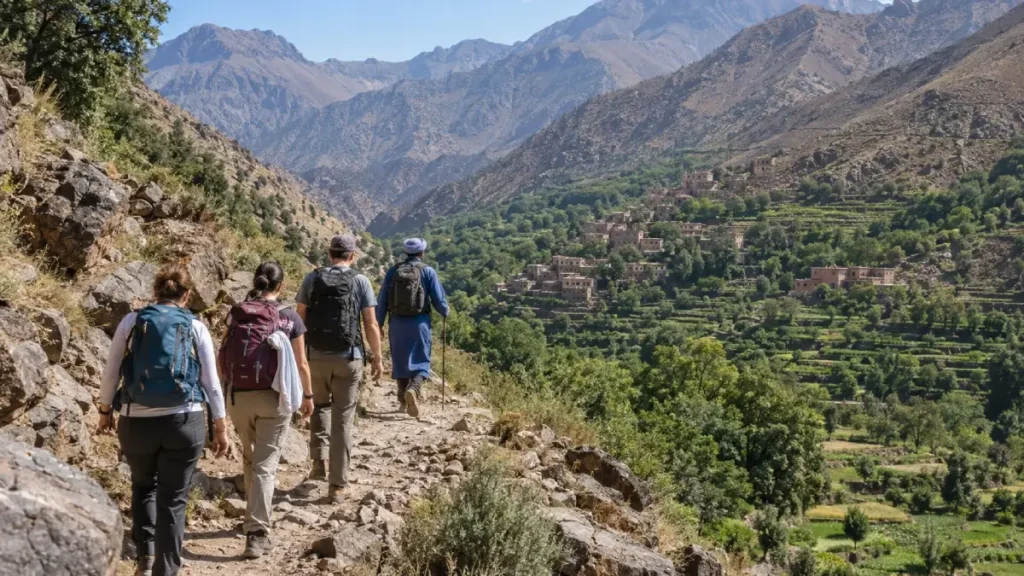
Around Imlil and at higher elevations, conditions vary sharply with altitude, route and daily weather. The important point is that mountain temperatures can be very different from Marrakech temperatures.
Nights in mountain villages can feel cold after warm days, so bring proper evening layers. A traveller arriving from the coast with only light summer clothes may be comfortable during the day but cold after sunset.
What to pack for the Atlas in September
For a September trek, bring:
- Lightweight layers for sunny daytime walking.
- A fleece, sweater or insulated layer for the evening.
- A light waterproof or windproof outer layer.
- Comfortable walking shoes with suitable grip.
- Sun protection, including sunglasses and a hat.
- A refillable water bottle.
Higher routes require more preparation than a simple day trip from Marrakech. For Mount Toubkal, arrange a licensed mountain guide and confirm current weather, trail conditions and access requirements locally before setting out.
For route planning and trekking advice, see the Atlas Mountains trekking guide.
Ouzoud, Ourika and the southern valleys are easier after the summer peak
Ouzoud Waterfalls and the Ourika Valley generally become less crowded after the main August holiday period. They remain popular day-trip areas, but September is generally calmer than August.
Waterfall flow can vary and should not be assumed from the calendar alone. The more reliable September advantage is the lower crowd level and the gradual improvement in daytime comfort later in the month.
Dades, Skoura and the Draa Valley
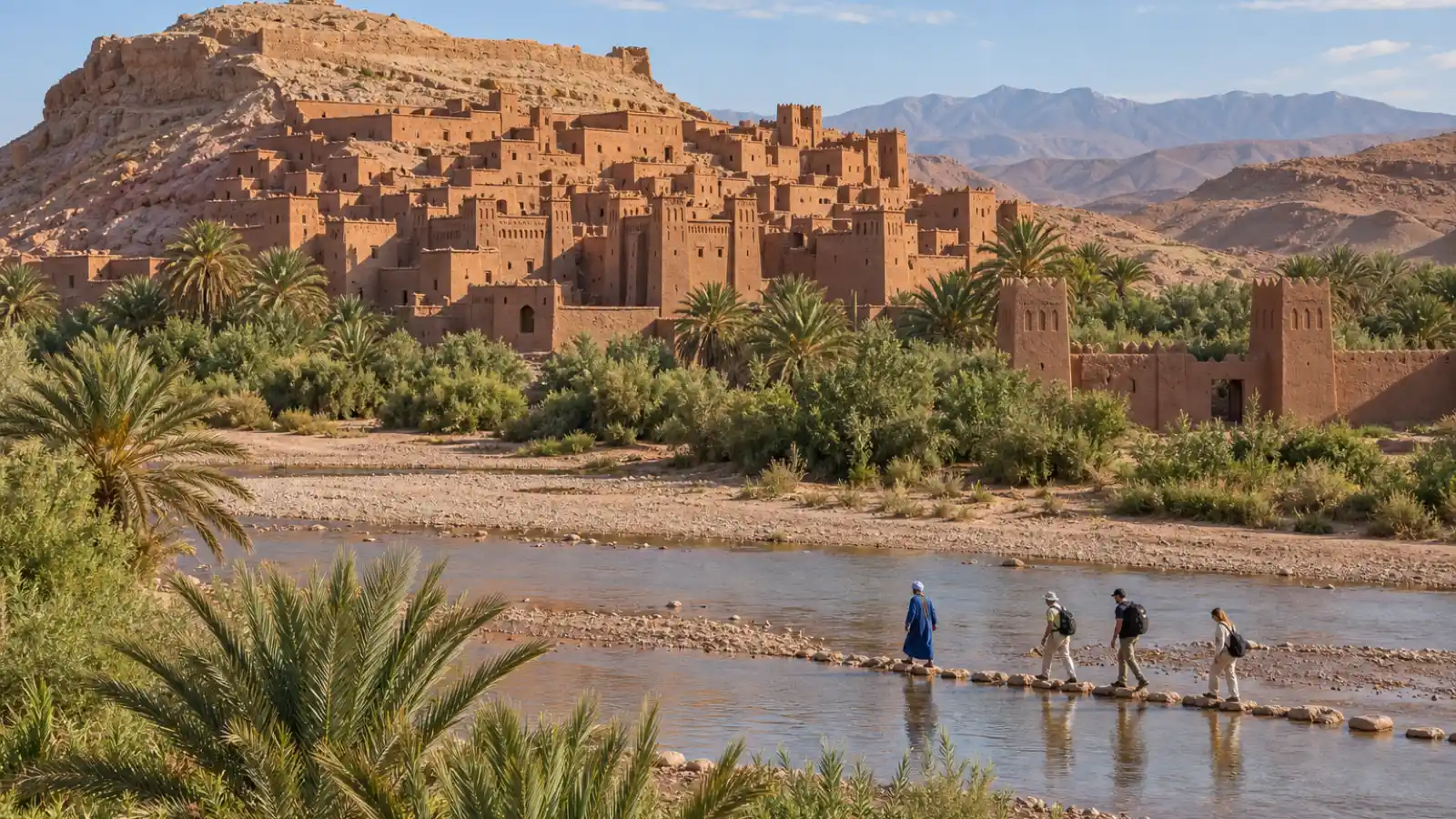
The second half of September is also much better for road trips through Dades, Skoura and the Draa Valley. Early-month heat remains important, particularly during exposed stops and walks, but late September makes valley walks, kasbah visits and scenic driving more manageable than August.
For self-drive travellers, September requires sensible pacing:
- Start southern drives early.
- Keep exposed sightseeing stops shorter around midday in early September.
- Carry drinking water in the vehicle.
- Avoid planning too many outdoor stops on the same hot day.
- Allow for changing comfort levels between Marrakech, the valleys, mountain passes and the desert.
September crowds and accommodation: quieter than August, before October builds
One of the biggest benefits of visiting Morocco in September is the sharp reduction in domestic holiday crowds after August. Coastal towns, roads and major attractions become noticeably calmer before the main international autumn travel period builds in October.
This is particularly welcome in Agadir, Essaouira, Marrakech day-trip destinations and popular northern cities. It can also make the overall travel experience feel less rushed, especially if you are moving by car.
Accommodation in coastal and resort destinations may offer better value after the August peak, but prices can still change significantly with weekends, events, room type and booking timing. September is not automatically cheap everywhere, so compare options before committing.
What to pack for Morocco in September
Packing for Morocco in September means preparing for both summer sun and cooler evenings. The right bag for Agadir is not the right bag for Imlil or Merzouga.
For most itineraries, pack:
- Lightweight cotton or linen clothing for daytime.
- Comfortable walking shoes for medinas, uneven streets and day trips.
- Strong sun protection: sunscreen, sunglasses and a hat.
- A light jacket, sweater or pashmina for evenings.
- Swimwear for Agadir, Essaouira or hotel pools.
- A warmer layer if you are visiting the Atlas Mountains or spending a night in the desert.
Travellers going into the Atlas need warmer layers than visitors staying entirely on the coast. Desert travellers also need an evening layer, even when daytime temperatures are high.
For a fuller checklist, use this Morocco packing list.
September festivals and cultural events
September can include cultural events such as Tanjazz in Tangier and the Imilchil Moussem. Their dates can change from year to year, and major events may affect accommodation demand and local transport.
If an event is central to your trip, confirm its official schedule before booking non-refundable accommodation or transport.
The best Morocco itinerary for September
For most travellers, the best September itinerary depends on whether the trip falls early or late in the month.
Best route for early September
In early September, prioritise the coast and north:
- Tangier or Rabat
- Chefchaouen
- Essaouira or Agadir
- Marrakech only with a heat-aware schedule
This route keeps more of the trip in areas with Atlantic or Mediterranean influence. If Marrakech is included, plan relaxed days with early starts and protected afternoons.
Best route for late September
Late September is much more flexible:
- Marrakech
- Atlas Mountains or Imlil
- Dades and Skoura
- Merzouga and the Sahara
- Essaouira or Agadir for beach time
This combination gives you cities, mountains, valleys, desert landscapes and warm Atlantic water in one trip. It is also the point in September when long-distance road travel becomes more realistic for travellers who want to see several regions.
Final advice for visiting Morocco in September
The best way to approach Morocco in September is to treat it as a transition month, not a guaranteed autumn month. Early September still demands a summer strategy in Marrakech, Fes and the Sahara. By late September, the country opens up considerably: cities become easier to walk, the Atlas becomes attractive for trekking, southern road trips are more comfortable and the Atlantic remains warm enough for proper beach time.
For the broadest choice of destinations, the later part of the month is generally the stronger option. If your dates are fixed in early September, build your itinerary around Tangier, Rabat, Chefchaouen, Essaouira or Agadir, and keep inland sightseeing flexible.
FAQ
Is September a good time to visit Morocco?
Yes. September is a transition month: early September can remain hot inland, while later in the month usually brings more comfortable conditions for cities, trekking and desert travel. The coast remains a strong choice throughout the month.
How hot is Marrakech in September?
Marrakech can still be hot in early September, with daytime temperatures often reaching the 30s. Conditions usually become more manageable later in the month, but check the forecast for your exact dates and plan outdoor sightseeing for cooler hours.
Can you visit the Sahara Desert in September?
Yes, but the later part of September is generally more comfortable than the beginning. Early September can remain extremely hot around Merzouga, so avoid exposed midday activities and confirm your camp’s operating and cooling arrangements.
Is it warm enough to swim in Morocco in September?
September is usually suitable for beach time in Agadir and Essaouira. The Atlantic is generally warmer than in winter or spring, although water temperature, wind and cloud vary and some swimmers may still find it cool.
What should I wear in Morocco in September?
Pack lightweight daytime clothing, sun protection and comfortable walking shoes, plus a light jacket or sweater for evenings. Bring warmer layers if you are trekking in the Atlas Mountains or staying overnight near the Sahara.