Traditional Crafts of Morocco 2026: Where to Buy Genuine Work
Morocco’s crafts vary by region: Safi is known for pottery, Fez for leatherwork, pottery and zellige, and Essaouira for thuya-wood marquetry. This guide points to documented public artisan centers and offers practical questions to ask before buying. Opening hours, stock and workshop access can change, so check directly before making a special trip.
Table of Contents
Table of Contents
Why Authenticity Matters in Traditional Crafts
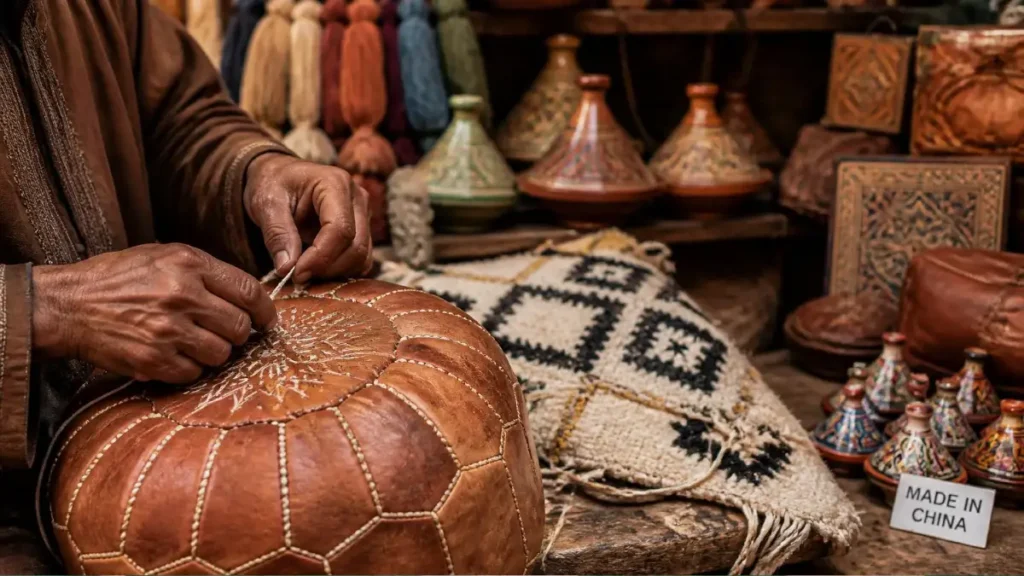
The cultural weight behind every stitch and carve
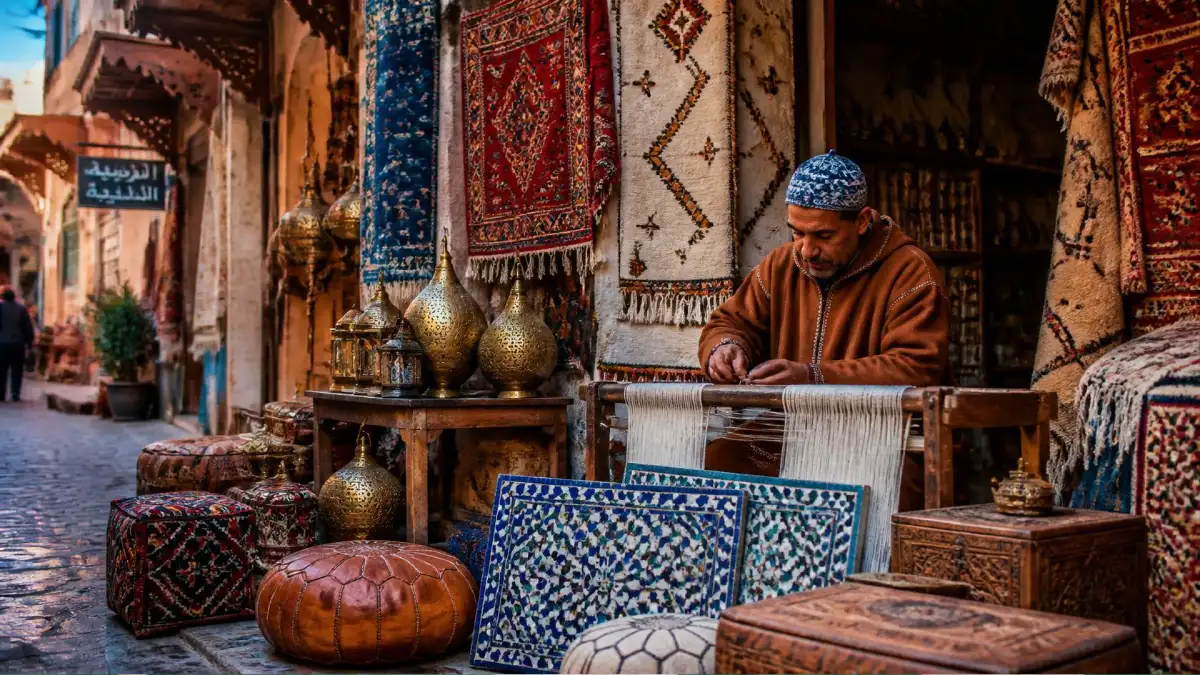
Moroccan crafts include pottery, leatherwork, wood marquetry, textiles and metalwork. Styles and techniques differ by region and workshop; ask makers how a particular piece was made rather than assuming one design has the same meaning everywhere.
The rise of mass‑produced imitations
Factory-made and handmade pieces can both be sold in Moroccan markets. If provenance matters, ask where and how the item was produced, what materials it contains and whether the seller can name the workshop. Compare similar items before deciding.
How to spot the real deal
- Ask the maker or seller about the technique, materials and finish; visible stitching alone does not prove an item was handmade.
- Do not wet or rub a product to test it. Ask the maker or seller about its materials and how it was made.
- Ask who made the piece and where. A seller should be able to explain the workshop and materials; a stamp alone does not prove authenticity.
- Compare similar pieces and ask what affects the price, such as size, leather type, stitching and workmanship. Prices vary; avoid treating one price as a universal authenticity test.
The Pillars of Moroccan Craftsmanship
Argan Oil and Craft Shopping
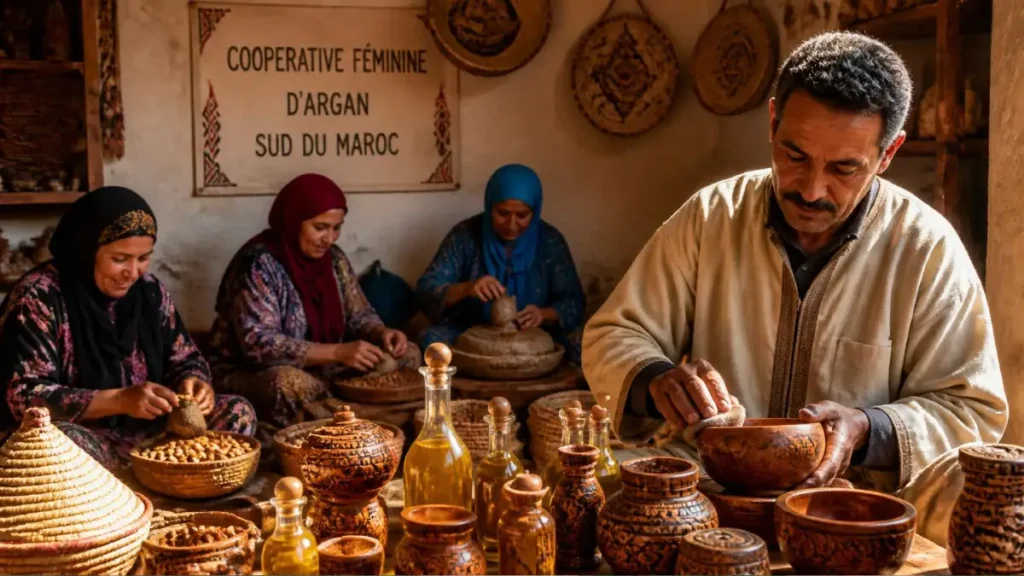
From Tree to Table
Argan oil is a food and cosmetic product made from argan kernels. Do not assume wooden crafts are finished with argan oil. If shopping for argan products, ask what the item contains, where it was made, and whether its label or documentation can be checked.
Documented Artisan Centers in Essaouira
- Essaouira’s official Ensemble d’Artisanat is listed at Bab Marrakech, Rue Mohamed El Qorry, with marquetry, jewelry, weaving, leatherwork and other crafts. Check current opening details before visiting.
- The official Moroccan tourism office highlights Essaouira for thuya wood marquetry. Visit working workshops in the medina and ask before photographing artisans or their work.
Products, prices and any documentation vary by seller. Ask for a receipt and written details of origin or cooperative support, and verify specific claims rather than assuming all shops provide them.
Moroccan Leather Crafts – The Art of Tannery
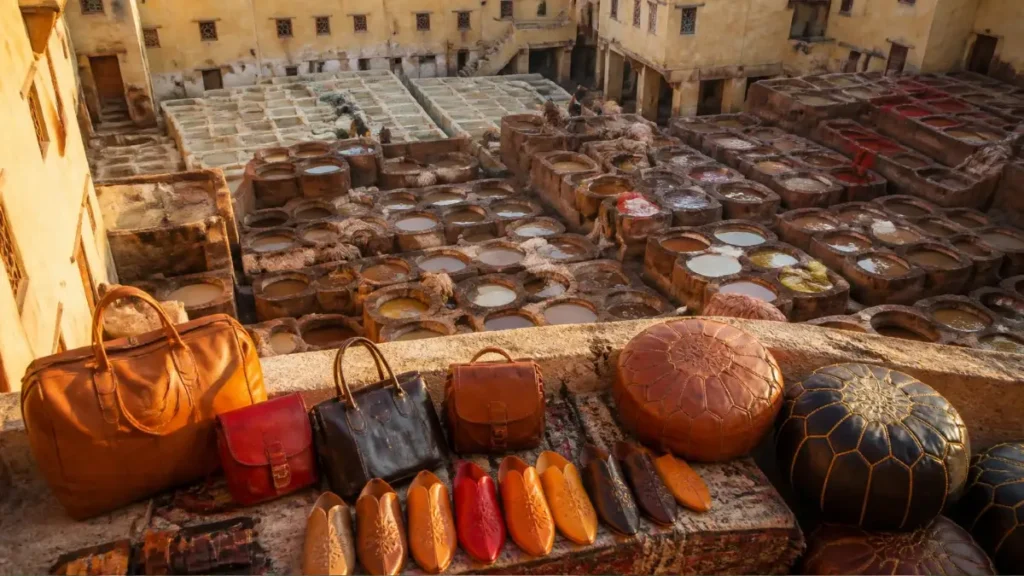
The Chouara Tannery Legacy
The Chouara Tanneries are a major leatherworking landmark in Fez. Materials and processes can vary; if you are buying leather, ask the maker or seller about tanning, dyes, lining and care.
Best Spots for Authentic Leather
- Fez’s official Ensemble d’Artisanat (Boulevard Allal Ben Abdellah) lists leatherwork, metalwork, pottery and zellige, carpets, woodwork and more. Confirm what is available before you visit.
- Marrakech’s official Ensemble d’Artisanat (Avenue Mohammed V) lists leather goods, babouches, pottery, woodwork, zellige, carpets and other crafts. Check current opening details first.
Ceramics and Zellige Tilework
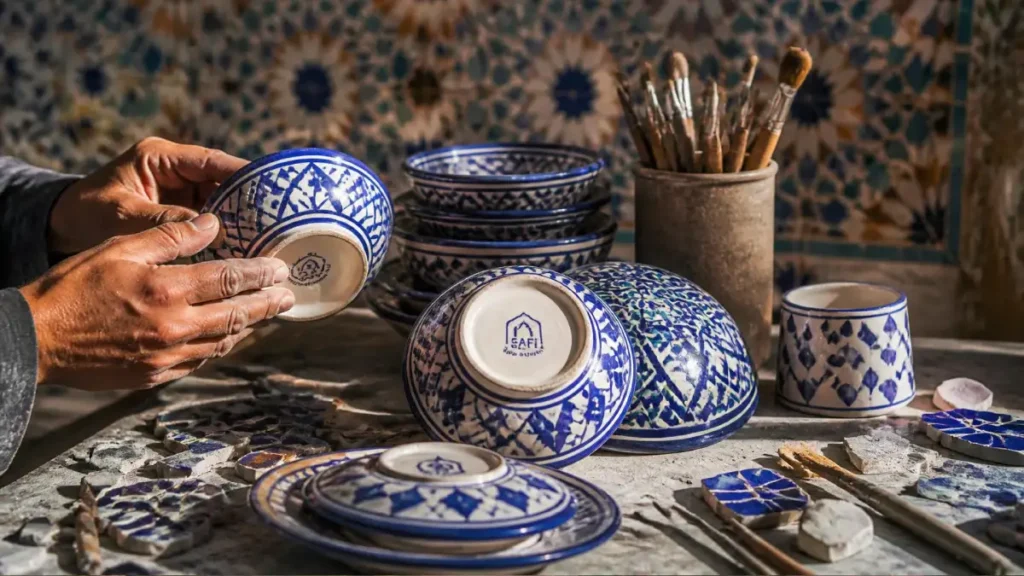
The Signature Blue of Safi
The Moroccan National Tourist Office describes Safi as a major pottery center with distinctive colored ceramics. A date or city stamp alone does not prove where or how an item was made.
Where to Find Real Pieces
- Maison de l’Artisan lists Safi’s Village des Potiers and Potter’s Hill as places for pottery. The national tourism office also describes Safi for its ceramics.
- Maison de l’Artisan lists Fès artisan centers for pottery and zellige. Ask sellers about the workshop, materials and care requirements.
Textiles: Rugs, Blankets and Embroidered Clothing
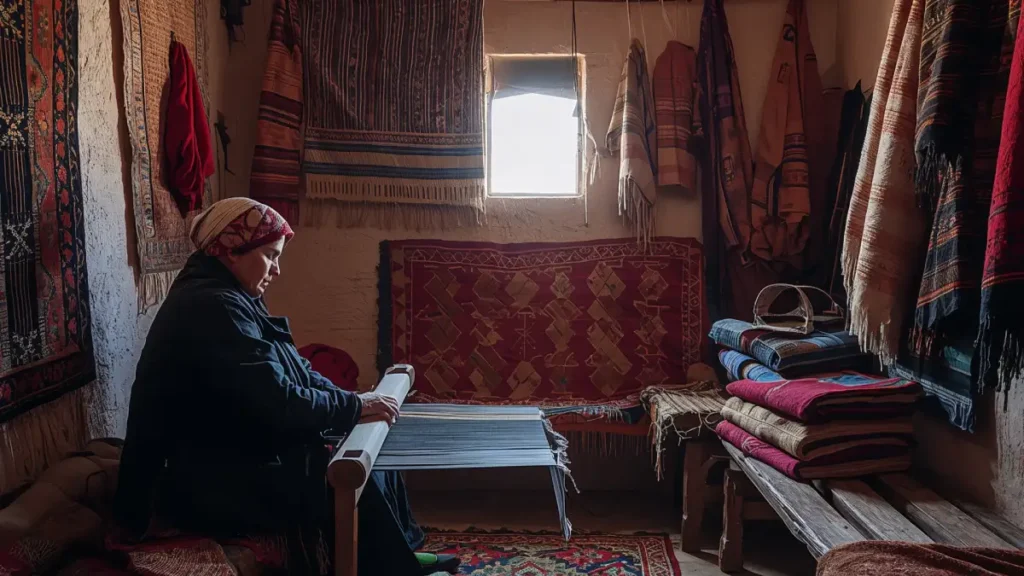
Berber Rug Weaving in the Atlas
Moroccan carpet styles and materials vary by region and maker. Ask whether the rug is wool or another fiber, how it was woven, whether dyes are natural or synthetic, and how to care for it. Do not assume a single time to make or regional pattern.
Buying Direct from the Loom
- Maison de l’Artisan’s official directory lists the Ensemble d’Artisanat de Fès with carpets and dyeing among its crafts. Confirm current products and hours directly.
- For rugs, ask where and by whom a piece was made, what materials it uses, and whether the seller can explain its construction. Weave, price and workshop access vary by region.
Read my deep rug buying guide.
Cities and Regions to Explore for Authentic Shopping
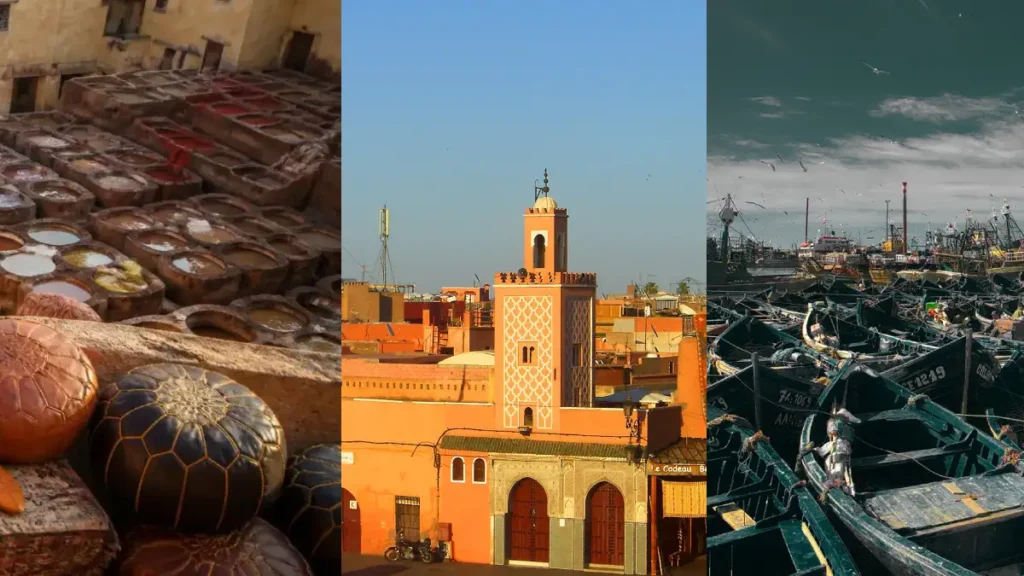
Fez – The Spiritual Heart of Craftsmanship
Fez has a wide range of crafts. Maison de l’Artisan lists an Ensemble d’Artisanat on Boulevard Allal Ben Abdellah and other artisan activity centers, including pottery and zellige. Check hours and product availability before visiting.
Marrakech – A Fusion of Old and New
Marrakech has public artisan centers as well as market stalls. Maison de l’Artisan lists an Ensemble d’Artisanat on Avenue Mohammed V with leather goods, babouches, pottery, woodwork, zellige, carpets and other crafts. Check hours and availability before visiting.
Essaouira – The Coastal Workshop Hub
The Moroccan tourism office highlights Essaouira for thuya wood marquetry. Maison de l’Artisan lists an Ensemble d’Artisanat at Bab Marrakech, Rue Mohamed El Qorry, with marquetry and other crafts. Check current details before visiting.
The Atlas Mountains – Rural Authenticity
Workshop visits and demonstrations may be available in some places, but access varies by maker and season. Contact a named workshop or organization directly to confirm activities, booking, price and photography rules before traveling.
Practical Tips for Buying Traditional Crafts Morocco
- Ask who made the item and where. Request clear information about its materials and how it was produced.
- Agree on the price before purchase. Bargaining customs and final prices vary by shop and item; there is no fixed discount that applies everywhere.
- For antiques, older textiles or products made from animal materials, check current export rules and your destination country’s import rules before buying.
- Ask which payment methods are accepted and request a receipt for a substantial purchase. Tips are optional unless a service charge is clearly stated.
- For a large or fragile item, agree on packing, shipping cost, insurance, delivery time and what happens if it arrives damaged before paying.
For specific souks, current price examples and advice on checking products before buying, see my guide to shopping in the Marrakech markets.
Supporting Sustainable Craft Communities
A cooperative’s programs and use of revenue vary. If a purchase is said to support a particular project, ask the organization for details.
- A cooperative’s structure and policies determine how revenue is used; ask the organization directly about its member benefits.
- If a seller says a purchase supports education or healthcare, ask which organization runs the project and how the support is documented.
- If a seller makes environmental claims, ask what specific project or practice is involved and how it can be verified.
Morocco has official artisan labels, including “Morocco Handmade.” Ask which body issued a label and how to verify it. Don’t assume generic claims are official without checking.
Where to Find Authentic Pieces Online (If You Can’t Travel)
If you shop online, review the seller, item description, return terms and shipping details before ordering. A marketplace listing alone does not verify provenance.
- On any online marketplace, check the individual seller’s location, item description, return terms, shipping costs and recent reviews; a marketplace listing alone does not verify provenance.
- Maison de l’Artisan describes Tribaliste as an online platform for Moroccan home crafts. Check each listing, seller and shipping terms directly before ordering.
For an online purchase, ask the seller for clear details about the item, its materials and origin. A signature or video can provide context but does not independently prove provenance.
Packing for a Craft‑Focused Trip
You’ll be carrying fragile ceramics, delicate textiles and possibly a leather bag back home. Our Morocco Packing List 2026 – What to Wear & Bring details the best carry‑on options, protective wrapping materials, and climate‑appropriate clothing for workshop visits (think sturdy shoes and breathable layers for dusty souks).
Craft Itinerary Sample: 7 Days of Hands‑On Heritage
- Day 1 – Marrakech: Explore the markets and visit the public artisan center; check current opening details.
- Day 2 – Essaouira: Explore thuya-wood marquetry and listed artisan centers; confirm availability before you go.
- Day 3 – Fez: Visit the listed artisan center and explore leatherwork, pottery or zellige; check what is open.
- Day 4 – Safi: Explore the pottery area and confirm workshop access directly.
- Day 5 – Allow time for travel and check in advance whether any craft demonstration is available.
- Day 6 – Choose a documented artisan center or market that fits your route; ask about materials and origin.
- Day 7 – Return to Marrakech and leave time for shopping, packing and shipping arrangements.
Feel free to adapt this outline to your own pace; every region offers a unique spin on traditional crafts Morocco. If you’re staying in a traditional riad you must read this guide.
Conclusion
Buying genuine Moroccan crafts is an investment in people, culture, and the environment. Whether you wander the winding alleys of Fez, sit beside a coop of women in Essaouira, or order a hand‑stitched leather bag from a verified online seller, the authenticity of the piece will always shine through the craftsmanship. Take the time to meet the makers, learn their stories, and you’ll return home with more than a souvenir – you’ll carry a piece of Morocco’s living heritage.
Ready to plan your craft‑filled adventure? Check out our Morocco Travel Guide for deeper itineraries, or browse the best riads in Marrakech for a stay that puts you steps away from the souks. Happy hunting!
Traditional Crafts of Morocco FAQ
What distinguishes genuine argan oil crafts from tourist versions?
There is no dependable home test based on scent or shine. Ask about the wood, finish and workshop, and treat claims about “argan oil finish” as something to verify with the maker.
Can I bring Moroccan leather goods back to my home country without issues?
Import rules depend on your destination and the exact material. Before buying leather or animal-derived items, check your country’s customs and wildlife rules; keep the receipt and any documentation the seller provides.
How much should I expect to pay for an authentic hand‑woven Berber rug?
Rug prices vary with size, materials, construction, age, condition and where you buy. Compare similar pieces and ask how the rug was made; I can’t support a single starting price for all Moroccan rugs.
Are there any certifications I should look for when buying online?
Morocco has official artisan labels, including “Morocco Handmade.” Ask which body issued a label and how to verify it. Don’t assume generic claims such as “Fair Trade Morocco” or “Co-op Certified” are official without checking.
Is it possible to arrange a private workshop visit for a group?
Some workshops or cooperatives may arrange visits, but availability varies. Contact a named organization directly to confirm the activity, booking, price, language and photography rules before traveling.