
Marrakech Food Tours: Which One Should You Book in 2026?
Marrakech food tours are one of the smartest ways to understand the city in your first 24–48 hours. Yes, you can walk into Jemaa el-Fnaa alone, point at a grill, and hope for the best. But if you want to know what you are eating, where locals actually go, what is safe, what is tourist theatre, and what is worth paying for, a guided Marrakech food tour can save you time, money, and a few stomach regrets.
I recommend food tours especially for first-time visitors. If your priority is orientation and history rather than food, compare a Marrakech walking tour instead, solo travellers, couples, and families who want to taste more than tagine and couscous. A good food walk is not only about snacks. It is about rhythm, markets, bread ovens, spices, olives, mint tea, family food, Moroccan street food, and the small rules of Moroccan hospitality.
In 2026, you will see three main types of food tours in Marrakech: cheap group street-food tours, curated small-group tasting tours, and private food walks with a local guide. Each one has a different price, pace, and level of comfort. If food is only one part of your plans, my Marrakech tours guide also compares city, desert and day-trip experiences. Shwiya b’shwiya — let’s compare them properly.
Table of Contents
Table of Contents
Quick Answer: Best Marrakech Food Tours by Traveller Type
If you want the best value, choose a small-group street-food tour in the evening. You will usually get several tastings, a local guide, and enough food to replace dinner.
If you want the most comfortable experience, choose a private Marrakech food tour. This is better if you dislike rushing, have children, want cleaner stops, need dietary flexibility, or want deeper cultural explanations.
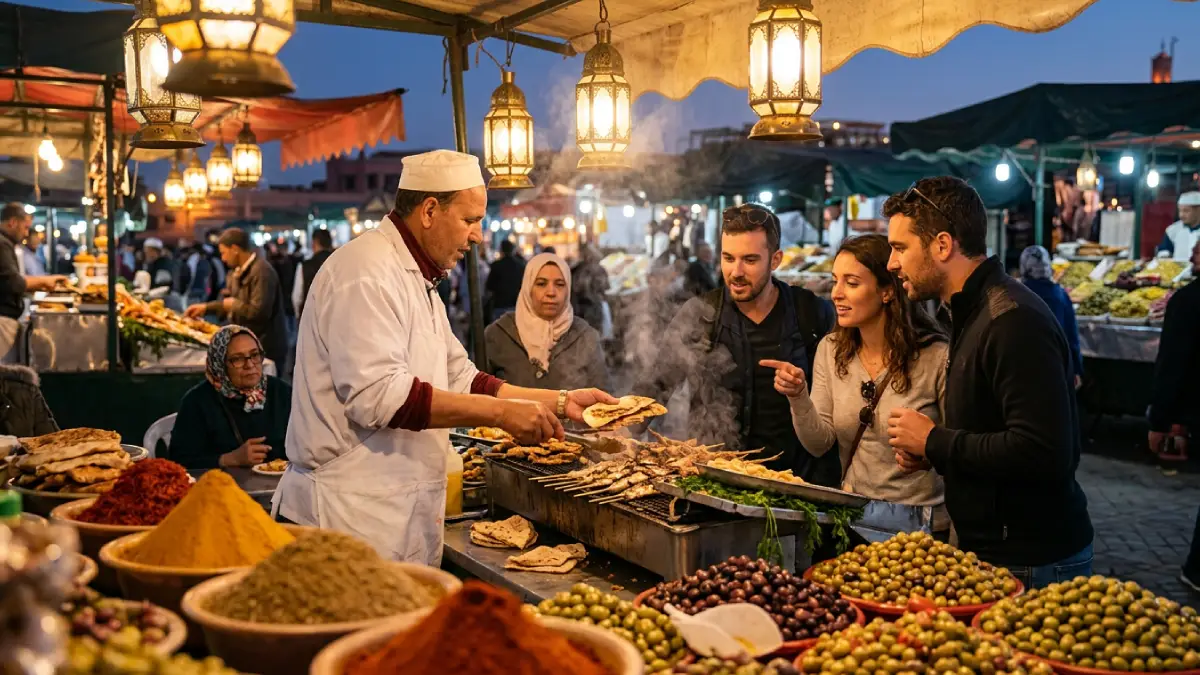
If you want the most “wow” evening, choose a night food tour around the medina and Jemaa el-Fnaa. The square is most alive after sunset, when the smoke rises, the stalls fill, and Marrakech becomes theatre.
If you want a deeper experience, choose a cooking class plus market visit. This is less about “eating many things” and more about learning how Moroccan food is built from spices, vegetables, meat, bread, fire, and patience.
Why Take a Food Tour in Marrakech?
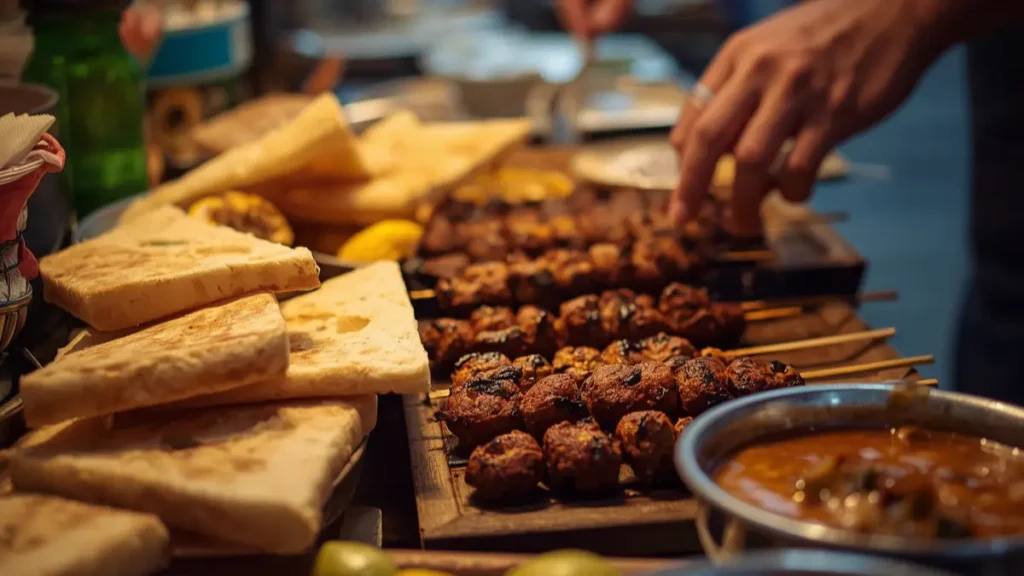
Marrakech is not an easy city to read from the outside. Instagram shows mint tea, rooftop tagines, and orange juice in Jemaa el-Fnaa. Reality is more complicated and more interesting.
The medina has tourist restaurants, local bakeries, spice sellers, hidden family kitchens, snail stalls, olive counters, grilled meat stands, sweet shops, and small places you might never enter alone. Some are excellent. Some are average. Some are designed only for passing tourists.
A good food tour Marrakech experience helps you answer practical questions quickly:
- What should I try first?
- Which stalls are clean enough?
- How much should things cost?
- Is the famous square worth eating in?
- What food is local, and what is just made for tourists?
- Can vegetarians enjoy Moroccan food?
- What should I avoid if I have a sensitive stomach?
This is why I see food tours as an orientation, not only an activity. Do it early in your trip, and the rest of your meals become easier.
After your food tour, use my guide to the best restaurants in Marrakech to choose where to eat next, from traditional Moroccan restaurants and Medina rooftops to affordable local meals and special-occasion dining.
Read my full Marrakech travel guide
Group Marrakech Food Tour vs Private Food Walk
Most Marrakech food tours online are group tours. Current marketplace listings often show 3–4 hour formats with included tastings, and many are sold as street-food, night-food, or “authentic Moroccan food” walks.
Cheap Group Food Tours
Cheap group tours are good if you are on a budget and want a simple introduction. You join other travellers, follow a guide, and try a fixed route of tastings.
- Best for: backpackers, solo travellers, short stays, first-time visitors.
- Typical strengths: affordable, easy to book, social, enough food for dinner.
- Possible weakness: fixed pace, less flexibility, larger groups, limited time for deeper questions.
This is the best option if you want a simple Marrakech food tour without paying private-guide prices.
If you prefer a cheaper group option, compare highly rated Marrakech food tours on Viator or GetYourGuide.
Curated Small-Group Food Tours
Small-group tours usually feel more personal than basic group walks. They may include more tastings, better storytelling, and a slower pace. Some Marrakech tours advertise 10+ or 15+ tastings, often around 3–4 hours.
- Best for: couples, food lovers, older travellers, travellers who want better quality without a private tour.
- Typical strengths: better guide attention, more thoughtful stops, stronger cultural context.
- Possible weakness: still not fully flexible if you have strict food needs.
For many travellers, this is the sweet spot between price and quality.
Private Food Walk with Youness
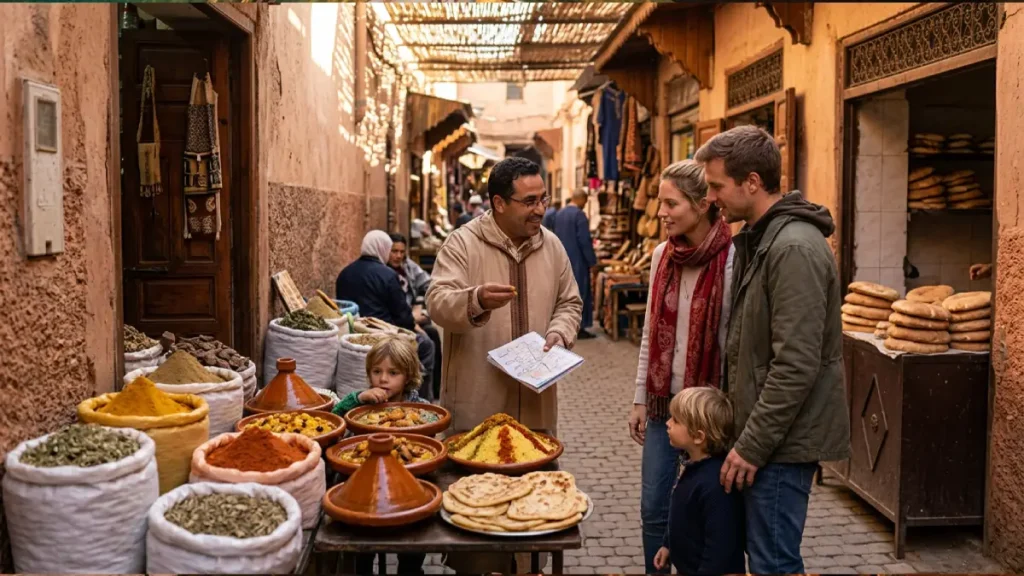
A private food walk is for travellers who want Marrakech explained properly, not rushed.
On a private experience, the route can be shaped around your comfort level: street food, market snacks, local cafés, spices, bread ovens, olives, sweets, mint tea, or a more careful “safe but authentic” route for travellers with sensitive stomachs.
- Best for: families, couples, mature travellers, private groups, nervous first-timers, people who want stories and culture.
- Typical strengths: flexible pace, better safety control, deeper explanations, no pressure to follow a group.
- Possible weakness: costs more than a basic group tour.
If you want a private Marrakech food walk, contact Youness through Morkosh Tours and explain your date, group size, hotel area, food interests, and any dietary needs.
Best Food Tours Marrakech: What to Expect
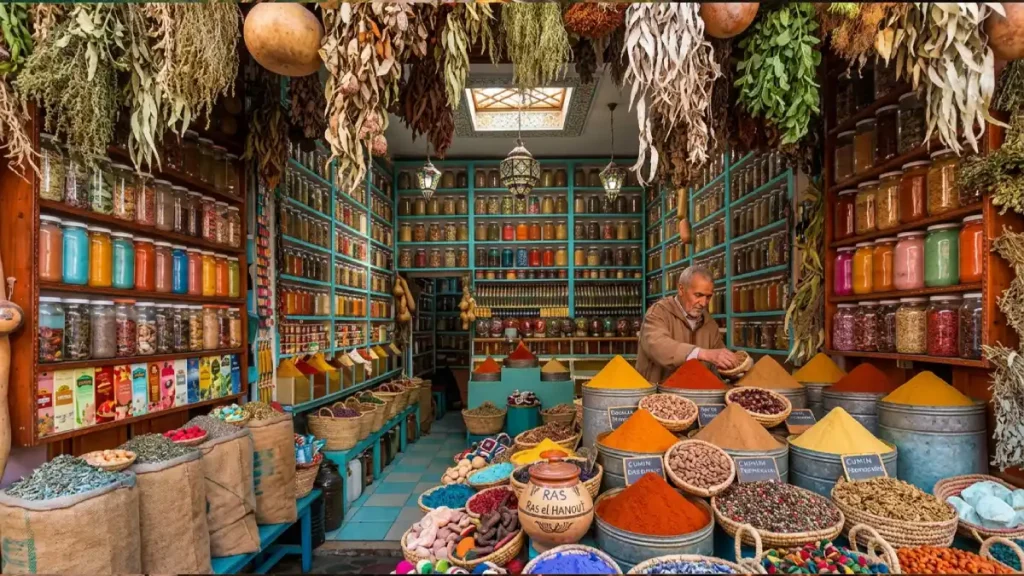
Most food tours in Marrakech include a mix of the following:
- Moroccan bread from a bakery or communal oven
- Olives and preserved lemons
- Harira soup, especially in cooler months or Ramadan-style food stops
- Msemen or harcha with honey, cheese, or amlou
- Dates and local sweets
- Grilled meats or kefta
- Tangia, the slow-cooked Marrakech specialty
- Snails in broth, if you are adventurous
- Mint tea or fresh juice
- Spice explanations in the souk
- A final dinner-style stop on some tours
Not every tour includes all of these. Always check what is included before booking. “Food tour” can mean three snacks and a walk, or it can mean a full dinner with many tastings.
Check my article about: traditional Moroccan food you should try.
Marrakech Night Food Tours: Are They Worth It?
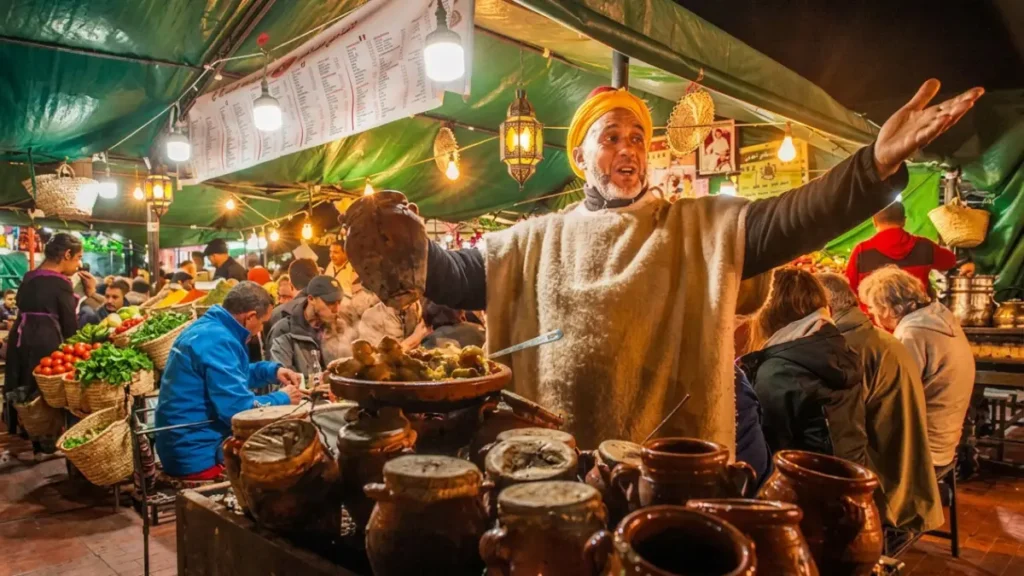
Yes, for most travellers, a night food tour is better than a daytime food tour.
Marrakech is hot for much of the year, and many food stalls feel more alive in the evening. Jemaa el-Fnaa is also a night-time experience. UNESCO describes Jemaa el-Fnaa as one of the main cultural spaces of Marrakech and a symbol of the city.
But here is the honest part: Jemaa el-Fnaa is also intense. It can be crowded, noisy, smoky, confusing, and sometimes pushy. Instagram shows the magic. Reality includes motorbikes, menus waved in your face, aggressive sellers, and prices that are not always clear.
This is where a guide helps. A good guide knows when to enter the square, which stalls are reliable, how to avoid pressure, and when to move into calmer side streets.
Choose a night food tour if you want energy, atmosphere, photography, and a real Marrakech evening. Choose a private food walk if you want that same atmosphere but with more control.
Cooking Class or Food Tour: Which Is Better?
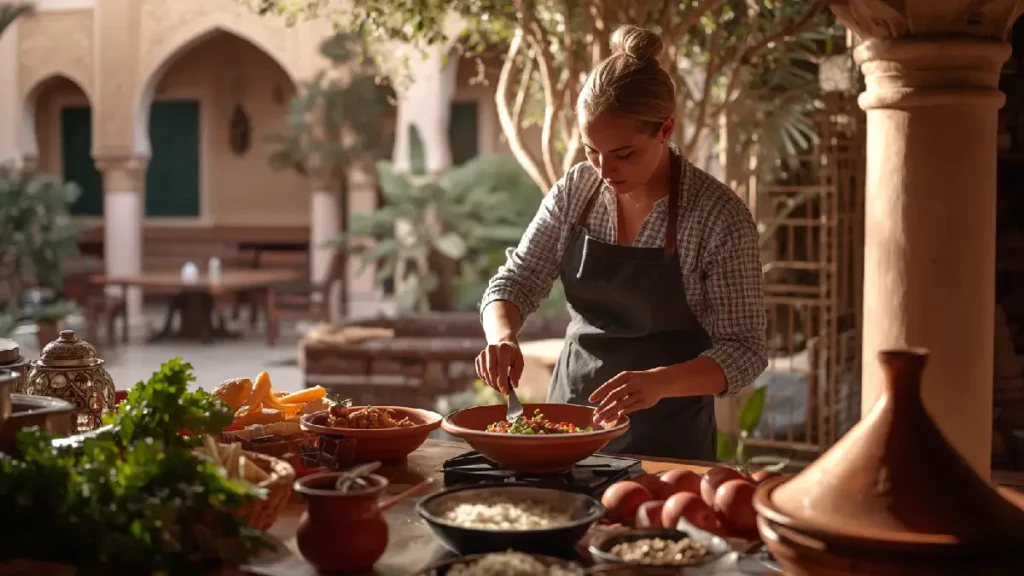
A food tour is better if you want variety. You walk, taste, compare, and learn the city.
A cooking class is better if you want depth. You shop for ingredients, learn how spices work, and cook one or two dishes properly.
- Choose a food tour if:
- You only have one night in Marrakech.
- You want street food and medina atmosphere.
- You want to try many small dishes.
- You want to learn where to eat for the rest of your trip.
- Choose a cooking class if:
- You love hands-on experiences.
- You want to understand tagine, couscous, bread, or Moroccan salads.
- You prefer a calmer setting.
- You want a family, riad, Berber home, or farm-to-table experience.
For food lovers, the best combination is simple: do a Marrakech food tour on your first evening, then book a cooking class later in the trip.
Food lovers can also compare Marrakech cooking classes if they want a hands-on experience.
Want to go deeper than tasting street food? Book the family-friendly Berber cooking class in Marrakech with Morkosh Tours. You’ll visit a traditional Berber market, drive into the Ourika Valley, cook with a local family, learn how Moroccan bread, mint tea, salads, and tajine are prepared, then sit down to enjoy the meal you helped make.
Check our Berber Cooking Class itinerary
Is Marrakech Street Food Safe?
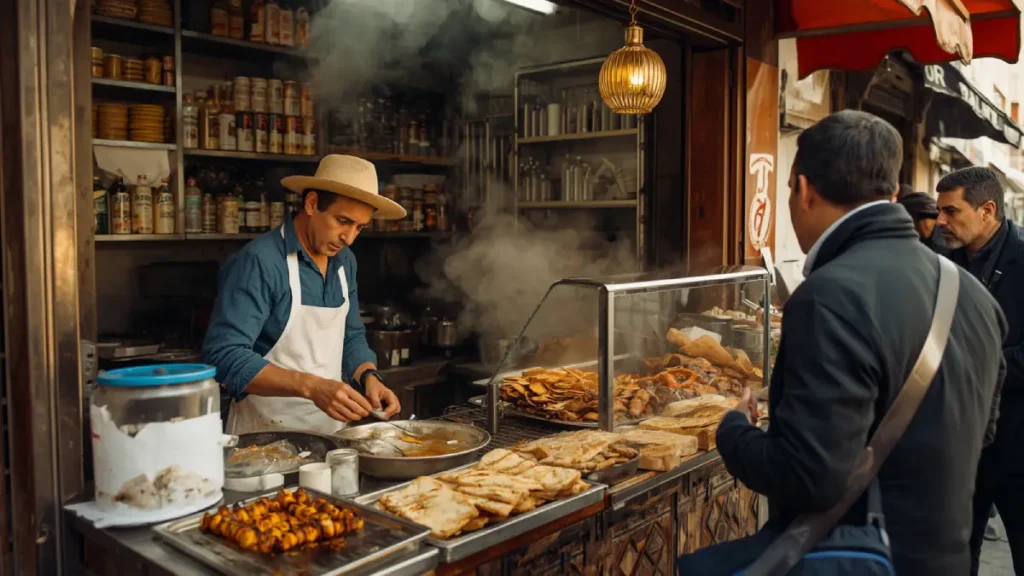
Marrakech street food can be wonderful, but you need to be sensible. The CDC recommends travellers use food and water precautions, including handwashing and avoiding contaminated water. UK travel-health guidance also advises travellers to take care with food and water hygiene in Morocco.
My local advice is practical:
- Eat where food moves quickly.
- Choose hot food cooked in front of you.
- Be careful with raw salads if your stomach is sensitive.
- Avoid seafood far from the coast unless you trust the place.
- Drink sealed bottled water.
- Use hand sanitizer before eating.
- Do not try ten heavy foods on your first night if you just arrived tired from a flight.
Also, do not be shy to say no. In Morocco, hshuma can make visitors accept food or pressure they do not really want. A good guide protects you from this. You can taste, smile, and move on.
Read my Morocco safety guide.
Vegetarian and Dietary Needs on Marrakech Food Tours
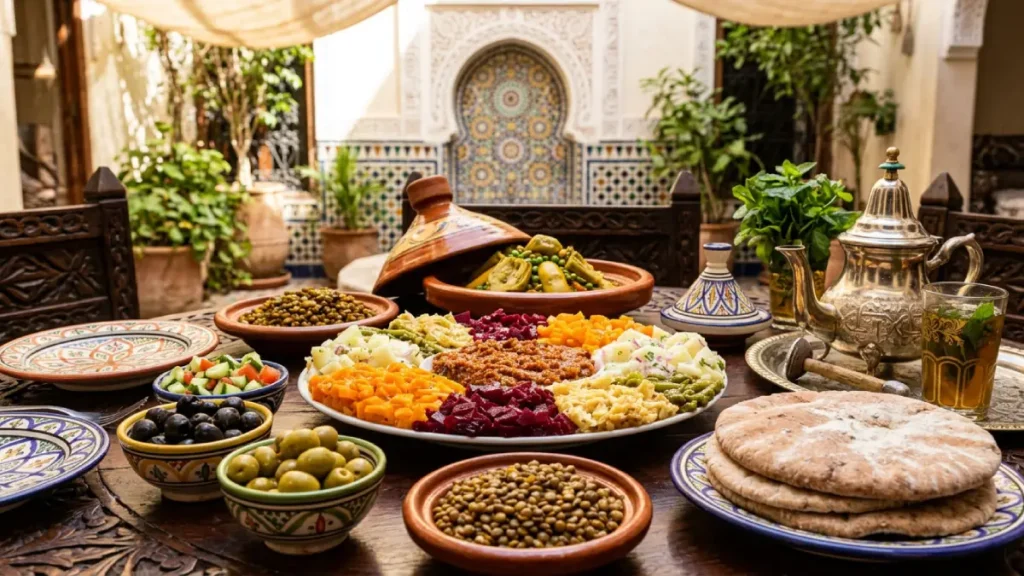
Vegetarians can enjoy Marrakech food tours, but they should choose carefully. Moroccan food has many vegetable dishes, breads, olives, soups, salads, lentils, beans, and sweets. But many street-food routes also include meat, broth, grilled skewers, or shared cooking surfaces.
Vegans, gluten-free travellers, and people with severe allergies need more caution. Some tour operators openly warn that their tastings may not suit vegans, celiacs, or severe allergies because of cross-contamination risks.
If you have strict dietary needs, a private food walk is usually better than a fixed group tour. Tell your guide before booking, not when you arrive.
How Much Do Marrakech Food Tours Cost in 2026?
Prices change by season, platform, group size, and what is included. Current online examples show budget street-food tours from around the low $30s, many popular food tours around $49–$61, and private tasting tours from higher price points.
A useful way to think about price:
- Budget group tour: best for simple tastings and meeting other travellers.
- Small-group tasting tour: best value for most visitors.
- Private food walk: best for comfort, flexibility, families, and deeper cultural context.
- Cooking combo: best for travellers who want to learn, not only eat.
Do not choose only by price. Ask what is included: number of tastings, water, dinner, hotel pickup, group size, language, and cancellation terms.
For a better planinng read my article: money and ATMs in Morocco.
What to Bring on a Marrakech Food Tour
- Bring comfortable shoes.
- The medina streets are uneven, and a 3–4 hour food tour can feel longer if you wear the wrong shoes.
- Bring small cash for tips or extra drinks, even if tastings are included.
- Bring water, especially from April to October.
- Bring a light jacket in winter evenings.
- Bring curiosity, but also common sense.
- Marrakech rewards travellers who are open, patient, and alert.
Where Should a Good Marrakech Food Tour Go?
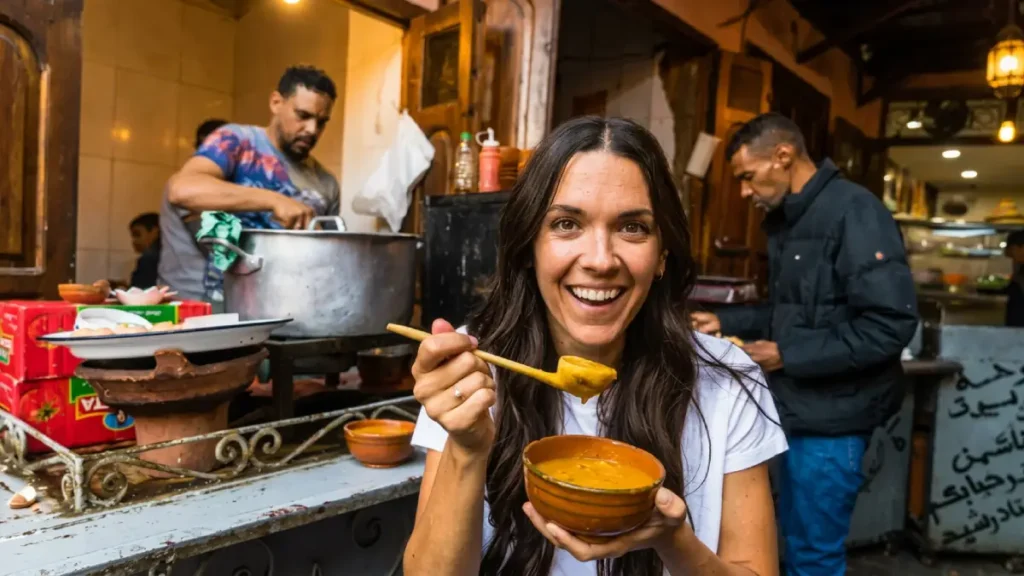
A strong route usually includes more than Jemaa el-Fnaa. The square is important, but the best experience often includes side streets, souk food stops, bakeries, olive stalls, spice areas, and neighbourhood places that travellers walk past without noticing.
A good tour should explain:
- Why bread matters so much in Moroccan meals
- How mint tea became a symbol of hospitality
- Why spices are not just “colourful souvenirs”
- How Moroccans eat differently at home and outside
- What locals eat for breakfast, lunch, snacks, and late-night meals
- Which foods are from Marrakech, and which are from other Moroccan regions
This is the difference between eating and understanding.
Best Time to Book a Food Tour in Marrakech
Book your food tour early in your Marrakech stay (where to stay in Marrakech). Your first or second evening is ideal.
Avoid booking a heavy food tour immediately after a long travel day if you arrive exhausted. Also think carefully during Ramadan, because opening hours and eating rhythms change. Food tours can still be excellent, but they need better planning.
For summer, evening is usually better than daytime. For winter, both late afternoon and evening can work well.
Another Marrakech evening idea: Moroccan hammam experience.
Planning the Rest of Your Morocco Trip
If Marrakech is only one stop on your trip, read my guide on Best places to stay in Morocco before you finalise your route. Choosing the right bases can save you hours of backtracking, especially if you want to combine Marrakech with Fes, Chefchaouen, Essaouira, the Atlas Mountains, or the Sahara.
For travellers staying a few nights in the city, food is only the beginning. After your evening food walk, you can plan one of the best day trips from Marrakech, such as the Atlas Mountains, Ouzoud Falls, Essaouira, or a longer Sahara route.
If you are still building your full route, my Morocco itineraries hub will help you compare 3-day, 7-day, 10-day, and 14-day trip ideas, depending on your pace, budget, and travel style.
Before you arrive, also check the ESIM Morocco 2026 guide so you can stay connected for maps, WhatsApp, restaurant pins, and meeting your guide without wasting time at the airport.
My Honest Recommendation
If this is your first time in Marrakech, do not treat food as just “dinner.” Food is one of the best ways to understand the city.
- For budget travellers, book a well-reviewed small-group Marrakech food tour.
- For couples and families, choose a curated small-group or private route.
- For nervous first-timers, travellers with dietary needs, or anyone who wants deeper stories, book a private food walk with Youness.
- For food lovers, combine a night food tour with a cooking class later in the trip.
The best Marrakech food tours are not the ones that make you eat the most. They are the ones that help you understand what you are tasting, who made it, where it comes from, and how to enjoy Marrakech without feeling lost.
FAQ: Marrakech Food Tours 2026
Are Marrakech food tours worth it?
Yes, especially for first-time visitors. A good food tour helps you understand what to eat, where to go, what to avoid, and how local food culture works. It is also useful if you feel nervous about eating street food alone.
What is included in a Marrakech food tour?
Most tours include several tastings, a local guide, and a walking route through the medina or Jemaa el-Fnaa area. Some include enough food for dinner, while others are more like snack tastings. Always check the number of tastings, group size, water, and pickup details before booking.
Is a night food tour in Marrakech better than a daytime tour?
For most travellers, yes. Marrakech is cooler and more atmospheric in the evening, and Jemaa el-Fnaa becomes much livelier after sunset. If you dislike crowds, choose a private night tour so the pace can be adjusted.
Can vegetarians join food tours in Marrakech?
Yes, but choose carefully. Moroccan cuisine has many vegetarian-friendly foods, but some street-food tours include meat broths, grilled meats, or shared cooking surfaces. Vegans, celiacs, and travellers with severe allergies should book private or confirm details in advance.
How much do food tours in Marrakech cost?
Current online examples vary widely, but many group street-food tours start around the low $30s, with stronger tasting-led tours often around $49–$61 or more. Private tours usually cost more because the route, pace, and guide attention are personalised.
Should I book a food tour or a cooking class?
Book a food tour if you want to taste many foods and explore the medina. Book a cooking class if you want to learn how Moroccan dishes are made. If you have time, do both: food tour first, cooking class later.