Morocco Packing List 2026: What to Wear & What to Actually Bring
If we haven’t met yet, I’m Youness – a licensed tour guide in Morocco and founder of Morkosh Tours. I’ve been guiding since my university days: crossing the Sahara more times than I can count, freezing in mountain guesthouses, and watching guests slowly realise that Morocco is a packing puzzle.
In one trip you can move from 40–45°C heat in the Marrakech medina, to windy, cool evenings in Essaouira, to 0°C nights in the Sahara dunes, then below‑freezing temperatures in the High Atlas. A generic list doesn’t survive that.
This Morocco Packing List 2026 is built around what I call a modular transition system. You don’t pack “for 7 days”, you pack for four climate zones:
- Medinas (Marrakech, Fes, old cities)
- Sahara desert (Merzouga, Chegaga)
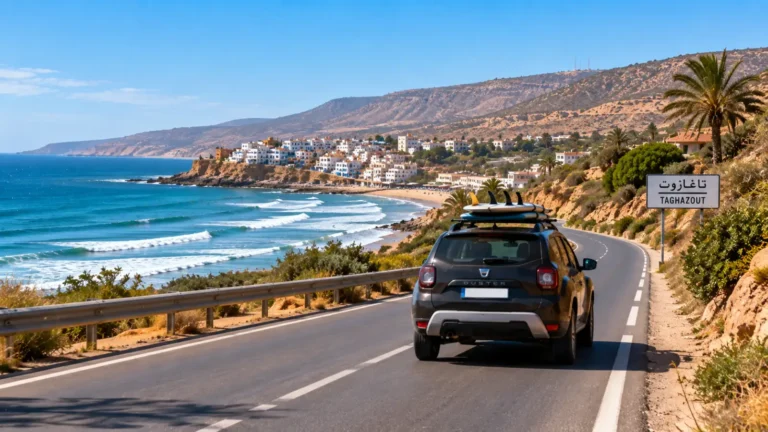
- Atlantic coast (Essaouira, Agadir, Taghazout)
- Mountains (Atlas, Imlil, Oukaimeden)
If you’re still designing your route, start with my Morocco Itineraries Hub; then use this guide to adjust your packing to the places you’re actually visiting.
Table of Contents
Table of Contents
Quick Snapshot: Your Morocco Packing List 2026
If you just want the headlines before we go deep, here’s the core:
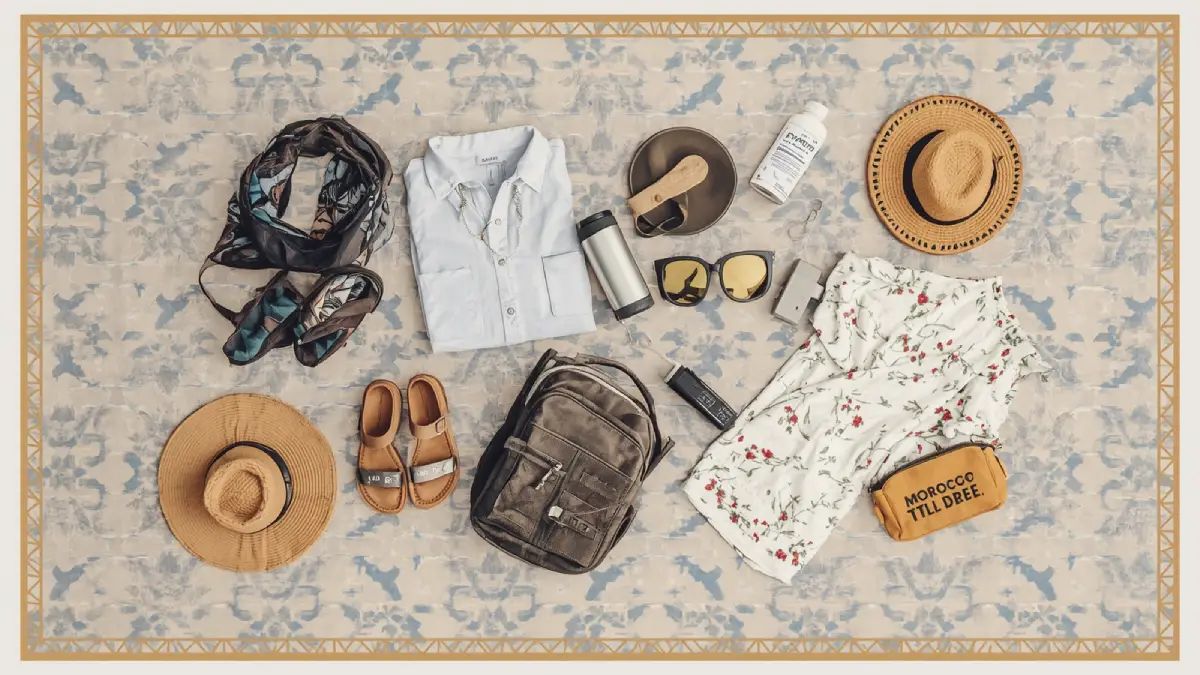
- Clothes: a small capsule of loose long trousers or maxi dresses, a handful of breathable tops with sleeves, one warm layer (fleece or light puffer), and sleepwear warm enough for a 0–5°C Sahara or Atlas night.
- Shoes: one reliable pair of closed trainers or walking shoes with grip for medinas and trips, and one pair of sandals for riads and the coast.
- Essentials: a cross-body bag that zips, a refillable bottle, rehydration salts, SPF 50+, a Type C/E adapter, a power bank, and a small Medina first‑aid kit (blister plasters and basic meds).
- Desert extras: headlamp, scarf or buff for wind and sand, and extra warm layers for night.
And one clear “no”: don’t pack a drone in 2026 unless you enjoy watching customs officers confiscate it.
The Golden Rule: Modesty Without Overheating
There’s no legal dress code for tourists, but there is a social dress code. The way people look at you in Rabat’s new town is not the same as in Fes el‑Bali or a small mountain village.
I use a simple rule with my guests: shoulders to knees covered when you’re in medinas, small towns and rural areas. It’s not about shame, it’s about respect and comfort. You can absolutely wear what you like, but bare shoulders and very short shorts in Fes or an Atlas village bring more stares and sometimes comments than most people enjoy.
The good news: you can be modest and cool. Light linen or cotton trousers, maxi skirts or dresses, and loose tops are your best friends. A large scarf over the shoulders is something I see work again and again – it keeps the sun off, softens the outfit in more conservative streets, and doubles as a light blanket on buses and flights.
In more conservative places like Fes el‑Bali or rural areas around Ait Ben Haddou, you feel the difference strongly; bare legs and shoulders really stand out. On the other hand, coastal Agadir or the new parts of Rabat feel much more liberal, with locals in modern Western fashion. Pack for the stricter side of the spectrum, and you’ll be comfortable everywhere.
Zone 1: What to Pack for Moroccan Medinas
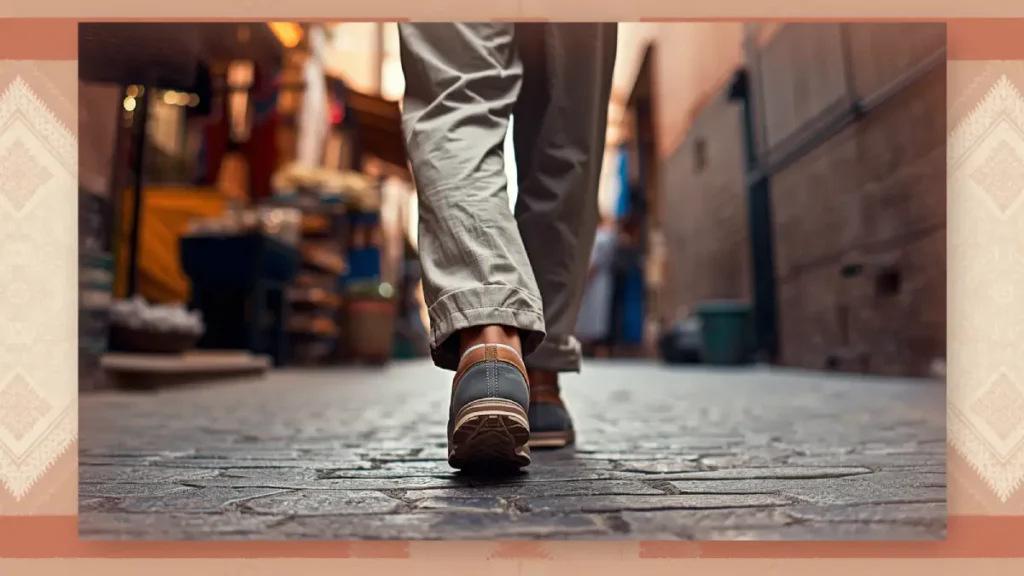
Medinas like Marrakech and Fes look romantic in photos, but under your feet is dust, broken cobblestones, wet tiles and narrow alleys. The two most important items here are good shoes and a sensible bag.
For shoes, think closed trainers or walking shoes with grip. I regularly see people in slick leather sandals slide on tiled steps or spend the day dodging puddles in flip-flops. One decent pair you don’t mind getting dusty is enough.
On top, plan for a handful of tops with sleeves and loose trousers or maxi skirts. Maxi dresses are great if you wear leggings underneath and throw a scarf over your shoulders when you feel exposed.
You don’t need a money belt under your shirt for every step, but a crossbody bag that zips and stays in front of your body is essential. It keeps phone, cash and documents under your eye in busy souks or on Jemaa el‑Fna. For more on how the city itself works and how to move around it, combine this packing list with my Marrakech Travel Guide and Fes Travel Guide.
Don’t leave without hitting the spice souks. Buying tea and spices to bring home is a highlight for many, but make sure you know which Gunpowder green tea and berrad teapot to look for. You can find my full recommendations for buying tea gear in my post on Authentic Moroccan Mint Tea.
Zone 2: Sahara Desert Packing Guide (Merzouga & Chegaga)
The desert is where packing mistakes really hurt. People imagine “hot desert = T‑shirt and thin blanket”. Then in January I see them wrapped in every spare blanket a camp can find.
In Merzouga (Erg Chebbi) and similar areas, days in winter can be pleasant, around 20–21°C, with clear sun. But once that sun drops, so does the temperature. In January and February, nights drop towards 0°C. In October and November, days are still warm, ~30°C, but nights regularly slide to about 7°C. Luxury camps provide bedding and blankets, but they don’t change the air temperature.
For a wider month-specific breakdown, read my guide to Morocco in January, including desert nights, city weather, Atlas conditions and what to pack.
You don’t need a huge suitcase of winter gear, but you do need a proper layering system. A breathable base layer (T‑shirt or long-sleeve), a fleece or light puffer, and long trousers or leggings will keep you much happier at camp. Add warm socks, and in winter a beanie or light hat. For sleepwear, think long sleeves and long bottoms, not the thin shorts you might use in hotels.
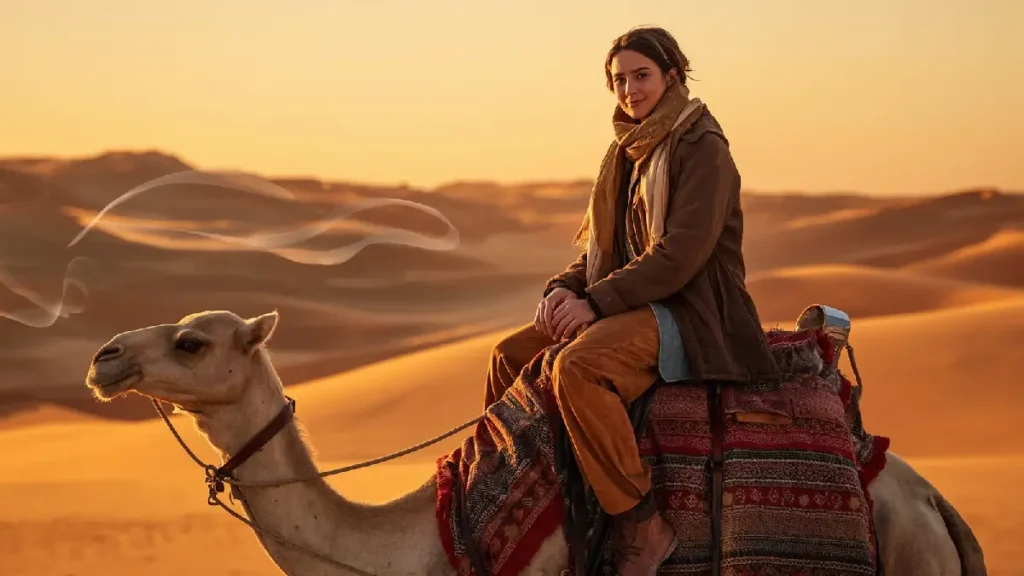
On the camel, long trousers and closed shoes are non‑negotiable. Camels are beautiful, but their saddles will happily eat your bare skin. A scarf or buff is useful for wind and sand; sunglasses are your friend.
On many Sahara tours the big luggage stays in the 4×4 or minivan while you go into camp with a smaller bag. That overnight desert daypack should carry your warm layers, headlamp, basic toiletries, any medication, and a power bank – because generators usually run only in the evening, and you’ll be happy to have your own battery if you want to take photos or check your route at night. For more detail on routes and camps, my Merzouga Desert Guide goes deeper.
Zone 3: Coastal Morocco – Essaouira, Agadir, Taghazout
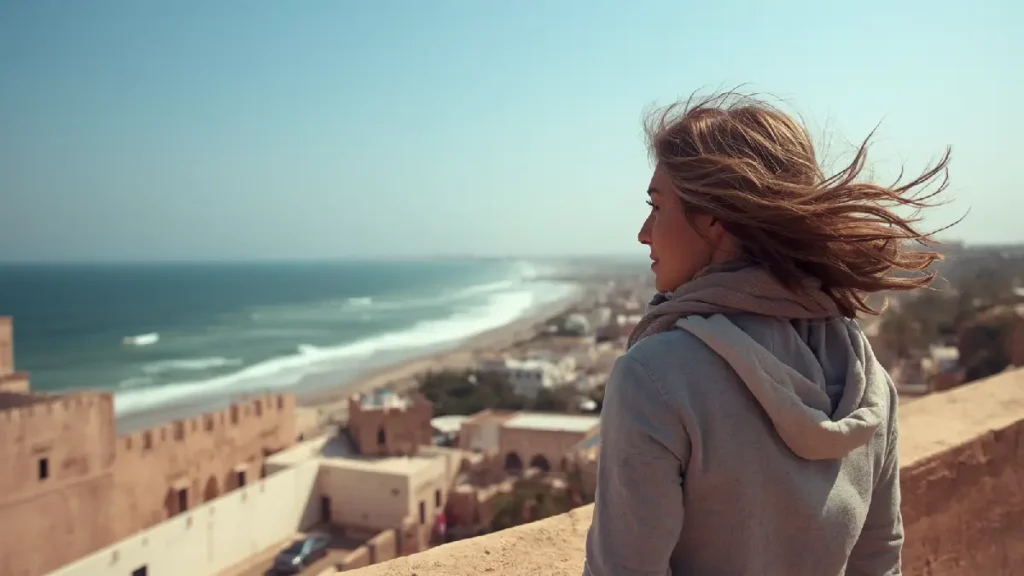
The coast is where many travellers escape to when Marrakech becomes a furnace. Places like Essaouira and Taghazout are often 10–15 degrees cooler than the inland cities, but the wind there surprises people.
In Essaouira, I’ve seen travellers in light dresses and shorts wrapped in blankets over lunch because the wind on the terrace is cold, even in August in Morocco. A light hoodie or sweater is useful almost year‑round. For the beach and surf towns, you still bring a swimsuit and easy sandals, but don’t forget closed shoes for evenings and for walking along cliffs and cobbled streets.
When you’re ready to choose a base here, use:
- Best Riads in Essaouira – for atmospheric medina stays
- Best Things to Do in Essaouira – so you know how active you’ll be (and how much warm clothing you’ll want on the ramparts)
Zone 4: Atlas Mountains & Cold Nights
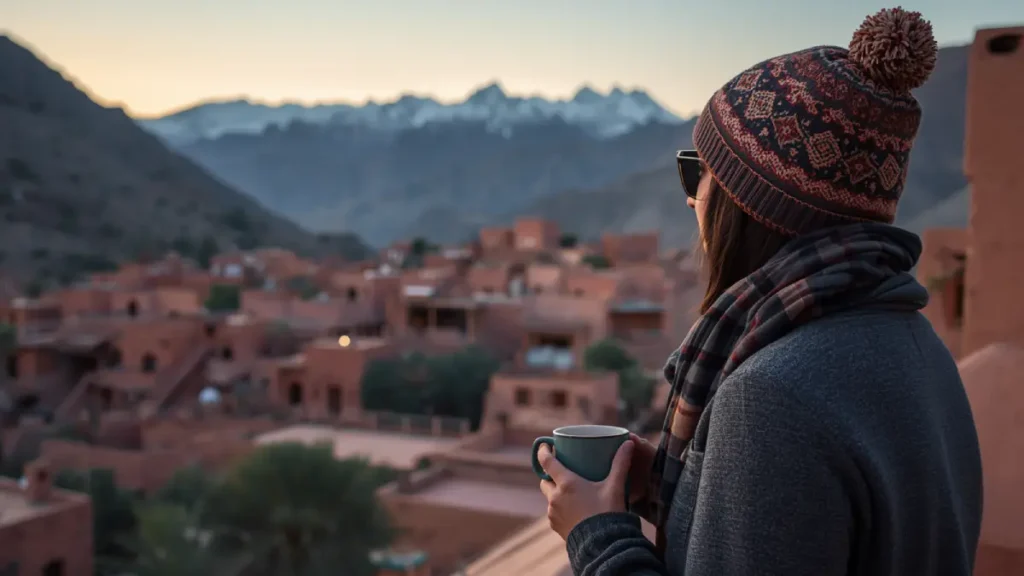
The High Atlas (Imlil, Oukaimeden, small valleys) are another place where people under‑pack for the cold. Outside, the air can be crisp and beautiful. Inside, many basic guesthouses and even some riads have no central heating. In winter, tile floors and thick walls trap the cold.
Here, think about what you wear inside a European mountain cabin:
- A base layer that can also be your day layer
- A warm fleece or light puffer
- Good socks and comfortable shoes with grip for walks between villages
- A hat and light gloves in winter, especially if you head to the snow around Oukaimeden
One of the most common comments I hear in January in Imlil is: “I wish I’d packed warmer pyjamas.” Don’t let that be you.
If you’re adding Atlas or Agafay to your Marrakech base, my best day trips from Marrakech guide helps you choose; this packing section tells you how not to freeze or overheat once you’re there. See my list of trekking gear for the Atlas Mountains. And for riad-specific tips, head to this guide.
What to Wear in Morocco for Women (2026 Reality)
I’m not going to pretend I know what every woman should wear, but after years of tours, some patterns are clear.
A maxi dress with leggings underneath is probably the single most useful outfit formula in cities and medinas. It looks good in photos, covers enough to be respectful, and you can adjust warmth by adding or removing a cardigan or scarf. Loose linen or cotton trousers plus a simple top with sleeves and a light outer layer works just as well.
Leggings by themselves are fine if you pair them with a tunic or long‑line top that covers the hips. Many guests feel comfortable with this combo. The problems start when leggings are tight, tops are short, and a lot of skin is visible at the same time. In the medina, that’s when you notice the looks.
You do not need a hijab. That’s a personal religious choice for Moroccan women. But I do recommend a big scarf for every female traveller – it adds modesty when you feel watched, protects from the sun, and keeps you warm in the evening. For a deeper dive into how dress, safety and solo travel intersect, my solo female travel Morocco guide pulls together many real experiences.
What to Wear in Morocco for Men
For men, the challenge is to remember that you’re not at a beach bar all the time.
In medinas and older districts, long trousers simply work better. Chinos or light travel trousers, plus a T‑shirt or casual shirt, are perfect. A collared linen shirt is great for riad dinners and nicer restaurants.
Shorts in Marrakech and Fes aren’t illegal, but if they’re very short, you’ll feel the eyes on your legs. On the coast, or in resorts and clearly touristic pool spaces, shorts are much more normal. Again, think context: what feels fine at a surf camp in Taghazout might feel very different in Fes el‑Bali.
Tech & Health: 2026 Essentials You’ll Be Glad You Packed
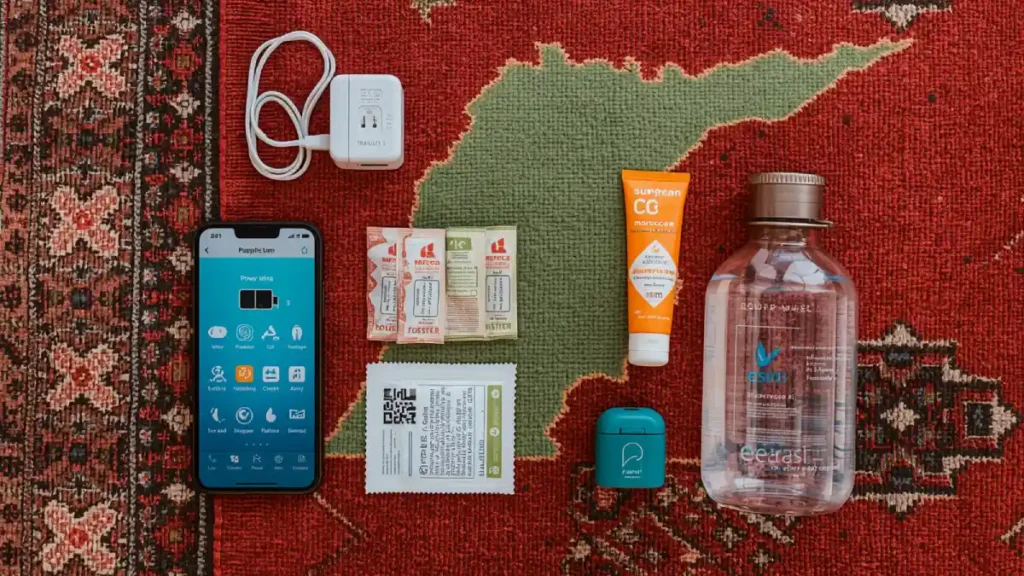
How to Stay Connected (eSIM vs Local SIM)
More and more of my guests now arrive with an eSIM already installed. It’s a good solution, especially if you don’t want to think about kiosks after a long flight.
An eSIM from providers like Airalo, Yesim, Saily gives you data immediately on landing, great for maps and WhatsApp. A local SIM from Maroc Telecom, Orange or INWI is still cheaper per gigabyte and sometimes more reliable in more remote areas.
My honest recommendation:
- If you’re on a budget or don’t like changing phone settings, buy a physical SIM at Marrakech or Casablanca airport.
- If you want maximum comfort and don’t mind paying a bit more, activate an eSIM before you fly for instant connectivity, then decide later if you also want a local SIM for longer trips or rural regions.
If you want plug‑and‑play options many travellers use, you can:
- Get a Morocco eSIM from Airalo for flexible data packs that cover maps, WhatsApp and email.
- Try Yesim or Saily if you prefer managing everything through a simple app.
For exact prices, airport kiosk details and which operator to choose for which route, I’ve written a dedicated best SIM card Morocco 2026 guide.
While offline maps are great, having active internet is crucial for booking last-minute train tickets or translating in the souks. I highly recommend packing a portable mobile Wi-Fi router rather than draining your phone’s battery with tethering.
Power, Charging & Little Things That Matter
In riads and especially in desert camps, outlets are limited. Many camps run on generators that are only on for a few hours. A decent power bank is one of those things guests always wish they had brought.
A Type C/E adapter (220V) will cover you for almost all sockets. Most travellers bring a single universal adapter and a small multi‑USB charger, which works well.
Check my detailed Morocco travel adapter guide for plugs, voltage, and what you actually need.
On the health side, the three things I see most:
- Dehydration
- Stomach issues
- Blisters
A refillable bottle, rehydration salts, basic anti‑diarrheals, painkillers and blister plasters will solve 90% of the minor drama. For the rest – serious illness, injuries, evacuation – you want proper insurance.
If your route includes the Sahara, Atlas Mountains or long road days, I strongly recommend having travel insurance that covers medical treatment and evacuation, not just lost baggage. You can quickly compare cover and get a policy online with EKTA Travel Insurance before you leave home. My full Morocco travel insurance guide explains what to look for and why.
(Replace # with your EKTA affiliate URL.)
For a wider safety mindset and what actually goes wrong (and what doesn’t), use this packing list with my Morocco Travel Safety Guide.
Adapting Your Packing to the Season
Spring & Autumn (March–May, Sept–Nov)
These are the times I recommend most. Daytime temperatures are pleasant in cities and tolerable in the desert. Even then, nights can be colder than people expect, especially in the Sahara and mountains.
You don’t need heavy winter gear, but one proper warm layer (fleece or light puffer) and something warmer to sleep in will make a big difference.
For a city-specific example, see what to pack for Marrakech in November, when warm afternoons can be followed by cool riad mornings and evenings. For the wider country, my Morocco in November guide explains the seasonal differences between Marrakech, the coast, northern cities, the Atlas and the Sahara.
Winter (Dec–Feb)
Winter in Morocco is not a joke, especially at night. Cities can feel mild in the sun but cold in riads and apartments. In the desert and Atlas, nights go to 0°C or below.
Bring a proper warm layer, warm pyjamas, and don’t underestimate how chilly a tiled riad floor at midnight can feel; my Morocco in December guide explains how this changes between cities, mountains, coast and desert.
For a city-specific checklist, see what to wear in Marrakech in December, including the layers needed for cool mornings, rooftop evenings and winter day trips.
Summer (June–Aug)
In summer, the interior of Morocco, including Marrakech, can be brutal in the middle of the day. Think 40–45°C in the medina. If you have to come in that window, plan your days around early mornings and late evenings, and give yourself midday “siesta” time by a pool or in a cool riad courtyard.
Long, loose, breathable clothing is your friend. Being fully covered in linen can feel cooler than baring your arms and burning.
If you want a deep breakdown of conditions by month (and when I’d avoid certain routes), read my Best Time to Visit Morocco guide.
Luggage Choices, Customs & What to Leave at Home
For classic routes that combine Marrakech, Fes, Chefchaouen, desert and a coast stop, I strongly prefer a backpack or soft‑sided duffel over a big hard suitcase.
Riad stairs, medina alleys and broken pavements don’t love wheels. A 60–70L soft bag is usually enough for 1–3 weeks if you pack smart and plan to do laundry once.
As for what not to bring, the first thing is still drones. Moroccan law has been strict for years; drones are frequently confiscated on arrival without return. Unless you have explicit written permission from the aviation authority, don’t try your luck.
Expensive jewellery usually just adds risk and worry. Toiletries are easy to buy locally; bring only what you truly need or special items you can’t replace.
FAQ: Morocco Packing List 2026
Can I wear shorts in Marrakech?
You can, but you may not enjoy the extra attention. In resorts and on the coast, shorts feel normal. In medinas, especially if they’re very short, you’ll stand out. Knee‑length shorts with a more covered top are the least problematic version.
Do female tourists have to wear a hijab in Morocco?
No. It’s a personal choice for local women. Foreign visitors are not expected to wear one. What’s appreciated is modest, respectful clothing: covered shoulders, tops that aren’t very tight or revealing, and skirts or trousers at least to the knee.
Is it okay for women to wear leggings in Morocco?
Yes, especially with a long shirt or tunic over the top. Leggings under maxi dresses or longer tops are very common among travellers. If the top is very short, you’ll feel more watched in medinas.
What is the best fabric to wear in Morocco’s heat?
Linen and cotton are the champions: breathable, light, and comfortable when you’re covered. Avoid heavy synthetics that trap sweat. Loose long sleeves in linen can feel better than bare, sunburnt arms.
Should I bring a suitcase or a backpack to Morocco?
For riad‑based, multi‑city trips, a backpack or soft duffel is easier: fewer stairs and wheel fights, easier to lift into vans and taxis. For a pure resort or business trip with taxis to hotel doors, a suitcase is fine.
Are drones allowed in Morocco in 2026?
No, not for regular leisure travellers. Drones without prior written authorization are often confiscated at the border. If in doubt, leave it at home.
What should I pack for a night in a desert camp?
Warm layers (including sleepwear), a headlamp or small torch, a power bank, scarf or buff, and basic toiletries/meds. Camps provide blankets, but your own layers and light will make the night much more comfortable.
Final Thoughts: Pack for Places, Not for Fear
Packing for Morocco in 2026 isn’t about bringing your whole wardrobe “just in case”. It’s about understanding the zones you’ll move through, and building a small, flexible kit that can slide between hot streets, cold desert nights, windy coasts and mountain air.
If you’re unsure how your route and your suitcase match, send me your rough plan – cities, desert, mountains, months – and I’m happy to tell you where to add or remove layers. That’s part of my job as a guide: not only to show you Morocco, but to help you be comfortable enough to enjoy it.