
For a direct Marrakech to Fes journey, the train is usually the best choice for solo travelers and couples. Current ONCF timetables show through Al Atlas services taking about seven hours. A private transfer or rental car makes more sense for families, groups or travelers who want more flexibility. If the Sahara is part of your trip, allow at least three days for a proper route via Merzouga instead of treating the desert as a shortcut.
The two cities are approximately 530 km apart by the main road route. Your best option depends on whether you want to arrive in Fes efficiently or make the journey itself part of the trip.
Table of Contents
Table of Contents
Which Marrakech to Fes transport option is best?
Choose the train if you want the best balance of cost, comfort, and simplicity. It is the most sensible direct option for most solo travelers and couples.
Choose a private transfer or rental car if you are traveling as a family, carrying plenty of luggage, or want door-to-door flexibility. A direct drive can take roughly 5.5 to 6 hours in good conditions.
Choose the bus if keeping the fare low matters more than comfort and journey time. It is usually slower, with journeys around 8 to 9 hours.
Choose a flight only if a direct service happens to operate on your travel date and the total door-to-door time works in your favor. The flight itself is short, but airport transfers, security, and waiting time reduce the advantage.
Choose Marrakech to Fes via Merzouga only when you want a multi-day desert itinerary. It is not a practical shortcut between the two cities.
Marrakech to Fes train: the best direct option for most travelers
The Marrakech to Fes train is my preferred option for most solo travelers and couples. It offers more room to sit and move around than a long-distance bus, and it is normally the easiest way to make this full-day journey without needing to navigate Moroccan roads.
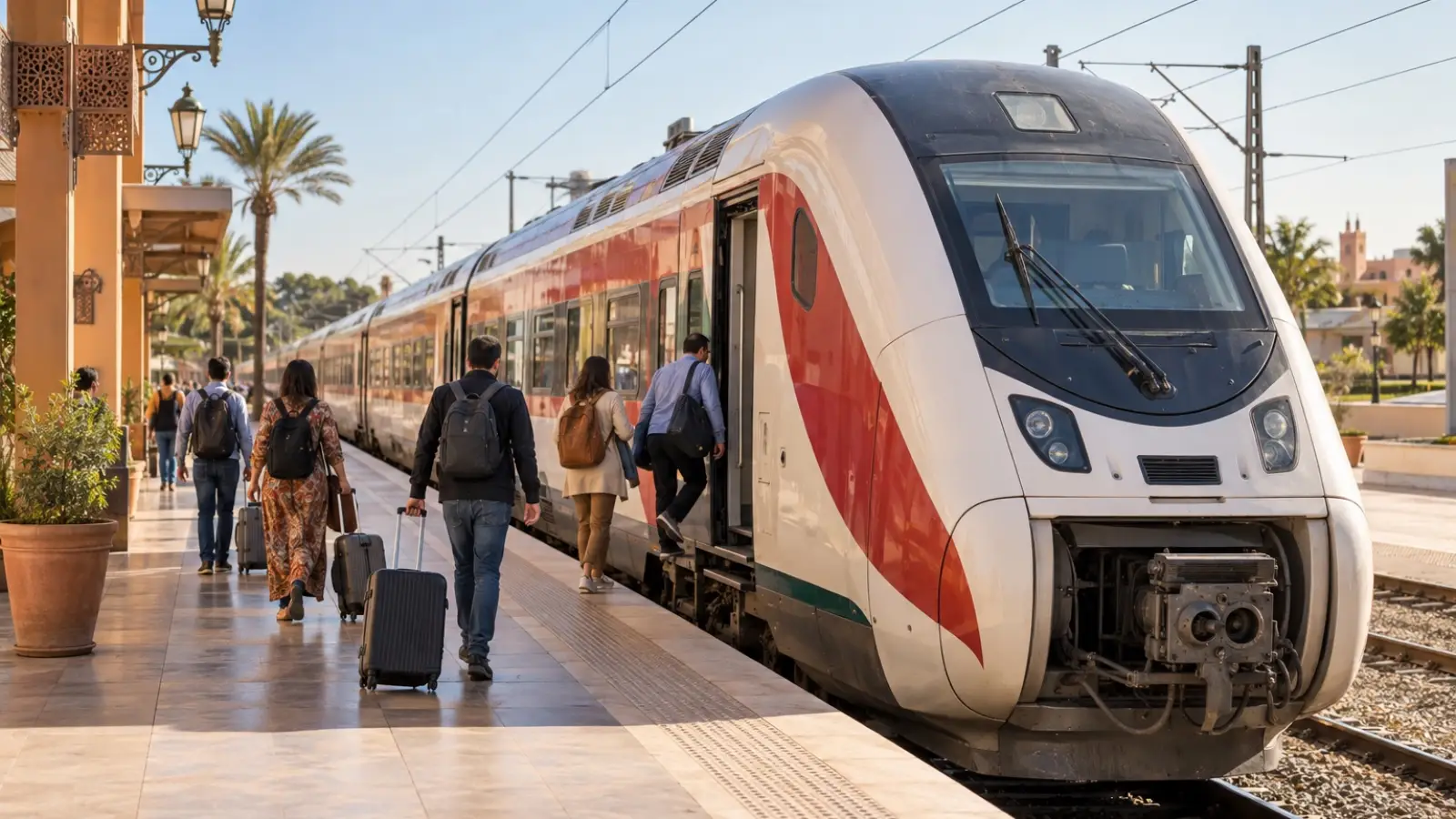
Train journeys typically take around seven hours. The current ONCF timetable lists through Al Atlas trains from Marrakech to Fes, travelling via Casablanca, Rabat, Kenitra and Meknes without requiring passengers to change trains. Timetables can still change, so check your exact departure on the official booking platform before travelling.
Ticket prices vary according to the departure, travel date, class and ticket conditions. Compare the live options on ONCF Voyages rather than relying on an old fare quoted online. For a journey of this length, first class can be worth considering when the price difference is reasonable and you value a quieter carriage and more space.
Where the train leaves and arrives
Trains leave from Marrakech railway station in Gueliz, the modern part of the city. If you are staying in the medina, allow time for the taxi ride to the station rather than assuming it is walkable.
In Fes, trains arrive at the railway station in the Ville Nouvelle, the newer part of the city. This is around 5 km from the old medina, so you will still need a taxi to reach accommodation near Bab Boujloud, Fes el-Bali, or another medina entrance.
For the final journey toward Bab Boujloud or another medina gate, use an official petit taxi and ask for the meter where applicable. Confirm the correct drop-off gate with your accommodation before leaving the station, because choosing the wrong side of the medina can mean a long walk with luggage.
For more help choosing where to stay and how to approach the medina, see this practical Fes travel guide.
What to expect on the train
Moroccan intercity trains are generally air-conditioned. Longer services may have refreshments available, but it is wise to bring water, snacks, and anything you need for the journey. Do not rely on onboard Wi-Fi.
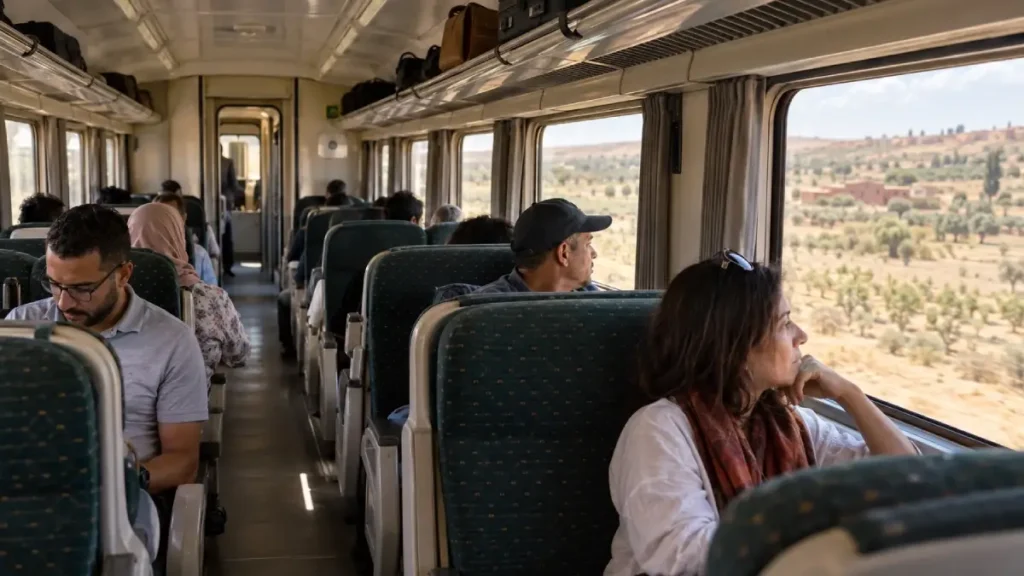
Toilet cleanliness can vary, particularly later in a busy journey. Keep tissues and hand sanitizer in an easy-to-reach bag.
Large suitcases are usually stored in overhead racks or luggage spaces at the end of the carriage. These areas can become crowded on popular departures, so arrive with enough time to board, organize larger bags, and keep valuables with you.
The scenery includes cities, plains, and agricultural countryside. It is an interesting way to see changing parts of Morocco, but it should not be sold as a dramatic scenic rail journey. Choose the train for comfort and practicality, not for mountain views.
Should you book Marrakech to Fes train tickets in advance?
You can buy tickets at Marrakech station, but it is better to book online or purchase ahead for an important departure. This matters especially during Moroccan holiday periods, busy weekends, and when you want first class.
Leaving ticket purchase until the final minutes can mean fewer seating choices or a less convenient departure. This is particularly frustrating before a long journey when you are trying to coordinate a hotel check-in or onward plans in Fes.
Marrakech to Fes bus: cheaper, but longer and less comfortable
The Marrakech to Fes bus can work well for travelers watching their budget, but it is usually not the most comfortable option for such a long distance.
CTM can be a practical alternative when its departure time or fare suits your itinerary better than the train. The journey is normally longer and offers less freedom to move around, so compare the live timetable, fare and terminal details on the official CTM website before booking.
Supratours may also show a useful departure on some dates. Check the current schedule directly and confirm both the Marrakech departure point and the Fes arrival terminal; the company, station and timetable matter more than an old price copied from another journey.
For most travelers deciding between bus and rail, the train is the stronger choice. You generally have more space to move, a more comfortable seat for the day, and a shorter overall journey.
The bus becomes more appealing when:
- The train times do not fit your itinerary.
- You find a substantially cheaper fare.
- You prefer an overnight departure and can sleep reasonably well on buses.
- You are traveling with a tight budget and do not mind a long day or night on the road.
Driving from Marrakech to Fes: fastest on the road, but not always cheapest
A direct Marrakech to Fes drive takes roughly 5.5 to 6 hours in good conditions using Morocco’s modern motorway network. That makes driving quicker than train or bus travel, but the real door-to-door time depends on traffic, breaks, the route you choose, and where you collect or return a rental car.
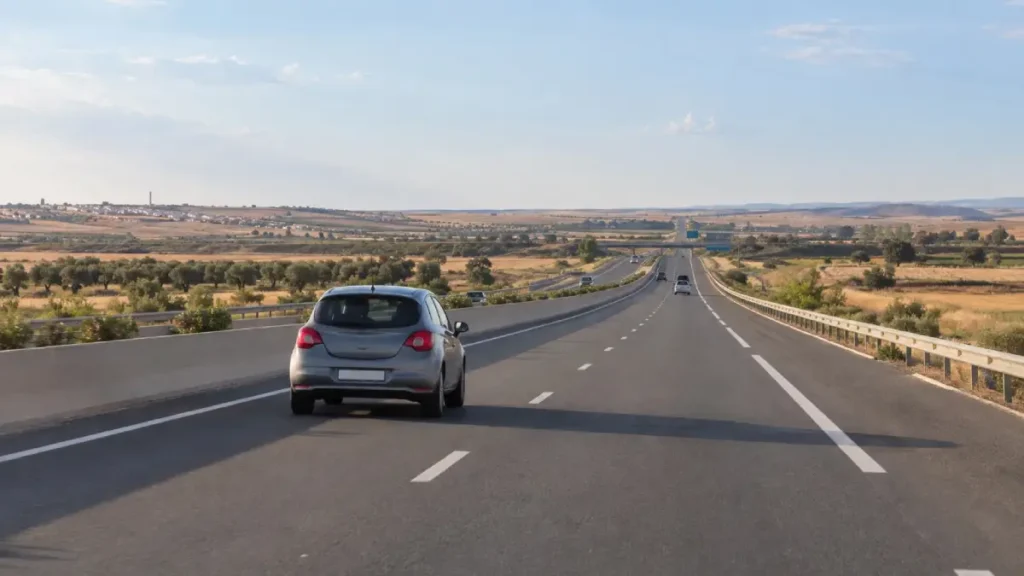
Major roads and motorways are generally good quality on this route. Where posted, motorway speed limits can reach 120 km/h. Drive according to the signs, expect toll booths, and avoid assuming that a motorway journey will be entirely stress-free around major cities.
When comparing costs, include motorway tolls, current fuel prices, rental insurance, parking and any one-way drop fee. These variable expenses can make a rental car poor value for a simple city-to-city journey, even when the driving time looks attractive.
When a rental car makes sense
Self-driving is most useful if you want freedom to stop elsewhere rather than simply travel from one city to the other. It can suit travelers who are comfortable driving in Morocco and want to include central Morocco, smaller towns, or rural landscapes.
The fastest route is not necessarily the most interesting route. If you deliberately choose a route through central Morocco, Beni Mellal can make a worthwhile break, with Ain Asserdoun gardens and Kasbah Ras el-Ain among the places to consider. However, Beni Mellal is not automatically the normal halfway stop on the fastest motorway route; the route you select changes both the drive time and the possible stops.
For a straightforward city-to-city transfer, renting a car solely for this leg may be more effort than necessary. For a wider road trip, it can be a good fit. Read the broader advice in this guide to getting around Morocco before committing to a self-drive itinerary.
Private Marrakech to Fes transfer: best for families and groups
A private transfer is the most convenient road option when you want a driver, hotel pickup, and a direct arrival at your Fes accommodation or medina access point.
A private transfer usually takes approximately 5.5 to 6 hours, depending on traffic and stops. Prices vary with the vehicle, group size, pickup point and included services, so request a written total before booking. The door-to-door arrangement is valuable when you are traveling with children, older relatives, bulky luggage or several people.
The important comparison is the total group cost. A private transfer is not automatically cheaper than train tickets, but it can become attractive when the vehicle cost is divided between several passengers.
A private transfer is particularly worth considering if you want to:
- Leave at a time that suits your itinerary.
- Stop for food or breaks when needed.
- Avoid changing taxis at stations.
- Travel directly to a riad, hotel, or agreed medina drop-off point.
- Keep a group together with luggage.
Before booking, confirm exactly what is included: vehicle size, luggage capacity, pickup point, planned stops, tolls, and the practical drop-off location in Fes. Cars cannot enter most of the old medina’s narrow lanes, so a “door-to-door” transfer may still mean a short walk from a nearby gate.
Marrakech to Fes flight: short in the air, not always faster overall
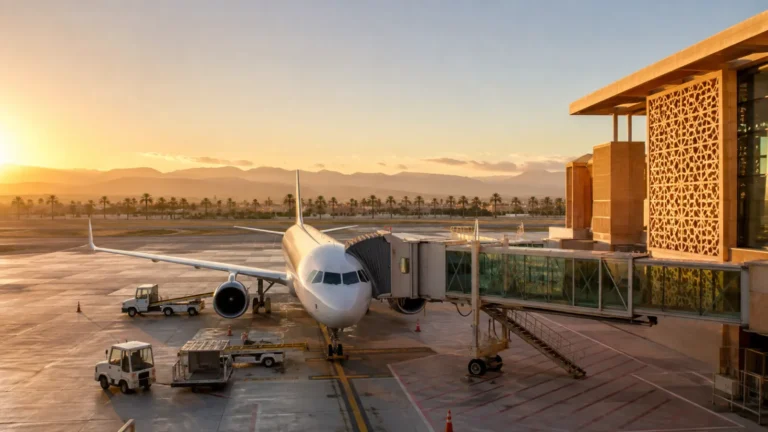
A Marrakech to Fes flight is short in the air, but direct service is not dependable enough to assume it will operate on your date. Check the live airline schedule before building your itinerary around flying.
Even if a direct flight is available, compare the full journey time. You need to account for travel to Marrakech Menara Airport, check-in, security, baggage collection, and transport from Fes Airport into the city. The result can easily be several hours door to door.
Fes Airport is separate from the railway station, so do not confuse an airport arrival with a train arrival when planning your onward transport. Use the official airport taxi area, confirm the displayed or quoted fare before departure and tell the driver which medina gate your accommodation recommends.
For most travelers, the train remains simpler unless the flight schedule matches your plans unusually well.
Marrakech to Fes via Merzouga: make it a three-day desert journey
Traveling from Marrakech to Fes via Merzouga is one of Morocco’s classic overland itineraries, but it is not a direct transport route. Choose it because you want the High Atlas, southern valleys, desert landscapes, and a night around the dunes—not because you need to reach Fes quickly.
I recommend a minimum of three days for this route. That gives you enough time to travel at a more reasonable pace and spend meaningful time in the Merzouga area. If you are choosing between the faster and more relaxed versions, see my Marrakech to Fes desert tour: 3 days vs 4 days guide.
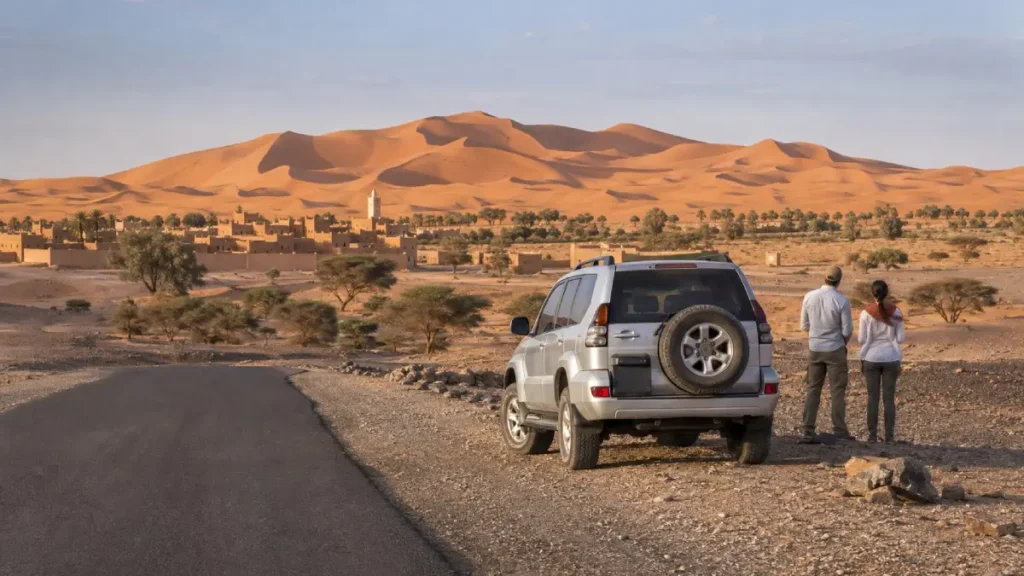
Trying to compress Marrakech–Merzouga–Fes into two days can involve roughly 20 hours of driving. You may technically reach Fes, but you will spend most of the trip inside a vehicle and have only a brief, rushed desert experience.
A three-day route is better for travelers who want:
- Mountain and valley scenery after leaving Marrakech.
- Time for stops along southern Morocco’s road routes.
- An overnight desert camp or Merzouga-area stay.
- A gradual overland arrival in Fes rather than a direct city transfer.
If the Sahara is a priority, do not add it as an exhausted detour between cities. Build the days into your itinerary deliberately. For route choices and what desert tours typically involve, see the guide to Sahara desert tours from Marrakech.
Arriving in Fes without common medina hassles
Whether you arrive by train, bus, car, or transfer, remember that Fes el-Bali is a vast pedestrian-focused medina with narrow lanes. Your driver may be able to take you only as far as a gate or nearby road.
If you are staying inside the medina, ask your riad or hotel for the best drop-off gate before leaving Marrakech. This avoids arriving at the wrong side of the old city with heavy luggage.
Around tourist areas, be cautious of people who tell you that a route is “closed” and then offer to guide you elsewhere. Unsolicited “free” help can lead to a shop visit or a request for payment. A polite but firm refusal is usually enough. Use your accommodation’s directions, an offline map, or an officially arranged guide if you want help navigating.
The practical choice for your itinerary
For a direct Marrakech to Fes trip, take the train unless your group size or schedule makes a private transfer more sensible. It is the most balanced option for comfort, cost, and ease.
Use the bus when the lower fare or a night departure genuinely improves your itinerary. Drive or arrange a transfer when flexibility and door-to-door convenience matter more than the lowest price.
And if Merzouga is on your list, give it the time it deserves. A proper three-day desert route is a travel experience in its own right, not a substitute for direct transport between Marrakech and Fes. Before leaving Marrakech, it is also worth reviewing the practical details in this Marrakech travel guide.
FAQ
What is the best way to travel from Marrakech to Fes?
For most solo travelers and couples, the train is the best option. It takes around seven hours, provides more space and comfort than a long-distance bus, and is usually simpler than arranging a car.
How far is Marrakech from Fes?
Marrakech and Fes are approximately 530 km apart by the main road route. A direct drive usually takes around 5.5 to 6 hours in good conditions, while trains typically take around seven hours.
Is there a direct train from Marrakech to Fes?
The current ONCF timetable lists through Al Atlas services from Marrakech to Fes, but departure times can change. Check ONCF Voyages for your exact travel date before booking.
Is it worth going from Marrakech to Fes via Merzouga?
Yes, if you specifically want a Sahara itinerary and can allow at least three days. It is not worth doing as a rushed two-day detour simply to get between the cities, as that can involve around 20 hours of driving.
Is a private transfer from Marrakech to Fes worthwhile?
A private transfer can be worthwhile for families and groups sharing the vehicle cost, especially when door-to-door convenience and luggage handling matter. Request a written quote that confirms the vehicle, stops, tolls and final drop-off point.