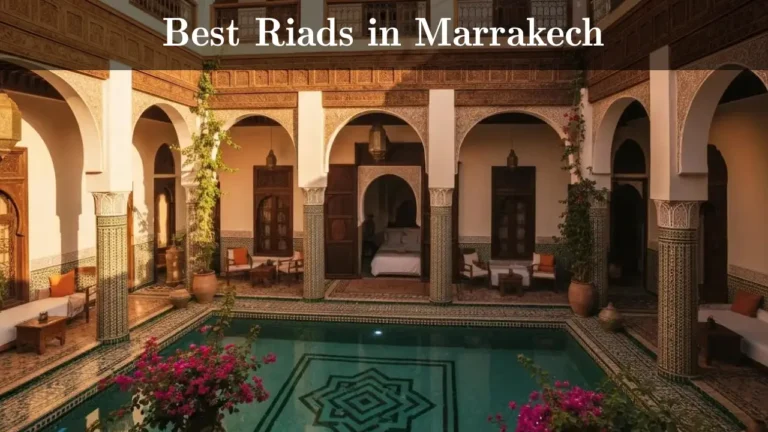

Morocco in November suits travellers who prefer comfortable sightseeing, quieter streets and cooler desert conditions to guaranteed beach weather. The country is moving from autumn towards winter: Marrakech and the Sahara can be pleasant by day but much colder after sunset, northern cities see more rain, and the Atlas Mountains begin to feel wintry.
It is particularly well suited to city breaks, road trips, cultural travel, photography and Sahara itineraries. It is less ideal if your main goal is a warm swimming holiday or high-altitude trekking without the complications of early snow and ice.
Table of Contents
Table of Contents
Is November a good time to visit Morocco?
Yes—November is a good time to visit Morocco if you want to explore rather than spend every day at the beach.
The intense summer heat has gone, so walking through Marrakech’s medina, browsing souks, visiting gardens and spending full days outdoors is far easier. The Sahara is also much more comfortable than in summer, when camel rides and dune walks can be exhausting in the heat.
November is generally quieter than October, especially in early and mid-month. Marrakech remains active throughout the year, but accommodation can offer better value than during peak spring, October and festive-season dates. Rates still depend heavily on the destination, property, weekday, events and demand, so treat November as a chance for better availability rather than a guaranteed bargain.
The trade-off is temperature variation. A sunny afternoon in Marrakech can feel mild and pleasant, while the same evening may require a jacket. In the Sahara and Atlas Mountains, nights can be genuinely cold. Northern Morocco also becomes wetter, with rain, mist and grey skies becoming more likely.
Compared with Morocco in October, November is cooler, calmer and often better value. Compared with December, it usually has fewer festive-season visitors and somewhat milder conditions before Christmas and New Year demand builds.
Morocco weather in November: what changes across the country?
Morocco November weather varies sharply by region. It is a month when packing for one city alone can lead to mistakes: Marrakech afternoons do not reflect the cold mornings in the Atlas, damp streets in Chefchaouen or desert temperatures before sunrise.
Early November can still hold onto some October warmth. By late November, mornings and evenings feel noticeably more winterlike, especially inland and at altitude. Treat the temperature ranges below as planning guides rather than promises, because conditions can change between regions and from one week to the next.
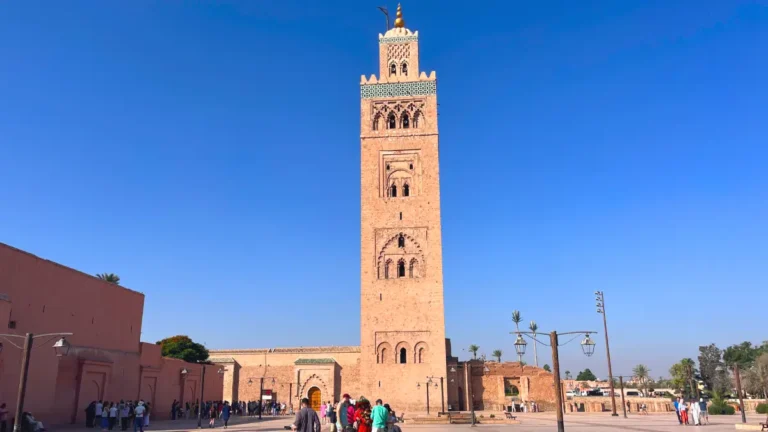
Marrakech in November: warm days, cool evenings
Marrakech in November typically has daytime highs of around 21–25°C, with nights dropping to roughly 9–12°C.
This is one of the best periods for sightseeing in the city. You can walk through the medina, souks, gardens and monuments without having to plan the whole day around escaping the midday heat. Lunch on a sunny terrace can still be very pleasant, but the temperature falls quickly once the sun goes down.
For Marrakech, think in layers rather than summer clothing alone:
- Light clothes for sunny afternoons
- A fleece, jumper or warm jacket for the evening
- Closed shoes or comfortable trainers for long walking days
- A light rain layer in case of autumn showers
For more help planning the city itself, see this Marrakech travel guide.
Fes and Meknes: cooler medinas and more autumn rain
Fes and Meknes are typically cooler than Marrakech in November, with daytime temperatures around 15–21°C and nights roughly 8–11°C.
The old medinas can feel colder than the forecast suggests. Stone walls, shaded lanes and tiled buildings retain little warmth in late autumn, particularly in the morning or after rain. That does not make November a poor time to visit—rainy weather can give the medinas a distinctive atmosphere—but it does make proper shoes and a warm outer layer more important.
Allow extra time when exploring on wet days. Uneven paving and narrow lanes can become slippery, and lingering in an unheated café or riad may feel cooler than expected.
Read the Fes travel guide alongside this seasonal advice if Fes is part of your route.
Chefchaouen, Tangier and the north: expect wetter weather
Northern Morocco becomes noticeably wetter in November. Chefchaouen often has grey skies, mist and periods of rain, while Tangier and other northern coastal areas can receive substantial autumn rainfall. Rabat is generally milder but still has more showers than during summer.
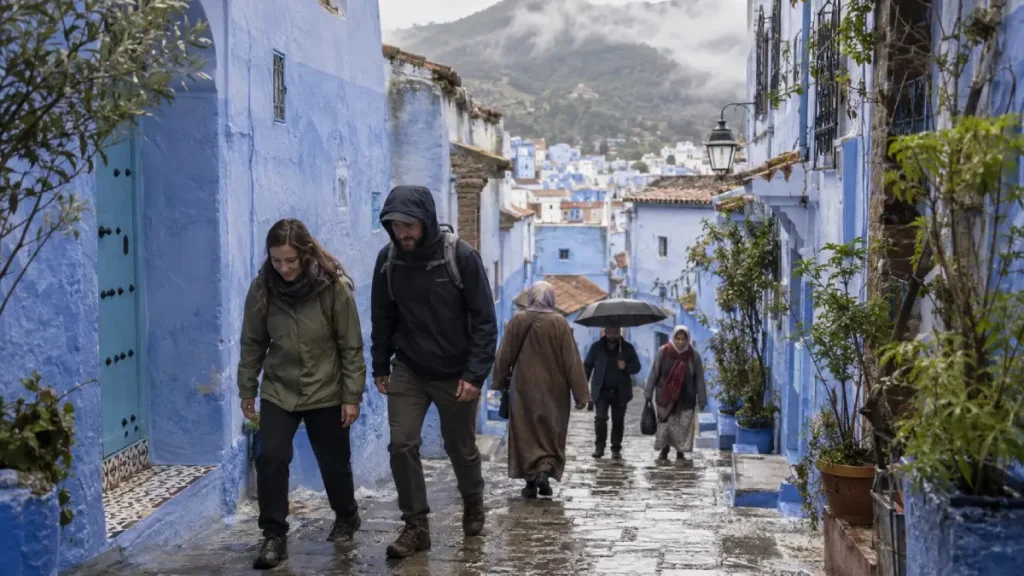
November can still work well for northern cities, particularly for travellers who enjoy a quieter, atmospheric visit rather than perfect blue skies. Just avoid treating it as reliably dry weather.
Bring:
- A lightweight waterproof jacket
- Walking shoes with decent grip
- A bag that protects electronics and documents from rain
- Layers for cooler, damp conditions
If your itinerary depends on mountain views around Chefchaouen, be flexible. Mist and cloud can obscure the surrounding hills even when rain is not constant.
Agadir in November: the best choice for winter sun
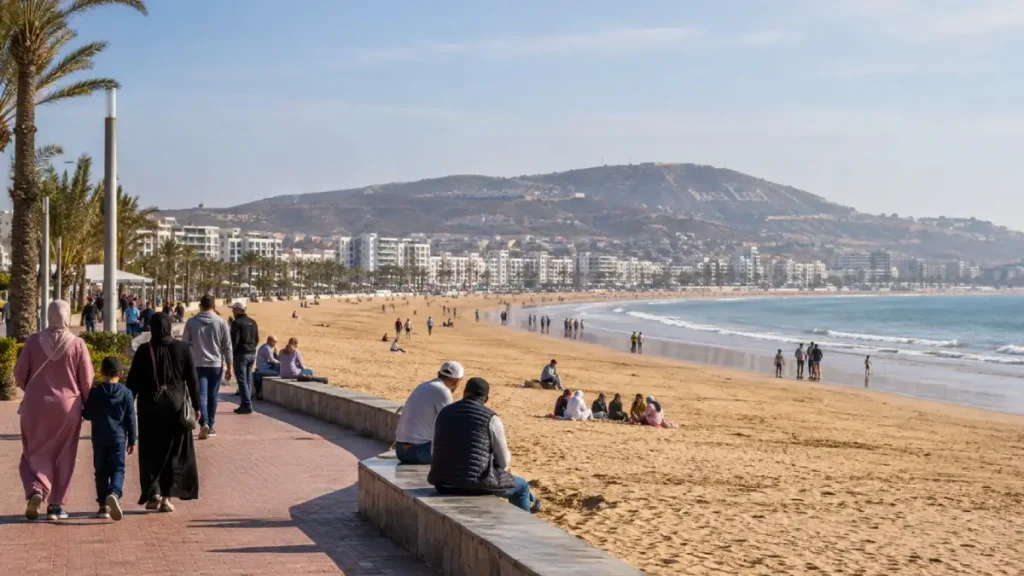
Agadir is the strongest November coastal option for travellers who want sunshine, outdoor terraces and relaxed coastal walks. Typical daytime temperatures can range around 20–25°C, often making it feel considerably warmer than northern Morocco.
It is a good fit for people who want a break from colder European weather without expecting high-summer conditions. You can sit in the sun, walk along the coast and enjoy daytime outdoor life comfortably.
However, November should not be sold as a guaranteed warm swimming holiday. Atlantic water can feel cool for many travellers, even when the air temperature is pleasant.
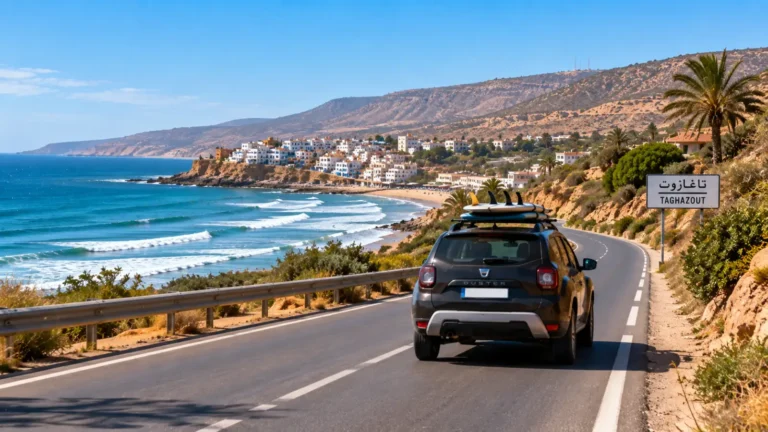
Essaouira in November: milder winds and stronger surf potential
Essaouira typically sees temperatures around 17–22°C in November. The fierce summer winds often ease, while autumn and winter Atlantic swells become more established.
That makes the month appealing for surfers, though conditions vary daily. Check current surf and wind forecasts rather than arriving with expectations of a particular wave pattern.
For non-surfers, Essaouira remains a relaxed option for seafood, medina walks and coastal scenery, but it can feel cool once the sun disappears. A windproof layer is more useful here than sandals and beachwear.
Is the Sahara worth visiting in November?
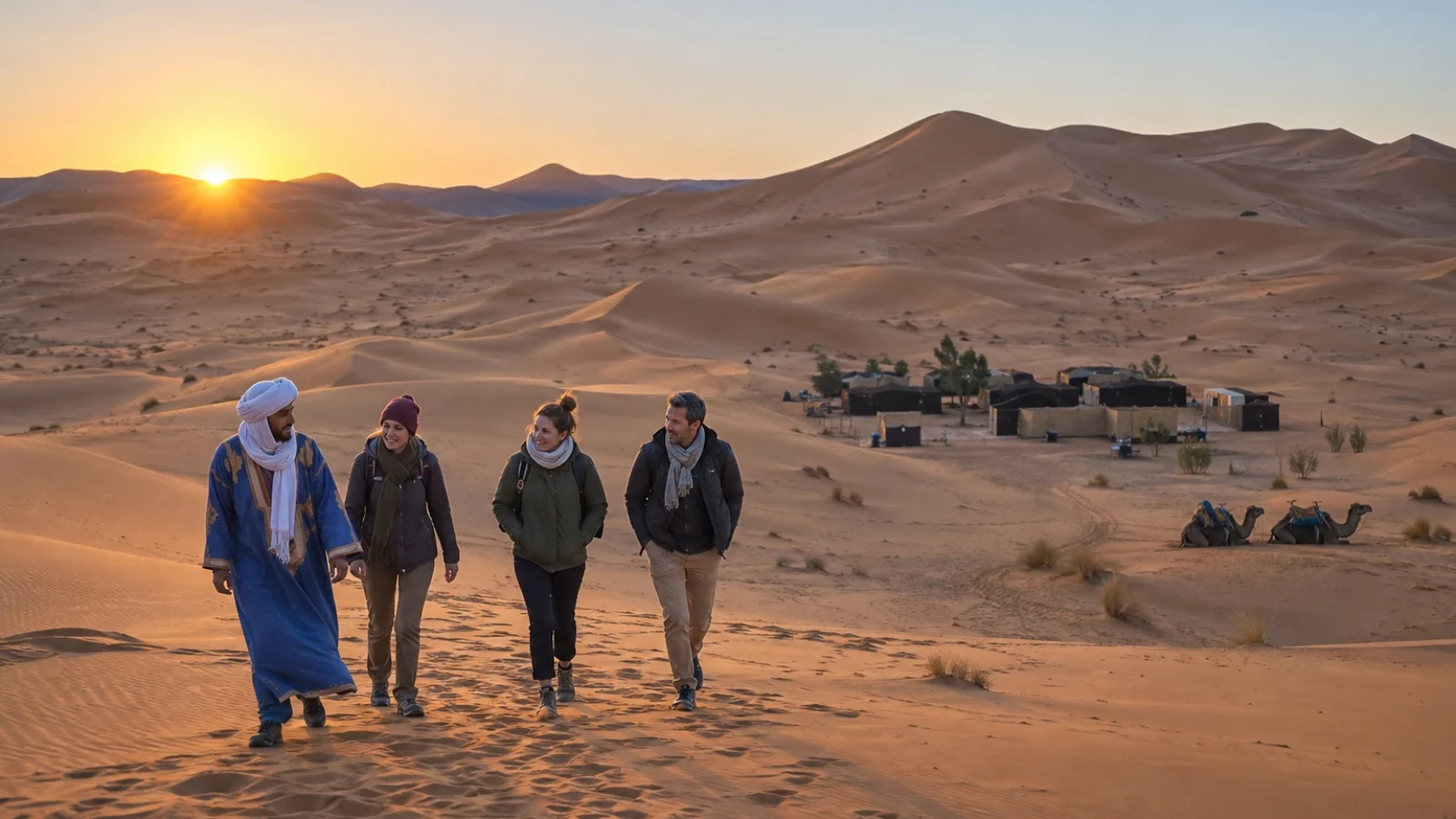
Yes. November is one of the most comfortable months for a Sahara trip, especially for travellers who want to experience dunes, camel rides and desert landscapes without summer heat.
Typical daytime temperatures can be around 22–27°C. This makes long drives, desert walks and camp activities much easier than during the hottest months. The light is also excellent for photography, particularly in the morning and late afternoon.
The important warning is the cold at night. Temperatures can fall into single figures Celsius, and the period around dawn can feel colder still.
Do not pack for the Sahara based only on the afternoon forecast. Bring:
- Thermal sleepwear
- Thick socks
- A warm fleece or insulated jacket
- A scarf or hat for evenings and dawn
- Closed shoes for walking around camp after dark
Many camps provide heavy blankets, and some offer heated accommodation. Do not assume heating is included, though—confirm the setup with your specific camp before booking.
A November desert itinerary also works especially well with a road trip through Skoura, Dades and the Draa Valley. Cooler temperatures make scenic stops more enjoyable, while autumn light and palm oases create strong photography conditions. The Draa date harvest may still be finishing in some areas, and markets can continue to carry fresh dates from the autumn harvest.
If you are starting from Marrakech, compare routes and camp styles through these Sahara desert tours from Marrakech.
Can you visit the Atlas Mountains and Imlil in November?
Yes, but November is a transition month in the Atlas. Lower valleys and villages around Imlil can remain accessible for walks and day trips, while high-altitude trekking becomes increasingly dependent on current snow, ice and weather conditions.
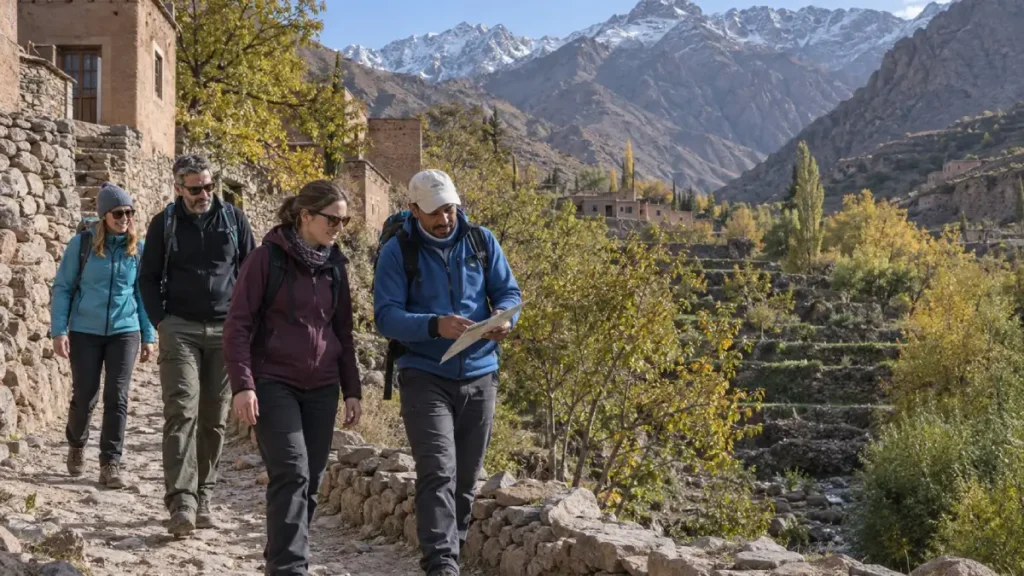
At altitude, daytime temperatures can be around 8–14°C, while nights may fall roughly between -2°C and 5°C, depending on elevation and location. Snow can arrive on the highest peaks, including Toubkal, during November, although the timing and amount vary from year to year.
For a low-elevation day trip from Marrakech, November can be rewarding: clear days, crisp air and fewer heat-related concerns. For multi-day trekking, however, this is no longer a summer-style hiking month. Conditions can shift quickly, and routes that are straightforward in autumn may require winter equipment or more technical planning after snow arrives.
For Toubkal and other higher routes, arrange a licensed local mountain guide and confirm current snow, ice and route conditions before setting out. Winter equipment may be necessary after snow arrives, even when Marrakech remains mild.
Before committing to a mountain itinerary, check a current forecast and use this Atlas Mountains trekking guide as a starting point for planning.
November road trips: why the Dades, Skoura and Draa Valley work well
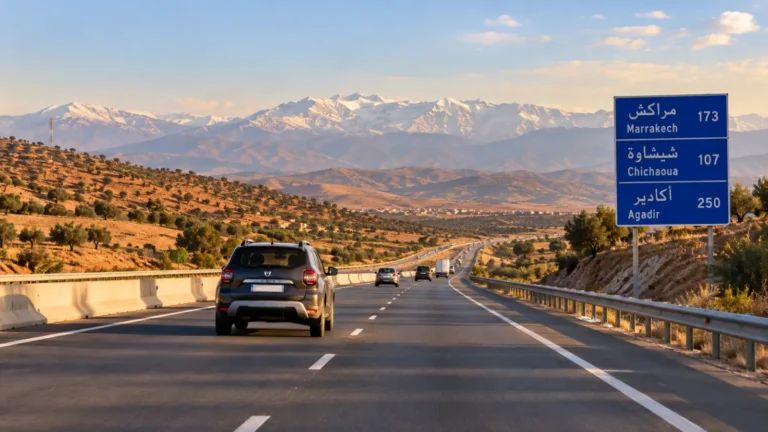
November is an excellent month for Morocco road trips through the southern valleys. In summer, driving between kasbahs, palm groves and desert-edge towns can become tiring because of the heat. In November, daytime temperatures are much easier to manage, making it more realistic to stop frequently for walks, viewpoints and photography.
The Dades Valley, Skoura and Draa Valley are particularly rewarding in this period because palms, ochre landscapes and softer autumn light create good contrast. You may also see signs of the date harvest in the south and olive harvesting in agricultural regions around Fes and Meknes.
Olive collection and local pressing are important November activities in parts of Morocco, but they are working agricultural routines rather than guaranteed visitor experiences. Do not expect access to a private farm or olive press unless it has been arranged in advance.
Driving conditions are generally good, but plan around shorter daylight hours. Rain can make northern and mountain roads slippery, while higher passes may see fog or the first snow later in the month. Avoid arriving on unfamiliar mountain roads after dark, and check current road and weather conditions when significant rain or snow is forecast.
What to pack for Morocco in November
The biggest packing mistake for Morocco in November is bringing clothes only for warm afternoons. The country can feel mild in daylight and surprisingly cold after sunset, particularly in the desert, Atlas Mountains and unheated traditional buildings.
A practical November packing list should include:
- T-shirts and light long-sleeve layers for daytime
- A fleece, jumper or warm jacket
- Comfortable closed walking shoes
- Warm socks
- A scarf, beanie or light hat for desert and mountain mornings
- Thermal sleepwear for Sahara camps
- A compact waterproof layer, especially for northern Morocco
- Sunglasses and sunscreen for clear days
- A small day bag that keeps valuables dry during showers
Indoor cold matters too. Many traditional riads and homes are designed to stay cool in hot weather, with tiled floors and thick walls that can feel chilly in late autumn. Ask whether your accommodation has functioning heating, reversible air-conditioning or another reliable heat source rather than assuming it does. A fireplace can be welcome where available, but it is not standard in every riad.
For a broader checklist, use this Morocco packing list, then add extra warm layers for your exact route.
Crowds, prices and November events
November is normally quieter than October, particularly in the first half of the month. It suits travellers who want more space in the medinas, easier restaurant reservations and a calmer pace without waiting for deep winter.
Marrakech is the main exception: it remains busy year-round and can become more expensive when major events take place. The Marrakech International Film Festival is usually scheduled in late autumn, but its dates change between editions and can affect accommodation demand. Check the official festival website before booking around it.
Two national holidays fall in November: 6 November commemorates Morocco’s Green March, and 18 November is Independence Day. Government offices and banks may close, while transport and private businesses can follow different schedules, so confirm anything time-sensitive locally.
You can verify the dates through Morocco’s official national holiday calendar.
Book flexible accommodation if your Marrakech stay overlaps with a major event period. Elsewhere, November can be a useful time to find better value than in peak spring or October, though prices are never uniform across the country.
Who should choose Morocco in November?
November is especially suitable for:
- Travellers who want comfortable city sightseeing
- Couples and independent travellers looking for quieter conditions
- Photographers drawn to autumn light, palms and desert landscapes
- Visitors planning Marrakech, Fes, Meknes or a Sahara route
- Value-conscious travellers avoiding the busiest spring and festive dates
- Travellers happy to pack layers and adapt to regional weather
It is less suitable for:
- Travellers expecting reliable warm-water swimming
- People packing only light summer clothes
- Visitors whose main goal is high-altitude trekking without winter preparation
- Travellers who need guaranteed dry weather in Chefchaouen, Tangier or northern Morocco
Plan November around warmth by day and layers by night
Visiting Morocco in November works best when you embrace the seasonal change rather than fight it. Build an itinerary around cities, southern road trips and the Sahara; use Agadir if winter sun matters; and keep northern or mountain plans flexible when rain or snow is possible.
November rewards travellers who value walking weather, quieter travel and comfortable desert days. Pack properly for the evening cold, confirm heating at desert camps and riads, and do not judge the whole country by Marrakech’s afternoon temperature. For a wider comparison with other months, see the guide to the best time to visit Morocco.
FAQ
Is Morocco warm in November?
Morocco can be pleasantly warm during the day, especially in Marrakech, Agadir and the Sahara. Evenings and mornings are much cooler, however, and desert and mountain nights can be cold.
Is Marrakech worth visiting in November?
Yes. Marrakech in November is particularly good for walking through the medina, souks, gardens and monuments because intense summer heat has disappeared. Expect mild days around 21–25°C and cooler nights around 9–12°C.
Can you swim in Morocco in November?
You may be able to enjoy sunny coastal weather in Agadir, but the Atlantic water often feels cool in November. It is better to think of the coast as a place for walks, terraces and sun rather than a guaranteed warm swimming holiday.
Is the Sahara cold in November?
It can be cold at night. Daytime temperatures are usually comfortable, but nights can fall into single figures Celsius and may feel colder near dawn. Bring thermal sleepwear, thick socks and warm layers.
Does it rain in Morocco in November?
Rain is more likely than in summer and early autumn, especially in northern Morocco. Chefchaouen, Tangier and other northern coastal areas can see rain, mist and grey skies, while Marrakech and the Sahara are often drier but should not be treated as rain-free.