
Morocco in February sits between winter and spring. Days are often bright enough for comfortable sightseeing, particularly in Marrakech, Agadir and the Sahara, while evenings can still be cold and northern cities may see rain. It is a good month for travelers who want fewer crowds before the March–April rush, comfortable walking temperatures and a chance of seeing almond blossom—provided they pack for changing conditions.
Table of Contents
Table of Contents
Is February a good time to visit Morocco?
Yes, February is a good time to visit Morocco if your priority is culture, road trips, photography, surfing, desert travel or city sightseeing rather than beach swimming and high-altitude trekking.
The country is beginning to warm after January, especially in the second half of the month. A sunny afternoon in Marrakech can feel almost springlike, yet the same day may begin with a cold breakfast on a riad terrace and end with a jacket-worthy evening.
February works especially well for:
- Exploring Marrakech, Fes, Meknes and Morocco’s medinas without summer heat
- Taking a Sahara trip, as daytime temperatures are usually pleasant
- Visiting Agadir for the strongest chance of winter sun
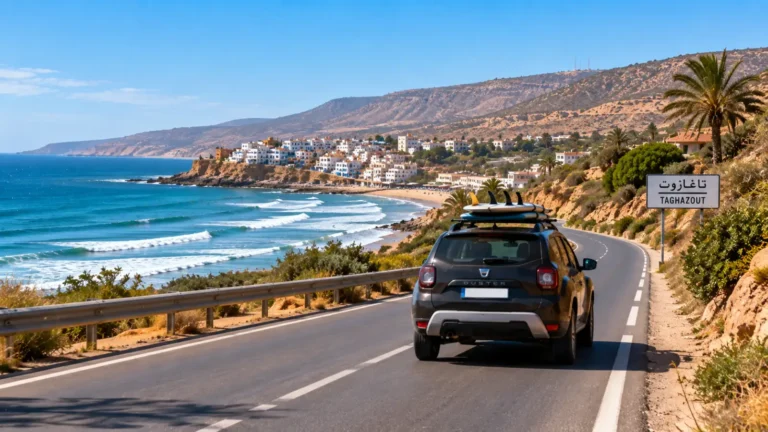
- Surfing on the Atlantic coast
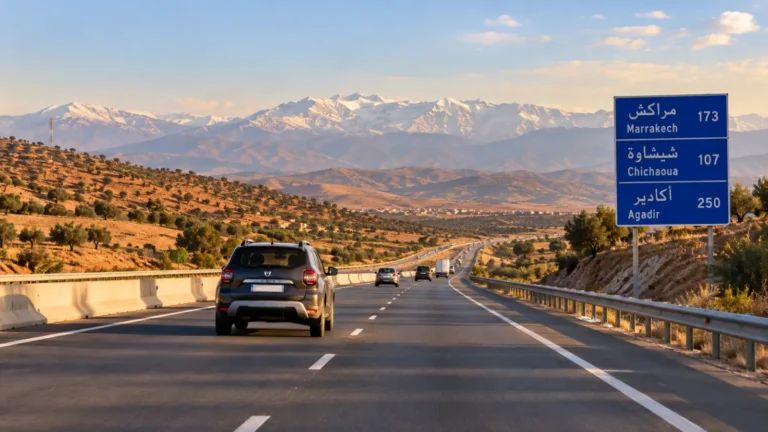
- Photographing green landscapes, snow-covered Atlas peaks and early blossoms
- Visiting Tafraoute or the Dades Valley during the almond blossom period
- Travelers looking for potentially better accommodation and tour rates than spring peak season
It is less suitable if you want guaranteed hot beach weather, warm sea swimming or challenging mountain trekking without proper winter equipment.
Morocco weather in February: expect warm sun and cold shadows
The most important thing to understand about Morocco weather in February is that sunshine can be misleading. Midday may feel pleasantly warm, especially on a sheltered terrace or in the desert, but temperatures fall quickly once the sun disappears.
February is still a winter month. Rain remains possible, particularly in northern and coastal areas, and mountain snow can affect higher routes. However, the harshest January cold is generally beginning to soften.
A practical February rule is simple: do not trust the sun too much. Pack for the warmest hour of the afternoon and the coldest hour of the morning.
Marrakech in February: one of the best city-break choices
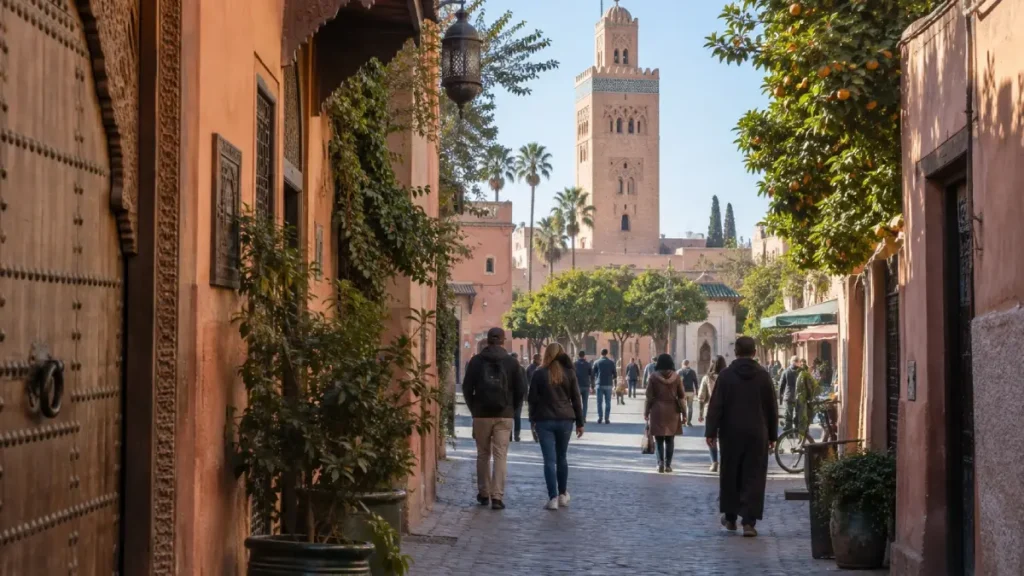
What does Marrakech feel like in February?
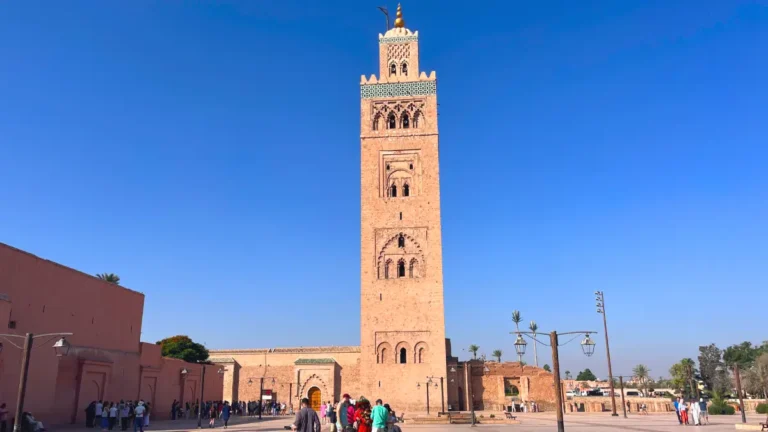
For many travelers, Marrakech in February offers an excellent balance: sunny sightseeing weather without the heat that can make long days difficult later in the year.
Daytime temperatures typically sit around 18–23°C, while nights are commonly around 8–13°C. The first half of the month can still feel distinctly wintry in the early morning and after sunset, but afternoons are often bright and comfortable for walking around the medina, gardens and historic sites.
The second half of February often feels noticeably warmer than the beginning of the month. That said, a sunny forecast does not mean you can leave your warm layer behind. Rooftop restaurants, open courtyards and early-morning departures can feel cool.
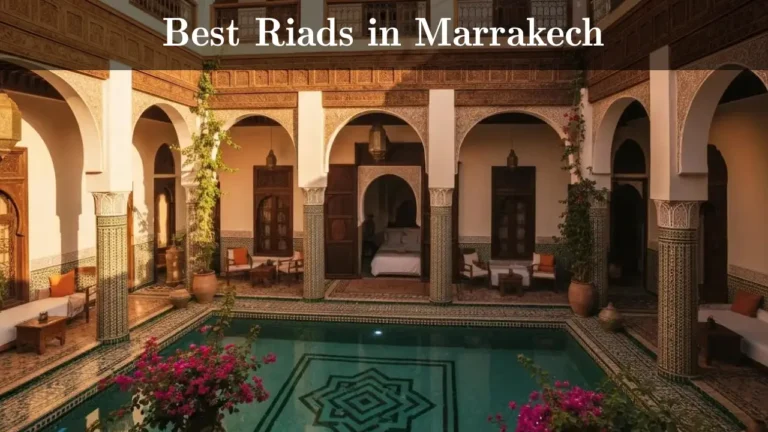
Traditional riads can also be colder indoors than travelers expect. Thick walls, tiled floors and shaded courtyards are useful in summer but may hold onto winter chill. Confirm that your accommodation has reliable heating before booking, especially if you are sensitive to cold.
For a fuller city-planning guide, see this Marrakech travel guide.
February events in Marrakech
Marrakech often hosts the 1-54 Contemporary African Art Fair around this period, which can be of interest to travelers visiting galleries, exhibitions and cultural spaces.
Dates change from year to year, so check the official 1-54 Marrakech calendar before planning your trip around the fair.
Fes and Meknes in February: cooler, quieter and occasionally damp
Fes and Meknes are usually cooler than Marrakech in February. Typical daytime temperatures are around 14–20°C, with nights around 6–11°C. Winter rain remains possible, and damp weather can make the cold feel more persistent.
These cities reward travelers who enjoy history, architecture, food and medina life, but they are not places to pack for as though it were already spring. In older medinas, shaded lanes, stone walls and tiled floors can make riads and traditional buildings feel colder indoors than the outdoor temperature suggests.
Bring a proper warm layer for evenings and mornings, along with a rain-resistant outer layer. Comfortable shoes matter too: wet or uneven medina streets are much less pleasant in unsuitable footwear.
Northern Morocco in February: Chefchaouen and Tangier can be changeable
Chefchaouen in February
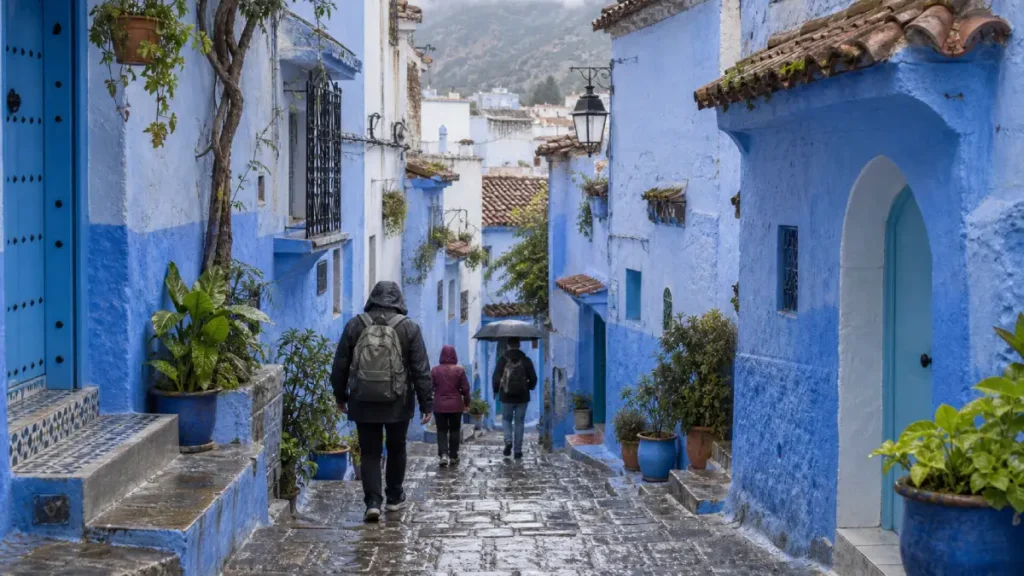
Chefchaouen can be atmospheric in February, but it is not reliably dry or warm. Expect changeable conditions, including mist, wind and winter showers. Daytime temperatures are typically around 14–20°C, with nights around 6–11°C.
The blue-painted lanes can look especially striking in soft light or after rain, but travelers should plan for slippery steps and cool evenings. This is a month for wandering with a jacket and allowing room for weather changes, rather than planning a rigid outdoor schedule.
Tangier and Rabat in February
Tangier can also be windy and wet at times, with similarly variable late-winter weather. Rabat is generally milder, but coastal cloud and periods of rain are still possible.
These cities can suit travelers who prefer museums, cafés, medina walks and coastal scenery over a sun-focused holiday. A compact umbrella or rain jacket is useful, though a waterproof outer layer is more practical in wind.
Agadir in February: Morocco’s best bet for winter sun
Agadir is one of the strongest choices for travelers seeking warmer February conditions. Daytime temperatures commonly reach around 21–25°C, and clear afternoons can be pleasant enough for sunbathing.
That does not make February a guaranteed swimming holiday. Atlantic water is still cold, and weather can vary. But compared with northern Morocco, Agadir offers a far better chance of bright, warm daytime conditions.
Agadir is a sensible choice for:
- Travelers who want sun alongside easy city facilities
- Families who prefer a less weather-sensitive base
- Visitors combining beach walks with day trips
- People who want to escape a northern European winter without expecting summer heat
Essaouira in February: good for surfing, not for warm swimming
Essaouira is cooler and windier than Agadir, with daytime temperatures commonly around 18–22°C. Its Atlantic setting gives it a different feel from inland Morocco: fresh air, changing skies and a breeze that can make an otherwise mild day feel cool.
The sea remains cold at roughly 17–19°C, so most travelers will not find normal swimming comfortable. Surfers generally need a wetsuit.
February can be a good fit for surfers, photographers and travelers who like relaxed coastal towns without high-season crowds. It is less suitable for someone booking a beach break mainly to swim and spend long days in light summer clothes.
Sahara weather in February: pleasant days, very cold nights
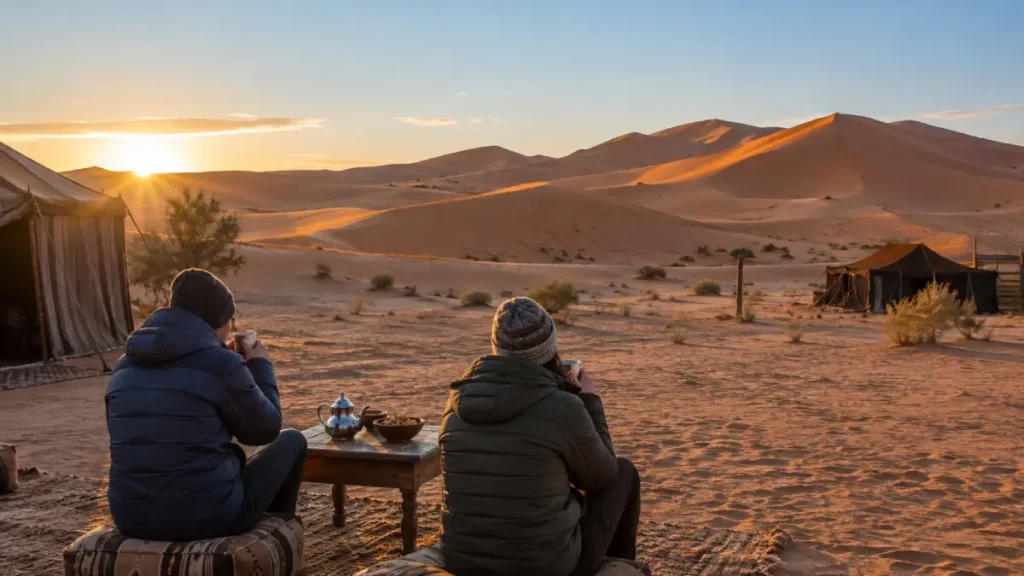
A Sahara trip can be particularly enjoyable in February because the daytime heat is usually manageable. Desert days are commonly around 18–23°C and can feel warmer under direct sun, making camel rides, walks around camp and time among the dunes more comfortable than in hotter months.
The trade-off is the night temperature. Desert nights remain very cold, often around 0–5°C and occasionally close to freezing. Do not assume that a warm afternoon means a mild evening.
For an overnight desert stay, bring:
- Thermal underwear
- Warm socks
- A fleece, insulated jacket or both
- A warm hat for after sunset and early morning
- Layers that can be removed during a sunny afternoon
Ask your camp what bedding and heating arrangements are available, but still bring your own warm clothing. A campfire may be pleasant, yet it does not replace proper layers once you return to your tent.
Atlas Mountains in February: snow is part of the picture
Can you visit the Atlas Mountains in February?
Yes, but the type of trip matters. Snow remains common at higher elevations in February, and heavy snowfall can temporarily disrupt mountain roads and passes, including Tizi n’Tichka.
Imlil can be a beautiful base for lower-level winter walks and for seeing the mountains in a quieter season. However, serious high-altitude routes may have snow and ice and require suitable winter equipment, route knowledge and experience.
Travelers should not treat a February mountain trip as a standard warm-weather hike. Conditions can change quickly, and transport plans need some flexibility.
For more on the village and how it fits into an Atlas itinerary, read the Imlil travel guide.
For the standard Mount Toubkal route, plan to hire a licensed local guide; checkpoints may verify guide arrangements. Confirm current access rules locally in Imlil before departure, especially in winter.
What to do if mountain weather is poor
If snow or rain affects your mountain plans, avoid forcing a difficult route simply because it was on the itinerary. Use the time for a lower-level walk where conditions allow, return to Marrakech, or adjust the route with your driver or local accommodation.
February road trips need a little more flexibility than spring travel, especially when crossing mountain areas.
Almond blossom season: a reason to visit in the second half of February
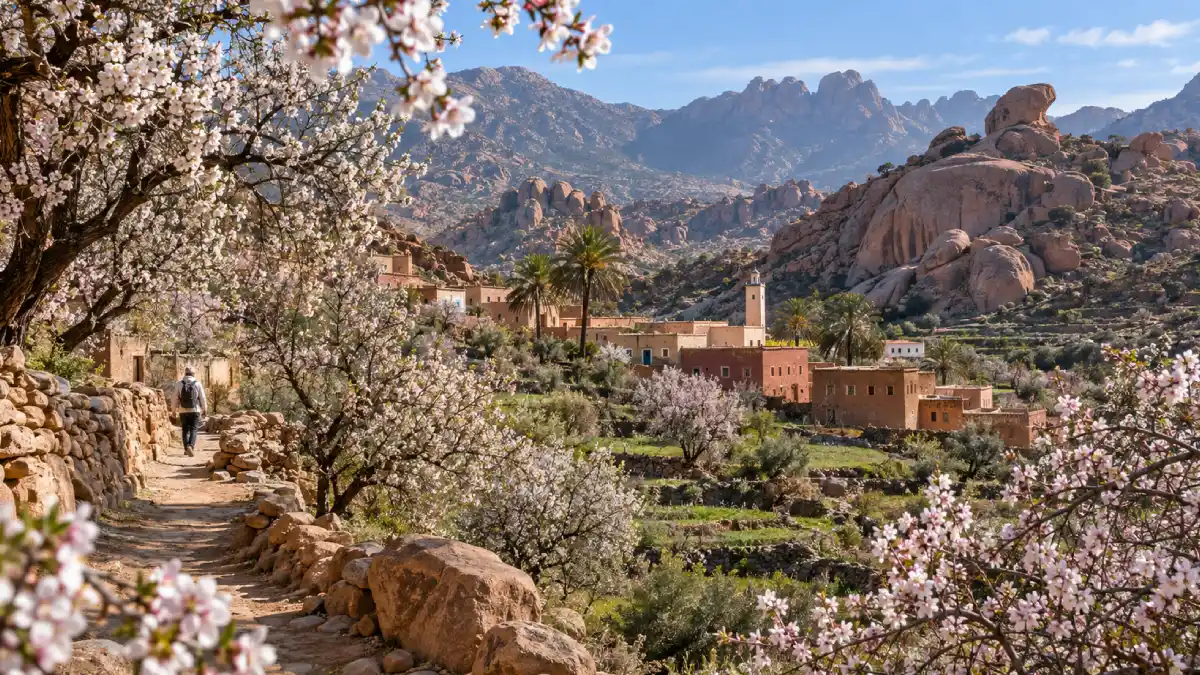
One of the most distinctive reasons for visiting Morocco in February is the almond blossom season. Blossoms often begin appearing around mid-February, particularly in parts of the Anti-Atlas around Tafraoute and in areas such as the Dades Valley.
The timing is never fixed. Winter temperatures and rainfall influence when trees bloom, so it is better to plan around a broad late-winter window than promise yourself blossoms on an exact date.
Tafraoute and the Almond Blossom Festival
Tafraoute is strongly associated with an annual Almond Blossom Festival that celebrates local Amazigh culture. If your trip is built around the festival, confirm the dates before finalizing flights, hotels or a road-trip itinerary.
Festival dates are announced locally and may shift with the blossom season. For timing, transport and practical planning, read my complete guide to the Almond Blossom Festival in Tafraoute before booking your trip.
Even without a festival date, the Anti-Atlas can be especially appealing in February for travelers who enjoy rural landscapes, small towns, local culture and softer late-winter light.
Crowds and prices in February
February remains relatively quiet compared with Morocco’s busier March and April spring period. Visitor numbers often begin to increase as the weather improves, particularly in Marrakech and popular desert circuits, but it is generally not peak season. If your trip falls a few weeks later, see my guide to Morocco in March.
Accommodation and tour prices can be more attractive than during the spring rush, although there is no fixed saving. Rates vary widely according to destination, school holidays, property type, room category and booking timing.
For the best balance of availability and value:
- Book popular riads and desert overnights ahead if your dates are fixed.
- Keep some flexibility for Atlas routes, where weather can affect travel.
- Consider Agadir if warm daytime weather matters more than historic sightseeing.
- Travel in the second half of February if you want a better chance of springlike afternoons and early almond blossom.
What to pack for Morocco in February
Layers are essential for visiting Morocco in February. You may need a T-shirt during a warm afternoon, then a fleece and jacket after sunset.
A practical February packing list includes:
- Light daytime clothes for sunny afternoons
- A warm fleece, sweater or insulated layer
- A rain-resistant or waterproof outer layer, especially for northern Morocco
- Comfortable closed walking shoes
- Warm socks for cold riad floors
- A scarf or light neck layer for wind and cool evenings
- Sunglasses and sunscreen for bright daytime sun
- Thermal underwear and a warm hat for the Sahara or Atlas Mountains
Do not pack only for the daytime forecast. The biggest February mistake is arriving with light spring clothing and discovering that breakfast, evenings and traditional accommodation feel much colder than expected.
For a broader checklist, use this Morocco packing list, then add extra warm layers for the desert or mountains.
Ramadan and February travel planning
Ramadan begins about 10 or 11 days earlier each Gregorian year, so some February trips will overlap with the fasting month. Morocco confirms the start through official moon sighting, which means future dates remain provisional until announced locally.
In tourist areas, many hotels and restaurants continue serving visitors, but opening hours and daily rhythms may change. Be considerate about eating, drinking or smoking in public during fasting hours, and expect streets and restaurants to become livelier after sunset. Check current dates and transport schedules shortly before departure.
Use quieter daytime hours for sightseeing, allow extra time around sunset, and reserve popular evening meals when possible.
Who should choose Morocco in February?
February is a strong choice for travelers who want Morocco before the main spring crowds and who are comfortable dressing for varied weather.
Choose February if you are interested in:
- Marrakech, Fes, Meknes and cultural city travel
- A Sahara excursion with manageable daytime temperatures
- Atlas scenery and lower-level mountain walks
- Almond blossom landscapes around Tafraoute or the Dades Valley
- Surfing on the Atlantic coast
- Photography, food, medinas and road trips
- A potentially better-value travel period than March and April
Consider another month if your main goal is:
- Hot weather every day
- Warm Atlantic swimming
- Mountain summits without snow or ice concerns
- Packing only light summer clothing
For a wider comparison with other seasons, see the guide to the best time to visit Morocco.
FAQ
Is Morocco warm in February?
Morocco can be pleasantly warm in the afternoon, especially in Marrakech, Agadir and the Sahara, but February is still winter. Mornings and evenings are cool, desert nights can be near freezing, and northern Morocco may be damp or rainy.
What is Marrakech like in February?
Marrakech typically has daytime temperatures around 18–23°C and nights around 8–13°C. It is usually comfortable for sightseeing during the day, but a warm layer is still needed for mornings, evenings and cooler riad interiors.
Can you go to the Sahara in February?
Yes. Sahara days are usually comfortable for desert excursions and camel rides, commonly around 18–23°C. However, nights are very cold, often around 0–5°C, so thermal layers, warm socks and a proper jacket are important.
Does it snow in Morocco in February?
Snow is still common at higher elevations in the Atlas Mountains during February. Heavy snowfall can temporarily affect mountain roads and passes, while high-altitude trekking may require proper winter equipment and experience.
Where is the warmest place in Morocco in February?
Agadir is one of the best choices for winter sun, with daytime temperatures commonly around 21–25°C. It is generally warmer for a coastal stay than Essaouira, which is cooler and windier.