Morocco Travel Adapter 2026: What Plug and Voltage Do You Need?
Quick Answer
Morocco uses Type C and Type E sockets with two round pins. The electricity supply is 220 volts at 50 Hz.
Travelers arriving from the United States, Canada, the United Kingdom, Australia and countries using different plug shapes will normally need a travel adapter. Most modern phone, laptop, camera and tablet chargers accept 100–240 volts, so they usually do not need a voltage converter.
Check the small print on every charger before connecting it. If the label says Input: 100–240V, 50/60Hz, you only need the correct plug adapter. If it accepts only 110 or 120 volts, do not connect it directly to a Moroccan socket.
What I Recommend Packing
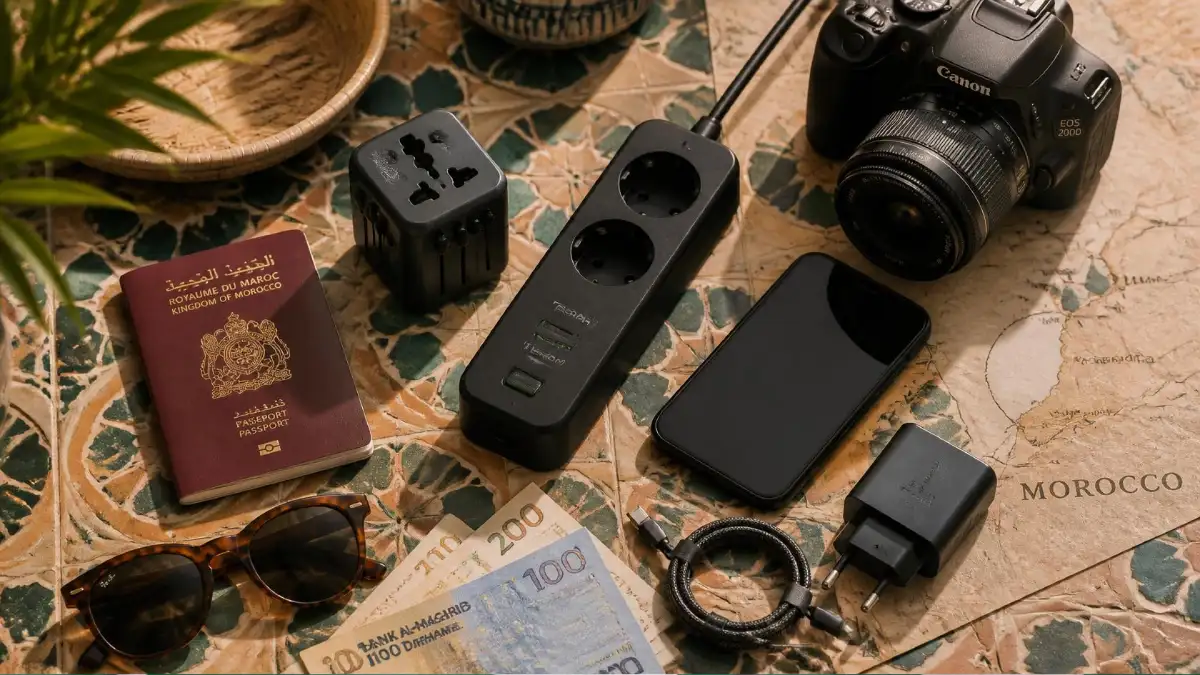
For most travelers, I recommend one reliable Type C or European travel adapter with several USB ports, plus a power bank for long driving days and desert stays.
I would not normally carry a heavy voltage converter just for a hair dryer. Many riads and hotels provide one, and a dual-voltage travel appliance is usually easier and safer to pack.
After more than twenty years guiding travelers around Morocco, the most common problem I see is not the Moroccan electricity supply. It is travelers assuming that a universal adapter also changes the voltage. It usually does not.
Table of Contents
Table of Contents
What Travel Adapter Do You Need for Morocco?
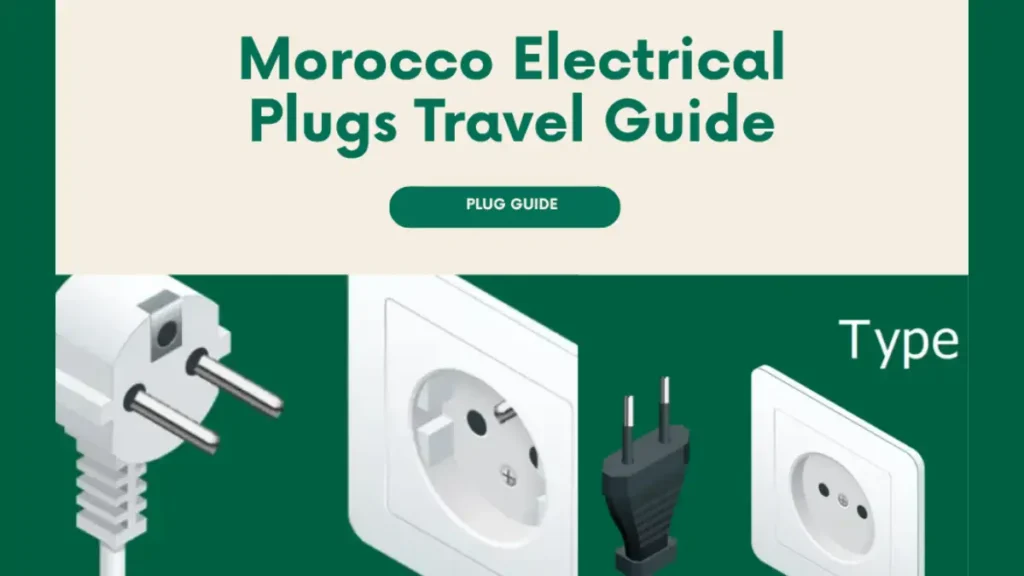
Morocco uses Type C and Type E electrical sockets. Both have two round pin openings, similar to the sockets used across much of continental Europe.
The electricity supply is 220 volts at 50 Hz. Whether you need only an adapter or also a voltage converter depends on the plug and voltage rating of your device.
| Where you are traveling from | Do you need an adapter? | Do you usually need a converter? |
|---|---|---|
| United States or Canada | Yes, for Type A and B plugs | Usually not for dual-voltage chargers |
| United Kingdom or Ireland | Yes, for Type G plugs | Usually not |
| Australia or New Zealand | Yes, for Type I plugs | Usually not |
| Most continental European countries | Usually no | Usually no |
| Other countries | Check your plug shape and device label | Depends on the voltage rating |
Traveling From the United States or Canada
Travelers from the United States and Canada need a plug adapter because American Type A and B plugs do not fit Moroccan sockets.
Most modern phone, laptop and camera chargers accept 100–240 volts. These devices normally need only a Type C or European plug adapter.
Appliances marked for 110 or 120 volts only should not be connected directly to a Moroccan socket. This is particularly important for older hair dryers, curling irons, electric shavers and heating appliances.
Traveling From the United Kingdom or Ireland
UK and Irish Type G plugs do not fit Moroccan sockets, so you will need a UK-to-European adapter.
Most British and Irish devices are designed for approximately the same voltage used in Morocco. A separate voltage converter is therefore not normally required, but you should still check the input label.
Traveling From Europe
Travelers from countries that already use Type C or compatible European plugs may not need an adapter.
Some grounded plugs differ in shape, however, so check that your plug is compatible with a Type E socket before traveling.
Adapter Versus Voltage Converter
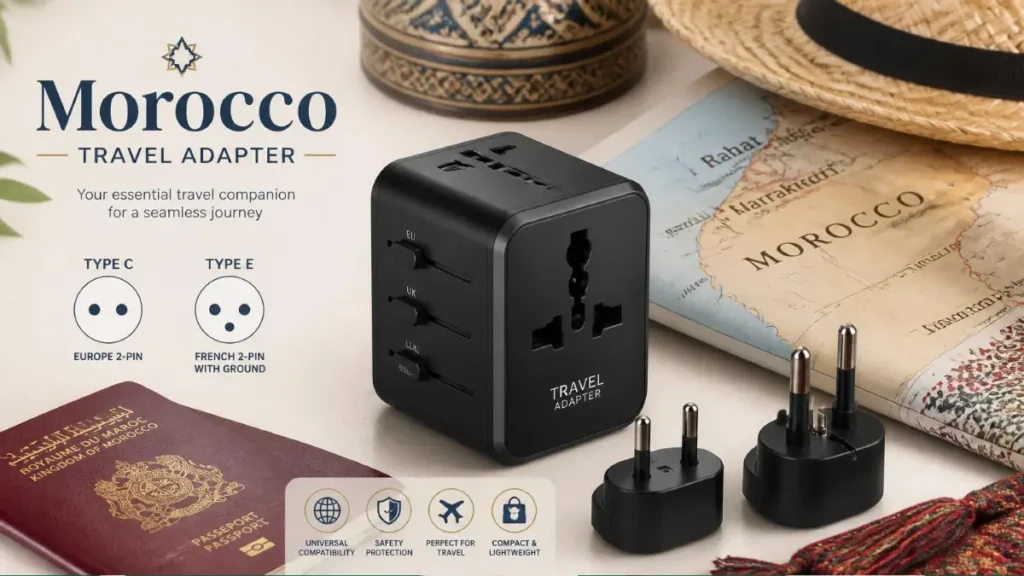
A travel adapter changes the physical plug connection. It does not change the electrical voltage.
A voltage converter changes the voltage supplied to the appliance. Most travelers do not need one because modern chargers are commonly dual voltage.
Check the charger label for wording such as:
Input: 100–240V, 50/60Hz
A charger with that rating can normally be used in Morocco with the correct plug adapter. Never assume compatibility based only on the device brand.
Which Adapter Should You Pack?
For most travelers, the practical choice is a reputable Type C or European adapter with:
- At least one USB-C port
- One or two additional USB ports
- A secure fit in the socket
- Clear voltage and current markings
- Compliance with recognized electrical safety standards
A compact multi-port charger is useful when a hotel or riad room has only one conveniently located socket. Avoid stacking several adapters together, and replace any adapter that becomes loose, cracked or unusually hot.
Charging in Hotels, Riads and Desert Camps
Most hotels and riads provide standard Moroccan Type C or Type E sockets, but the number and location of outlets vary considerably. Older rooms may have only one convenient socket, while newer properties sometimes provide USB charging beside the bed.
For travelers carrying several devices, a reputable multi-port USB charger is usually more useful than a large power strip. It allows you to charge a phone, camera battery and power bank through one adapter.
Electricity can be more limited in remote guesthouses and desert camps. Some camps provide charging inside every tent, while others offer a shared charging area or switch electricity off during part of the night. Camp facilities vary, so confirm the arrangements directly when charging medical equipment or other essential devices matters.
I recommend fully charging your phone and power bank before leaving the last town on a desert route. Even when a camp advertises electricity, it is better not to depend on uninterrupted charging.
How to Choose a Safe Morocco Travel Adapter
Choose an adapter from a reputable electrical or travel retailer rather than selecting the cheapest unbranded option. The adapter should fit firmly, have intact insulation and be rated for the devices you plan to connect.
Remember that a plug adapter does not convert voltage. Check the input label on each charger or appliance:
- 100–240V, 50/60Hz: normally suitable for Morocco with the correct plug adapter.
- 220–240V, 50Hz: normally compatible with Morocco.
- 110–120V only: requires an appropriately rated voltage converter or should not be used.
Most modern phone, tablet and laptop chargers are dual voltage, but travelers should check the actual label rather than assume. Apple, for example, specifies that its USB power adapters accept power sources from 100 to 240 volts at 50 to 60 Hz.
High-powered appliances such as hair dryers, curling irons and heating devices require particular care. A small travel converter may not safely support them. A dual-voltage travel appliance, or one provided by the accommodation, is usually the simpler choice.
I do not recommend buying an electrical adapter from a souk simply to save a small amount of money. If you forget yours, look for an established electronics shop, supermarket or travel retailer and inspect the product before using it.
Practical Electricity Checklist for Morocco
Before packing, check the input label on every charger and electrical appliance you plan to use.
For most travelers, the electricity kit can remain simple:
- One reputable Type C or European plug adapter
- A multi-port USB or USB-C charger
- A fully charged power bank
- The original charging cables for your devices
- A spare cable for any device you rely on daily
A voltage converter is normally unnecessary for phones, tablets, laptops and cameras marked 100–240V, 50/60Hz.
Do not bring a 110-volt-only hair dryer, curling iron or heating appliance unless you have confirmed that an appropriate converter can safely handle its power requirements. Using an appliance supplied by your accommodation is often easier.
Common Morocco Adapter Mistakes
Assuming a universal adapter converts voltage
Most universal travel adapters only change the plug shape. They do not make a 110-volt appliance safe to use with Morocco’s 220-volt electricity supply.
Checking the device instead of the charger
The voltage information is normally printed on the charger or power brick. Look for the word Input, followed by the supported voltage range.
Depending entirely on desert-camp charging
Charging arrangements vary between camps. Confirm the facilities when electricity is essential, and charge your phone and power bank before leaving the last town.
Packing several separate adapters
One reliable adapter combined with a multi-port charger is often more practical than carrying a different adapter for every device.
Buying the cheapest adapter available
A loose or poorly constructed adapter can become hot or fail to hold the plug securely. Choose a reputable product with clear electrical ratings and replace it if it becomes damaged.
How Electricity Fits Into Your Morocco Packing List
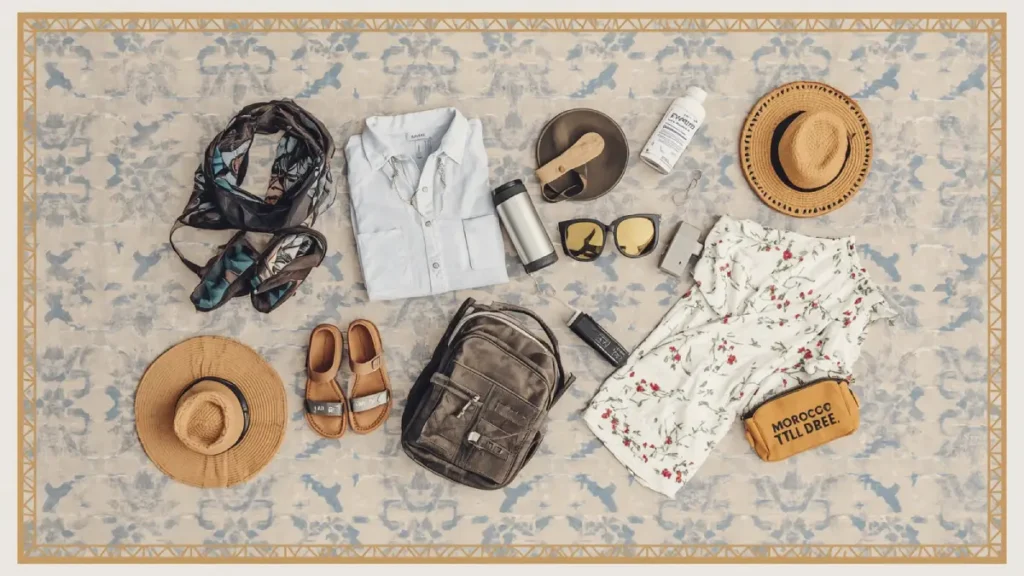
Your adapter should be packed with your essential travel items rather than buried in checked luggage. Keep it with your phone charger, medication and other equipment you may need immediately after arrival.
For long road journeys, I also recommend keeping a charged power bank in your day bag. This is particularly useful on routes crossing the Atlas Mountains or continuing toward the Sahara, where you may spend much of the day away from your accommodation.
For a broader list of clothing, electronics and practical travel items, see my Morocco Packing List 2026.
Final Recommendation: Which Morocco Travel Adapter Should You Pack?
For most travelers, the right Morocco travel adapter is simple: pack one reputable Type C or European adapter, a multi-port USB charger and a fully charged power bank.
Before leaving home, check every charger for Input: 100–240V, 50/60Hz. Devices with that rating normally work with Morocco’s 220-volt electricity supply and need only the correct plug adapter.
Leave 110- or 120-volt-only heating appliances at home unless you have confirmed that a properly rated converter can support them. For hair dryers and similar appliances, using a dual-voltage model or one supplied by your accommodation is usually easier.
Keep your adapter in your carry-on rather than checked luggage. For clothing, electronics and other practical essentials, see my Morocco Packing List 2026.
Once your devices are sorted, my Getting Around Morocco in 2026 guide will help you plan trains, buses, taxis and longer road journeys.
FAQs About Morocco Travel Adapters
What plug types are used in Morocco?
Morocco uses Type C and Type E electrical sockets. Both accept plugs with two round pins, although Type E sockets also include a grounding connection.
The electricity supply is 220 volts at 50 Hz.
Do travelers from the United States or Canada need an adapter?
Yes. Type A and Type B plugs used in the United States and Canada do not fit Moroccan sockets.
Most modern phone, laptop and camera chargers are dual voltage, so they normally need an adapter rather than a voltage converter. Check the input label before connecting the device.
Do travelers from the United Kingdom need an adapter for Morocco?
Yes. British Type G plugs do not fit Morocco’s Type C and Type E sockets.
Because the UK and Morocco use similar voltage levels, most British electronics need only a plug adapter. Always confirm the voltage information printed on the charger or appliance.
Can I charge an iPhone or laptop in Morocco?
Usually, yes. Official Apple USB power adapters accept 100–240 volts at 50–60 Hz, and many modern laptop chargers have a similar dual-voltage range.
You still need an adapter if the charger’s plug does not fit a Moroccan socket. Check third-party chargers individually rather than assuming they have the same rating.
Can I use an American hair dryer in Morocco?
A hair dryer marked for 110 or 120 volts only should not be connected directly to Morocco’s 220-volt electricity supply.
High-powered heating appliances can require large converters that are inconvenient to carry. A dual-voltage travel dryer or a dryer supplied by your accommodation is normally the safer and simpler option.
What is the difference between an adapter and a converter?
A travel adapter changes the physical plug shape so it fits the socket. It does not change the voltage.
A converter changes the voltage supplied to an appliance. Most phones, tablets, cameras and laptops do not need one when their chargers are marked 100–240V.
Can I charge my devices in a Sahara desert camp?
Many desert camps provide electricity, but the location, operating hours and number of sockets vary. Some tents have their own outlets, while other camps use a shared charging area.
Charge your phone and power bank before leaving the last town, and confirm the facilities when electricity is essential. My guide to the 3 Day Desert Tour From Marrakech explains what the route and overnight desert experience actually involve.
Can I buy a travel adapter after arriving in Morocco?
Adapters are available in major cities, supermarkets and electronics shops, but quality varies.
I recommend bringing a reputable adapter from home when possible. If you buy one locally, inspect the casing and pins, check its electrical rating and avoid using it if it fits loosely or becomes unusually hot.