
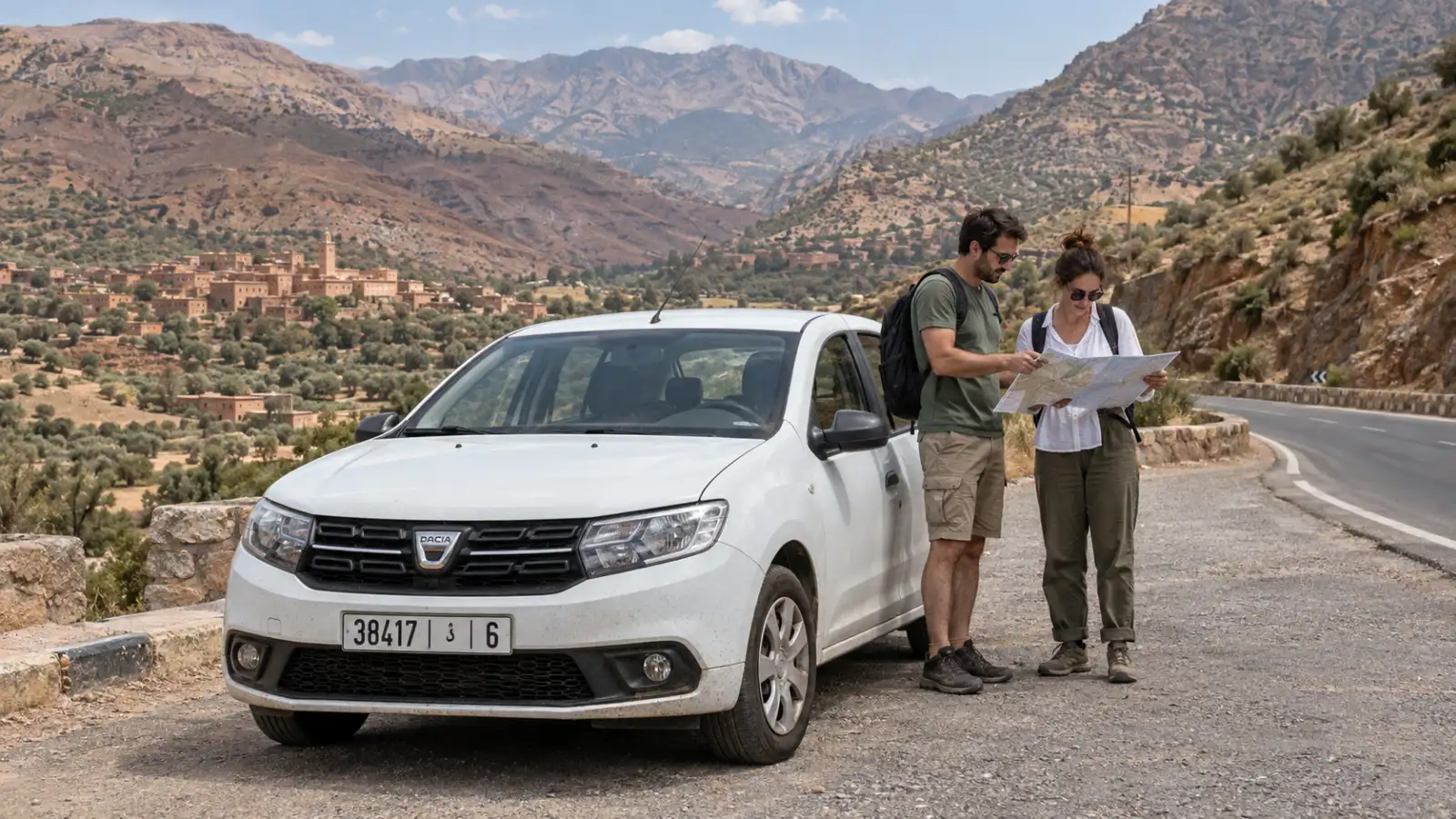
Renting a car in Morocco is an excellent choice if you want to travel beyond the main cities at your own pace. It works particularly well for couples, families, independent travelers, and small groups heading to the Atlas Mountains, rural villages, the Atlantic coast, Ouarzazate, Dades and Todra Gorges, or Merzouga.
The key is to rent the right car, understand the insurance and deposit before you arrive, and avoid paying for a vehicle while it sits unused in a city. For simple journeys between major cities, trains and intercity buses can be easier. But for a route with scenic stops, small towns, and flexible timing, car rental in Morocco gives you far more freedom.
Table of Contents
Table of Contents
Is renting a car in Morocco worth it?
I recommend renting a car when your itinerary includes places that are inconvenient to reach by train or bus, or when you want to stop frequently along the way. A rental car Morocco trip can be especially good value when two or more people are sharing the costs.
Self-driving is a strong option for routes such as:
- Marrakech to Ait Ben Haddou, Ouarzazate, Dades Valley, Todra Gorge, and Merzouga
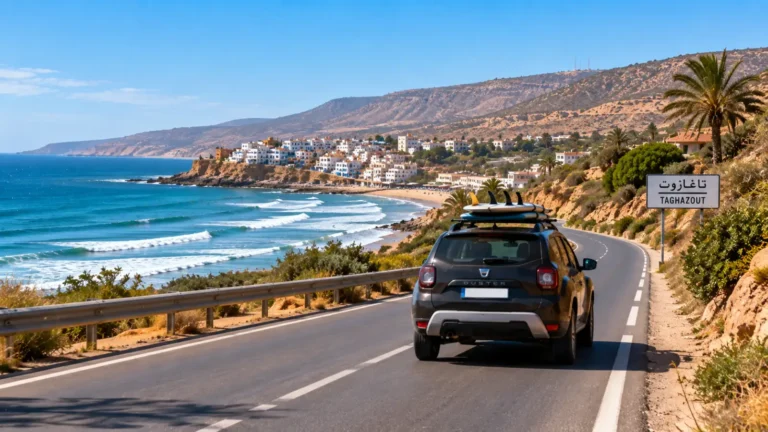
- Marrakech to Essaouira, Taghazout, and Agadir
- Tangier to Chefchaouen and Fes
- Marrakech towards Ouirgane and the Atlas foothills
- Atlantic coastal routes where you want to explore smaller beaches and towns
A car gives you flexibility for viewpoints, lunch stops, kasbahs, villages, and places that buses simply pass by. It can also be more comfortable for families carrying luggage, child seats, and day-trip essentials.
However, I do not recommend renting a car solely for sightseeing inside Marrakech, Fes, or Casablanca. Walking, taxis, and local transport are usually easier in these cities. Traffic is busy, parking can be frustrating, and cars cannot enter many Medina lanes.
If you are staying in Marrakech for several nights before starting a road trip, collect the vehicle on the day you leave the city. There is no reason to pay for unused rental days and deal with difficult Medina parking.
For travelers who do not feel comfortable with Moroccan traffic, mountain roads, or longer driving days, a professional private driver in Morocco is often the better option. This is particularly sensible for demanding mountain conditions, long multi-day routes, or travelers who prefer to focus entirely on the scenery.
What does car rental in Morocco cost?
Indicative daily rates for car hire Morocco can vary widely according to season, pickup location, vehicle type, insurance level, and availability. As a general guide, expect approximately:
- €20–45 per day for an economy car
- €35–60 per day for a compact SUV
- €60 or more per day for a larger 4×4
Summer, school holidays, Christmas and New Year, and popular desert-travel periods can push prices higher. Automatic cars and airport pickups can also cost more than basic manual vehicles collected in town.
The cheapest advertised rate is not always the cheapest final booking. Before confirming a rental, check whether the quote includes:
- Third-party liability coverage
- Collision damage waiver (CDW)
- Theft cover, if applicable
- The deductible or excess amount
- Airport or station collection fees
- Additional-driver charges
- Child-seat charges
- One-way fees
- Out-of-hours return or collection fees
- Mileage restrictions, if any
A low headline price can become expensive when insurance, deposit conditions, and extra charges are only explained at the desk.
Find a rental car for your Morocco trip
Compare cars for your travel dates and pickup location. Before booking, check the supplier’s reviews, deposit, insurance excess, mileage policy, and accepted payment cards.
Choose the right rental car for your route
Economy cars are enough for most paved tourist routes
For most visitors, a simple economy vehicle is the most sensible choice. Cars such as a Dacia Sandero, Renault Clio, or Kia Picanto are generally sufficient for paved routes including Tizi n’Tichka, Ait Ben Haddou, Ouarzazate, Zagora, and the paved approach to Merzouga.
An economy car is usually cheaper to rent, easier to park, and perfectly practical if you are traveling light. It is the option I would choose for a straightforward paved-road itinerary rather than paying extra for a vehicle you do not need.
Do keep expectations realistic: a small car can feel less comfortable on long mountain days, especially with several passengers and full luggage.
A compact SUV is useful for comfort and luggage
A Dacia Duster or similar compact SUV can be worthwhile for families, couples with substantial luggage, or travelers who want more cabin comfort and ground clearance.
The main advantages are not necessarily off-road ability. They are luggage space, a higher seating position, and better comfort on uneven sections of otherwise paved roads. Make sure the trunk is large enough to keep bags out of sight rather than leaving valuables visible in the cabin.
Most travelers do not need a genuine 4×4
A proper 4×4 is generally unnecessary for standard Morocco road trips. Renting one simply because you are heading to the desert is a common and costly mistake.
You may need a suitable 4×4 only when traveling on authorized off-road pistes or undertaking specialist routes. Ordinary tourists should not attempt to drive a rental car into deep dunes. Desert camps normally organize suitable transfers from accessible meeting points, which is safer and avoids damage or recovery costs.
For road conditions, city traffic, tolls, and practical driving advice, see this detailed guide to driving in Morocco.
Manual or automatic: book early if you need an automatic
Manual transmission cars are more common in Morocco and are usually cheaper. If you are comfortable driving manual, you will have more vehicle choices and often lower rental prices.
Automatic cars are available, but supply can be limited, especially during busy travel periods. Reserve early if an automatic is essential for you. Do not assume that an agency will have one available when you arrive, even if it appears common in your home country.
When booking, make sure the confirmation clearly states automatic transmission rather than relying on a vehicle photo or a vague car category.
Airport pickup or city pickup?
Both options can work well, but the best choice depends on when you begin driving.
Airport pickup is best for immediate road trips
Marrakech, Casablanca, and Fes airports are convenient collection points when you are starting a road trip immediately after landing. This can save time and avoid arranging an extra transfer to a city office.
Airport pickup is particularly practical for travelers landing in Marrakech and leaving directly for the Atlas Mountains, Ait Ben Haddou, or the coast.
The downside is that airport rentals can come with added fees, and you may be tired after a flight. If you are arriving late, confirm the agency’s collection process and any after-hours charges in writing.
Downtown offices suit travelers spending time in the city first
Downtown rental offices can be more convenient if you are spending your first few nights in Marrakech, especially around Gueliz. You can explore the city without a car, then collect it when you are ready to leave.
For more location-specific booking advice, read the guide to car rental in Marrakech.
If you are staying in or near a Medina, ask your accommodation about the closest accessible pickup point and parking options before you confirm the rental.
International agencies or local Moroccan rental companies?
International brands such as Hertz, Avis, Sixt, Europcar, and Budget often offer standardized booking systems and contracts. They may feel more familiar to travelers, but they can require substantial credit-card deposits.
Smaller Moroccan car rental companies can offer competitive prices, flexible collection arrangements, and direct communication through WhatsApp. Some are excellent; others are less consistent.
I recommend choosing a company based on recent reviews, clear insurance terms, and written rental conditions—not price alone. Before paying, ask for confirmation of:
- The exact vehicle category or comparable model
- Transmission type
- Deposit amount and payment method
- Insurance included in the quote
- Excess amount
- Fuel policy
- Mileage policy
- One-way or airport fees
- Collection and return times
- Emergency contact details
A company that answers these questions clearly before you book is usually a better sign than one offering the lowest online rate.
Deposits and insurance: understand these before you collect the car
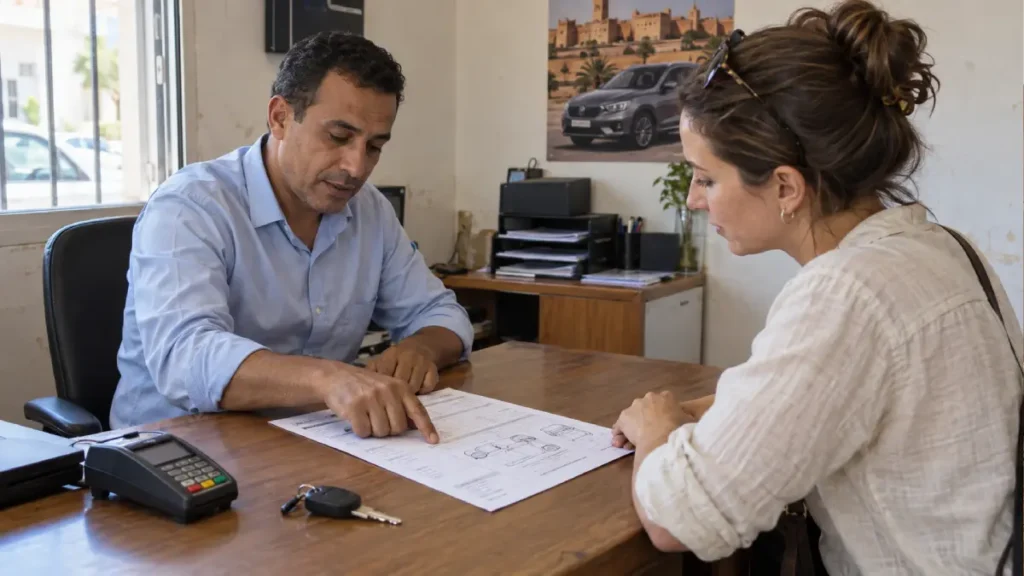
Insurance is where many travelers become confused. Your booking may include basic coverage, but that does not mean you have zero financial responsibility if the car is damaged.
Read the rental agreement carefully and ask about:
- Third-party liability: cover for damage or injury involving other people or vehicles
- Collision damage waiver (CDW): cover that may reduce your liability for damage to the rental car
- Theft cover: protection if the car is stolen, subject to the contract terms
- Excess or deductible: the maximum amount you may still be liable for in a claim
- Security deposit: the amount blocked or charged by the rental company as security
- Exclusions: items and circumstances that may not be covered, such as tires, windscreens, underbody damage, keys, off-road driving, or unauthorized drivers
- Roadside assistance: what is included and who to contact if you have a problem
Excess amounts can reach approximately 5,000–15,000 MAD, while deposits vary considerably by rental company, car category, and insurance package.
Be particularly careful with third-party excess-reimbursement insurance bought through a booking website or separate insurer. It may reimburse you later, but it does not necessarily remove the rental company’s deposit requirement at collection.
Never assume “full insurance” means every possible issue is covered. Ask what happens with tires, glass, scratches, off-road damage, and accidents involving an undeclared additional driver.
Also, never leave your original passport as security without checking the applicable rules and seeking a safer alternative.
What documents do you need to rent a car in Morocco?
Travelers normally need:
- A valid passport
- A valid driving licence
- A payment card accepted by the rental company
International Driving Permit requirements can depend on your issuing country, licence format, and the rental company’s own policy. Check the current official requirements and your rental company’s written terms before you travel.
For official road-safety and transport information, travelers can also consult the National Road Safety Agency (NARSA), while confirming practical rental requirements directly with their chosen company.
Inspect the car properly before leaving the rental office
This is one of the most important parts of renting a car in Morocco. Do not rush because the agent is waiting, other customers are behind you, or you are tired after a flight.
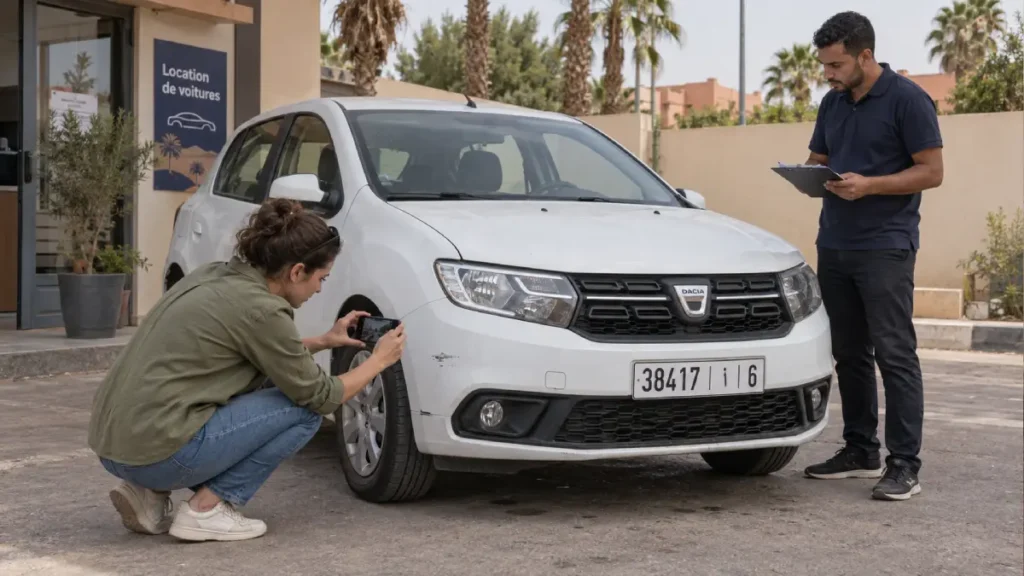
Before accepting the car:
- Photograph every exterior panel, wheel, tire, and windshield.
- Take a clear walk-around video, including close-ups of scratches and dents.
- Photograph the interior, fuel gauge, mileage reading, and dashboard warning lights.
- Make sure all existing marks are written on the rental agreement.
- Check the spare wheel or repair kit and jack where applicable.
- Test the air conditioning before driving away.
- Confirm that registration documents and insurance papers are in the car.
- Ask for the agency’s direct WhatsApp number for assistance during the trip.
Also inspect the tires carefully. A small scratch is easy to notice, but tire damage and wheel scuffs are common sources of disputes.
At return, repeat the process: photograph the vehicle, fuel level, mileage, and exterior condition. If possible, inspect the car with the rental representative and obtain written confirmation that it was returned in acceptable condition.
Avoid common car-rental problems and surprise charges
Most rentals go smoothly when expectations are clear, but a few problems come up repeatedly. Be cautious about:
- Damage charges for marks that were already present
- Unclear cleaning fees
- Unexpected insurance add-ons at collection
- Off-hours pickup or return fees
- Disputes over fuel level
- Extra charges for crossing into an unapproved area
- One-way fees not shown in the original quote
One-way rentals between cities may involve an additional charge, sometimes around €70–150, depending on the company and distance. Confirm this before booking rather than assuming you can return the car in another city at no cost.
Before returning the car, confirm the exact return location, opening hours, fuel policy, and whether cleaning charges apply. If you have an early airport departure, arrange an after-hours drop-off in writing or consider returning the vehicle the evening before.
Parking, fuel, and practical details on a Morocco road trip
Plan for parking outside historic medinas
Cars generally cannot reach riads located deep inside Morocco’s historic medinas. Contact your riad before arrival and ask for the closest accessible gate and parking location.
Supervised parking areas and attendants are common. Indicative charges may be around 2–5 MAD for short street parking and 20–30 MAD for overnight parking, but this varies by city and facility.
Do not try to force your way through narrow Medina lanes with a rental car. Apart from being stressful, it can lead to damage, blocked streets, and arguments with pedestrians or delivery drivers.
Refuel before remote mountain and desert stretches
Fuel stations from Afriquia, Shell, TotalEnergies, and other brands are widely available on major routes. In smaller towns and remote areas, do not wait until the tank is nearly empty.
I recommend refilling when the fuel gauge reaches around half full before heading into the mountains, toward the gorges, or into desert regions. Carry some cash for smaller stations.
Moroccan stations are commonly full service. Tell the attendant clearly whether you need diesel or petrol, and confirm the amount before they begin. A small tip of around 2–5 MAD for extra assistance is appreciated but not compulsory.
Download offline maps before leaving the city
Mobile navigation is useful, but do not rely on it completely. Download offline maps before longer drives, particularly for mountain areas and remote routes where coverage can be inconsistent.
Avoid leaving luggage, cameras, or bags visible in the car. Keep valuables with you or locked out of sight in the trunk.
Drive realistically: save city driving for taxis and walking
Morocco drives on the right. Motorways and many national roads are generally well maintained, but driving in Marrakech, Casablanca, and Fes requires concentration because of scooters, motorcycles, pedestrians, congestion, busy roundabouts, and sudden lane changes.
Outside cities, watch for livestock, agricultural vehicles, pedestrians crossing outside designated areas, slow trucks, and motorcycles overtaking unexpectedly. Avoid night driving through rural regions, mountain passes, and isolated desert roads because lighting can be limited and hazards are harder to see.
Never overtake across solid white lines. Respect posted speed limits, signals, and road markings. Police checkpoints and radar controls are common, especially at town entrances and exits. Slow down when approaching a checkpoint, stop fully when instructed, and follow the officer’s direction. If fined, follow the official payment procedure and request a receipt.
Motorway limits can reach 120 km/h, but limits vary on other roads and must be followed as posted.
For longer distances, toll motorways are useful on routes such as Casablanca to Marrakech and Tangier towards the south. Carry Moroccan dirhams or another accepted payment method, and avoid Jawaz-only lanes unless the vehicle has the appropriate electronic tag.
When a private driver is a better choice than self-driving
A rental car is not the right choice for every itinerary. I recommend a professional driver instead if you are uncomfortable with traffic, do not want to handle mountain roads, are planning a demanding multi-day route, or simply prefer to relax during the journey.
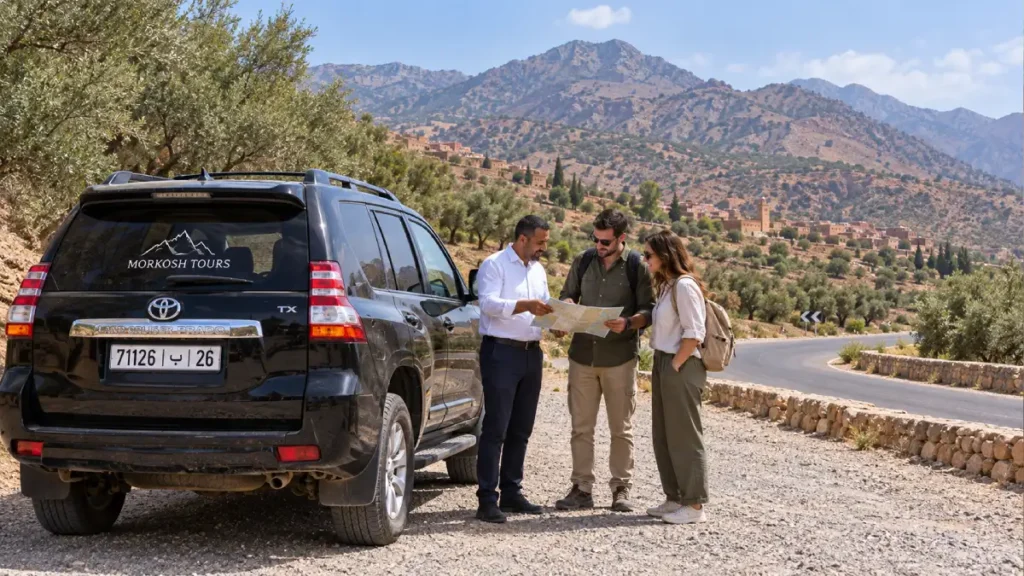
This is especially relevant for deep desert excursions and difficult mountain conditions. A driver with local route knowledge can also make a family trip easier when you have young children, substantial luggage, or limited time.
Travelers who prefer this option can explore private-driver services in Morocco. For simpler city-to-city travel, compare the alternatives in this guide to getting around Morocco.
My practical recommendation for renting a car in Morocco
Rent a simple, reliable car for paved intercity journeys, rather than the largest 4×4 on offer. Book an automatic early if you need one, read the insurance terms before paying, and photograph the car carefully at collection and return.
Avoid unnecessary driving in congested cities, build extra time into mountain days, and do not drive after dark on rural routes. A rental car can make Morocco far easier to explore—but only when it matches your route and confidence level.
Ready to choose your rental car?
Check availability for your dates, choose a vehicle that fits your luggage, and review the full rental conditions before confirming.
FAQ
How much does it cost to rent a car in Morocco?
Indicative rates are around €20–45 per day for an economy car, €35–60 for a compact SUV, and €60 or more for a larger 4×4. Actual prices depend on season, location, transmission, insurance, and availability, so always confirm the final price and included coverage before booking.
Do I need an International Driving Permit to rent a car in Morocco?
You will normally need a valid passport, driving licence, and a payment card accepted by the rental company. International Driving Permit requirements depend on your issuing country, licence format, and the rental company, so check the current rules before arrival.
Is an automatic rental car easy to find in Morocco?
Automatic cars are available, but manual cars are much more common and usually cheaper. If you need an automatic, reserve it well in advance, especially during busy travel periods.
Do I need a 4×4 for Merzouga or the Atlas Mountains?
No, not for standard paved tourist routes. An economy car can handle routes to Ait Ben Haddou, Ouarzazate, Zagora, and the paved approach to Merzouga. A compact SUV can add comfort and luggage space, while a genuine 4×4 is mainly for authorized off-road pistes and specialist routes.
Is it safe to drive a rental car in Morocco?
It can be safe for confident drivers who stay alert and follow local road rules. The biggest challenges are busy city traffic, scooters, pedestrians, rural hazards, mountain bends, and driving after dark. Avoid night driving outside cities, respect posted limits, and use a professional driver if you are not comfortable with the route.