
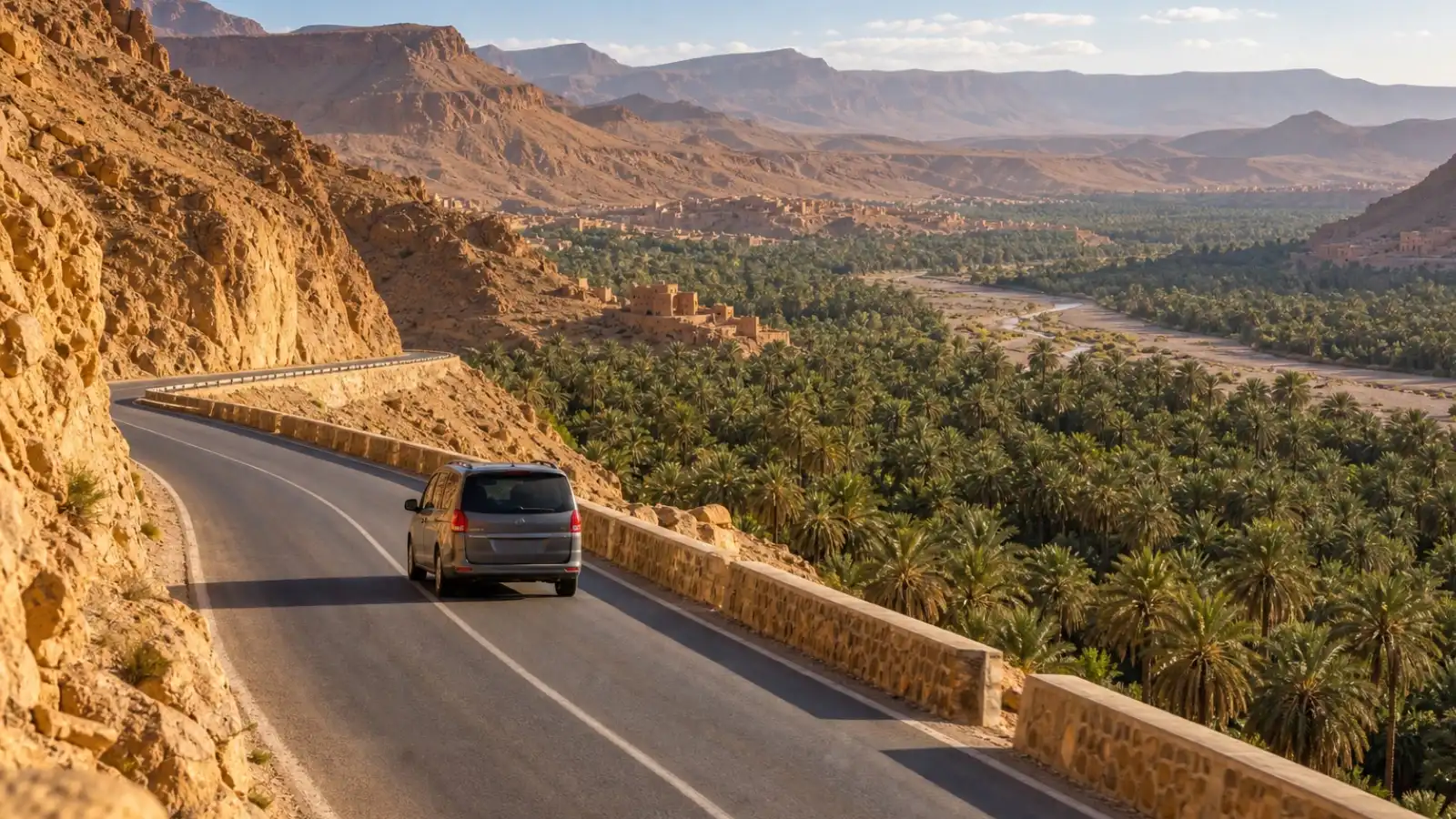
The journey from Fes to Merzouga takes you from the Middle Atlas mountains to the edge of the Erg Chebbi dunes. It is a long travel day, but the route is one of Morocco’s most varied: cedar forest, mountain towns, wide plateaus, the Ziz Valley and finally the desert.
For most travelers, the best option depends on how much flexibility you want. A direct bus is the practical budget choice. A private driver, transfer or multi-day tour costs more but makes the journey itself part of the experience, with stops in Ifrane, Azrou, Midelt and the Ziz Valley.
Without sightseeing, the Fes to Merzouga travel time is realistically around 7–8 hours. With lunch, photography stops and normal breaks, allow 9–10 hours.
Table of Contents
Table of Contents
What is the best way to get from Fes to Merzouga?
For budget-conscious independent travelers, Supratours is generally the simplest direct public-transport option. For couples, families or anyone who wants to stop along the route, private transport is usually the more comfortable choice.
Here is the practical comparison:
- Direct Supratours bus: Best for solo travelers and travelers keeping costs down. It is the most straightforward public option because it goes to Merzouga.
- CTM bus to Rissani: Possible, but usually less convenient because Rissani is roughly 35 km from Merzouga. You will need to arrange a taxi for the final stretch.
- Private transfer: Best when you want door-to-door transport, control over stops and an earlier arrival in Merzouga.
- Multi-day private or shared tour: Best for travelers who want the route to be part of the trip rather than a long point-to-point transfer.
- Shared grand taxis: Not recommended for most foreign travelers on this route. There is no simple direct shared-taxi journey from Fes to Merzouga.
If you are beginning your trip in the city, this Fes travel guide can help you plan how many days to allow before heading south.
Fes to Merzouga by bus: the most practical budget option
Supratours goes directly to Merzouga
Supratours is the recommended public-transport option for travelers looking for a direct bus from Fes to Merzouga. It avoids the extra transport connection required when arriving in Rissani.
Fares, departure times and arrival points can change, so check the official Supratours timetable search for your travel date before making fixed plans.
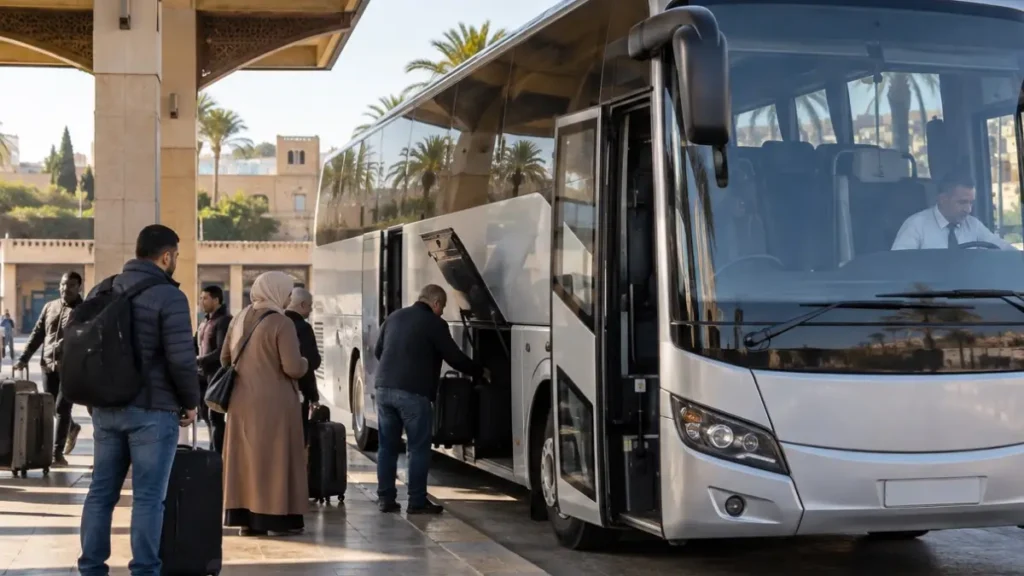
A direct bus is a sensible choice if:
- You are travelling alone and do not need sightseeing stops.
- You are comfortable with a full day on the road.
- You already have accommodation arranged in Merzouga.
- You plan to stay at least two nights in the desert area, so one travel day does not consume too much of the trip.
The main trade-off is that you pass through some of the route’s best scenery without having much freedom to stop. You will see the changing landscape, but you will not have time for a proper cedar forest visit, Ziz Valley viewpoint or relaxed lunch in Midelt.
CTM may require a connection in Rissani
Depending on the current timetable, CTM may take you toward the southeast without continuing all the way to Merzouga. If your service ends in Rissani, you will need onward transport for the final journey to Merzouga.
This option can work when the timetable suits your plans, but an extra connection adds uncertainty after a long day. Arrange the final transfer in advance if you expect to arrive late or are carrying substantial luggage.
Check current options through the CTM website before booking.
Bus luggage and arrival planning
For a bus journey, pack so that you can manage your own bags easily. A medium suitcase or backpack is simpler than several loose bags, particularly when you arrive and need to meet a hotel, riad or desert-camp representative.
Before departure, confirm these details with your accommodation:
- The exact Merzouga meeting point.
- Whether they collect guests from the bus arrival area.
- Whether the camp transfer is by 4×4 or camel.
- The latest practical arrival time for a sunset camel trek or camp transfer.
Do not assume that a desert camp is directly beside the bus stop. Many camps involve a final transfer from Merzouga village or a designated meeting point near the dunes.
Private transfer or tour: better for stops and a relaxed arrival
Private transport turns the Fes to Merzouga route into a proper road trip. You can stop for coffee in Ifrane, visit the cedar forest around Azrou, have lunch in Midelt and pause at viewpoints above the Ziz Valley.
A private driver or transfer is especially useful if you are arriving in Merzouga for a desert camp stay. You can leave Fes early enough to reach the dunes before sunset rather than arriving after dark.
Private-transfer and tour prices vary widely with group size, season, vehicle type, route stops and accommodation level. Ask for a written quote that clearly states whether the price covers the whole vehicle or each passenger, and whether meals, accommodation and desert activities are included.
Why leave Fes early?
An early departure gives you more time for breaks and worthwhile stops while improving your chance of reaching the dunes in daylight. Confirm the day’s sunset time and your camp’s latest transfer time when choosing exactly when to leave.
That matters because a late arrival can create several problems:
- You may miss a sunset camel trek.
- Desert temperatures can fall quickly after dark, particularly in winter.
- It becomes harder to coordinate the final 4×4 or camel transfer to a camp.
- You lose the chance to see the dunes in daylight before settling in.
If your plan is only to reach a hotel in Merzouga village and rest, an evening arrival is manageable. If you have booked a camp experience, aim for daylight.
Who should book private transport?
A private driver or tour is usually the strongest option for:
- Couples: More comfort, scenic stops and a less rushed day.
- Families: Easier control over toilet breaks, meals, luggage and children’s energy levels.
- Small groups: The total vehicle cost can become more reasonable when shared.
- Photographers: You can stop when the light and landscape are right.
- Travelers with limited time: You can combine transport and sightseeing instead of losing a whole day on a bus.
The drawback is cost. If your main goal is simply reaching Merzouga independently, the direct bus is normally better value.
The Fes to Merzouga route: where to stop on the way
The usual road route is:
Fes → Ifrane → Azrou → Midelt → Ziz Valley → Erfoud → Merzouga
The landscapes change substantially during the day, so even travelers who are not planning a formal tour will notice why this route is popular.
Ifrane for a quick coffee break
Ifrane is a useful early stop after leaving Fes. Its cooler mountain setting feels very different from the desert landscape ahead, and it is a practical place for coffee and a short leg stretch.
It is not necessary to spend hours here if Merzouga is your final destination that day. A brief stop is enough for most travelers.
Azrou Cedar Forest and Barbary macaques
The cedar forest near Azrou is worthwhile if you want to see wild Barbary macaques. It is one of the route’s most distinctive natural stops and a good contrast to the arid scenery further south.
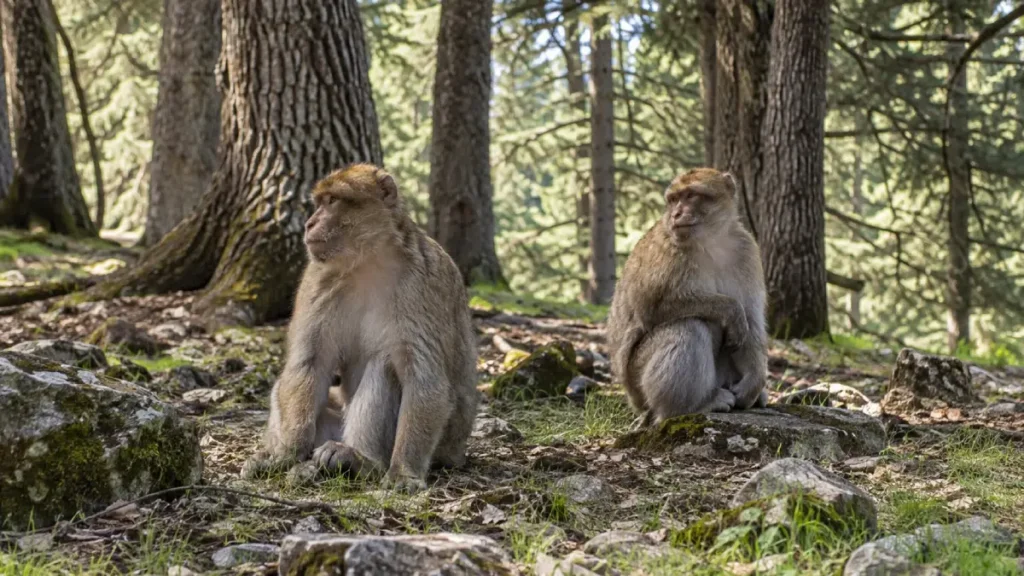
Keep a sensible distance from the monkeys and do not encourage them to approach by offering food. They are wild animals, even in areas where they are accustomed to visitors.
Midelt for lunch and a break from the road
Midelt is the practical midpoint of the journey and the most logical place for lunch. It breaks up the drive well before continuing toward the Ziz Valley and the desert.
For a private journey, this is usually the stop where it makes sense to take a proper meal rather than just a quick roadside snack. Bus travelers will have less control over timing, so carry water and a few snacks in case stops are shorter than expected.
Ziz Valley viewpoints before Erfoud
The Ziz Valley is one of the best scenic sections of the route. The views over palm groves and fortified villages are a strong reason to choose private transport if your budget allows.
You do not need a long visit to appreciate it, but a short viewpoint stop makes the day feel far less like a transfer. The contrast between the dry rocky surroundings and the green valley below is particularly striking.
Erfoud is the final major town before Merzouga
After Erfoud, the landscape becomes increasingly desert-like as you approach Merzouga. This is the point where it is worth checking that your accommodation knows your expected arrival time, particularly if you are continuing into the dunes that evening.
For more information on what to do once you arrive, see this Merzouga desert guide.
Why shared grand taxis are rarely a good Fes to Merzouga option
Shared grand taxis are common in Morocco, but they are not the easy shortcut many first-time visitors expect on this route.
There is no simple direct shared-taxi journey from Fes to Merzouga. You may need to change vehicles around Midelt or Errachidia, and shared taxis generally wait until they have enough passengers before leaving. That can mean delays, cramped travel and uncertainty about where you will end up at the end of the day.
For most foreign travelers, the bus is simpler and more predictable. A private transfer is better if you need flexibility. Shared grand taxis only make sense for experienced travelers who are comfortable arranging several local connections and accepting an uncertain timetable.
Seasonal road and weather realities
The journey crosses very different climates. Conditions in Fes or the Middle Atlas can be completely different from those in Merzouga.
Winter: cold desert nights and possible mountain snow
Winter can be an excellent time for the desert during the day, but nights in Merzouga can be freezing. Bring proper layers rather than relying on a light jacket: warm trousers, socks, a fleece or jumper, and a warm outer layer make a real difference at a desert camp.
Snow in the Middle Atlas can occasionally disrupt or close roads. If you are travelling in winter, keep your plans flexible and check road conditions close to departure.
Summer: intense daytime heat in Merzouga
Summer heat in the Merzouga area is intense. Desert activities may need to be reduced during the middle of the day and moved to dawn or dusk instead.
If you are travelling from Fes in summer, carry more water than you think you will need for the drive, wear sun protection and avoid planning a demanding dune activity immediately after a long journey.
Ramadan and Eid travel
Transport and local services can operate differently around Ramadan and Eid, especially close to major travel dates. Check your bus, transfer and accommodation arrangements directly before departure.
How to choose between bus, transfer and tour
Your best Fes Merzouga transport option depends less on distance than on the kind of trip you want.
Solo travelers: bus for value, shared tour for ease
The direct bus is generally the best choice for solo travelers who value independence and a lower budget. Book accommodation with a clear arrival arrangement, and do not leave the final camp transfer unclear until you reach Merzouga.
A shared group tour can be worth considering if you want company on the road and prefer having transport, stops and desert logistics arranged together.
Couples: private transport is usually worth the extra cost
For couples, a private transfer or private multi-day tour is often the better experience. You can travel at your own pace, stop in the Ziz Valley, take a proper lunch break and arrive in time for the dunes without worrying about bus connections.
The bus still works for a lower-cost trip, but it is more of a transport day than a scenic journey.
Families: control the pace with a private driver
Families usually benefit most from private transport. Children often need more stops than a scheduled bus allows, and the ability to control meal times, toilet breaks and arrival time makes the day easier.
If travelling with young children, avoid an itinerary that expects them to complete a long drive and a sunset camel trek without a rest. Reaching Merzouga before dark gives your family more flexibility.
Plan the arrival in Merzouga, not just the drive
The biggest mistake on this route is focusing only on how to get from Fes to Merzouga and not on what happens after arrival. Merzouga is the gateway to the dunes, but your hotel or camp may be elsewhere, and the last transfer needs to be coordinated.
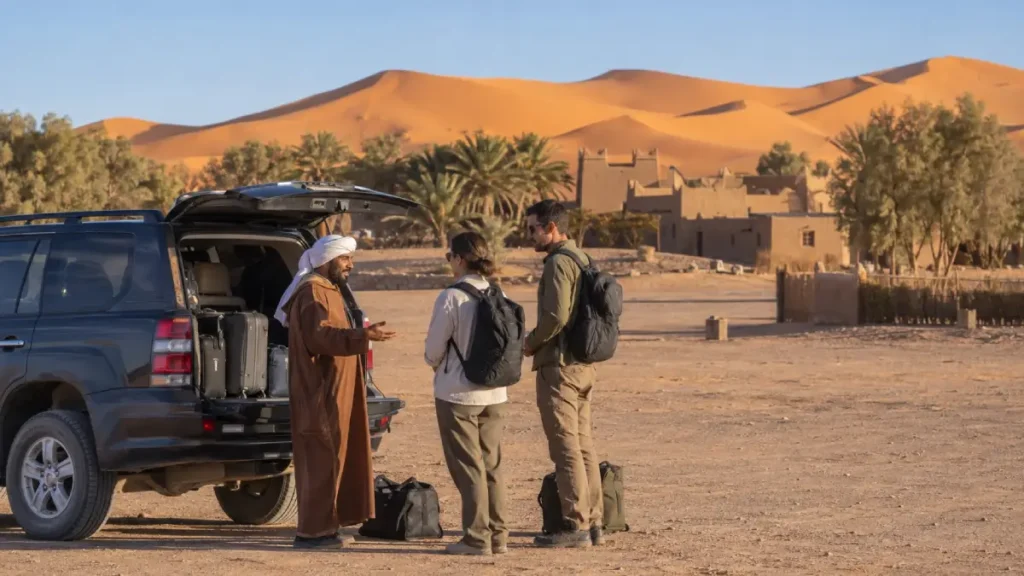
Before leaving Fes, confirm:
- Your accommodation’s exact location and meeting point.
- Whether your booking includes a 4×4 transfer, camel trek or both.
- The latest arrival time for the experience you have booked.
- Whether dinner is included if you arrive late.
- What warm clothing you need, especially between late autumn and early spring.
Merzouga is part of Morocco’s wider Sahara region, so it is also worth reading about the Sahara desert regions of Morocco if you are deciding whether to continue onward or return to Fes after your desert stay.
FAQ
How long does it take to get from Fes to Merzouga?
A direct journey without sightseeing takes around 7–8 hours. With lunch, photography stops and normal breaks, allow 9–10 hours.
Is there a direct bus from Fes to Merzouga?
Supratours is generally the most practical direct bus option to Merzouga. Check the official timetable for your travel date because routes, departure times and arrival points can change.
Is it better to take a bus or private transfer from Fes to Merzouga?
Take the bus if you are travelling solo, watching your budget and do not need sightseeing stops. Choose private transport if you want door-to-door service, flexibility, scenic stops and a better chance of reaching the dunes before sunset.
Can I take a shared grand taxi from Fes to Merzouga?
It is possible in stages, but it is not recommended for most foreign travelers. There is no straightforward direct shared-taxi route, and you may need to change around Midelt or Errachidia while waiting for taxis to fill.
What time should I leave Fes for Merzouga?
Leave early enough to allow for breaks and route stops while still reaching Merzouga in daylight. Confirm the sunset time and your camp’s latest transfer time for your travel date.