
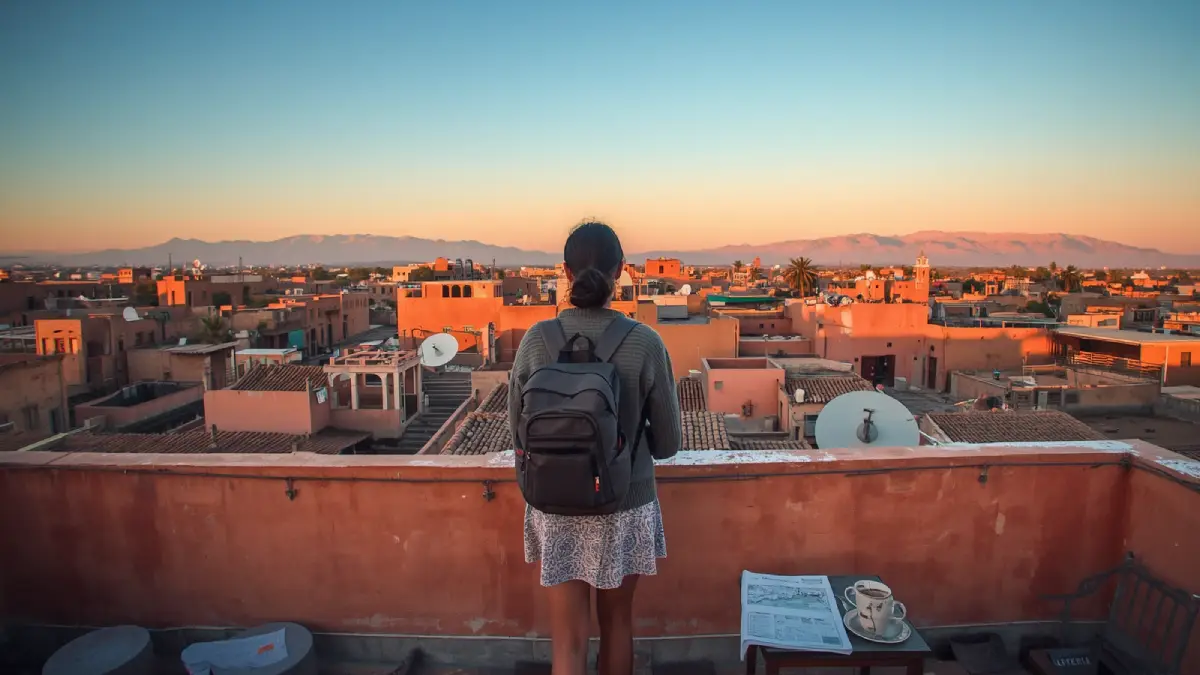
Morocco Travel Guide 2026: Plan Your Trip With a Local Guide
Morocco can look compact on a map. It is not.
I have been a licensed Moroccan tour guide since 2004, and one of the biggest differences I see between a well-planned Morocco trip and an exhausting one is simple: realistic distances.
Travelers often want Marrakech, Fes, Chefchaouen and the Sahara in a week. Technically, you can move quickly through all of them. But much of that holiday will be spent watching Morocco through a vehicle window.
For a first trip covering the country’s classic highlights, I recommend at least 10 days. If you have 12 to 14 days, even better.
This Morocco travel guide is designed to help you make the big decisions first: how long to stay, where to go, how to move around, how much cash to carry, what to pack and what first-time visitors frequently misunderstand.
For the details, I’ll point you to my specialist guides rather than repeat the same information here.
Table of Contents
Table of Contents
Morocco Quick Answers
How many days do you need in Morocco?
Ten days is my recommended minimum if you want Marrakech, Fes, the Sahara and Chefchaouen. Twelve to fourteen days gives you a much more relaxed journey.
What is the best time to visit Morocco?
Spring and autumn are usually the easiest periods for combining cities, mountains and desert travel. Summer can work, but you need to adapt your schedule to the heat, particularly inland and in the south.
Read my full Best Time to Visit Morocco guide.
What is the best way to travel around Morocco?
It depends on the route. Trains are excellent between many major cities. CTM and Supratours are useful where rail does not go. For the Sahara and southern Morocco, I often recommend a private driver when the budget allows.
How much cash should a couple carry?
As a practical day-to-day amount, I normally suggest having around 500–1,000 MAD available for a couple, while using cards where they are accepted.
Which Moroccan SIM do I recommend?
For travelers covering a large part of the country, my usual overall physical-SIM recommendation is Maroc Telecom because of its broad coverage, especially when a trip extends beyond the main cities.
Is Morocco suitable for a first-time independent trip?
Yes. But good route planning matters. The medinas, long road distances and differences between city and rural travel can surprise first-time visitors.
How Many Days Do You Need in Morocco?
If you want only Marrakech and one nearby excursion, you can have a worthwhile short break.
If you want to understand Morocco beyond one city, I recommend giving yourself more time.
For the classic combination of:
- Marrakech
- Fes
- Chefchaouen
- Sahara / Merzouga
10 days is the minimum I personally consider comfortable enough to recommend.
With less time, something usually suffers. You either remove a destination or start turning the trip into a sequence of arrivals, unpacking, early departures and long drives.
With 12–14 days, you gain room for slower mornings, additional stops, a second night somewhere you enjoy, and the occasional change of plan.
That matters in Morocco.
A good Morocco itinerary should leave time to experience the country rather than simply collect photographs from it.
The Biggest Morocco Planning Mistake I See
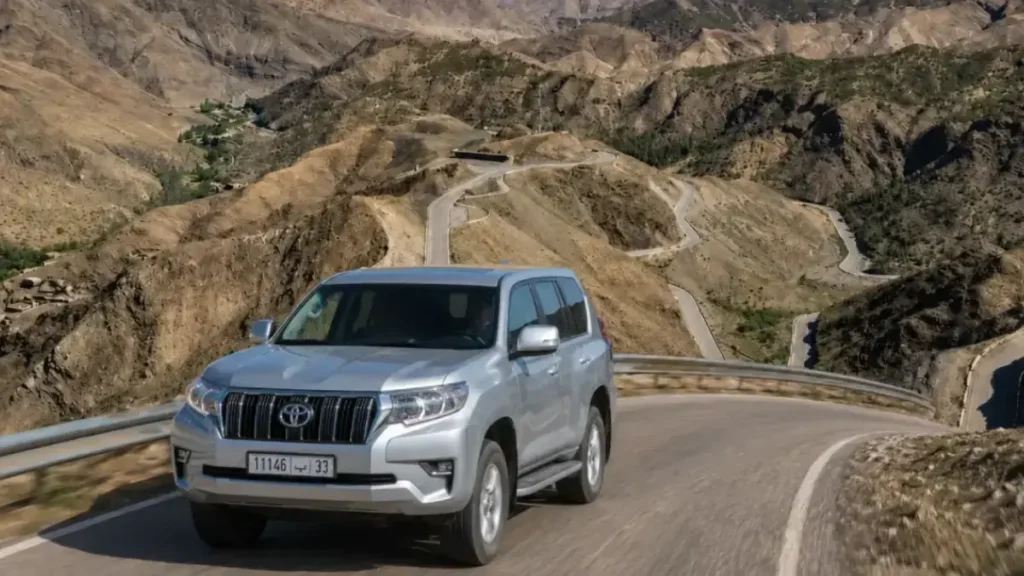
The biggest first-time mistake is underestimating the scale of Morocco and the time required to move between places.
The Sahara is the best example.
Merzouga is not a quick excursion from Marrakech. Driving there means crossing a substantial part of southern Morocco, and a direct road day can approach 10 hours depending on the route, stops and conditions.
That journey contains extraordinary scenery — the High Atlas, old kasbah routes, valleys, gorges and gradually changing landscapes — but only if you allow the road to become part of the trip.
Trying to “tick off the Sahara” too quickly often produces the opposite result.
Instead of remembering the silence of the dunes, people remember being exhausted in a vehicle.
My advice is simple:
When planning Morocco, count travel days as part of your itinerary rather than empty space between destinations.
Best Time to Travel to Morocco
There is no single perfect month for every Morocco trip because conditions vary dramatically between the Atlantic coast, imperial cities, Atlas Mountains and Sahara.
For a first journey covering several regions, spring and autumn are generally the easiest seasons.
Spring can bring comfortable city sightseeing, greener landscapes and good conditions across much of the country.
Autumn is another strong period, particularly once the intense summer heat begins to ease.
Summer requires more planning. Marrakech, Fes and the interior can become extremely hot, while Atlantic destinations such as Essaouira often feel very different.
Winter is excellent for some travelers, but evenings can be cold — especially in the mountains and desert — and people frequently underestimate how much temperatures can drop after sunset.
If you are planning a winter trip, my Morocco in January guide explains where the month works well, where it feels cold, and how to plan around shorter days.
For a month-by-month winter example, see my practical guide to visiting Morocco in December, including weather, where to go and what to pack.
I cover the seasonal differences in much more detail in my Morocco Best Time to Visit guide.
Where to Go in Morocco
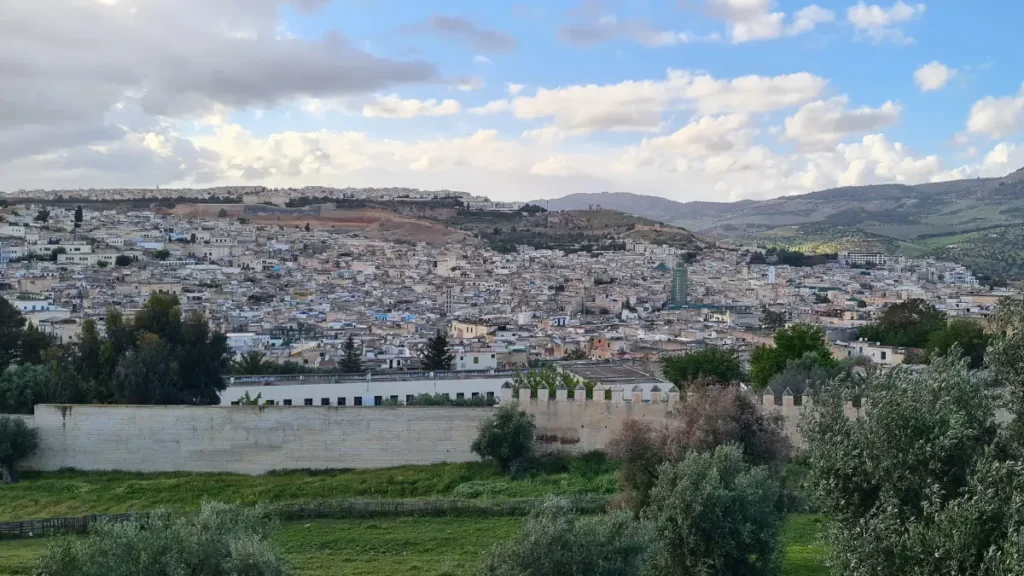
The mistake here is trying to include everything.
Morocco works better when you choose a route that makes geographical sense.
Marrakech
For many first-time visitors, Marrakech is the easiest introduction to the country’s energy: souks, riads, gardens, food, historic monuments and a Medina that can feel overwhelming during the first few hours.
If Marrakech is part of your trip, start with my Marrakech Travel Guide.
Fes
Fes feels different.
Its historic Medina is denser, more traditional in many areas and extraordinarily rewarding when you understand how to explore it.
I strongly value good orientation here rather than treating Fes el-Bali as a checklist of monuments.
See my Fes Travel Guide and Fes Medina Guide.
Chefchaouen
Chefchaouen gives a Morocco itinerary a change of rhythm.
The Rif Mountain setting, blue-painted old town and compact centre make it particularly appealing after larger cities.
See my Chefchaouen Travel Guide.
The Sahara
For the classic large dunes, most first-time itineraries focus on Merzouga and Erg Chebbi.
But the desert should be planned as a region, not just as one night in a camp.
The journey there is part of the experience.
Explore my Sahara Desert guides.
Atlantic Coast
If you have extra time, the Atlantic coast can balance a city-and-desert itinerary beautifully.
Essaouira is particularly easy to combine with Marrakech and gives travelers a slower coastal atmosphere. If you’re considering more time by the sea, explore my guide to Morocco’s coastal cities.
For a wilder southern-coast stop, my guide to Legzira Beach explains how to plan the remaining arch, tide-safe walking and an overnight in Sidi Ifni or Mirleft.
Rabat and Casablanca
Rabat fits naturally into a northern route and deserves more attention than many itineraries give it.
Casablanca is Morocco’s major economic centre and an important arrival hub, but for most leisure travelers I would normally allocate more sightseeing time to places such as Marrakech, Fes or Rabat unless Casablanca itself interests them.
If you are planning to spend time in the city, see my Casablanca Travel Guide. But if you are choosing between Morocco’s two main arrival bases, my Casablanca vs Marrakech comparison explains which city deserves more time on a first trip.
That gives the section a useful next step without overloading it.
I would not force a Rabat link unless you already have a dedicated Rabat guide. If you do have one, then we can link both cities naturally from the same section.
How to Get Around Morocco
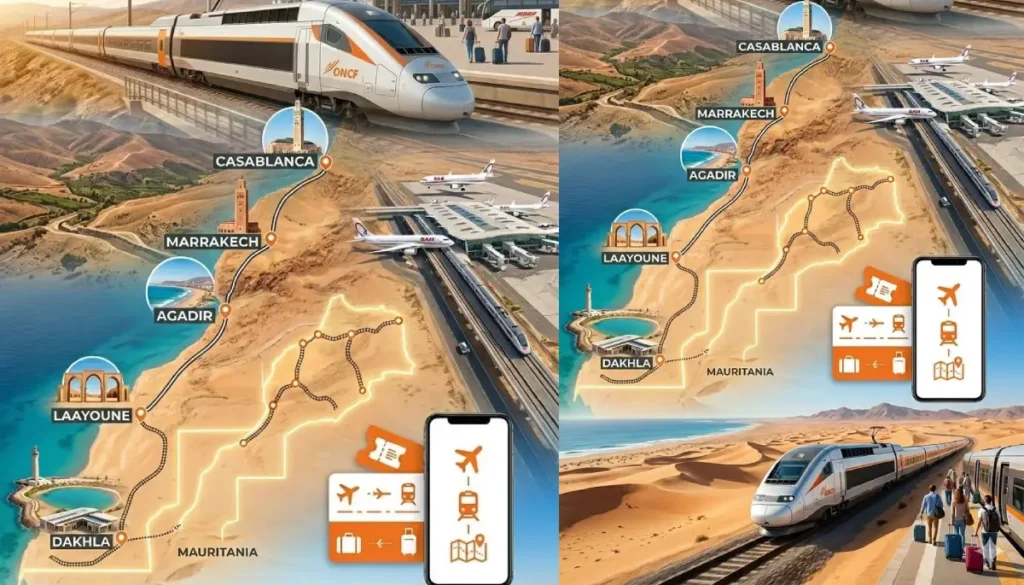
There is no single “best” transport system for the whole country.
I choose transport according to the route.
Train
For rail-connected cities, the train is often the easiest solution.
Casablanca, Rabat, Tangier, Fes and Marrakech are well integrated into the national rail system, although the type of service varies by route. ONCF currently operates both high-speed Al Boraq and conventional Al Atlas services; for example, Tangier–Casablanca is an Al Boraq corridor, while Casablanca–Marrakech is served by Al Atlas rather than Al Boraq.
Before finalizing a multi-city itinerary, use my Morocco train map to see which destinations are connected by rail and where you will need a bus, transfer or rental car.
Check the current schedule directly with ONCF before travel because timetables and engineering works can change.
Bus
For destinations without rail access, buses can be extremely useful.
For Chefchaouen, I normally recommend established operators such as CTM or Supratours rather than trying to force the trip into the rail network.
Private Driver
Once an itinerary moves into the High Atlas, valleys and Sahara, private transport becomes much more valuable.
It costs more than public transport, but a good driver gives you flexibility for scenic stops, meals, viewpoints and villages while removing the stress of connecting several separate transport services.
For many couples, families and small groups doing the classic southern route, this is where I think the extra cost provides real value.
For more detailed transport planning, use my Getting Around Morocco guide.
Travelers combining the capital with Marrakech can also read my detailed train from Rabat to Marrakech guide for station choices, journey time and alternatives.
A Classic 10-Day Morocco Route
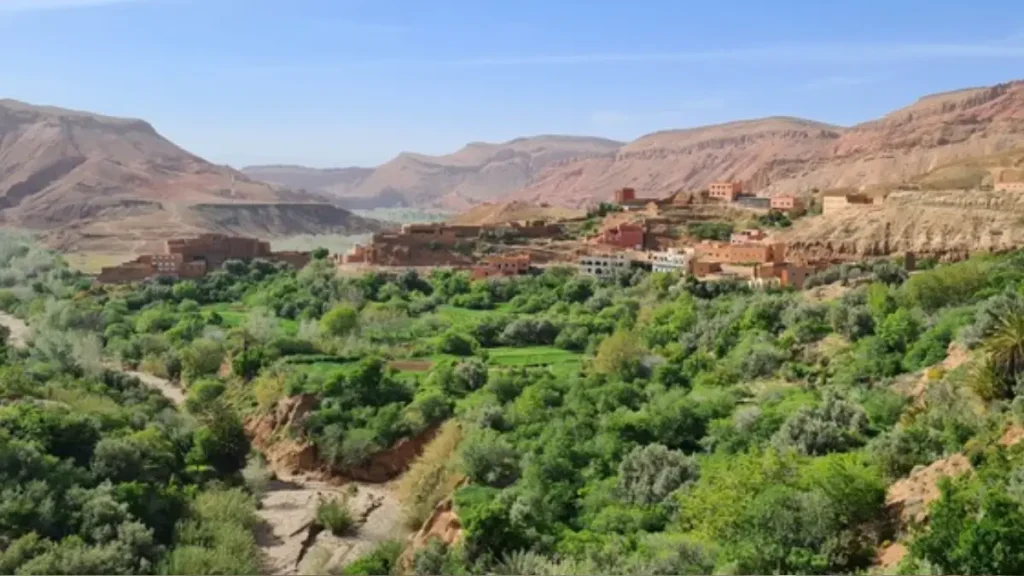
I don’t want this page to become another detailed itinerary, but if you ask me for a logical first-time route from Casablanca, I generally like the idea of going north first and then working south toward the Sahara and Marrakech.
A framework could look like this:
Days 1–2: Casablanca and Rabat
Arrive, recover from the flight and begin with Rabat rather than immediately rushing across the country.
Days 3–4: Chefchaouen
Travel north toward the Rif Mountains and spend time in Chefchaouen.
Days 5–6: Fes
Continue to Fes and give the Medina proper time rather than arriving late and leaving the next morning.
Day 7: Toward Merzouga and the Sahara
Travel south through the changing landscapes toward Erg Chebbi.
Day 8: Dades Valley or Skoura
Continue through the southeast with time around the Todra area and valleys.
Day 9: Marrakech
Cross toward Marrakech, with the route allowing for the High Atlas and Ait Benhaddou area.
Day 10: Casablanca / departure connection
This is a route framework, not a promise that every traveler should follow exactly the same schedule.
Flight times, interests, season and how much you enjoy slower travel can completely change what I recommend.
If you have 12–14 days, I would rather add breathing room than simply add more destinations.
If you want a more detailed route with realistic travel times, overnight stops and transport advice, explore my Morocco itineraries and choose the trip length that fits your schedule.
Where to Stay in Morocco
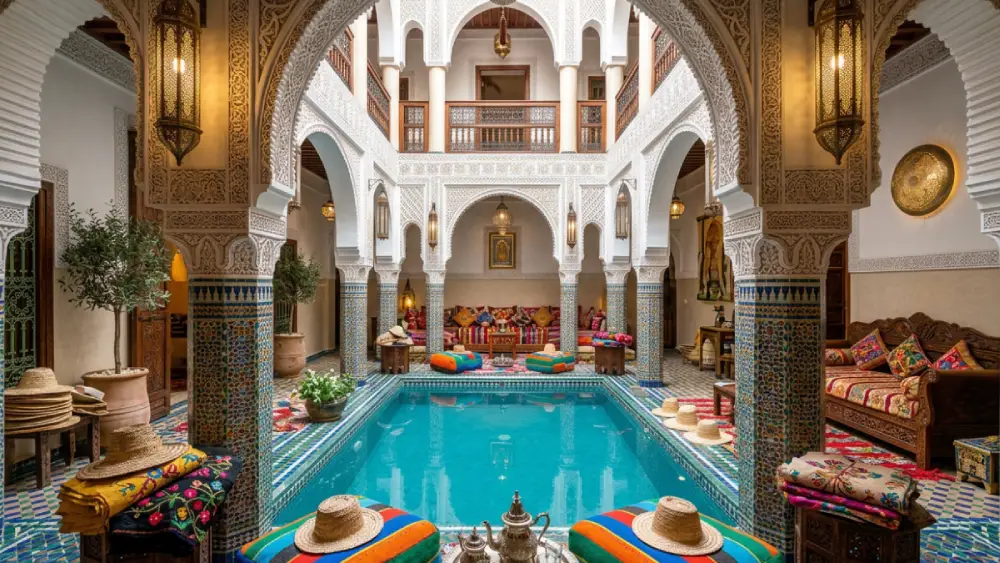
Morocco’s accommodation is part of the experience.
In historic cities such as Marrakech and Fes, many travelers want to stay in a riad inside or near the Medina.
That can be wonderful — but location matters.
A beautiful riad hidden deep inside narrow lanes may also mean walking with luggage from the nearest vehicle-access point.
Modern hotels are often easier for travelers who prioritize elevators, pools, car access, larger rooms and familiar hotel services.
Elsewhere you will find kasbah-style stays, mountain lodges, coastal hotels, guesthouses and desert camps.
Rather than choosing purely from photographs, think about:
location + vehicle access + noise + stairs + heating/air conditioning + how you actually travel.
For accommodation planning, start with my Best Places to Stay in Morocco guide.
Money, Cash and Cards
The Moroccan currency is the dirham (MAD).
Cards are increasingly useful, especially in larger hotels, restaurants and modern businesses, but Morocco is still a country where cash matters.
For a couple, I generally recommend keeping roughly 500–1,000 MAD accessible during the day rather than walking around with your entire holiday budget.
You may need cash for:
- taxis
- small cafés
- tips
- souk purchases
- smaller restaurants
- rural stops
- businesses where card terminals are unavailable or inconvenient
At ATMs, pay attention when a machine offers to convert the amount into your home currency. In many cases your own bank/card provider’s conversion can be preferable to accepting the ATM’s conversion offer.
I explain this properly in my Morocco Money and SIM Card Guide.
SIM Cards and Mobile Data
Having mobile data makes independent Morocco travel considerably easier.
Maps, WhatsApp, hotel communication, train information and last-minute bookings are all easier when you are connected.
For a physical SIM covering a broad Morocco itinerary, Maroc Telecom is usually my first overall recommendation, particularly when guests are heading beyond the major urban centres toward the Atlas, Sahara and rural valleys.
That does not mean it is automatically strongest in every individual location. Network performance changes geographically, and the best provider in one desert area may differ from another.
That is why I keep the detailed provider comparison in my Best SIM Card Morocco guide rather than turning this page into another SIM article.
Food, Eating and Tipping
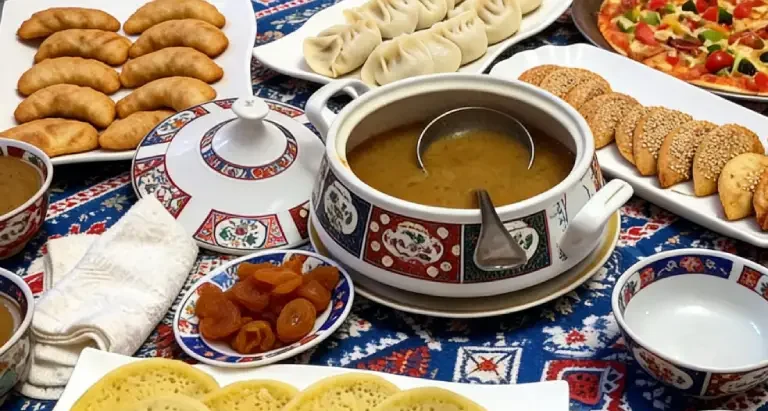
Do not come to Morocco and eat only tagine.
Tagine is a cooking method and style of dish, not one single recipe, and Moroccan food changes by city and region.
Depending on where you travel, look for dishes such as:
- couscous
- pastilla
- harira
- grilled meats
- regional tagines
- fresh Moroccan salads
- breads and msemen
- seafood on the coast
- tanjia in Marrakech
And allow room for simple local food as well as famous restaurants.
For restaurants where service is good, 10–15% is a normal tip in my experience.
Want to explore Moroccan food properly?
You do not need to turn every interaction into a tipping calculation, but restaurant tipping is more established than some outdated Morocco guides suggest.
For regional dishes, street food, eating tips and more local recommendations, read my complete Moroccan Food Guide.
What to Wear and Pack for Morocco
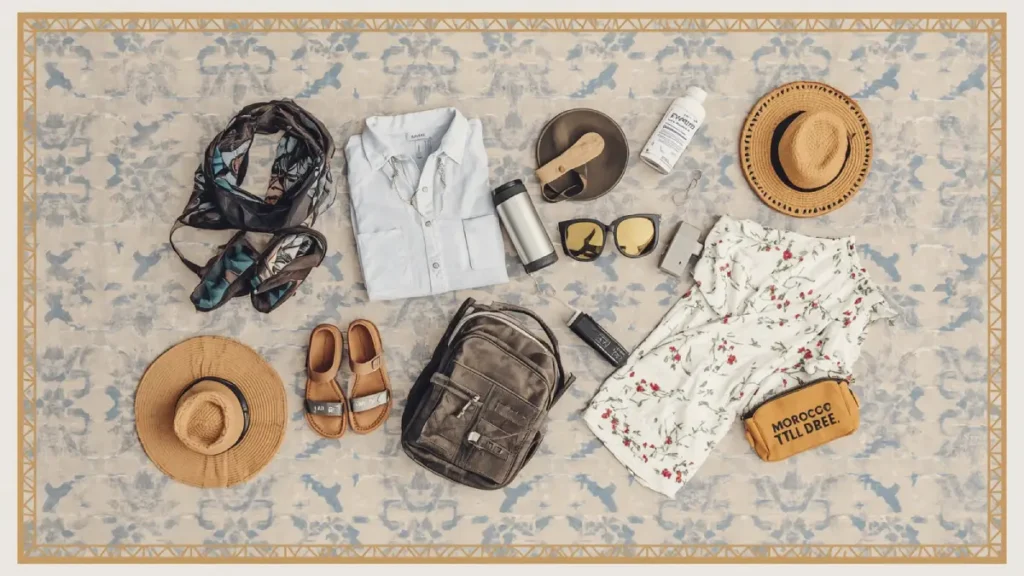
You do not need a special “Morocco costume.”
Pack for the weather, your activities and the fact that Morocco is generally more socially conservative than many European beach destinations.
For most travelers, I suggest comfortable clothing that isn’t unnecessarily revealing, plus:
- good walking shoes
- layers
- sun protection
- something warmer for mountain/desert evenings
- a light scarf
- comfortable trousers or longer shorts/skirts depending on your preference
- medications and personal essentials
The correct packing list changes substantially between August in Marrakech and a winter night near the Sahara.
Use my complete Morocco Packing List before you pack.
Culture and Etiquette
If you have visible body art and are wondering how it is received locally, my guide to tattoos in Morocco explains the cultural context, religious considerations and practical etiquette for travelers.
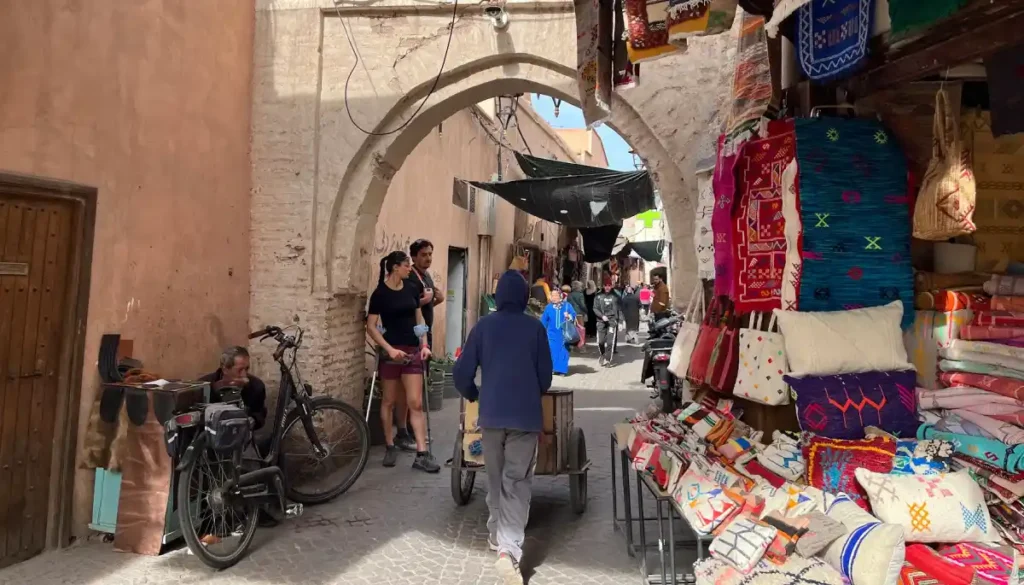
Moroccan hospitality is real, but Morocco is also a living country rather than a tourism set.
A few habits make travel easier.
Learn salam alaykum, shukran and la shukran.
Ask before photographing people closely.
Dress with reasonable awareness of your surroundings.
Be especially respectful around mosques and religious spaces.
During Ramadan, daily rhythms can change. Visitors are not expected to behave as if they are fasting, but a little awareness and respect goes a long way.
And don’t confuse negotiation with hostility.
In souks, bargaining can simply be part of the buying process. A flexible price is not automatically a scam.
For more detail, read my Morocco Travel Tips.
Is Morocco Safe?
Most travelers visit Morocco without serious problems.
The issues I see more often are much less dramatic:
- overpaying
- confusing taxi negotiations
- getting lost in medinas
- unwanted sales pressure
- misleading “help”
- pickpocketing in crowded places
- unrealistic transport plans
Good awareness matters more than fear.
In a medina, Google Maps can be useful, but don’t expect it to understand every alley, covered passage, temporary closure or locally used route perfectly.
If somebody genuinely helps you find a difficult location, a small tip can be perfectly normal.
That is different from someone deliberately misleading you and then demanding money.
I cover the subject properly in my Morocco Travel Safety Guide.
Before You Book: Check Entry Requirements
Visa rules depend on nationality and circumstances, so I would not put a giant nationality table on this page.
Morocco’s Ministry of Foreign Affairs provides official visa and entry information and directs travelers to check the requirements that apply to their passport.
For a traveler-friendly explanation, see my Morocco Visa Requirements Guide.
Always confirm the rules that apply to your passport before buying a non-refundable trip.
My First-Time Morocco Planning Checklist
Before you fly, I would make sure you have answered these questions:
How many actual full days do I have?
Don’t count an evening arrival as a sightseeing day.
Does my route make geographical sense?
Avoid crossing the same parts of the country repeatedly.
Have I allowed enough time for the Sahara?
Treat the journey south as part of the holiday.
Which sections should I do by train, bus or private vehicle?
You don’t need one transport method for the entire trip.
Do I know how I will reach my accommodation?
Especially if you are staying inside an old Medina.
Do I have some dirhams available?
Don’t rely exclusively on cards.
Will I have mobile data?
Sort your SIM or eSIM early.
Have I packed for more than daytime temperatures?
Mountains and desert evenings can surprise people.
Am I trying to see too much?
That final question can improve your trip more than adding another attraction.
Morocco Travel Guide FAQ
Is 7 days enough for Morocco?
Yes for a focused itinerary.
I would not recommend trying to properly combine Marrakech, Fes, Chefchaouen and Merzouga in seven days. Choose fewer regions and enjoy them.
Is 10 days enough?
Yes. Ten days is my ideal minimum for the classic highlights.
It still requires sensible routing, but it is much more realistic.
Is 14 days better?
For many travelers, absolutely.
Twelve to fourteen days gives you a better balance between sightseeing and travel time.
Should I rent a car in Morocco?
It depends on the itinerary and your confidence driving.
A rental car can work very well for experienced independent travelers outside the medinas, but you do not need one for a trip based mainly around rail-connected cities.
Can I travel Morocco by train?
You can cover several major destinations by rail, but not the entire country.
Chefchaouen and the main Sahara destinations require other transport. ONCF’s current network combines different train services and coach connections depending on the route.
Which SIM card is best for Morocco?
For a broad first-time itinerary, I usually recommend Maroc Telecom overall, especially when the journey includes rural areas, the Atlas and Sahara approaches.
Do I need cash?
Yes.
Cards are useful, but I would never travel around Morocco relying on cards alone.
How much should I tip in restaurants?
For good restaurant service, around 10–15% is normal in my experience.
Is Marrakech or Fes better for a first visit?
They are very different.
Marrakech has a larger modern tourism infrastructure and is easy to combine with the Atlas, Essaouira and southern routes.
Fes gives you one of Morocco’s deepest historic Medina experiences.
A first Morocco trip is better when you understand their differences rather than trying to choose a “winner.”
What is the biggest mistake first-time visitors make?
Trying to fit too much Morocco into too little time.
Distances look manageable on a map. On the ground, long transfers accumulate quickly.
Final Advice From a Moroccan Guide
If you remember only one thing from this Morocco travel guide, make it this:
Slow the itinerary down before you add another destination.
Morocco rewards travelers who leave enough time for the road, conversations, tea, unexpected stops and places they did not know they would enjoy.
For the classic first trip, I would choose 10 days as the minimum, use trains where the rail network makes sense, buses for routes such as Chefchaouen, and consider a good private driver when moving through the south and Sahara.
Carry some cash.
Get your mobile data sorted.
Don’t fear the medinas — learn how they work.
And give the Sahara enough time to feel like the Sahara rather than a very long drive followed by a photograph.
Shwiya b’shwiya — little by little.