Is Morocco Safe For Americans In 2026? What You Really Need To Know
If you’re an American thinking about Morocco in 2026, you’ve probably seen two extremes online:
- “Morocco is totally safe, don’t worry at all!”
- “Morocco is dangerous, you’ll be hassled/scammed/robbed.”
The truth, as usual, is in the middle.
I’m Youness, a licensed Moroccan tour guide based in Marrakech. For more than 20 years I’ve guided Americans all over the country – Marrakech, Fes, Chefchaouen, Casablanca, the Sahara, the Atlas. In this guide I’ll answer directly: is Morocco safe for Americans in 2026? And I’ll show you where the real risks are, and how to handle them step by step (shwiya b’shwiya).
This article gives a US‑focused view, then links you to my full Morocco Safety Guide and Travel Insurance Guide if you want more detail.
Table of Contents
Table of Contents
Short Answer: Is Morocco Safe for Americans in 2026?
Yes, for the vast majority of Americans, Morocco is safe to visit in 2026, as long as you:
- Use normal big‑city common sense
- Understand local customs a bit
- Choose your neighbourhoods and night movements carefully
- Have proper travel insurance in case something serious happens
Compared to many big US cities, the levels of violent crime against tourists are low. The real issues are:
- Petty theft (phones, wallets, bags)
- Scams and overcharging
- Getting overwhelmed in medinas (stress, not danger)
- Traffic and road safety
- Occasionally, unwanted attention, especially for solo women
The good news: all of those are manageable once you know what to expect.
Is Morocco Safe for Tourists in General?
Before zooming in on Americans, let’s answer: is Morocco safe for tourists?
Overall:
- Morocco is one of the more stable countries in the region.
- Tourism is a major industry; locals generally want you to feel welcome.
- Big tourist cities (Marrakech, Fes, Chefchaouen, Agadir, Casablanca, Tangier) are used to foreign visitors.
What you’re unlikely to face:
- Random violent attacks on tourists (very rare)
- Widespread anti‑American sentiment on the street
What you are likely to face occasionally:
- Persistent shopkeepers and “guides”
- Taxis trying not to use the meter
- Higher‑than‑local prices if you don’t ask first
- Crowds and sensory overload in medinas
This is why I always say: Morocco is intense, not unsafe – especially at first.
For a deeper, non‑US‑specific overview, see my full Morocco safety guide.
Is Morocco Safe for Americans Specifically?
Americans usually worry about:
- Anti‑American feeling
- Terrorism risk
- Political tensions
From my daily experience on the ground:
- Most Moroccans are more interested in your tip and your story than your passport.
- Many have family in France, Spain, Canada, the US – migration is normal here.
- People may ask “Where are you from?” and say “America! Welcome!” – that’s usually the end of it.
There is no special danger for Americans compared to other Western tourists in day‑to‑day travel.
What you should still do:
- Register with the US State Department Smart Traveler Enrollment Program (STEP) if that makes you feel better.
- Check the current US travel advisory and your own risk tolerance.
- Follow local news via your embassy or reliable sources if you’re staying long.
Is Marrakech Safe for Americans?
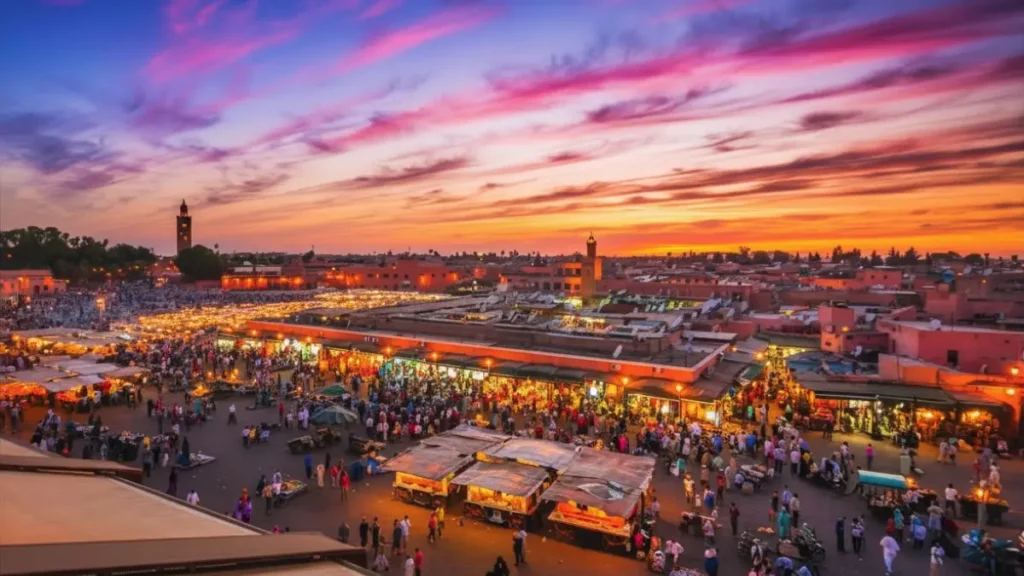
Most Americans start or finish in Marrakech, so let’s answer: is Marrakech safe?
Yes, Marrakech is generally safe for American tourists in 2026, with the same caveats as any big tourist city:
- Pickpockets in crowded areas (Jemaa el‑Fna, souks, busier alleys)
- Over‑friendly “helpers” wanting to guide you or take you to shops
- Taxi overcharging, especially around the medina and airport
How to keep it sane:
- Keep phones and wallets in front pockets or zipped bags.
- Avoid counting cash in the middle of a busy square.
- At night, use petit taxis or ride apps rather than walking very long distances through the medina if you’re not comfortable.
- Choose riads in well‑known areas and let them arrange a station or taxi drop‑off for you.
Marrakech is more about sensory overload and scams than physical danger. If you go in with that mindset, it becomes part of the game, not a shock.
Is Casablanca, Morocco Safe?
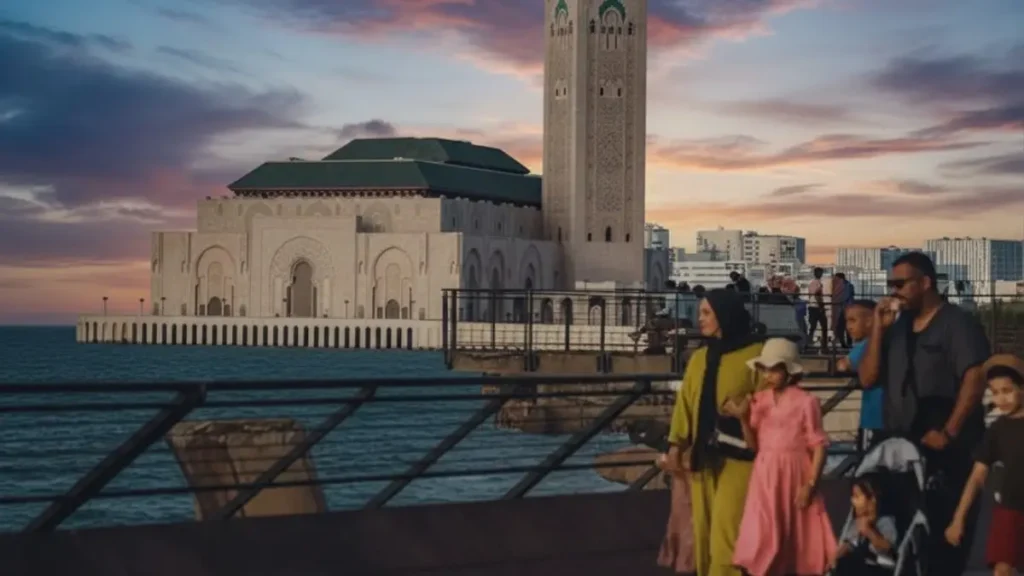
Many Americans land in Casablanca and wonder: is Casablanca Morocco safe?
Casablanca is:
- Morocco’s economic capital, not a tourist fantasy city
- Full of business people, commuters, neighbourhoods, malls, schools
Is Casablanca safe for tourists?
- Yes, generally. The risks are similar to big cities worldwide:
- Pickpocketing in crowded areas
- Occasional petty crime late at night in certain neighbourhoods
- Touristic areas (Hassan II Mosque, Corniche, central districts) are heavily frequented and generally calm.
Tips:
- Avoid walking alone very late at night in quiet, poorly lit streets.
- Use taxis or ride apps rather than wandering the city at 1–2 am, especially if you’re not sure of the neighbourhood.
- In the old medina and denser districts, treat your phone like you would in any big US city: not in the back pocket, not dangling in your hand for long.
If you’re just in Casablanca for 1–2 days before heading to Marrakech or elsewhere, see my Casablanca Travel Guide for safe, practical ways to fill the time.
Is Morocco Safe for Solo Female Travellers (Including Americans)?
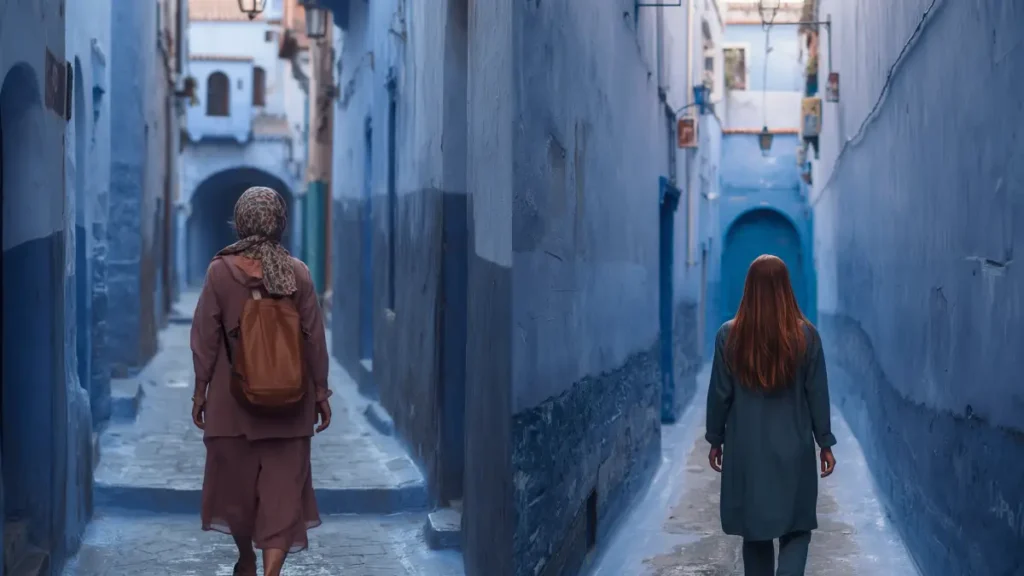
This is one of my most common questions.
Is Morocco safe for solo female travellers? Yes, thousands do it every year – including many Americans – but you do need to be more conscious of:
- Verbal attention (stares, comments, attempts at flirting)
- Occasionally, someone trying to walk with you “as a guide”
- Feeling uncomfortable in some alleys at night if they’re very quiet
In my tours and with my solo guests, what works best:
- Dress in a way that blends in more (shoulders and knees covered): not a rule, but it makes your life easier.
- A confident “No, shukran” (No, thank you) when someone is too persistent.
- Stay in well‑reviewed riads/hotels in central but not sketchy areas.
- Use petit taxis or ride apps at night, especially in Casablanca and Marrakech.
I cover solo and solo female travel more fully in my Morocco safety guide, with specific medina strategies.
Real Risks Americans Should Take Seriously (Not Just Clickbait)
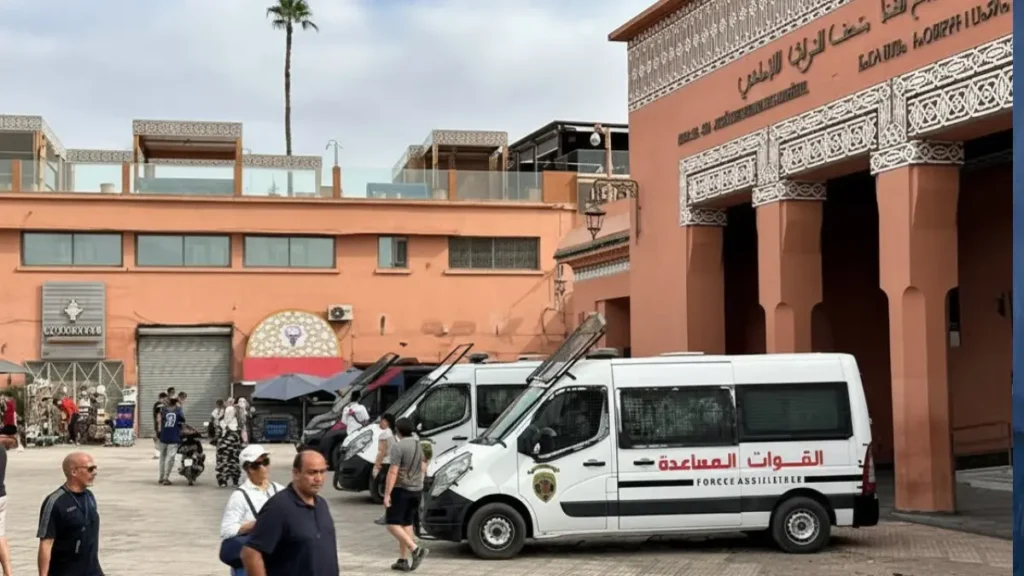
Instead of vague “be careful” advice, here are the real, practical risks:
1. Petty Theft (Phones, Wallets, Bags)
Most common scenarios:
- Phone grabbed from a table in a busy café.
- Wallet lifted from an open bag in the souk.
- Bag left unattended “just for a second”.
How to reduce risk:
- Use zipped bags or cross‑body bags in crowded places.
- Don’t leave phone and wallet on the outside café table in very busy areas.
- In crowds (Jemaa el‑Fna, bus stations), keep your bag in front or under your arm.
If your phone goes missing, it becomes a huge headache with bank apps, tickets, eSIM/SIM, 2FA. A good reason to have real travel insurance that covers theft of electronics up to a realistic limit.
2. Traffic & Road Safety
The most dangerous thing most tourists do here is cross the road or take long drives.
Risks:
- Drivers not always respecting pedestrian crossings.
- Speed differences between cars, scooters, donkey carts.
- Long days on the road if you rush a desert or multi‑city itinerary.
Tips:
- Cross with locals when possible; follow their timing.
- Use licensed taxis and reputable transfers, not random unlicensed cars from the street.
- Avoid night driving on rural roads, even in rental cars.
3. Scams & Overcharging
Morocco has:
- “Helpful” strangers who guide you then ask for money.
- Shops that quote 3–5x local prices to see if you’ll accept.
- Taxi drivers who don’t want to use the meter.
This is more about annoyance than real danger, but it can ruin your mood.
Antidotes:
- Decide beforehand what you won’t do: e.g. “I never follow someone into a shop I don’t want to visit.”
- Ask prices before you sit or order, especially in very touristy spots.
- In taxis, insist on the meter or agree a fare in advance.
I give scripts and specific examples in my main safety guide.
Terrorism & Political Stability: A Calm but Honest Note
No country on earth can say “zero risk” – including the US.
Morocco:
- Has strong security services and takes extremism seriously.
- Has had incidents in the past (as many countries have) but not regular events.
- Is considered relatively stable compared to many neighbours.
Practical steps:
- Avoid large demonstrations or political gatherings if they appear.
- Register with STEP (Smart Traveler Enrollment Program) if you’re a US citizen who likes extra embassy backup.
- Check government advisories shortly before your trip.
For most visitors, this remains background context, not a daily concern.
Health, Water & Food Safety for Americans
Most Americans are also nervous about:
- Water safety
- Food hygiene
- Medical care
Key points:
- Tap water is officially treated in big cities, but I recommend bottled water for drinking, at least for the first days, especially if you’re sensitive.
- Street food ranges from excellent to “don’t risk it” – go where locals are busy and food is hot and turning over fast.
- In case of serious health issues, good private clinics exist in major cities; in rural areas, care is basic.
This is where travel insurance really matters. My advice as someone with an insurance mind:
- Look for 50,000–100,000 USD minimum for medical + evacuation.
- Check that desert tours, camel rides, trekking, quad bikes are not excluded.
- Ensure pre‑existing conditions are properly declared.
Details and examples are in my Morocco travel insurance guide.
Money, ATMs & Cards: Any Special Risks for Americans?
The main “risk” here is not fraud; it’s bad exchange rates and fees.
- ATMs are common in cities; use big banks (BMCI, Attijariwafa, etc.).
- Always decline Dynamic Currency Conversion (DCC) when the ATM or card terminal asks if you want to be charged in USD – choose MAD instead.
- Many US banks charge foreign transaction + ATM fees; a service like Wise or Revolut can help.
For a full strategy, including tipping norms, cash vs card, and SIM/eSIM choices, see my Morocco Money & SIM Card Guide 2026.
American‑Style Expectations vs Moroccan Reality
A few mindset tips:
- Service style is different – not rude, just not US‑style “How are you today, sir?” 20 times.
- Things can take longer; there’s more “Inshallah” timing than strict US punctuality.
- Rules exist, but flexibility allows people to solve problems creatively.
If you arrive expecting New York or LA level organisation, you’ll get frustrated. If you accept you’re in North Africa, it becomes part of the story.
Final Thoughts: Should Americans Visit Morocco in 2026?
If you:
- Use common sense like you would in any big US city
- Accept that Morocco is intense but not hostile
- Protect your money, phone and health with a bit of planning
…then yes, Morocco is absolutely safe and rewarding for Americans in 2026.
Who Morocco is great for:
- Americans who want culture, history, food and landscapes very different from home.
- Couples, families and solo travellers willing to learn shwiya b’shwiya.
- People comfortable with some unpredictability.
Who might struggle:
- Those who hate any form of hassle, noise or bargaining.
- People expecting Western Europe in North Africa.
If you want a deeper dive into specific cities, scams, and what to do if something goes wrong, read my full Morocco Safety Guide. And before you come, make sure your travel insurance for Morocco covers the trip you’re actually planning – not just the cheapest policy on a comparison site.
FAQ – Is Morocco Safe for Americans in 2026?
Is Morocco safe for Americans to visit in 2026?
Yes, Morocco is generally safe for Americans in 2026, as long as you take normal big‑city precautions. Violent crime against tourists is rare; the main issues are petty theft, scams and traffic. Most Moroccans are welcoming to American visitors, and you’re unlikely to face specific anti‑American hostility in day‑to‑day travel.
Is Morocco safe for tourists overall?
Morocco is considered one of the safer and more stable destinations in North Africa for tourists. Big cities like Marrakech, Fes and Casablanca are used to foreign visitors and have visible police presence in central areas. As with any popular destination, you should watch out for pickpockets, overcharging and hassle in tourist zones, but serious incidents are uncommon.
Is Marrakech safe for American tourists?
Yes, Marrakech is safe for American tourists if you stay aware of your surroundings. The main risks are pickpockets in busy areas like Jemaa el‑Fna and the souks, and occasional taxi or shop overcharging. At night, it’s best to use petit taxis or ride apps rather than walking long distances through unfamiliar alleys if you’re not comfortable.
Is Casablanca, Morocco safe?
Casablanca is generally safe, but it feels more like a working city than a tourist playground. The main concerns are petty crime in crowded areas and being in the wrong quiet neighbourhood very late at night. Stick to central, well‑lit areas, use taxis or ride apps at night, and treat your belongings as you would in any large US city.
Is Morocco safe for solo female travellers from the US?
Many American women travel solo in Morocco every year without major problems. You should expect some extra attention and occasional unwanted comments, but serious incidents are rare. Dressing modestly, using taxis or ride apps at night, choosing well‑reviewed riads and firmly saying “No, shukran” when needed all help. My main safety guide goes deeper into solo female strategies.
Do I need travel insurance for Morocco?
Strongly yes. Good travel insurance is essential for Americans in Morocco because it covers unexpected medical issues, accidents on desert or mountain trips, and theft or loss of luggage and electronics. Look for at least 50,000–100,000 USD in medical and evacuation cover, and make sure activities like desert tours, camel rides, trekking and quads are not excluded.