
Tangier Travel Guide 2026: What to See, Where to Stay and How to Plan
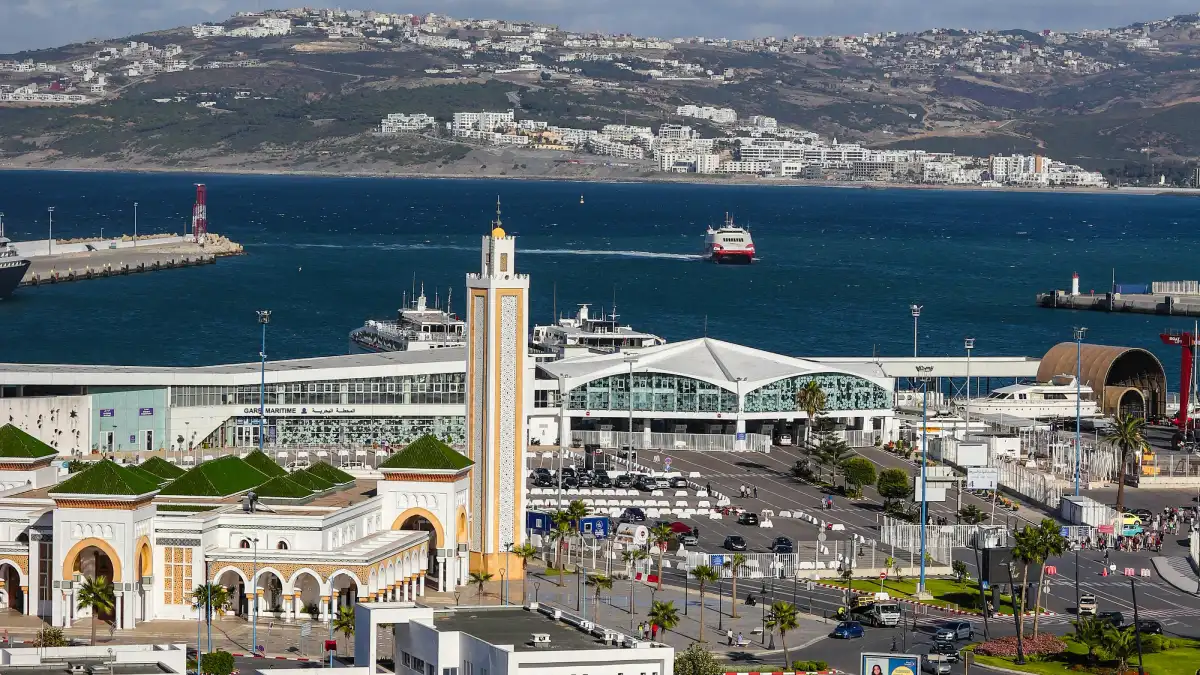
Tangier feels different from Marrakech and Fes from the moment you arrive. The Medina climbs above a working port, Spanish words mix with Moroccan Arabic and French, and ferries cross the Strait toward Europe throughout the day.
This Tangier travel guide will help you decide how long to stay, what to see, where to base yourself and how to arrive by ferry, train or plane.
I’m Youness Labchir, a licensed Moroccan guide since 2004. After more than twenty years guiding travelers across Morocco, I normally recommend Tangier to visitors who enjoy port cities, layered history, café culture and places that do not fit a polished tourism image.
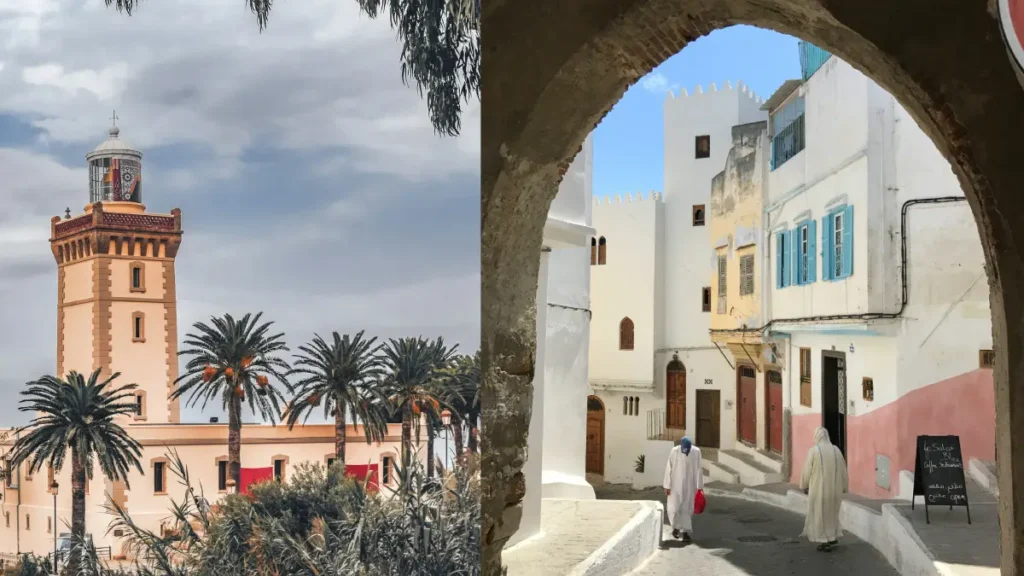
Tangier is not simply a transfer point between Spain and Morocco. One day is enough for the Medina and Kasbah, but two full days give you time for the city, Café Hafa and the coastal route toward Cape Spartel. Add a third day when you want a slower pace or a trip to Asilah, Tetouan or Chefchaouen.
Table of Contents
Table of Contents
Tangier Travel Guide 2026: Quick Answer
| Planning question | My recommendation |
|---|---|
| Ideal stay | Two full days; three for a slower visit or nearby excursion |
| Best for | History, cafés, sea views, ferries from Spain and northern Morocco routes |
| Not ideal for | Travelers looking only for desert scenery or a quiet beach resort |
| Best areas to stay | Kasbah or Medina for atmosphere; city center or Malabata for easier vehicle access |
| Best time to visit | Spring and early autumn for comfortable sightseeing; bring layers for wind and cooler evenings |
| Main airport | Tangier Ibn Battouta Airport, approximately 11 km from the city |
| Train connection | Al Boraq to Rabat and Casablanca; verify the current timetable through ONCF |
| Ferry connection | Tarifa to Tangier Ville is commonly scheduled at about one hour |
| Can you visit from Spain in one day? | Yes, but ferry check-in, immigration and possible weather disruption reduce sightseeing time |
| Guide needed? | Not essential for the main Medina sights, but useful on a short ferry day trip or for deeper historical context |
| My recommendation | Stay overnight rather than treating Tangier only as a rushed day trip |
Is Tangier Worth Visiting?
Yes, Tangier is worth visiting when you want to understand northern Morocco rather than repeat the atmosphere of Marrakech or Fes.
Its strongest experiences are not large monuments. They are the walk between Grand Socco and the Kasbah, the sea views from Café Hafa, the American Legation, the port-city history and the changing mood between the old Medina and the modern waterfront.
Tangier may disappoint travelers expecting a perfectly restored historic city. Traffic, construction, steep streets and ordinary port-city life are part of the experience.
How Many Days Do You Need in Tangier?
One day covers the principal Medina sights, but it leaves little room for delays or a relaxed meal.
I recommend:
- One day: Grand Socco, Medina, Kasbah, American Legation and Café Hafa
- Two days: add Cape Spartel, the Hercules Caves and more time in the modern city
- Three days: add Asilah, Tetouan, Chefchaouen or a slower coastal day
Travelers arriving by ferry should not calculate sightseeing time from the advertised crossing alone. Check-in, passport control, boarding and possible weather delays can remove several hours from a day trip.
What Makes Tangier Different?
Tangier’s identity comes from its position on the Strait of Gibraltar and its long connection with Europe, Africa and the wider Mediterranean.
Moroccan Arabic and French are widely used. Spanish influence remains particularly noticeable in northern Morocco, while English ability varies by person and setting.
The Medina is smaller and generally easier to navigate than the old cities of Fes or Marrakech, but it still includes steep lanes, uneven paving and vehicle-free sections. Comfortable shoes matter more than a perfect sightseeing schedule.
How to Get to Tangier

Tangier is one of Morocco’s easiest cities to reach from Europe and from the major cities along the Atlantic rail corridor.
You can arrive by:
- Fast ferry from Tarifa
- Ferry through Tangier Med
- Al Boraq high-speed train
- Conventional ONCF train connections
- International or domestic flight
- CTM coach, grand taxi or private transfer
The best arrival point depends on whether Tangier is your first stop in Morocco, part of a northern route or only a day trip from Spain.
Tarifa to Tangier by Ferry
The Tarifa–Tangier Ville ferry is the most convenient sea route for travelers who want to arrive directly beside the city center and Medina.
Baleària and Africa Morocco Link currently sell crossings on this route. The advertised sailing time is commonly around one hour, but the complete journey takes longer once you include:
- Check-in
- Boarding
- Passport control
- Disembarkation
- Moroccan entry formalities
- Possible weather or operational delays
Check the exact departure and documentation requirements directly with the ferry operator before traveling.
Official booking pages:
Tangier Ville or Tangier Med?
Do not confuse the two ports.
| Port | Best for | Location |
|---|---|---|
| Tangier Ville | Foot passengers, Tarifa crossings and city visits | Beside central Tangier and within walking distance of the lower Medina |
| Tangier Med | Larger ferries, vehicles and some Algeciras crossings | Approximately 45 km east of Tangier city |
A ticket marked Tangier Med does not bring you into central Tangier.
When arriving through Tangier Med, allow time and money for a bus, taxi or private transfer into the city. Confirm the onward transport before boarding the ferry, particularly when arriving in the evening.
Is a Tangier Day Trip From Tarifa Realistic?
Yes, but the advertised one-hour crossing does not equal one hour of total travel.
A same-day trip works best when:
- You take an early ferry
- You travel with only a small day bag
- You know the return check-in deadline
- You stay mainly within the Medina, Kasbah and central city
- You leave a buffer for passport control and delays
Do not attempt to combine the Medina, Cape Spartel, Hercules Caves and a relaxed lunch unless your ferry schedule gives you enough time.
For a first visit, staying one night provides a much better experience. Tangier becomes quieter after the day-trip groups leave, and you avoid watching the clock throughout the afternoon.
What Ferry Prices Should You Expect?
Ferry prices vary according to:
- Operator
- Travel date
- One-way or return booking
- Passenger age
- Vehicle
- Ticket flexibility
- Seasonal demand
- Promotional offers
Check both operators for your exact date rather than relying on a fixed price from an older travel article.
Read the ticket conditions carefully. A cheaper fare may have stricter change or cancellation rules.
My Ferry Advice
Do not book a tight flight, train or international connection immediately after a ferry arrival.
Strait crossings can be affected by wind, port operations and immigration delays. When the onward journey is important, build a generous buffer or stay overnight in Tangier.
Arriving at Tangier Ibn Battouta Airport
Tangier Ibn Battouta Airport is outside the central city and is not practical to reach on foot.
The simplest arrival options are:
- Official airport taxi
- Transfer arranged by your hotel or riad
- Prebooked private transfer
- Rental car when Tangier begins a longer road trip
Use the official taxi area rather than accepting an unsolicited ride inside the terminal. For the taxi fare situation, airport bus and pre-booked pickups, read my Tangier Airport transfer guide.
Before entering the vehicle, confirm:
- The total fare
- Your exact destination
- Whether the price covers the whole group
- Whether there is enough luggage space
- The nearest accessible drop-off point for a Medina property
A taxi may not be able to reach the door of a Kasbah or Medina riad. Ask your accommodation for the nearest gate or meeting point before flying.
Check current airport services through the official ONDA Tangier Airport page.
Should You Arrange an Airport Transfer?
A prearranged transfer is worth considering when:
- Your flight arrives late
- You are traveling with children
- You have several bags
- Your accommodation is inside the Medina
- You do not speak French, Arabic or Spanish
- You want someone to meet you with your name
For an ordinary daytime arrival with light luggage, the official taxi rank is normally sufficient.
Tangier by Al Boraq Train
Tangier is the northern end of Morocco’s Al Boraq high-speed rail corridor.
Al Boraq connects:
- Tangier
- Kenitra
- Rabat Agdal
- Casablanca Voyageurs
You can see how this high-speed corridor connects with the rest of the country on my practical Morocco train routes map.
The Tangier–Casablanca journey commonly takes a little over two hours, depending on the selected service and timetable.
Check the exact train through the official ONCF Voyages website.
Traveling From Rabat or Casablanca
Al Boraq is normally the easiest public-transport option from Rabat or Casablanca.
It avoids city traffic, and Tangier Ville railway station is located in the modern part of the city near Malabata rather than beside the historic Medina.
From the station, continue by petit taxi or arranged transfer to:
- The Medina
- Kasbah
- Grand Socco
- City-center hotel
- Malabata accommodation
Traveling From Fes
Tangier and Fes are connected through the ONCF network, but the exact journey may use a conventional train, Al Boraq connection or a change at another station.
Search the entire journey on ONCF rather than assuming it will be direct.
Traveling From Marrakech
There is no direct Al Boraq high-speed line from Marrakech to Tangier.
Travelers normally use a conventional ONCF train and may change in Casablanca. The journey takes a substantial part of the day.
For connection times, ticket-price ranges and the overnight option, read my detailed guide to taking the train from Tangier to Marrakech.
When a route includes Marrakech, Tangier, Fes and the Sahara, check whether the itinerary has become too spread out. My Morocco Itineraries guide explains which combinations are realistic by trip length.
Booking Tangier Train Tickets
Reserve ahead when:
- Traveling during a weekend or public holiday
- Using a popular departure
- Traveling as a family or group
- Connecting with a ferry or flight
- Visiting during a busy domestic travel period
Ticket prices depend on the route, class, availability and fare conditions. Check the live ONCF result rather than publishing or relying on one permanent price.
Getting Around Tangier
Tangier is manageable without a rental car.
The Medina, Kasbah, Grand Socco and central waterfront are close enough to explore on foot. Taxis are useful for the railway station, airport, Malabata, Café Hafa, Cape Spartel and accommodation outside the historic center.
Walking in Tangier
Walking is the best way to experience the Medina and Kasbah.
Expect:
- Steep lanes
- Uneven paving
- Stairs
- Limited vehicle access
- Busy crossings outside the Medina
- Incorrect map directions inside narrow streets
Save your accommodation location before leaving and ask for a nearby landmark rather than depending only on the street address.
Comfortable shoes are essential. Tangier’s Medina is smaller than Fes, but the slopes can be tiring.
Petit Taxis in Tangier
Tangier’s petit taxis are used for journeys inside the city.
They are practical for:
- Railway station to Medina
- Malabata to Grand Socco
- Hotel to restaurant
- Café Hafa
- Airport-bus connections or city errands
Petit taxis have limited luggage and passenger space. A family with several suitcases may need more than one vehicle or a larger transfer.
Ask for the meter when appropriate:
“Compteur, s’il vous plaît.”
Or in Moroccan Arabic:
“Afak, compteur.”
When the meter is not used, agree on the total fare before entering. Confirm that the amount is in Moroccan dirhams and covers the full journey rather than each passenger.
Carry small notes because drivers may not have change for large bills.
Grand Taxis and Private Transfers
Grand taxis are used for longer journeys and destinations beyond ordinary city taxi limits.
They may be useful for:
- Cape Spartel
- Hercules Caves
- Asilah
- Tetouan
- Chefchaouen
- Tangier Med
- Regional beaches
A grand taxi may operate as a shared vehicle or be hired privately.
Before departure, confirm:
- Whether the fare is per person or for the whole vehicle
- Whether the taxi will wait for you
- Whether the journey is one way or return
- How much luggage is included
- The final destination
- Any additional stops
Do not rely on an old fixed price. The total varies by distance, waiting time, passenger arrangement and whether you hire the entire vehicle.
For Cape Spartel and the Hercules Caves, a round-trip taxi with agreed waiting time is normally easier than trying to find another vehicle at each stop.
Do Ride Apps Work in Tangier?
Careem and inDrive may be available in Morocco, but driver availability and pickup practicality vary.
Apps can be useful because they provide:
- Driver details
- Vehicle information
- A proposed or estimated fare
- A map of the journey
- A digital trip record
They are less useful inside narrow Medina lanes where vehicles cannot enter.
Do not depend on an app as your only plan for:
- A late airport arrival
- An early ferry
- An important train connection
- A pickup deep inside the Medina
Keep the official taxi rank or a hotel-arranged transfer as a backup.
Should You Rent a Car in Tangier?
A rental car is unnecessary when you are staying mainly in Tangier.
Parking, city traffic and Medina access create more inconvenience than freedom.
A car becomes useful when Tangier begins a wider northern road trip involving:
- Asilah
- Tetouan
- Chefchaouen
- Mediterranean beaches
- The Rif Mountains
- Several rural stops
Collect the vehicle when leaving the city rather than keeping it unused during a central Tangier stay.
For a full comparison of trains, buses, taxis, rental cars and private drivers, see my Getting Around Morocco in 2026 guide.
Tangier Itineraries: One, Two or Three Days
Tangier is compact enough for a useful one-day visit, but the city becomes more enjoyable when you stop treating it as a list of attractions.
The Medina, American Legation, Kasbah and Café Hafa fit naturally together. Cape Spartel and the Hercules Caves require a separate road journey west of the city and should normally be planned as a half-day excursion.
One Day in Tangier
This plan works for travelers staying overnight or arriving early by train.
Ferry passengers should shorten it according to their return check-in time and leave a generous delay buffer.
Morning: Grand Socco, Medina and American Legation
Begin at Grand Socco, officially called Place du 9 Avril 1947.
The square marks the transition between Tangier’s modern city and its historic Medina. From here, enter through Bab Fahs and continue toward the Petit Socco.
Allow time to walk rather than following the fastest map route. Tangier’s Medina is not as difficult as Fes, but small lanes, stairways and market activity can slow you down.
Continue to the Tangier American Legation.
The building represents the long diplomatic relationship between Morocco and the United States and now operates as a museum, research center and cultural institution.
Check the current visitor schedule before going because museum opening days, event access and guided-tour arrangements can change.
Late Morning: Petit Socco and the Kasbah
After the Legation, continue through the Medina toward the Petit Socco.
The square is best experienced as a place to pause rather than a monument to photograph. Sit for coffee or mint tea and watch the movement between the cafés and surrounding lanes.
Walk uphill toward the Kasbah.
Visit the Kasbah Museum of Mediterranean Cultures when it is open. The museum occupies part of the former Dar al-Makhzen, the historic sultan’s palace, and provides useful context for Tangier’s relationship with the Mediterranean and northern Morocco.
Do not rush the museum only to maintain a strict schedule. If you enjoy history, allow approximately an hour and leave additional time for the courtyard and surrounding Kasbah streets.
Lunch: Medina or Kasbah
Eat near the Kasbah or return toward the central Medina.
A practical lunch might include:
- Bissara
- Grilled fish
- Kefta tagine
- Moroccan salads
- Caliente
- A simple daily fish or meat dish
Choose according to what looks fresh rather than insisting on one famous restaurant.
Tangier’s port location makes seafood a natural choice, but the quality and value vary. Ask whether fish is sold by portion or weight before ordering.
Afternoon: Café Hafa and the Phoenician Tombs
After lunch, continue toward Café Hafa.
The café is known for its terraces facing the Strait. The setting matters more than a complicated menu, so this is normally a tea stop rather than the main meal of the day.
Nearby, the Phoenician Tombs provide another open view toward the sea. The site has limited interpretation, so visitors interested in the history may gain more from seeing it with a knowledgeable guide.
Allow time to sit rather than arriving only for a photograph.
Evening: Modern Tangier or the Waterfront
If you are staying overnight, return toward the modern city for dinner.
Walk along Boulevard Pasteur, explore the streets around the city center or continue toward the waterfront according to your accommodation location.
Do not schedule a distant restaurant immediately after a full walking day. Tangier’s hills can make a short route feel longer than expected.
One-Day Ferry Version
Travelers returning to Tarifa on the same day should focus on:
- Grand Socco
- Medina and Petit Socco
- American Legation or Kasbah Museum
- Lunch
- Return toward Tangier Ville Port
Add Café Hafa only when your ferry schedule leaves a comfortable margin.
I would not add Cape Spartel and the Hercules Caves to an ordinary self-guided ferry day. The road excursion, museum visits, immigration and return check-in create too many opportunities for delay.
Two Days in Tangier
Two full days provide the best balance for a first visit.
Use the first day for the historic center and the second for the Atlantic coast.
Day 1: Medina, Museums and Café Hafa
Follow the one-day city route:
- Grand Socco
- American Legation
- Petit Socco
- Kasbah Museum
- Lunch in the Medina or Kasbah
- Café Hafa
- Phoenician Tombs
- Dinner in the modern city or Kasbah
This day is mainly on foot, with a short taxi journey when useful.
Day 2: Cape Spartel and the Hercules Caves
Arrange a taxi, private driver or rental car for the western coastal route.
Begin at Cape Spartel, then continue toward the Hercules Caves and Achakar area.
The Hercules Caves are a protected cultural site approximately 14 km west of Tangier. The visit itself is relatively short, so the coast, viewpoint and journey should be treated as one combined half-day rather than building an entire day around the cave alone.
Confirm:
- The total taxi or driver price
- Waiting time
- Whether the journey includes both stops
- Whether entry tickets are included
- Where the driver will meet you
- The expected return time
Return to Tangier for a late lunch.
Use the remaining afternoon for one of these:
- Perdicaris Park and Rmilat Forest
- The modern waterfront
- Boulevard Pasteur and the city center
- A slower café afternoon
- Shopping without a fixed sightseeing list
Three Days in Tangier
Three days suit travelers who prefer slower city travel or want to add one northern Morocco excursion.
Day 1: Historic Tangier
Explore:
- Grand Socco
- Medina
- American Legation
- Petit Socco
- Kasbah Museum
- Kasbah streets
- Café Hafa
- Phoenician Tombs
Keep this day concentrated around the historic city.
Day 2: Atlantic Coast
Visit:
- Cape Spartel
- Hercules Caves
- Achakar coast
- Perdicaris Park or Rmilat Forest
Return to Tangier for dinner rather than continuing to another city after a full coastal day.
Day 3: Choose One Experience
Do not attempt to combine every nearby destination. Choose according to your wider Morocco route.
Option 1: Modern Tangier
Stay in the city when you want a relaxed final day.
Explore:
- Boulevard Pasteur
- The modern city center
- Tangier Ville waterfront
- Art galleries or bookstores
- A longer lunch
- A hammam or café afternoon
This is the best option before an evening train, ferry or flight.
Option 2: Asilah
Choose Asilah for whitewashed lanes, Atlantic views and a smaller coastal-town atmosphere.
It works well as a day trip or as the next overnight stop when continuing south.
Option 3: Tetouan
Choose Tetouan when you want a stronger Andalusian and northern Moroccan cultural focus.
Its Medina has a different rhythm from Tangier and deserves more than a quick roadside stop.
Option 4: Chefchaouen
Chefchaouen can be visited from Tangier, but the road journey makes it a long day.
I prefer staying overnight in Chefchaouen when the wider itinerary permits. This gives you time before and after the busiest day-trip hours.
Use my Tangier to Chefchaouen guide to compare the bus, shared-taxi, private-transfer and driving options before choosing your departure time.
Which Tangier Itinerary Should You Choose?
Choose one day when Tangier is a ferry stop or short rail visit.
Choose two days when you want the historic city and the Cape Spartel coast without rushing.
Choose three days when you enjoy slower travel or want one carefully selected northern excursion.
My normal recommendation is two full days. It provides enough time to understand Tangier without using the city only as a base for long day trips.
Best Things to Do in Tangier
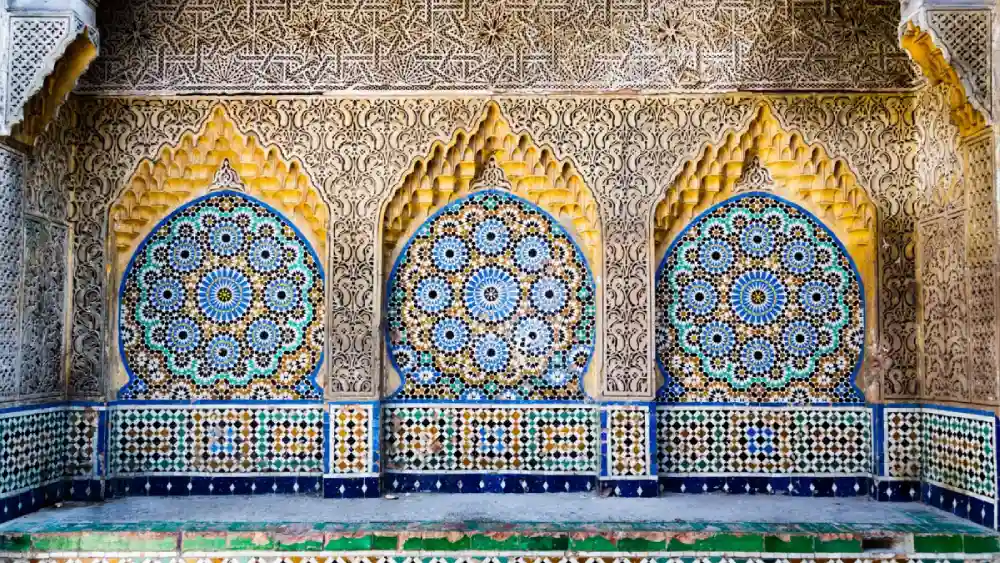
Tangier’s strongest attractions are divided between the historic city, the modern waterfront and the Atlantic coast west of town.
You do not need to visit every place below. For a one-day visit, prioritize the Medina, American Legation, Kasbah and Café Hafa. Add Cape Spartel and the Hercules Caves when you have a second day.
| Attraction | Best for | Time to allow |
|---|---|---|
| Tangier Medina and Petit Socco | Walking, cafés and everyday city life | 1–2 hours |
| Kasbah and Kasbah Museum | History, architecture and city views | 1–1.5 hours |
| American Legation | Morocco–United States history and art | 1–1.5 hours |
| Grand Socco and Mendoubia Gardens | Orientation and people-watching | 30–60 minutes |
| Café Hafa and Phoenician Tombs | Tea, sea views and a slower pause | 1–2 hours |
| Cape Spartel | Coastal scenery and sunset | 30–60 minutes |
| Hercules Caves | A short iconic coastal stop | 30–45 minutes |
| Perdicaris Park | Walking, shade and sea views | 1–2 hours |
| Ibn Battuta exhibition space | Travel history | 45–90 minutes |
| Tangier waterfront and modern city | Evening walks and a different side of Tangier | 1–2 hours |
1. Walk Through the Tangier Medina and Petit Socco
The Medina is the best place to begin understanding Tangier.
Enter from Grand Socco through Bab Fahs and walk toward the Petit Socco before continuing uphill to the Kasbah.
The Petit Socco was historically connected with Tangier’s cafés, merchants, writers and international population. Today, it remains a useful place to sit with coffee or mint tea and watch the movement through the Medina.
Tangier’s old city is smaller than the Medina of Fes, but it still contains:
- Steep lanes
- Stairs
- Small covered passages
- Residential areas
- Shops aimed at both residents and visitors
- Map directions that do not always match the street
Allow yourself to wander, but avoid following an unsolicited guide unless you have agreed on the service and price.
2. Explore the Kasbah
The Kasbah occupies the upper part of Tangier’s old city.
Its streets are quieter than the commercial lanes below, and several openings along the walls provide views toward the Strait and port.
The area is worth visiting even when you do not enter a museum. Walk slowly through the lanes, look at the doorways and allow time for the climb.
The Kasbah is also one of the most atmospheric areas to stay, although vehicle access and luggage handling require more planning.
3. Visit the Kasbah Museum of Mediterranean Cultures
The Kasbah Museum occupies the former Dar al-Makhzen palace.
Its collection helps explain Tangier’s relationship with northern Morocco, the Mediterranean and the civilizations that passed through the region.
I recommend it for travelers who want context rather than only attractive Medina photographs.
At the time of writing, the National Foundation of Museums lists:
- Opening from 10:00 a.m. to 6:00 p.m.
- Closure on Tuesdays
- A standard admission fee
- Reduced and combined-ticket options
Check the latest schedule and ticket information on the official Kasbah Museum page.
Allow approximately one hour, or longer when you enjoy archaeology, decorative arts and historic buildings.
4. Visit the Tangier American Legation
The Tangier American Legation is one of the city’s most meaningful historic sites.
The building reflects the long diplomatic relationship between Morocco and the United States and now functions as a museum, research center and cultural institution.
The rooms contain art, historical documents and exhibitions connected with Tangier’s international history.
The museum is inside the Medina, so it fits naturally between Grand Socco, Petit Socco and the Kasbah.
At the time of writing, the Legation lists:
- Weekday opening from 10:00 a.m. to 5:00 p.m.
- Weekend opening from 10:00 a.m. to 3:00 p.m.
Check the current schedule, events and visitor information on the official Tangier American Legation website.
Allow at least one hour. Travelers interested in Moroccan–American history may want longer.
5. Begin or End at Grand Socco
Grand Socco, officially Place du 9 Avril 1947, marks the transition between the modern city and the Medina.
It works as:
- A meeting point
- An orientation landmark
- A taxi drop-off area
- The starting point for a Medina walk
- A place to observe Tangier’s daily rhythm
The square itself does not require a long visit. Its value comes from the surrounding places, including Bab Fahs, Mendoubia Gardens and St. Andrew’s Church.
6. See Mendoubia Gardens and St. Andrew’s Church
Mendoubia Gardens provide a short green pause beside Grand Socco.
Nearby, St. Andrew’s is an active Anglican church built in a style that combines Christian use with Moroccan architectural elements.
The church remains a place of worship rather than a conventional tourist attraction. Visit respectfully, avoid interrupting services and check whether visitor access is available.
Its official church listing currently shows a Sunday service at 11:00 a.m., but ordinary visiting access may depend on the caretaker and church activities.
See the current information on the official St. Andrew’s Church listing.
7. Drink Tea at Café Hafa
Café Hafa is famous for its tiered terraces overlooking the Strait.
The attraction is the setting rather than an extensive menu. Order mint tea, find an available table and allow time to sit.
The café can become crowded, especially around sunset. Arrive earlier when you want a quieter experience or a better chance of finding a table with an open view.
What photographs do not show:
- Service can be simple and slow
- The terraces involve many steps
- Shade is limited in some areas
- Wind can make an evening feel cooler than expected
- A clear view of Spain depends on weather conditions
Café Hafa is worth visiting, but it should be treated as a tea stop rather than the best meal in Tangier.
8. Walk to the Phoenician Tombs
The rock-cut tombs near Café Hafa face the sea and provide one of Tangier’s most open coastal viewpoints.
The site has limited interpretation, and visitors may not understand what they are seeing without prior context.
Come for:
- The view
- Sunset
- A quiet pause
- The walk from the Kasbah or Café Hafa
The exposed setting can be windy, and there are few facilities. Avoid leaving valuables unattended while sitting or taking photographs.
9. Visit Cape Spartel
Cape Spartel stands west of Tangier along the Atlantic coastal route.
It is best combined with the Hercules Caves and, when time permits, Perdicaris Park.
Choose Cape Spartel for:
- Coastal views
- Photography
- A break from the city
- A sunset excursion
- A short stop on a western Tangier drive
The visit itself does not require several hours. Most travelers spend more time on the journey, viewpoints and combined coastal stops than at one specific monument.
A private taxi with agreed waiting time is normally the simplest option when you do not have a rental car.
10. Visit the Hercules Caves
The Hercules Caves are one of Tangier’s best-known coastal attractions.
The cave includes natural and human-shaped sections, including the famous sea opening often compared with the outline of Africa.
I still consider it worth visiting when you are already traveling to Cape Spartel, but expectations matter.
The visit is:
- Relatively short
- Often crowded during busy periods
- More commercial than some photographs suggest
- Best treated as one part of the coastal route
Do not build an entire day around the cave.
Check the current entrance arrangements before traveling because ticketing and access can change.
11. Walk in Perdicaris Park
Perdicaris Park, also known as Rmilat Forest, provides shaded walking routes and sea views outside the city center.
It is a useful alternative when you want nature without spending the day at a beach.
Choose it for:
- Walking
- Picnics
- Families
- A break from Medina streets
- A combined trip with Cape Spartel
Wear shoes suitable for paths rather than only city pavements. The experience depends on the weather, and exposed viewpoints can be windy.
12. Learn About Ibn Battuta
Ibn Battuta was born in Tangier and became one of history’s most widely traveled figures.
The Borj En-Na’am exhibition space in the Kasbah presents his journeys, the regions he visited and Tangier’s place at the beginning of his story.
This attraction is most useful for travelers who are genuinely interested in exploration, geography and medieval travel.
It is not a replacement for the Kasbah Museum. The two sites have different purposes:
- Kasbah Museum: Tangier and Mediterranean history
- Ibn Battuta exhibition: the journeys and legacy of Ibn Battuta
Check the current access details directly before visiting, because reliable official opening information is not always easy to find online.
13. See Tangier’s Modern Waterfront
The rebuilt waterfront and marina show a different side of Tangier from the Medina.
Walk here in the late afternoon or evening when you want:
- An easier, flatter stroll
- Cafés and modern restaurants
- Views toward the port
- Access to Malabata
- A contrast with the historic city
The waterfront is not the reason I would travel to Tangier, but it helps explain how quickly the city is changing.
Traffic, construction and large modern developments are also part of present-day Tangier. The city is not frozen in its international-zone past.
Which Tangier Attractions Should You Prioritize?
For one day, prioritize:
- Grand Socco
- Medina and Petit Socco
- American Legation
- Kasbah and Kasbah Museum
- Café Hafa
For two days, add:
- Cape Spartel
- Hercules Caves
- Perdicaris Park
- Modern waterfront
Travelers interested in museums should add the Ibn Battuta exhibition. Travelers who prefer atmosphere can spend that time walking, sitting in cafés and exploring the Kasbah instead.
You do not need to turn Tangier into a checklist. Its strongest quality is the movement between different worlds: Medina lanes, diplomatic history, port activity, Atlantic wind and the modern city growing below the old walls.
What and Where to Eat in Tangier
Tangier’s food reflects its position between the Mediterranean, Atlantic coast and northern Morocco.
Seafood is an obvious strength, but the city is not only about expensive fish restaurants. Some of the most useful food experiences are simple: bissara for breakfast, a slice of caliente, grilled sardines, kefta, fresh bread and mint tea in an old café.
I recommend combining:
- One café stop chosen for its atmosphere rather than its menu
- One simple local breakfast or lunch
- One seafood meal
- One traditional or contemporary Moroccan dinner.
Tangier Foods Worth Trying
Bissara
Bissara is a thick soup made from dried fava beans or split peas and commonly served with olive oil, cumin and bread.
It is filling, inexpensive and normally eaten for breakfast or lunch. Choose a busy café where the soup is being served continuously and arrives properly hot.
Caliente
Caliente reflects northern Morocco’s Spanish influence.
It is a soft baked snack made mainly with chickpea flour, eggs, water and seasoning. It is cut from a large tray and commonly eaten inside bread or on its own.
The texture is closer to a savory custard than a pizza, despite the comparisons sometimes used online.
Fresh Fish and Seafood
Tangier receives seafood from both the Atlantic and Mediterranean coasts.
Depending on the restaurant and season, menus may include:
- Sardines
- Sole
- Sea bass
- Calamari
- Shrimp
- Anchovies
- Mixed grilled fish
- Seafood tagines
Ask whether the price is per portion or by weight before ordering.
A display of fresh fish does not automatically mean the entire meal will be inexpensive. Confirm the chosen fish, preparation, accompaniments and total pricing first.
Northern Moroccan Pastilla
Pastilla is often associated with Fes, but northern Moroccan cooking also has its own versions and family traditions.
Seafood pastilla can be particularly suitable in Tangier. The filling may combine fish, shrimp, vermicelli and spices inside crisp pastry.
It is rich and normally better shared as a starter than ordered after several other heavy dishes.
Kefta and Grilled Meat
Kefta is seasoned minced meat served grilled or cooked in a tomato-based tagine.
A small grill or neighborhood restaurant with high turnover can provide a better experience than a large menu aimed entirely at visitors.
Look for meat cooked after ordering and served immediately.
Tangier Street Food and Food Safety
No street-food seller can be guaranteed risk-free.
I look for stalls where:
- Food is cooked after the customer orders
- Hot dishes are served steaming
- Ingredients move quickly
- Raw and cooked food are separated
- Utensils and surfaces appear organized
- Bottled drinks remain sealed
- Prices are displayed or agreed before ordering
Be more cautious with:
- Undercooked meat or seafood
- Food left uncovered at room temperature
- Lukewarm dishes that should be hot
- Raw salads when the washing water is uncertain
- Pre-cut fruit exposed for long periods
- Unsealed water
- Ice from an unclear source
- Unpasteurized dairy products
Wash or sanitize your hands before eating, especially after handling cash.
Travelers who are pregnant, immunocompromised or managing serious food allergies should be more conservative and choose places where ingredients and preparation can be explained clearly.
Tangier Café Culture
Cafés are central to Tangier’s identity.
A café visit does not need to involve a complicated brunch or specialty-coffee menu. Sometimes the purpose is simply to sit, drink tea or coffee and watch the city.
Café Hafa
Café Hafa is primarily about the terraces and view across the Strait.
Choose it for:
- Mint tea
- Late-afternoon atmosphere
- Sea views
- A pause after visiting the Kasbah or Phoenician Tombs
Do not plan it as your main meal. Service is simple, the terraces involve many steps and the best tables are not guaranteed.
Café Tingis
Café Tingis sits on the Petit Socco and is useful for observing the Medina.
It works best as a coffee or tea stop during a walking route between Grand Socco and the Kasbah.
The value is the square and the movement around you rather than an elaborate menu.
Cinema Rif Café
The café at the Cinémathèque de Tanger faces Grand Socco and attracts a mix of residents, visitors, students and people connected with the city’s cultural scene.
Choose it for:
- Coffee near the Medina entrance
- A break before or after a film
- A more contemporary Tangier atmosphere
- A short laptop session when seating and Wi-Fi permit
It is a cultural café, not a dedicated coworking space. Do not assume a quiet table or dependable video-call environment during busy periods.
For the history and preparation of Moroccan tea, see my authentic Moroccan mint tea guide.
Restaurants Worth Comparing in Tangier
Restaurant status, menus and opening hours can change. Check directly before making a special journey.
| Restaurant | Best for | What to expect |
|---|---|---|
| Saveur de Poisson | A distinctive seafood set meal | Informal, abundant and focused entirely on fish |
| El Morocco Club | A polished Kasbah dinner | Moroccan and Mediterranean cooking with a bar and evening atmosphere |
| Salon Bleu | Lunch or tea with Kasbah views | Traditional dishes and a rooftop-style setting |
| Nord-Pinus | Moroccan food in a boutique-hotel setting | Tagines, grilled fish and weather-dependent terrace dining |
| Aquarium Blue | A more formal seafood dinner | Modern restaurant focused on fish and shellfish |
| Anber | Upscale Moroccan dining in Malabata | Formal presentation outside the historic center |
| Villa Josephine | A celebration or slower hotel meal | Historic villa setting, gardens and a higher price position |
Saveur de Poisson
Saveur de Poisson is one of Tangier’s most unusual dining experiences.
Rather than choosing from a long menu, guests are normally served a sequence centered on the available fish and seafood.
Choose it when:
- Everyone in the group eats seafood
- You enjoy a fixed or set-style meal
- You prefer food to polished decoration
- You are comfortable with a busy, informal dining room
It is not suitable for someone who dislikes fish, wants several menu choices or needs highly controlled allergy preparation.
Current opening arrangements can be difficult to confirm online. Ask your accommodation to telephone before making the journey.
El Morocco Club
El Morocco Club is near the Kasbah and combines a café terrace, restaurant and evening piano-bar atmosphere.
Choose it for:
- A polished dinner
- Couples
- Moroccan and Mediterranean dishes
- Cocktails or music after the meal
- An evening close to Kasbah accommodation
Reserve ahead for dinner and check which part of the property you are booking. The café, restaurant and bar provide different experiences.
Use its current official social account to confirm reservations and opening days:
Salon Bleu
Salon Bleu is known for its location near the Kasbah Museum and views over the Medina and bay.
Choose it for:
- Lunch after the Kasbah Museum
- Tea or a lighter meal
- Traditional Moroccan dishes
- Views and atmosphere
- Travelers staying inside the Kasbah
The stairs and layout may be difficult for visitors with limited mobility. Ask about the most accessible seating before reserving.
Check current opening information through its active account:
Nord-Pinus
Nord-Pinus serves Moroccan cooking inside a small Kasbah hotel.
Its official restaurant information emphasizes wood-fired tagines, grilled fish, vegetables, preserved lemon and Moroccan soups. Depending on the weather, meals may be served inside or on the terrace.
Choose it for:
- A quieter Kasbah meal
- Boutique-hotel atmosphere
- Traditional Moroccan cooking
- A terrace when weather permits
- Travelers who prefer a smaller dining room
Check current details on the official Nord-Pinus restaurant website.
Aquarium Blue
Aquarium Blue is a modern seafood restaurant that says it selects fish from Tangier’s port market.
Choose it for:
- A more formal seafood dinner
- A group wanting an extensive fish selection
- Special occasions
- Travelers staying around Malabata or the modern city
- A polished setting rather than a simple grill
Ask to see the current menu and confirm whether selected fish is priced by portion or weight.
See the latest information on the official Aquarium Blue website.
Anber
Anber is an upscale Moroccan restaurant in the Malabata area.
Choose it for:
- A formal Moroccan dinner
- Contemporary presentation
- Travelers staying near the waterfront
- A special occasion outside the Medina
- Groups wanting a modern dining room
This is a different experience from eating in a traditional Medina café or simple neighborhood restaurant.
Check current menus and reservations on the official Anber website.
Villa Josephine
Villa Josephine occupies a historic property in the hills above Tangier and includes a restaurant, bar, gardens and pool.
Choose it for:
- A celebration
- A romantic meal
- A slower lunch
- Historic-villa atmosphere
- Travelers comfortable taking a taxi outside the center
Confirm that outside guests are accepted for your chosen meal and whether a reservation, dress expectation or minimum spend applies.
Check current information on the official Villa Josephine website.
Which Tangier Restaurant Should You Choose?
Choose Saveur de Poisson when seafood itself is the purpose of the meal.
Choose El Morocco Club for a stylish Kasbah evening with a more polished atmosphere.
Choose Salon Bleu for a meal or tea near the Kasbah Museum with elevated views.
Choose Nord-Pinus for Moroccan cooking in an intimate boutique-hotel setting.
Choose Aquarium Blue for a modern and more formal seafood dinner.
Choose Anber for upscale Moroccan dining near Malabata.
Choose Villa Josephine for a celebration where the historic setting matters as much as the food.
I would not eat only in famous restaurants. Add a simple bissara breakfast, a slice of caliente and one neighborhood lunch to understand Tangier more fully.
Practical Tangier Restaurant Advice
Before making a special journey to a restaurant, confirm:
- Current opening days
- Lunch or dinner service
- Whether a reservation is needed
- Whether fish is priced by portion or weight
- Alcohol availability
- Accessibility and stairs
- Payment methods
- Service charges
- Allergy requirements
Carry some Moroccan-dirham cash. Modern restaurants commonly accept cards, but small cafés and neighborhood food shops may not.
Where to Stay in Tangier
The best area depends on whether you prioritize atmosphere, easy transport or sea views.
| Area | Best for | Main drawback |
|---|---|---|
| Kasbah | Historic atmosphere, views and boutique riads | Steep lanes, stairs and limited vehicle access |
| Medina | First-time visitors who want to walk to the main sights | Noise, navigation and luggage handling |
| Grand Socco and city center | Easy access to the Medina, cafés and taxis | Busier streets and less traditional atmosphere |
| Malabata and waterfront | Railway access, modern hotels and sea views | Less historic character |
| Residential hills | Quiet hotels, villas and special occasions | Taxis are needed for most sightseeing |
Kasbah or Medina
Choose the Kasbah or Medina when atmosphere is the priority.
You can walk to Grand Socco, the American Legation, Petit Socco, the Kasbah Museum and Café Hafa. The trade-off is access. A taxi may not reach the door, and carrying luggage uphill can be tiring.
Ask the property for:
- The nearest vehicle-accessible gate
- Walking directions
- Luggage assistance
- The number of stairs
- Whether rooms have heating or air-conditioning
- How late reception remains staffed
City Center or Grand Socco
Choose the city center when you want to remain close to the Medina without sleeping deep inside it.
This area works well for short stays, ferry passengers and travelers using taxis frequently. It also provides easier access to cafés, shops and Boulevard Pasteur.
Malabata and the Waterfront
Malabata is practical for travelers arriving by train or preferring modern hotels.
Choose it for:
- Easier vehicle access
- Waterfront walks
- Modern hotel facilities
- Railway-station convenience
- Families carrying substantial luggage
You will normally need a taxi to reach the Kasbah and upper Medina.
My Recommendation
For a first two-night stay, choose the Kasbah or the edge of the Medina when you are comfortable with stairs and light luggage.
Choose the city center or Malabata when transport convenience matters more than historic atmosphere.
Compare Places to Stay in Tangier
Affiliate disclosure: The accommodation search below contains affiliate links. Morocco Unfolded may earn a commission if you make a reservation, at no additional cost to you.
Compare current availability after deciding whether the Kasbah, Medina, city center or Malabata best suits your transport plans and preferred atmosphere.
Is Tangier Safe for Visitors?
Tangier is generally manageable for visitors using ordinary urban precautions, but it should not be described as risk-free.
Petty theft, persistent offers and unwanted guidance can occur around crowded tourist areas, transport points and parts of the Medina.
Practical precautions include:
- Keep phones and wallets secure in crowded areas
- Avoid displaying large amounts of cash
- Agree on taxi fares when the meter is not used
- Use busy, lit routes after dark
- Do not follow an unsolicited guide
- Confirm prices before accepting a service
- Keep digital copies of important documents
- Use the official port, airport and railway taxi areas
The port and Medina entrances can attract people offering tours, directions or transportation. A firm “La, shukran”—no, thank you—is normally enough.
For broader advice, see my Morocco Travel Safety Guide 2026.
Solo Female Travel in Tangier
Women travel independently in Tangier, but unwanted comments or attention can occur.
I recommend:
- Arriving at unfamiliar accommodation during daylight when possible
- Using a taxi after a late arrival
- Saving the accommodation location offline
- Avoiding empty Medina lanes late at night
- Sitting near other passengers on public transport
- Sharing important journey details with someone you trust
- Leaving any situation that feels uncomfortable
Modest clothing can reduce attention in some settings, but harassment is never the traveler’s fault.
My Solo Female Travel Morocco Guide 2026 covers clothing, transport, accommodation and common concerns in more detail.
Best Time to Visit Tangier
Spring and early autumn normally provide the best balance for walking and coastal sightseeing.
Spring
March through May usually brings comfortable daytime conditions, greener landscapes and cooler evenings.
Bring a light waterproof layer because northern Morocco can receive rain.
Summer
Tangier is generally milder than inland cities such as Marrakech and Fes, but summer can still be warm, humid and busy.
Coastal wind can make the temperature feel cooler, especially in the evening.
Autumn
September and October are strong months for city walks, coastal excursions and outdoor meals.
The sea may remain pleasant while the most intense summer crowds begin to decline.
Winter
Winter is suitable for museums, cafés and a quieter visit, but expect wind, rain and cooler nights.
Historic properties can feel cold when heating is limited. Confirm room heating when visiting between late autumn and early spring.
For nationwide seasonal planning, see my Best Time to Visit Morocco guide.
Best Day Trips From Tangier
Do not use Tangier as a base for several consecutive long day trips. Choose one according to your route.
Asilah
Choose Asilah for a smaller Atlantic town, whitewashed lanes and a slower coastal atmosphere.
It works well as a day trip or the next overnight stop when traveling south.
Tetouan
Choose Tetouan for Andalusian heritage, crafts and a Medina with a different character from Tangier.
It deserves several hours rather than a quick roadside photograph.
Chefchaouen
Chefchaouen is possible as a long day trip, but I prefer an overnight stay.
The journey takes enough time that a same-day visit often places you in the blue Medina during its busiest hours.
See my Chefchaouen Travel Guide before deciding whether it belongs in your route.
Common Tangier Planning Mistakes
Confusing Tangier Ville and Tangier Med
Tangier Ville is beside the central city. Tangier Med is approximately 45 kilometers away.
Read the port name carefully before booking accommodation or onward transportation.
Treating the Ferry Time as the Complete Journey
The advertised crossing does not include check-in, passport control, boarding or possible delays.
Build a buffer before any train, flight or return ferry.
Adding Cape Spartel to a Rushed Ferry Day
The coast deserves a separate half day.
A short ferry visit is better spent in the Medina, Kasbah and American Legation.
Booking a Kasbah Riad Without Checking Access
Historic accommodation may involve steep lanes and stairs.
Ask exactly where the taxi stops and whether luggage assistance is provided.
Expecting Tangier to Look Like Marrakech
Tangier is a working port city with traffic, construction, modern development and uneven restoration.
Its appeal comes from its history, cafés, sea views and cultural mixture rather than one spectacular monument.
FAQs About Tangier
Is Tangier worth visiting?
Yes. Tangier is worth visiting for its Medina, Kasbah, American Legation, café culture, sea views and connections with Spain.
It is particularly useful as the beginning or end of a northern Morocco itinerary.
How many days do you need in Tangier?
Two full days are ideal for most first-time visitors.
Use one day for the Medina and museums and a second for Cape Spartel, the Hercules Caves and the modern city.
Can you visit Tangier from Spain in one day?
Yes, but keep the itinerary simple.
Allow time for ferry check-in and immigration, and return to the port well before the required boarding deadline.
Which Tangier port is closest to the Medina?
Tangier Ville is the city port beside central Tangier.
Tangier Med is a separate major port east of the city and requires onward road transportation.
Do you need a car in Tangier?
No. The historic center is walkable, and taxis cover the railway station, airport and coastal attractions.
Rent a car only when Tangier begins a longer northern Morocco road trip.
Is Tangier good for families?
Yes, especially for families interested in ferries, trains, history and coastal scenery.
Choose accommodation with easy vehicle access when traveling with a stroller or several suitcases.
Is Tangier suitable for solo women?
Yes, with sensible planning.
Unwanted attention can occur, so choose well-reviewed accommodation, avoid isolated lanes late at night and arrange transportation after a late arrival.
What should you wear in Tangier?
There is no special tourist dress code.
Comfortable walking shoes, layers and a wind-resistant jacket are particularly useful. Clothing that covers the shoulders and knees may feel more comfortable in traditional areas.
Final Verdict: Who Should Visit Tangier?
Tangier suits travelers who enjoy cities with several identities rather than one polished tourism image.
Come for the walk from Grand Socco to the Kasbah, the American Legation, Café Hafa, the Strait views and the contrast between the Medina and modern waterfront.
One day gives you an introduction. Two days allow Tangier to make sense.
Travelers continuing through northern Morocco can combine Tangier with Tetouan or Chefchaouen.
Those traveling south can use Al Boraq toward Rabat and Casablanca before continuing to Marrakech; if you stop in the capital, my Rabat to Marrakech train guide explains the onward journey.
The most important decision is not how many attractions you can collect. It is whether you give Tangier enough time to feel like a city rather than only a border crossing.