Visiting Morocco During Ramadan

Visiting Morocco During Ramadan

Visiting Morocco During Ramadan

The Ultimate 2026 Survival & Cultural Guide by Youness
logo

Visiting Morocco during Ramadan is not just a trip; it’s stepping into a completely different rhythm of life. By day, the streets are calm, contemplative, even sleepy. But after sunset, the entire country seems to exhale at once: mosques fill, families gather around lavish tables, and city squares glow and hum until the early hours.

If you’re thinking about going to Morocco during Ramadan in 2026, you’re in for a deeply immersive, emotionally resonant experience, as long as you understand how life changes during this month and plan accordingly.

Ramadan Dates for Morocco

Because Ramadan follows the Islamic lunar calendar, it shifts about 10–11 days earlier each year:  

– Ramadan 2025 in Morocco: February 28 – March 29, 2025  
Ramadan 2026 in Morocco: February 19March 20 or 21st, 2026  

So can you travel to Morocco during Ramadan? Absolutely. For culturally curious travelers, visiting Morocco during Ramadan can be far more transformative than coming in peak tourist season.  

Visiting Morocco during Ramadan? What Is Ramadan?

going to morocco during ramadan

Ramadan is the 9th month of the Islamic lunar calendar, believed to be the month when the Quran was first revealed to the Prophet Muhammad. It’s the most sacred time of year for Muslims and shapes almost every aspect of daily life in Morocco while it lasts. 

The Five Pillars & Where Fasting Fits In

Islam is built on Five Pillars:  

  1. Shahada’  – the declaration of faith  
  2. Salat’  – the five daily prayers  
  3. Zakat’  – charitable giving  
  4. Sawm’ – fasting during Ramadan  
  5. Hajj’ – pilgrimage to Mecca (for those able)  

‘Sawm’ (fasting) isn’t just about not eating or drinking. It’s designed to:  

– Build self-discipline  

– Cultivate empathy for the poor and hungry  

– Encourage spiritual cleansing and reflection  

Who Fasts in Morocco?  

From dawn (Fajr) to sunset (Maghrib), practicing Muslims refrain from:  

– Eating and drinking (including water)  

– Smoking  

– Sexual activity  

Those exempt from fasting include:  

– Young children (pre-puberty)  

– The elderly  

– Pregnant or breastfeeding women  

– Travelers  

– People with medical conditions  

However, many Moroccans who are technically exempt still fast out of tradition, pride, and community solidarity, which explains why public eating can feel so sensitive.  

The “Ramadan Law” and Cultural Etiquette

If you’re visiting Morocco during Ramadan, understanding the legal landscape is crucial.

Article 222 of the Moroccan Penal Code: The “Ramadan Law”

Article 222 makes it a crime for Muslims to break the fast in public without legitimate reason. This means:

  • A Muslim caught eating, drinking, or smoking in public during fasting hours can face fines or even jail time.
  • The law is aimed at Muslims, not at non-Muslim visitors.

What About Travelers? Are You Required to Fast?

If you’re a non-Muslim tourist:

  • You are not legally required to fast.
  • You won’t be arrested for drinking water in your hotel or eating in a tourist-friendly café.

However, etiquette matters:

  • Avoid eating, drinking, or smoking in the street during the day.
  • Opt for private spaces: your riad, hotel, or discreet restaurants that cater to tourists.
  • If you must drink water in public (e.g., on a hike), do it quietly and respectfully, away from people.

Alcohol Restrictions During Ramadan

Morocco has a complex relationship with alcohol, and it tightens considerably in Ramadan:

  • Alcohol sales to Moroccans are prohibited and enforced strictly this month.
  • Supermarkets like Carrefour, Marjane, and Acima stop selling alcohol around 10 days before Ramadan begins.
  • High-end hotels, riads, and some tourist-oriented bars may still serve alcohol to foreign guests, but expect:
    • Reduced availability
    • Higher prices
    • A more discreet atmosphere

Plan accordingly if a sunset beer or glass of wine is usually part of your travel ritual.

Navigating Daily Life: The “Night Owl” Rhythm

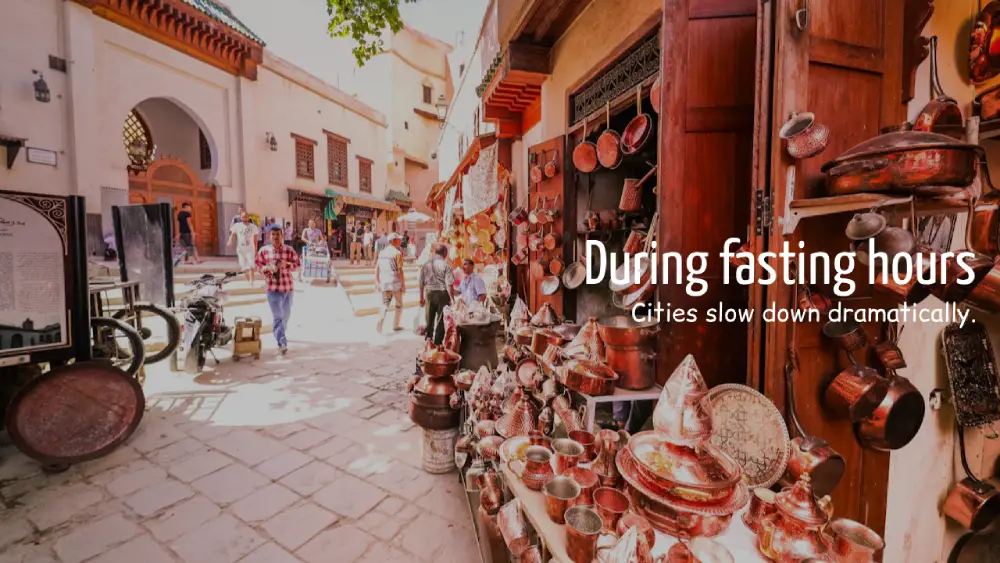
Ramadan in Fez medina

Going to Morocco during Ramadan means adjusting to a flipped daily schedule.

Daytime Pace (10 AM – 5 PM)

During fasting hours:

  • Cities slow down dramatically.
  • Banks, government offices, and monuments often have reduced hours (e.g., 10 or 11 AM to 3 or 4 PM).
  • Locals may be:
    • More tired
    • Less patient (especially late afternoon)
    • Less available for meetings or tours

It’s a good time for:

  • Quiet sightseeing
  • Museums (when open)
  • Hammams that cater to tourists
  • Relaxing in your riad’s courtyard or rooftop

The 7 PM – 9 PM “Ghost Town”
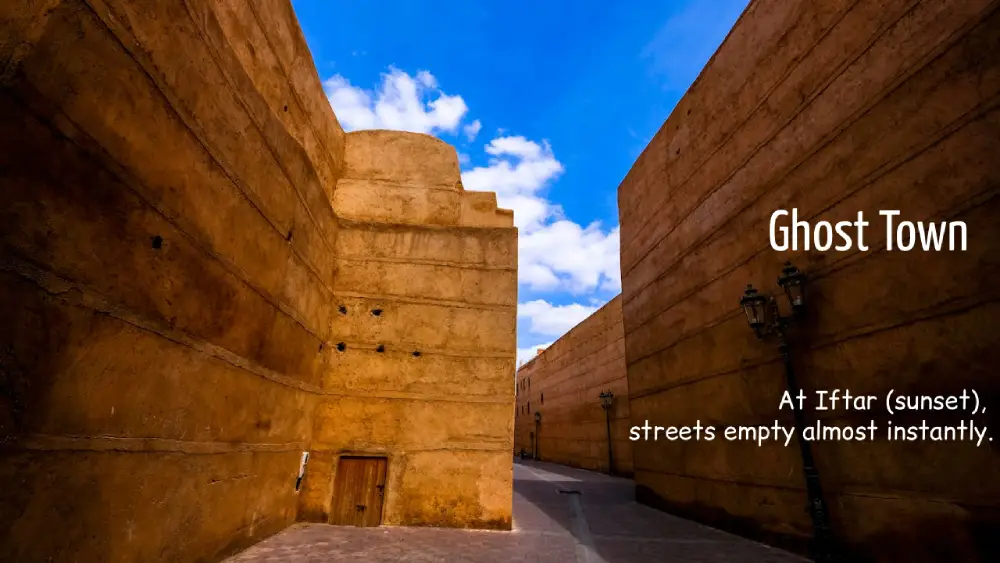
marrakech At Iftar (sunset)

Just before sunset, the atmosphere becomes electric and urgent. Then:

  • At Iftar (sunset)streets empty almost instantly.
  • Shops close, taxis vanish, and it can feel like a sudden curfew.
  • Everyone goes home to break the fast with family.

Tip: Avoid traveling between 30 minutes before sunset and 1 hour after—you’ll struggle to find food, taxis, or open shops.

The Night Shift (After Iftar)

Then the magic begins:
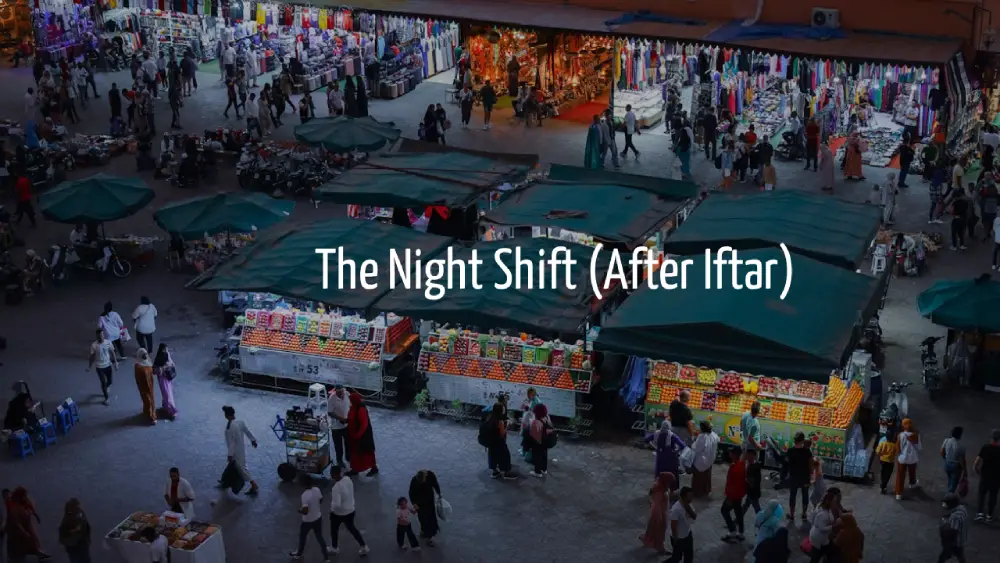
The Night Shift (After Iftar)

  • Cafés, markets, and street vendors come back to life.
  • Families stroll, children play outside late, and socializing peaks between 9 PM and 2 AM.
  • In big cities like Marrakech and Casablanca, the nightlife (non-alcoholic) is at its brightest.

Plan your day like a local:

  • Sightsee lightly by day,
  • Immerse yourself in the street life by night.

The Ramadan Clock Change

Crucial detail for visiting Morocco during Ramadan:

  • Morocco often switches from GMT+1 back to GMT just before Ramadan,
  • Then returns to GMT+1 after Eid al-Fitr.

This affects:

  • Flight times
  • Train schedules
  • Tour pick-ups
  • Prayer and Iftar times

Always confirm time zones with your hotel or tour company on arrival.


The Culinary Journey: From Dates to Harira

One of the biggest perks of going to Morocco during Ramadan is access to seasonal foods you won’t easily find at other times.

The Ftour (Iftar) Sequence
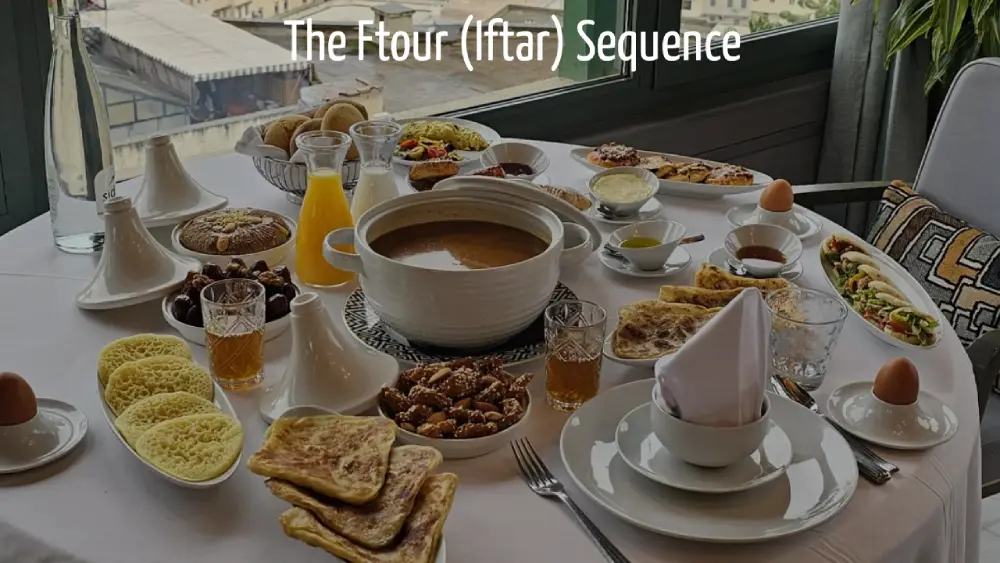
The Ftour (Iftar) Sequence

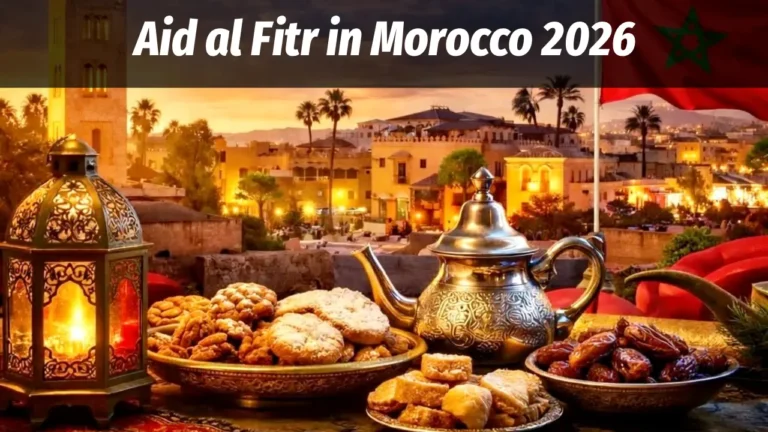
Breaking the fast is called Ftour in Morocco. A classic Ftour spread includes:

  1. Dates and milk

    • Following Prophetic tradition
    • Rapid sugar hit after a long day of fasting
  2. Harira

    • A rich tomato, lentil, and chickpea soup, often with lamb or beef
    • Hearty, comforting, deeply Moroccan
  3. Chebakia

    • Flower-shaped sesame cookies, deep-fried and soaked in honey
    • Sticky, fragrant with anise, saffron, and cinnamon
  4. Baghrir

    • The famous “thousand-hole pancakes”
    • Spongy, soaked in butter and honey

Suhoor: The Pre-Dawn Meal

Around 3–4 AM, families eat Suhoor, the last meal before the fast resumes:

  • Usually simple but sustaining—bread, eggs, olives, cheese, tea.
  • You may hear noise and see lights even at odd hours as people prepare for the day’s fast.

Must-Try Ramadan-Only Dishes

When visiting Morocco during Ramadan, look for:

  • Sellou (Sfouf) – a dense, nutty energy mix of roasted flour, almonds, sesame seeds, anise, and honey.
  • Msemen – buttery, folded square pancakes, often eaten with honey or cheese.

Ask your riad to arrange a Ramadan Ftour experience or book a home-hosted Iftar to try the real, home-style versions.

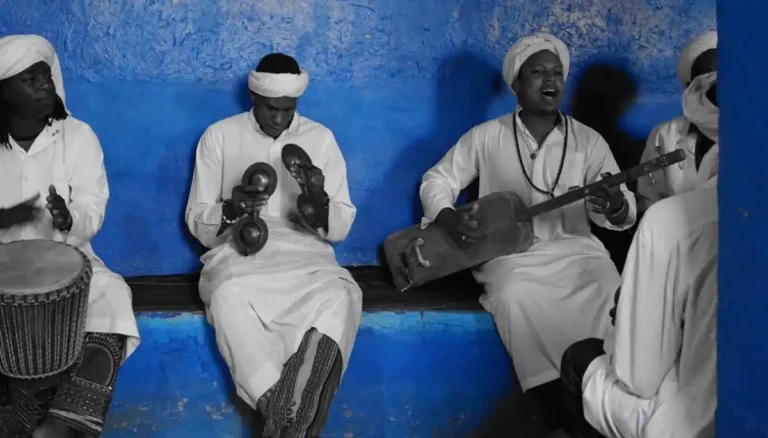
Sensory Experiences You Can’t Find Elsewhere

Ramadan in Morocco is not just visual and culinary—it’s deeply auditory and emotional.

The Cannon (Medfaa) and Siren (Zowaka)

To mark the end of the daily fast:

  • cannon blast (Medfaa) may sound in some cities.
  • In others, a siren (Zowaka) rings out at sunset.

These are synchronized with the Maghrib call to prayer and signal:

You can eat now.

You’ll also hear a pre-dawn siren before Fajr, letting people know Suhoor time is almost over.

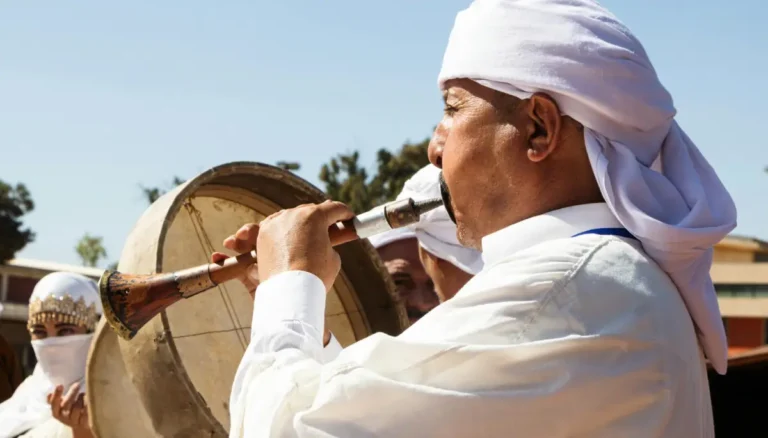
The Nafar (Town Crier)

In some traditional neighborhoods:

  • A man dressed in a jelaba (hooded robe) and often a red fez walks the streets with a long horn or flute.
  • He’s called the Nafar, and he passes through around 3–4 AM to wake people for Suhoor.

It’s one of the most evocative, old-world Ramadan traditions you can witness.

The Night of Power (Laylat al-Qadr)

Considered the spiritual peak of Ramadan, Laylat al-Qadr is believed to fall on the 27th night:

  • Described in the Quran as “better than a thousand months” of worship.
  • Mosques overflow, and prayers continue late into the night.
  • The spiritual intensity is palpable, particularly in cities like Fez or Marrakech.

The month of Ramadan contains the most blessed of nights, also known as laylatul qadr, about which Allah (SWT) asks us:

“What will make you realise what the Night of Power is like?

The Night of Power is better than a thousand months.

Angels and the Spirit descend upon it with their Lord´s permission with every command;

There is peace that night until the coming of dawn.” [Quran: 97:1-5]


Destination Highlights: Where To Be and When

When visiting Morocco during Ramadan, your experience will vary by city.

Marrakech

  • Jemaa el-Fnaa transforms after dark into a massive open-air theater: food stalls, storytellers, musicians.
  • During the day, it’s quieter than usual—but at night, the square is electric.
  • Rooftop terraces are ideal for watching Iftar unfold from above.

Fez (Fès)

  • Often described as Morocco’s spiritual heart.
  • The call to prayer from Al-Qarawiyyin, one of the world’s oldest universities, echoes through 9,000 narrow medina alleys.
  • Laylat al-Qadr here is especially intense and atmospheric.

Chefchaouen

  • The famous blue-washed town nestled in the Rif Mountains.
  • Quieter and more contemplative than Marrakech or Fez.
  • Influenced by Andalusian traditions, evenings are gentle, with families strolling through cobalt lanes after Ftour.

Specialized Advice for Different Travelers

Solo Female Travelers

Going to Morocco during Ramadan as a solo woman can actually feel safer and calmer:

  • Men are focusing on prayer, family, and self-restraint.
  • Street harassment is often less intense, though not entirely absent.

Still, keep to best practices:

  • Dress modestly (cover shoulders, cleavage, and knees).
  • Avoid very dark, deserted alleys late at night.
  • Book reputable riads and guides.

Foodies

If you live to eat, visiting Morocco during Ramadan is a dream:

  • Access to special Ramadan-only dishes.
  • Late-night street food scenes.
  • Opportunity to attend home-cooked Iftars and cooking classes with a Ramadan twist.

Just remember: daytime options are limited, so plan main meals around sunset and night.

Budget Travelers

Ramadan can be a value-friendly season:

  • Slightly lower hotel and riad rates, especially in big cities.
  • Fewer large tour groups.
  • Easier bargaining in some markets (outside of prime shopping times).

You’ll trade some daytime convenience for authenticity and savings.


Pros and Cons of Visiting Morocco During Ramadan

ProsCons
Witness unique ancient traditions (Nafar, Cannon, Siren)Many local restaurants closed during the day
Experience extraordinary hospitality (Iftar invitations)Public eating/drinking is discouraged
Vibrant, festive nighttime atmosphereReduced hours for monuments, banks, and some shops
Deeply spiritual, contemplative travel experienceHeat and fasting can make some locals more irritable
Access to special Ramadan-only foods and ritualsAlcohol harder to find; nightlife is mostly “dry”
Fewer tourists, more authentic local interactionsLogistics trickier around Iftar and clock changes


Conclusion: Is It Worth Visiting Morocco During Ramadan?

For travelers who value culture, authenticity, and human connection, visiting Morocco during Ramadan is absolutely worth it.

You’ll need:

  • More flexible planning
  • Extra cultural sensitivity
  • Willingness to adapt your schedule

But in return, you’ll experience:

  • A society moving in spiritual unison
  • Nighttime streets filled with warmth, generosity, and shared meals
  • Traditions that most tourists never see

If you truly want to understand Moroccan life from the inside, this is the month to come.

Action Step: When planning your trip, book at least one “home-hosted Iftar”—through your riad, a trusted guide, or a reputable cultural tour. It’s the single most powerful way to experience Ramadan hospitality from the inside.


FAQ: Visiting Morocco During Ramadan (2025–2026)

Q: Can I drink water in public during Ramadan?
A: Technically, yes if you’re not Muslim, but it’s considered impolite. Try to drink in private spaces (your hotel, a tourist café) and avoid drinking right in front of people who are fasting.

Q: Are museums and monuments open?
A: Usually yes, but with reduced hours. Expect something like 11 AM – 5 PM, and always check locally—the exact schedule can change year to year.

Q: Do I have to fast if I’m visiting Morocco during Ramadan?
A: No. Non-Muslim visitors are not expected to fast. Just be respectful about how and where you eat or drink during the day.

Q: What happens at the end of Ramadan?
A: The month concludes with Eid al-Fitr, a three-day celebration centered on:

  • Family gatherings
  • Feasts and sweets
  • Charity and gifts for children

Traveling during Eid means some shops and services may close, but you’ll witness one of the happiest, most joyful times of the year in Morocco.

If you’re going to Morocco during Ramadan in 2025 or 2026, lean into the rhythm, adjust your expectations—and you’ll come home with some of the richest travel memories of your life.


Planning a trip to Morocco? I’m here to help you make it smooth, safe, and unforgettable.
Get in touch with me, Youness, and I’ll guide you personally, itineraries, and everything you need for a perfect Moroccan adventure.

WhatsApp Youness