Solo Female Travel Morocco Guide 2026: Honest Advice From a Local Guide
If we haven’t met yet, I’m Youness – licensed tour guide, owner of Morkosh Tours, and someone who has crossed the Sahara more times than I can remember. This Solo Female Travel Morocco Guide 2026 is everything I’d tell my own sister or best friend if she were coming to travel Morocco alone.
You’ll get the real picture: where it feels safe, where it feels intense, how to deal with “sweet tongues” (catcalling), how to move around confidently, and a realistic 7–10 day Morocco solo travel itinerary that doesn’t exhaust you.
If you’re still comparing routes, you can also look at my Morocco Itineraries Hub and then adapt those loops for solo travel.
Table of Contents
Table of Contents
Solo Female Travel in Morocco at a Glance 2026
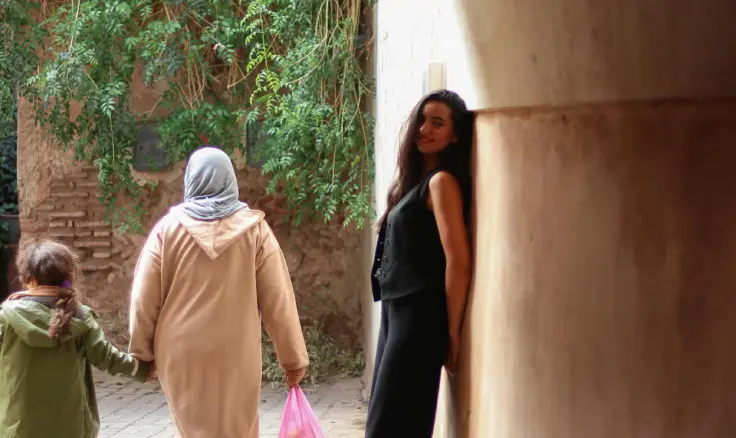
Let’s start with the question in every search bar: Is Morocco safe for solo female travellers?
Short answer: Yes – generally safe, especially for violent crime. The main challenge is discomfort, not danger: verbal harassment, touts, and sensory overload in the big medinas.
For a deeper breakdown of risks, scams and what actually goes wrong, read my full Morocco Travel Safety Guide alongside this solo female guide.
Key 2026 context:
- Morocco is expecting around 17.5 million tourists by 2026, under the official 2023–2026 Tourism Roadmap.
- The country maintains an “investment‑grade” reputation for political stability and security in North Africa.
- Tourist Police (Brigade Touristique) are very present in places like Marrakech, Fes, and major UNESCO sites.
Best “mental hacks” for safety:
- Understand hshuma: the Moroccan concept of shame / social embarrassment. When you call something “hshuma,” you’re saying “this is not respectable,” and most people back off fast.
- Dress with modest intention: cover shoulders and knees, avoid extra‑tight clothes. Not because you “must”, but because it reduces comments and shows respect.
- Use 1st‑class trains (especially Al Boraq high‑speed rail), licensed guides, and reputable riads – these are your “safe bubbles” inside the country.
Quick safest-feeling cities for solo women (from my guests):
- Most relaxed: Essaouira, Chefchaouen, Rabat
- Most intense: Marrakech, Fes, some areas of Tangier.
Safety vs. Comfort: What Solo Women Really Experience
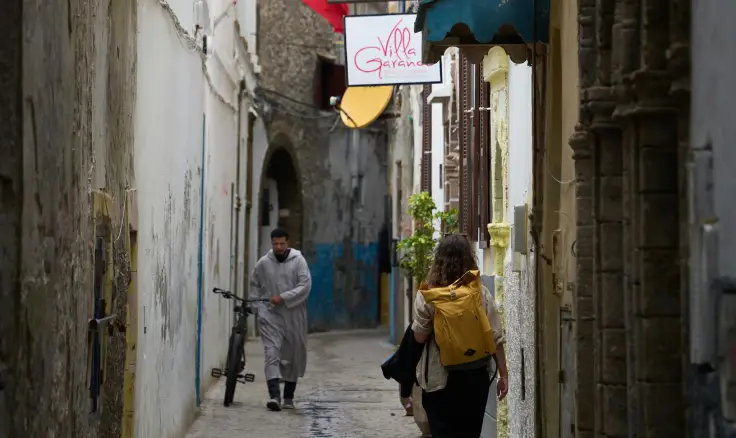
Let’s be very clear: there’s a big difference between danger and discomfort.
The Emotional Reality: “Sweet Tongues” vs Real Risk
Most solo women who travel with me say:
- They rarely feel physically threatened.
- They often feel emotionally drained by comments.
Common phrases you might hear:
- “Hello beautiful, where are you from?”
- “Hey gazelle” (a typical catcall)
- “I love you” / “Do you want a Moroccan husband?”
- Jokes about being a “passport to Europe”
You can think of this as a background noise of unsolicited attention. It feels worse in:
- Fes – very dense medina, many “fake guides” and hustlers.
- Marrakech – especially around Jemaa el‑Fna and the souqs.
But in places like Essaouira and Chefchaouen, many women tell me, “It finally feels like I can breathe again.”
Street Harassment Strategy: The “Art of Ignoring”
In Morocco, attention grows when you feed it. So:
- Ignore first. No smile, no answer, no eye contact.
- Walk with purpose. Even if you’re lost, act like you’re not.
- If someone is helpful but pushy, a firm “La, shukran” (no, thank you) plus moving away is enough 90% of the time.
Many of my solo guests use:
- Headphones (even without music)
- Sunglasses
- A neutral or “resting bitch face”
These are not about being rude – they are a polite shield.
The “Fake Husband” Tactic (And Why It Works)
Morocco is very family‑oriented. Saying you are married changes the dynamic immediately because a man flirting with a “married woman” brings hshuma on himself.
youness labchir
Useful Darija lines:
- Rajli f l‑otel. – My husband is at the hotel.
- Rajli f r‑restoran. – My husband is at the restaurant.
If someone keeps insisting, I often teach guests this one word:
- “Hshouma!” – Shame!
You’re basically calling them out in public. Most men back off quickly because no one likes to be seen as disrespectful.
It’s also worth checking the latest advisories on the UK FCDO Morocco page and the US State Department Morocco page before you fly.
Cultural Intelligence: How to Blend In and Earn Respect
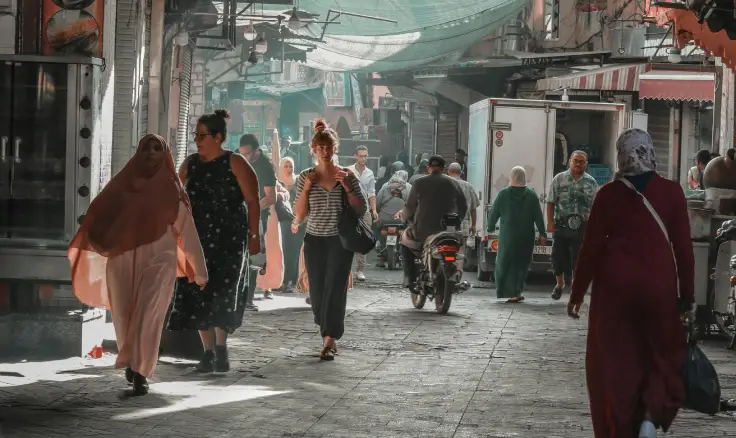
If you understand a few basic elements of Moroccan culture and etiquette for women, you’ll notice how people’s behaviour changes towards you.
Modest Intention: Dress as a Sign of Respect (Not Submission)
You don’t need to wear hijab or black abayas. But:
Good baseline:
- Cover shoulders and chest
- Cover knees (midi/maxi dresses, loose pants, long skirts)
- Avoid super tight leggings without a longer top
In the heat, breathable fabrics like linen or cotton are perfect. If X (modest dress), then Y (less street attention) – this is a real pattern my guests notice.
For a complete breakdown of outfits, layers and what to bring for cities, desert and coast, use my Morocco Packing List 2026.
The Right-Hand Rule (And Why It Matters)
In Moroccan culture:
- Right hand = clean, respectful
- Left hand = traditionally for “bathroom things”
So try to:
- Pay money, shake hands, and eat shared dishes with your right hand.
- This tiny gesture signals: “I respect your customs,” and it softens people immediately.
Photography Etiquette: People Aren’t Props
Many Moroccans are shy about photos – especially older women and religious men.
Before taking someone’s picture, ask:
- “Mumkin taswira?” – Is a photo possible?
If they say no, don’t sneak it. It’s considered hshuma and can create tension very fast. In places like Jemaa el‑Fna, entertainers may expect payment for photos – agree the price before snapping.
Solo Female Transit Morocco: Trains, Taxis & SIM Cards (2026)
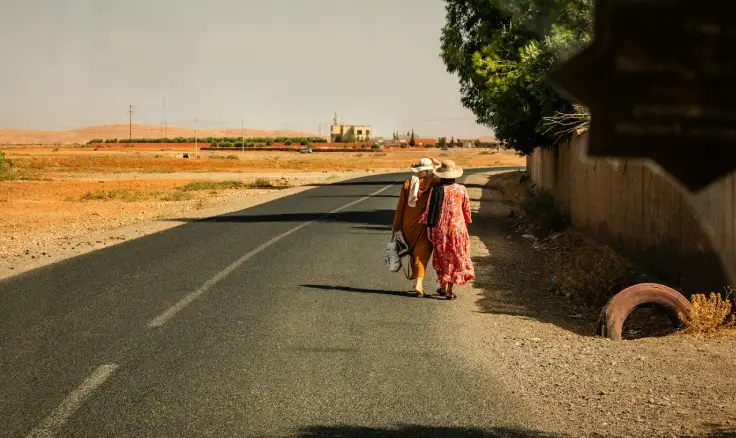
Now the boring but important stuff: how to move around safely and stay connected.
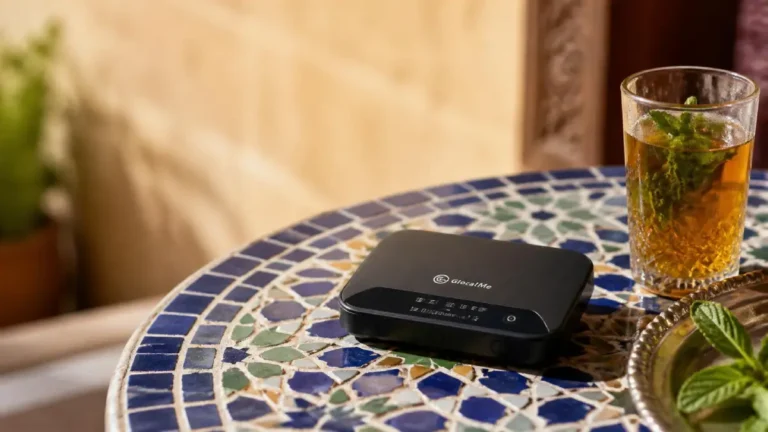
SIM vs eSIM in 2026: What Actually Works
For a solo woman, internet = safety tool: maps, WhatsApp location, translator, contacting your riad.
My recommendation (especially for desert & rural routes):
Maroc Telecom (IAM) – Best overall coverage, especially:
- High Atlas
- Marrakech → Ouarzazate → Merzouga (Erg Chebbi)
- Villages in the Drâa and Ziz Valleys
Orange – Great for cities and coast:
- Casablanca, Rabat, Marrakech, Fes, Tangier, Agadir, Essaouira
- Often has good social media data packs (Instagram, WhatsApp, etc.).
Typical 2026 prices (approx.)
- Tourist SIM + 10–20 GB data: 100–200 MAD (~€10–20)
- eSIM (Airalo / Yesim): more convenient for landing connected, but you’ll usually pay more money for less data and weaker desert coverage.
If you want the full comparison of eSIM vs physical SIM and which operator works best in the desert, see my best SIM card Morocco 2026 guide.
My local advice:
Arrive, use airport Wi‑Fi, then buy a physical Maroc Telecom SIM at the airport or in town. Use eSIM only as back-up or if you’re staying in big cities only.
Trains & the Al Boraq High-Speed Rail
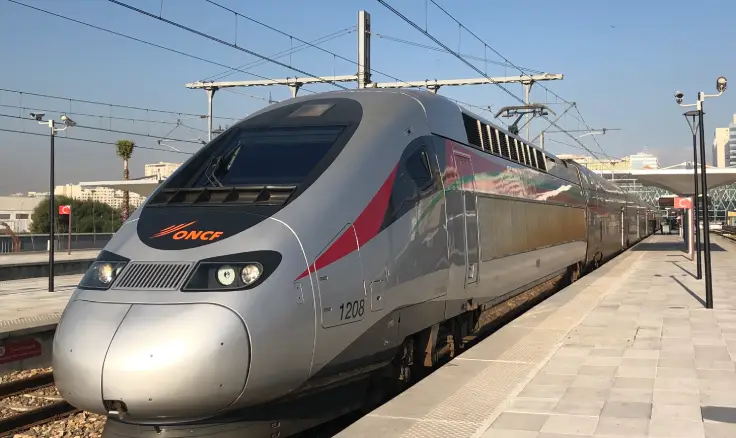
Trains in Morocco are run by ONCF (oncf.ma) and are one of the best ways for a solo woman to cross the country.
Al Boraq (high‑speed rail) runs mainly:
- Casablanca – Rabat – Kenitra – Tangier
Why 1st Class is worth it for solo women:
- More space, quieter, often cleaner
- More families and business travellers
- Less chance of someone trying to squeeze next to you
Typical 1st‑class fares (2026 ballpark):
- Casablanca → Tangier (Al Boraq): around 220 MAD
- Marrakech → Fes (with a change in Casablanca): similar ballpark for the full journey
Transit safety tips:
- Sit near women or families if possible.
- Keep your small bag on your lap or between your feet, not above your head with valuables.
- Track your ride on Google Maps (offline maps work fine) so you don’t panic about missing your stop.
ONCF train booking wesbsite.
Petit Taxis & Avoiding Scams
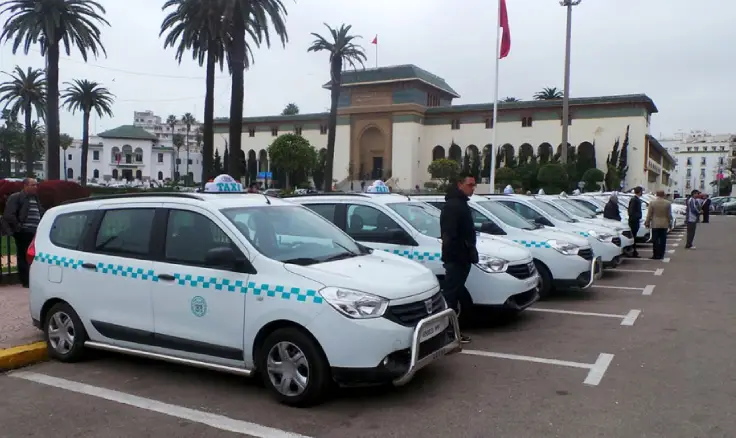
Every city has small coloured taxis (petit taxis) that only operate inside the city.
Marrakech (example, 2026):
- Short daytime ride inside the city: usually 10–20 MAD
- By law: they should use the meter (compteur), but some “forget”.
How to handle it:
Daytime:
- Get in and say “Afak, compteur.” – Please, meter.
- If they refuse, just step out and take another.
Night:
- It’s often easier to agree a price before you get in.
- For simple in‑city trips: 20–40 MAD is normal, unless you’re going far.
In cities like Casablanca, Rabat, Tangier, some women now prefer apps (Heetch, Careem, etc.) to avoid price arguments and get a digital record of the ride.
Never:
- Let a taxi “bring a friend who needs a lift too” if it makes you uncomfortable.
- Put your passport or main bag in the trunk and out of sight without need.
For more detail on buses, trains, taxis and apps, read Getting Around Morocco in 2026.
The “Golden Loop”: A 7–10 Day Morocco Solo Travel Itinerary
Let’s build a Morocco solo travel itinerary (10 days) that works for a first‑time solo female traveller who wants:
- A taste of the Sahara (but not hardcore off‑grid)
- The magic (and chaos) of the medinas
- Time to breathe on the coast
Overview: The 7–10 Day Golden Loop
Marrakech → High Atlas → Erg Chebbi (Sahara) → Fes → Chefchaouen → Rabat/Casablanca
You can do the “core” in 7 days, but 10 days is where it really feels relaxed. So check 7 day Golden Loop itinerary from Marrakech to Fes.
Days 1–3: Marrakech – Welcome to Controlled Chaos
Why start in Marrakech?
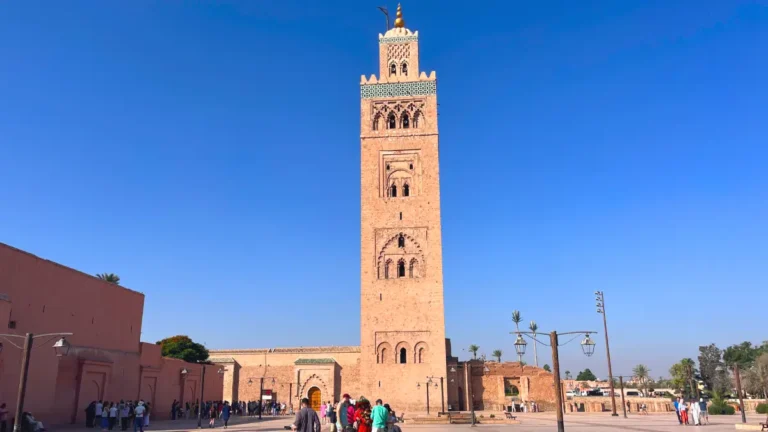
It’s intense, yes, but it’s also well‑set‑up for travellers, with many good riads, women‑led restaurants, and day trips.
Where to stay (solo‑friendly riads):
- Indian Palace (luxury style, quiet area, good staff presence)
- Riad Nirvana (mid‑range, small and personal – solo guests tell me they feel “looked after” there)
What to do (with safety in mind):
- Get lost (a little) in the souqs during the daytime, not late at night.
- Sunset mint tea on a terrace overlooking Jemaa el‑Fna – watch the chaos from above.
- Dinner at Al Fassia (women‑run) or Sahbi Sahbi (all‑female kitchen, modern twist).
- Lunch at Amal Women’s Training Center – great food that supports women’s training.
Evening tip:
If you want to see Jemaa el‑Fna at night, do it early evening, stick to the lit main areas, and walk with purpose back to your riad. If you feel tired/overwhelmed, take a taxi back – 10–20 MAD is not the time to save money.
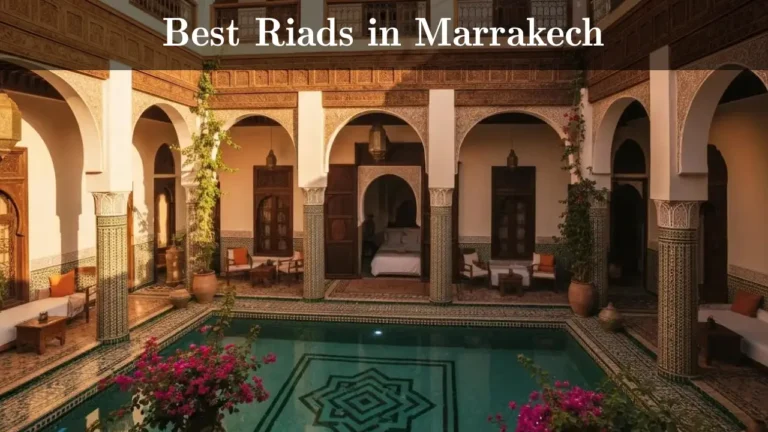
For deeper details, check my Marrakech Travel Guide and my Best Riads in Marrakech if you haven’t chosen your riad yet.
Days 4–5: The Sahara Choice – Erg Chebbi vs Erg Chigaga
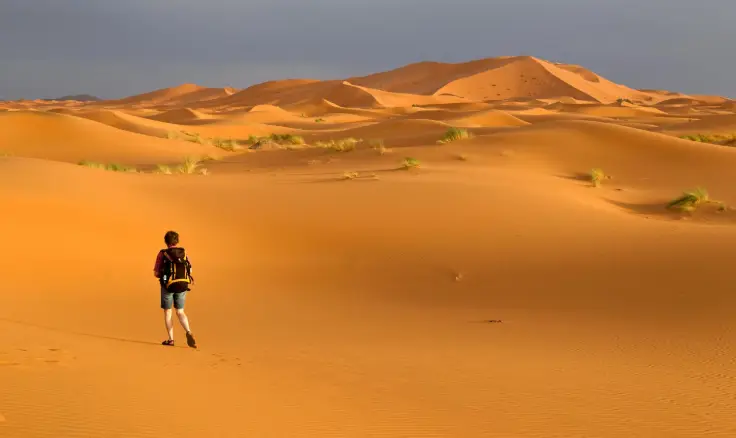
For a first‑time solo woman, I almost always recommend:
> Erg Chebbi (Merzouga) over Erg Chigaga (M’hamid).
Because you’re going remote, make sure you also read my Morocco Travel Insurance Guide and Safety Guide so you understand what’s covered and how far help really is.
Why Erg Chebbi is better for you:
- Paved road access all the way to Merzouga
- Wide choice of luxury camps with:
- Private tents
- Ensuite bathrooms
- Hot showers
- Better chance of Maroc Telecom coverage
- Easier logistics: less time truly “off‑grid” if you get anxious being disconnected
Why Erg Chigaga is better for a second trip:
- Wilder, more remote, several hours of 4×4 off‑road
- Limited facilities, eco‑style camps, weaker signal
- Beautiful – but better when you already know how Morocco works.
To digg more into it, read my article about: ‘difference between Erg Chebbi and Erg Chigaga for solo travelers‘
Sample 3‑day Marrakech → Sahara (Erg Chebbi) route
Day 4: Marrakech → High Atlas → Dades Valley
- Cross Tizi n’Tichka Pass (lots of curves, but incredible views)
- Stop at Kasbah Ait Ben Haddou (UNESCO Ait Ben Haddou – link it mentally to Gladiator, Game of Thrones)
- Continue to Dades Gorge
Driving reality (2026):
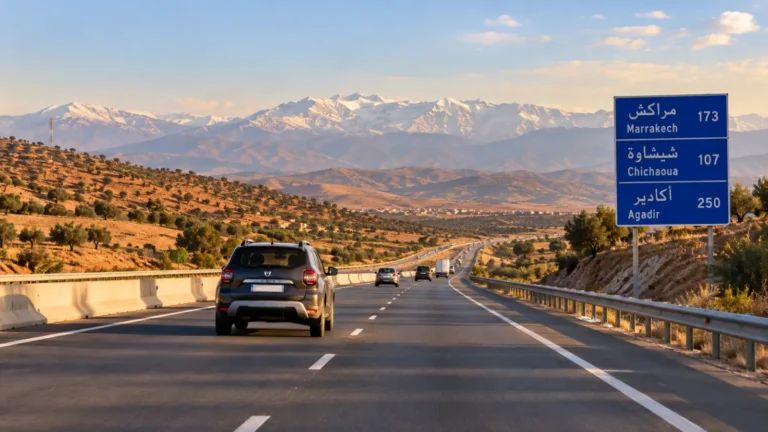
- Marrakech → Dades: about 6 hours with stops
- Road is paved, but winding – don’t try to drive this yourself at night.
Stay in a small guesthouse or kasbah. This is where having a licensed Morocco guide/driver really reduces stress for solo women – no negotiating, no worrying about remote roads.
Day 5: Dades → Todra Gorge → Merzouga (Erg Chebbi)
- Morning walk in Todra Gorge – big cliffs, calm atmosphere
- Continue through Erfoud → Rissani → Merzouga
Dades → Merzouga: around 4–5 hours driving.
Late afternoon:
- Switch to camels or 4×4 for the final approach to camp
- Sunset on the dunes
- Dinner, music, stargazing
See what is offered on a Luxury Sahara Desert tour from Marrakech.
Safety note:
In properly run camps, you have lockable tents and staff on site. If you’re worried about being the only solo woman, tell your operator in advance – many can place you with other solo travellers or small groups.
Days 6–8: Fes & Chefchaouen – Intense City, Blue Recovery
Erg Chebbi → Fes (Long but Worth It)
From Merzouga to Fes is a long day, but it’s more efficient than bouncing back to Marrakech.
- Expect about 7–8 hours by car via the Ziz Valley, Middle Atlas and cedar forests near Azrou.
Fes reality check for solo women:
- The medina has over 9,000 alleys.
- It’s a masterpiece, but also where “fake guides” and touts are most active.
My strong suggestion:
- Book a licensed local guide for at least one half‑day in Fes.
- Your guide can show you safe routes, help fend off hustlers, and explain the history.
Riad recommendation in Fes:
- Dar Seffarine – classic, secure, with staff who really take care of solo guests.
Read my Fes Travel Guide for a full medina survival plan.
Fes → Chefchaouen: Welcome to the “Blue Spa”
After Marrakech + Fes + Sahara, your nervous system deserves Chefchaouen.
- Fes → Chefchaouen: around 4 hours by private transfer or shared transport.
Why I call it a “spa for the nerves”:
- Compact medina, soft blue walls
- Much less aggressive selling
- Great place to wander alone, take photos, sit in cafés, hike a little in the Rif hills
Where to stay:
- Lina Ryad & Spa – popular with solo women, central and comfortable.
Check my Chefchaouen guide and Best Riads in Chefchaouen if you decide to spend more than one night there.
Days 9–10: Essaouira or Rabat/Casablanca – The Soft Landing
You have two good options to finish:
Option A: End in Rabat/Casablanca (If You’re Flying Out From There)
From Chefchaouen:
- Bus or private transfer to Rabat or Casablanca via Tangier.
Rabat:
- Calmer, modern, wide streets, embassies, fewer hustlers.
- A good place to “decompress” before heading home.
Casablanca:
- Less romantic, but practical for flights.
- You can visit the Hassan II Mosque (one of the few mosques non‑Muslims can enter on a guided tour).
Option B: Loop Back to Marrakech + Essaouira (If You Have 10+ Days)
If you have extra days, I love this finish:
- Chefchaouen → Fes (or Casablanca) → flight/train back to Marrakech.
- Then bus or private transfer to Essaouira for 2 nights.
Why Essaouira is gold for solo women:
- Compact, walkable medina by the sea
- Laid‑back surf / artist community
- Much less hassle; many women tell me it’s the first place they walked alone at night and still felt relaxed.
Great riad for solo women:
- Dar Emma – simple, friendly, safe base.
Solo Dining & Gastronomy: Eating Well (and Safely) Alone
Food is a big part of your experience – and yes, it’s okay to eat alone here.
Beyond Tagine: What I Recommend You Try
You already know tagine and couscous, so let’s go deeper:
- Tangia Marrakchia – Beef or lamb slow‑cooked in a clay pot in the furnace of a traditional Moroccan hammam. Very Marrakesh, very local.
- Mechoui – Whole lamb slow‑roasted, often in a “mechoui alley” near Jemaa el‑Fna. Melt‑in‑your‑mouth meat.
- Harira – Tomato‑based soup with lentils, chickpeas and herbs, often eaten at Ramadan to break the fast.
- Msemen – Square flaky flatbread, great for breakfast or street snacks.
In Marrakech, two women‑friendly, women‑led spots:
- Al Fassia (Gueliz) – Classic dishes, all‑female team. Reserve ahead.
- Amal Women’s Training Center – Perfect for lunch, relaxed environment for solo diners.
Street Food Safety
You can absolutely enjoy street food with some common sense:
- Pick busy stalls with a high turnover.
- Avoid salads that have been sitting in the sun.
- Only drink bottled or filtered water – never tap.
- In places like Jemaa el‑Fna, fresh orange juice is usually 10–15 MAD. Choose stands with clean glasses or ask for a plastic cup.
2026 FAQ: Solo Female Travel Morocco – Straight Answers
Is Morocco safe for a woman travelling alone?
Yes, generally. Violent crime against tourists is rare. The main issue is verbal harassment and pushy touts, especially in Marrakech and Fes. If you:
– Dress modestly,
– Use 1st‑class trains and reputable riads,
– Ignore catcalls and use a few key Darija words,
then Morocco is absolutely manageable – thousands of solo women do it every year and many come back.
What should I wear in Morocco to avoid unwanted attention?
Think:
– Shoulders covered
– Knees covered
– Not skin‑tight
Loose pants, maxi skirts, T‑shirts, light scarves – perfect. You’re not “giving in”; you’re using cultural intelligence to reduce “sweet tongues” and show respect for hshuma norms.
Can I drink the tap water in Morocco?
I always tell guests: no.
– Use bottled water or a filter bottle.
– Avoid ice in very local places.
– Brush your teeth with bottled water if you have a sensitive stomach.
Most “Morocco belly” comes from water and salads, not from tagine.
Should I book a group Sahara tour or go solo?
For a solo woman, I strongly recommend:
– A group tour or
– A private tour with a licensed guide/driver
Don’t try to DIY the Sahara with random taxis and buses. Desert logistics (weather, distances, tracks, breakdowns) are not a good place to experiment.
Price ballpark (2026):
– Cheap 3‑day shared tour Marrakech → Merzouga: around 130–150 USD (very basic, lots of driving, big groups).
– Private desert trip with a company like mine, including nice accommodation and more days: can easily reach $1,800+ for a 7‑day loop.
How do I avoid scams in Marrakech and Fes medinas?
– Download offline maps (Maps.me or Google Maps).
– If someone says “This street is closed” and insists on guiding you “another way”, politely ignore and keep walking or ask a shopkeeper, not a random guy.
– If you want a guide, book a licensed guide through your riad or a reputable company, not someone who approaches you in the street.
– Always ask the price before accepting a service (henna, photos with animals, leather cleaning, etc.).
Are there mosquitoes in Morocco in November or January?
– November: In oases and some coastal areas (Agadir, Atlantic coast), you can see mosquitoes at dusk. Bring repellent.
– January: Very few mosquitoes – it’s winter, especially cold in the desert at night. You’ll worry more about warm clothes than bugs.
Do I need a local SIM card or is an eSIM enough?
If you’re only staying in Casablanca, Rabat, Marrakech, Fes, Tangier, an eSIM might be okay.
But if you’re going to:
– Sahara (Erg Chebbi / Erg Chigaga)
– Small Atlas villages
– Off‑the‑beaten‑path areas
then a local SIM, especially Maroc Telecom, is much better for coverage and price. In 2026, local SIMs still win over eSIM for value and reach.
Final Word – If You Want a Local in Your Corner
If you’ve read this far, you already know that solo female travel in Morocco in 2026 is absolutely possible – and it can be one of the richest trips of your life if you combine:
- A bit of street smarts
- Respect for hshuma and local etiquette
- Smart logistics: good riads, 1st‑class trains, Maroc Telecom SIM, and a well‑planned Golden Loop
If you’d like help turning this guide into a real itinerary – with a safe Sahara camp, trustworthy drivers, and riads where I know solo women are treated well – you can:
- Ask me here for a custom 7–10 day Morocco solo travel itinerary 2026, or
- Tell me your dates, budget, and whether you prefer Erg Chebbi or Essaouira time, and I’ll map it out day‑by‑day in my style.
- If you want to build your route step by step, you can also start with my Morocco Itineraries Hub and then we adapt it together for solo female travel.
Tell me next:
- Your travel month
- Approx budget (per day or for the whole trip)
- What you care about most: food, photography, history, or just not feeling stressed
I’ll build the exact route and daily plan around that.