
The Ultimate Sahara Desert Morocco Guide
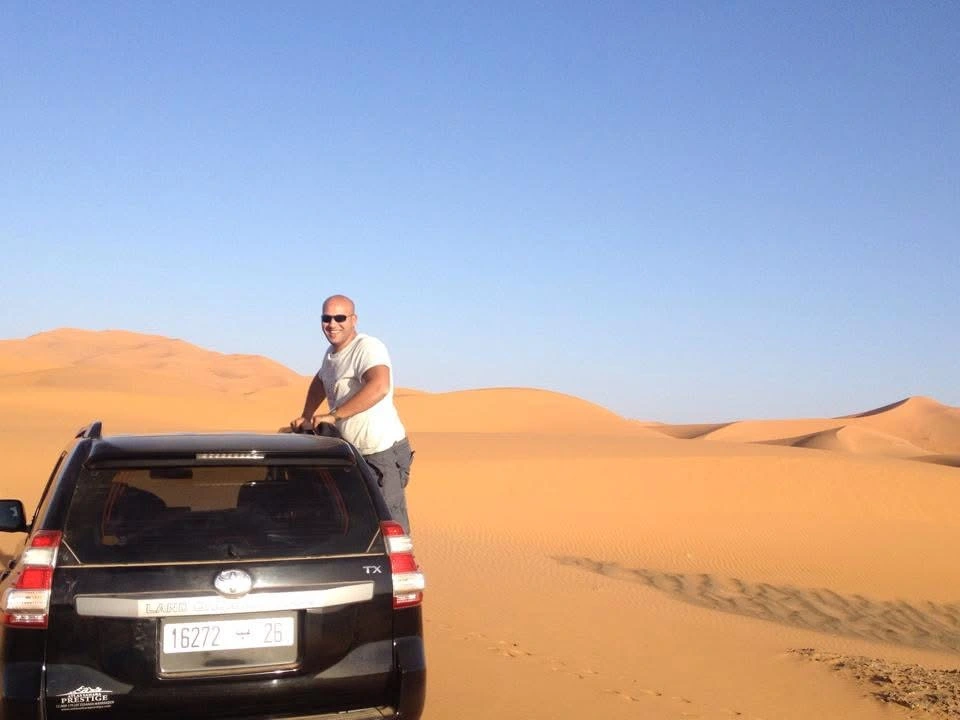
Hey, I’m Youness – a licensed tour guide in Morocco. I’ve been leading tours all over this country for more than 20 years, since my university days. I’ve crossed the Sahara Desert Morocco more times than I can count, slept in every kind of camp (from “is this a bed?” to full-on luxury), and listened to every camel vs dromedary joke on the planet.
So let me talk to you like a friend who actually knows what it’s like out there – not just someone reposting Instagram photos.
The Dream vs Reality of the Sahara Desert Morocco
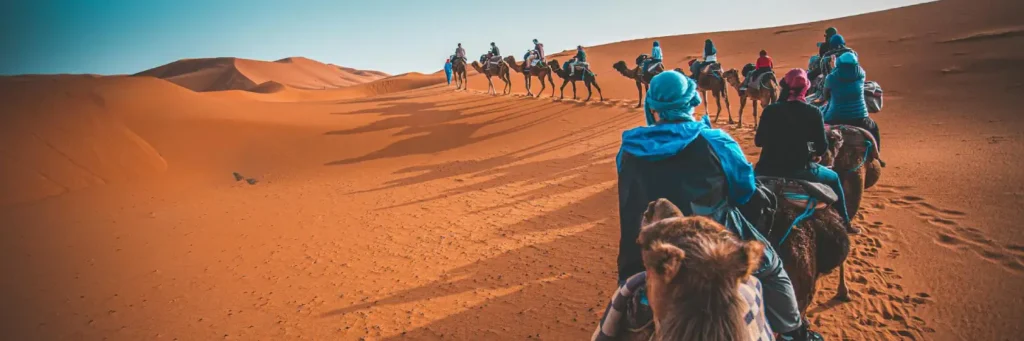
When people think Sahara Desert Morocco, they picture:
- Giant orange dunes
- Perfect sunsets
- Drums by a campfire
- Stars like a planetarium with no roof
And yeah, that’s all real. It really is magical.
But…
Getting there? Long.
Camels? Not exactly comfortable.
Weather? Either “oven” or “freezer,” sometimes both in 24 hours.
If you remember one thing, make it this:
The best Sahara experience needs at least 3 days, a good tour company, and you should know the difference between Erg Chebbi and Erg Chigaga before you book anything.
Mobile coverage gets less reliable once you travel deeper into the Sahara, so it helps to sort out your SIM or eSIM before leaving the major cities. I compare the best physical SIM and eSIM options in my updated Morocco guide, including what to expect when traveling toward Merzouga, Zagora, and the desert regions.
Let’s break it down.
Erg Chebbi vs Erg Chigaga: Which Desert Should You Choose?
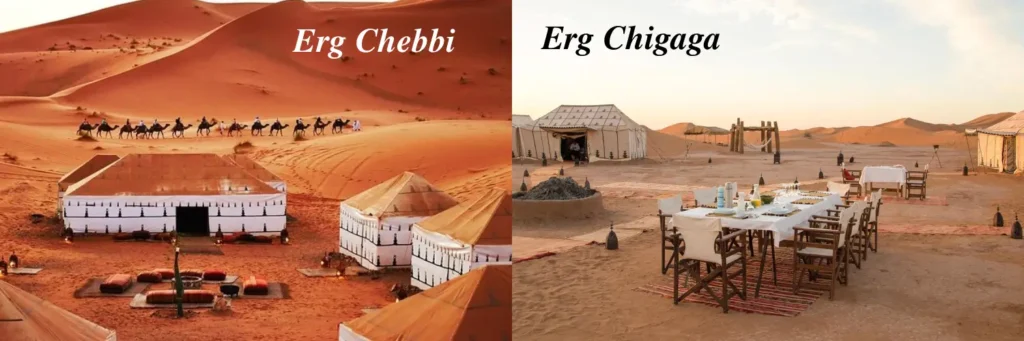
Most people don’t realize this before they come, but in Sahara Desert Morocco, there isn’t just “one desert spot.” You’ve got two main sandy dune areas that travelers talk about:
- Erg Chebbi – near Merzouga
- Erg Chigaga – near M’Hamid
And then there’s Zagora, which I’ll explain in a second.
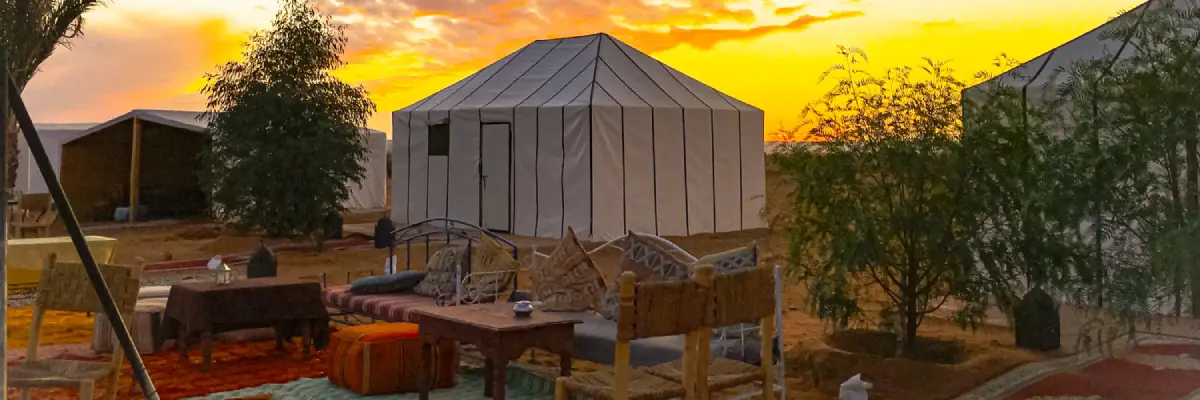
Erg Chebbi (Merzouga) – The Famous One
If you’ve seen those classic dune shots from Merzouga desert tours, that’s probably Erg Chebbi Morocco.
- How to get there:
Mostly paved roads, about 9–10 hours from Marrakech. You go over the Atlas Mountains, pass places like Ait Ben Haddou, the “Thousand Kasbahs,” and sometimes Dades Gorges.
- What it looks like:
- Tall, golden dunes, some up to 150 meters high
- Proper “whoa” moments at sunrise and sunset
- Amazing for photos
The vibe:
- More touristic, but in a good way if you like options
- You’ll find everything: hostels, riads, mid-range hotels, and luxury desert camps
- Good if you want comfort and choice – budget to very fancy
If it’s your first time in the Sahara regions, Erg Chebbi is usually the easiest and most impressive choice.
See our Merzouga Desert Guide.
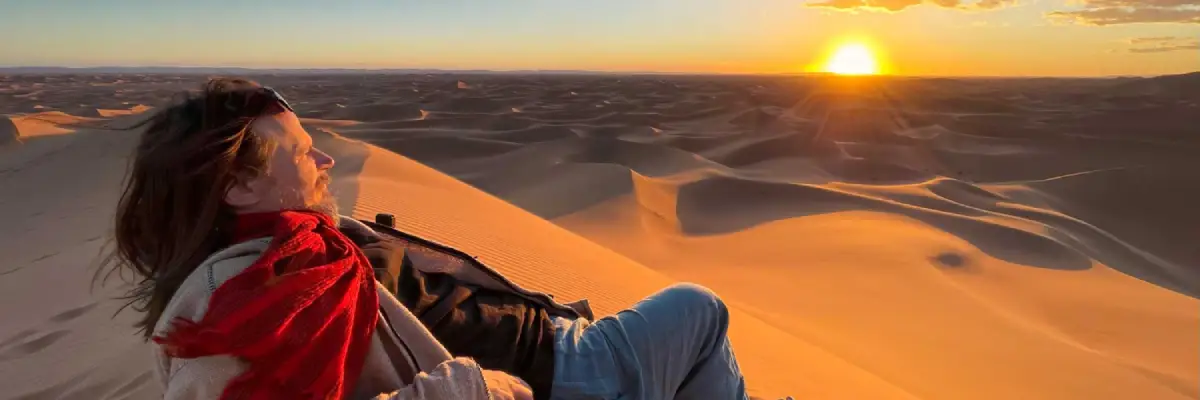
Erg Chigaga (M’Hamid) – The Wild One
Erg Chigaga is for you if you’re thinking, “I want the feeling of being in the middle of nowhere.”
How to get there:
- First you head to M’Hamid (around 9–10 hours from Marrakech)
- Then you still have 1.5–2 hours of 4×4 off-road into the dunes
- No paved road for that last part – it’s an adventure.
What it looks like:
- Huge, wide area of dunes
- Dunes are usually not as tall as Erg Chebbi, but it feels more endless
- Way fewer people, more silence.
The vibe:
- Proper remote
- Almost no light pollution – the stars are insane at night
- Fewer camps, more “expedition” feeling
Choose Erg Chigaga if you want something wilder, quieter, and you don’t mind rougher roads and more basic setups.
Zagora Desert Tours – What You Really Get
Now, about Zagora desert tours…
You’ll see a lot of 2-day “Sahara from Marrakech” tours to Zagora.
Are they bad?
Not necessarily.
Are they the classic big dunes of the Sahara Desert Morocco?
Nope.
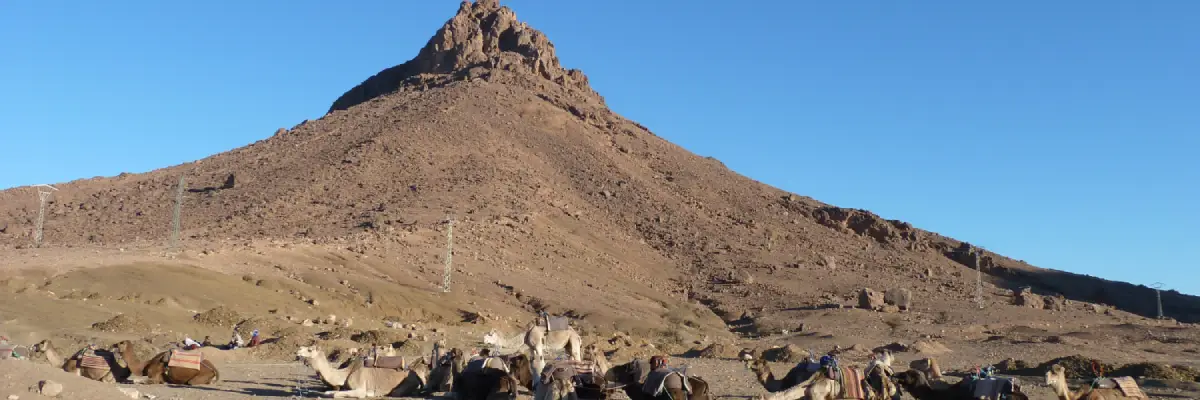
- Zagora is more rocky desert with some small dunes
- It’s good if you’re short on time and just want a “desert night” feeling
- But if you’re dreaming of huge golden dunes like in Merzouga – Zagora is not that
If the big dunes are your dream, look for tours to Merzouga (Erg Chebbi) or M’Hamid / Erg Chigaga, not just “Zagora.” Check our Morocco Destinations page.
Travelers with only half a day or one free evening should compare the real Sahara journey with Agafay Desert tours from Marrakech. Agafay is less than an hour from the city and works well for camel rides, quad biking, sunset dinners, and camps, but it has rocky hills rather than the high sand dunes of Erg Chebbi or Erg Chigaga.
To plan precisely, see our detailed ‘Morocco Travel Guide‘ page.
Quick Comparison of the Sahara Desert Regions
| Feature | Erg Chebbi (Merzouga) | Erg Chigaga (M’Hamid) |
|---|---|---|
| Access | Paved almost all the way | Last 1.5–2 hrs off-road by 4x4 |
| From Marrakech | ~9–10 hours driving | ~9–10 hrs + off-road |
| Vibe | More touristic, more comfort | Remote, wild, fewer people |
| Dunes | Taller, more dramatic | Wider area, more “endless” feeling |
| Best for | First-timers, photos, comfort | Adventurous travelers, solitude fans |
To plan precisely, see our detailed ‘Erg Chebbi vs Erg Chigaga‘ page.
How Long Do You Actually Need in the Sahara?
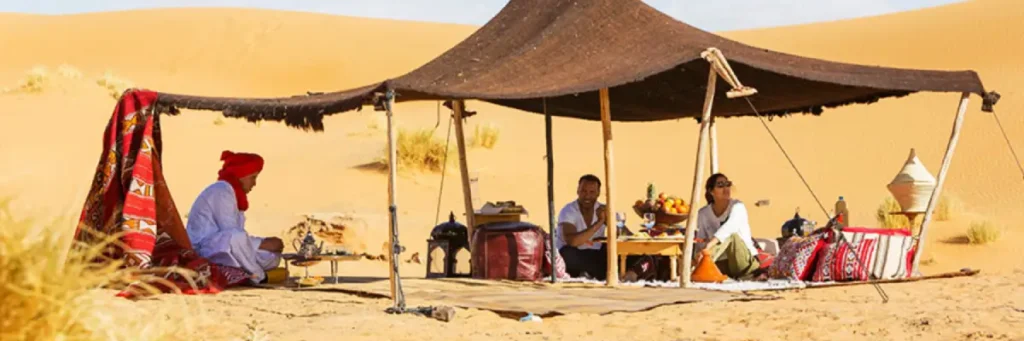
Let me be honest with you: Morocco isn’t tiny, and the Sahara Desert Morocco is far from the main cities.
1-day trip?
Forget it.
From Marrakech or Fes, you simply can’t get to real big dunes and back in one day. If someone sells you that, run.
2 days / 1 night
- You can just about do Marrakech → Zagora → Marrakech
- But it’s fast and doesn’t reach the big sand seas like Erg Chebbi or Chigaga
- It’s more like a “desert sample,” not the full experience
3 days / 2 nights – The Minimum That Makes Sense
This is the classic loop:
- Day 1: Marrakech → Atlas Mountains → Ait Ben Haddou → Dades/Tinghir
- Day 2: Dades/Todra → Merzouga → camel ride → night in the dunes
- Day 3: Long drive back to Marrakech (or on to Fes)
Still a lot of driving, but you finally get that real Moroccan desert night under the stars.
4 days / 3 nights – My Recommendation
If you can, do 4 days:
- You see more of the Thousand Kasbahs, Dades Gorges, maybe Todra Gorge
- You’re less exhausted and can enjoy the best views in Atlas Mountains, not just stare out the window half-asleep
- Better pace, more chances for photos, short walks, coffee stops, all the good stuff.
If you’re booking a Sahara tour, make sure your travel insurance actually covers camel rides and long desert drives – I explain how in my Morocco travel insurance guide.
“Want help choosing between Merzouga, Erg Chigaga, or Zagora for your dates and budget? Message me on WhatsApp and I’ll help you plan your Sahara route.”
How to Get to the Sahara Desert Morocco
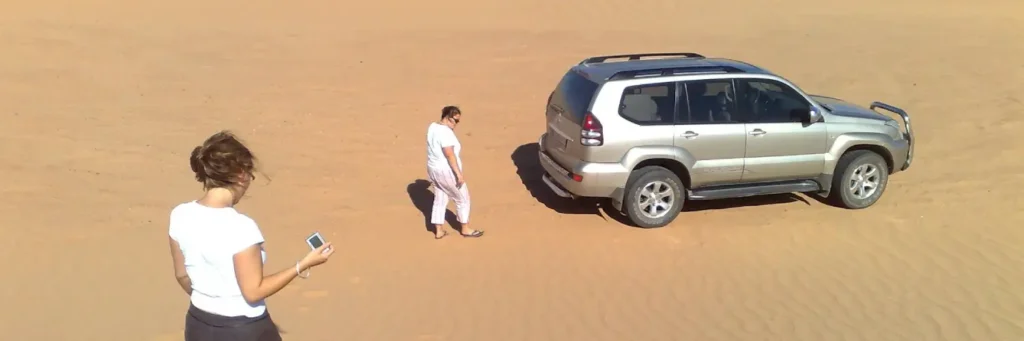
1. Guided Tours from Marrakech and Fes
This is what most travelers do.
Group tours:
- Cheaper
- Fixed itinerary, shared minivan or bus
- Quality really depends on the company – some great, some… not so great
Private tours:
- More expensive, but way more flexible
- You choose your pace, photo stops, and type of camp
- Great for couples, families, or solo travelers who want more safety and comfort
- Easy to combine desert with morocco mountain climbing, villages, and side trips
2. Traveling on Your Own (Bus or Rental Car)
Supratours bus to Merzouga:
- Solid option if you’re on a budget and don’t mind long rides
- Then you meet your camp in Merzouga town and they take you into the dunes
Rental car:
- Total freedom
- You can stop anywhere in the Atlas Mountains for pictures
- But it’s long-distance driving with mountain passes like Tizi n’Tichka, not for everyone.
3. Flying via Errachidia
- You can fly to Errachidia from Casablanca or Fes
- From there, it’s around 2 hours by road to Merzouga
- You save time but you miss that crazy scenic drive through the mountains
Solo Female Travelers in the Sahara: Real Talk
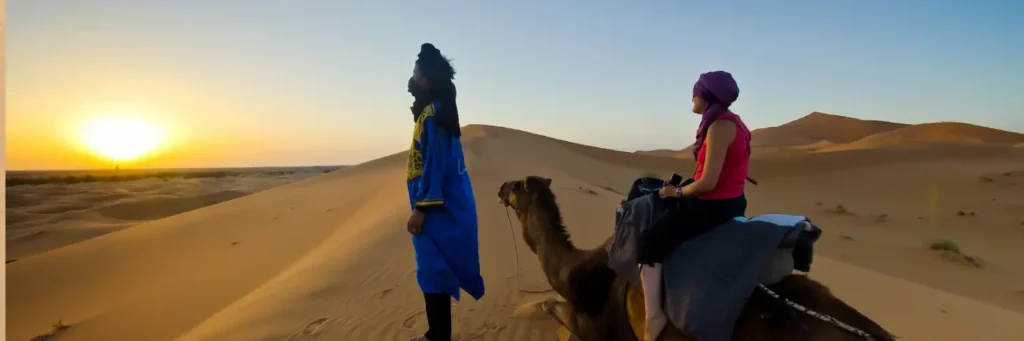
I’ve guided a lot of solo women in the Sahara Desert Morocco and across the country, so let’s be honest.
Morocco is generally safe in terms of serious crime, but:
- Harassment and catcalling do happen, especially in cities and touristy areas
- It’s annoying, and sometimes exhausting – but with the right setup, you can still have an amazing trip
My Tips (From Guiding for 20+ Years)
Book online with good reviews
- Choose Merzouga desert tours or Zagora desert tours with lots of detailed reviews from women.
- Or let your riad book your desert trip. They usually work with trusted local guides they know personally.
Clothing
- Cover from wrists to ankles with light, loose clothes.
- Not because you “have to,” but it really helps reduce attention.
- A scarf is useful: sun protection, sand shield, and handy if you want to cover your hair.
Behavior
- Be polite but not overly friendly with random guys on the street.
- “La, shukran” (no, thank you) is your best friend.
- Don’t share where you’re staying or that you’re alone.
- Ignore persistent touts; arguing usually makes it worse.
Pick the right company
- A lot of bloggers complain about subpar experiences with super-cheap group tours (no boundaries, unprofessional staff, etc.)
- If you’re solo, it’s worth paying a bit more for a well-reviewed, reputable company or a private / small group tour.
To plan precisely, see our detailed ‘Safety‘ page.
What to Expect: Camels, Camps, and Extreme Weather
The Camel Trekking Morocco
Let me say it clearly:
Camels are amazing animals… but they are not comfortable.
- They’re tall, and getting on/off can feel like a mini roller coaster.
- You’ll probably be sore after a long ride – thighs, hips, lower back.
- If you’ve got back or knee issues, ask your tour to use 4×4 for part or all of the way instead.
Do it for the experience and the photos, not because you think it’s going to feel like riding a couch.
Where You Sleep: Camp Levels
Budget camps
- Simple tents, maybe shared.
- Basic toilets (sometimes squat, sometimes far from your tent).
- Can be very cold in winter and hot in summer.
- Atmosphere can be magical though – we’re still in the Sahara!
Mid-range
- Better tents, proper beds.
- Shared or semi-private bathrooms.
- Better food, maybe some sandboarding, live music.
Luxury glamping
- Stylish tents with private bathrooms, hot showers, real beds.
- Sometimes AC/heating and even pools near Merzouga.
- If you want the desert but not the discomfort, this is the way.
The Weather Paradox
The Sahara Desert Morocco is extreme:
Summer:
- Can easily hit 115°F (46°C) in the day.
- You move slow, drink a lot, and hide in the shade.
Winter:
- Nights can drop to 32°F (0°C) or colder.
- In a tent, you’ll be very happy to have thermal layers.
Spring & Autumn:
- Best balance for most people.
- But sandstorms can happen any time of year.
Sahara Desert Costs, Extras, and Common Tricks
Rough Cost Idea
- Budget group tours: from around €85–€150 (2–3 days, very basic)
- Mid-range 3–4 day tours: €250–€450
- Luxury camps: often €200+ per night, just for the camp.
Hidden Extras People Forget
- Lunches: Usually not included. Drivers stop at “tourist restaurants” – clean, but pricier than local spots.
- Water: Buy bigger bottles in towns; camps charge more (you are in the desert, after all).
- Tips: For drivers, guides, camp staff – plan a little tipping budget.
- Scarves: Someone will 100% try to sell you a “traditional desert scarf.” They’re useful in the Sahara Desert Morocco, but bring your own if you don’t want to buy one last minute at tourist prices.
The Famous Rug Story
If you’ve heard about the “carpet scam,” it’s usually this:
- You’re taken to a “cooperative” or “Berber village”.
- You get tea, a long explanation, then the sales pressure starts.
- Prices are high, and sometimes the rug you chose is swapped for a cheaper one when rolled.
My advice:
- Only go into carpet shops if you’re actually open to buying.
- Decide your budget before you walk in.
- If you don’t want anything, say a firm “no” and don’t feel guilty – it’s your money, your trip.
For 2026 ATM fees, cash strategy and eSIM tips, check my Morocco Money and SIM Card Guide 2026.
What to Pack for the Sahara Desert Morocco
You don’t need a suitcase the size of a camel, just smart packing.
For Your Health
- Dramamine (or similar): The Tizi n’Tichka pass is windy – motion sickness is common.
- Pepto Bismol / Imodium: Food changes + long drives… you’ll be glad you have them.
- Basic first-aid stuff: painkillers, band-aids, antiseptic wipes.
For Gear
- Power bank: Camps don’t always have many plugs.
- Lens cleaning kit: Sand goes everywhere. Cameras and phones especially.
- Eye drops: Desert air is dry; your eyes will thank you.
- Headlamp or small flashlight: Super useful for walking to the bathroom at night.
For Clothes
Winter:
- Thermals, warm socks, hat, a real jacket. Don’t underestimate the cold nights.
Summer:
- Light, long sleeves and long pants or skirts – protects from sun and keeps you modest and comfortable.
- A scarf/turban for sun + sand.
Shoes:
- Light hiking shoes or sneakers for walking.
- Sandals or flip-flops for camp.
So… Is the Sahara Worth It?
Honestly? Yes. 100%.
The Sahara Desert Morocco is not the most comfortable part of the country, and it’s definitely not the easiest to reach. But when you’re standing on top of a dune at sunset, or lying back under a sky full of stars with no city lights anywhere… it feels unreal.
If you:
- Give yourself 3–4 days
- Choose between Erg Chebbi vs Erg Chigaga based on what you actually want.
- Pick a solid tour company (especially important for solo travelers)
- And pack smart for the weather.
You’ll probably leave saying, “Okay, the long drive was totally worth it.”
To plan precisely, see our detailed ‘Morocco Travel Guide‘ page.
FAQs About the Sahara Desert Morocco
How do I get to the Sahara from Marrakech?
Most travelers either:
- Join a 3–4 day tour from Marrakech to Merzouga (Erg Chebbi), or
- Travel by bus or rental car to Merzouga or M’Hamid, then take a 4×4 or camel into the dunes.
A 1-day trip from Marrakech to real dunes is not realistic.
Is Merzouga or Zagora better?
For big golden dunes, Merzouga (Erg Chebbi) is better.
Zagora is closer but usually offers rocky desert and low dunes; it’s more of a “desert taster” than a full Sahara dune experience.
Can I combine the Sahara with Morocco mountain climbing?
Yes. Many travelers combine:
- A Merzouga desert tour with a detour through the High Atlas Mountains,
- Or a Toubkal trek (near Imlil) with a later trip east to the desert.
Some private itineraries even focus on the best views in Atlas Mountains en route to the Sahara.
Is the Sahara safe for solo female travelers?
With preparation and vetted companies, yes—many women do it. Expect some harassment in cities and touristy areas, but desert regions themselves can feel calmer when you’re with a trusted guide or riad-backed tour.
If you’d like, I can create a tailored summary of the exact logistics (routes, timing, and cost ranges) for your preferred desert—Merzouga or Chigaga—or a set of quick-reference flashcards to help you compare them at a glance.
Written by Youness Labchir
Licensed Morocco Tour Guide