
The Ultimate 2026 Guide to the Atlas Mountains, Morocco:
The Soul of the High Atlas
Step out of Marrakech’s medina and it’s pure chaos, in a fun way. Scooters, street food, bargaining everywhere. Drive just an hour south and you’re in a different world: fresh air, wild thyme, woodsmoke, rivers in red rock canyons, and the call to prayer over green terraces. That’s the Atlas Mountains, Morocco.
For a zoomed‑in look at valleys, passes and kasbah routes, see my Atlas Morocco Map & Guide.
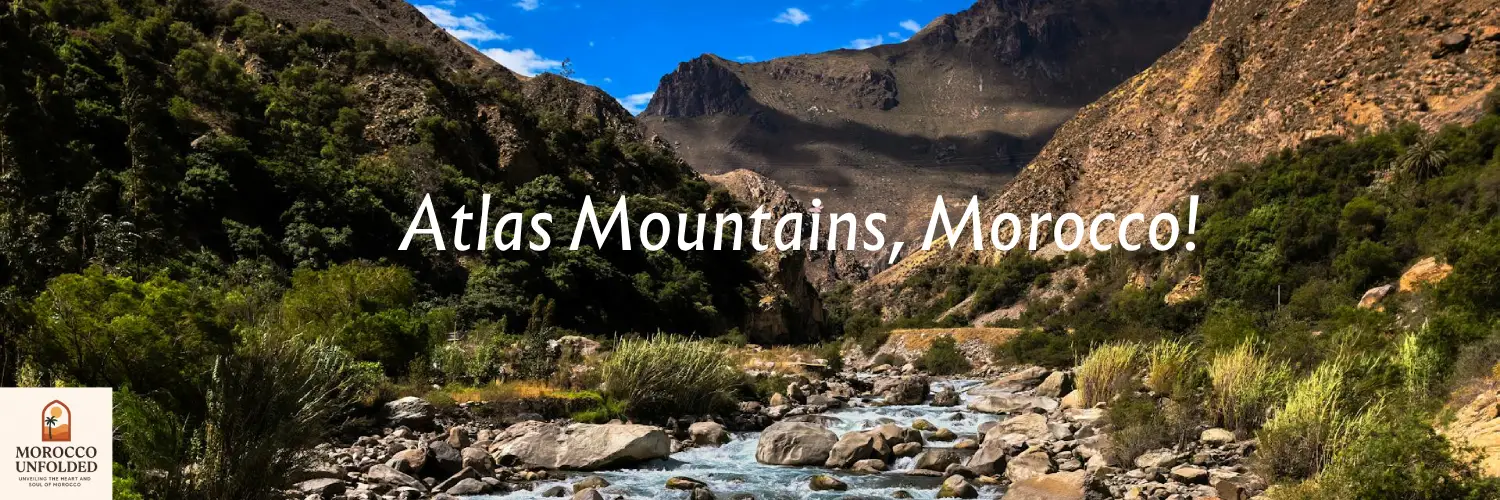
This huge range separates the Sahara from the coast and has its own weather, culture, and way of life. It’s not just a backdrop for hiking in Atlas Mountains, you walk through Amazigh villages, past walnut groves, barley fields, and mud-brick houses. One day here can be shepherds, snow-capped peaks, and sunset views. Whether you’re into easy Morocco mountain trekking, a non-technical summit, or a luxury stay with the best views in Atlas Mountains.
This guide covers when to go, where to stay, and how to plan it.
Planning Your Adventure
When to Go
Spring (March–May)
If you can pick any time, go now.
- Peak season for atlas mountains morocco
- Valleys are covered in wildflowers, rivers are full, everything is ridiculously photogenic
- Perfect for day hikes, multi-day Morocco mountain trekking, and pretending you’re in a nature documentary
Autumn (September–November)
Runner-up best season.
- Clear skies, sharp views over the High Atlas and toward the Sahara
- Great for Morocco mountain climbing goals like Toubkal and M’Goun
- Warm days, cooler nights—ideal “sweat but don’t suffer” weather
Summer (June–August)
If Marrakech feels like an oven, the mountains are your AC.
- Much cooler than the city, especially above 1,500m
- Lower valleys still get hot in the afternoon, so start hikes early and finish by lunch
- Great for families and first-timers sticking to easy valleys like Ourika and Ouirgane
Winter (December–February)
Snow, drama, and way fewer people.
- Snow-capped peaks, amazing light, quiet trails
- Toubkal and higher passes often need crampons, ice axes, and some snow experience
- Roads like Tizi n’Tichka can close in bad weather, so build in extra time (and patience).
- For the bigger winter picture beyond the mountains, my Morocco in December guide compares Atlas conditions with Marrakech, the Sahara, coastal towns and northern cities.
For a winter snow day that does not involve climbing Toubkal, my Oukaïmeden skiing guide explains the road from Marrakech, equipment rentals, family activities and the uncertain lift situation.
To plan precisely, see our detailed ‘Best Time to Travel to Morocco‘ page.
Top Destinations for Every Type of Traveler
Ourika Valley
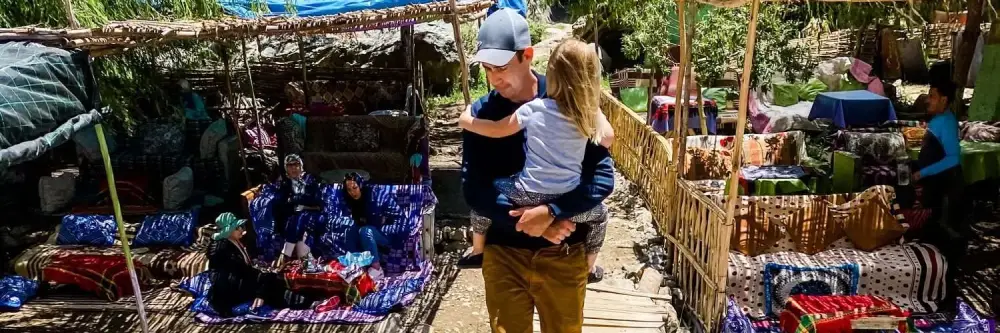
If you want a quick escape from Marrakech without going full “expedition mode,” Ourika is your spot. It’s about an hour away, and the road ends at Setti Fatma, a super popular village with lots of cafés and small hikes.
- Follow local guides up to the seven waterfalls above Setti Fatma
- Eat tagine by the river! yes, with your feet in the water on hot days
- Great for kids, casual walkers, and anyone who wants good views without a death march
Imlil & Mount Toubkal
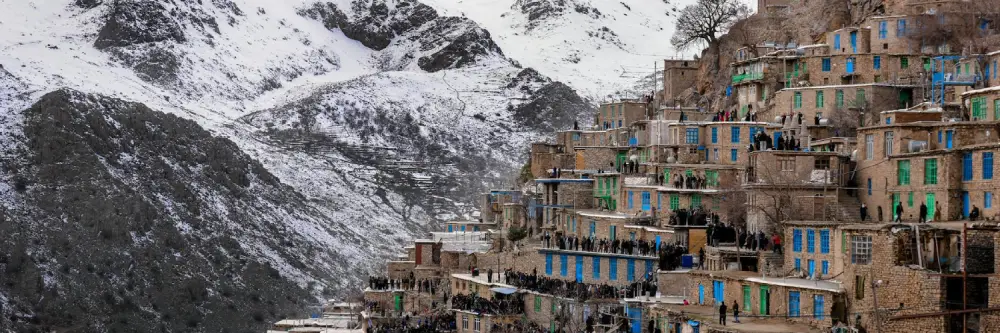
Imlil (1,740m) is the hub for trekking in the Atlas Mountains. Think stone guesthouses, mules hauling luggage, gear rental shops, and mountain views in every direction.
From here, most people set their sights on Mount Toubkal (Jebel Toubkal), North Africa’s highest peak at 4,167m. In summer, it’s more of a very tough hike than a technical climb, but don’t underestimate the altitude or the loose scree. In late autumn to spring, it turns into a proper winter mountain with snow and ice.
- A licensed local guide is now mandatory for Toubkal
- Guides who’ve been doing this for 20–30 years, know every rock, weather mood swing, and tea stop on the mountain—and they connect you with local life along the way
Ounila Valley & Aït Ben Haddou
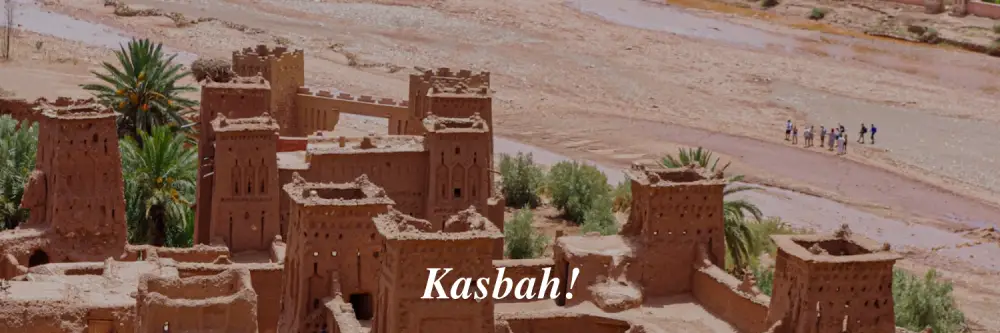
Head over the Tizi n’Tichka pass and duck into the quieter Ounila Valley. This used to be part of an old caravan route linking the Sahara to Marrakech, and it still feels like a journey back in time.
- Aït Ben Haddou: A UNESCO-listed fortified village of mud-brick towers and narrow lanes. You’ve probably seen it in Gladiator or Game of Thrones without realizing.
- Telouet Kasbah: Once the power base of the Glaoui family, now a mix of crumbling walls and ridiculously beautiful tilework and painted wood ceilings.
Do both in one day if you can: history, architecture, and landscapes all rolled into one very photogenic trip.
Ouirgane Valley & Aït Bouguemez
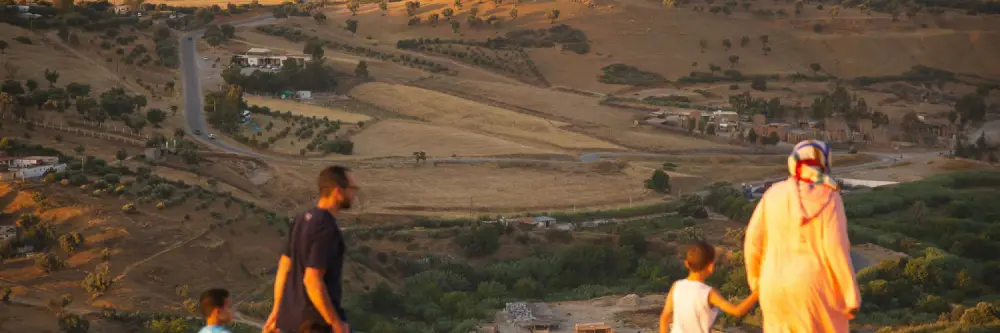
If you want peace and views without feeling like you’re climbing to the moon, Ouirgane Valley is perfect.
- Lower and warmer than Imlil
- Think olive groves, red hills, and quiet forest trails
- Great base for gentle Morocco mountain trekking and wellness or yoga retreats
Further east, Aït Bouguemez, also known as the “Happy Valley,” is where you go when you want space, silence, and wide-open views.
- Green patchwork fields of wheat, apples, and walnuts
- Traditional villages and weekly markets with very few big tour groups
- Awesome base for multi-day treks and climbs around the M’Goun Massif, without Toubkal-level crowds
For practical details on distances, prices and tour options, read my Atlas Mountains day trip from Marrakech 2026 guide.
The “Summit Quest”: Climbing Mount Toubkal
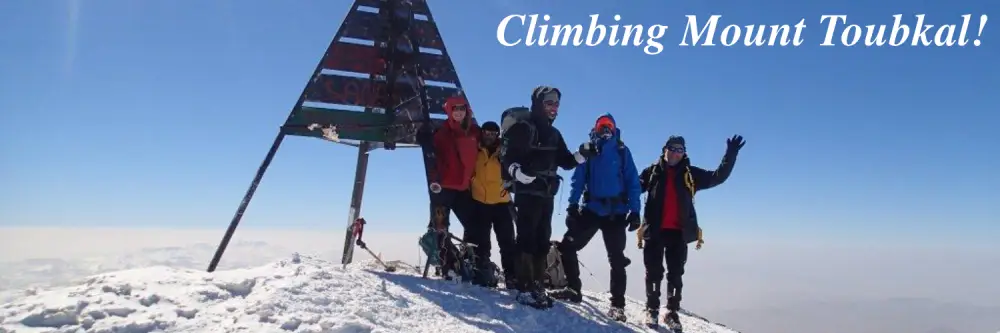
For a lot of people, Morocco mountain climbing basically means one thing: Toubkal.
In good summer conditions, the normal route is just a seriously long, steep hike—no ropes, no rock climbing—but the altitude, loose ground, and unpredictable weather keep it interesting. In winter and early spring, it can be full-on snow and ice, so this is where an experienced guide and proper gear stop being “nice to have” and become “don’t even think about going without them.”
Classic 4-Day Toubkal Itinerary
Day 1: Marrakech → Imlil
- Drive 60–90 minutes from Marrakech into the High Atlas
- Do a short warm-up walk to nearby villages and viewpoints
- Overnight in a guesthouse, check gear with your guide, drink a lot of tea
Day 2: Imlil → Toubkal Refuge (3,206m)
- 5–6 hours of steady uphill via Aroumd and the white shrine of Sidi Chamharouch
- Mules can carry your big bag if you want to save your knees
- Night at the refuge: simple, social, and a bit chilly—layers are your friend
Day 3: Summit Day → Refuge → Imlil
- Pre-dawn start with headlamps (and probably some questioning of life choices)
- Climb scree slopes to the summit
- On a clear day, you’ll see the Sahara glowing to the south and the plains to the north—honestly some of the best views in Atlas Mountains
- Back down to the refuge for lunch, then continue to Imlil if your legs haven’t resigned
Day 4: Imlil → Marrakech
- Slow morning, wander local villages, buy all the rugs you swore you wouldn’t
- Drive back to Marrakech and brag about your summit over dinner.
Luxury Among the Peaks: Elite Retreats
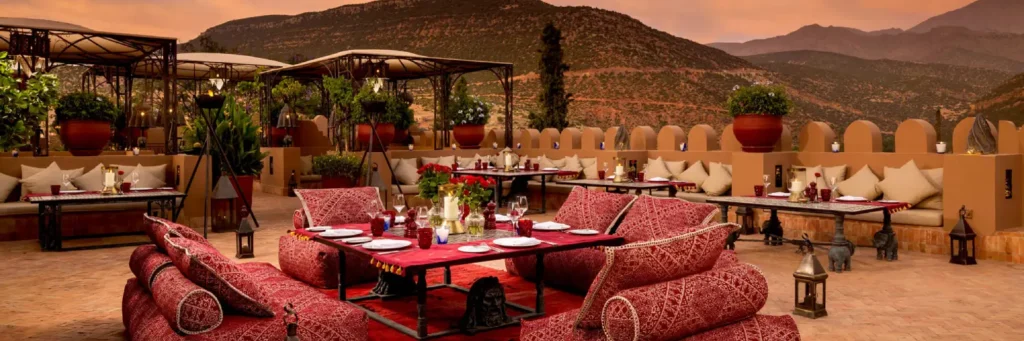
The Atlas Mountains, Morocco aren’t all blisters and bunk beds. You’ve also got some seriously dreamy luxury stays hiding in these valleys.
Kasbah Tamadot
- Sir Richard Branson’s mountain hideaway near Asni
- Berber Tented Suites with plunge pools, insane valley views, and curated experiences
- Basically “honeymoon in the mountains” energy
Kasbah Bab Ourika
- Perched on a ridge above the Ourika and N’Fis valleys
- Built from rammed earth so it melts into the landscape
- 360° views, organic gardens, and a big focus on sustainability
Kasbah du Toubkal
- Often called a “Mountaineer’s Palace”
- You can only reach it by foot or mule from Imlil, which makes it feel extra special
- Mix of authentic Berber style and comfy stays, with terraces looking straight at the Toubkal massif
Olinto
- Small, intimate retreat in the Ouirgane Valley
- Pavilion-style suites, lots of privacy, very “slow travel, read-a-book, take-a-hike” vibes
- Perfect if you want to mix gentle walks, spa time, and absolutely zero stress
Gear & Preparation Checklist
Footwear
- Broken-in, waterproof hiking boots with ankle support (no “brand new boots on day one” regrets)
- Comfy trainers or sandals for around lodges and villages
Clothing (Layering Is Your Superpower)
- Moisture-wicking base layers
- Fleece or light insulated jacket
- Waterproof, windproof shell jacket and pants
- Sun hat, beanie, and light gloves—even summer mornings at altitude can be chilly
Health & Safety
- SPF 50+ sunscreen and lip balm (the sun here doesn’t play)
- Water system: 1.5–3L a day plus a filter bottle, LifeStraw, or tablets
- Mini first-aid kit: blister plasters, painkillers, rehydration salts
- Altitude awareness: go steady, drink water, and don’t try to be a hero if you feel rough
Winter / Shoulder Season Extras
- Crampons that actually fit your boots
- Ice axe, plus someone (your guide) who knows what they’re doing with it
- 4-season sleeping bag for basic mountain refuges
- Gaiters, thicker gloves, and extra thermal layers
Cultural Etiquette: Respecting Berber Traditions
One of the best parts of the Atlas Mountains, Morocco is walking through Amazigh villages where life still follows the seasons more than the clock. A little respect goes a long way.
Hospitality
- If someone invites you in for mint tea—aka “Berber whiskey”—say yes if you can
- It’s a big sign of welcome. Sit, sip slowly, chat, even if you only know a few words
Dress Code
- Cover shoulders and knees, especially in villages, homes, or religious areas
- Super tight or very revealing clothes can feel awkward for locals
Photography
- Always ask before taking photos of people, their homes, or animals
- Many are fine with it if you show respect and maybe share the photo after
Planning an Atlas Mountains trip and not sure which valleys, villages, or hiking routes fit your itinerary? Get in touch with me, Youness. I can help you plan realistic travel times, choose the right mountain stops, and connect the Atlas naturally with Marrakech, the Sahara, or the rest of your Morocco route.
For detailed advice about scams, taxis, ATMs and general travel safety, read my Morocco Travel Safety Guide 2026. For mountain-specific safety, always check weather conditions and use an experienced local guide for higher-altitude routes.
Expert FAQ Section
Do I need a permit for Mount Toubkal?
You don’t need your own special permit, but you do now need a licensed local guide. They handle the checkpoints, make smart calls on route and weather, and basically keep your Toubkal experience safe instead of sketchy.
Is altitude sickness common in the Atlas Mountains?
It can happen, especially on Toubkal above 3,000m. Go up gradually, drink plenty of water, eat light, and avoid alcohol. Spending a night at the Toubkal Refuge really helps. If you feel off, tell your guide—don’t just push through.
Can you see the Sahara from the summit of Toubkal?
Yes, and it’s as epic as it sounds. On a clear day from the 4,167m summit, you can see jagged High Atlas ridges fading into the hazy golden Sahara. Sunrise up there is next-level.
Are the Atlas Mountains safe for solo female travelers?
Generally, yes—especially in well-trodden areas like Imlil and Ourika. Hiring a good local guide makes everything easier: navigating trails, dealing with transport, and smoothing out cultural differences. Plus, it’s nice having backup in the mountains.
So use this as your basecamp: whether you’re into family-friendly river walks, serious Morocco mountain trekking, film-set fortresses, or sipping mint tea at a luxury kasbah, the Atlas aren’t just a day trip from Marrakech. They’re their own little world—high peaks, warm hospitality, and more “wow” views than your camera roll can handle.
🌿 Responsible Travel in Morocco
When hiking or staying in the Atlas Mountains, carry a refillable water bottle and avoid leaving plastic behind on trails or in villages, where waste collection can be limited. Buying directly from local cooperatives, women’s workshops, and village artisans is also a practical way to support mountain communities while helping traditional crafts remain economically viable.
Choose locally run guesthouses, riads, and mountain lodges that use water carefully, reduce unnecessary waste, and employ people from the surrounding communities. On hiking routes, farmland, and village paths, stay on established trails and respect local instructions, especially around cultivated land and water sources.
The Atlas Mountains are also one of the best places in Morocco to practice slow travel. Spending an extra night or two in a valley or mountain village gives you more time to walk, meet local people, and experience daily life without rushing from one stop to the next — while also reducing the impact of constant transport.
Written by Youness Labchir
Licensed Morocco Tour Guide