
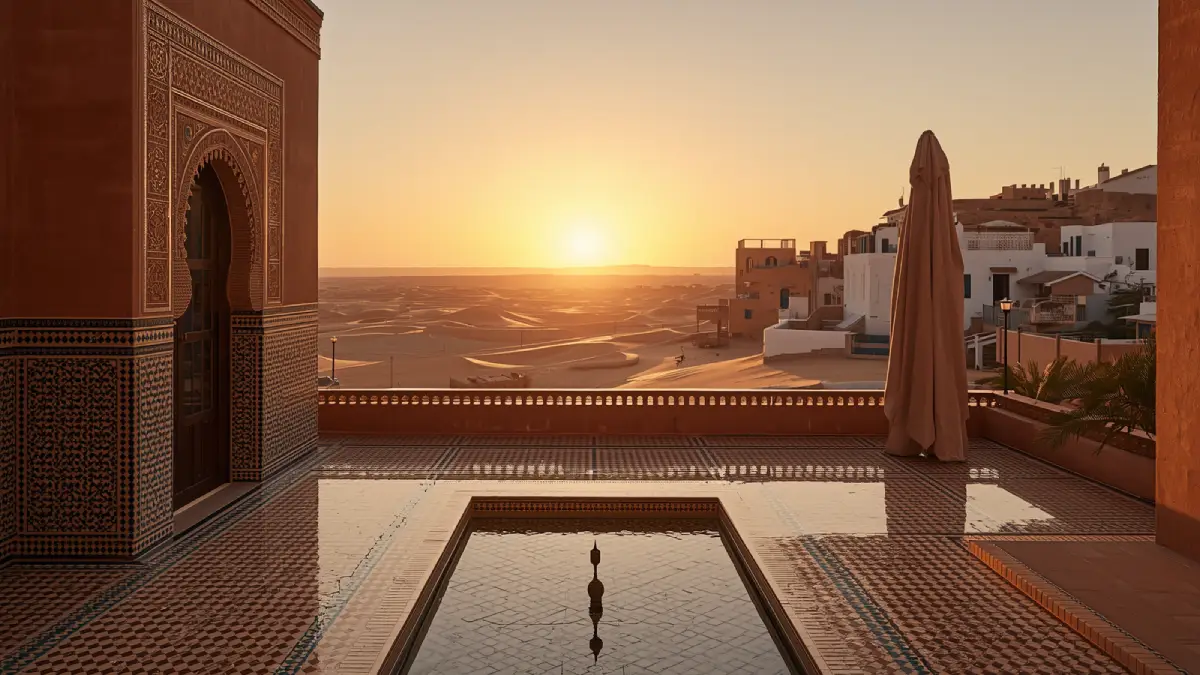
Best Places to Stay in Morocco 2026: Where to Base Your Trip
The best places to stay in Morocco depend on your route, not simply which hotel looks most attractive online.
For a first trip, I normally recommend combining different accommodation experiences: a riad in Marrakech or Fes, an accessible hotel when transport convenience matters, a coastal guesthouse in Essaouira and a carefully chosen Sahara camp when the desert fits the itinerary.
I’m Youness Labchir, a licensed Moroccan guide since 2004. After more than twenty years planning Morocco journeys, I have seen that the wrong location can create more problems than the wrong room. A beautiful riad deep inside a Medina may be perfect for one traveler and exhausting for another carrying several suitcases or traveling with young children.
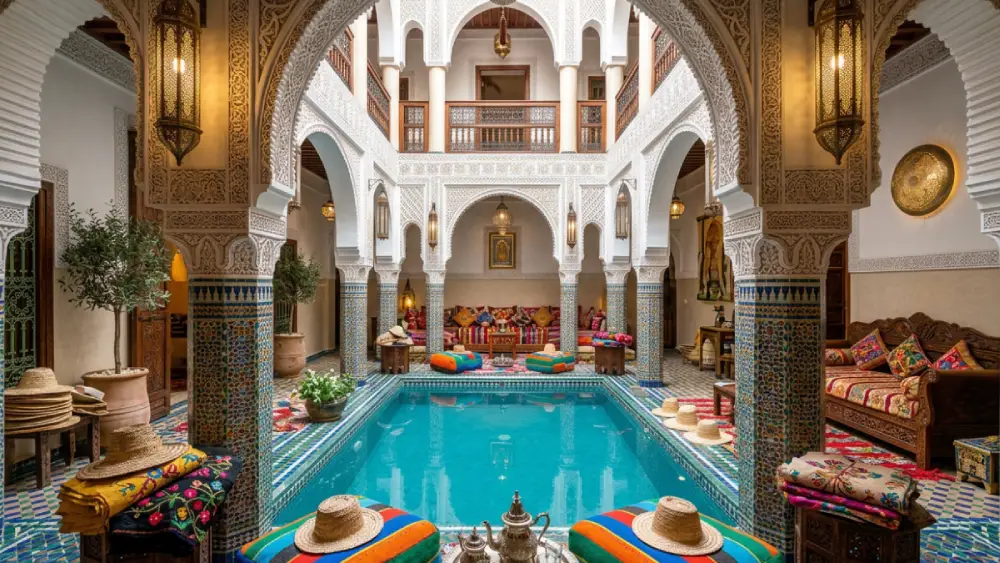
This guide will help you choose the right destinations, neighborhoods and accommodation types before you compare individual properties.
If you already know where you want to stay and are comparing specific riads, resorts and luxury properties, see my Best Hotels in Morocco 2026 guide.
Table of Contents
Table of Contents
Best Places to Stay in Morocco: Quick Answer
| Traveler or trip style | Best starting point | Accommodation to consider |
|---|---|---|
| First Morocco visit | Marrakech, Fes, Essaouira and one desert region | Medina riads, accessible hotels and one verified desert camp |
| Short city break | Marrakech, Tangier or Fes | Central riad or hotel near a vehicle-accessible gate |
| Families with children | Marrakech outside the deepest Medina, Rabat, Agadir or modern Tangier | Hotel, resort or family-friendly riad with straightforward access |
| Culture and historic architecture | Fes, Marrakech, Tetouan or Rabat | Restored riad, dar or heritage guesthouse |
| Coast and slower travel | Essaouira, Agadir, Taghazout or Tangier | Medina guesthouse, beachfront hotel or surf accommodation |
| Atlas Mountains | Imlil, Ouirgane or a village that fits the route | Mountain lodge, guesthouse or kasbah-style hotel |
| Easier Sahara logistics | Merzouga and Erg Chebbi | Guesthouse beside the dunes plus a verified camp |
| More remote Sahara experience | Erg Chigaga | Camp reached through an organized four-wheel-drive transfer |
| Mobility needs or substantial luggage | Modern districts and road-accessible properties | Hotel with a lift, parking or door-to-door transfer |
| Luxury and relaxation | Marrakech, Atlas foothills or selected coastal resorts | Verified palace hotel, resort or private villa |
My Recommendation
Do not choose every stay in isolation.
A property can have excellent reviews and still be wrong for your route because it is far from the next departure, difficult to reach with luggage or in an area that becomes inconvenient after dark.
Start by deciding:
- Which cities genuinely require overnight stops
- How many hotel changes the itinerary contains
- Whether atmosphere or easy access matters more
- Whether anyone struggles with stairs or long walks
- How each property connects with trains, airports and road journeys
The strongest Morocco accommodation plan usually mixes styles rather than booking the same type of property throughout the trip.
For realistic routes by trip length, start with my Morocco Itineraries hub.
How Moroccan Accommodation Really Works
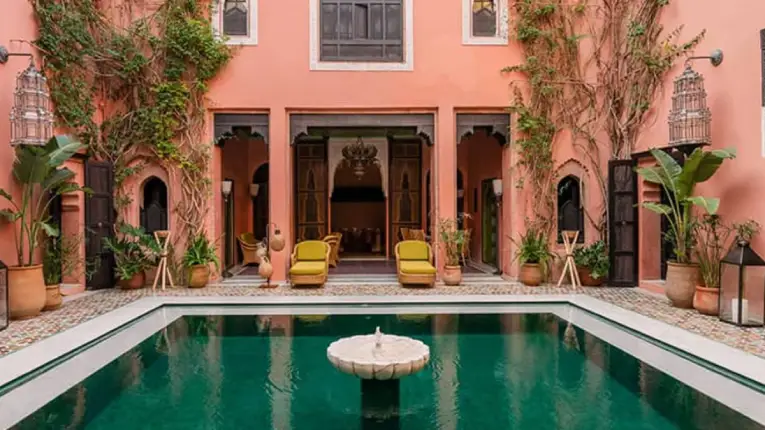
Morocco offers more than conventional hotels. Understanding the main property types will make booking considerably easier.
| Accommodation type | Best for | Important limitation |
|---|---|---|
| Riad | Historic atmosphere and personal service | Stairs, limited road access and rooms facing a shared courtyard |
| Dar or guesthouse | Smaller, informal traditional stay | Facilities and service vary considerably |
| Modern hotel | Families, business travel and easy transport | Less historic atmosphere |
| Resort | Pools, restaurants and relaxation | Often outside the walkable historic center |
| Kasbah-style hotel | Southern routes, valleys and desert gateways | The word “kasbah” does not guarantee a historic building |
| Mountain lodge | Hiking, villages and nature | Heating, road access and meal choices may be limited |
| Desert camp | Dune experience and overnight atmosphere | Electricity, bathrooms, noise and access vary |
| Apartment | Longer stays and independent travelers | Reception, housekeeping and luggage support may be limited |
| Hostel | Budget and social travel | Privacy, noise and comfort vary |
What Is a Riad?
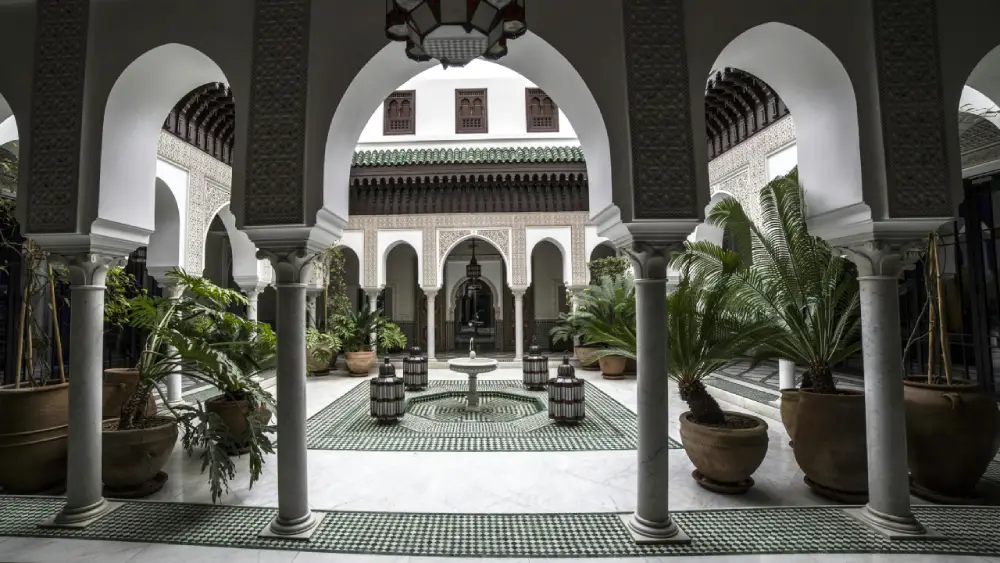
A riad is traditionally a Moroccan house organized around an interior courtyard or garden.
Many historic homes have been converted into small guesthouses. Bedrooms normally open toward the central courtyard, and breakfast may be served there or on the rooftop.
Riads can provide:
- Traditional architecture
- Personal service
- Home-cooked meals
- Rooftop terraces
- A quieter interior than the street outside
- Help finding your way through the Medina
They can also involve:
- Several flights of stairs
- No elevator
- Vehicle-free access
- Limited sound insulation
- Small or unusually shaped rooms
- Weak heating in winter
- Wi-Fi that does not reach every corner
The labels riad, dar and guesthouse are used loosely in marketing. Choose according to the actual building, access and facilities rather than the property name.
My Riad Morocco guide explains what to check before reserving one.
When Is a Hotel Better Than a Riad?
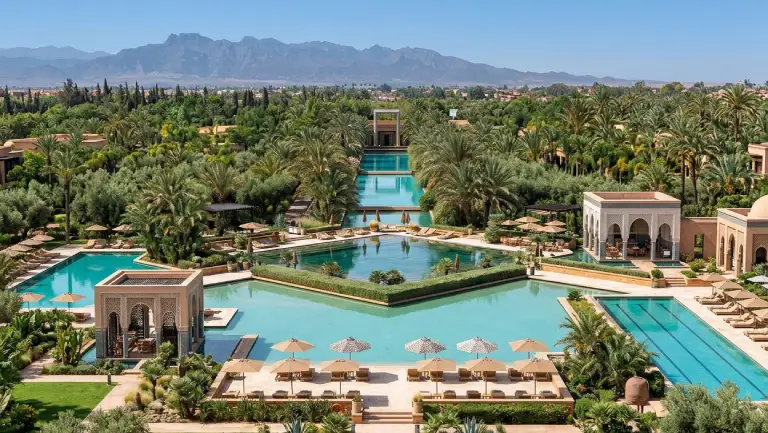
A modern hotel may be the better choice when you need:
- An elevator
- Reliable road access
- Parking
- Larger family rooms
- A swimming pool
- Twenty-four-hour reception
- Standardized heating and air-conditioning
- Easy access to a railway station or airport
- Space for several suitcases
Choosing a hotel does not make the trip less authentic. Sometimes practical accommodation gives you more energy to experience the destination itself.
For individual options across different price positions, use my Best Hotels in Morocco guide.
Where to Stay in Marrakech
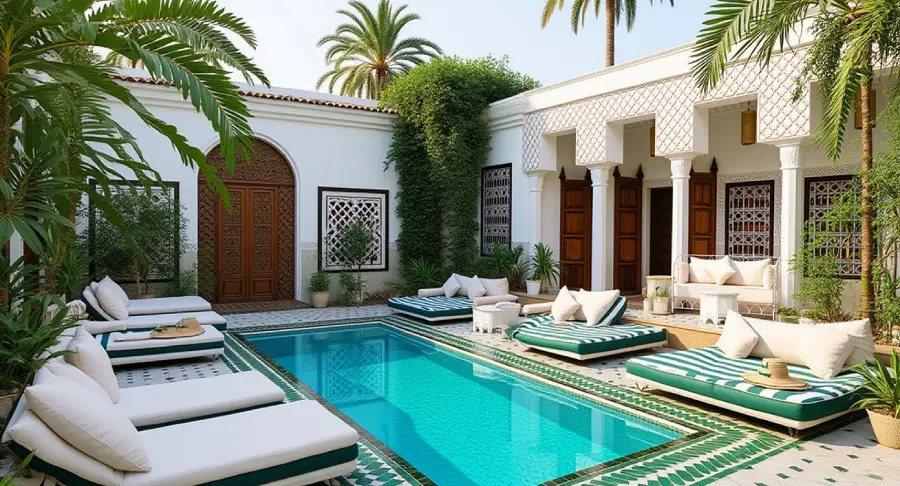
Marrakech offers Morocco’s widest accommodation range, from small Medina guesthouses to palace hotels and large resorts.
The main decision is whether you want to stay inside the Medina or in the modern city.
Marrakech Medina
Choose the Medina when you want:
- Souks and historic streets outside the door
- Rooftop breakfasts
- Traditional architecture
- Walking access to Jemaa el-Fna and historic attractions
- The experience of returning to a quiet courtyard after a busy day
The disadvantages are access, noise and navigation.
Motor vehicles cannot reach many riads. You may need to walk from a gate or parking area, sometimes through busy lanes. Ask the property for the exact drop-off point and whether someone will meet you.
The best Medina location is not always the closest room to Jemaa el-Fna. A property near a reliable gate can be more convenient while remaining within walking distance of the principal sights.
Gueliz
Choose Gueliz for:
- Modern hotels and apartments
- Cafés and contemporary restaurants
- Easier taxi access
- Wider streets
- Shopping
- Longer stays
- A less intense arrival
Gueliz works particularly well for travelers who want to visit the Medina during the day but sleep in a more familiar urban environment.
Hivernage
Choose Hivernage for:
- Higher-end hotels
- Pools and spas
- Nightlife
- Restaurants serving alcohol
- Easier vehicle access
- Proximity to the airport road
It is less atmospheric than the Medina but convenient for short luxury stays, events and travelers who value hotel facilities.
Palmeraie and Outlying Resorts
Properties outside central Marrakech suit travelers who want:
- A resort
- Large gardens
- Pools
- Privacy
- A quiet final night
- Time spent mainly at the property
They are less practical for travelers planning to enter the Medina every day. Taxi and transfer costs, journey times and isolation should be considered before booking.
My Marrakech Recommendation
For most first-time visitors, I recommend two or three nights in a well-located Medina riad.
Choose Gueliz or Hivernage instead when easy access, nightlife, mobility or hotel facilities matter more than sleeping inside the old city.
Use my Where to Stay in Marrakech 2026 guide to compare neighborhoods, then see the Best Riads in Marrakech for individual properties.
Where to Stay in Fes
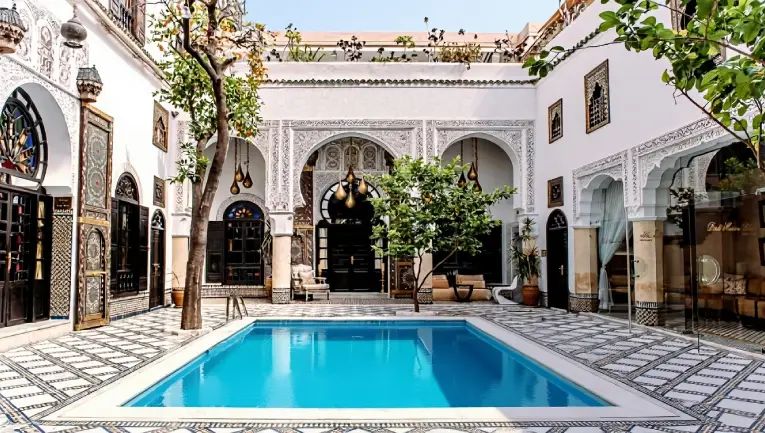
Fes presents a stronger version of the Medina-versus-modern-city decision.
Fes el-Bali is large, car-free and more complicated to navigate than Marrakech. Staying inside it can be one of Morocco’s most memorable experiences, but the property’s exact location matters.
Fes el-Bali
Choose Fes el-Bali when you want:
- Historic architecture
- Rooftop Medina views
- Walking access to madrasas, souks and craft areas
- A complete old-city experience
- A riad meal after sightseeing
The deeper the property sits inside the Medina, the longer the final luggage walk may be.
For many travelers, the best compromise is a riad near a major gate such as Bab Boujloud or Bab Rcif. You retain the atmosphere while making taxis, luggage and evening returns easier.
Fes Ville Nouvelle
Choose Ville Nouvelle for:
- Railway-station access
- Modern hotels
- Elevators
- Parking
- Easier airport transfers
- Familiar restaurants and services
You will need transport to reach the historic Medina, but the practical advantages can be valuable for families, older travelers and one-night transit stays.
My Fes Recommendation
Stay inside Fes el-Bali when historic immersion is one of the main reasons for visiting Morocco.
Choose a riad near a gate rather than the deepest available address when luggage, mobility or independent evening navigation concerns you.
My Best Riads in Fes 2026 guide compares the main locations and accommodation levels. The Fes Travel Guide will help you plan the rest of the stay.
Where to Stay in Essaouira
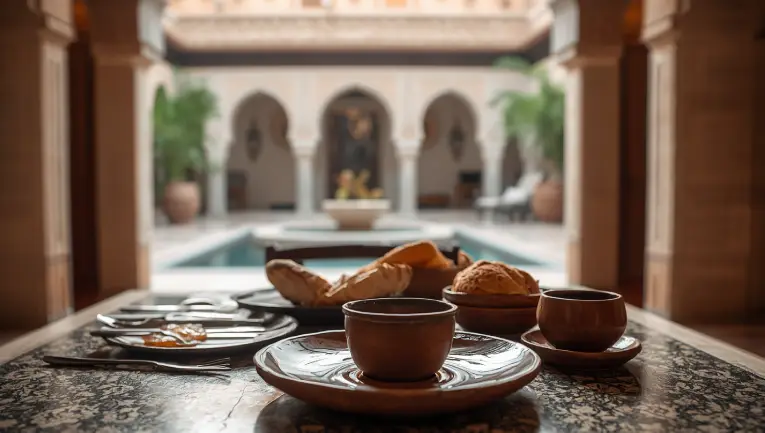
Essaouira is one of the easiest destinations in Morocco for slowing down.
The Medina is compact, the beach begins near the town and most visitors can explore without a car.
Inside the Essaouira Medina
Choose the Medina for:
- Traditional guesthouses
- Walking access to the port and ramparts
- Restaurants and cafés
- Rooftop terraces
- A car-free atmosphere
- Short stays without daily transport
The final access may still involve walking from Bab Marrakech, Bab Sbaa or another gate.
Ask about stairs and rooftop wind. A sea-view terrace can be beautiful while the room itself feels cool or noisy in windy weather.
Beach and New-Town Side
Choose accommodation outside the walls when you want:
- Easier road access
- Parking
- Larger hotels
- Beach proximity
- Rooms with lifts
- A quieter base away from the busiest Medina streets
This area is practical for families, surfers carrying equipment and travelers continuing by rental car.
Countryside Outside Essaouira
Rural lodges and villas outside town suit longer relaxation stays.
They are not ideal when your main plan is walking into the Medina several times a day. Confirm transportation, meals and the distance to town before booking.
My Essaouira Recommendation
For two or three nights, I normally choose a Medina riad near a gate.
Choose the beach side when luggage, parking or immediate access to the sand matters more.
See my Best Riads in Essaouira guide for current individual recommendations.
Where to Stay in Chefchaouen
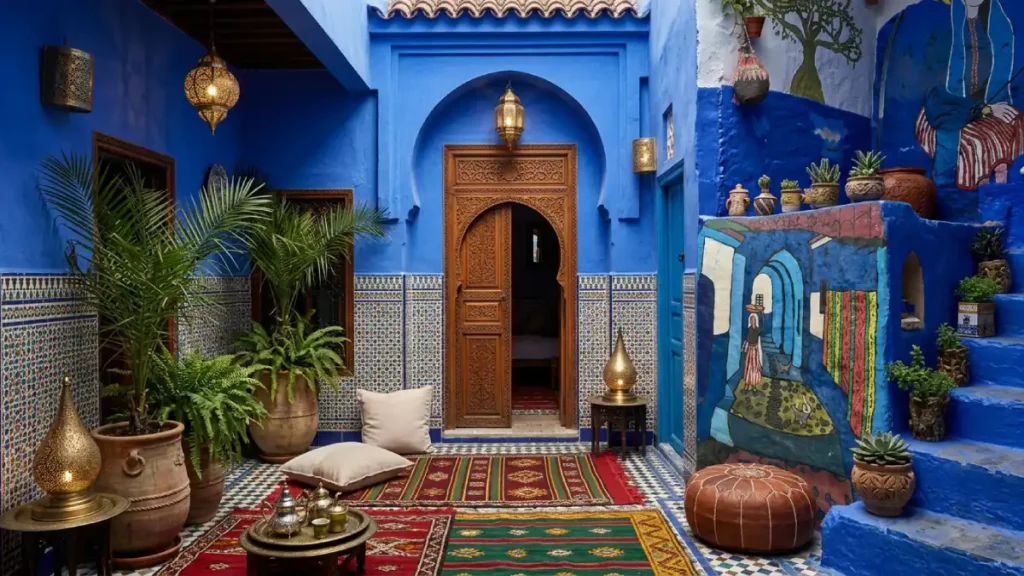
Chefchaouen is small, but its steep terrain changes the accommodation decision.
Inside the Blue Medina
Choose the Medina for:
- Blue lanes outside the door
- Rooftop views
- Quiet mornings before day-trippers arrive
- Walking access to the main square
- A romantic or atmospheric overnight stay
Many properties involve stairs, both inside the building and along the street leading to it.
A map can make two accommodations appear equally central while one requires a much steeper climb.
Below or Outside the Medina
Choose a hotel or guesthouse lower down when you need:
- Parking
- Easier luggage access
- Fewer stairs
- A direct vehicle drop-off
- A simpler arrival after dark
You can still walk into the old city without sleeping at its highest point.
My Chefchaouen Recommendation
Stay at least one night rather than visiting only during the busiest middle of the day.
Choose the Medina when atmosphere matters and you can manage the steps. Choose a lower property when comfort and access matter more than waking inside the blue lanes.
See my Best Riads in Chefchaouen and Chefchaouen Travel Guide.
Where to Stay in Tangier
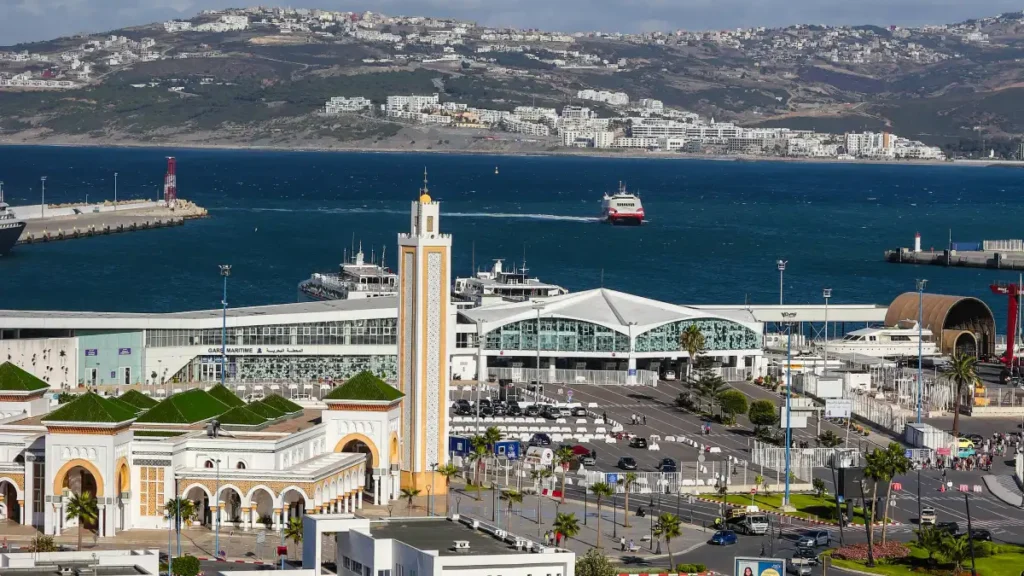
Tangier offers historic accommodation in the Kasbah and Medina, modern hotels near the center and larger properties around Malabata and the waterfront.
Kasbah and Medina
Choose the historic city for:
- Port and Strait views
- Small guesthouses
- Access to museums and cafés
- Atmosphere
- Walking routes through old Tangier
Expect steep streets, stairs and limited vehicle access.
Ask how far you will walk from the taxi drop-off and whether luggage help is available.
City Center and Grand Socco
Choose the central city for:
- Easy access to the Medina
- Taxis
- Cafés and shops
- Short ferry stays
- A balance between atmosphere and convenience
This is often the best option for travelers with only one night.
Malabata and the Waterfront
Choose Malabata for:
- Modern hotels
- Railway-station convenience
- Sea views
- Easier vehicle access
- Family facilities
- A flatter evening walk
You will normally take a taxi to the Kasbah and upper Medina.
My Tangier Recommendation
Choose the Kasbah for atmosphere and Malabata for transport convenience.
My Tangier Travel Guide 2026 includes a fuller area comparison, ferry advice and realistic itineraries.
Where to Stay in Rabat
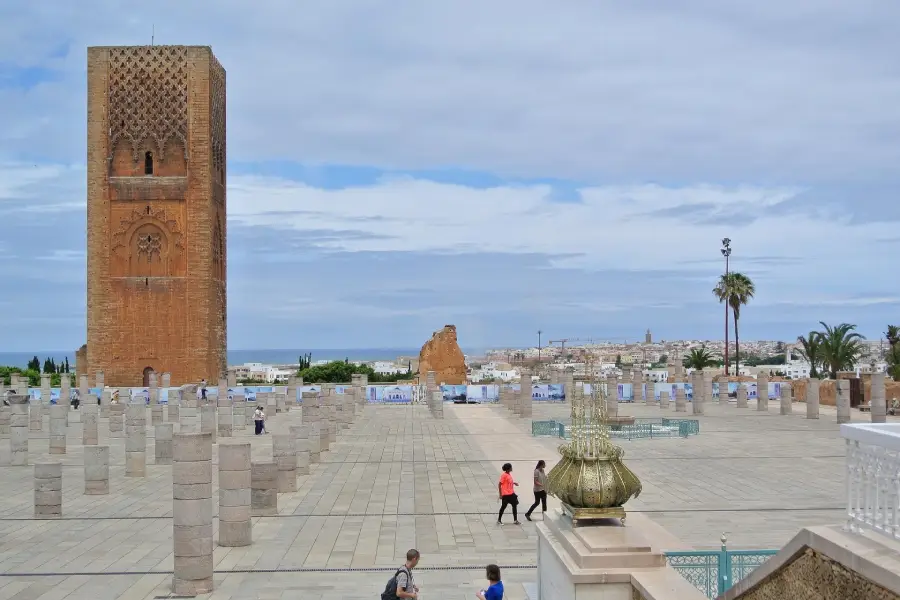
Rabat is calmer and easier to navigate than Marrakech or Fes.
It works well for travelers who want historic sights without staying in a large, intense Medina.
Rabat Medina and Kasbah des Oudayas
Choose this area for:
- Historic atmosphere
- Walking access to central sights
- Traditional guesthouses
- Cafés and local streets
- A quieter Medina experience
Property choice is smaller than in Marrakech or Fes, so book earlier when you want a specific style.
Hassan and Central Rabat
Choose Hassan for:
- Modern hotels
- Tram access
- Easier taxis
- Business travel
- Access to major monuments
- A comfortable first or final stay
Agdal
Choose Agdal for:
- Restaurants and cafés
- Apartments
- Longer stays
- Modern services
- Railway connections
- A residential atmosphere
My Rabat Recommendation
Rabat is one of the best Moroccan cities for travelers who want a manageable combination of history and modern comfort.
Stay centrally for one or two nights rather than using the city only as a brief railway stop.
Once you have chosen your neighborhood, use my Rabat travel guide to plan the city’s main sights and a realistic one- or two-day itinerary.
Where to Stay in Casablanca
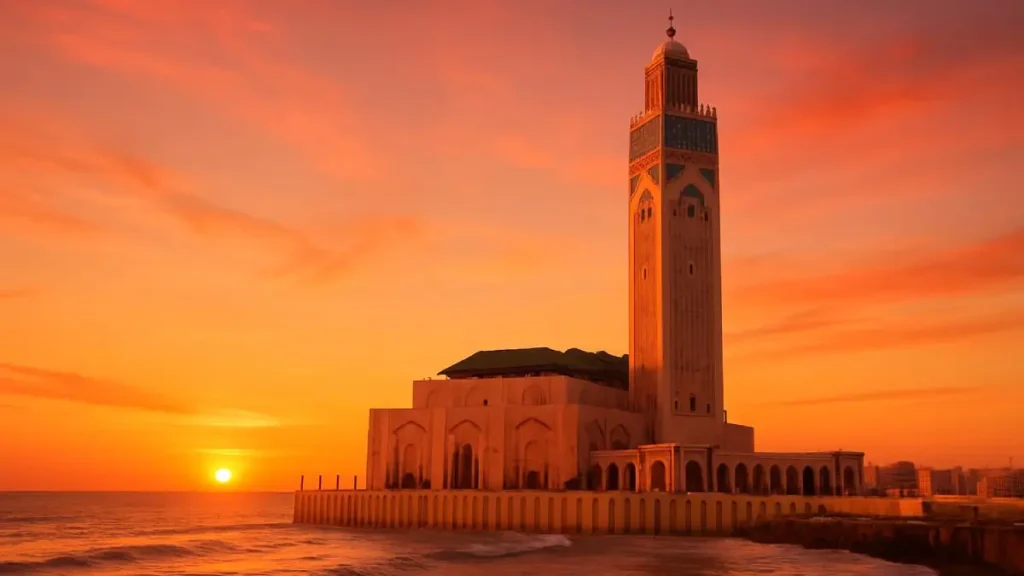
Casablanca is mainly a practical base for flights, business, the Hassan II Mosque and onward rail travel.
Choose the neighborhood according to the purpose of the stay.
Near Casa Voyageurs
Choose this area when:
- You arrive late by train
- You leave early
- The stay is only one night
- Railway convenience is the priority
This is a functional choice rather than the city’s most attractive base.
Central Casablanca
Choose the center for:
- Architecture
- Restaurants
- Tram access
- Business travel
- Easier movement around the city
Check recent comments about street noise and the immediate block around the hotel.
Ain Diab and the Corniche
Choose the Corniche for:
- Sea views
- Restaurants
- Nightlife
- Larger hotels
- A more relaxed one- or two-night stay
You will normally use taxis to reach the railway station and central attractions.
My Casablanca Recommendation
Do not cross the entire city simply to stay in the most fashionable area before an early train or flight.
Match the hotel to the departure point. Convenience can be more valuable than atmosphere during a transit night.
Where to Stay in the Atlas Mountains
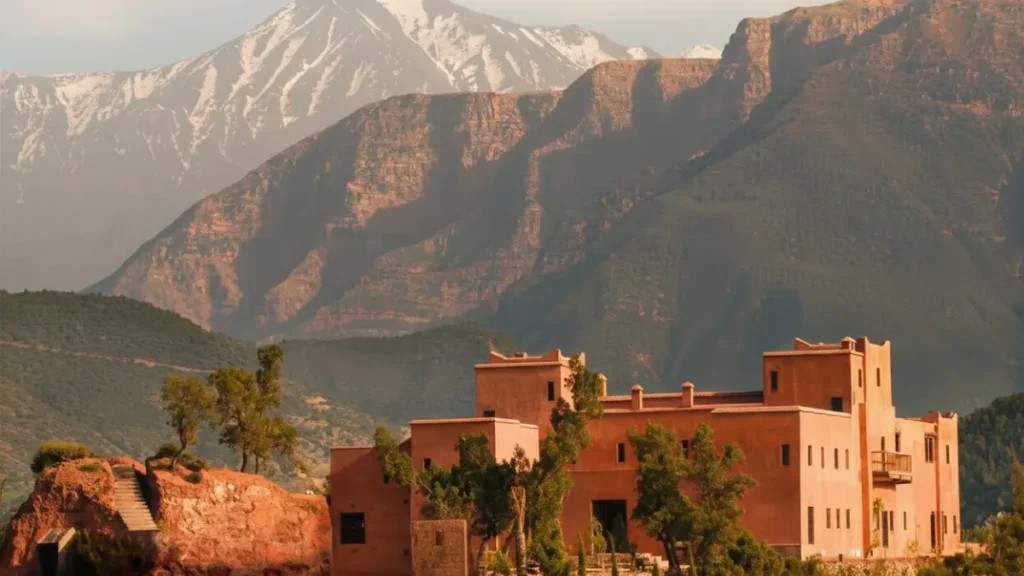
The Atlas Mountains should not be treated as one accommodation zone.
Imlil, Ouirgane, the Ourika Valley and other mountain areas provide different experiences and route connections.
Imlil
Choose Imlil for:
- Hiking
- Mount Toubkal routes
- Village guesthouses
- Mountain guides
- Active stays
Properties may be reached by steep roads, village paths or short walks from the vehicle.
Ask about:
- Luggage transfer
- Heating
- Hot water
- Meal arrangements
- Guide access
- Road conditions
- Distance from the vehicle drop-off
Ouirgane
Choose Ouirgane for:
- Quiet lodges
- Pools and gardens
- Short walks
- A slower mountain stay
- Easier relaxation than high-altitude trekking
It suits travelers wanting nature without committing to a demanding hike.
Ourika Valley
The Ourika Valley is more commonly visited as a day trip, but an overnight stay can make sense when you want a quieter evening after the day visitors leave.
Check road access and restaurant options because accommodation is spread along the valley.
My Atlas Recommendation
Stay overnight when the mountains are an important part of the trip rather than an item to collect between Marrakech and another destination.
For active travel, use my Trekking Atlas Mountains Morocco 2026 guide.
Where to Stay Along the Southern Morocco Route
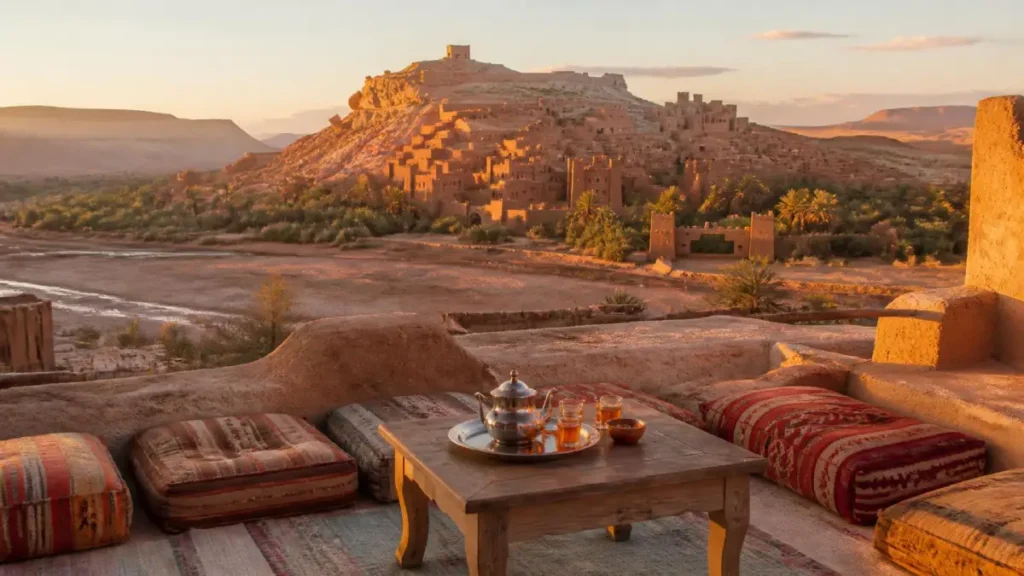
The road between Marrakech and the Sahara includes several possible overnight bases.
Do not choose all of them on one short itinerary.
Aït Ben Haddou
Stay in or near Aït Ben Haddou for:
- Late-afternoon and early-morning views
- A quieter experience after day visitors leave
- A first night after crossing the High Atlas
- Historic atmosphere
Accommodation choice is more limited than in Ouarzazate.
Ouarzazate
Choose Ouarzazate for:
- A broader hotel selection
- Restaurants
- Film-related attractions
- Easier road logistics
- A practical transit base
It is useful rather than deeply atmospheric in every neighborhood.
Skoura
Choose Skoura for:
- Palm-grove scenery
- Kasbah guesthouses
- Slower travel
- Gardens and quiet
- A more restful alternative to a roadside hotel
Skoura is one of my preferred southern bases when the itinerary allows time to enjoy the property rather than arriving late and leaving early.
Dades Valley
Stay in the Dades Valley when the route continues toward Todra Gorge and Merzouga.
Check the exact location. Some properties described as being “in Dades” sit far along the winding gorge road, adding driving time the following morning.
Todra and Tinghir
Tinghir offers practical services, while properties closer to Todra Gorge provide scenery and walking access.
Choose according to whether you need a functional overnight stop or time in the gorge itself.
My Southern Route Recommendation
On a slower journey, choose one atmospheric base such as Skoura or Aït Ben Haddou and one practical valley stop before the desert.
On a three-day Marrakech–Merzouga tour, accommodation is often selected according to the fixed route rather than because it is the best property in the region.
My 3 Day Desert Tour From Marrakech explains what the standard overnight structure actually involves.
Where to Stay in the Sahara
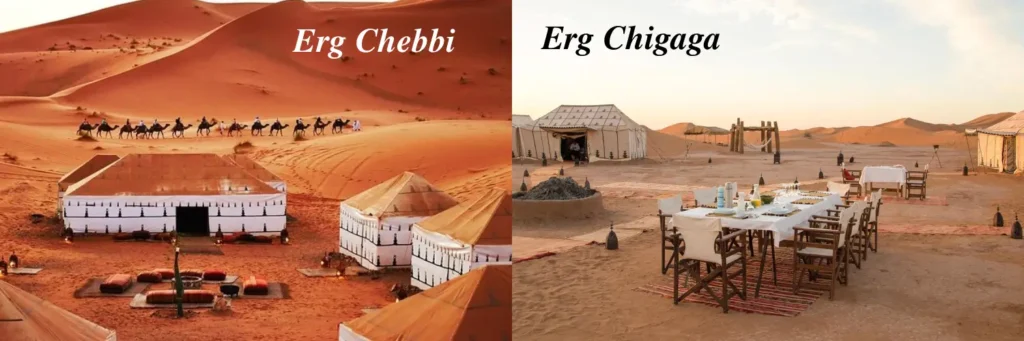
Morocco’s two main large-dune experiences are Erg Chebbi near Merzouga and Erg Chigaga beyond M’Hamid.
They require different accommodation and transport planning.
Merzouga and Erg Chebbi
Merzouga is the easier option for independent travelers.
Paved roads reach the settlements beside the dunes, and travelers can choose between:
- Hotels and guesthouses in Merzouga
- Properties in Hassilabied
- Camps near the dunes
- Packages combining a guesthouse and camp night
Guesthouse or Desert Camp?
A guesthouse provides:
- Standard road access
- A conventional room
- Easier charging
- More predictable bathrooms
- Somewhere to leave luggage
- Shelter during difficult weather
A camp provides:
- Dune surroundings
- Sunset and sunrise
- Dinner and breakfast
- Music or evening gathering
- Camel or four-wheel-drive transfer
For many travelers, the best arrangement is one guesthouse night and one camp night rather than using the camp as the only base.
What to Verify Before Booking a Merzouga Camp
Confirm:
- Exact camp location
- Meeting point
- Vehicle parking
- Camel or four-wheel-drive transfer
- Private or shared bathroom
- Hot-water availability
- Heating or cooling
- Electricity hours
- Dinner and breakfast
- Sandboarding or other activities
- Luggage transfer
- Cancellation during severe weather
- Music and quiet hours
The word luxury has no consistent definition across desert camps.
A private bathroom does not necessarily mean reliable hot water, and electricity does not necessarily operate throughout the night.
Erg Chigaga
Erg Chigaga is more remote and normally reached by four-wheel drive from the M’Hamid or Foum Zguid side.
Choose it when you want:
- Greater isolation
- Fewer camps
- An off-road approach
- A stronger feeling of distance
- A slower desert itinerary
It is less suitable when you have very limited time or want to organize every stage independently.
See my Erg Chebbi vs Erg Chigaga comparison and Sahara Desert Camp guide before choosing.
Where to Stay in Agadir and Taghazout
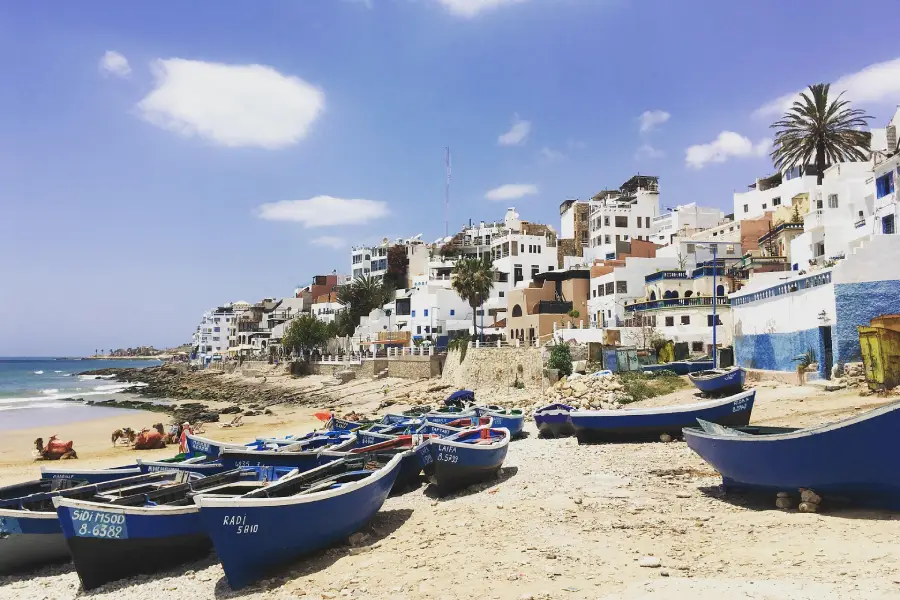
Agadir and Taghazout suit different coastal travelers.
Agadir
Choose Agadir for:
- Large beachfront hotels
- Resorts
- Pools
- Family facilities
- Accessible rooms
- A straightforward beach holiday
- Restaurants and organized services
Agadir was rebuilt as a modern city, so it does not offer the traditional Medina accommodation experience of Marrakech, Fes or Essaouira.
Once you have chosen where to stay, see my guide to things to do in Agadir, Morocco to plan your days.
Taghazout
Choose Taghazout for:
- Surfing
- Smaller guesthouses
- Yoga and wellness retreats
- Longer coastal stays
- A social atmosphere
- Cafés and ocean views
The village has grown quickly. Check construction noise, road access, parking and the actual walking distance to the beach.
Properties described as being in Taghazout may be in nearby developments or villages rather than in the old center.
Once you choose your accommodation, check my Agadir to Taghazout transport guide so you know whether your property is in the village, Taghazout Bay or another nearby development.
My Agadir and Taghazout Recommendation
Choose Agadir for a conventional resort and Taghazout for surfing or a smaller coastal atmosphere.
If you are travelling from Marrakech to Agadir, plan the transport before booking your accommodation, especially when your final destination is outside central Agadir.
Travelers seeking historic architecture and walkable old streets should consider Essaouira instead.
Best Places to Stay in Morocco by Traveler Type
First-Time Visitors
A strong first-trip accommodation mix is:
- Marrakech riad
- Fes riad near an accessible gate
- Essaouira or Chefchaouen guesthouse
- Southern kasbah or valley lodge
- Verified Sahara camp
- Practical final-night hotel near the departure route
This provides contrast without changing hotels every night.
Families
Families should prioritize:
- Road access
- Connecting rooms or suites
- Pool safety
- Lifts
- Reliable heating and cooling
- Breakfast timing
- Child seats for transfers
- Space for luggage
- Quiet sleeping rooms
A beautiful but inaccessible riad is rarely worth several difficult arrivals and departures with young children.
Solo Travelers
Solo travelers may prefer:
- Small riads with staffed reception
- Hostels with strong recent reviews
- Central hotels
- Properties that arrange arrival transfers
- Accommodation close to well-used routes
Confirm whether reception remains staffed after your expected arrival time.
Couples
Couples often enjoy:
- Medina riads
- Kasbah guesthouses
- Small mountain lodges
- Coastal boutique hotels
- One carefully selected desert camp
Check privacy, room location and noise rather than choosing only from courtyard photographs.
Travelers With Limited Mobility
Ask direct questions before booking:
- How many stairs lead to the room?
- Is there a lift?
- Can a vehicle reach the entrance?
- Is the shower step-free?
- Are public areas accessible?
- How far is the nearest taxi point?
- Can staff assist with luggage?
The word accessible can mean different things, so request photographs or measurements when necessary.
What Accommodation Photographs Do Not Show
Online photographs rarely explain:
- The walk from the taxi drop-off
- Street noise
- Calls to prayer
- Rooftop stairs
- Whether the room faces the courtyard
- Bathroom ventilation
- Winter heating
- Construction next door
- How cold a pool remains
- Whether the terrace is shared
- How long breakfast takes
- Parking arrangements
- The road to a mountain lodge
- Nighttime music at a desert camp
Read recent reviews for repeated practical complaints, not only general praise.
One negative review does not prove a property is bad. The same complaint appearing repeatedly usually deserves attention.
Morocco Accommodation Booking Checklist
Before reserving, confirm:
- Exact location
- Vehicle access
- Final walking distance
- Luggage assistance
- Number of stairs
- Lift availability
- Heating and air-conditioning
- Bathroom type
- Breakfast hours
- Dinner availability
- Parking
- Reception hours
- Payment method
- Local taxes or additional charges
- Cancellation conditions
- Pool season
- Wi-Fi where you need it
- Family-room configuration
- Airport, station or port transfer
- Construction or renovation nearby
For a desert camp, also confirm the meeting point and final transfer.
For a Medina riad, save the nearest gate and telephone number before arrival.
How Many Hotel Changes Are Too Many?
Changing accommodation consumes more time than most travelers expect.
Every move involves:
- Packing
- Checkout
- Luggage transport
- Waiting
- Driving
- Finding the new property
- Check-in
- Reorganizing the room
I try to avoid one-night stays unless the route genuinely requires them.
A two-night base normally gives you one complete day without luggage. Three nights create time to understand the destination rather than only arrive and leave.
Matching Accommodation to a Realistic Route
Five Days
Choose one primary base and one nearby contrast.
Examples:
- Marrakech plus Essaouira
- Marrakech plus the Atlas Mountains
- Fes plus Chefchaouen
- Tangier plus Chefchaouen or Asilah
Do not try to combine Marrakech, Fes and the Sahara in five days.
Seven Days
A realistic accommodation pattern might be:
- Three nights Marrakech
- Two nights Essaouira or Atlas Mountains
- One or two final nights according to the departure airport
A northern trip could combine Tangier, Chefchaouen and Fes.
Ten Days
Ten days can support:
- Marrakech
- Southern route
- Merzouga
- Fes
Alternatively, choose a city-and-coast route without the Sahara.
Fourteen Days
Two weeks allow a stronger accommodation mix:
- Marrakech riad
- Atlas or southern lodge
- Dades or Skoura
- Sahara guesthouse and camp
- Fes riad
- Chefchaouen guesthouse
- Tangier or Casablanca departure hotel
The route should determine the stays. Do not choose ten attractive properties and then force them into one itinerary.
Best Time to Book Accommodation in Morocco
Book earlier when traveling during:
- Spring
- Early autumn
- Christmas and New Year
- Easter or international school holidays
- Major festivals
- Moroccan holiday travel periods
- Weekends at small desert camps
- Peak surf periods
- Special events in Marrakech
Season also affects what matters inside the property.
In summer, verify air-conditioning, shade and pool access.
In winter, verify real heating, hot water and whether the room receives sunlight.
For seasonal planning, use my Best Time to Visit Morocco guide.
FAQs About the Best Places to Stay in Morocco
What is the best place to stay in Morocco for first-time visitors?
Marrakech is the most practical first base for many visitors because it offers historic accommodation, modern hotels, restaurants and access to several onward routes.
A complete first trip should normally include more than Marrakech. Fes, Essaouira, Chefchaouen, the Atlas Mountains or the Sahara can provide a different side of the country.
Is it better to stay in a riad or hotel in Morocco?
Choose a riad for traditional architecture, a small property and Medina atmosphere.
Choose a hotel for lifts, road access, standardized facilities, pools, parking or easier family logistics. Many trips work best with both.
Which Moroccan city has the best riads?
Marrakech has the widest range, while Fes offers some of the strongest historic atmosphere.
Essaouira and Chefchaouen provide smaller, more relaxed riad experiences.
Is it safe to stay inside a Moroccan Medina?
Many travelers stay safely in Medina accommodation.
Choose a well-reviewed property, understand the arrival route and avoid wandering through unfamiliar empty lanes late at night. A riad near a major gate can provide a useful balance between atmosphere and access.
Should I stay in the Marrakech Medina or Gueliz?
Choose the Medina for historic atmosphere and walking access to the souks.
Choose Gueliz for modern hotels, restaurants, taxis and an easier urban environment. Neither area is universally better.
Where should families stay in Morocco?
Families often benefit from road-accessible hotels in Gueliz, Hivernage, Rabat, Agadir, Malabata or near Medina gates.
A family-friendly riad can also work when it has appropriate rooms, safe stairs and easy luggage arrangements.
Is one night in a Sahara camp enough?
One camp night is enough for many first-time visitors.
Travelers who want more comfort can stay one night in a Merzouga guesthouse and one night in a camp. Two camp nights make more sense when activities, solitude or a remote route justify them.
Is Merzouga or Erg Chigaga better for accommodation?
Merzouga offers easier access and a larger selection of guesthouses and camps.
Erg Chigaga offers greater remoteness but requires more transport planning and normally an off-road transfer.
Should I book accommodation with dinner?
Dinner is useful in mountain lodges, desert camps and remote southern properties where alternative restaurants are limited.
In Marrakech, Fes, Tangier and Essaouira, booking every dinner at the accommodation can prevent you from exploring the local restaurant scene.
How far in advance should I book Morocco accommodation?
Book small riads, desert camps and special properties early for spring, autumn and holiday periods.
Outside peak dates, you may have more flexibility, but the best-located rooms and family configurations can still sell first.
Are Moroccan riads suitable for older travelers?
Some are, but many involve stairs and vehicle-free access.
Choose a property near a Medina gate and ask direct questions about lifts, room level, bathrooms and the distance from the taxi drop-off.
Should I book the cheapest desert camp?
Not without checking what is included.
Very low prices may reflect shared bathrooms, basic bedding, distant camp locations, limited electricity or additional transfer charges. Compare the complete experience rather than the tent price alone.
Final Verdict: Where Should You Stay in Morocco?
The best places to stay in Morocco are the places that make your route easier while giving you the experience you actually want.
Choose a riad when historic atmosphere matters. Choose a hotel when access and facilities matter. Choose a mountain lodge when you have time to enjoy the surroundings, and choose a desert camp only after verifying its location, bathrooms, electricity and transfer arrangements.
For a first trip, I normally recommend mixing three or four accommodation styles. That contrast is part of traveling through Morocco.
The goal is not to collect the largest number of beautiful hotels. It is to wake up in the right place for the day ahead.
Use my Getting Around Morocco in 2026 guide to connect the bases, and check the Morocco Packing List 2026 for luggage advice across Medinas, mountains, coast and desert.
Travelers who want help matching accommodation to a private route can contact me through Morkosh Tours with their dates, group size and preferred pace. I will help you compare the route before you make the final booking decisions.