

Marrakech Travel Guide 2026: What First-Time Visitors Need to Know
Salam, I’m Youness Labchir. I’m a licensed Moroccan tour guide based in Marrakech, and I have been guiding travelers around Morocco since 2004.
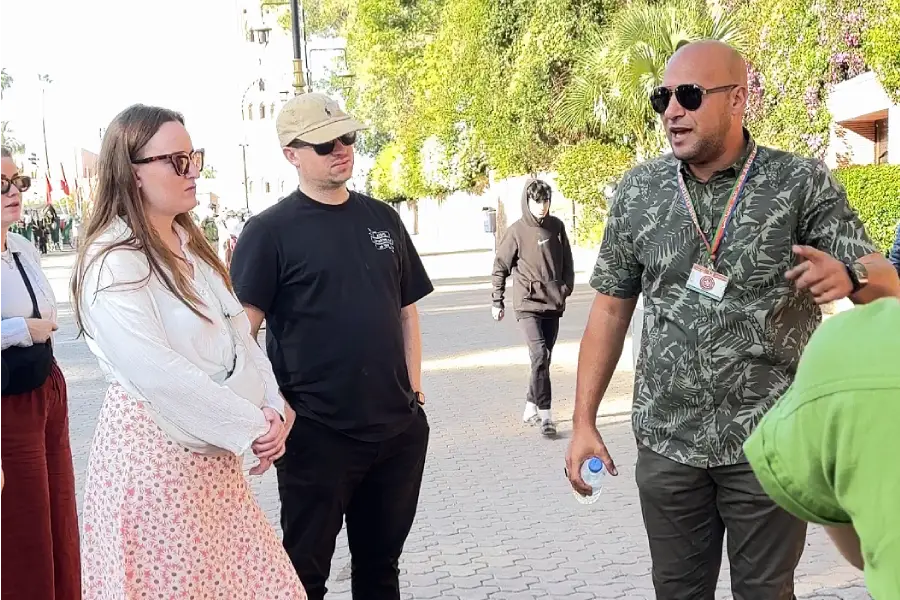
Marrakech can be one of the highlights of a trip to Morocco, but it is also a city that first-time visitors often misunderstand.
The Medina is noisy, colorful and intense. Scooters pass through narrow lanes, shopkeepers call from the souks, Jemaa el-Fna changes character throughout the day, and a riad that looks five minutes away on your phone can suddenly feel impossible to find.
Then you walk through an unmarked wooden door and everything changes: a quiet courtyard, orange trees, a fountain and almost none of the noise from outside.
Understanding that contrast is the key to enjoying Marrakech.
My advice for a first visit is simple: give Marrakech three full days, stay somewhere that suits the way you travel, and use your first morning to get oriented rather than immediately trying to conquer the Medina alone.
This Marrakech Travel Guide focuses on the practical details I explain to guests: where to base yourself, how airport taxis really work, what city taxis should cost, how not to get lost in the souks, which scams are genuinely common, how much time you need and how to explore without exhausting yourself.
For complete attraction recommendations, use my Best Things to Do in Marrakech guide. If choosing a neighborhood or riad is your main concern, go directly to my Where to Stay in Marrakech guide.
If you mainly want attractions and activities, see my guide to the Best Things to Do in Marrakech.
Table of Contents
Table of Contents
Marrakech Travel Guide: Quick Answers for First-Time Visitors
How long should you stay?
I recommend 3 full days in Marrakech if you are staying in the city and not using one of those days for a long excursion.
Where should first-time visitors stay?
For the classic Marrakech experience, look first at Mouassine or Dar El Bacha in the central Medina. Choose the Kasbah if easier access and a quieter atmosphere matter more. Choose Gueliz or Hivernage if you prefer modern hotels, wider roads and easier taxi access.
What should you do on your first day?
Do not make your first Marrakech experience a random solo walk deep into the souks. I recommend starting with a licensed guide or a reputable small-group Medina orientation tour, then exploring independently once you understand the main routes.
How much is a taxi from Marrakech Airport?
As a realistic local baseline, allow around 100–150 MAD during the day for a standard trip toward the Medina or central city, with many nighttime trips falling around 150–200 MAD after 8 PM, depending on the destination.
Is there an airport bus?
Yes. Bus 19 is useful for budget travelers. The current local fare is 30 MAD one way or 50 MAD for a dedicated round-trip ticket.
How much is a petit taxi in Marrakech?
For tourists, a realistic street baseline is around 20–30 MAD for a short daytime ride and roughly 30–50 MAD for a medium ride. Night fares are higher.
Do you need cash?
Yes. Cards are increasingly useful, but keep small Moroccan dirham notes for taxis, tips, small cafés, souk purchases and everyday expenses.
Is Marrakech difficult to navigate?
The main city is easy enough, but the deep Medina is different. GPS helps, although covered souks, narrow alleys and dead ends make digital maps imperfect. My Marrakech city map shows the main districts, Medina routes and useful navigation landmarks.
How Many Days Do You Really Need in Marrakech?
For most first-time visitors, three full days is the sweet spot.
Two days is possible, but you will spend much of the trip moving from one sight to another. You can see the Medina, Jemaa el-Fna, several historic monuments and perhaps Jardin Majorelle, but there is little space left for the slower side of Marrakech.
Three days gives the city room to breathe.
You can spend time learning the Medina rather than simply crossing it, visit the important architecture without racing, enjoy a hammam or cooking experience, have a long rooftop lunch and see some of modern Marrakech as well.
Four days works particularly well for slow travelers, families, photographers and anyone who likes downtime at their riad or hotel. For faster travelers, four full days entirely inside Marrakech can begin to feel repetitive.
My rule for first-time guests
2 full days: highlights only.
3 full days: my recommended balance.
4 full days: slow Marrakech with more rest, food and neighborhood time.
5+ days: consider using Marrakech as a base for one or more day trips.
If you want to leave the city, compare the realistic driving times in my Best Day Trips from Marrakech guide before sacrificing one of your Marrakech days.
Where Should a First-Time Visitor Stay in Marrakech?
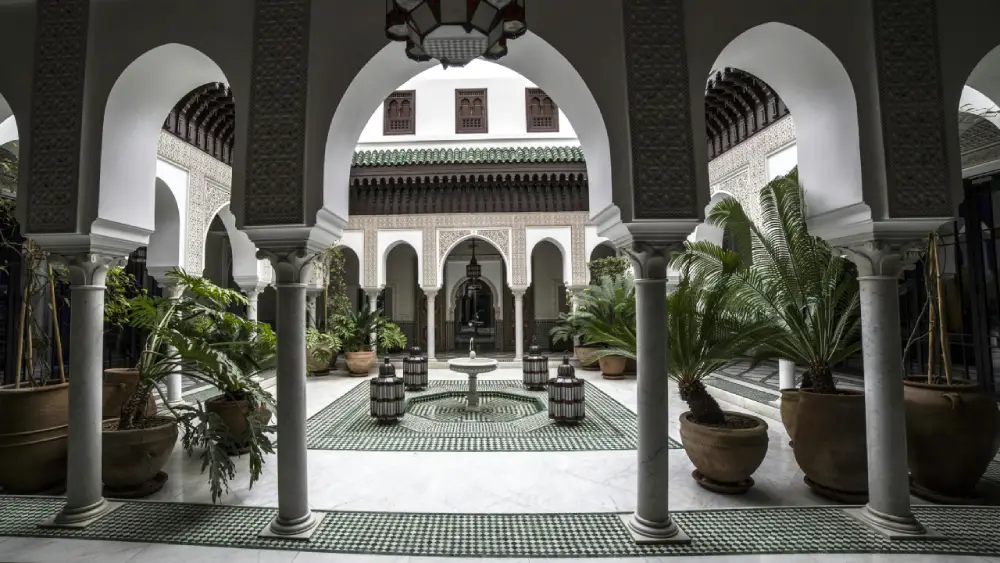
Where you sleep can completely change how Marrakech feels.
I do not believe every traveler should automatically book the deepest riad they can find simply because it looks beautiful online.
Mouassine and Dar El Bacha: my default first-time choice
For most first-time visitors who want the classic Medina experience, I like the area around Mouassine and Dar El Bacha.
You are close to the souks and many of the places travelers want to explore on foot, but the atmosphere can feel more manageable than staying immediately beside the busiest sections of Jemaa el-Fna.
There is also a good mix of traditional riads, cafés, galleries and more contemporary Marrakech design.
The Kasbah: better when access matters
The Kasbah is one of my favorite alternatives for travelers who want a riad but do not want to be buried deep inside confusing northern Medina alleys.
It feels more residential, has important historic sights nearby and generally gives you easier access to roads and taxis.
That can matter much more than people realize when arriving with luggage or returning late in the evening.
Gueliz or Hivernage: choose comfort over immersion
Choose Gueliz if you prefer modern cafés, restaurants, apartments, wider streets and a more familiar city layout.
Choose Hivernage if large hotels, swimming pools, luxury facilities and nightlife are priorities; my Marrakech nightlife guide compares Hivernage with Gueliz and the Medina for bars, clubs, rooftops and late-night transport.
You will lose some of the experience of waking up inside the old Medina, but getting around by car is easier.
If you plan to continue beyond the city, my guide to renting a car in Marrakech explains why collecting the vehicle in Gueliz may be easier than keeping it during a Medina stay.
For neighborhood-by-neighborhood advice, accommodation access and specific properties, use my complete Where to Stay in Marrakech 2026 guide rather than trying to choose your riad from this general travel guide.
Arriving at Marrakech Airport Without Starting Your Trip Stressed
Marrakech Menara Airport is close to the city. The difficult part for many first-time travelers is not the drive—it is the final arrival inside the Medina.
Use the official taxi system
The airport now uses an organized prepaid taxi system rather than forcing every arriving traveler to negotiate directly with a driver at the curb.
Look for the official Kech.cab / taxi counter, give them your destination, pay the quoted fare and follow the instructions for your assigned taxi.
For a typical first-time visitor heading toward the Medina or central Marrakech, I tell guests to think in terms of roughly:
- 100–150 MAD during the day
- 150–200 MAD after 8 PM as a realistic nighttime range
Exact official pricing depends on the destination, so use the amount displayed or quoted through the official system rather than insisting that every address should cost exactly the same.
Bus 19 is the budget option
If you are traveling light and arriving during operating hours, the airport bus can be useful.
Current local pricing:
- 30 MAD one way
- 50 MAD round trip
The important thing is what happens after you get off.
A bus or taxi can take you to the edge of the Medina. It cannot magically drive through every narrow alley to your riad.
Ask your accommodation before flying for:
- its WhatsApp location pin
- the nearest vehicle-accessible drop-off point
- a contact number
- whether someone can meet you if the riad is difficult to find
That final five or ten minutes is where many first-time arrivals become confused.
I explain the entire process in my Marrakech Airport to Medina guide.
Getting Around Marrakech: Walking, Petit Taxis and Ride Apps
Most first-time visitors use a combination of walking and petit taxis.
Inside the historic Medina, walking is usually the only practical option. Between the Medina, Gueliz and Hivernage, taxis are useful.
Petit taxi reality
The meter is supposed to be used, but in practice tourists should not assume every driver will volunteer to switch it on.
My current street baseline for visitors is:
- Short daytime ride, around 2–3 km: 20–30 MAD
- Medium ride, around 3–5 km: 30–50 MAD
- Nighttime: expect higher fares, commonly around 50% more after 8 PM
If a driver agrees to use the meter, the actual fare for a short journey can be lower.
When a driver refuses the meter, agree on the price before getting into the taxi.
If somebody asks for 70 or 100 MAD for an ordinary short city journey, you do not need an argument. Smile, say “la shukran,” and ask another driver.
Carry small notes. A reasonable 20 MAD ride becomes unnecessarily complicated when the only note in your wallet is 200 MAD.
Petit taxis are also limited to three passengers, so a group of four normally needs two small taxis or a larger vehicle.
What about Uber and Bolt?
This changed recently.
Uber officially returned to Marrakech in late 2025 using licensed transport vehicles, and Bolt also currently lists Marrakech as an operating city.
They can be useful, especially once you are already settled in the city, but I would still arrive with a backup plan rather than assuming an app pickup will always be the simplest option at the airport.
For travel between cities, trains, buses and longer routes, use my Getting Around Morocco guide.
If you are arriving from the capital, use my Rabat to Marrakech train guide for realistic journey times, tickets and advice on continuing from Marrakech station.
Coming from northern Morocco? My Tangier to Marrakech guide compares daytime trains, the overnight couchette, driving and private transfers.
If Chefchaouen is part of your route, use my Marrakech to Chefchaouen guide to compare travelling through Fes, connecting through Tangier, hiring a private transfer or driving.
Heading south to the Atlantic coast? My Marrakech to Agadir guide compares coaches, taxis, private transfers and driving so you can choose the most practical option for your trip.
The First-Day Mistake I See Again and Again
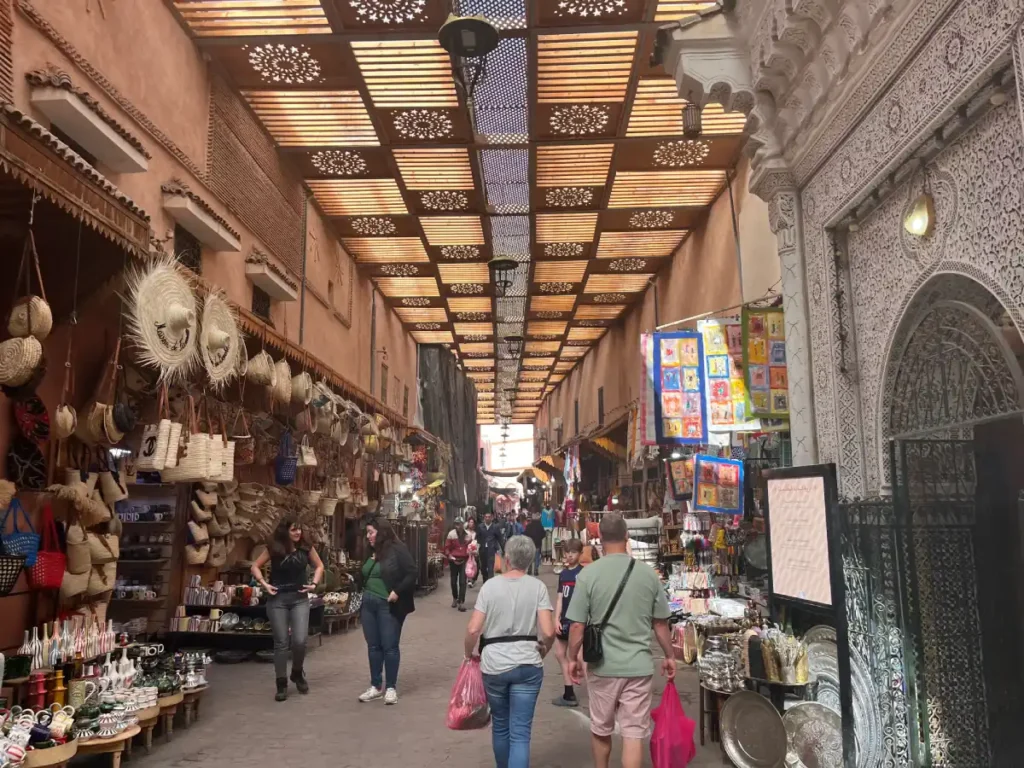
One of the most avoidable mistakes I see is this:
A traveler lands, leaves the bags at the riad and immediately walks straight toward Jemaa el-Fna and the souks with no understanding of how the Medina works.
Within an hour they are lost.
Then somebody appears and says the road is closed, offers a shortcut, leads them toward a shop or asks for money.
The traveler becomes defensive, assumes everybody is trying to scam them and spends the rest of the trip uncomfortable.
That is why I recommend using part of your first day for orientation.
A good licensed guide is not there simply to walk you between monuments.
The useful part is learning:
- how the main Medina routes connect
- which landmarks you can use for orientation
- where taxis can and cannot reach
- how souk pricing works
- how to respond to unsolicited “helpers”
- where you may want to return independently later
- how Jemaa el-Fna changes between daytime and evening
A private guide gives you the most flexibility. Travelers on a smaller budget can choose a reputable group walking tour led by a properly qualified local guide. My Marrakech walking tour guide compares private guides with free and lower-cost walking tours in more detail.
After that first orientation, go back and explore alone.
That is the point.
You do not need somebody holding your hand for your entire Marrakech trip. You need enough understanding to feel comfortable making your own decisions.
What Should You Actually See in Marrakech?
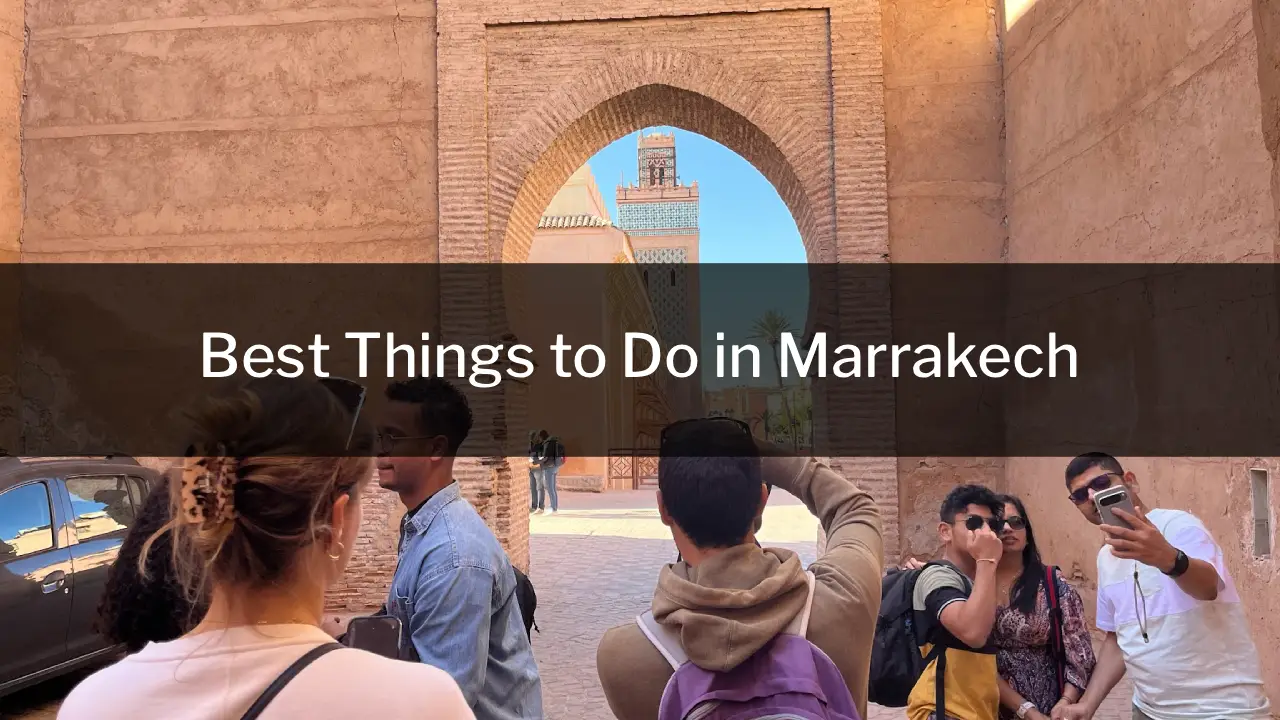
For a first visit, however, I would make sure you experience a mixture of historic Marrakech, living Medina culture and somewhere quiet enough to reset.
A strong first trip normally includes:
Jemaa el-Fna
See it more than once. Morning, late afternoon and evening feel like different places.
The souks
Do not treat them only as a shopping mall. Watch how different crafts and trades cluster into particular areas and notice the workshops behind the souvenir stalls.
If shopping is a priority, my detailed Marrakech market guide explains which specialist souks to visit, realistic prices and how to bargain comfortably.
Koutoubia Mosque and its surroundings
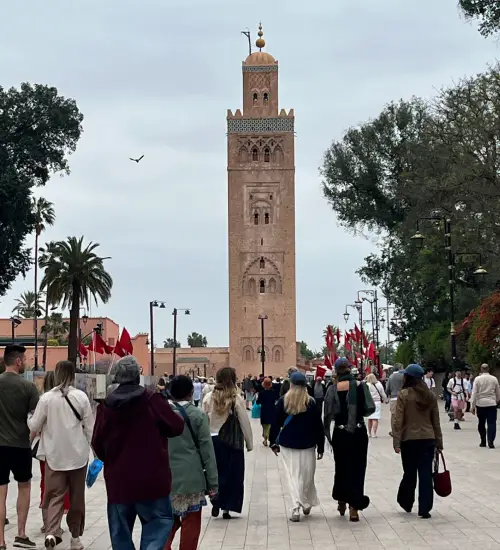
The minaret is one of Marrakech’s most recognizable landmarks and also a useful orientation point outside the tightest Medina streets.
Bahia Palace or another major historic monument
Choose a few important places rather than trying to collect every ticketed sight in the city.
Ben Youssef Madrasa
One of the strongest stops for visitors interested in traditional architecture and craftsmanship.
Jardin Majorelle
Completely different from the old Medina. Reserve ahead rather than assuming you can arrive whenever you want.
A hammam, food experience or cooking class
Marrakech makes more sense when you participate in something rather than spending three days photographing buildings.
If you want a premium early-morning experience outside the city, my Marrakech hot air balloon guide explains prices, sunrise timing, pickup arrangements and how to choose an operator.
My full attraction guide is here: Best Things to Do in Marrakech.
Marrakech Travel Tips: The Scams That Are Real—and the Ones That Are Exaggerated
Marrakech has scams and aggressive selling. Pretending otherwise does travelers no favors.
But describing the entire Medina as dangerous is equally misleading.
Most problems I see visitors dealing with are about money, pressure, navigation or unclear prices.
Henna without permission
Around Jemaa el-Fna, some henna sellers try to begin drawing on a visitor’s hand before a price has been agreed.
Do not allow somebody to start a service you did not request.
A firm “la shukran” and continuing to walk is easier than negotiating after the henna is already on your skin.
Monkeys, snakes and photographs
If you photograph performers or animals around Jemaa el-Fna, expect money to become part of the conversation.
The simplest rule is not to take the photograph unless you have agreed on what you are comfortable paying.
If somebody tries to put an animal onto you without permission, step away immediately.
“The road is closed”
This is one of the most useful tricks to recognize.
A stranger sees you checking your phone and says:
“The road is closed.”
“Prayer this way.”
“Festival today.”
“I show you shortcut.”
Sometimes directions are genuine. Sometimes the “shortcut” ends at a shop, tannery or another business where the helper expects payment or commission.
Do not automatically follow someone simply because they sound confident.
Taxi overpricing
The common problem is not a mysterious taxi conspiracy. It is much simpler: tourists do not know the normal price and accept the first number.
Ask for the meter. If that fails, agree on a reasonable price before boarding.
Restaurant extras
At busy tourist-facing food stalls or restaurants, clarify what you ordered and what is included.
If bread, olives or another dish appears without you asking, do not be embarrassed to ask whether it is included before eating it.
Things that are NOT automatically scams
Mint tea in a shop: Accepting tea does not create a legal or moral obligation to buy something.
Haggling: Paying a different price from somebody else does not automatically mean you were cheated. Souk prices are negotiated.
A small tip for genuine help: If somebody genuinely walks a short distance to show you the correct alley, a small 5–10 MAD tip can be perfectly normal. That is different from deliberately misleading you and then demanding money.
The objective is not to become suspicious of every Moroccan who speaks to you.
Learn to recognize pressure, agree prices before services and keep control of your decisions. Marrakech becomes much easier once you stop reacting to every interaction as either friendship or fraud.
Money, Cash and Tipping in Marrakech
Marrakech is easier when you carry both a bank card and Moroccan cash.
Cards are increasingly useful at riads, hotels, larger restaurants and modern shops, but small cash payments remain part of everyday travel.
I recommend keeping smaller notes available for:
- petit taxis
- tips
- cafés
- street food
- small purchases
- porters
- minor entrance or service payments
Do not walk around with your entire trip budget in cash. Withdraw what you need and keep most of your money securely elsewhere.
When an ATM offers to convert the withdrawal into your home currency, check carefully before accepting that conversion. In many cases it is better to let your own bank handle the exchange rate.
For current ATM fees, cards, cash strategy and mobile data, use my detailed Morocco Money Guide.
How much should you tip?
There is no need to tip everyone who speaks to you.
For restaurants, around 10–15% is normal when you are happy with the service.
For smaller services, guides, porters and drivers, the appropriate amount depends on what they actually did for you. Agreeing prices clearly first avoids turning every interaction into an awkward discussion at the end.
Eating in Marrakech: Do More Than Order Tagine Every Night
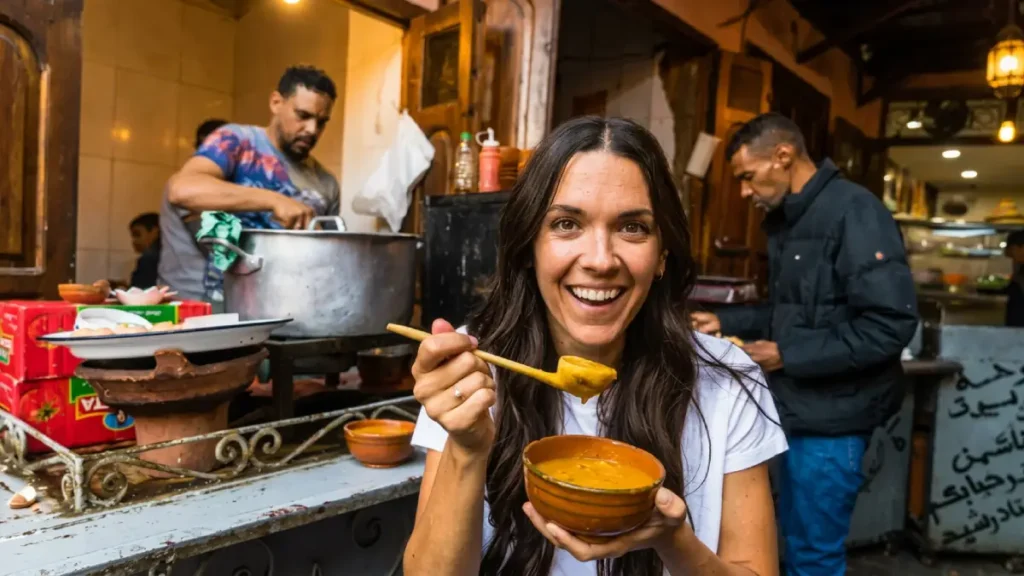
Marrakech has everything from simple neighborhood food to palace restaurants and international fine dining.
But on a first visit, I would make room for food that actually tells you something about the city.
One dish especially connected with Marrakech is tanjia.
Do not confuse tanjia with tagine.
Tagine is prepared in the familiar shallow clay cooking vessel with a cone-shaped lid. Tanjia is traditionally slow-cooked in a clay urn and is strongly associated with Marrakech.
I also recommend trying a mixture of:
- Moroccan salads
- grilled meats
- couscous when available
- harira
- msemen
- Moroccan pastries
- mint tea
- seasonal fruit and juices
To understand what locals eat in the morning and what to order in cafés or riads, use my guide to Moroccan breakfast.
A good food tour can be useful early in your stay because you learn what you are looking at before spending the rest of the trip ordering from tourist menus.
If you prefer to learn the cooking itself, choose a hands-on class.
For specific restaurants use my Best Restaurants in Marrakech. For a more interactive experience, compare my Marrakech Food Tours and Cooking Classes in Marrakech guides.
What Should You Wear in Marrakech?
You do not need a special Marrakech costume.
Wear clothes that are comfortable for walking, suitable for the weather and reasonably respectful of the place you are visiting.
Loose, breathable clothing works particularly well during warm months.
For sightseeing around the Medina and traditional neighborhoods, many travelers feel most comfortable with shoulders and knees reasonably covered.
Good walking shoes matter more than fashion advice. Medina surfaces can be uneven, dusty and occasionally slippery.
Bring:
- comfortable walking shoes
- breathable layers
- sun protection
- a light layer for cooler evenings
- a small cross-body or secure day bag
- a reusable water bottle
- a power bank if you depend heavily on your phone for maps
For a trip extending beyond Marrakech into the Atlas, Sahara or coast, use my complete Morocco Packing List.
When Is the Best Time to Visit Marrakech?
If you have flexibility, spring and autumn are usually the easiest seasons for first-time sightseeing.
You spend a lot of time walking in Marrakech. That means the difference between pleasant weather and extreme heat matters more here than it does on a resort holiday.
Summer is completely possible, but you need to change the rhythm of your day: start earlier, take longer breaks during the hottest hours and return outside later.
Winter days can be excellent for walking, but do not assume Morocco means warm evenings all year. A riad courtyard can feel surprisingly cool after sunset.
For detailed winter planning, compare my guides to Marrakech in January and Marrakech in February; February is normally a little milder, but both months require layers and confirmed accommodation heating.
If you are planning a late-autumn trip, my guide to Marrakech in November explains the temperatures, rainfall, clothing, riad heating and day-trip conditions in detail.
Whatever the season, build breaks into your schedule.
I would rather see a guest properly enjoy four places than rush through nine attractions simply because an online itinerary says they should.
For month-by-month planning across your whole trip, see my Best Time to Travel to Morocco guide.
How I Would Pace a First Marrakech Visit
This is not meant to replace a dedicated hour-by-hour itinerary.
Think of it as a rhythm.
First day: orientation and the Medina
Learn the old city before trying to master it.
Use a guide for the first few hours if this is your first Moroccan Medina. Understand the souks, see the Koutoubia area and experience Jemaa el-Fna later in the day when the square changes atmosphere.
Do not fill every hour.
Second day: history plus recovery
Choose several important historic sights rather than every monument on Google Maps.
Then slow down.
That could mean a hammam, long lunch, cooking experience or simply returning to your riad for a few hours before going out again.
Third day: see another side of Marrakech
Use your final full day for the parts of the city that balance the Medina.
Jardin Majorelle, Gueliz, contemporary shops, cafés or a slower food experience can all work.
If you have four or more days, that is when I would start considering a day trip rather than trying to squeeze one into a short first visit.
The important lesson is this:
Marrakech is better when you leave space between experiences.
Planning exactly three days? Follow my complete 3 Days in Marrakech itinerary for the day-by-day route, including the Medina, Majorelle, Bahia Palace, a hammam and your options for Day 3.
Should You Take a Day Trip From Marrakech?
Only after you have given Marrakech enough time.
If you have two or three days total, I normally recommend experiencing the city properly rather than spending one of those days sitting in a vehicle.
With four, five or more days, excursions become much easier to justify.
Popular choices include:
High Atlas Mountains
My usual choice when visitors want mountain scenery, villages, walking and a completely different pace from Marrakech.
Agafay
Useful if you want a nearby rocky-desert landscape, sunset experience or dinner without committing to the long journey toward the Sahara.
Essaouira
The best contrast if you want Atlantic air, a smaller Medina and a slower coastal atmosphere.
Ouzoud Falls
Beautiful, but remember that it involves significant driving for a day trip.
Do not confuse Agafay with the Sahara. If seeing large sand dunes is one of the main reasons you came to Morocco, you need several days, not a quick Marrakech afternoon excursion. I explain the practical difference in my guide to a Sahara desert day trip from Marrakech.
Start with my Best Day Trips from Marrakech comparison. If the mountains interest you most, read my Atlas Mountains Day Trip from Marrakech guide.
Is Marrakech Safe for First-Time Visitors?
The problems I spend most time warning visitors about are not dramatic dangers.
They are confusion, overpaying, pickpocketing in crowded areas, unwanted sales pressure, getting lost and making poor decisions because somebody is tired.
Use the same awareness you would use in any busy tourism city:
- keep your phone and wallet secure in crowds
- do not display large amounts of cash
- agree on prices before services
- avoid following strangers deep into unfamiliar alleys
- use well-lit main routes when returning late
- contact your riad if you are unsure about the final walk home
- do not let embarrassment stop you from saying “no”
Solo travelers can explore Marrakech independently, but being independent does not mean refusing all local help.
Good accommodation staff, licensed guides and reputable drivers make the city easier.
The difference is that you choose the help instead of allowing somebody on the street to choose for you.
For the bigger country-level picture, see my Morocco Travel Safety Guide.
Get Mobile Data Before You Start Exploring
Marrakech is one of those places where working mobile data immediately reduces stress.
You may need it to:
- contact your riad
- open a WhatsApp location pin
- check your route
- book transport
- translate something
- find the nearest vehicle-accessible point
- verify restaurant or attraction information
You can buy a Moroccan SIM after arrival or install an eSIM before flying.
I would not overload this Marrakech Travel Guide with mobile-network details because I keep those updated separately.
Compare the current options in my Best SIM Card in Morocco guide before your trip.
Marrakech Travel Guide FAQ
Is three days enough for Marrakech?
Yes. Three full days is what I recommend for most first-time visitors who are concentrating on Marrakech itself. Two days feels rushed, while four days is better for travelers who enjoy a slower pace.
Should I hire a guide in Marrakech?
You can explore independently, but I recommend a guided Medina orientation during your first day if this is your first visit. The main benefit is not simply seeing monuments—it is understanding the streets, souks, local habits and common tourist traps so you can explore confidently afterward.
How much should a taxi from Marrakech Airport cost?
For a normal trip toward central Marrakech, I currently tell guests to allow approximately 100–150 MAD during the day. After 8 PM, around 150–200 MAD is a realistic nighttime range for many central destinations. Use the official airport taxi system and check the price quoted for your exact destination.
How much should I pay for a petit taxi in Marrakech?
As a practical tourist baseline, around 20–30 MAD is reasonable for many short daytime journeys, with medium trips often around 30–50 MAD. Ask for the meter first; if it is refused, agree on the price before entering.
Is Uber available in Marrakech?
Yes. Uber officially returned to Marrakech in late 2025 using licensed transport vehicles. Bolt is also operating in Marrakech. I would still keep normal taxis as a backup.
Should I stay in the Medina or Gueliz?
For the classic first-time Marrakech experience, I normally recommend the Medina, especially Mouassine or Dar El Bacha. Choose the Kasbah for easier access and a calmer atmosphere. Choose Gueliz if modern hotels, roads and restaurants matter more to you than sleeping inside the historic city.
Do I need cash in Marrakech?
Yes. Bring a card, but also carry Moroccan dirhams in smaller denominations for taxis, small purchases, tips, cafés and other everyday expenses.
Is haggling in the Marrakech souks a scam?
No. Negotiation is part of traditional souk shopping. A seller asking a high opening price does not automatically mean you are being scammed. Decide what an item is worth to you, negotiate politely and walk away if you cannot agree.
Is accepting mint tea in a shop a trick?
No. Tea is part of Moroccan hospitality and commercial culture. You can accept tea, talk, negotiate and still leave without buying anything. Be polite, but do not confuse hospitality with an obligation to spend money.
What is the biggest mistake first-time visitors make in Marrakech?
One of the biggest is entering the Medina with no orientation, getting lost immediately and then depending on whichever stranger offers help. Learn the main routes early, preferably with a licensed guide or reputable orientation tour, and the rest of your visit becomes much easier.
Final Advice From a Marrakech Guide
Marrakech does not need to be conquered.
You do not need to see every palace, buy something from every souk or fill every hour with an activity.
For most first-time visitors, the best approach is simpler:
Spend three full days in the city. Choose your neighborhood carefully. Organize your airport arrival before you land. Learn the Medina early. Carry small cash. Know what normal taxi prices look like. Say no confidently when you do not want something—and stay open enough to enjoy genuine Moroccan hospitality when it appears.
Most importantly, give yourself time to stop.
Sit on a rooftop. Have tea. Go back to the riad in the afternoon. Watch Jemaa el-Fna change as the sun goes down.
That rhythm is Marrakech.
Once you understand it, the city stops feeling like chaos and starts making sense.
If you are still planning your trip, your next steps are:
Best Things to Do in Marrakech
Build the trip shwiya b’shwiya—little by little—and Marrakech will reward you.