
Discovering the Soul of Traditional Moroccan Food
Hello! My name is Youness. If you’ve spent any time reading up on my beautiful country, you’ve likely seen the shiny pictures of rooftop tajines looking out into the Marrakech skyline. But after leading tours for over 20 years with my company, Morkosh Tours, from the university days to crossing the Sahara more times than a dromedary, I can tell you one thing: you haven’t really tasted Morocco until you’ve understood the soul behind the plate.
Food is more than sustenance in Morocco, it’s a history book you can eat. Our traditional Moroccan food is a living mosaic, blending Berber (Amazigh) roots with Arab, Andalusian, Jewish and even French influences. Whether you are lost in the maze of the Marrakech Medina, or sitting under the stars in a desert camp, the flavours tell a story of hospitality and spice.
In this guide I’m going to take you past the “Instagram filters”, and show you what we locals actually eat, how much you should really be paying, and where to find the secrets that most tourists walk right past.
Quick Summary: What Makes Moroccan Food Unique?
- Health-First: It’s a flavor-forward cuisine relying on whole grains, fresh seasonal vegetables, and lean meats like lamb and poultry.
- The Spice Philosophy: We don’t use heat to burn your tongue; we use spices like cumin, turmeric, and cinnamon to create deep, aromatic layers.
- Communal Spirit: Meals are almost always shared from a single large plate, emphasizing connection and family.
The Pillars of the Table: Tagine and Couscous
Tagine – The Icon of the Hearth
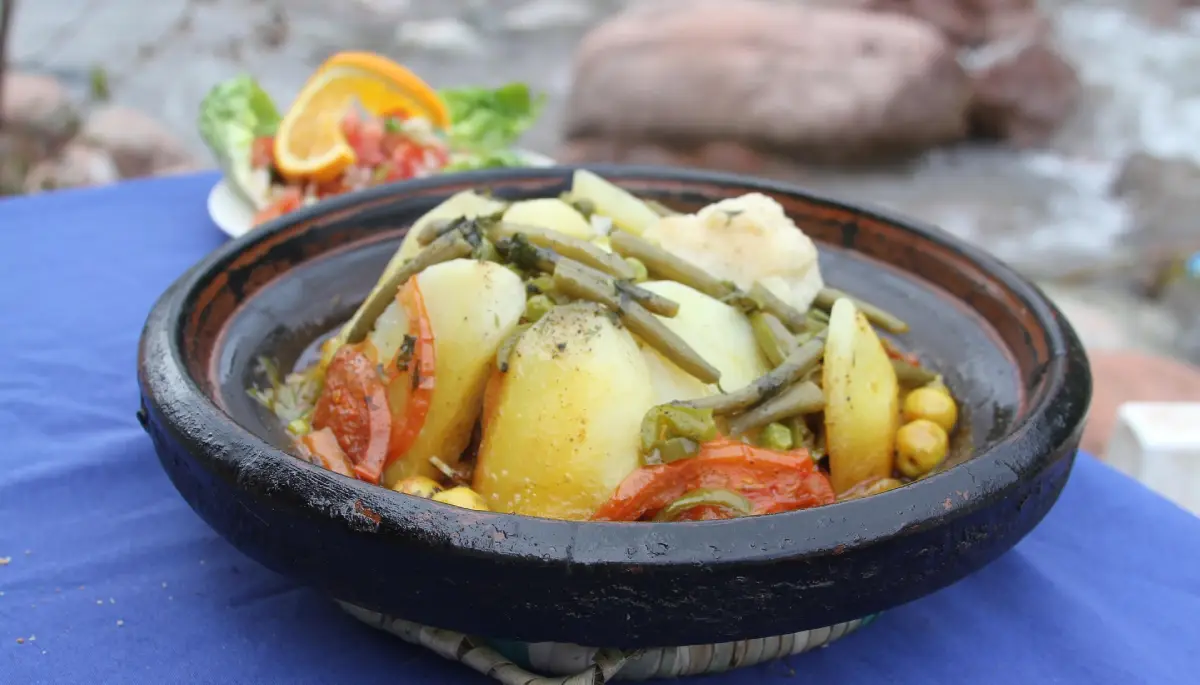
When folks ask me “Youness, what is a Tagine? That’s a bit of a trick question, I tell them. The dish is called Tagine, as is the clay conical pot in which it is cooked. The magic is in the shape, the cone traps the steam and drips it back onto the food, slow-cooking it until the meat falls off the bone.
In Marrakech, you’ll find endless varieties, but the best Moroccan dishes in Marrakech are usually the classics:
- Lamb with Prunes and Almonds: A perfect balance of savory and sweet.
- Chicken with Preserved Lemon and Olives: The zingy, salty “soul food” of every Moroccan home.
Local Tip: If you see a tagine that looks perfectly dry and the vegetables are neatly arranged like a mountain, it might have been cooked in a pot and “plated” in the clay for show. A real tagine looks a bit “messy” because it’s been simmering for hours!
Couscous – The Friday Ritual
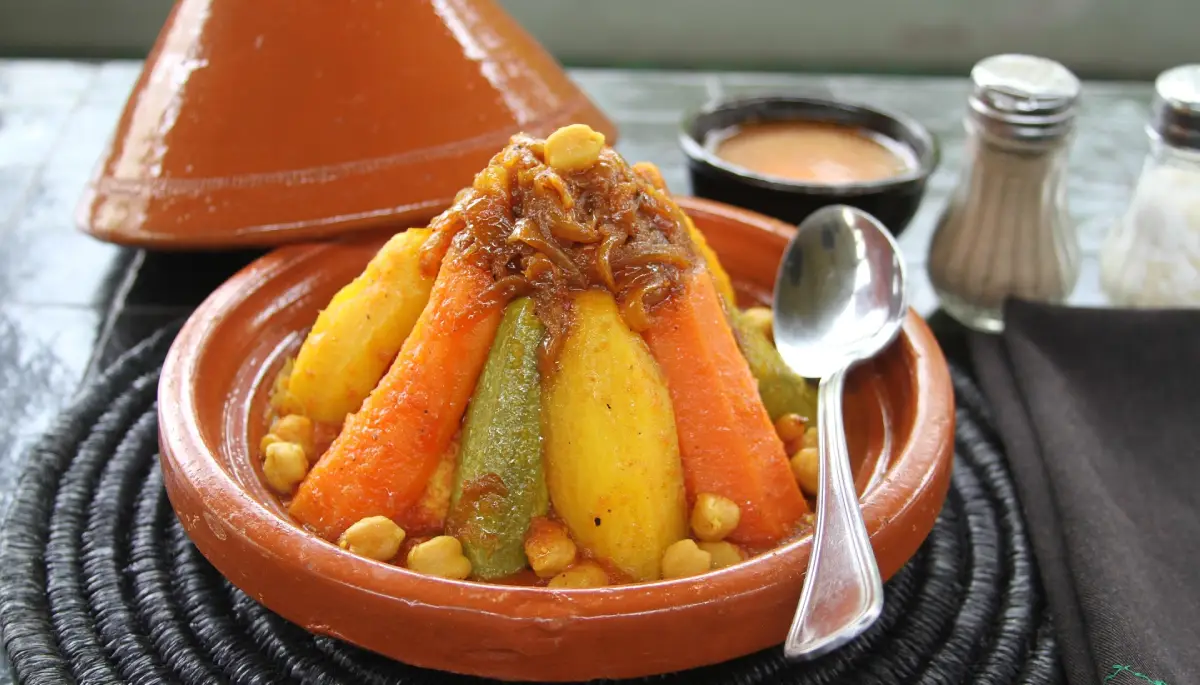
If Tagine is our daily bread, Couscous is our sacred Friday family lunch, traditionally eaten after midday prayers. This isn’t the “instant” stuff from a box. A traditional Moroccan grandmother (and the chefs I trust) will steam the semolina grains three separate times over a simmering pot of broth and vegetables.
It is a communal dish, served in a giant earthenware bowl. My favorite place for a truly authentic Friday experience is the Amal Women’s Training Center in Marrakech. Not only is the food home-cooked and divine, but you are also supporting a social cause that empowers local women. It’s the closest you’ll get to a Moroccan family lunch without being invited to my mother’s house!
Insider Secrets: The Flavors You Can’t Replicate at Home
Authentic Moroccan Spice Blend: Ras el-Hanout
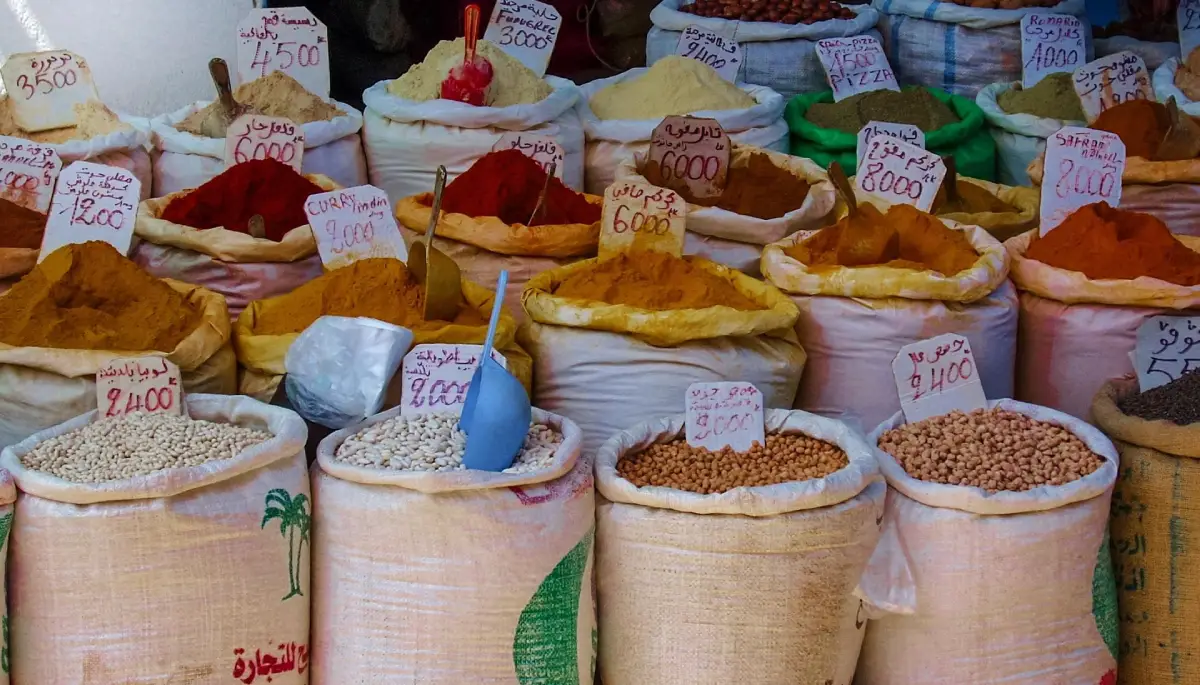
You’ve heard of it, but do you know what it means? Ras el-Hanout literally translates to “Head of the Shop.” It implies that the spice merchant (the Al’Attar) has blended his very best, top-shelf spices. A true blend can have anywhere from 25 to 44 distinct ingredients, including cardamom, nutmeg, mace, galangal, and even dried rosebuds.
The Spice Market Trap:
Avoid the pre-packaged “Moroccan Spice” bags in the tourist spots. These are often old and their potency is lost. Look for a proper Al’Attar. Look for freshly ground spices. A real shop will give you a whiff that will make your eyes water. If you want the real thing, look for bright colors and ask when it was ground. If it was longer than 2 months ago, forget it.
The "Secret" Ingredients: Smen and Charmoula
To add that “funk” and depth to Moroccan cooking, we use Smen – an aged, fermented butter that has a slight smell of blue cheese but a flavor of heaven when melted into couscous.
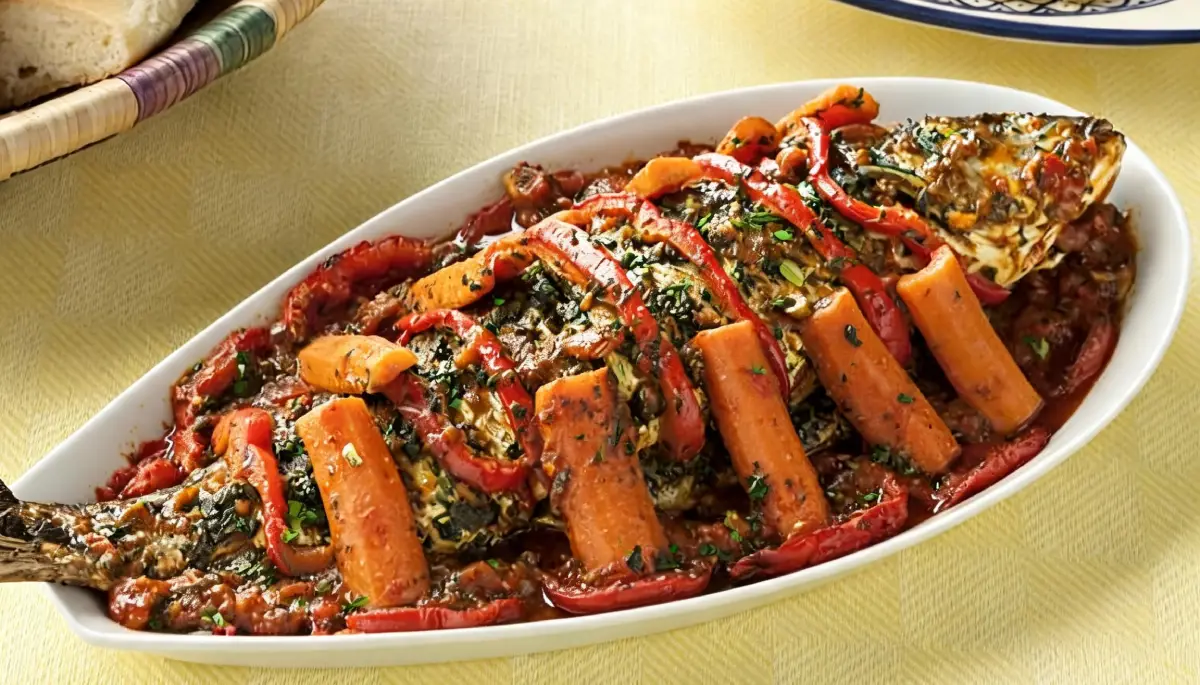
And then there is Charmoula is the classic marinade I look for in good Moroccan seafood. It is a bright marinade of garlic, fresh parsley, cilantro, cumin and paprika. If you go to the coast in Essaouira you’ll see fresh sardines grilled with this, it’s the best.
Beyond the Tourist Menu: Street Food & Local Delicacies
This is where the real fun starts. If you only eat in hotel restaurants, you are missing 70% of the flavor of Morocco.
The Medina Staples
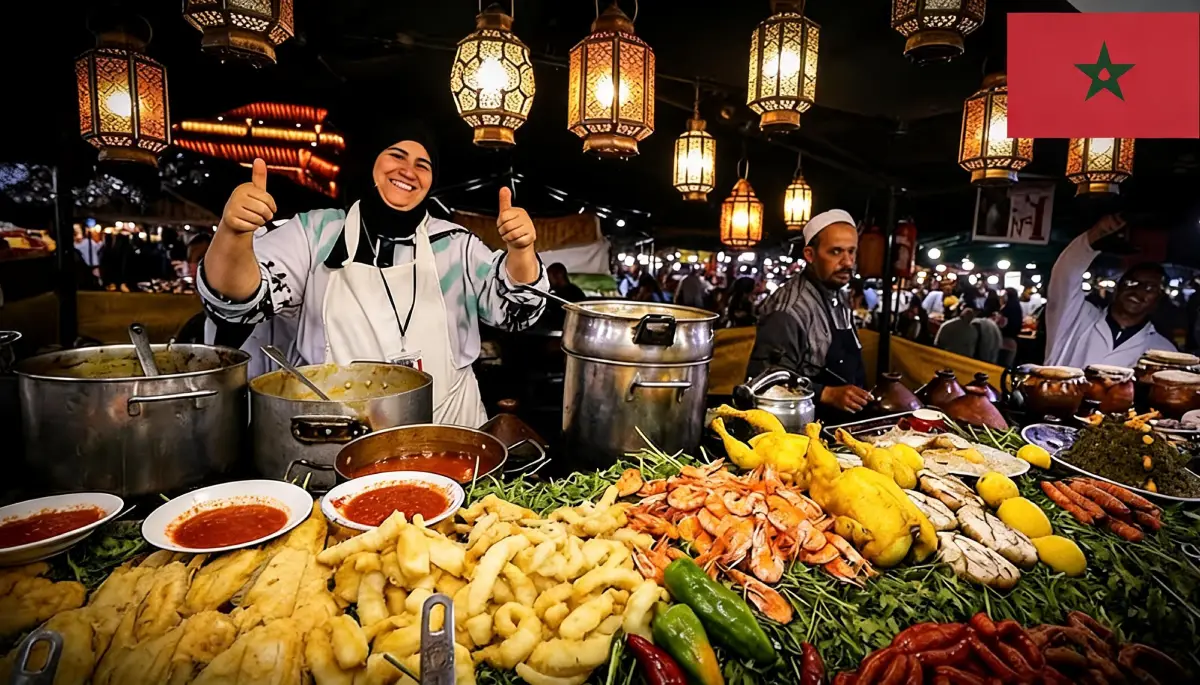
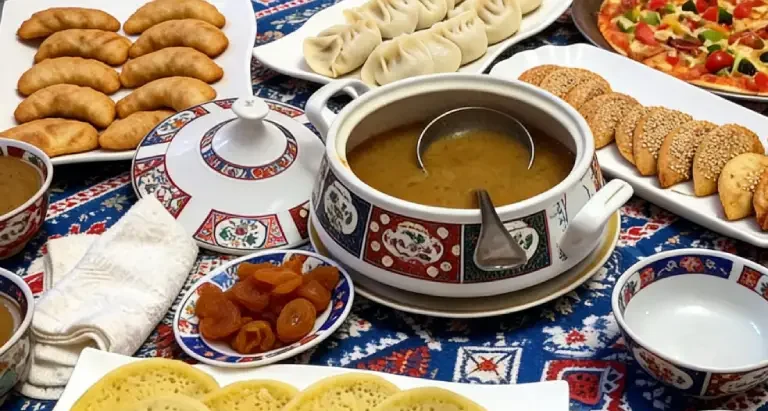
- Harira: This is a zesty tomato, lentil, and chickpea soup. During Ramadan, it’s how we break our fast. In the Marrakech Medina, **a bowl of Harira at a local stall is a bargain, typically costing around 4 DH.** Yes, you read that right—less than half a dollar for a nutritious, soul-warming meal.
- Maakouda: These are deep-fried potato patties. Slip them into a piece of bread with a little spicy harissa, and you have the ultimate Moroccan sandwich.
The Adventurous Side: Tangia and Mechoui
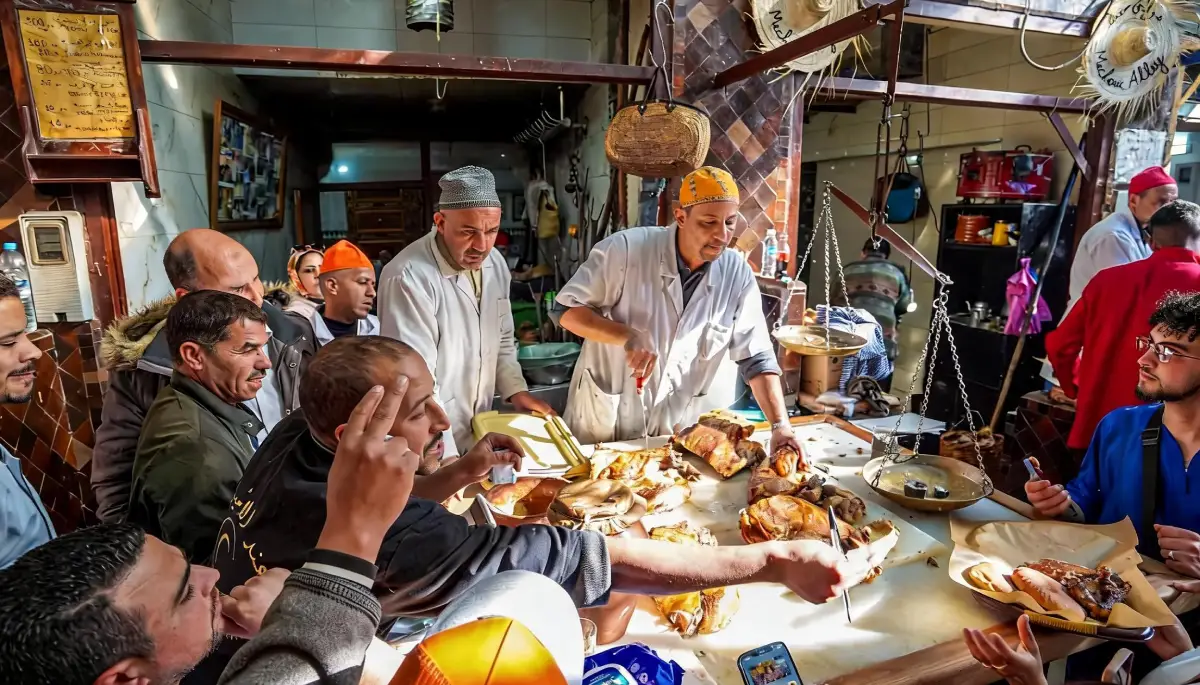
You can’t go to Marrakesh without tasting Tangia Marrakchia. Historically, Tangia is a “bachelor’s dish” and Tagine is a “woman’s dish” cooked at home. A clay jar filled with lamb, garlic, saffron and preserved lemon would be taken to the fernatchi (the man who heats the water for the local hammam) by men. The jar is buried in hot embers and cooked slowly for hours.
The Tangia secret: Head to “Mechoui Alley” next to Jemaa el-Fnaa. The most legendary place is Chez Lamine Hadj Mustapha. Because he’s world class for a reason. While there, try the Mechoui (pit-roasted lamb). Sold by weight, so expect to pay about 185-190 DH (around 17 EUR) per kilo, for the most tender meat of your life.
If you want to move from tasting Moroccan food to actually learning how it works, a Moroccan cooking class in Marrakech is the next step. You will understand why tagine is cooked slowly, why preserved lemon matters, why mint tea is a ceremony, and why Moroccan food is more about balance than throwing many spices into one dish.
Sweet Sips: "Moroccan Whiskey"
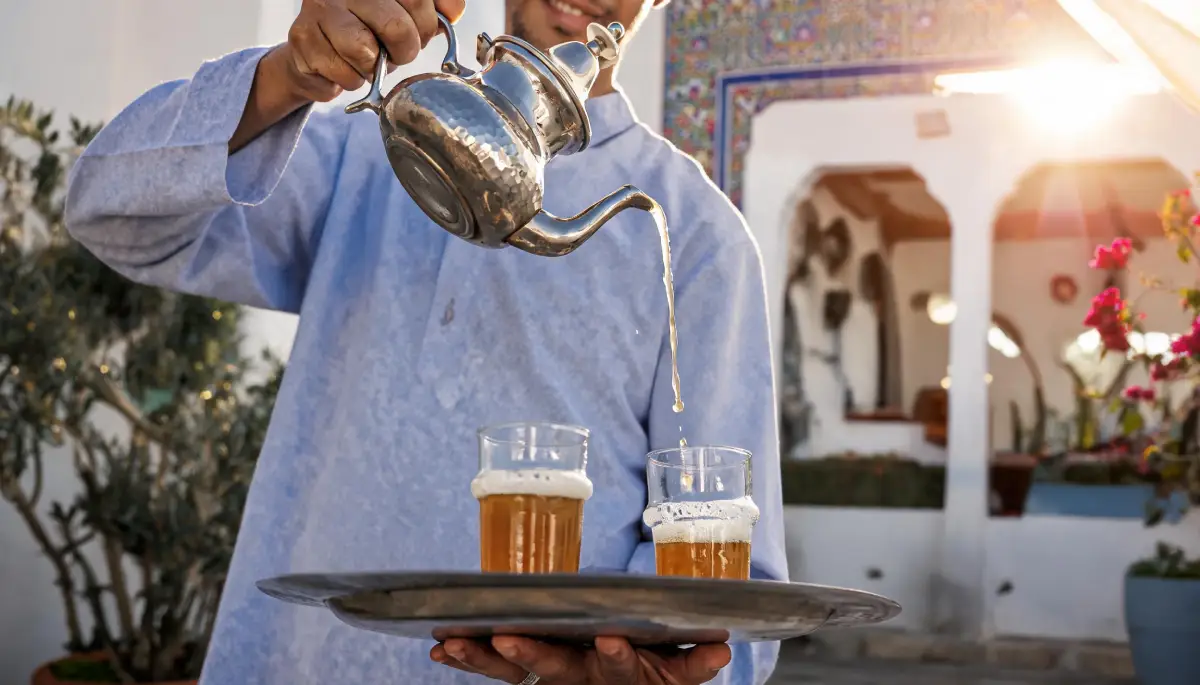
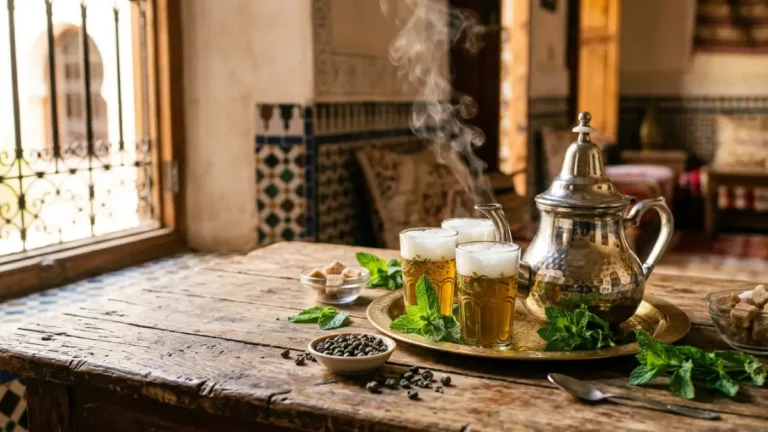
And then there’s Mint Tea, of course. We call it “Moroccan Whiskey” because we drink it just as much! This is not just a drink, it’s a performance. We pour it from a height and make a “turban” of foam on top, aerating the tea and showing the guest that he or she is welcome.
The Art of the Moroccan Bakery
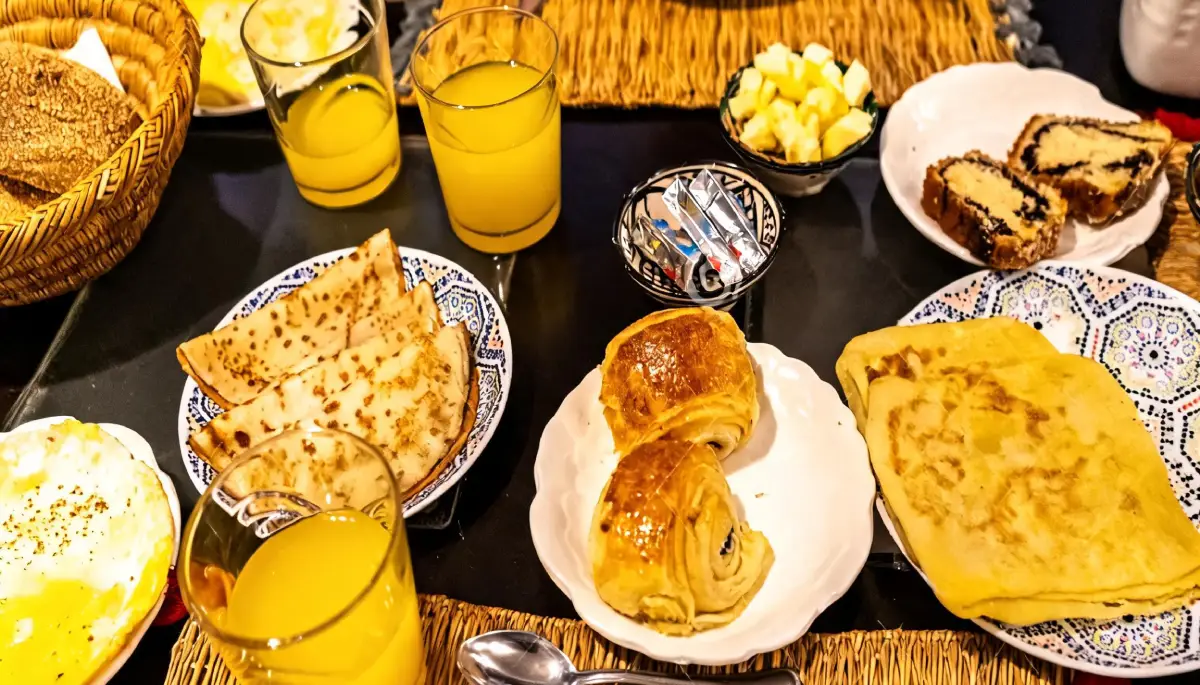
In Morocco, bread is more than food—it is your fork.
- Khobz: This is the crusty, round white bread you’ll see everywhere. We use it to scoop up tagine sauce.
- Msemen and Baghrir: Msemen is a flaky, square pancake, and Baghrir is a “thousand-hole” crepe. You’ll find these on every breakfast table, usually served with honey and butter.
For a closer look at khobz, msemen, baghrir, amlou, eggs and café drinks, see my complete Moroccan breakfast guide.
- B’stilla: This is the king of Moroccan pastries. It’s a sweet-savory pie made of paper-thin *warqa* dough, traditionally filled with pigeon (though chicken is common now), almonds, and dusted with cinnamon and powdered sugar. It’s a flavor explosion that perfectly defines traditional Moroccan food culture.
A Guide for Modern Travelers: Dietary & Safety Tips
Vegetarian & Vegan Friendly Options
While we love our lamb, Morocco is a paradise for vegetarians. You just have to know what to ask for beyond the “vegetable tagine.”
- Zaalouk: A smoky eggplant and tomato salad.
- Loubia & Addis: These are “straight vegetarian dishes” that locals live on. Loubia is white kidney beans in tomato sauce, and Addis is savory stewed lentils.
- Bessara: This is my “hidden treasure” recommendation. It’s a thick fava bean soup served with a swirl of olive oil and a dash of cumin. It’s a breakfast staple, especially on chilly mornings in the Atlas Mountains.
Safety & Health
To avoid the dreaded “medina belly,” I always tell my tour guests: prioritize cooked food over raw salads at smaller, less-frequented street stalls. Stick to places with high turnover where you can see the steam rising from the pots. Also, while Morocco has excellent wines (look for the Vin Gris from the Meknes region), remember that most local “snacks” and medina spots are dry.
Moroccan Dining Etiquette: How to Eat Like a Local
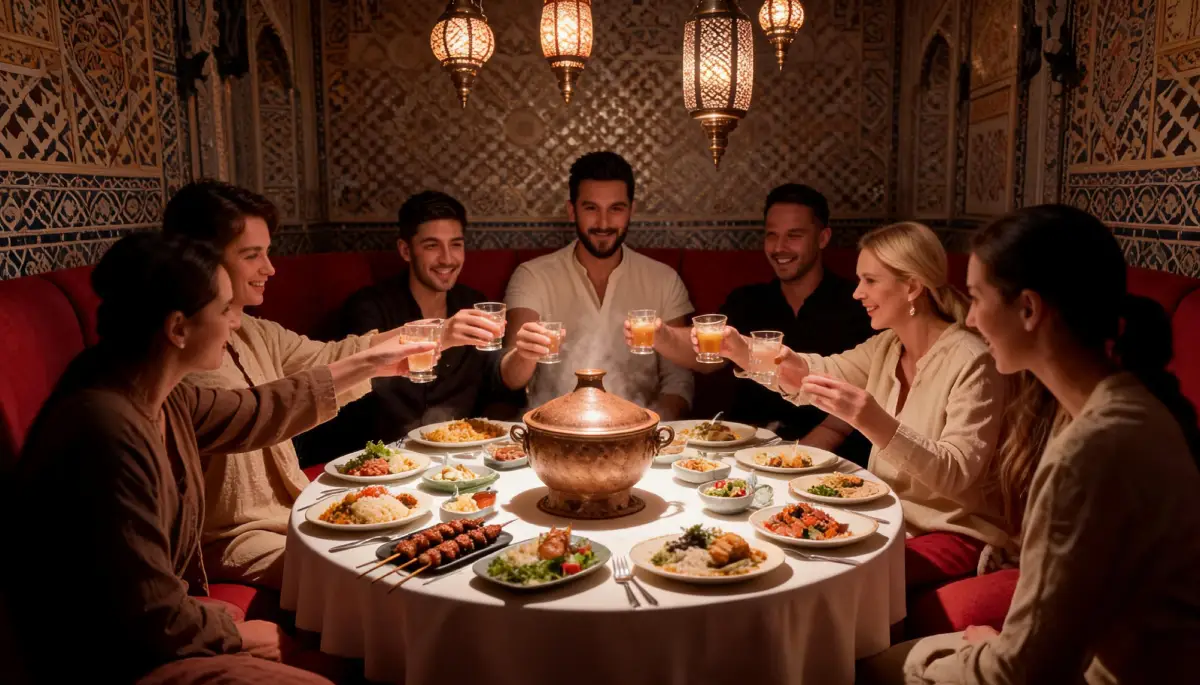
If you want to impress your guide (like me!), follow these simple rules:
- The Right Hand Rule: Always eat with your right hand. The left hand is traditionally reserved for hygiene and is considered “unclean” for the communal bowl.
- The Bread Scoop: Use a small piece of khobz to “pinch” the meat and vegetables.
- The Three-Finger Rule: Use your thumb and first two fingers to gather food. Using your whole hand is seen as a bit greedy!
- Wait for the “Bismillah”: Don’t start until the host says “Bismillah” (In the name of God).
Conclusion: Finding the Soul of Morocco
At the end of the day, traditional Moroccan food isn’t about expensive white-tablecloth restaurants. The real heart of our cuisine is found in a 4 DH bowl of Harira at sunset, a communal Friday Couscous at the Amal Center, or a Tangia cooked in the ashes of a neighborhood hammam.
Morocco is a country that welcomes you with open arms and a full plate. Don’t be afraid to step off the main path, sit on a plastic stool, and eat where the locals eat. That is where the magic happens.
If you’re planning a trip and want to find these hidden culinary gems without the stress, come find me at Morkosh Tours. I’d be honored to show you the Morocco I know and love.
Written by Youness Labchir
Licensed Morocco Tour Guide
FAQs About Traditional Moroccan Food
What is the national dish of Morocco?
Couscous is the official national dish. It is more than just food; it’s a ritual served every Friday across the country, symbolizing community and gratitude.
Is Moroccan food very spicy?
It is highly flavorful and aromatic, but not “hot.” We use spices like ginger, saffron, and turmeric to create warmth and depth rather than burning heat. If you want heat, ask for a side of Harissa!
What is the most popular street food in Morocco?
Sfenj (fried doughnuts) and Maakouda (potato patties) are staples. However, the most iconic “must-try” street food unique to Marrakech is Tangia.
Are there vegetarian options in Moroccan cuisine?
Absolutely! Dishes like Zaalouk, Bessara, and vegetable-heavy Couscous (asked for without meat) make Morocco very vegetarian-friendly.
How do you eat Moroccan food traditionally?
Traditionally, we eat from a communal plate using the right hand and a piece of crusty bread (Khobz) as a scoop. It’s a beautiful way to share a meal with friends and family.