Eid al-Fitr Morocco 2026: A Local Guide to Celebrating Aïd with Moroccans
We don’t have to guess anymore for 2026:
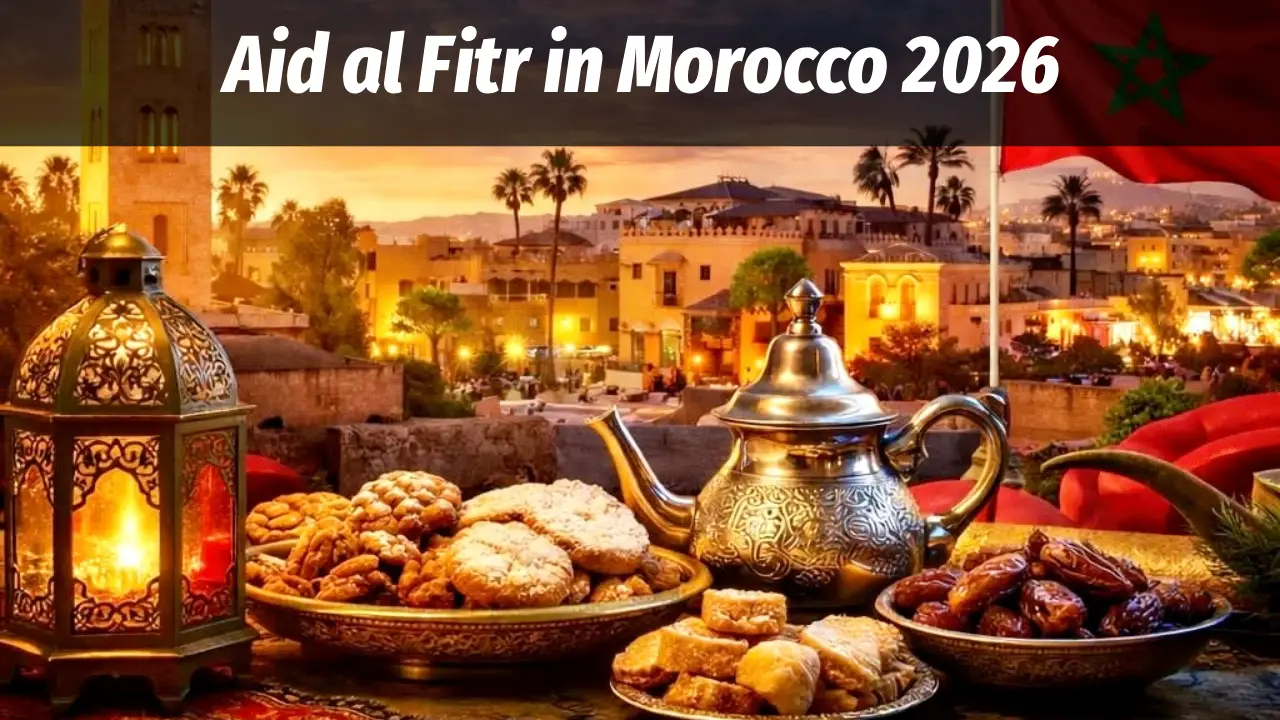
The official date for Eid al-Fitr in Morocco in 2026 is Friday, March 20.
My name is Youness, and I am a licensed tour guide in Marrakech. I own Morkosh Tours. I’ve been showing people around Morocco’s cities, mountains, and the Sahara for more than 20 years. Some of the best times I’ve had here are around Eid, when the country goes from the quiet intensity of Ramadan to the joy of Aïd el Fitr.
This guide is for you if you want to know how we really celebrate Eid al-Fitr in Morocco in 2026.
Direct Answer Snippet
Official Date:
The Ministry of Habous and Islamic Affairs has confirmed that Eid al-Fitr 2026 in Morocco will be on Friday, March 20, 2026.Beginning of the Celebrations:
Celebrations started on Thursday, March 19, 2026, at sunset.Public Holiday Status:
Eid al Fitr Morocco 2026 holiday is a 2‑day national public holiday. Schools, banks, and government administrations are closed these two days, while most tourist services (riads, hotels, many restaurants) remain active with adjusted hours.
So if you’re planning your trip around eid fitr 2026 maroc, you can confidently anchor your itinerary on Friday, March 20, 2026 as Day 1 of Eid.
The Science and Tradition of the Moon Sighting
You might remember seeing conflicting online predictions – some saying March 20, others pointing to March 29. Let’s clear that up.
Why There Was Confusion Before
Before the official eid al fitr morocco 2026 announcement, there were:
- Astronomical predictions that strongly favored Friday, March 20 (after a 30‑day Ramadan).
- Other forecasts that suggested Sunday, March 29, based on different calculation methods.
These differences come from:
- Different fiqh (Islamic legal) opinions about using calculations vs. only visual sightings.
- Some communities following Mecca or neighboring countries; Morocco follows its own local sighting.
Who Has the Final Word in Morocco?
In Morocco, only one authority decides the eid al fitr morocco 2026 date:
Ministry of Habous and Islamic Affairs
They:
- Dispatch observers to many regions on the 29th night of Ramadan.
- Use visual observation of the crescent moon.
- Announce the result on national TV/radio and online.
For Eid al-Fitr Morocco 2026, they confirmed:
- Ramadan completed 30 days.
- Friday, March 20, 2026 is the first day of Eid.
So all previous “maybe March 29” calculations are now just historical notes; the morocco eid announcement 2026 has fixed the date.
Global vs. Local: Why Morocco Can Differ
Morocco sticks to local sighting, so the eid al fitr morocco 2026 calendar can differ by a day from:
- Gulf countries,
- European Muslim communities,
- North American mosques,
- Even some neighboring North African countries.
That’s normal here. Moroccans simply follow the national announcement. This also applies to morocco eid al adha and eid al adha 2026 morocco – expected dates exist, but the official decision is always based on local sighting.
Spiritual Foundations & Social Impact
To understand Eid here properly, you need to see beyond the food and clothes.
Zakat el Fitr: Charity Before Celebration
Zakat el Fitr is a mandatory charity that must be paid:
- By every Muslim who can afford it.
- Before the Eid prayer.
- On behalf of each person in the household.
Its purpose:
- To purify the month of fasting from any shortcomings.
- To allow the needy to celebrate Eid with dignity.
In the last days of Ramadan and the early morning of Eid, you’ll see:
- People giving money or food to local mosques or associations.
- Families quietly supporting neighbors who are struggling.
If you’re a non‑Muslim visitor, you’re not obliged, but if the spirit of Eid inspires you, you can donate to a transparent local NGO. On my tours, I sometimes connect interested guests to reliable organizations.
Salat al-Eid: The Morning Prayer
The day of Eid al-Fitr Morocco 2026 begins with Salat al-Eid:
- Held shortly after sunrise.
- Takes place in:
- Large open areas called Msala, or
- Big mosques when needed.
In major cities:
- Marrakech:
- Huge crowds near Koutoubia Mosque and in large open grounds around the city.
- Casablanca:
- Massive gatherings around Hassan II Mosque and several Msala fields.
- Fez, Rabat, Tangier, Meknes:
- Big outdoor prayer areas on the city edges and central mosques.
Non‑Muslims cannot join the prayer but can observe respectfully:
- Keep a reasonable distance.
- Dress modestly.
- Don’t block the flow of people.
- Be very discreet with photography (no close‑ups during the prayer itself).
Watching thousands of people standing shoulder‑to‑shoulder in silence just after sunrise is one of the most powerful ways to experience eid al fitr in morocco.
The “Grand Exode”: Travel Rush Before and After Eid
Around Eid, Morocco experiences a kind of internal migration:
- People living in Casablanca, Rabat, Marrakech often return to their villages or hometowns.
- There’s a huge movement just before Eid and again after.
What this means for you:
- ONCF trains (especially Casa–Rabat–Tangier and Casa–Marrakech) get very busy.
- Intercity buses from big cities to smaller towns fill quickly.
- Highways can see heavy traffic, especially afternoon/evening before Eid and the day after.
If you’re traveling around Eid al-Fitr Morocco 2026:
- Avoid scheduling your longest transfers on Thursday, March 19 and Saturday, March 21, if possible.
- Book train and bus tickets several days in advance.
- If you’re with a private driver (like on my tours), we adjust departure times and routes to dodge peak chaos.
Fashion Guide 2026: Ceremonial Excellence
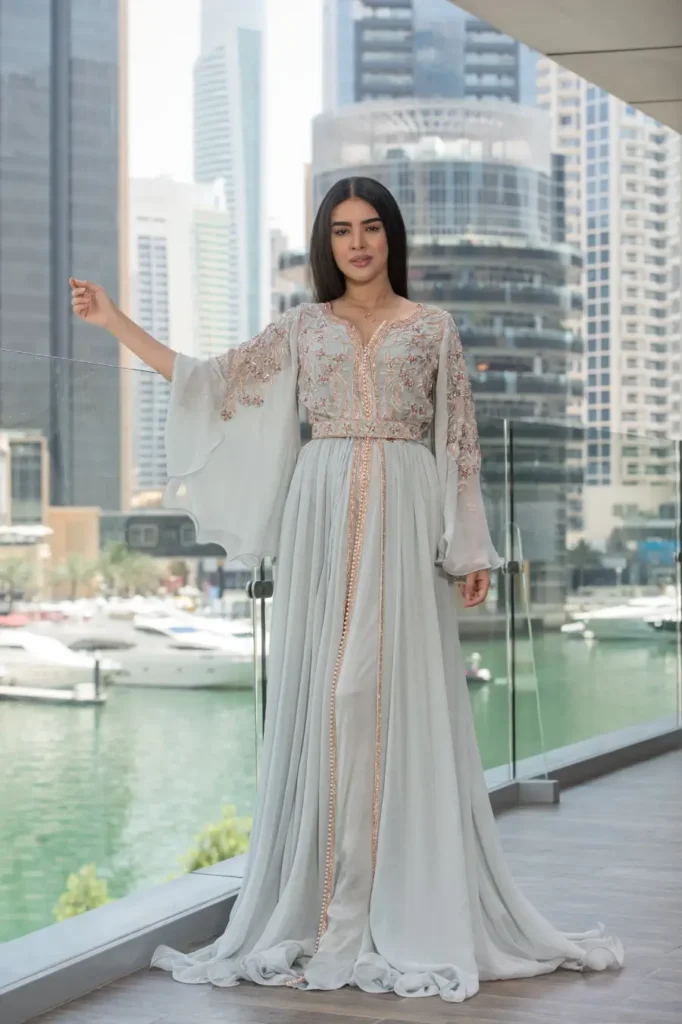
Eid is also a fashion moment. Even in modest homes, people make an effort to wear something fresh and clean – and often new.
Many of my guests ask about Authentic Moroccan Takchita vs Kaftan for Eid 2026, so let’s break it down.
The Takchita: Formal Royalty
The Takchita is the most formal and ceremonial women’s outfit:
- Two pieces:
- Tahtiya (under‑dress),
- Dfina (over‑dress, often open at the front).
- Closed and shaped with a wide Mdamma (belt), sometimes metal, sometimes richly embroidered.
Typical uses:
- Day 1 of Eid for big family lunches.
- Engagements and weddings.
- Major religious holidays and formal invitations.
Technical quality markers for authenticity:
- Sfifa: Braided trim along front, neck, and sleeves.
- Handcrafted sfifa is slightly thicker, with a bit of texture and “life”.
- Machine sfifa can be overly flat and too perfect.
- Aakad: Hand‑knotted buttons.
- Real aakad are tiny, dense knots aligned along the chest.
- Many cheap kaftans now have simple plastic or metallic buttons instead.
If you’re thinking about buying a Takchita, look closely at these details. They tell you a lot about craftsmanship.
The Kaftan: Elegant Simplicity
The Kaftan is a one‑piece garment:
- Flows easily and is very comfortable.
- Ideal for daytime visits and less formal gatherings.
- Still often decorated with sfifa and aakad, but usually simpler than a full ceremonial Takchita.
For travelers:
- A kaftan is easier to wear and pack.
- You can use it again back home as a special dress.
- It gives you a sense of Moroccan style without needing a complicated belt and multiple layers.
For Eid al-Fitr Morocco 2026, local women might:
- Wear a Kaftan or Takchita on Day 1 for family visits.
- Switch to more casual outfits or djellabas on Day 2.
The Djellaba: Everyday Tradition
The Djellaba is the iconic Moroccan hooded robe (Qob = hood):
- Worn by men and women.
- Common for:
- Salat al-Eid in the morning,
- Casual family visits,
- Day‑to‑day life all year.
Men often wear:
- A light white or cream djellaba with leather babouches (slippers).
- Maybe a traditional fez in some regions, but not everywhere.
Women might wear:
- A colorful or pastel djellaba with embroidery.
- Sometimes they’ll change later into a Kaftan or Takchita for guests.
If you want to “blend in” respectfully during eid al fitr in morocco, a simple djellaba or a modest kaftan is a great choice.
A Gastronomic Journey: The “Sacred” Breakfast and Beyond
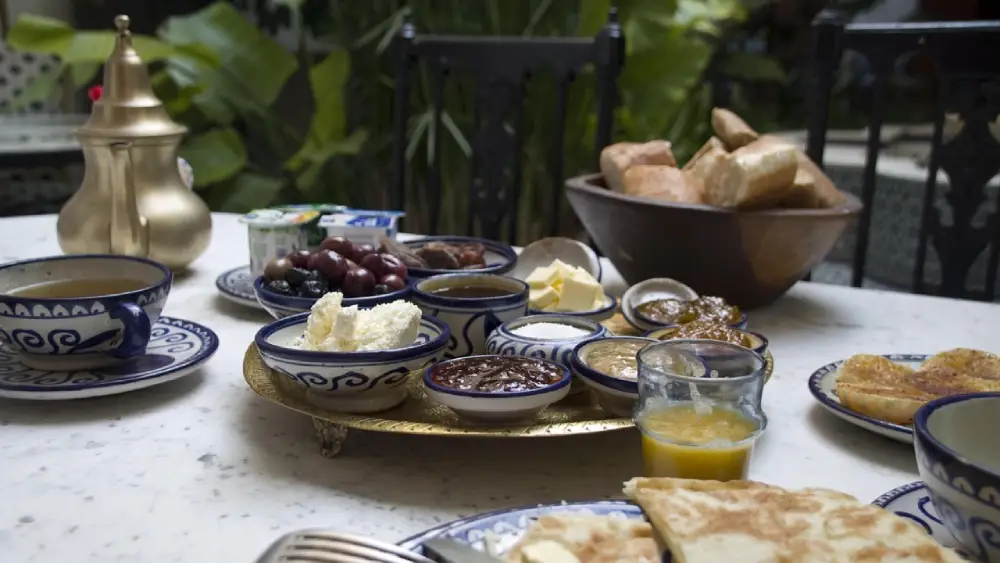
Now we get to my favorite subject: food.
Eid is the first morning in a month when people can eat breakfast after sunrise without thinking about fasting. That makes the Traditional Moroccan Eid breakfast: Hrbil and Msemmen feel incredibly special.
The Iconic Breakfast: Hrbil, Baghrir, and Msemmen
On Eid morning, many Moroccan tables feature:
Hrbil (also called Belboula in some places)
- Cracked wheat or barley cooked slowly with milk (sometimes mixed with water).
- Sweetened with honey or sugar, enriched with butter.
- Thick, warm, comforting – like a Moroccan version of porridge, but with its own character.
Baghrir – “pancake with a thousand holes”
- Spongy, full of tiny holes that drink up honey–butter sauce.
- Usually stacked on a plate in the middle of the table.
Msemmen
- Square, layered flatbread, folded and cooked with oil or smen (fermented butter).
- Eaten with:
- Honey and butter,
- Amlou (almond, honey, argan),
- Or cheese/jam for a twist.
If you’re staying in a riad in Marrakech, Fez, or Casablanca during Eid al-Fitr Morocco 2026, ask them in advance:
“Could you prepare a traditional Moroccan Eid breakfast: Hrbil and Msemmen on March 20?”
Most will be delighted to do something special if they’re open and staffed.
Traditional Sweets: The Plates That Travel
In the days before Eid, Moroccan homes become factories of sweets. Common ones include:
Kaab el Ghzal (Cornes de Gazelle)
- Crescent‑shaped pastries filled with almond paste.
- Flavored with orange blossom water.
Chebakia
- Fried dough shaped into flowers or twists.
- Soaked in honey and sprinkled with sesame seeds.
- Famous in Ramadan, but still present on Eid tables.
Ghoriba
- Crumbly cookies made with almonds, peanuts, or coconut.
- Slightly cracked surface, tender inside.
Plates of these sweets circulate between homes as families visit each other. If you’re invited somewhere, arriving with a box of good dates or chocolates is a simple, appreciated gesture.
Eid Lunch: Grilled Meat & Family Time
While Eid al-Fitr isn’t as meat‑centered as morocco eid al adha, many families still prepare special meat dishes:
Boulfaf
- Lamb liver wrapped in caul fat, skewered and grilled.
- Eaten hot with salt and cumin.
Lamb Kebabs
- Marinated pieces of lamb or beef, grilled on charcoal.
- Served with fresh bread, salad, and mint tea.
Mechoui
- Whole lamb slow‑roasted, traditionally in a pit or special oven.
- In cities like Marrakech, some specialist shops and restaurants can prepare Mechoui for groups if ordered in advance.
If you want to taste these without an invitation to a local home, some traditional restaurants in Marrakech and Fez may offer Eid menus with special dishes – just ask when booking.
Traveler’s Survival Guide: Cities, Dining, and Logistics
Now, how does all this affect you as a traveler during Eid al-Fitr Morocco 2026?
Is Morocco “Open” During Eid?
Yes – absolutely. But the rhythm changes.
Day 1 of Eid (Friday, March 20, 2026):
- Morning:
- Most shops closed.
- Streets quiet until after the prayer and breakfast.
- Afternoon:
- Some cafés and restaurants near tourist areas reopen.
- Souks can be quieter, but not dead.
- Evening:
- Places like Jemaa el-Fnaa begin to fill again.
- Families go out for walks, ice cream, or coffee.
Day 2 of Eid (Saturday, March 21, 2026):
- More businesses open.
- Tourist restaurants and activities generally operate.
- It feels like a festive Sunday: relaxed but functioning.
So if you’re staying in Marrakech, Fez, or Casablanca, you won’t be stuck in your hotel – you’ll just experience a softer, more family‑oriented version of the city.
Where to Eat in Marrakech and Casablanca During Eid 2026
Search interest is high for “Where to eat in Marrakech and Casablanca during Eid 2026”, and for good reason: people worry about closures. In big cities, you have options.
Casablanca
La Sqala
- Located in an old fortress near the port.
- Lush garden, fountains, traditional decor.
- Good for breakfast, brunch, or lunch with a Moroccan menu (tagines, salads, pastries).
- It’s a classic spot that often stays active around holidays.
Le Dhow
- Restaurant on a moored boat.
- More international menu but with local touches.
- Best for dinner – pleasant views and a “special night out” feel.
- Around Eid, it’s a nice contrast to home‑style meals.
Marrakech
Dar Yacout
- Iconic palace‑style restaurant in the old city.
- Fixed multi‑course Moroccan menu.
- Very atmospheric – think lanterns, courtyards, and multiple plates arriving one after another.
- Book in advance, especially around Eid.
Al Fassia
- Famous women‑run restaurant (Gueliz and Aguedal).
- Consistently good traditional dishes, especially tagines and couscous.
- Packed with locals and visitors on special occasions – definitely reserve.
Dar Moha
- Set in a beautiful riad with a central pool.
- Known for refined “new Moroccan” cuisine.
- Works well for both lunch and dinner if you want something elegant but not stiff.
Fez
- Le Saveur du Palais
- Intimate and focused on Fassi specialties (Fez is the “queen” of refined Moroccan cooking).
- Complex tagines, pastillas, and beautifully presented dishes.
- A great choice for a special Eid meal if you’re in Fez.
Not every restaurant will be open at every usual time on Eid morning, but for dinners and second‑day lunches, you will have solid choices. Always call or message ahead around the holiday.
Weather & Packing for March 2026
Because Eid al-Fitr 2026 Morocco falls in March, expect:
Weather:
- Mornings and evenings: cool, sometimes chilly.
- Days in Marrakech and the south: pleasant, can be quite warm in the sun.
- North and Atlantic coast (Casablanca, Rabat, Tangier): more chance of clouds and some rain.
Packing tips:
- Layers: T‑shirts, light sweater, and a windbreaker.
- Waterproof layer or small umbrella.
- Closed shoes and maybe sandals for warmer afternoons.
- Modest clothing: shoulders covered, shorts/skirts at least to the knee – especially important around mosques and during Eid.
If you’re combining Eid with a desert leg and wondering:
“Is the Sahara Desert tour worth it?”
In March, yes – very much. Temperatures are manageable, and the light is beautiful.
FAQ: Key Logistics at a Glance
How long does Eid al-Fitr last in Morocco?
Officially, Eid al-Fitr in Morocco is a 2‑day public holiday. In practice, the festive mood often extends to 3 days:
- Day 1 (Friday, March 20, 2026): Prayer, family breakfast, close family visits.
- Day 2 (Saturday): More visits, families going out, some travel.
- Day 3 (Sunday): Most services back to full normal, but the relaxed holiday atmosphere lingers.
So if you’re planning your stay for eid fitr 2026 maroc, aim for at least 3–4 days in one place to really feel it.
Can I visit mosques during Eid?
Non‑Muslims generally cannot enter active mosques in Morocco (Hassan II in Casablanca is a partial exception with guided tours outside prayer times). During Eid al-Fitr Morocco 2026:
- You can observe Salat al-Eid from a distance.
- Dress modestly and be extra respectful with cameras.
- Don’t walk between prayer lines or near the front area.
Many travelers tell me that just standing at the edge of a Msala and watching the unity of the prayer is one of their most memorable Morocco moments.
Where should I stay for a good Eid atmosphere?
If you want to really feel Eid:
Marrakech
- Choose a riad in the medina.
- You’ll hear the early morning calls to prayer and feel the medina slowly waking up after Salat al-Eid.
Fez
- A riad near Bab Boujloud (Blue Gate) or deep in the old medina.
- Fez has a very traditional religious life, so the Eid energy is strong and authentic.
Rabat
- If you prefer a calmer, more “local life” atmosphere in the capital.
- A modern hotel like STORY Le Carrousel lets you enjoy comfort while the city around you celebrates.
Bonus: Sahara & Tour Questions I Get All the Time
Since many travelers combine Eid with a Sahara trip, here are quick answers to the most common questions.
Which country is best to visit the Sahara Desert?
I’m biased, of course, but Morocco is one of the easiest and richest ways to experience the Sahara:
- Classic dunes at Erg Chebbi (Merzouga) and Erg Chigaga.
- Good infrastructure: a full range of camps from basic to luxury.
- You can mix desert, imperial cities, and coast comfortably in 8–12 days.
What is the best way to experience the Sahara Desert?
- Spend at least 1 night in a desert camp, ideally 2.
- Arrive before sunset, leave after sunrise.
- Do:
- A proper camel ride (not just a 5‑minute photo),
- A quiet walk on the dunes,
- Time with local guides around the fire and under the stars.
Try to avoid itineraries that promise “everything” in a short time – they often mean too much driving and not enough real experience.
What is the best tour company for Morocco?
The “best” company is the one that:
- Uses licensed guides and drivers.
- Plans realistic distances (no insane 12‑hour days back‑to‑back).
- Is honest about what you can and can’t fit into your time.
I created Morkosh Tours after years of guiding for other agencies because I wanted to focus on private guided tours in Morocco that respect both the travelers and the local people. If you want to combine Eid al-Fitr Morocco 2026 with a desert loop or a custom itinerary, I can help you build something that flows naturally around the confirmed Eid date.
Final Thoughts & How I Can Help
Eid al-Fitr 2026 Morocco is not a show – it’s a lived, intimate family moment that you, as a respectful visitor, can witness from close by. You’ll taste real Hrbil and Msemmen, watch families leaving Salat al-Eid, and feel a country shifting from introspection to gratitude and joy.
If you’re thinking about experiencing Eid al-Fitr in Morocco, or combining it with the Sahara, Atlas Mountains, or coastal towns:
- Visit my website: www.morkosh.com
- Or reach out to me and I’ll help you design a realistic, human‑paced itinerary around March 20, 2026.
I’ve crossed this country more times than I can count – and I’d be happy to help you experience it at its most meaningful moment.
Written by Youness Labchir
Licensed Morocco Tour Guide
